Carte du Pays des Bassoutos (Map of the Basotho Country) by Hamilton Moore Dyke (1847)
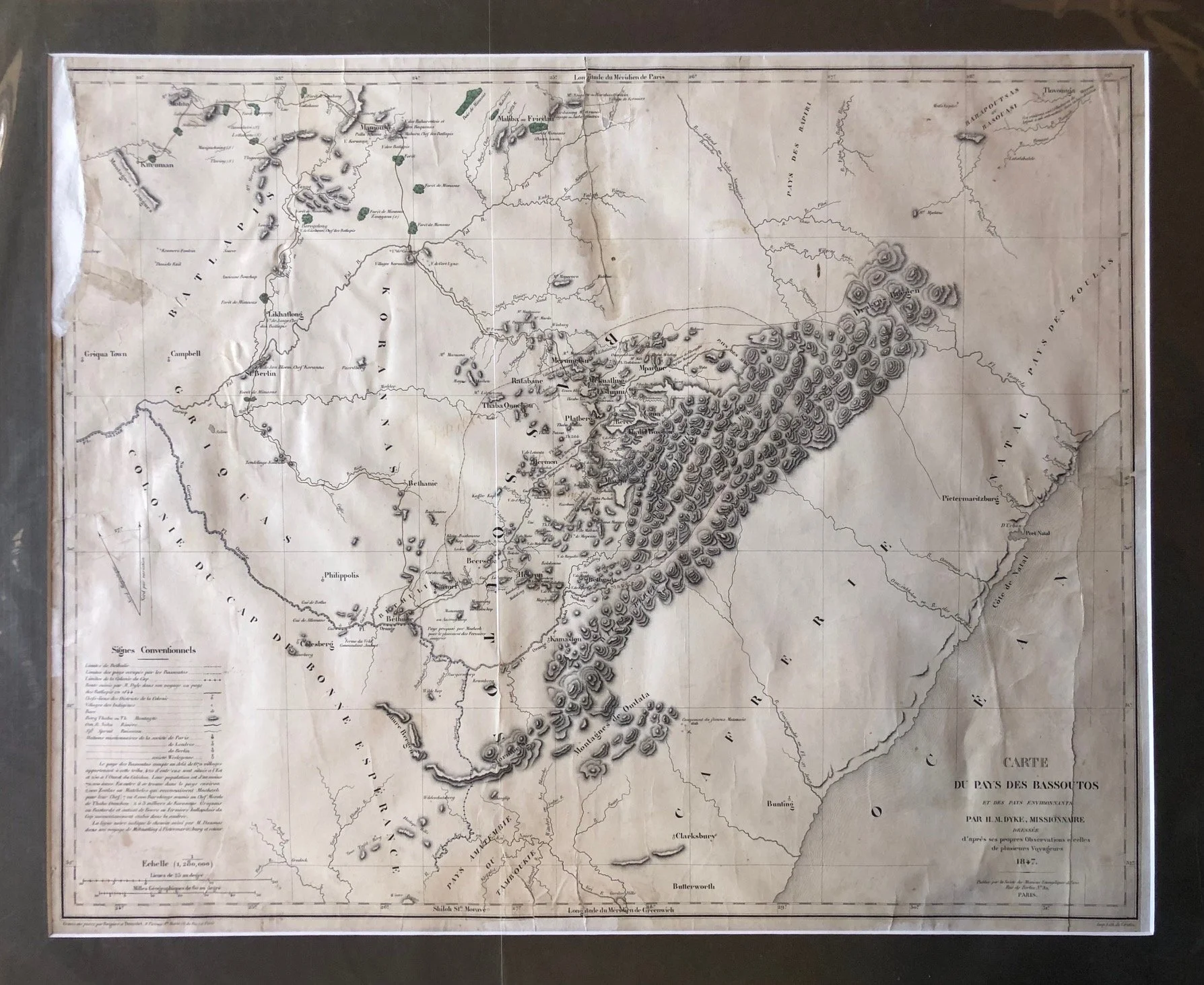
This 1847 map, titled "Carte du Pays des Bassoutos" (Map of the Basotho Country), is an exceptionally rare and important piece of southern African cartography. Compiled by the French Protestant missionary Hamilton Moore Dyke of the Paris Evangelical Missionary Society (PEMS) and published in Paris, it captures a critical geopolitical snapshot of the southern African interior just before the region was permanently altered by colonial expansion.
A Document of the Basotho Kingdom at its Territorial Height
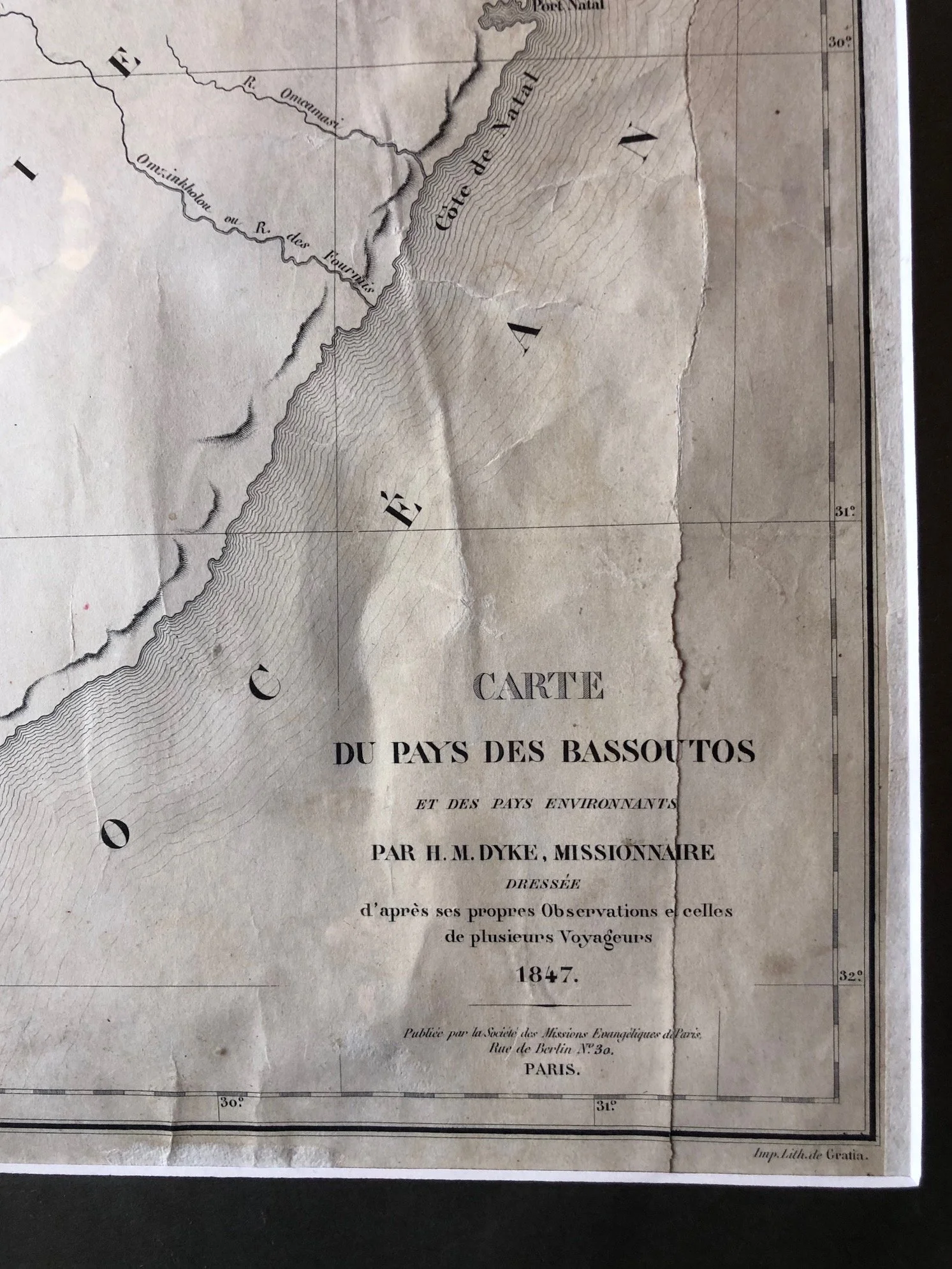
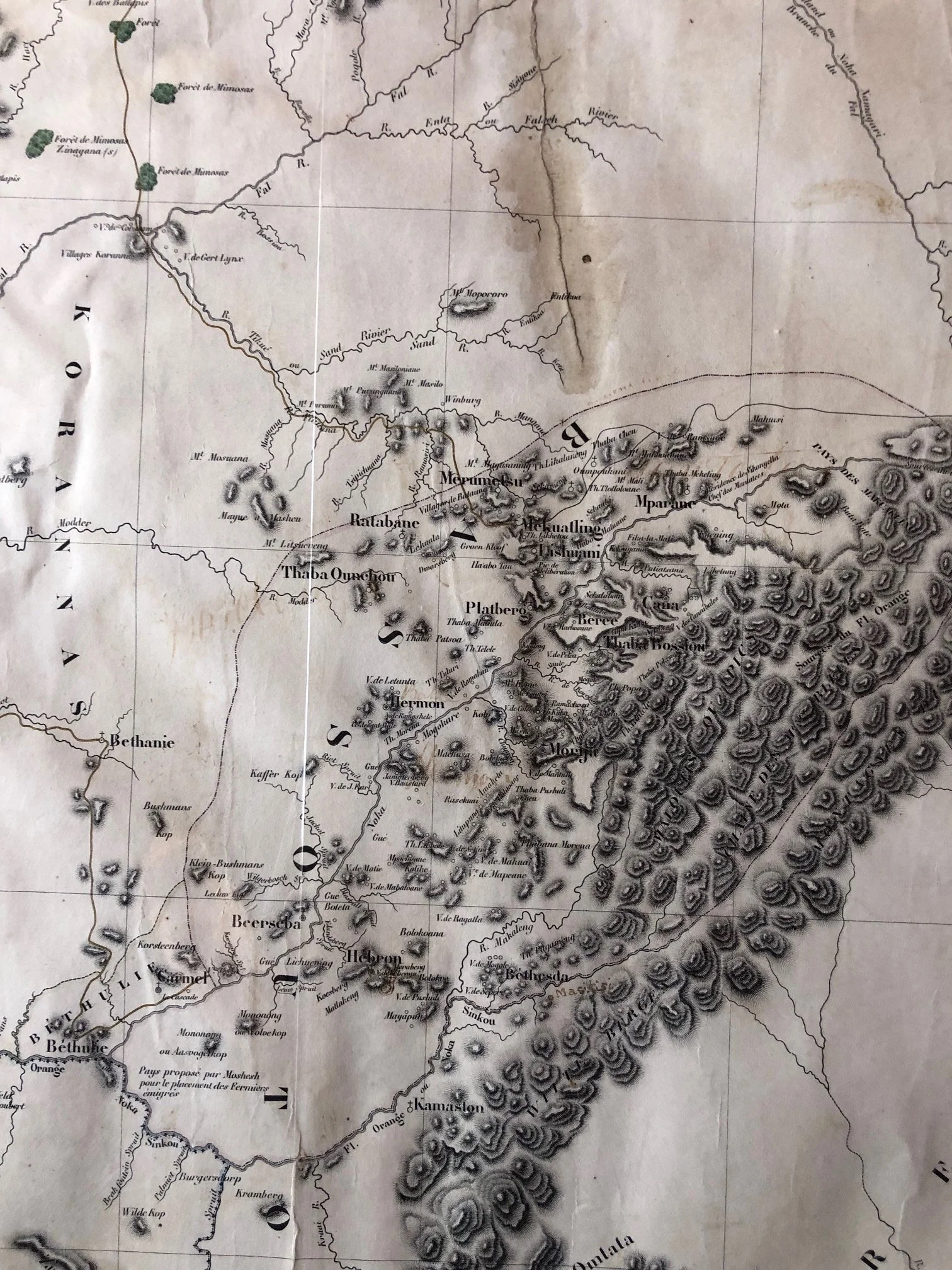
As shown in the title cartouche, the map was drawn in 1847 based on Dyke's personal observations and those of fellow travelers. This was an era when the Basotho Kingdom, consolidated by the brilliant statesman King Moshoeshoe I ("Moshesh"), was trying to assert its territorial boundaries against encroaching Trekboers and British colonial interests.
Just one year later, in 1848, the British declared the Orange River Sovereignty, which triggered decades of boundary disputes and wars that eventually stripped the Basotho of their fertile lands west of the Caledon River. This map stands as a primary record of what Moshoeshoe's kingdom actually encompassed before those conflicts.
Fascinating Demographic Data in the Legend
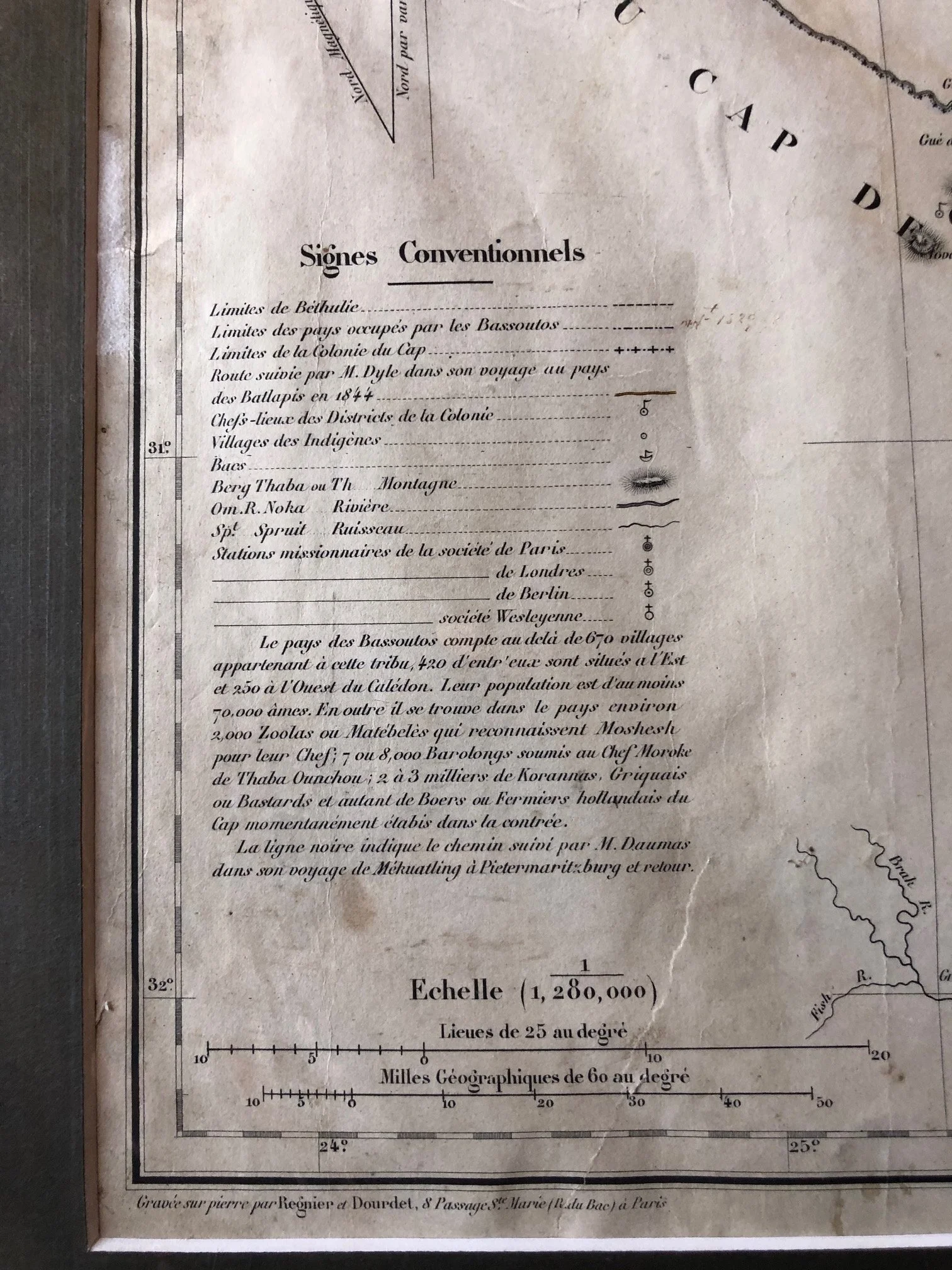
The lower-left section of the map contains an extraordinary explanatory note (Signes Conventionnels) that gives rare contemporary statistics on the region's population:
Village Count: It notes that the Basotho country includes over 670 villages, with 420 situated east of the Caledon River and 250 to the west.
Population Dynamics: It estimates the population at a minimum of 70,000 souls.
Political Alliances: Crucially, it notes that this figure includes “2,000 Zoolas or Matabélés who recognize Moshesh as their Chief,” illustrating Moshoeshoe's inclusive diplomacy and his ability to integrate refugees fleeing the disruptions of the Mfecane/Difaqane.
Coexistence: It mentions that the area also holds 7,000 to 8,000 Barolongs, 2,000 to 3,000 Korannas and Griquas (referred to as Bastards), and “as many Boers or Dutch farmers temporarily established in the area.”
Mapping the Footprints of Global Missionaries
The map acts as an ecclesiastical blueprint of the interior. The legend differentiates between various missionary societies active on the front lines of contact:
The Paris Evangelical Missionary Society (indicated by a standard cross symbol).
The London Missionary Society (indicated by a cross over a circle).
The Berlin Missionary Society (indicated by a cross over a horizontal line).
The Wesleyan Methodist Missionary Society (indicated by an inverted anchor-cross).
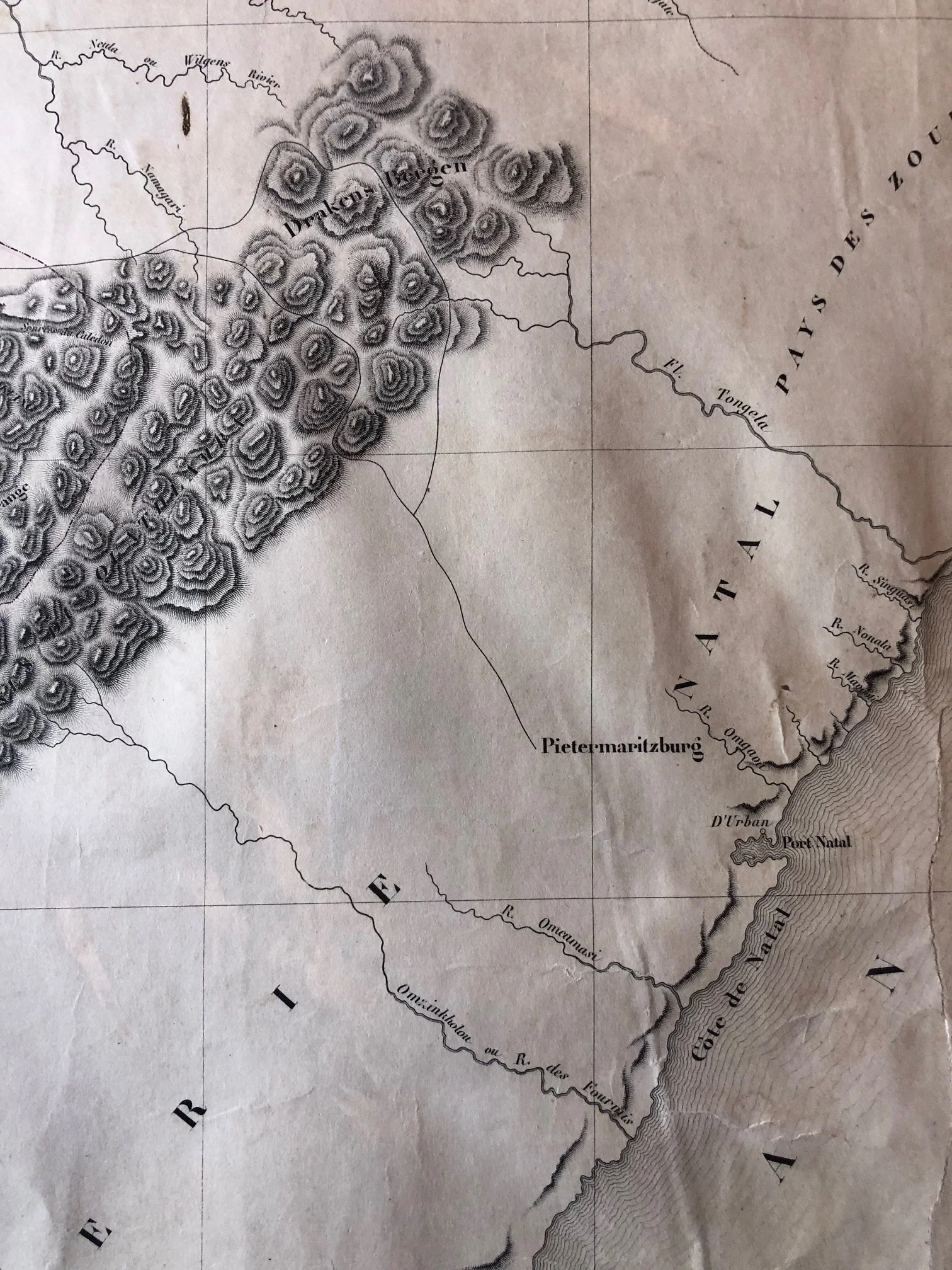
It also traces specific exploratory routes, such as the dotted line tracking the journey of fellow PEMS missionary François Daumas from his station at Mékuatling all the way across the Drakensberg mountains to Pietermaritzburg and back.
French Cartographic Style and Local Topography
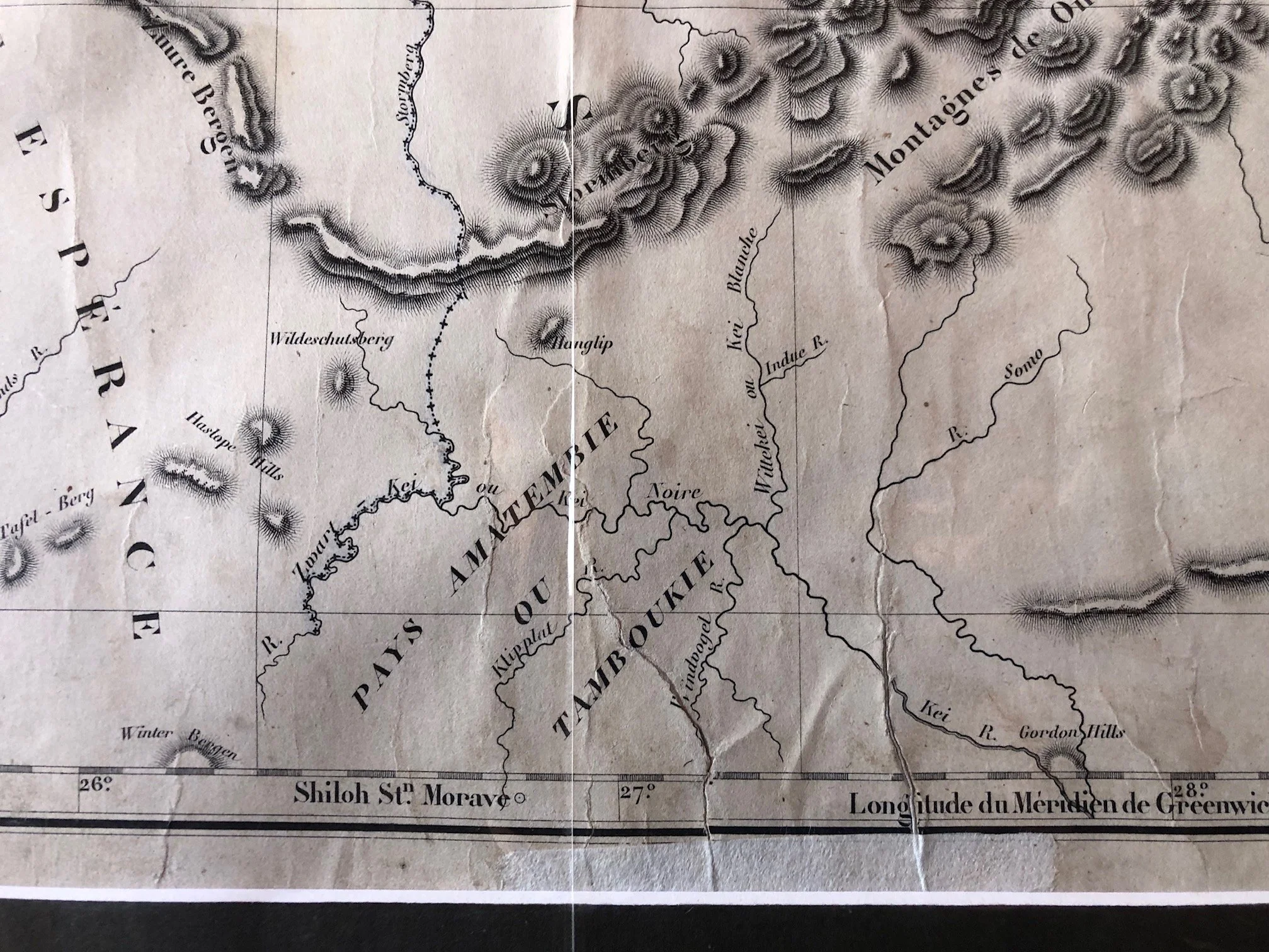
The map's physical geography is rendered with striking artistic detail, particularly the massive, stylized hachures used to depict the "Montagnes de Maloutia" (Maloti Mountains) and the Drakensberg range splitting the interior from the Côte de Natal. Because it was engraved on stone and printed in Paris by Régnier and Dourdet, it applies sophisticated 19th-century French lithographic techniques to a landscape that European empires had barely charted.
620mm x 500mm
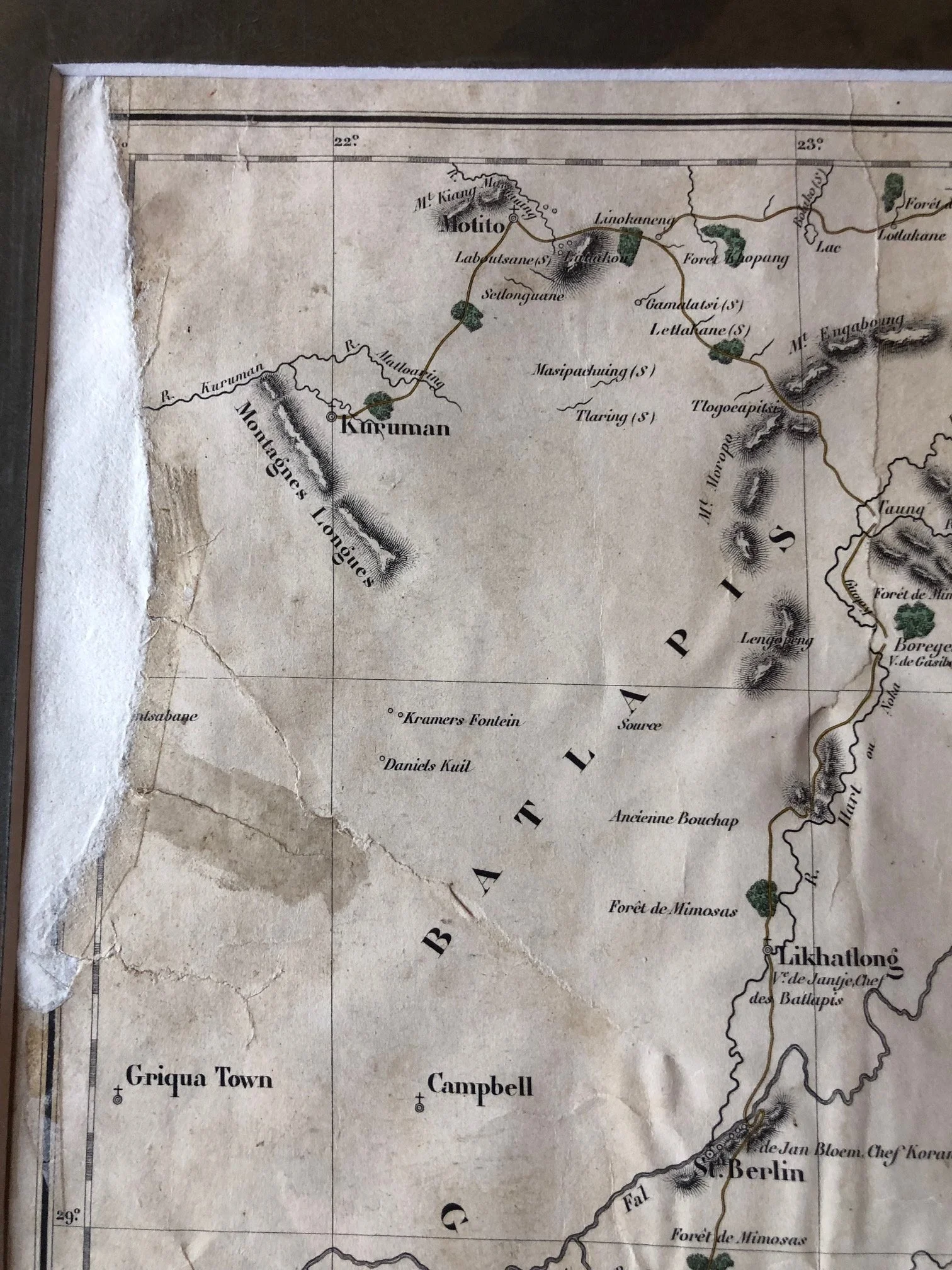
Engraved map; extensive repairs; this map has many tears and is well used.
R7,500