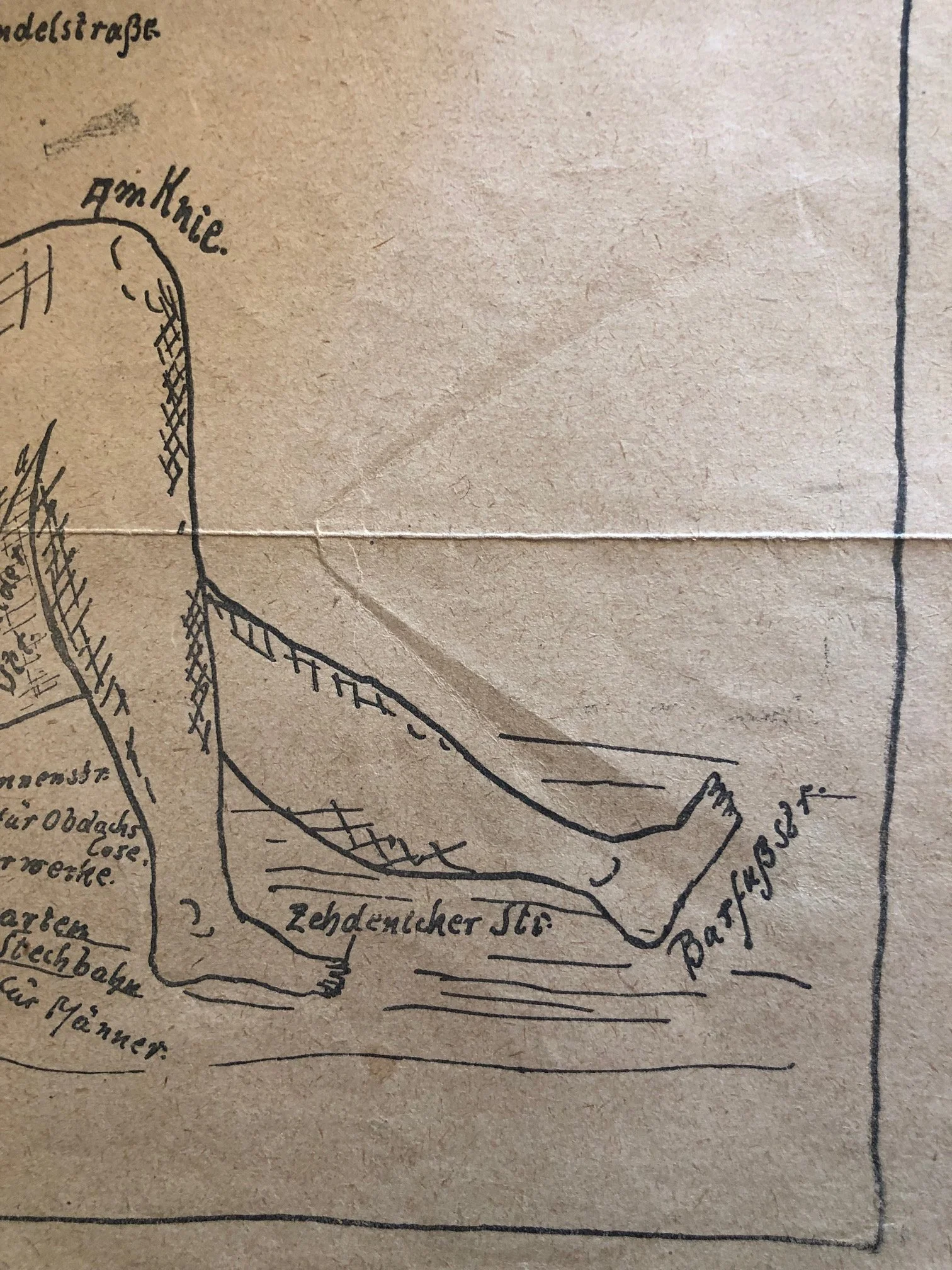
Map of Berlin; German Revolution of 1918–1919
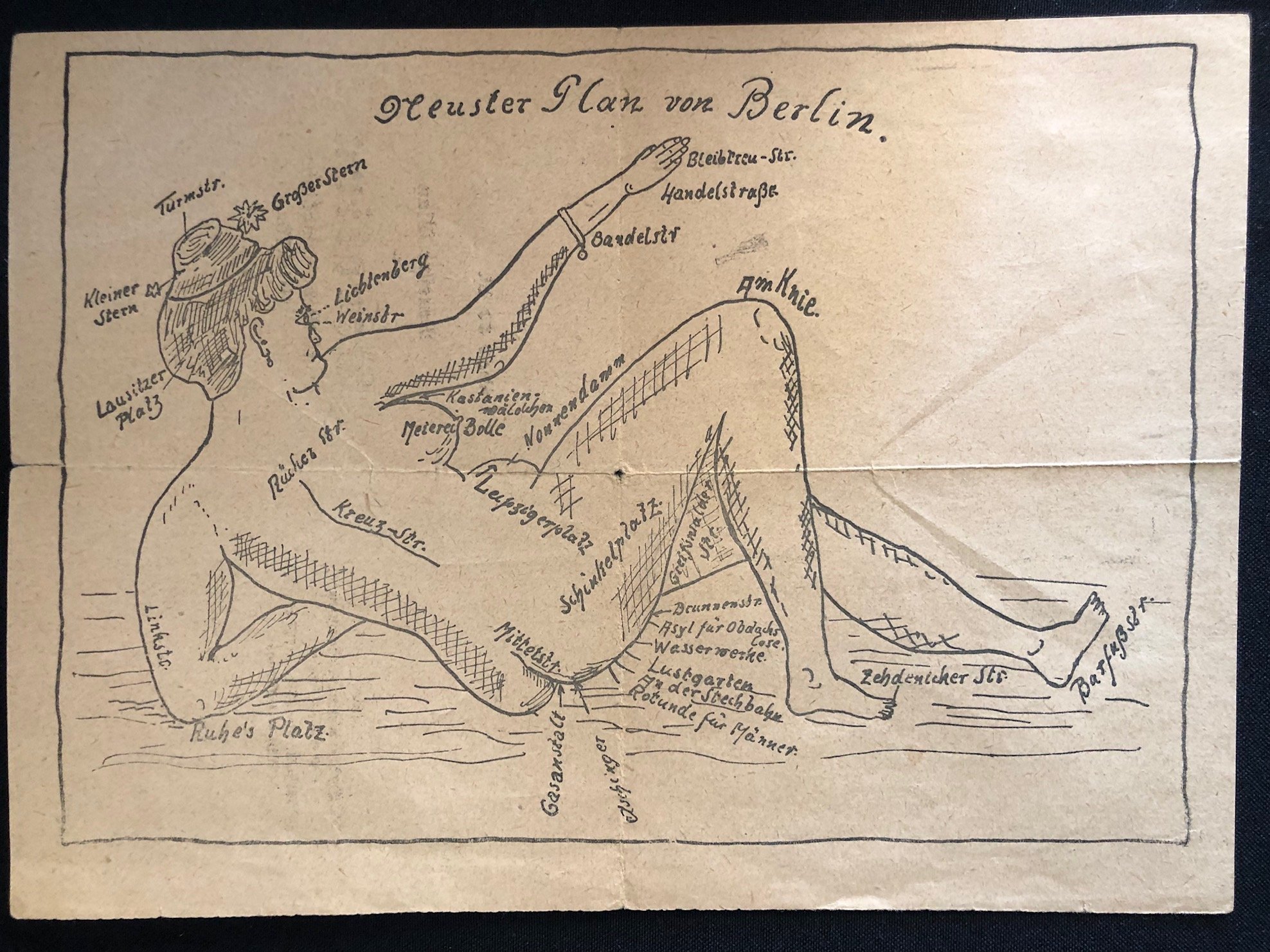
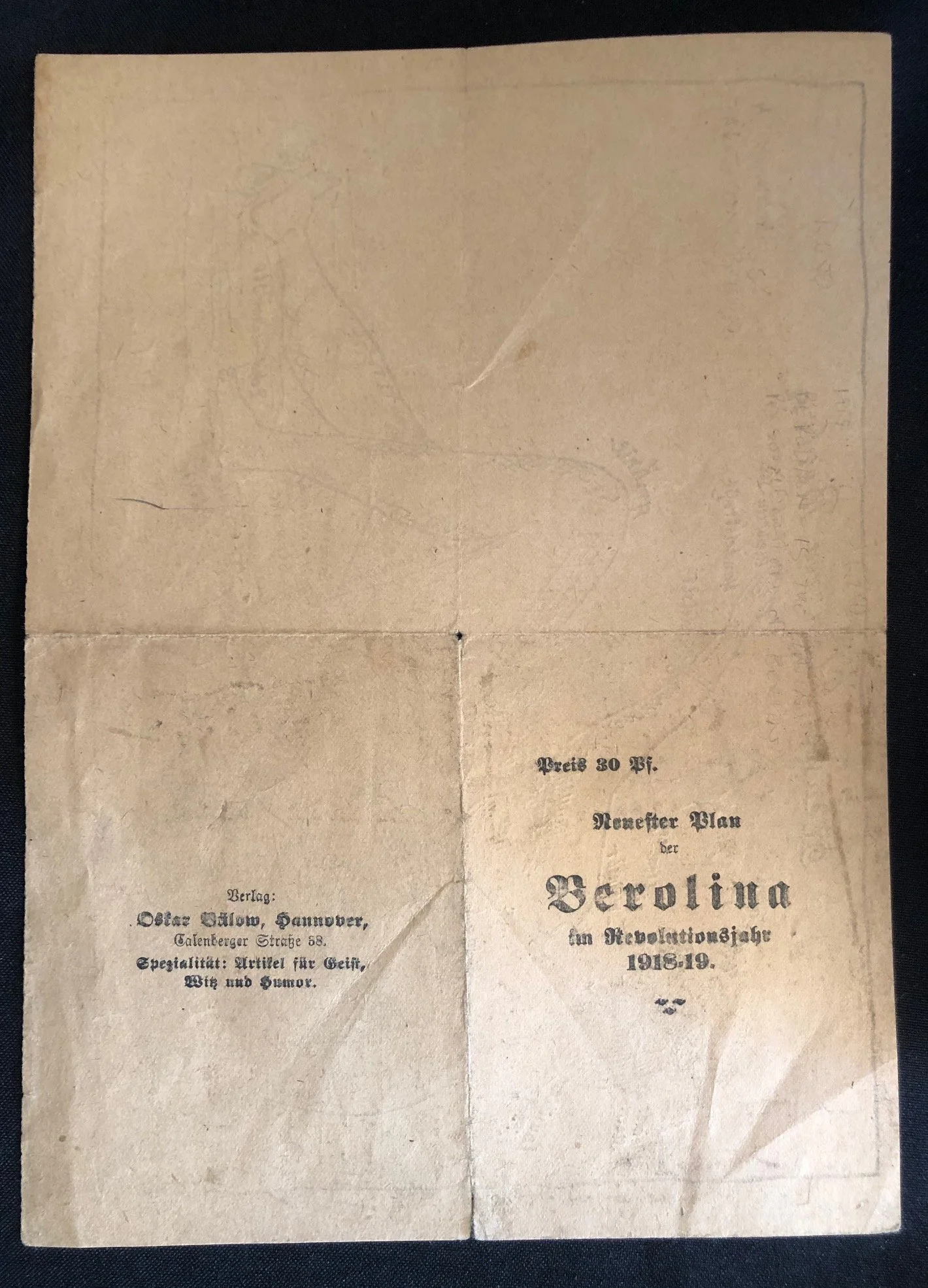
When folded, this sheet was designed to look like a standard, pocket-sized municipal tourist map. The text printed on the reverse entirely recontextualizes the satirical map on the front, placing it at a watershed moment in German history: the collapse of the German Empire and the chaotic birth of the Weimar Republic.
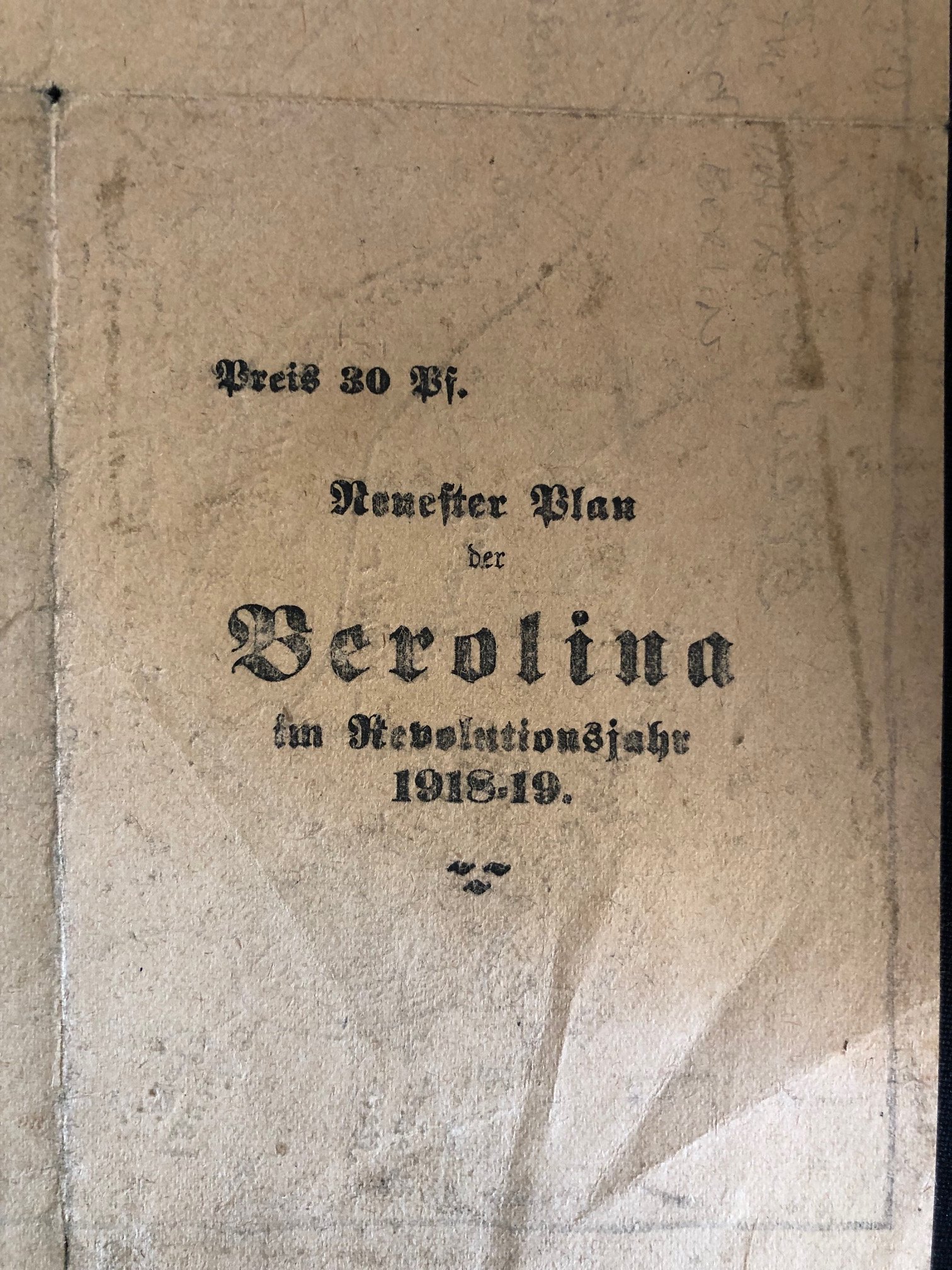
"Berolina" in the Year of Revolution
Preis 30 Pf.
Neuester Plan der Berolina im Revolutionsjahr 1918-19.
Translation & Historical Context:
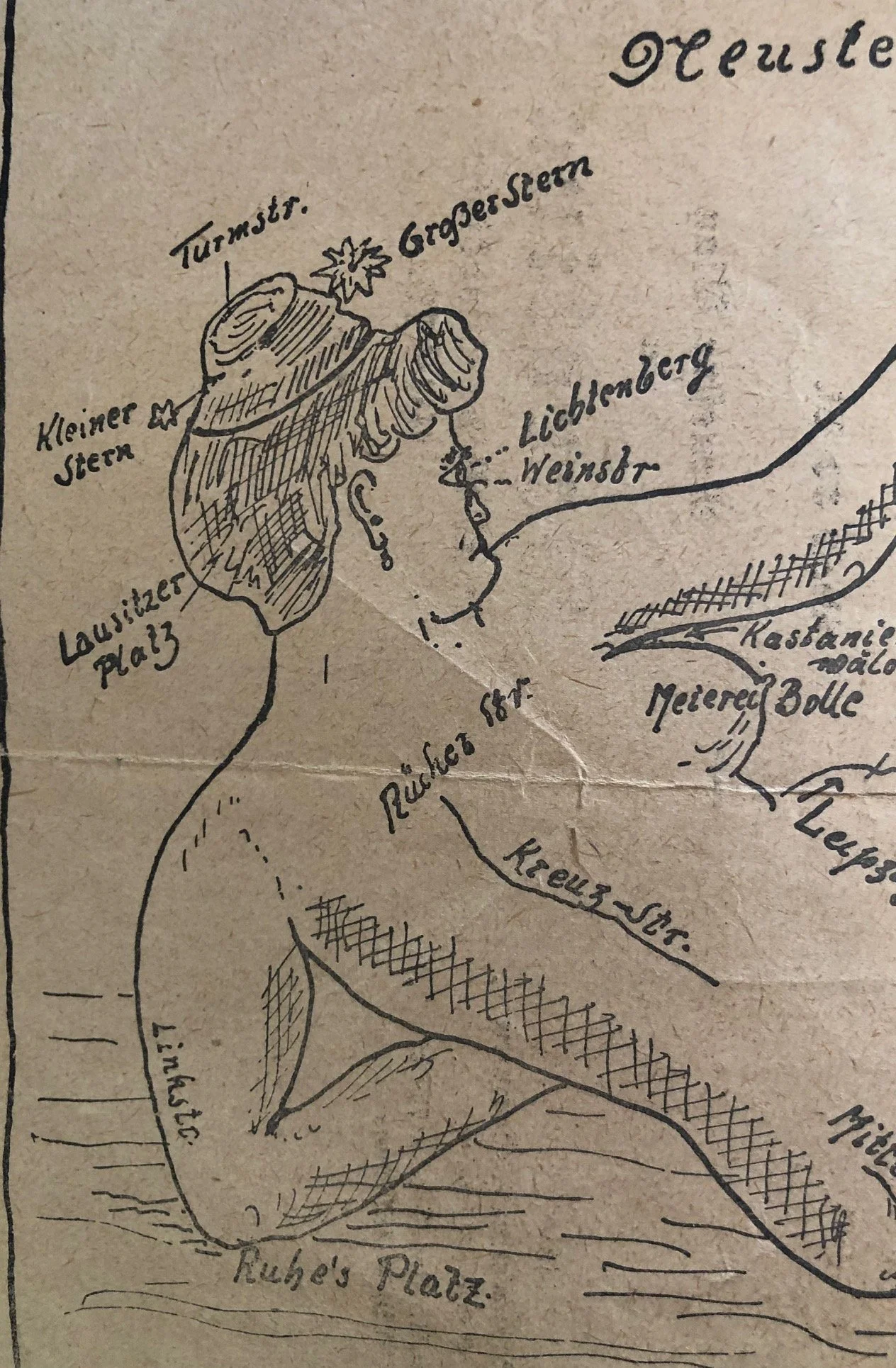
"Berolina": This is the traditional, allegorical female personification of the city of Berlin (much like Britannia for Britain or Marianne for France). Knowing this transforms the nude drawing on the front from a generic woman into Berolina herself. The map is a literal, highly irreverent stripping down of the city's grand patriotic symbol.
"Im Revolutionsjahr 1918-19" (In the German Revolution Year 1918-19): In November 1918, following defeat in World War I, Kaiser Wilhelm II abdicated, the monarchy was overthrown, and Berlin became a violent battleground between radical socialists (the Spartacists) and the newly formed social-democratic government backed by paramilitary Freikorps units.
By labeling this a map of Berolina during the revolution, the publisher is using biting humor to comment on a city stripped of its imperial dignity, exposed, chaotic, and completely upended by political upheaval.
The Publisher: A Specialist in Subversive Wit
Verlag: Oskar Bülow, Hannover, Calenberger Straße 58.
Spezialität: Artikel für Geist, Witz und Humor.
Translation:
Publisher: Oskar Bülow, Hanover, Calenberger Straße 58. Specialty: Articles for Wit, Mind, and Humor.
Oskar Bülow was a known regional publisher specializing in satirical postcards, novelty folding cards, parlor games, and humorous ephemera. Printing this in Hanover for distribution or sale to a Berlin-centric audience (or to provincial Germans amused by the chaos of the capital) shows how quickly publishers commercialized the political shockwaves of the revolution. Selling it for a mere 30 Pfennig made it an affordable piece of topical, underground street literature.
With the knowledge that this dates precisely to 1918–1919, the anatomical puns on the front side take on a much sharper, more cynical political meaning rather than just simple bawdy humor:
The Lower Anatomy & Municipal Failure: The concentration of labels like Asyl für Obdachlose (Homeless Asylum), Wasserwerke (Waterworks), and Gasanstalt (Gasworks) near the rear and thighs highlights a Berlin that was physically freezing, starved by wartime blockades, and suffering from severe infrastructure breakdowns during the winter strikes of the revolution.
The "Lustgarten" (Pleasure Garden): Positioned near the groin on the front, the Lustgarten in Berlin was historically a grand public square used for imperial military parades. During the 1918–1919 revolution, however, it became the primary staging ground for massive, fiery mass protests and revolutionary speeches by socialist leaders like Karl Liebknecht. Mapping it to an erogenous zone is a direct satire of the political passions boiling over in the city's streets.
Rare revolutionary satire; the old Prussian order collapsed, showing how everyday citizens used dark, gritty, and sexualized humour to process the immense trauma, political chaos, and social nakedness of Berlin during the winter of 1918–1919.
250mm x 180mm
Minor tears and wear.
R800