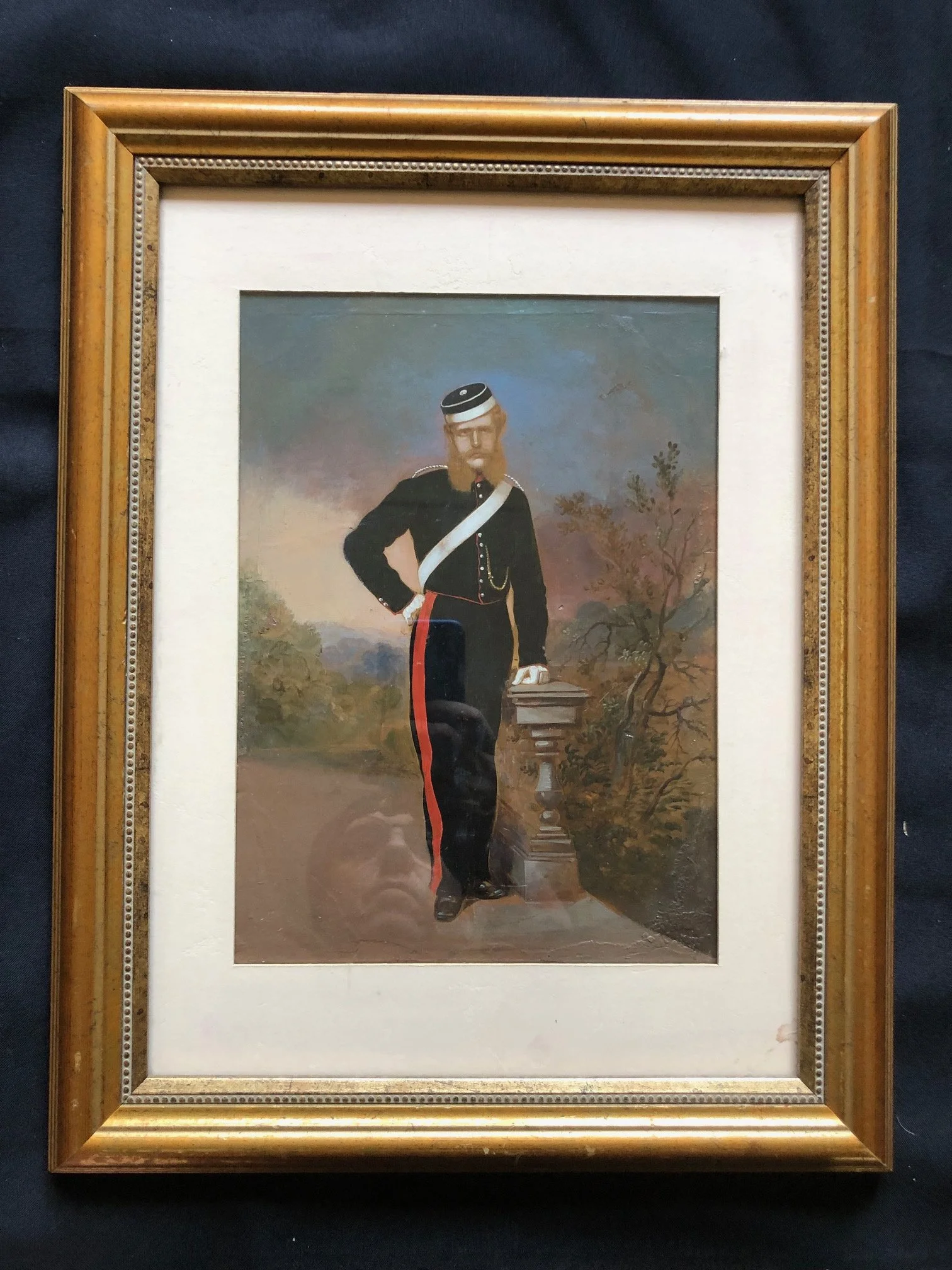
Portrait of an Officer (c.1880)
Based on the visual evidence in this mid-to-late 19th-century portrait, the subject is a gentleman in British colonial or volunteer military uniform, likely dating from the 1860s to the 1880s.
The portrait has several distinctive uniform details, an intriguing signature, and a specific stylistic context that tell a fascinating historical story.
Deciphering the Uniform & Context
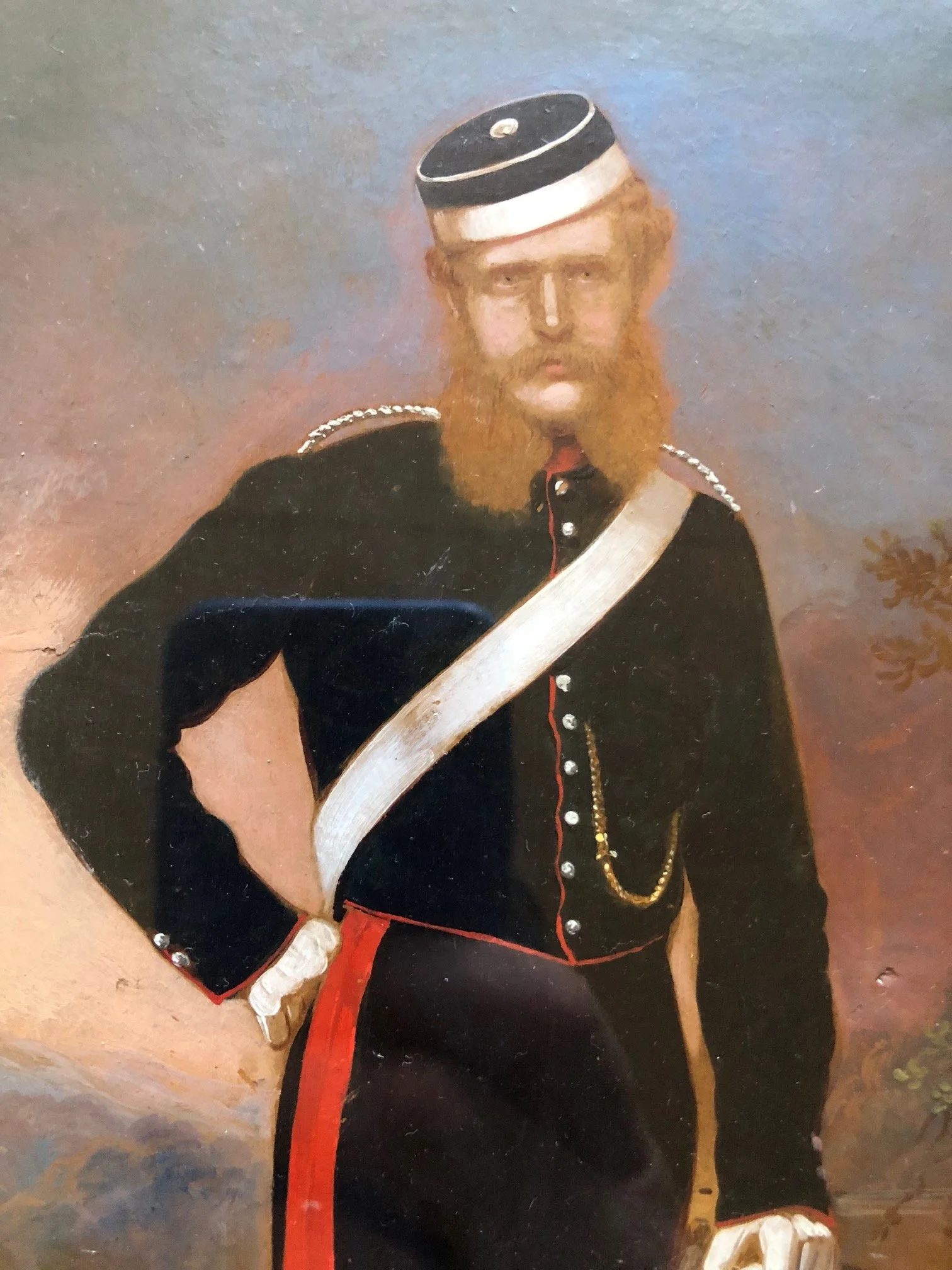
The subject's uniform points directly to a cavalry or artillery officer, most likely from a Colonial Volunteer Regiment rather than the regular British Army line infantry.
The Headgear (Pillbox Cap): The small, round, brimless cap perched high on the head is a classic British military "pillbox" fatigue cap, widely worn by cavalry, artillery, and volunteer units during the Victorian era. The white band contrasting against the dark base suggests a specific regimental distinction.
The Tunic and Pouch Belt: He wears a dark (likely rifle green or blue) high-collared tunic with a prominent white or silver leather cross-belt (pouch belt), characteristic of officer undress or cavalry uniforms.
The Trousers: The thick red stripe (welt) down the seam of the dark trousers strongly denotes an artillery or cavalry assignment (such as a light horse or hussar volunteer regiment).
Physical Appearance: His full, long mutton-chop beard and sweeping moustache are the quintessential height of military fashion during the mid-Victorian period, particularly popular during the 1870s.
Artistic Medium: The Overpainted Photograph
This piece is a "painted photograph" or an overpainted solar print/enlargement, a highly popular medium between 1860 and 1890.
Photographic emulsions of the mid-19th century could not capture colour, and early large-scale prints often lacked contrast. Artists would print a faint photographic outline onto canvas or heavy paper and completely overlay it with oils, gouache, or watercolours.
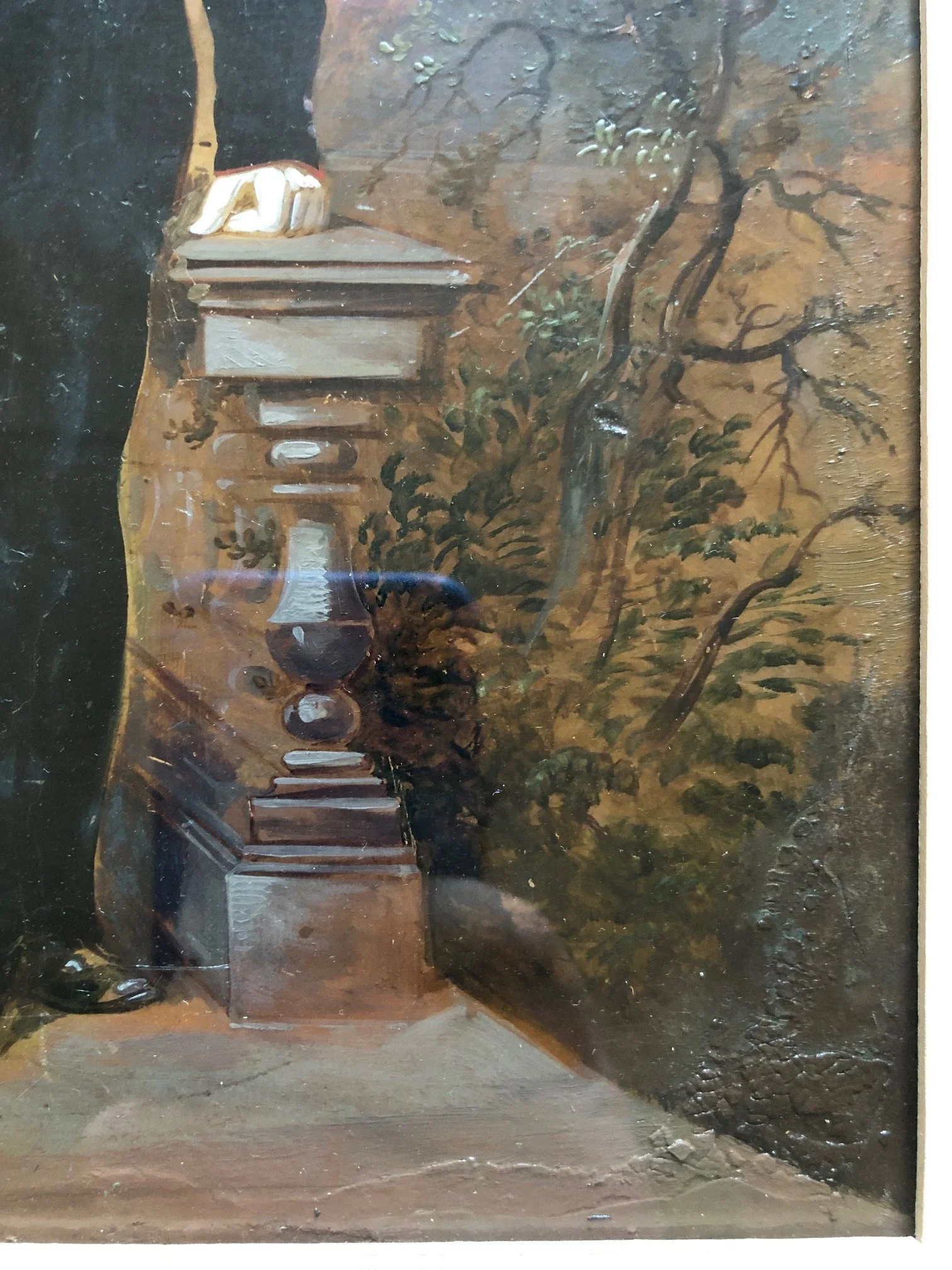
The stiff, slightly formal pose, the reliance on a classical studio prop (the stone balustrade), and a generic, romanticized landscape background are classic indicators of Victorian photographic studio setups.
This hybrid medium allowed officers and colonial figures to send high-quality, lifelike, and colourful portraits back home to Europe or display them in local clubs to solidify their social standing.
Frame size: 355mm x 455mm
Heavily restored; mountboard fish mothed.
(Bought in Johannesburg).
mm x mm
R2,000