Poster: WWll "Souvenir Hunting" Crisis in North Africa (1942)
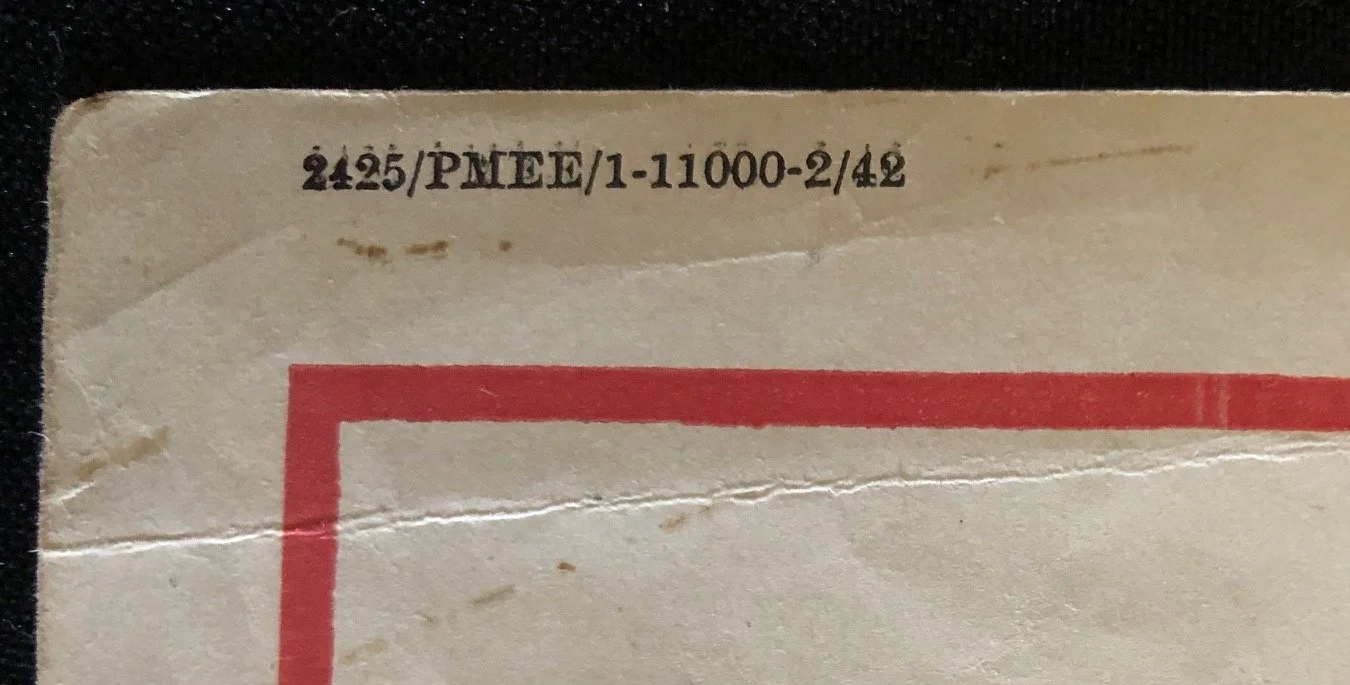
The printer code along the margin (PMEE / 1942) identifies this as an official WWII security warning produced by the Middle East Command Printing Directorate for Allied forces (British, South African, Australian, New Zealand, and Indian troops) serving in the North African Campaign.
The "Souvenir Hunting" Crisis in North Africa
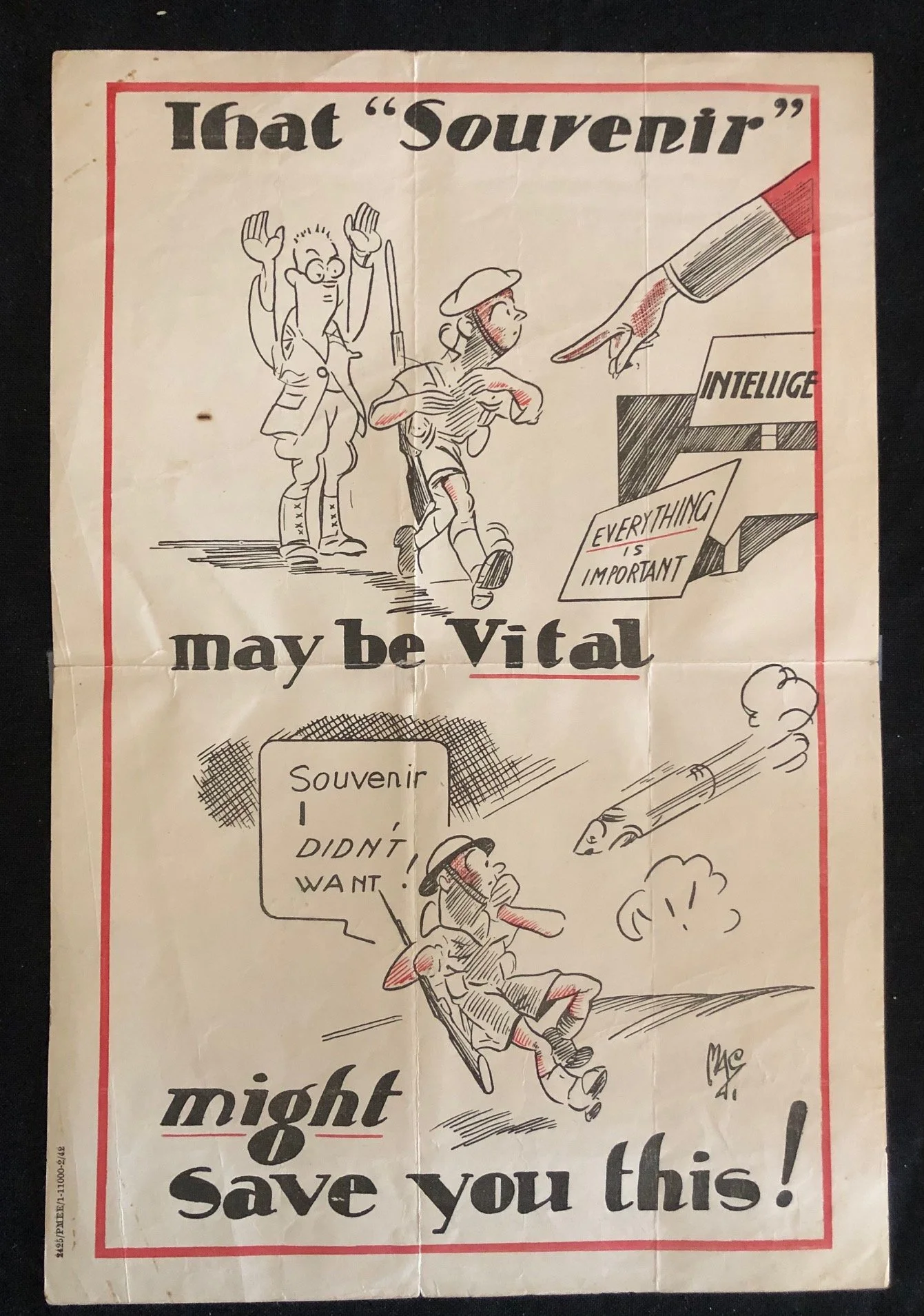
During the Desert War in 1941–1942, battlefield trophy hunting posed a major operational security threat to Allied Intelligence. Soldiers frequently looted captured Axis prisoners, abandoned vehicles, and enemy positions for personal keepsakes—such as maps, field diaries, letters, uniforms, technical manuals, or logbooks—keeping them in their kitbags rather than turning them over to Battalion Intelligence Officers.
Why Seemingly Minor Items Were Vital
Allied Intelligence relied heavily on captured enemy documentation to piece together Axis orders of battle, logistics shortages, unit movements, and code changes in North Africa. A single pocket diary or field order taken from an Italian or German prisoner could reveal upcoming artillery targets or supply line vulnerabilities. When soldiers pocketed these items as souvenirs, the delay in processing intelligence directly put frontline units at risk of unexpected enemy bombardment—the exact scenario depicted in the bottom panel.
Humor as a Training Tool
The artwork—signed by the service cartoonist "Mac"—was created to deliver serious operational discipline through relatable humor. Rather than using stern, dry military directives, Middle East Command commissioned lighthearted cartoonists to illustrate service publications (such as Parade magazine and theater posters printed in Cairo) to ensure troops actually read and remembered key security protocols.
215mm x 330mm
Folded; worn; minor stains.
R1,000