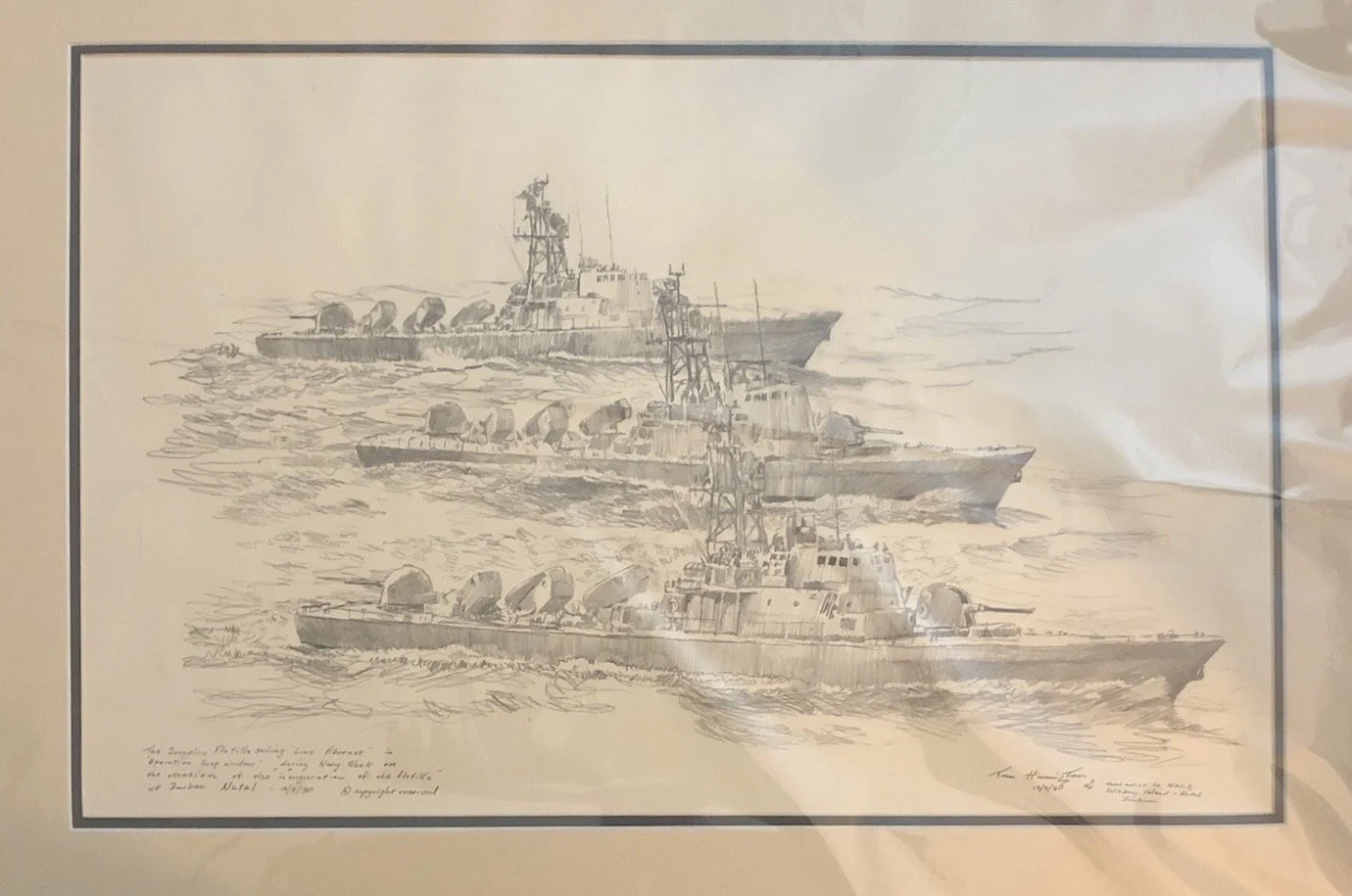
The Scorpion Flotilla by Tom Hamilton, N.O.I.C, Salisbury Island, Durban, Natal (1980)
A pencil drawing capturing a highly significant, specific moment in South African naval history - the height of the Cold War and the Border War era, when the South African Navy (SAN) had to completely reinvent itself due to international isolation.
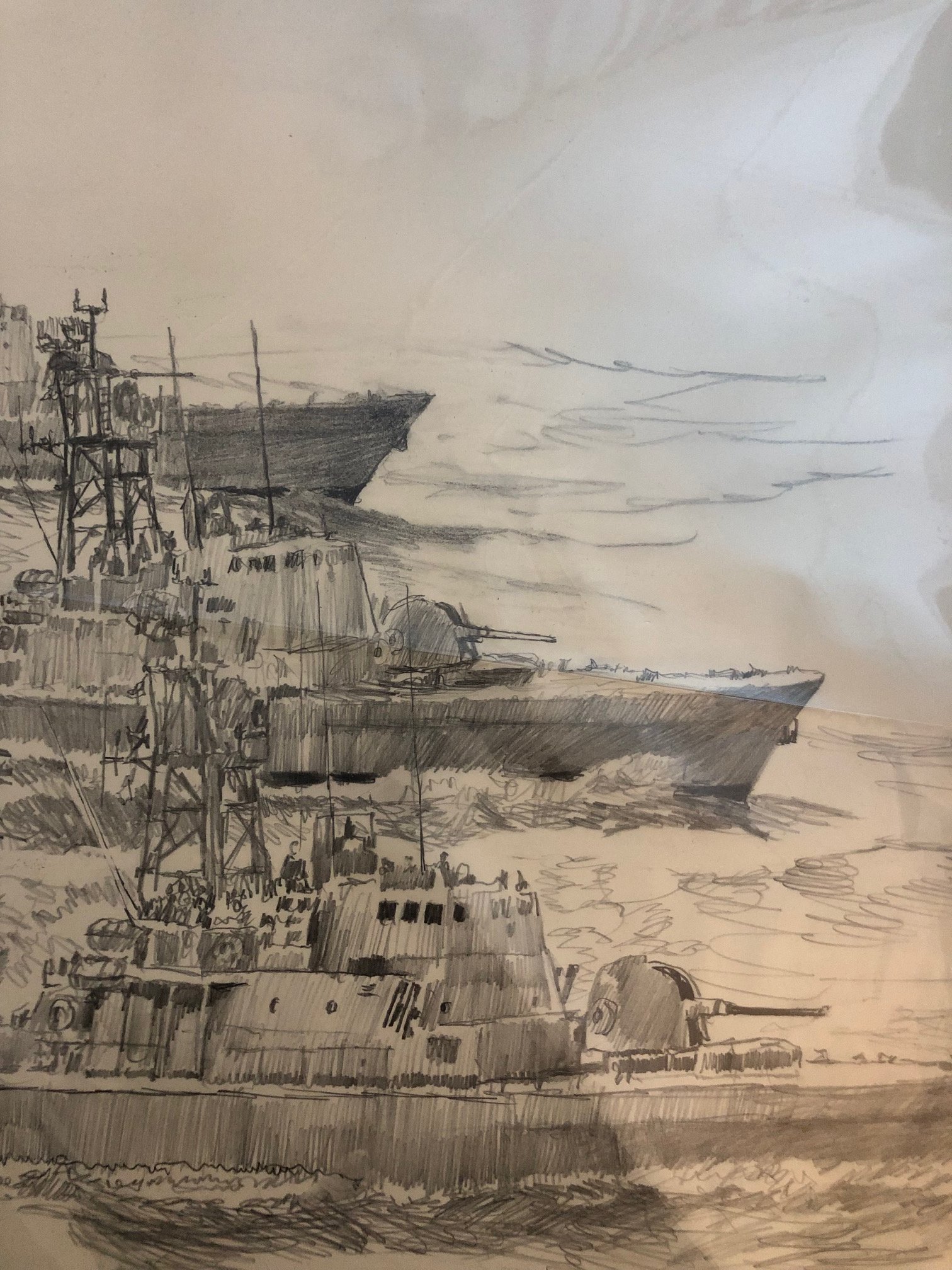
The three missile strike craft sailing "Line Abreast" are Warrior-class strike craft (initially known as the Minister-class, named after South African Ministers of Defence).
The Israeli Connection (Project Jaws): In the mid-1970s, facing an escalating arms embargo, South Africa entered a covert military agreement with Israel. These ships are variants of the Israeli Sa'ar 4 class missile boats. The first three were built by Israeli Shipyards in Haifa, while the subsequent vessels were built under license in Durban by Sandock-Austral.
The Weaponry: Distinct, angled missile launchers on the deck behind the superstructure. These housed Skerpioen (Scorpion) surface-to-surface missiles (a South African modification of the Israeli Gabriel missile). Up front and aft, rounded turrets of the 76mm Oto Melara rapid-fire guns, which gave these small, fast vessels immense firepower for their size.
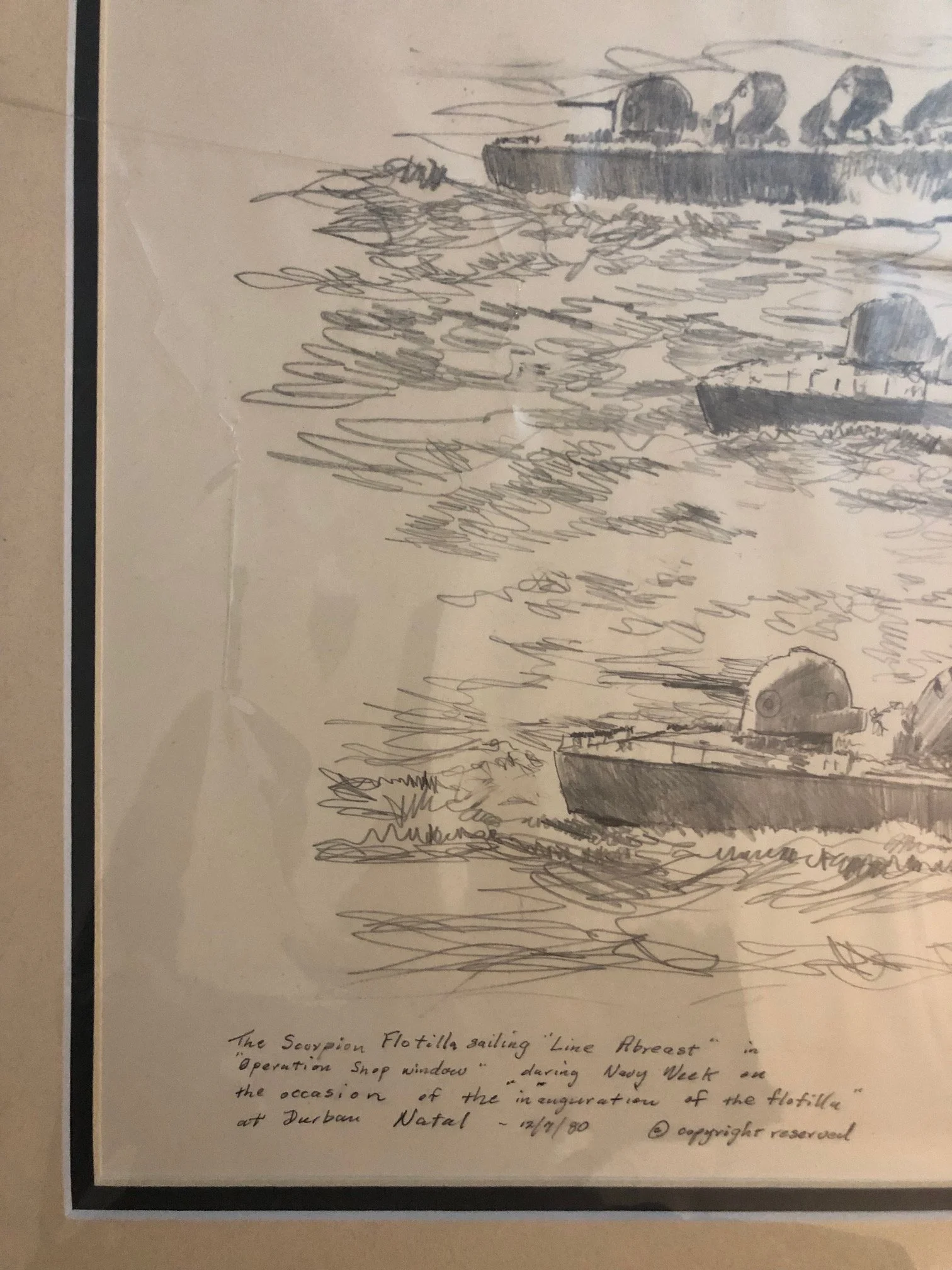
The Inscription & "Operation Shop Window"
"The Scorpion Flotilla sailing 'Line Abreast' in 'Operation Shop Window' during Navy Week on the occasion of the 'inauguration of the flotilla' at Durban Natal – 12/2/80"
The Scorpion Flotilla was the official operational designation for the 1st Strike Craft Squadron. Because the United Nations arms embargo (UN Resolution 418 of 1977) cut South Africa off from procuring larger British frigates, the SAN shifted its entire strategic doctrine toward these agile, hard-hitting strike craft to protect the coastline.
Operation Shop Window was the traditional name used by the SAN for live-fire and tactical demonstrations put on for the public, media, and military dignitaries. It was literally a "shop window" displaying the navy's operational readiness and striking power.
The Date (12 February 1980) marks the exact period when the strike craft squadron was formally consolidated and integrated into Naval Base Durban.
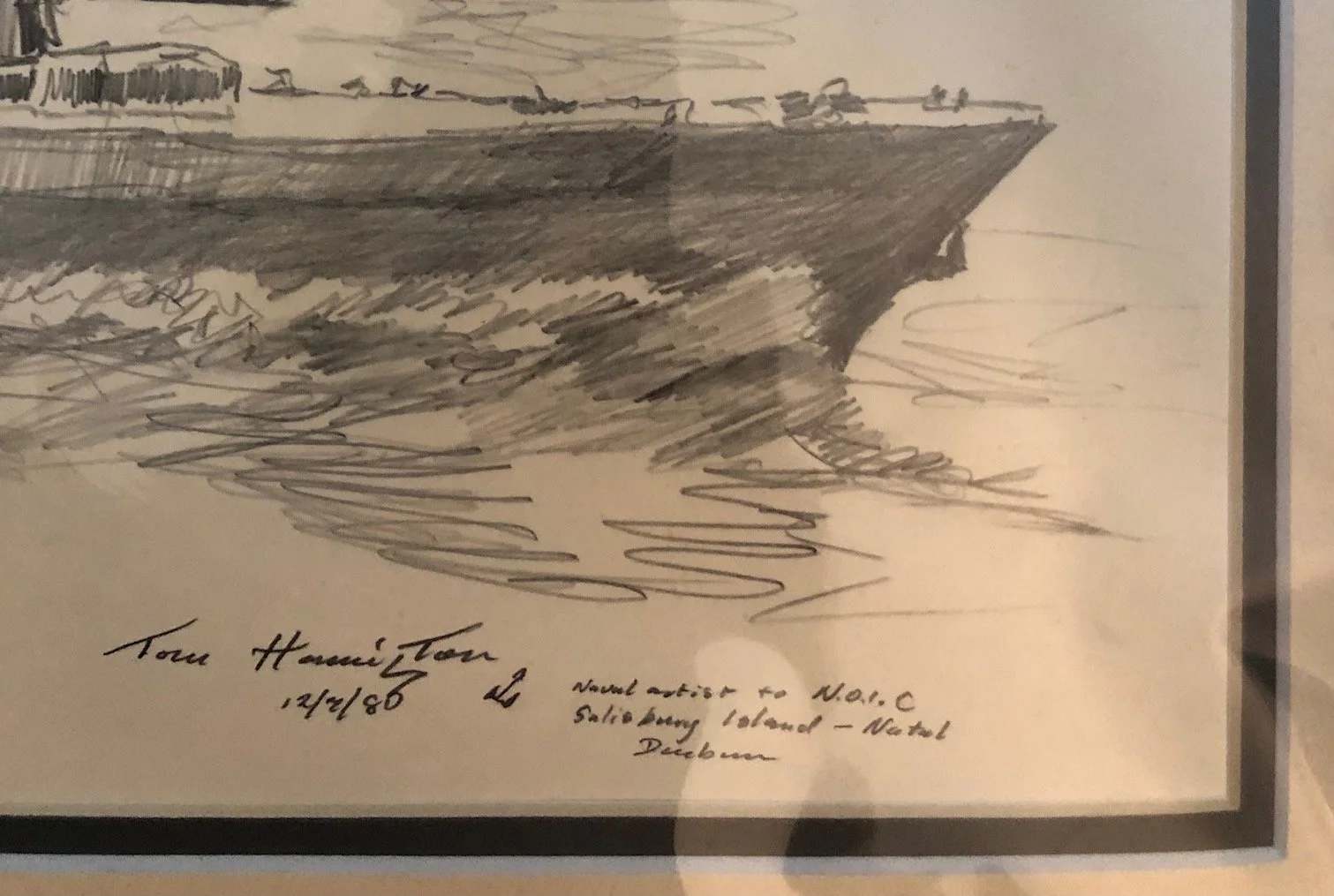
The bottom right inscription reads:
"Tom Hamilton 12/2/80. Naval artist to N.O.I.C. Salisbury Island – Natal, Durban"
Salisbury Island in Durban Bay was the primary base for the South African Navy's strike craft fleet during this era. Base facilities had been expanded specifically to handle the influx of these new vessels.
N.O.I.C. stands for Naval Officer in Charge. Tom Hamilton, acting as an official or semi-official naval artist attached to the command at Salisbury Island, was tasked with recording the event firsthand. His style is a classic maritime field sketch—focused on accuracy of rigging, hull lines, and weapon placement, likely drawn from life or immediate reference photographs during the maneuvers.
This drawing acts as a snapshot of a navy in transition. By 1980, the SAS President class frigates were aging out or starved of parts, and these small missile boats became the frontline deterrence of the state. They would go on to see clandestine operational service throughout the 1980s, including deploying special forces (Recces) for raids deep into Angolan and Mozambican territory.
610mm x 395mm frames
R2,500