"Mine Dancing" Booklets
The Complex History of "Mine Dancing"
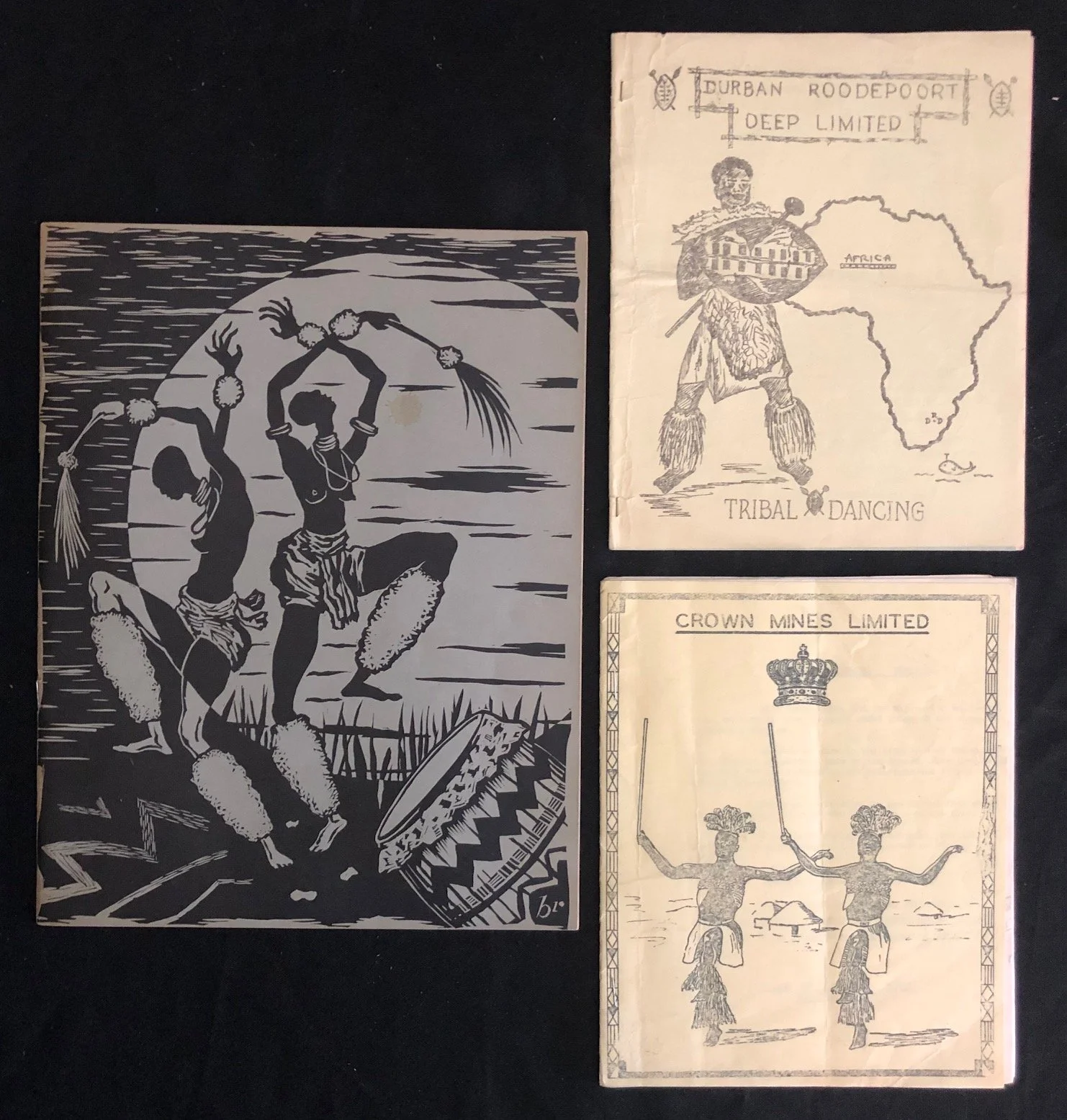
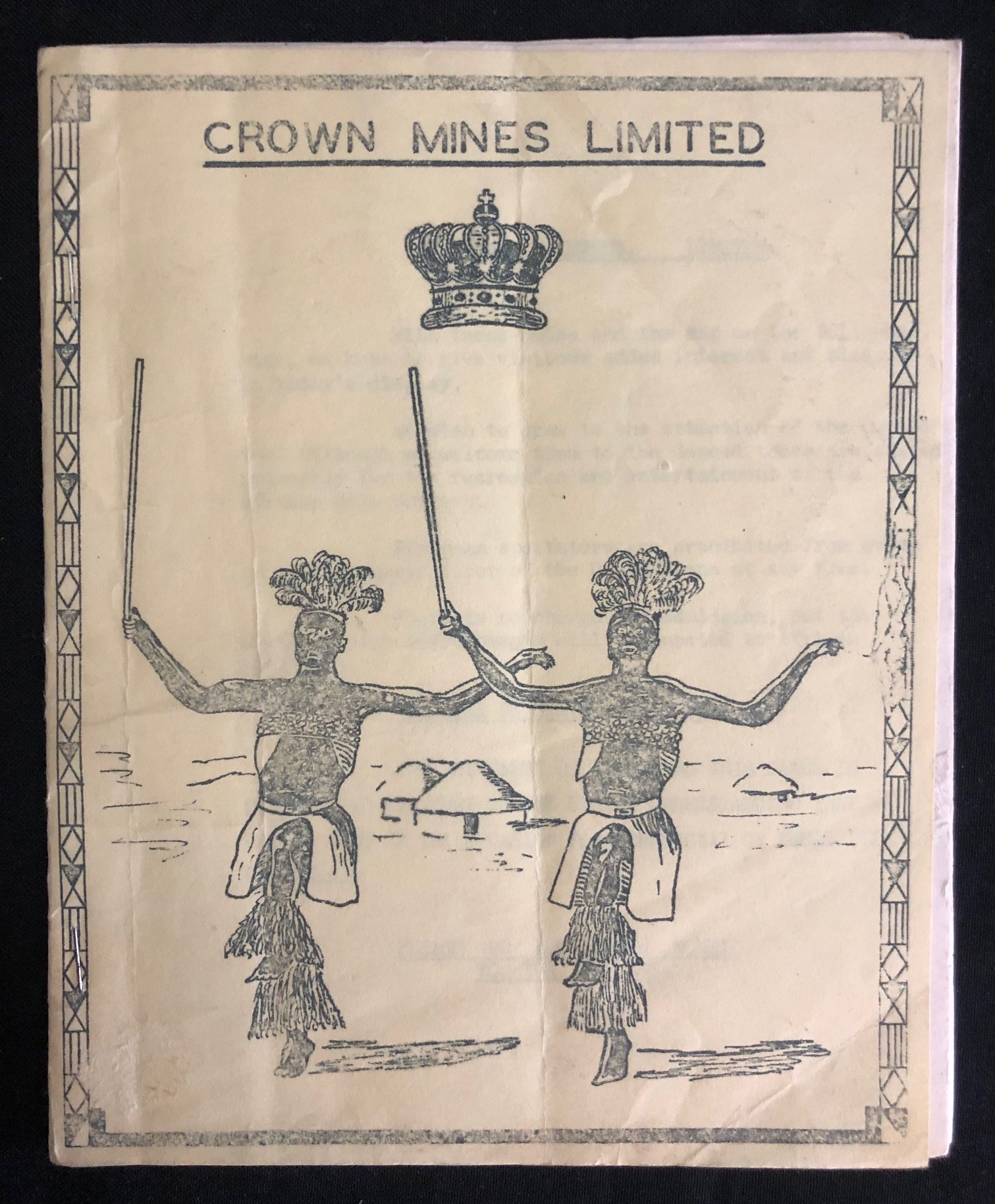
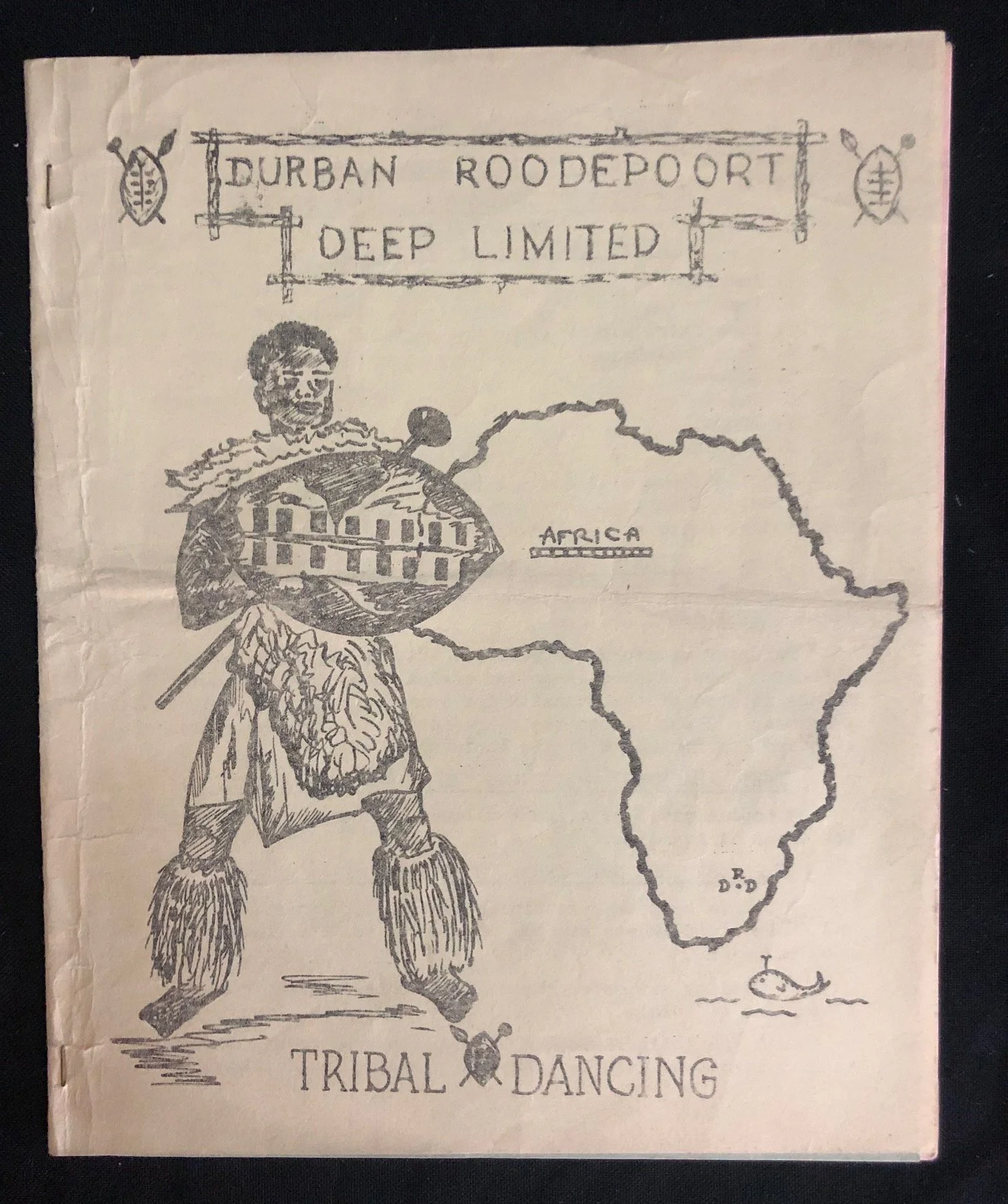
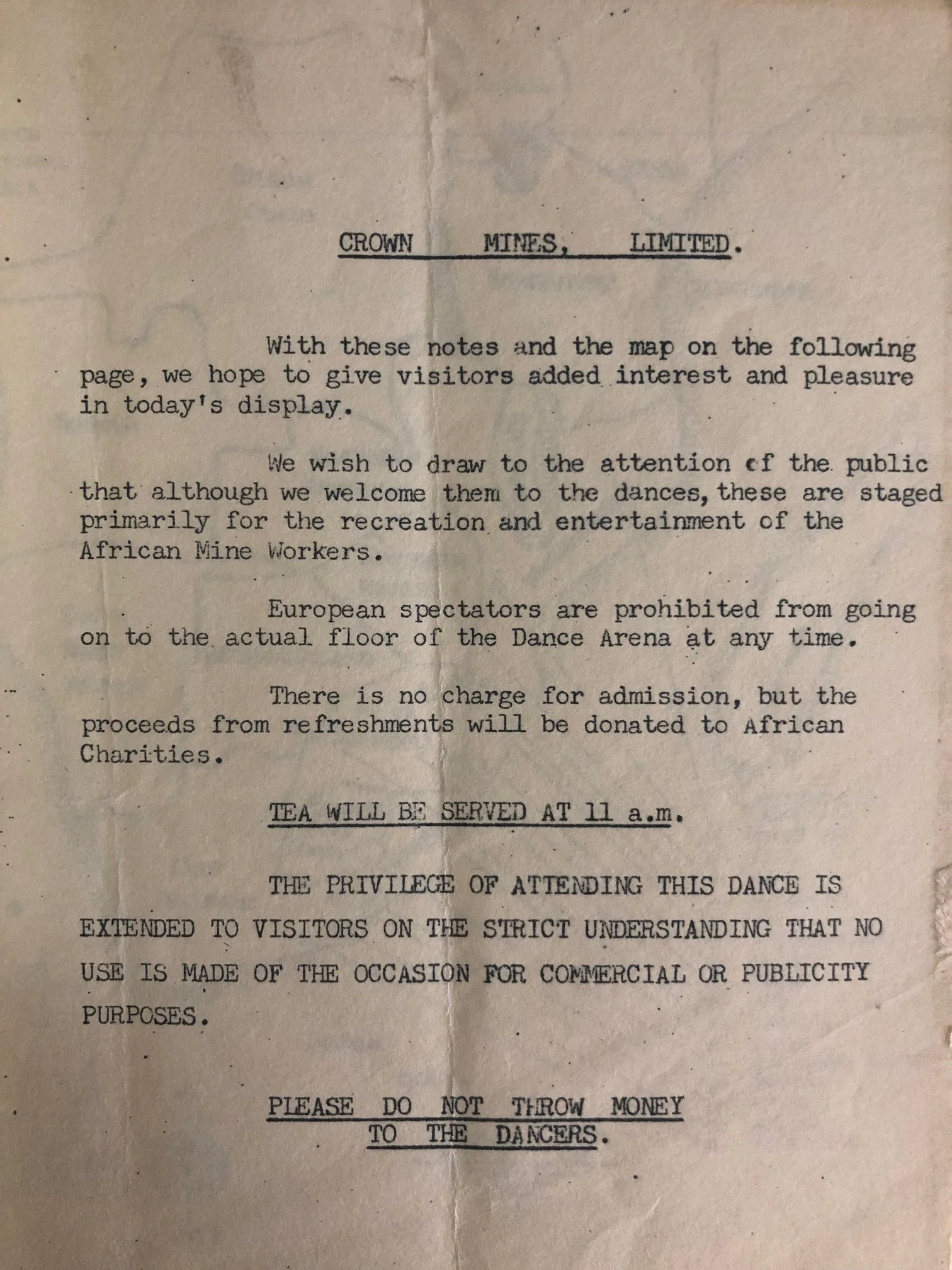
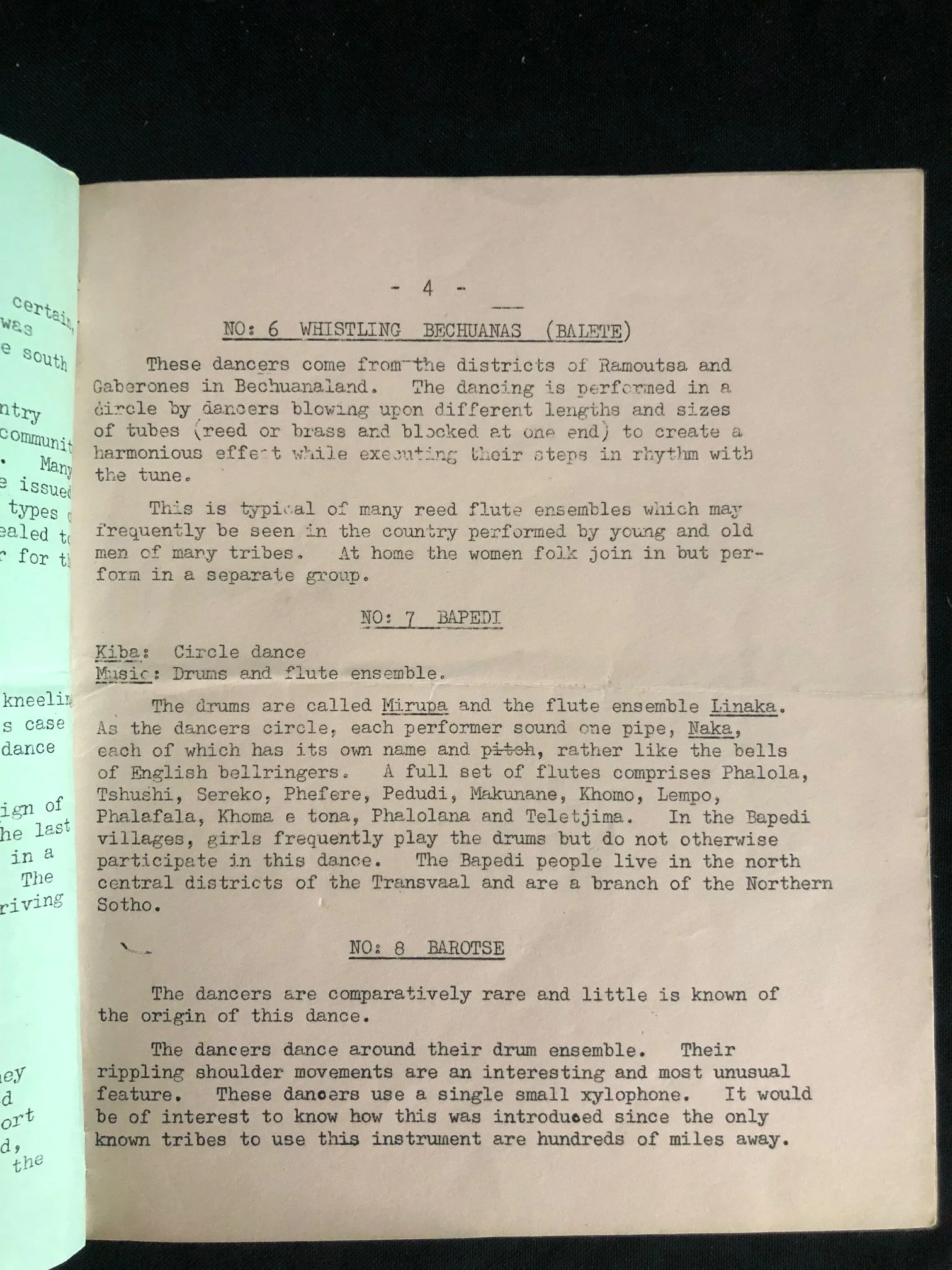
The booklets for Durban Roodepoort Deep Limited and Crown Mines Limited represent the ubiquitous "Tribal Dancing" performances that took place on the Witwatersrand gold mines.
Corporate Control & Pacification: Beginning in the early 20th century, mining compounds organized these weekly Sunday dance competitions for migrant laborers. For the mining houses, it served a dual paternalistic purpose: it was marketed as a "healthy, traditional outlet" for the intense, gruelling physical energy of young male miners, and it was used by management to channel ethnic identities into controlled, competitive environments, effectively discouraging inter-ethnic solidarity or cross-compound labour unionizing.
The Tourist Gaze: By the mid-20th century, these performances became massive tourist attractions in Johannesburg. White domestic audiences and international visitors would fill purpose-built arenas on Sunday mornings to watch the dances. The programs shown here were handed out to these spectators, presenting a sanitized, highly curated version of African culture that fit neatly into the segregationist and later apartheid-era narrative that Black South Africans belonged fundamentally to rural, "tribal" homelands rather than the modern urban economy.
The 1956 "African Contrasts" and Wits University Great Hall
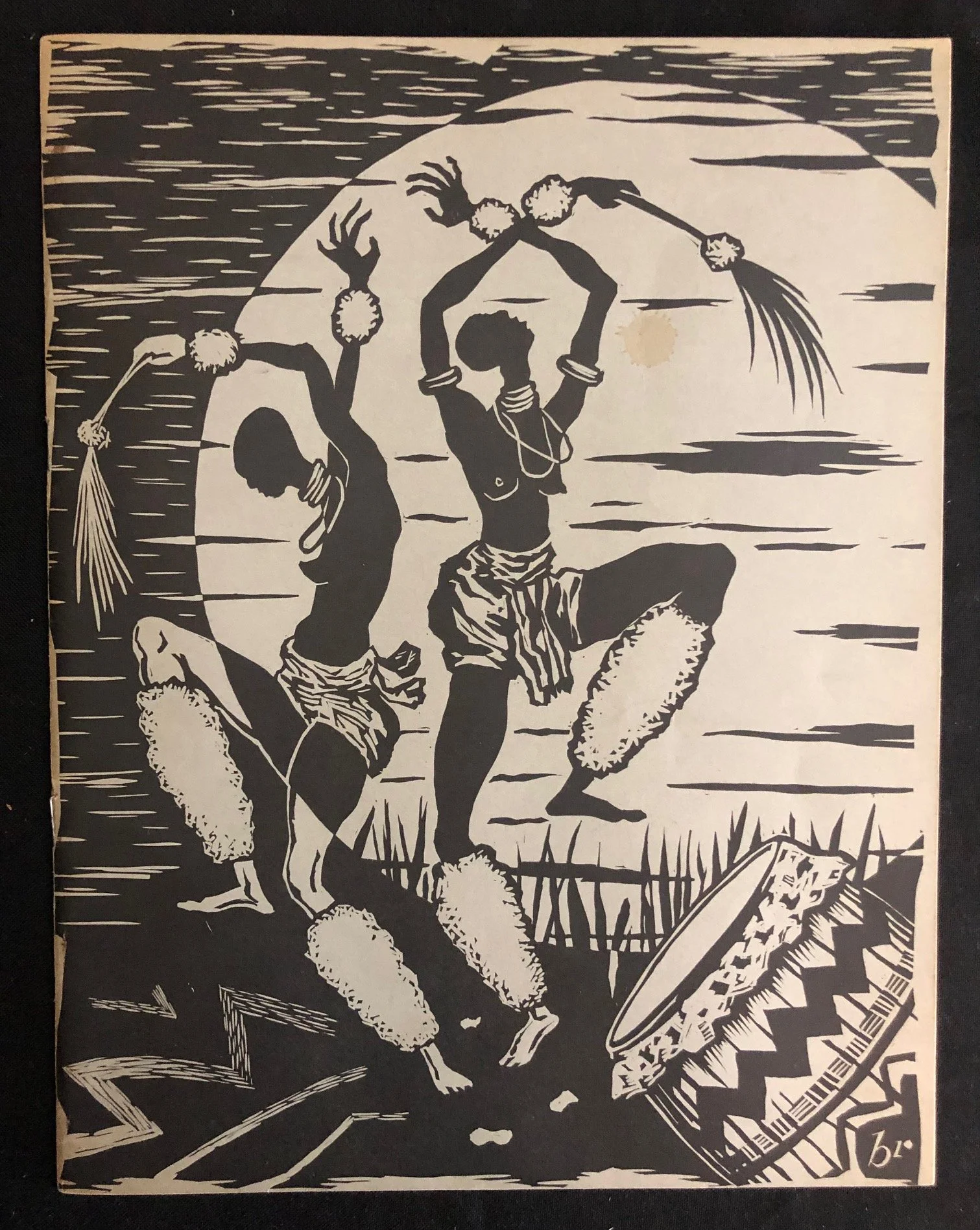
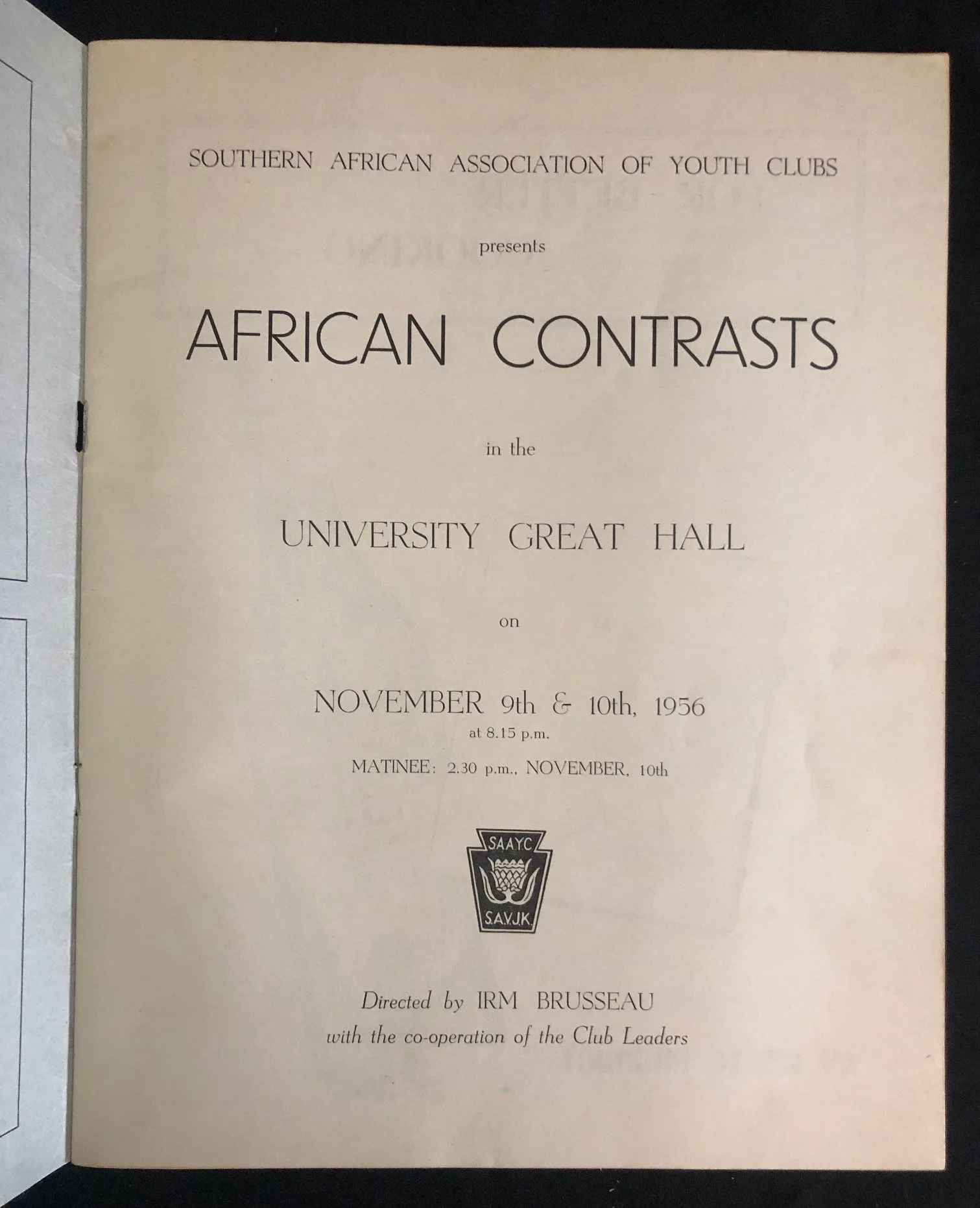
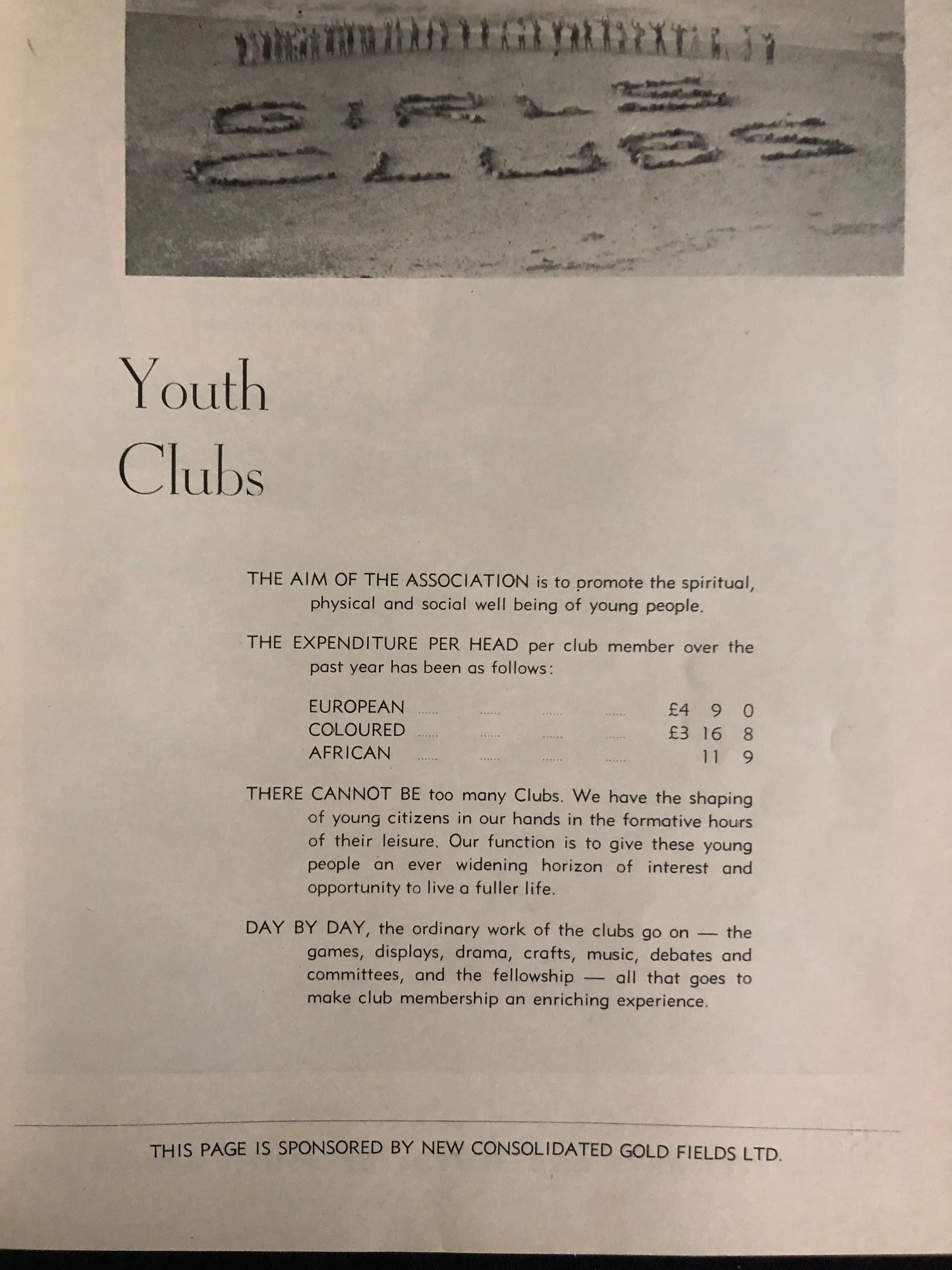
The larger program details a production titled "African Contrasts", presented by the Southern African Association of Youth Clubs (SAAYC) on November 9th & 10th, 1956, directed by Irm Brusseau.
A Flashing Point in 1956: The date is incredibly charged. November 1956 was the peak of the build-up to the Treason Trials, where 156 anti-apartheid activists (including Nelson Mandela) were arrested just a month later in December.
The Venue: Hosting this performance at the University Great Hall (University of the Witwatersrand, or Wits) is highly symbolic. In the 1950s, the Wits Great Hall was one of the very few prominent, large-scale venues in Johannesburg that managed to maintain a level of non-segregated or integrated audience policy for certain cultural events, making it a critical hub for liberal and progressive theatrical productions before the National Party government strictly enforced total segregation in public entertainment spaces via the Group Areas Act.
The "Contrast" Theme: Productions organized by bodies like the SAAYC often walked a tightrope. The title "African Contrasts" likely juxtaposed "traditional" rural expressions (like the mine dancing motifs shown in the accompanying brochures) with "modern" urban choral, jazz, or dramatic expressions. While well-meaning liberal initiatives often sponsored these youth club events to provide urban opportunities, they existed within the tightening vice of a state trying to stamp out Black urbanization.
Graphic Art and the "br" Monogram
The striking linocut/woodblock-style illustration on the cover features two dancers silhouetted against a massive moon with a prominent drum.
Notice the small "br" monogram in the bottom right corner of the print. This likely belongs to the director/artist Irm Brusseau (or a closely associated printmaker of the era).
During the 1940s and 50s, South African graphic art saw an explosion of stylistic interaction. European-born or trained artists working in South Africa heavily utilized bold, expressionistic woodcuts and linocuts to capture African movement. Simultaneously, this exact medium was being adopted and transformed by Black artists at community arts centers, eventually evolving into the iconic "township protest art" printmaking movement of the 60s and 70s.
These booklets are marvelous survivors—they capture the exact moment when traditional rural performance was institutionalized by capital, packaged for tourists, and simultaneously re-interpreted on the urban stage against the backdrop of an impending political storm.
165mm x 205mm (2 yellow booklets).
215mm x 280mm
All have minor wear and creasing
R1,500 (for 3 together).