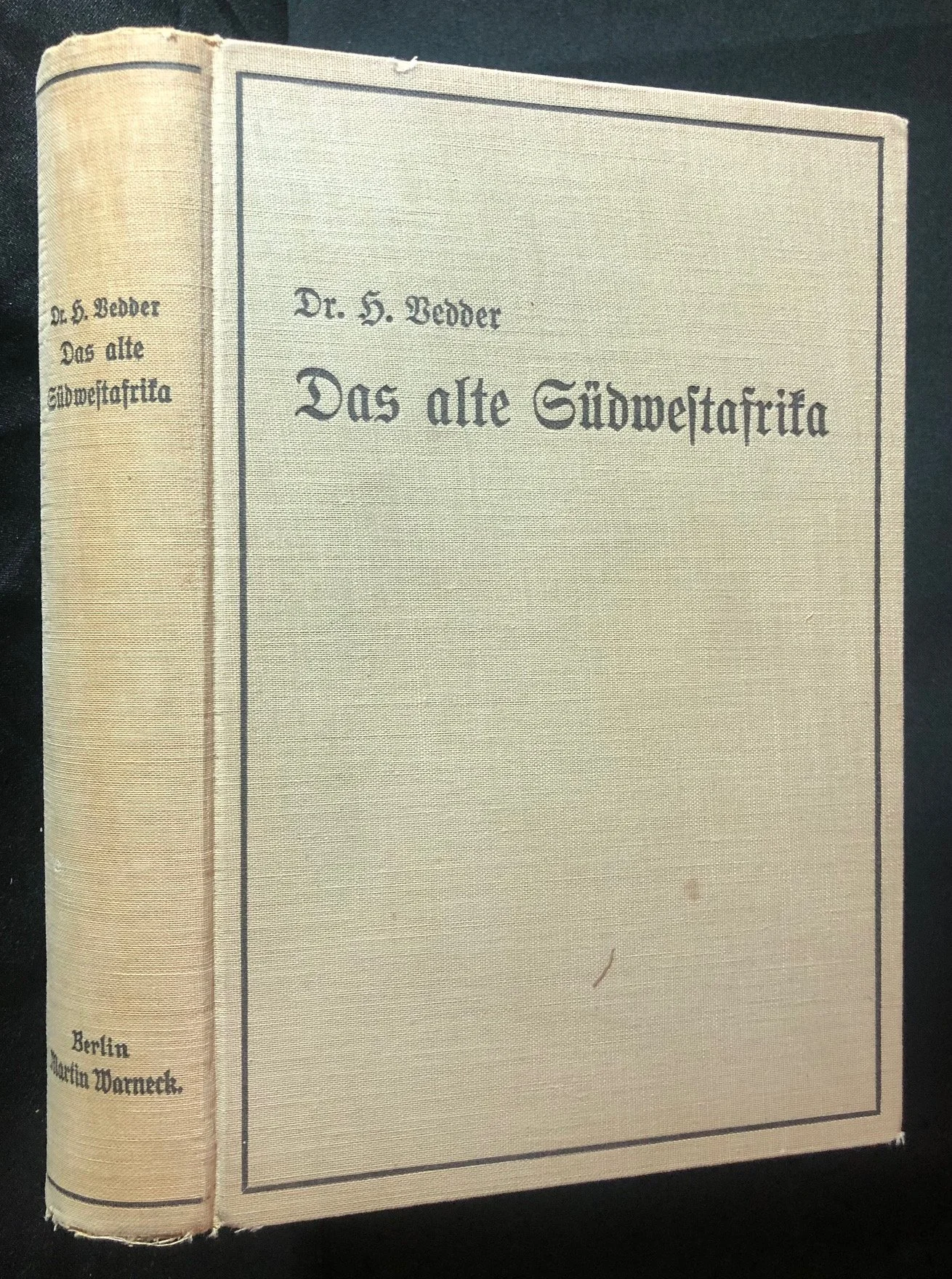
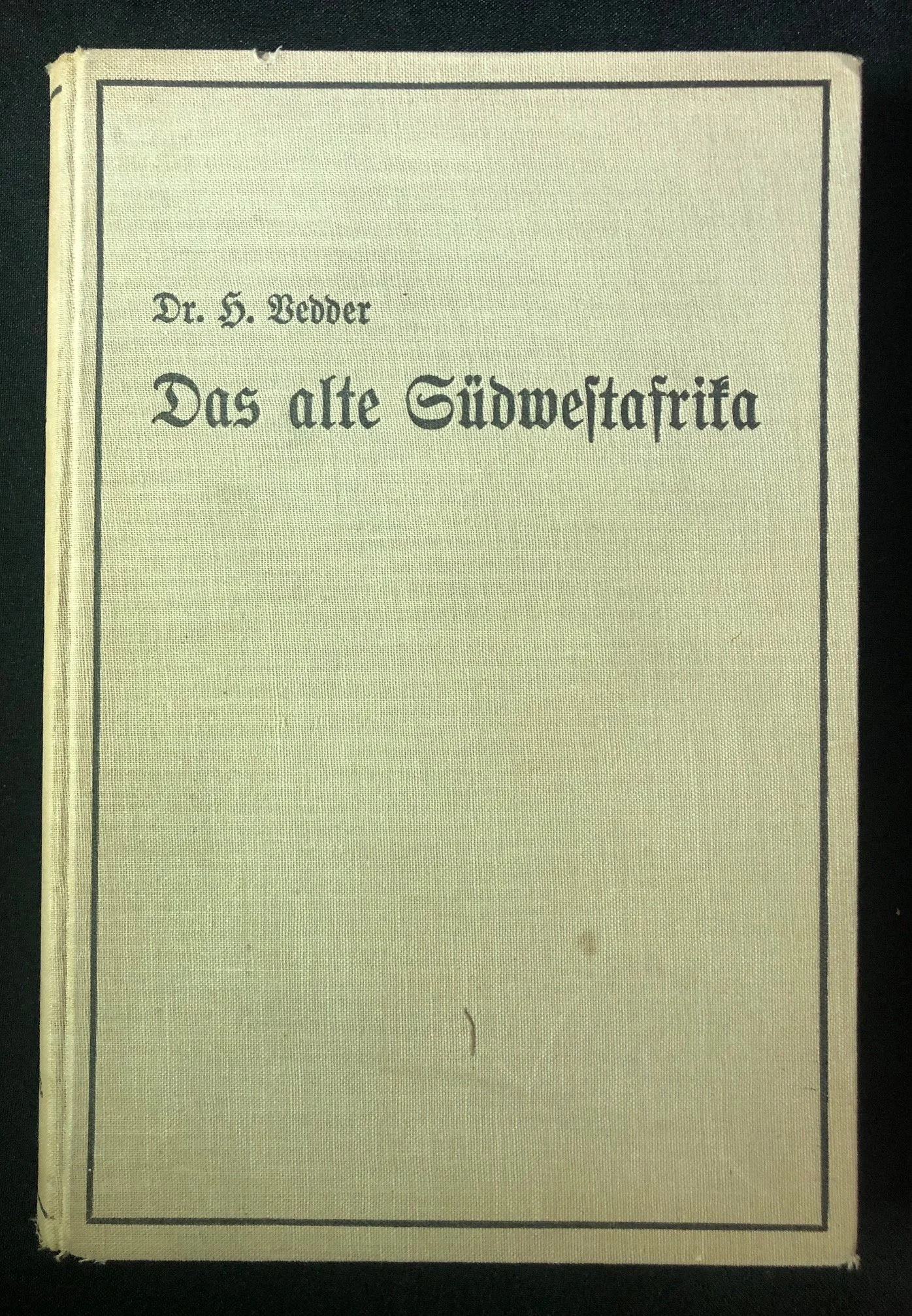
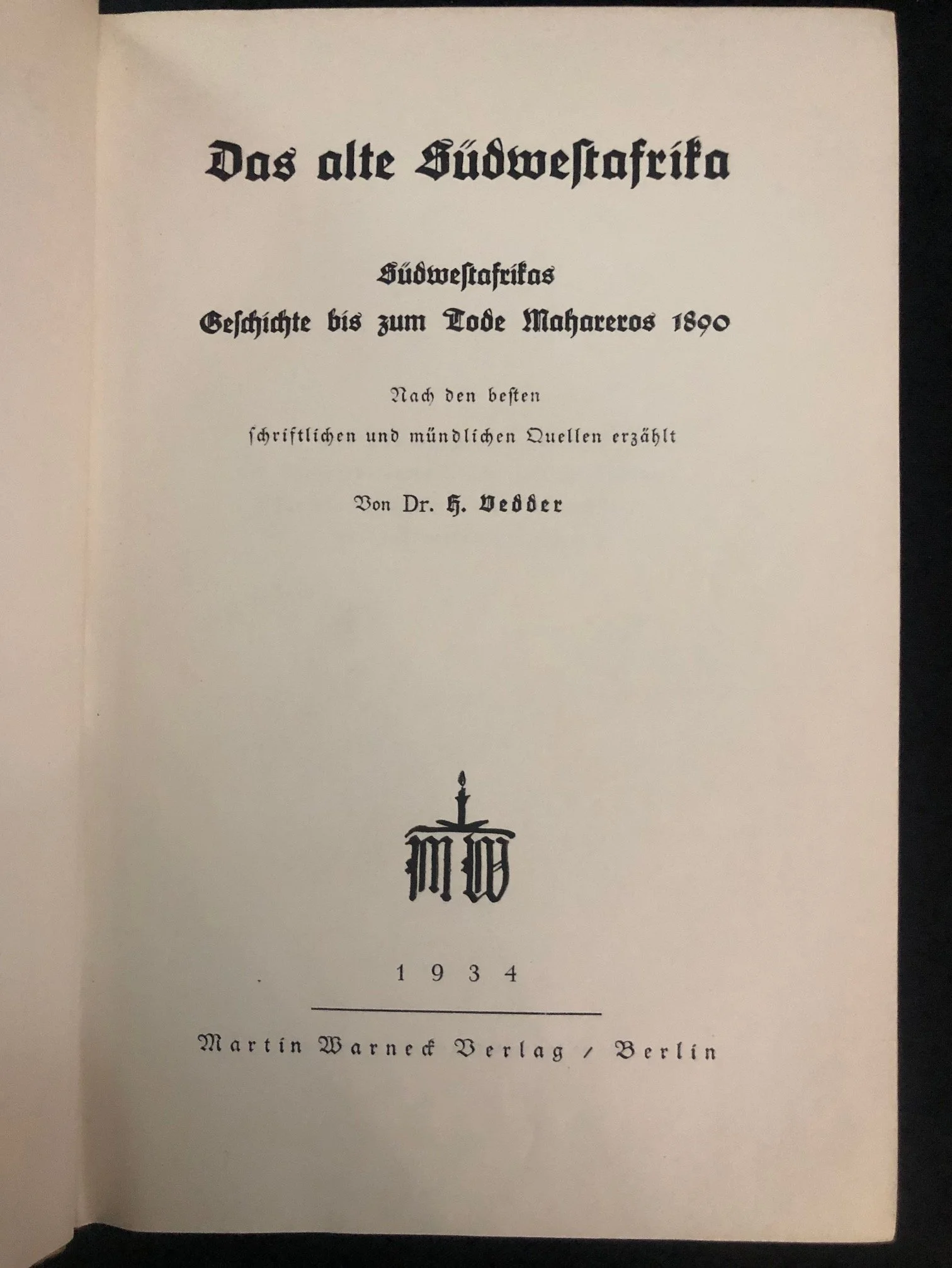
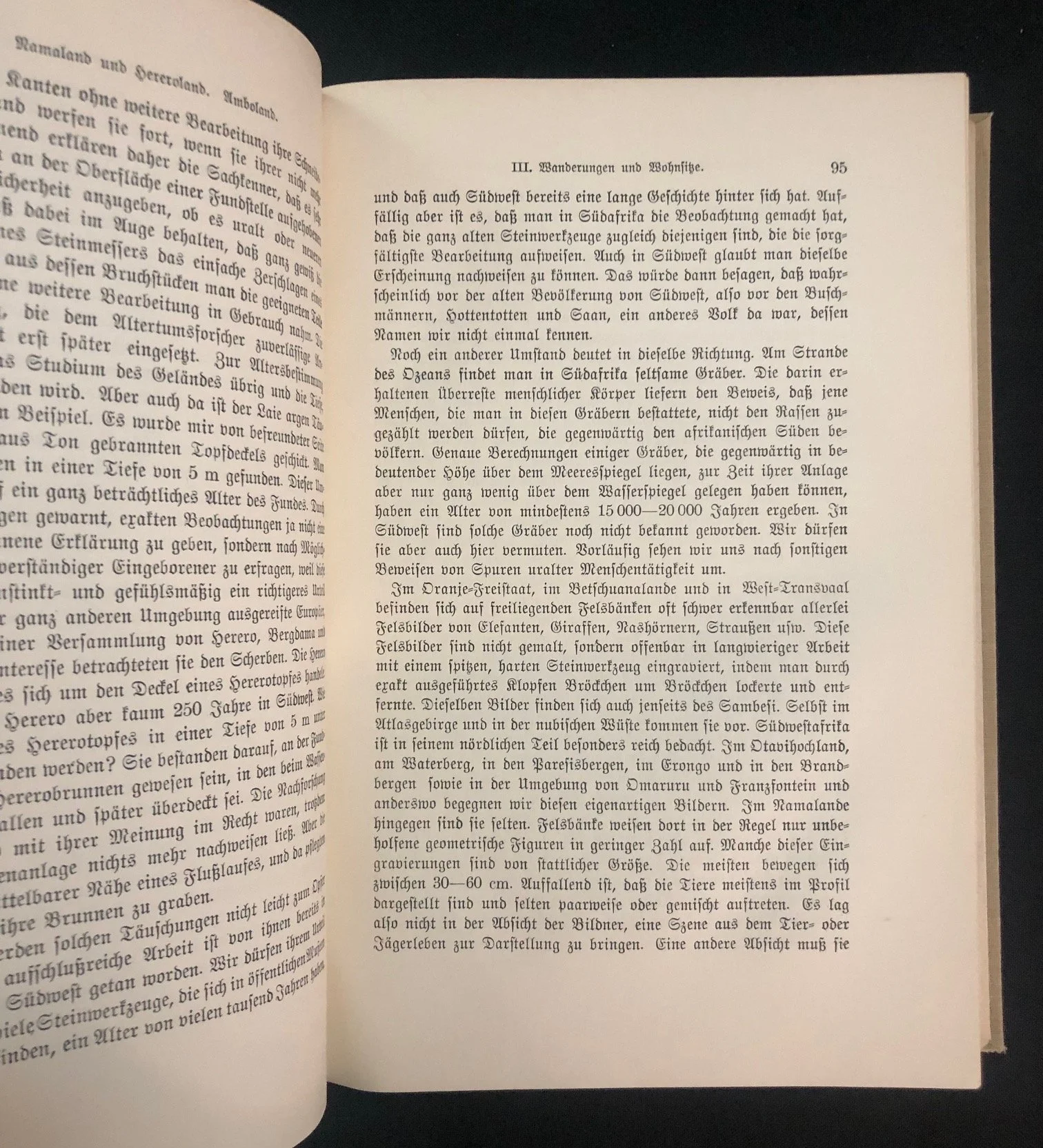
Das alte Südwestafrika (The Old South West Africa) by Dr. Heinrich Vedder (1934)
First edition of Das alte Südwestafrika (The Old South West Africa) by the German missionary, linguist, and ethnologist Dr. Heinrich Vedder, published by Martin Warneck Verlag in Berlin in 1934.
This volume holds a fascinating, complex, and controversial place in the historiography of Namibia (formerly German South West Africa).
The Definitive Narrative (With a Caveat)
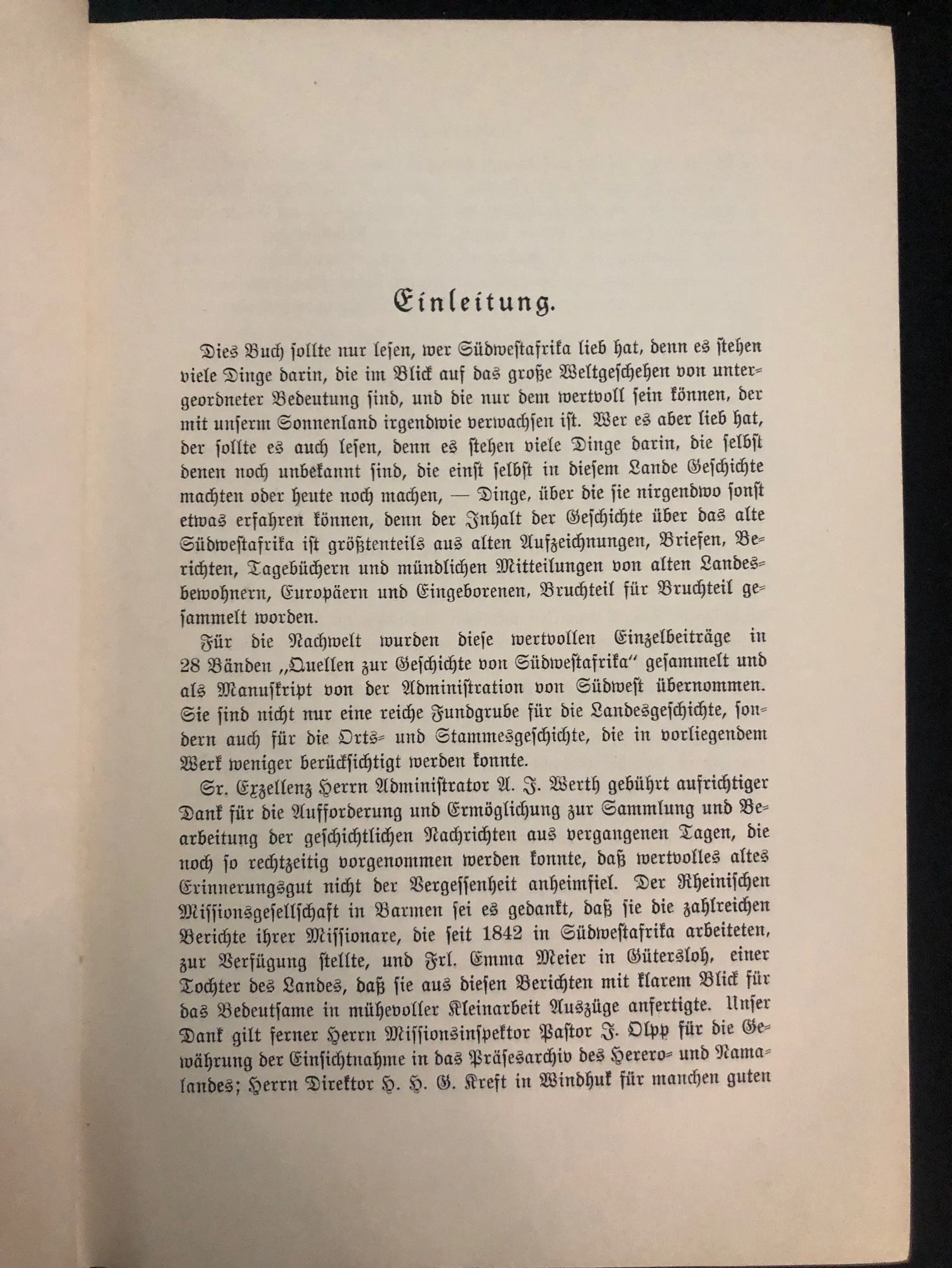
For decades after its 1934 publication, this 666-page work was considered the absolute, undisputed "bible" of Namibian pre-colonial history. Because Vedder utilized an extraordinary range of Rhenish Missionary Society archival materials, early European travelogues, and crucial oral histories from indigenous leaders, it provided an unmatched level of detail. It was later translated into English in 1938 as South West Africa in Early Times.
The Significance of 1890 and Maharero
The book's subtitle, Südwestafrikas Geschichte bis zum Tode Mahareros 1890 ("South West Africa's History up to the Death of Maharero 1890"), highlights a pivotal turning point. Maharero was the paramount chief of the Herero people. His death in 1890 effectively marked the end of the old, sovereign tribal era and cleared the path for full-scale German colonial consolidation under Curt von François, which ultimately led to the tragic colonial wars and the Herero and Namaqua genocide (1904–1908). Vedder intentionally chose this terminal date to capture what he viewed as the "old" world before it was subsumed by direct European administration.
A Battleground of Modern Historiography
While the book remains an indispensable reference tool for antiquarians and researchers due to its exhaustive bibliography and detailed cartography, modern historians view it with a highly critical eye.
he Colonial Lens: Vedder wrote the book from a paternalistic missionary perspective. He famously framed pre-colonial Namibia as a land locked in perpetual, chaotic warfare—primarily between the Herero and the Nama under Jonker Afrikaner—suggesting that European intervention brought a necessary "order."
Political Legacy: Vedder's tribal classifications and historical interpretations were later utilized by the South African apartheid administration (where Vedder served as an appointed Senator representing South West African interests in the 1950s) to justify ethnic segregation policies and the creation of "homelands."
165mm x 235mm x 49mm
Some edge wear.
R750