Die Kämpfe der deutschen Truppen in Südwestafrika. Der Feldzug gegen die Hereros (The Battles of the German Troops in SWA.). Vol 1 only (1906)
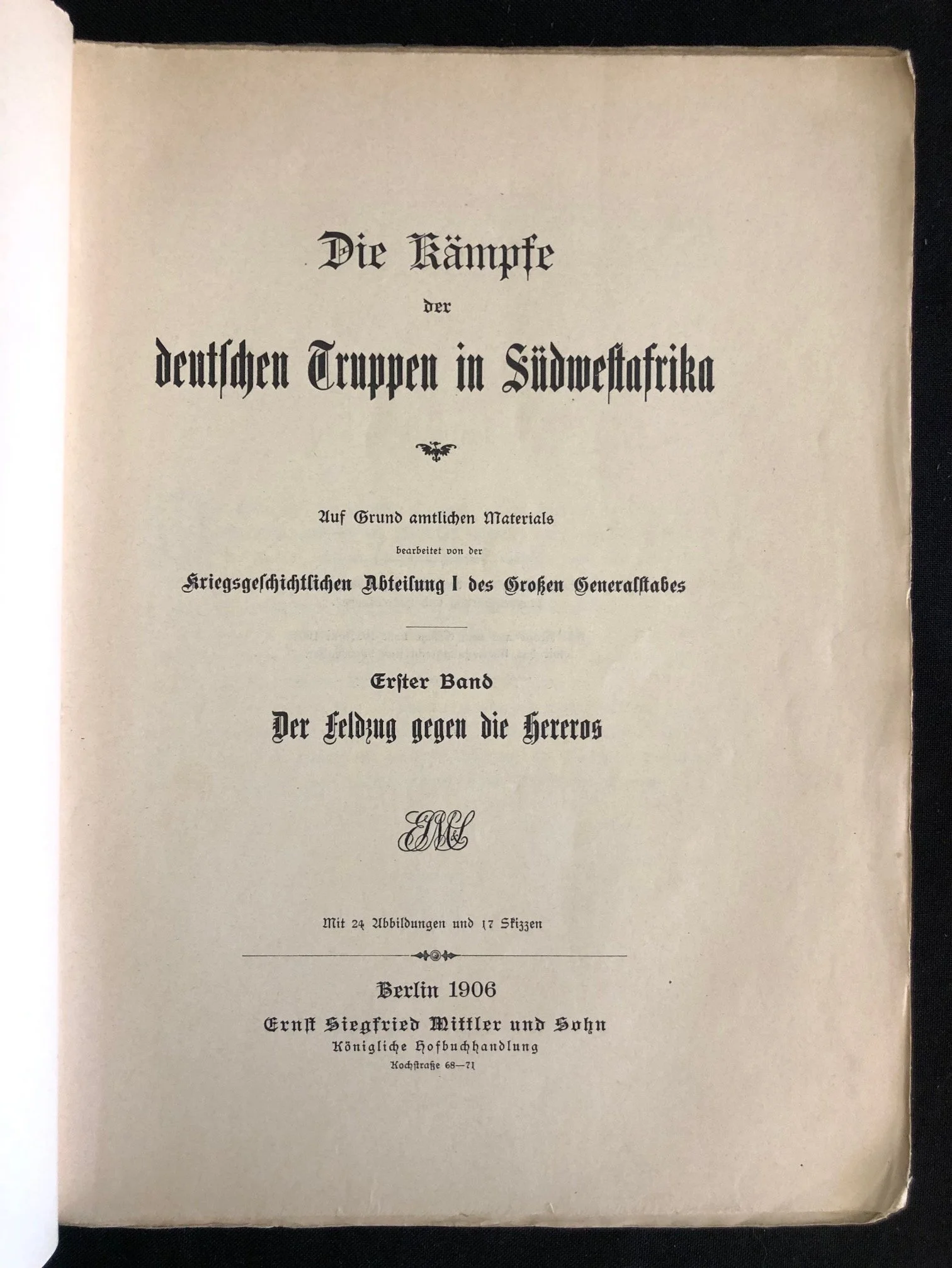
Die Kämpfe der deutschen Truppen in Südwestafrika. Erster Band: Der Feldzug gegen die Hereros ("The Battles of the German Troops in Southwest Africa. Volume One: The Campaign against the Hereros").
Published in Berlin in 1906 by Ernst Siegfried Mittler und Sohn, the official bookstore to the Prussian royal court, and compiled by the Historical Section of the Great German General Staff.
The Official Record of a Genocide
This volume serves as the primary, official German military perspective on what is today universally recognized as the Herero and Namaqua Genocide (1904–1908)—the first genocide of the 20th century. Because it was compiled auf Grund amtlichen Materials ("on the basis of official material") by the Great General Staff, it was designed to justify and document the campaign led by General Lothar von Trotha. Von Trotha famously issued his infamous Vernichtungsbefehl (annihilation order), driving the Herero people into the Omaheke Desert to perish of starvation and dehydration.
A Contemporary Inscription from the Era
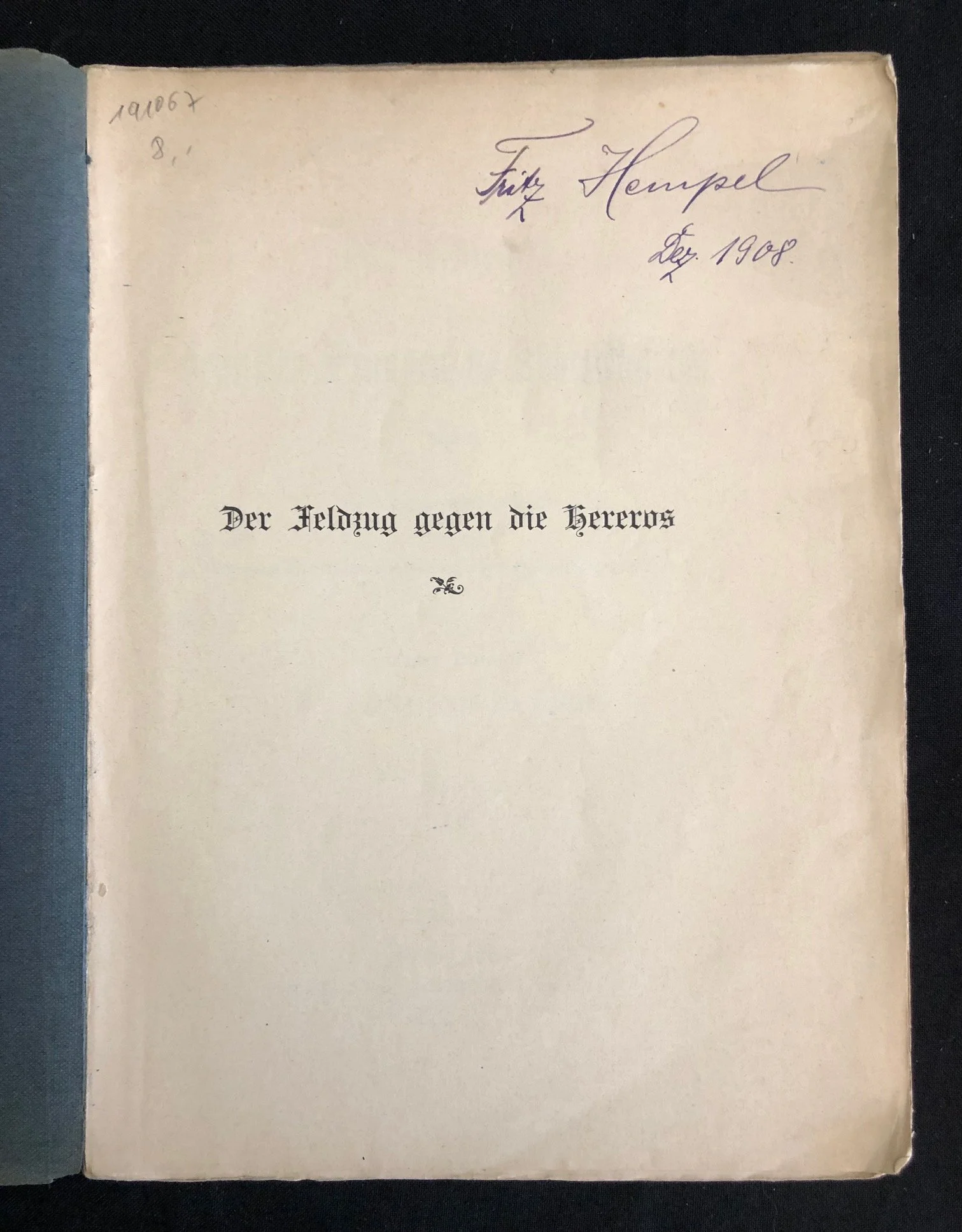
On the half-title page features a prominent contemporary ink signature: "Fritz Hempel, Dez. 1908".
The date—December 1908—is highly significant. This was the year the concentration camps in German South West Africa (such as the notorious Shark Island camp) were officially closed, marking the formal end of the genocidal campaign. Given the niche, official military nature of this publication in 1906, it was typically acquired by military personnel, colonial officials, or families directly tied to the German Imperial Army (Schutztruppe).
Propaganda and Military Strategy
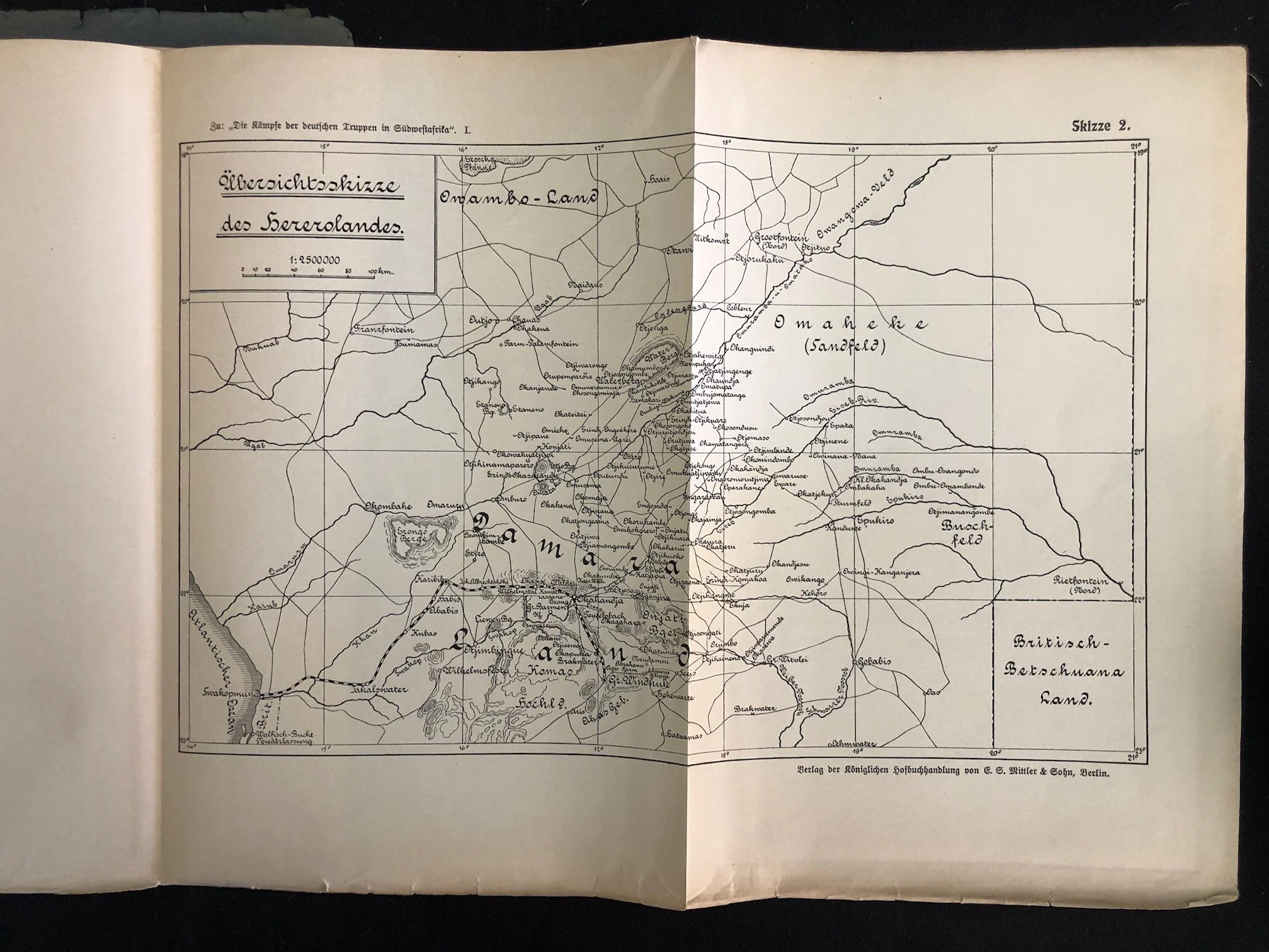
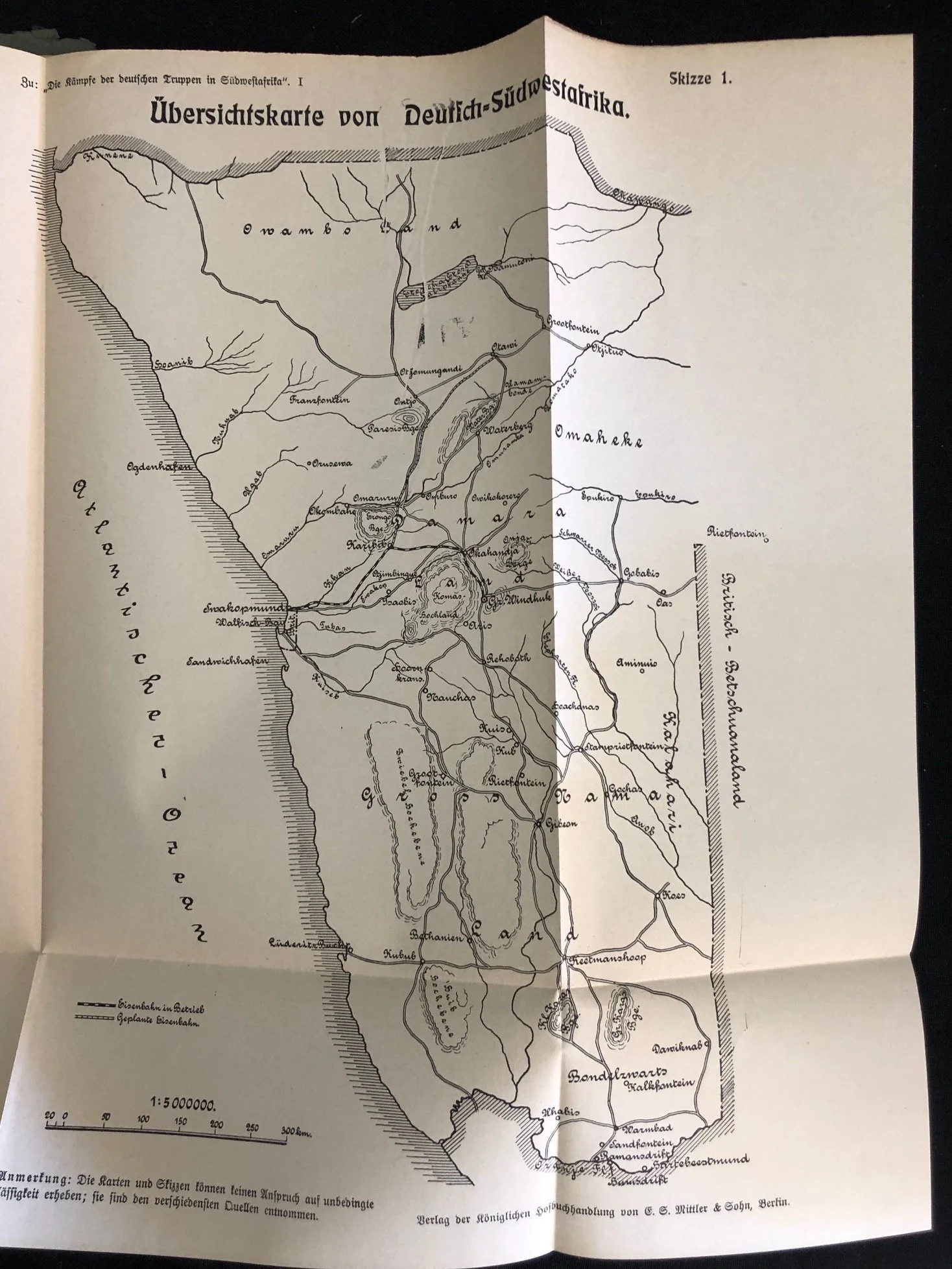
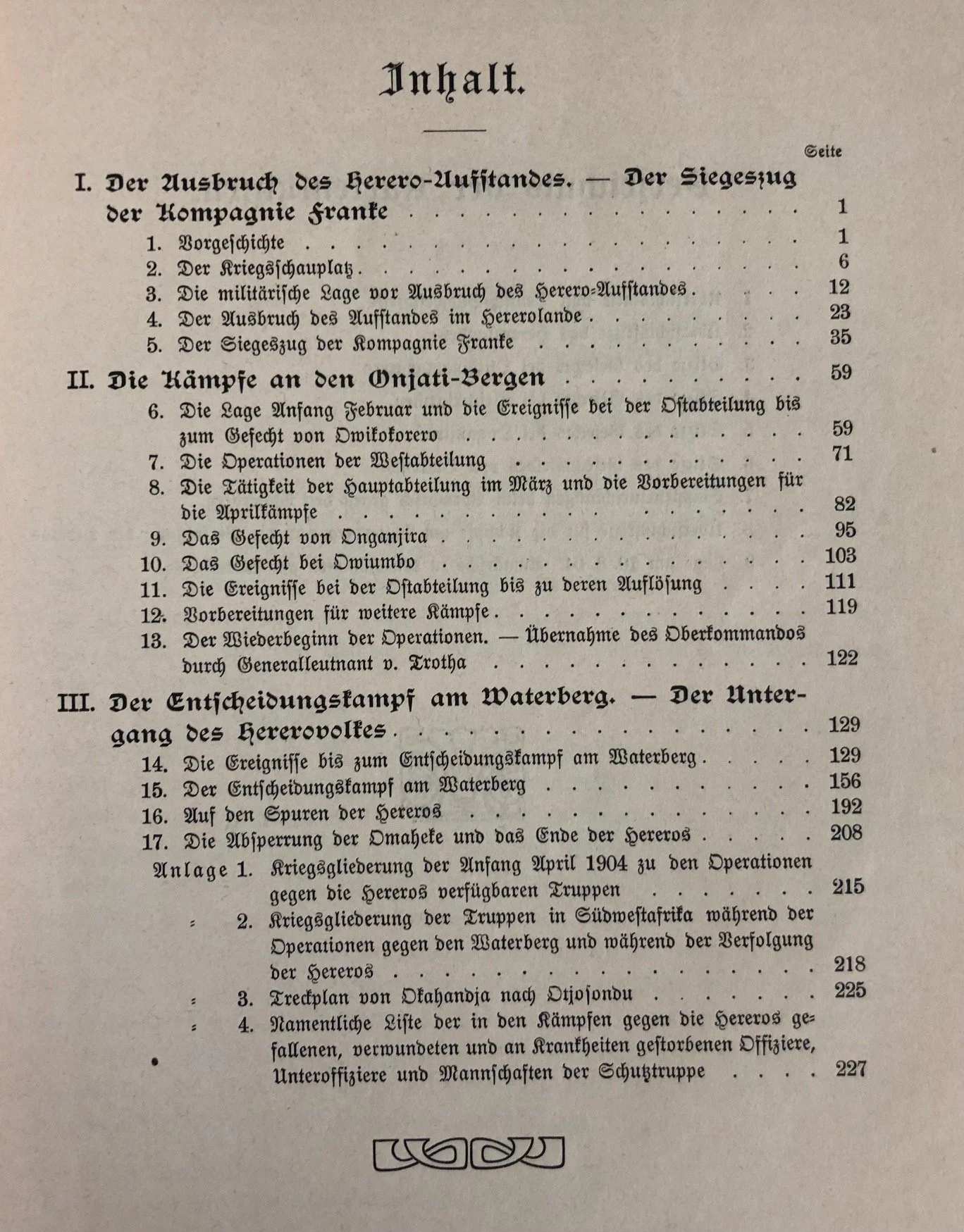
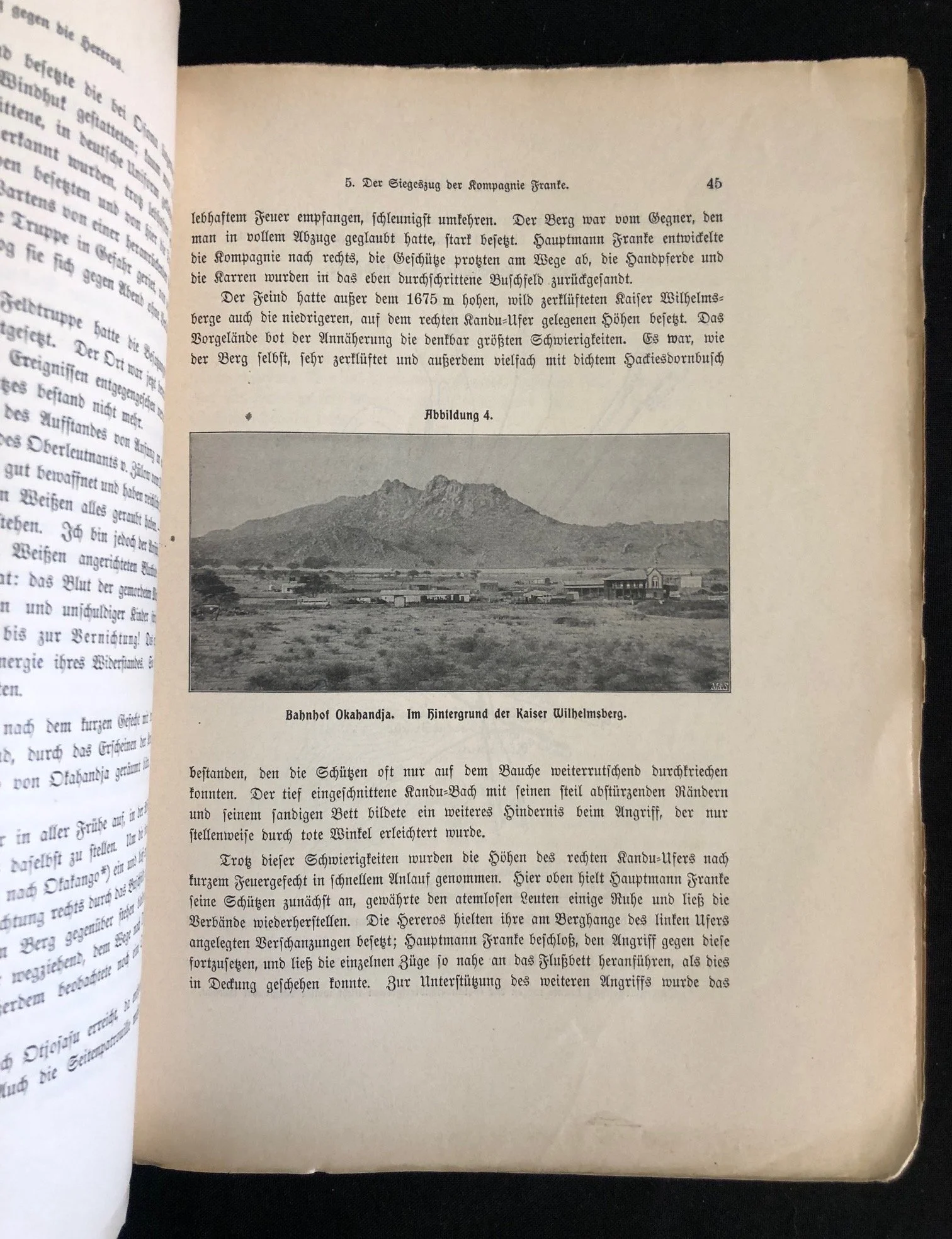
From a historiographical perspective, this book is vital for understanding how the German military elite self-reported their colonial actions. It includes detailed maps, battle plans, and tactical sketches (the cover notes "24 illustrations and 17 sketches") meant to analyze the campaign's logistics, guerrilla warfare tactics, and the Battle of Waterberg. Rather than capturing a neutral history, it reflects the Imperial German army's efforts to institutionalize its colonial military doctrines just years before the outbreak of World War I.
190mm x 255mm
Vol 1 only. 1906.
Complete with all 9 maps. Both wrappers are detaching; maps loose; edges worn and chipped.
R1,000