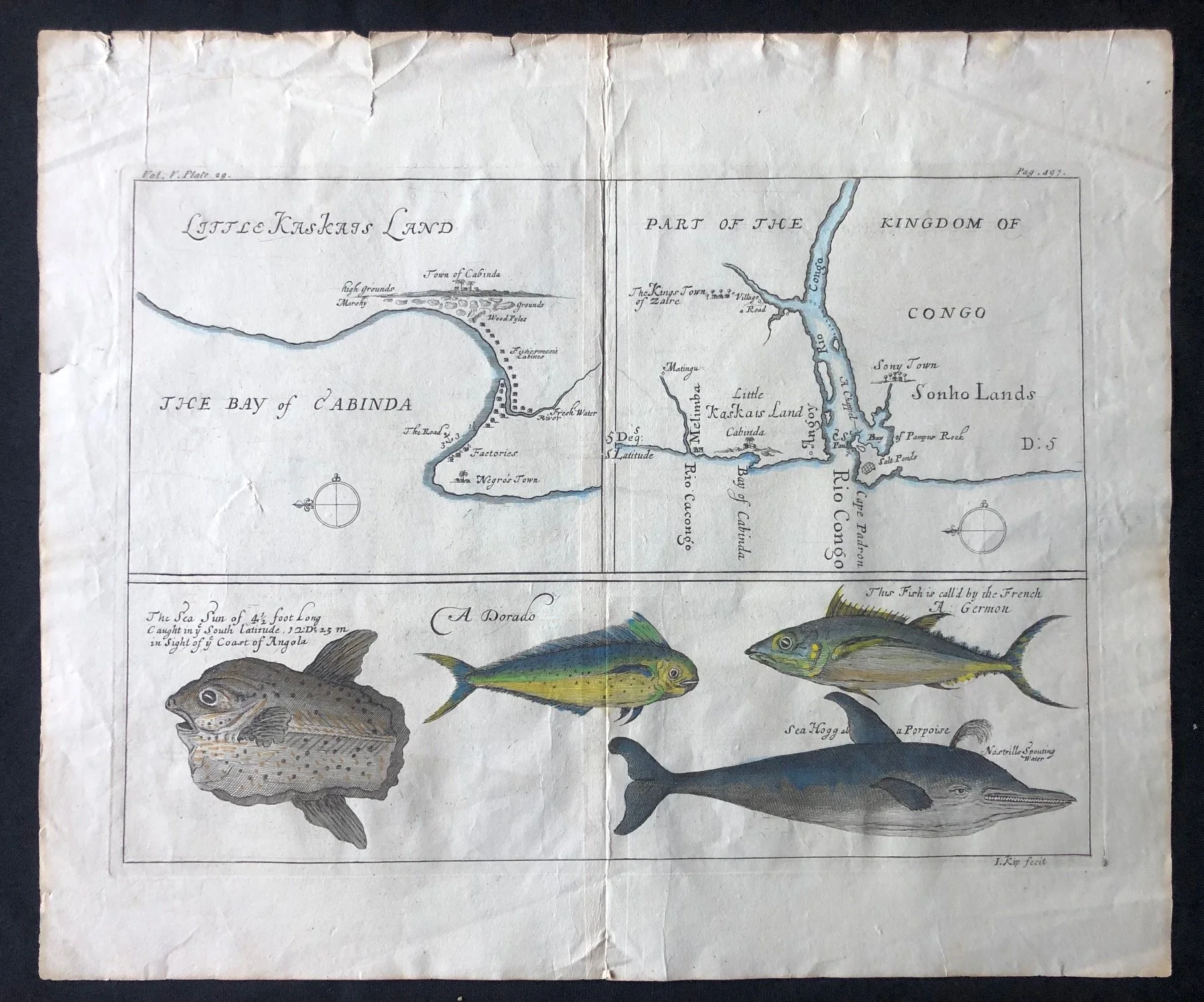
Map of the Mouth of the Congo by Johannes Kip (1732)
Hand coloured (later) copper plate engraving.
By the notable Dutch engraver Johannes Kip (indicated by the signature J. Kip). It was originally published in London within Volume V of Awnsham and John Churchill's influential compilation, A Collection of Voyages and Travels.
Geopolitical Windows into the Transatlantic Era
The map splits its focus between two crucial geographical choke points of 18th-century West African trade:
The Bay of Cabinda: Located on the left panel, it depicts early European trade infrastructure alongside local settlements, marked directly on the coast as "Factories" (commercial trading posts).
The Kingdom of Congo and Sonho Lands: The right panel charts the volatile mouth of the Congo River (Rio Congo). "Sonho" refers to Soyo, a prominent province of the Kingdom of Kongo that frequently asserted its economic independence from the central kingdom by trading directly with Dutch and British merchants.
The Cartographer's Role as a Naturalist
During the early 18th century, maps served as more than just navigational grids; they were comprehensive repositories of colonial exploration and natural history.
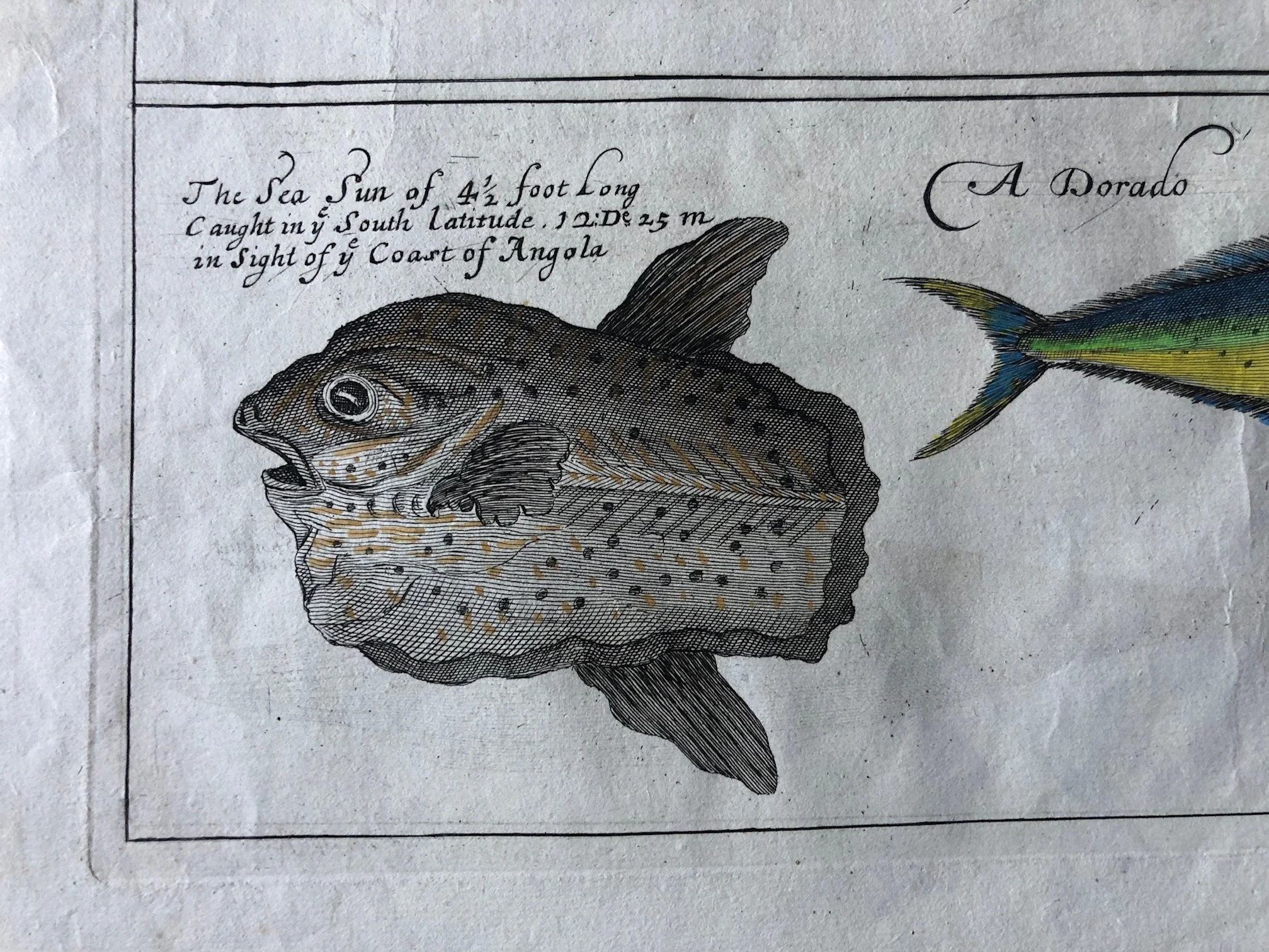
Because long sea voyages relied heavily on identifying local marine life for both sustenance and navigation cues, the entire bottom half of the sheet is dedicated to hand-colored illustrations of Atlantic fauna. These include remarkably recognizable rendering styles of:
The Sea Sun: An ocean sunfish (Mola mola), complete with a localized note stating it was caught “in Sight of the Coast of Angola."
A Dorado: The vibrant dolphinfish or mahi-mahi.
A Germon: The French term for an albacore tuna.
Sea Hogg or a Porpoise: A stylized depiction of a marine mammal featuring a blowhole labeled "Nostrill Spouting Water."
Torn at the edges; worn and creased.
410mm x 345mm
R3,000