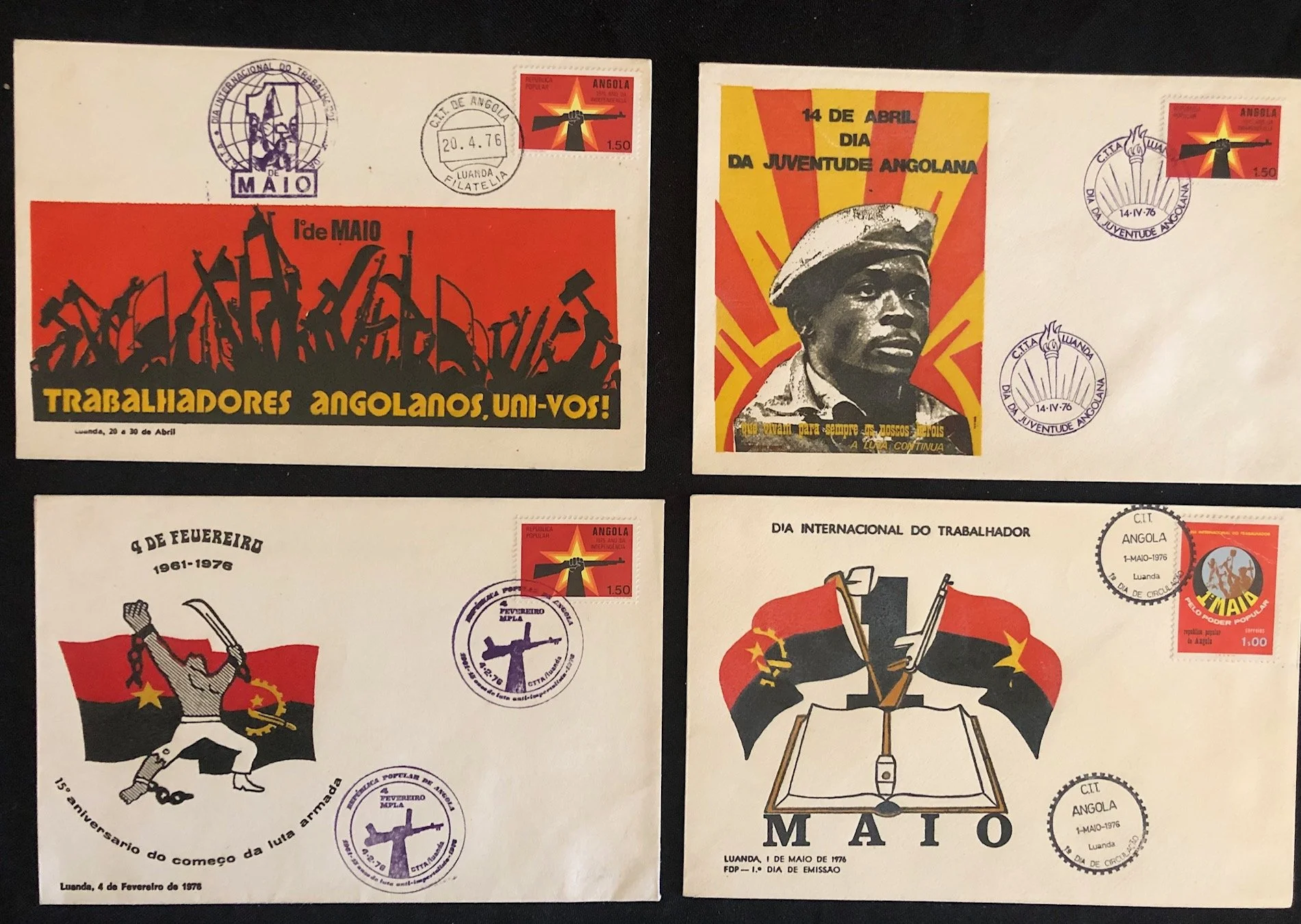
Four Post-Independence Angolan First Day Covers (1976)
These four philatelic First Day Covers (FDCs) capture the moment post-independence Angola was establishing its national identity, ideology, and state imagery following the end of Portuguese colonial rule.
The Historical Crucible (1975–1976)
Angola declared independence from Portugal on November 11, 1975, under the Popular Movement for the Liberation of Angola (MPLA). These covers, all postmarked in Luanda between February and May 1976, were issued within the first six to six-and-a-half months of independence—a period defined by the immediate transition to a Marxist-Leninist state framework and the outbreak of the Angolan Civil War.
The Birth of Sovereign Postal Imagery
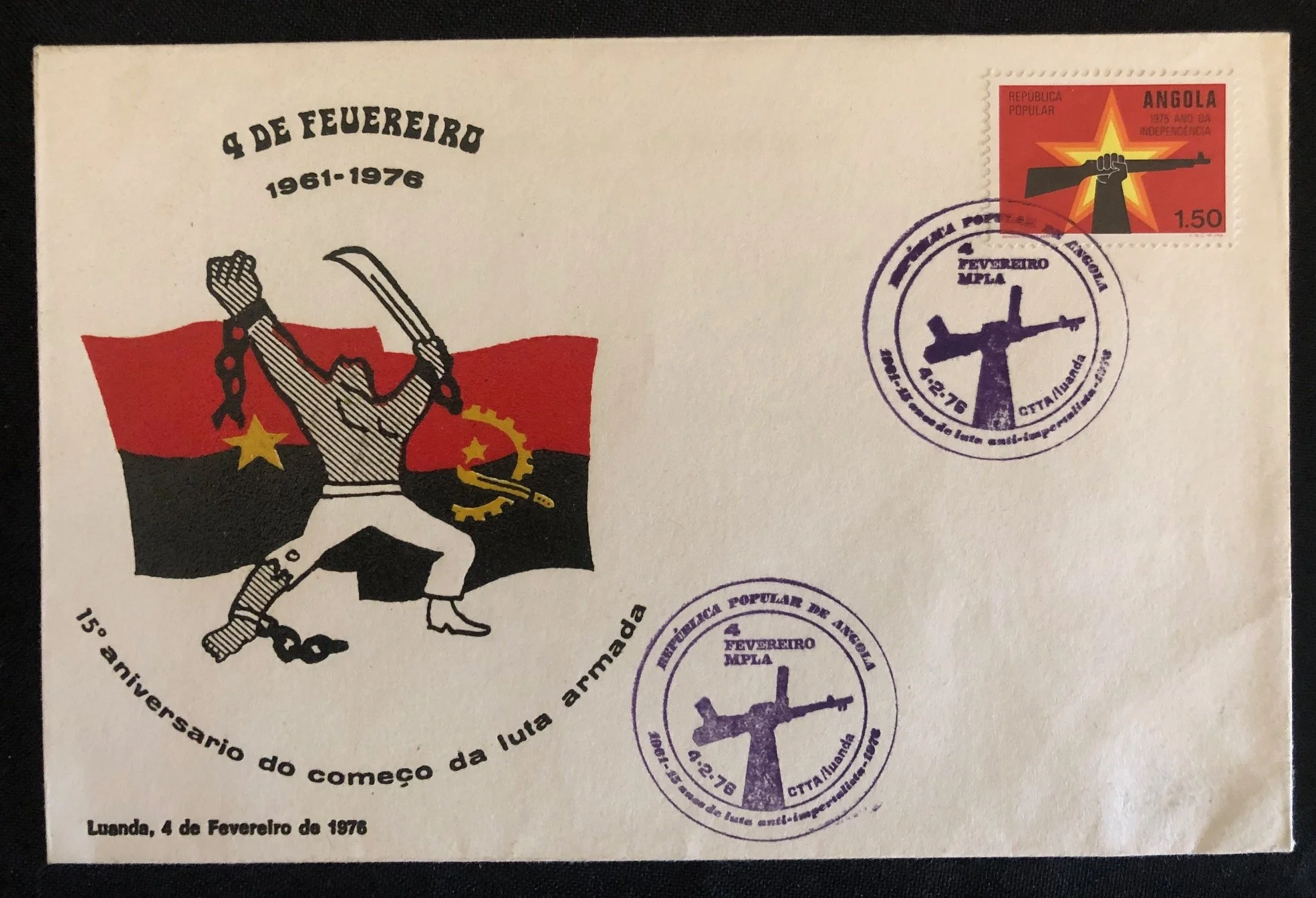
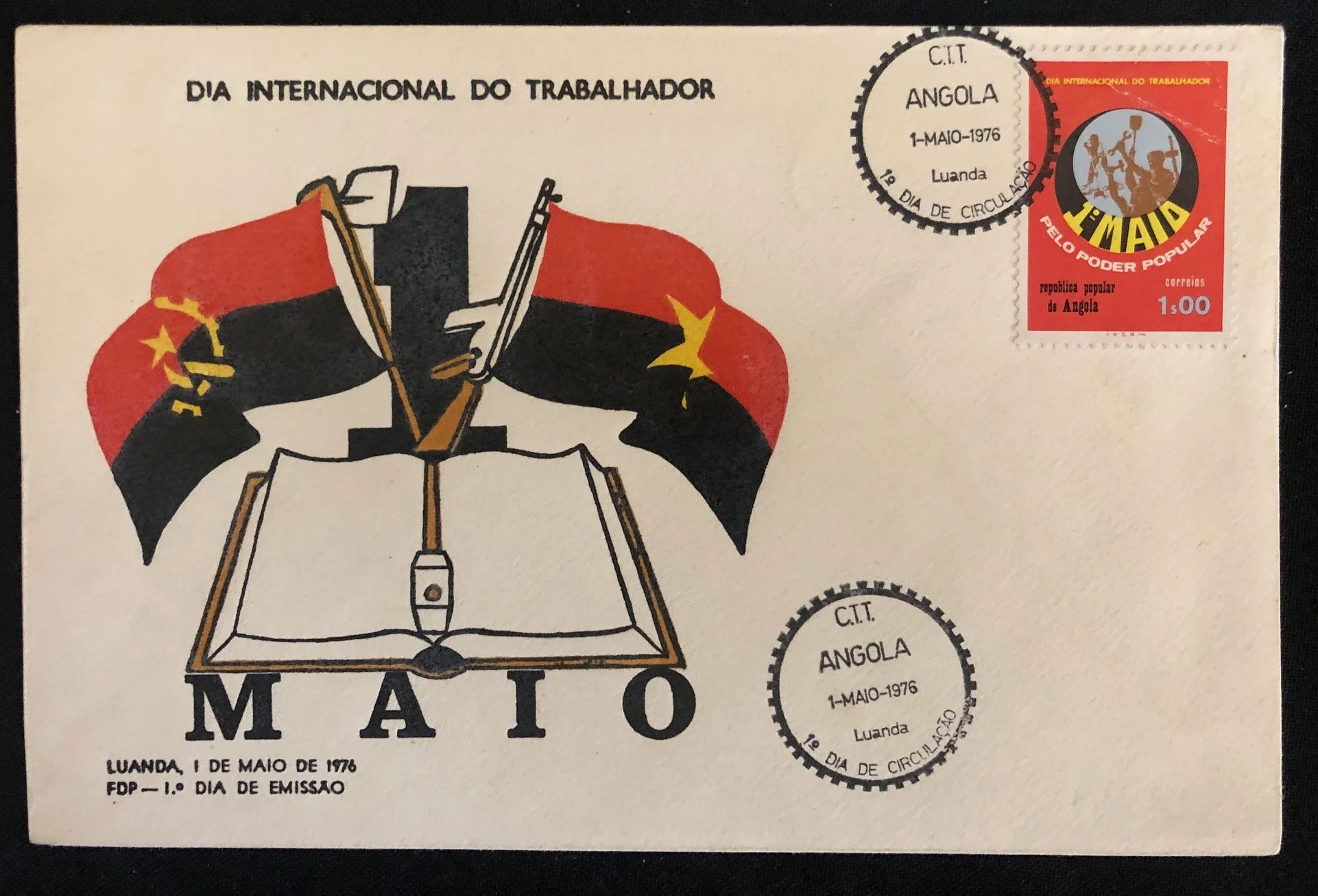
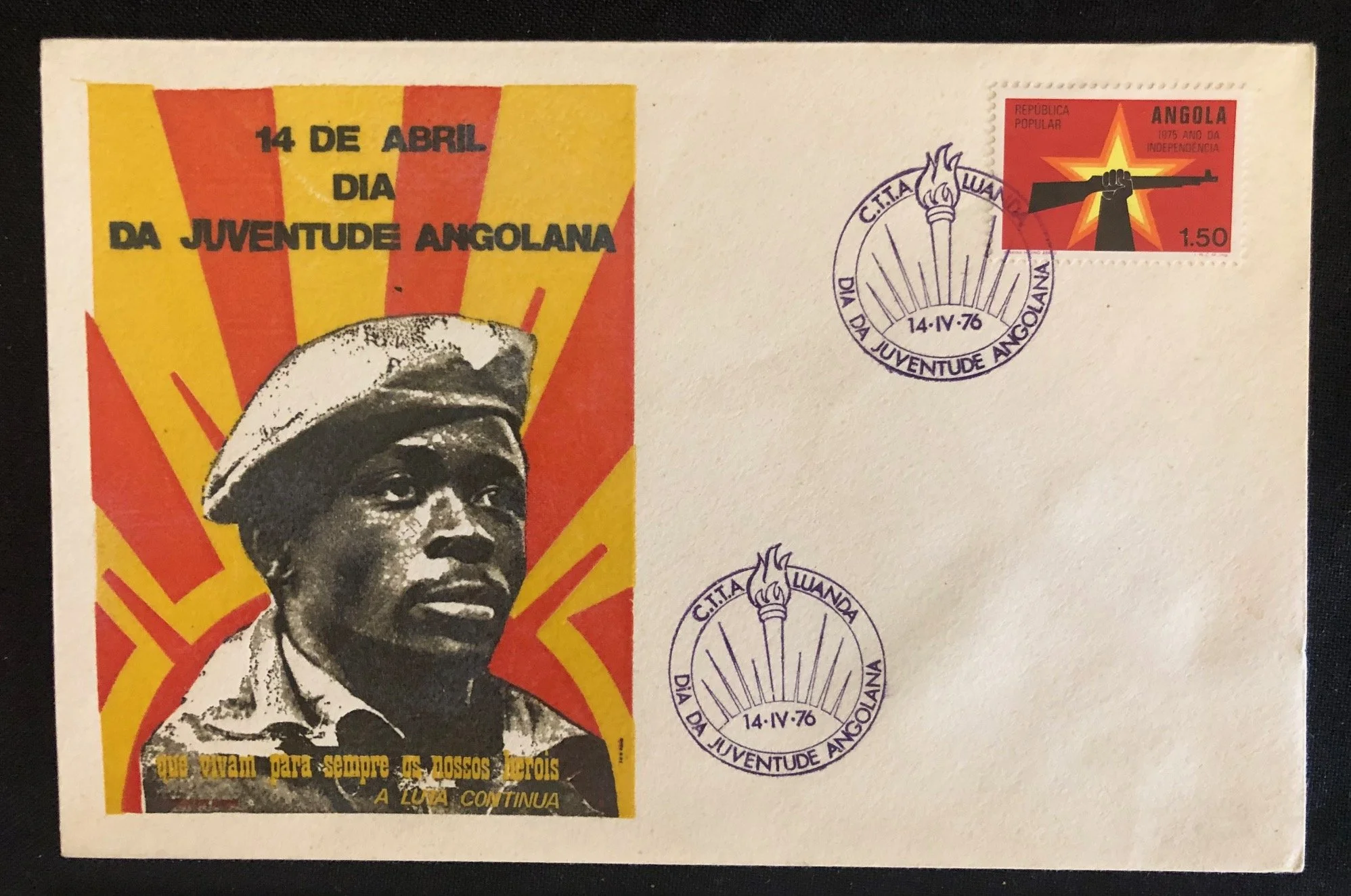
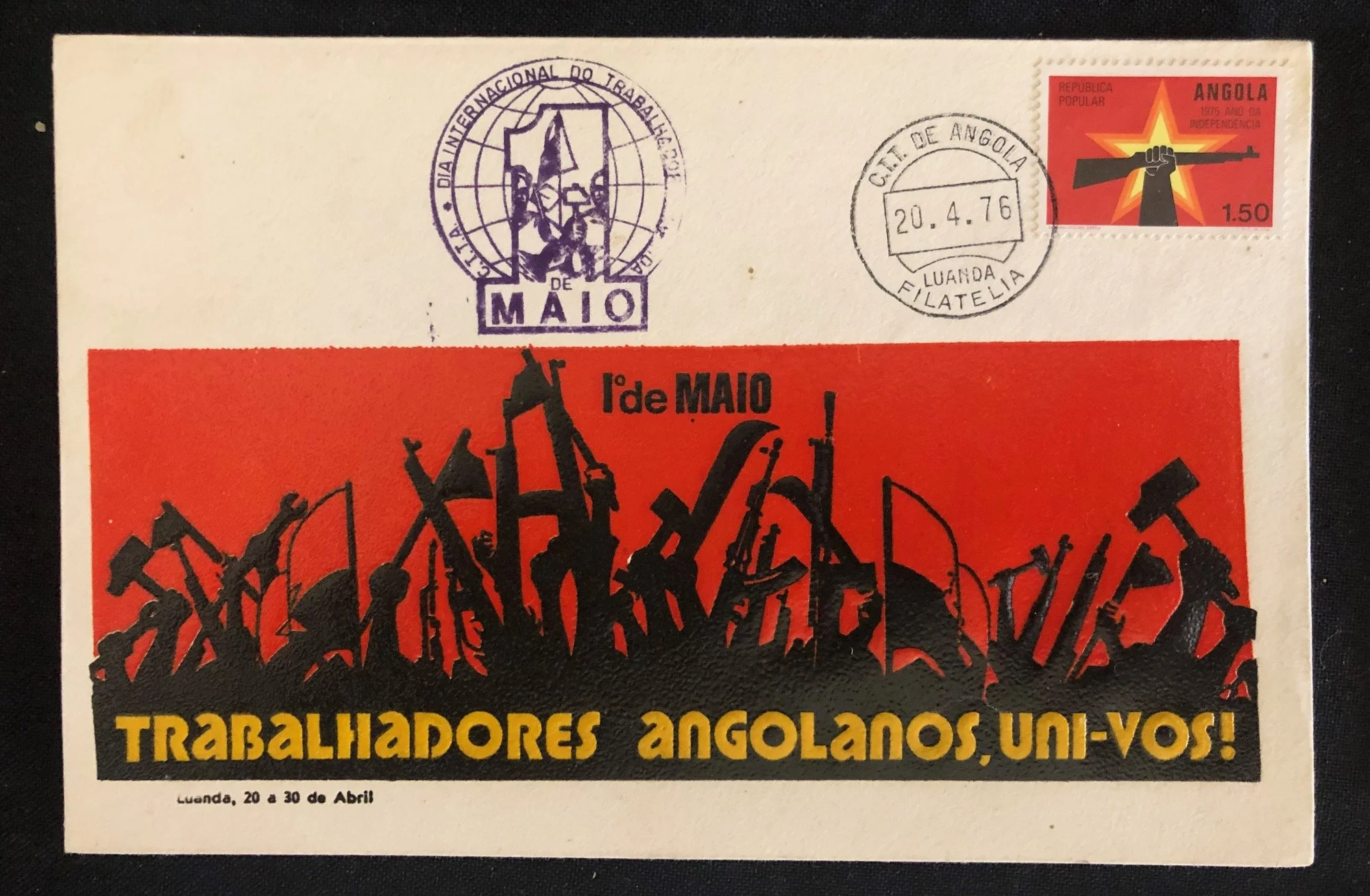
Each envelope bears newly issued stamps depicting a raised fist holding an assault rifle (AK-47) set against the red and black flag of the People's Republic of Angola (República Popular de Angola). The stamps feature the tagline "1975 ANO DA INDEPENDÊNCIA" (1975 Year of Independence). This swift re-tooling of the postal system replaced colonial iconography with revolutionary symbolism to project state legitimacy both domestically and internationally.
Commemorating Key Political Milestones
The illustrated cachets ( printed artwork on the left) explicitly line up with the foundational narratives of the MPLA government:
Bottom Left (4 de Fevereiro 1961–1976): Marks the 15th anniversary of the outbreak of the armed struggle against Portuguese colonial rule (commemorating the February 4, 1961 attacks in Luanda). It depicts a guerrilla breaking chains while wielding a machete before the new national flag.
Top Right (14 de Abril – Dia da Juventude Angolana): Commemorates Angolan Youth Day (April 14), featuring Commander Hoji-ya-Henda, a prominent MPLA youth leader who was killed in combat in 1968.
Top Left & Bottom Right (1º de Maio – Dia Internacional do Trabalhador): Commemorates May Day / International Workers' Day 1976. The imagery blends industrial/agricultural labor tools with military rifles and open books, reinforcing the socialist trifecta of education, labor, and armed defense.
Special Philatelic Handstamps
The circular cancellation marks explicitly tie the postal administration directly to the party-state apparatus. Notice the pictorial handstamps on the lower-left cover, which feature the profile of an automatic weapon surrounded by the text "4 FEVEREIRO MPLA ... ano de luta anti-imperialista" (Year of anti-imperialist struggle).
Each envelope: 170mm x 110mm (Four envelopes).
Minor wear and aging.
R1,000