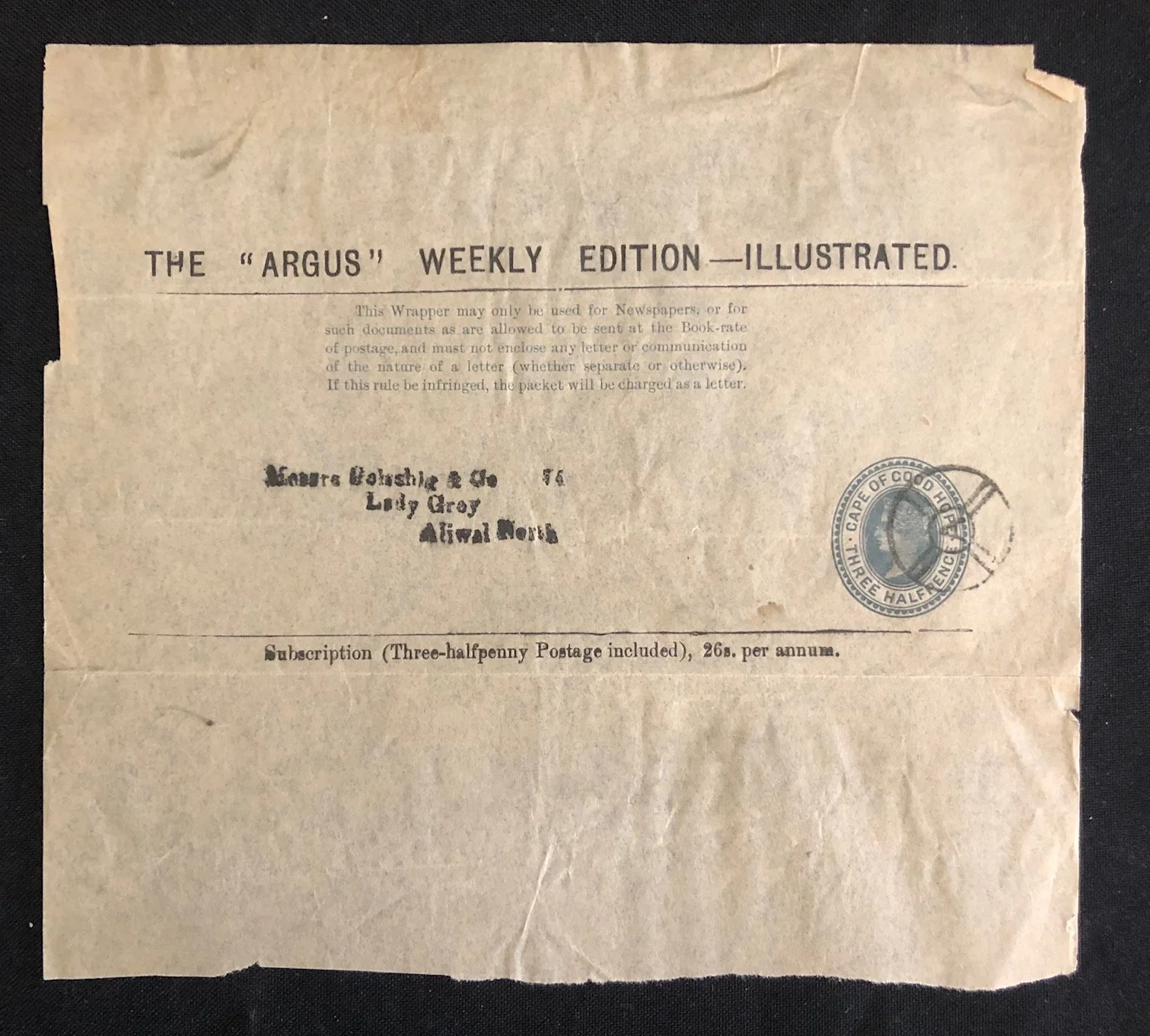
The Argus Weekly Edition wrapper (c.1890)
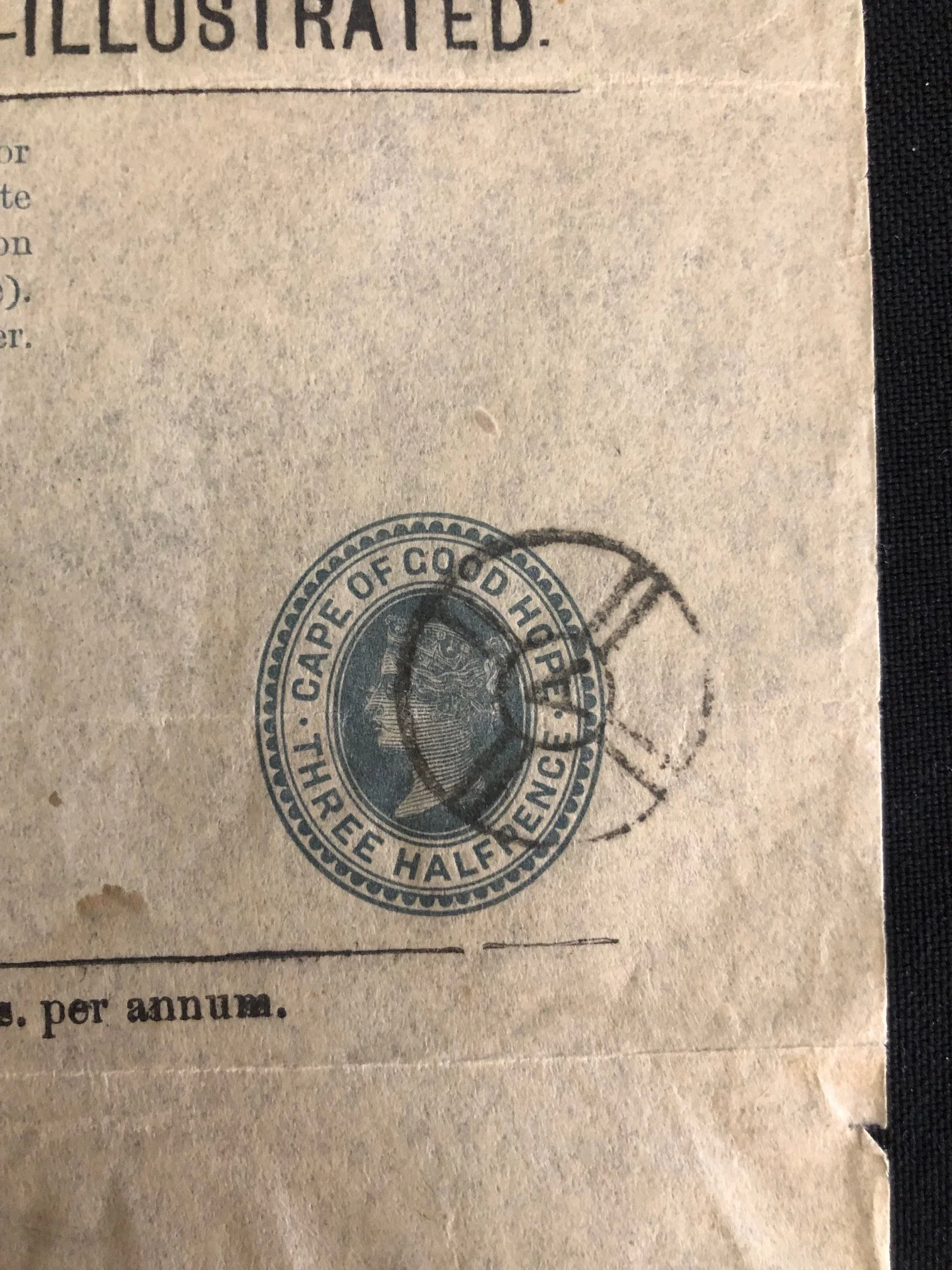
This is a piece of late-19th-century South African media and postal history: an original newspaper wrapper for The Argus Weekly Edition—Illustrated, complete with a pre-printed (impressed) Cape of Good Hope "Three Halfpence" postage stamp featuring Queen Victoria.
The Pre-Paid Newspaper Wrapper
Before the era of digital media or easily accessible plastic packaging, newspapers sent to subscribers outside major delivery zones were wrapped in dedicated bands of paper like this one.
To streamline the process, major publishers purchased postal stationery wrappers with the stamp already embossed or printed directly onto the paper by the post office (or printed by firms like De La Rue under official authority). The warning text in the center highlights the strict regulations of the era: if the wrapper contained an actual handwritten letter or note inside instead of just the printed newspaper, the recipient would be heavily penalized with standard letter-rate fees.
"The Argus Weekly" and the Rural Delivery Network
The Argus (originally The Cape Argus, founded in Cape Town in 1857) was the dominant newspaper of the Cape Colony. The "Weekly Edition—Illustrated" was specifically designed to be dispatched to far-flung rural towns and agricultural hubs.
If you look closely at the stamped address, this specific issue was sent to:
Messrs. Volshig & Co.
Lady Grey
Aliwal North
Lady Grey is a small, picturesque town nestled near the Drakensberg mountains, established in 1857 and located near the larger hub of Aliwal North in the Eastern Cape. Receiving a weekly illustrated newspaper from Cape Town was a crucial lifeline connecting remote frontier traders and residents to global news, politics, and Victorian culture.
The "Three Halfpence" Rate and the "Bonnet" Postmark
The pre-printed blue stamp is a Three Halfpence rate, which covers the combined subscription and postal delivery fee as noted at the bottom: "Subscription (Three-halfpenny Postage included), 26s. per annum."
The stamp itself has been cancelled with a classic barred oval numeral canceller (often colloquially referred to by philatelists as a "bonnet" or "grid" cancellation). These heavy ink marks were explicitly designed to completely deface the stamp so it couldn't be chemically cleaned and fraudulently reused by the public.
185mm x 170mm
Worn and creased.
R500