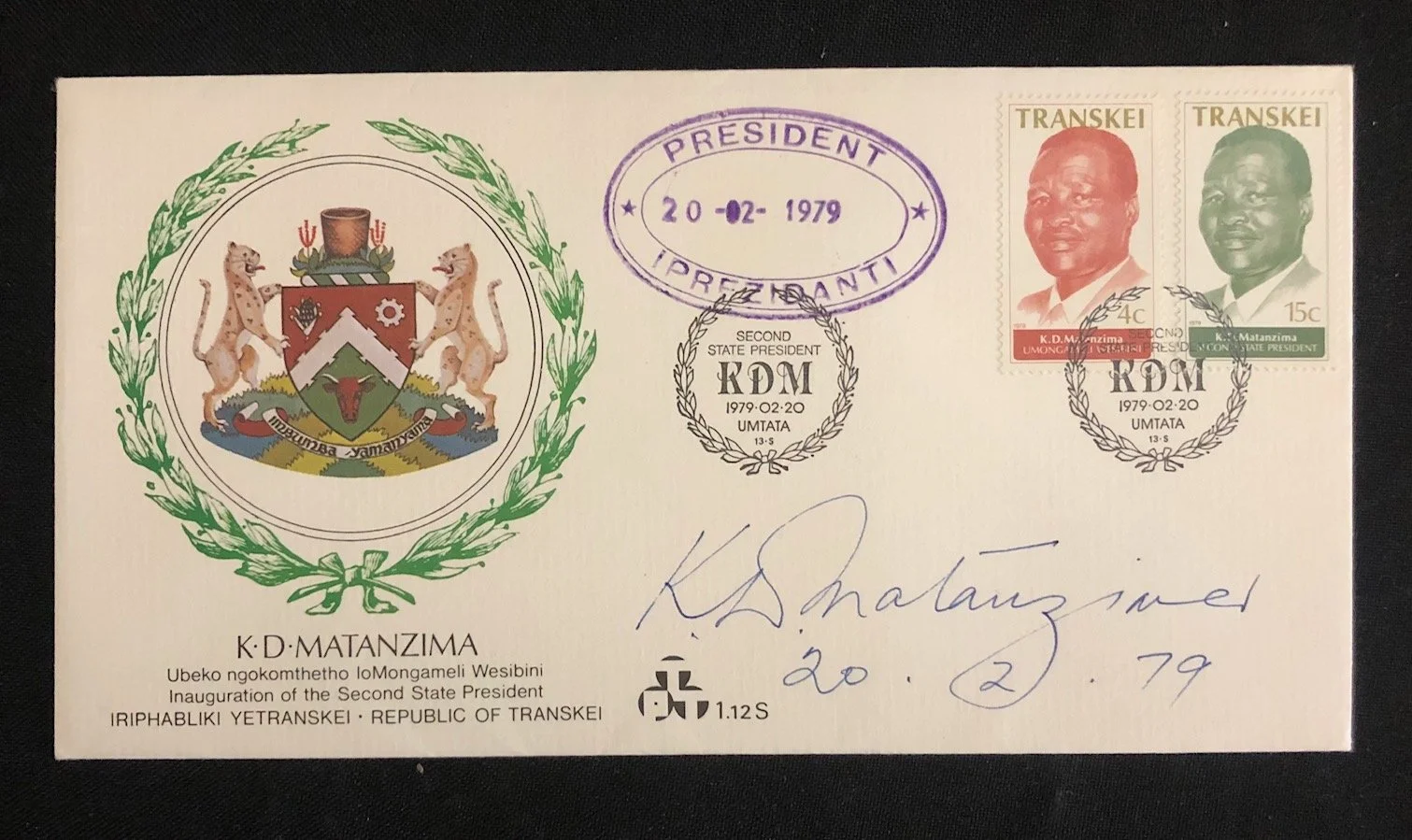
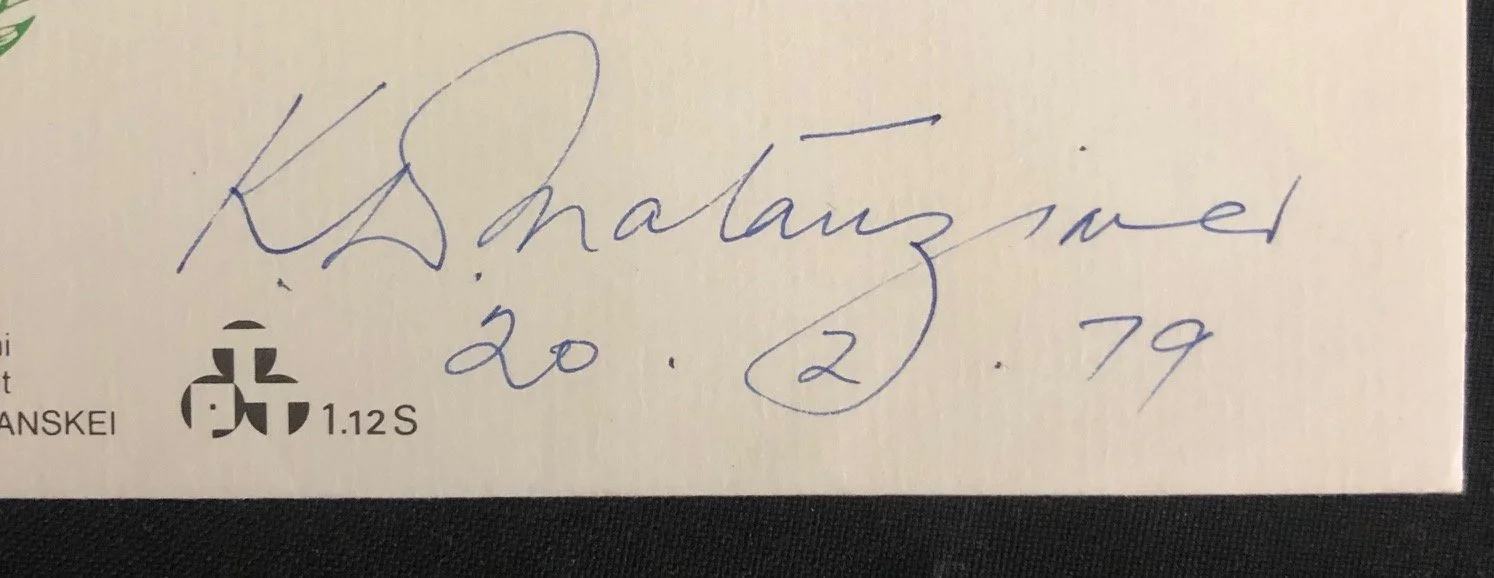
Signed First Day Cover - Chief Kaiser Daliwonga (K.D.) Matanzima - State President of the Republic of Transkei (1979)
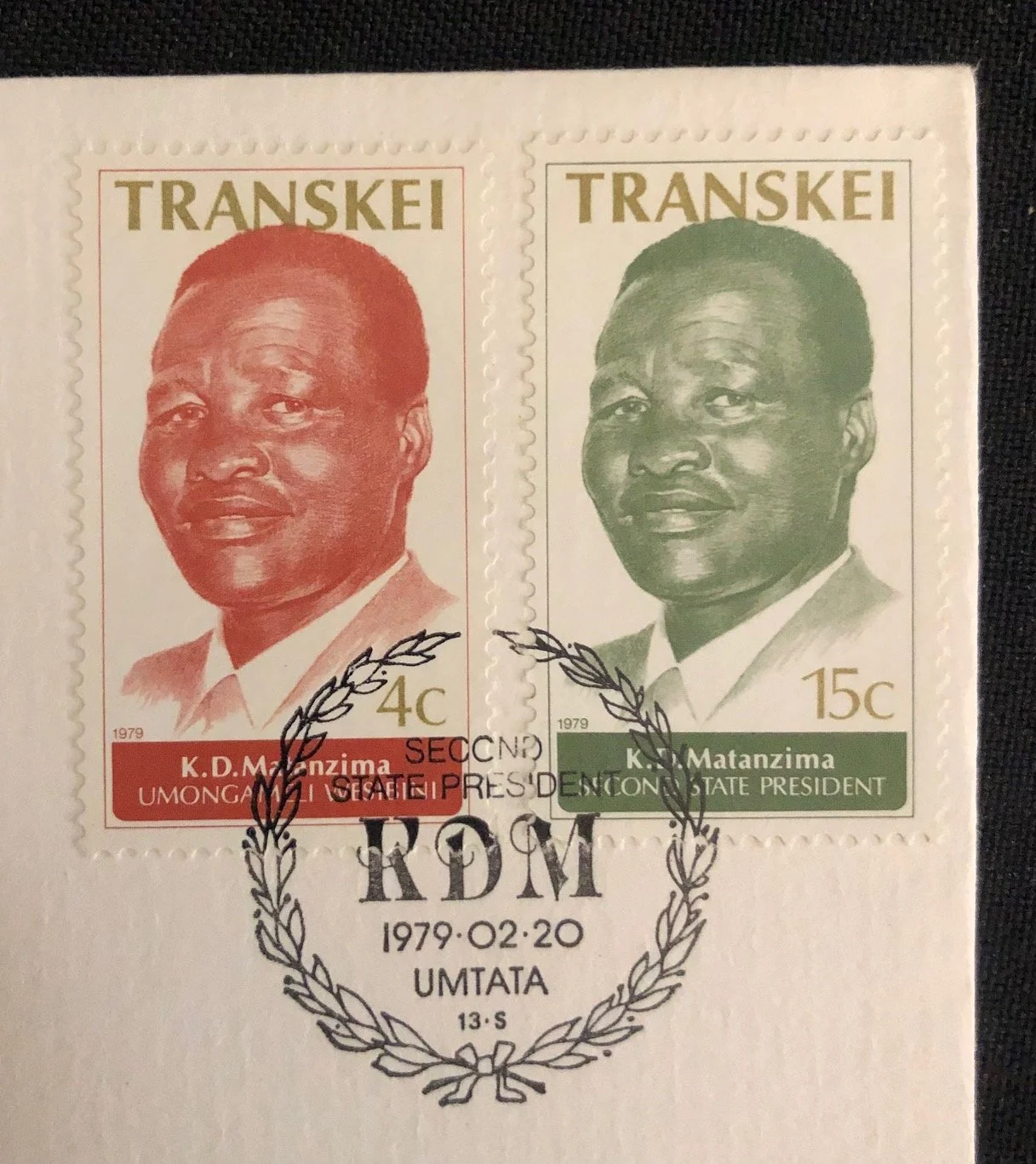
This is a First Day Cover commemorating the inauguration of Chief Kaiser Daliwonga (K.D.) Matanzima as the Second State President of the Republic of Transkei on 20 February 1979.
The Complex Mandela Connection
Perhaps the most striking personal history behind K.D. Matanzima is his relationship with Nelson Mandela. By Thembu Royal lineage, Mandela was actually Matanzima’s uncle, though Matanzima was older. The two grew up together, attended Fort Hare University together, and were close friends in their youth.
However, their paths split drastically over apartheid policy:
Matanzima chose to work within the system, becoming a champion of the "Bantustan" policy and leading Transkei to become the first "independent" homeland in 1976.
Mandela chose revolutionary resistance, viewing the homelands as puppet states designed to strip Black South Africans of their broader citizenship. Mandela fiercely condemned his nephew's collaboration from Robben Island.
A Diplomatic Illusion
The "Republic of Transkei" (as printed on the bottom left of the cover) maintained all the outward trappings of a sovereign nation, including its own constitution, military, international passport, coat of arms, and the postal system that produced this cover.
However, this independence was a geopolitical illusion. Except for South Africa and the other later homelands (Bophuthatswana, Venda, and Ciskei), no country in the world ever recognized Transkei’s independence. The United Nations Security Council formally declared its independence illegal, viewing it as a mechanism to institutionalize grand apartheid.
The Power Shift of 1979
While Matanzima is listed here as the Second State President (succeeding Botha Sigcau), he was the undisputed strongman of Transkei from 1963 until he was ousted in a bloodless coup by General Bantu Holomisa in 1987.
When Transkei gained nominal independence in 1976, Matanzima took the role of Prime Minister because it held the actual executive power, leaving the presidency as a ceremonial role. By 1979, he decided to consolidate his power by shifting himself into the Presidency while his brother, George Matanzima, took over as Prime Minister—effectively running the territory as a family fiefdom.
Philatelic Note
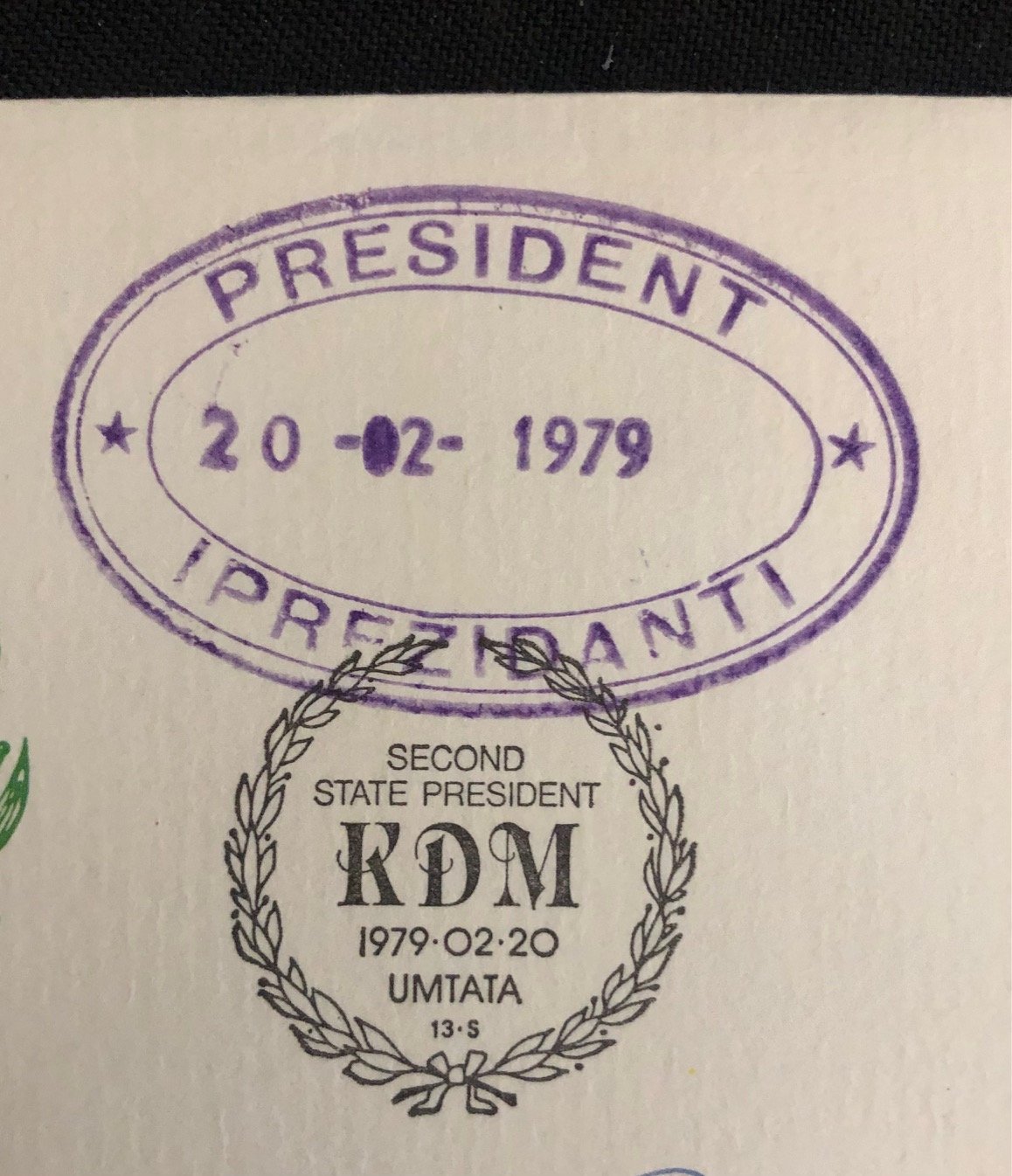
For collectors of Southern African postal history, homelands ephemera like this —complete with the official "Iprezidanti" oval date stamp, the Umtata cancellation, and Matanzima's personal signature—serve as a direct, tangible record of the apartheid regime's attempt to redraw the map of South Africa, a project that was completely dismantled in 1994 when Transkei was reintegrated into the Republic.
190mm x 100mm
R500