Envelope Depicting Cape Town-The Cape of Good Hope (c.1855)
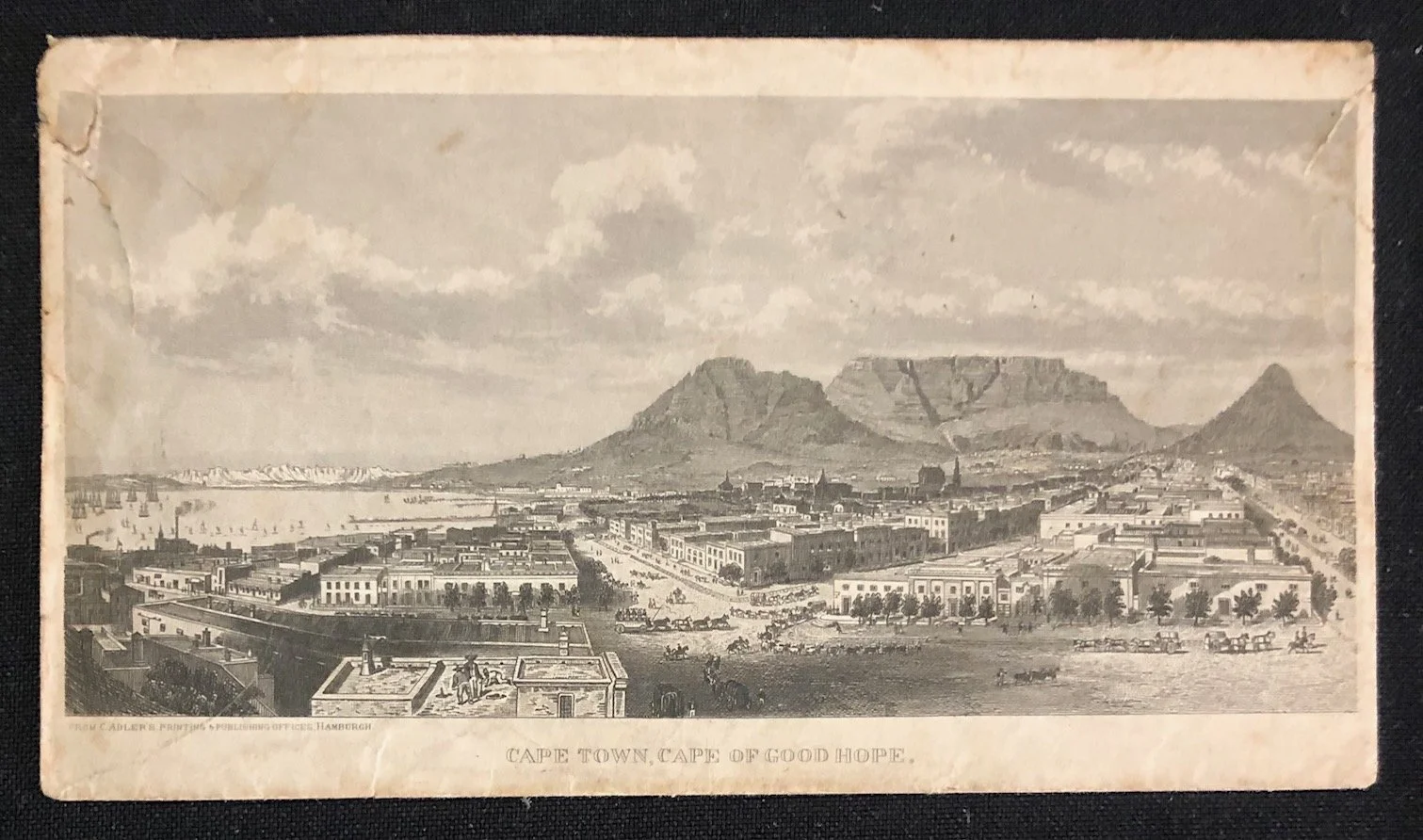
A rare pictorial stationery envelope (or a "letter card" style wrapper) featuring a lithographed panoramic view titled "Cape Town, Cape of Good Hope."
The Global Printing Monopoly of C. Adler, Hamburg
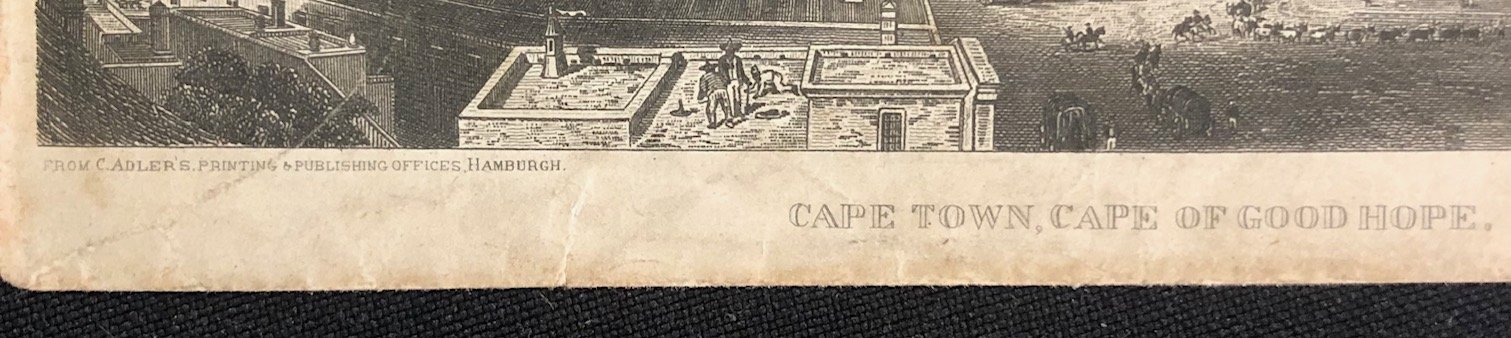
Note the lower-left edge imprint: "From C. Adler's Printing & Publishing Offices, Hamburgh."
Charles Adler of Hamburg was a pioneer in the mid-1800s commercial print industry. Germany, and Hamburg in particular, held a near-monopoly on high-quality lithography and steel engraving technology during this era. Adler realized there was an insatiable market across the British Empire for beautifully illustrated stationery. Rather than printing local scenes in Cape Town or London, publishers frequently outsourced the work to German houses because their fine line work and tone control were unmatched.
Adler produced a highly collectible series of these "views on envelopes" for port cities all over the world—from New York and Boston to Melbourne and Cape Town.
A Captured Moment in Cape Town's Urban Development (c. 1850s–1860s)
The panorama offers a meticulously detailed mid-Victorian snapshot of Cape Town. It is drawn from an elevated perspective (likely looking down from the slopes of Signal Hill or the old Chavonnes Battery area near the docks).
Several historical elements stand out in the vignette:
The Transformed Shoreline: The view shows Table Bay filled with sailing vessels, right before the construction of the Alfred Basin (which began in 1860) completely altered the historic coastline.
Transport Dynamics: In the foreground and streets, you can see horse-drawn carriages and ox-wagons moving through the wide, unpaved streets, capturing the reliance on traditional inland transport even as the port itself was modernizing.
The Roofscape Detail: reveals flat-roofed, classic Cape Georgian and Dutch-style townhouses, with figures depicted standing on the stoeps and rooftops—a common practice in the heat of a Cape summer.
The Precursor to the Picture Postcard
In the mid-19th century, sending a letter was an expensive luxury, and the modern "picture postcard" had not yet been invented or legalized by international postal unions (which didn't happen until the late 1800s).
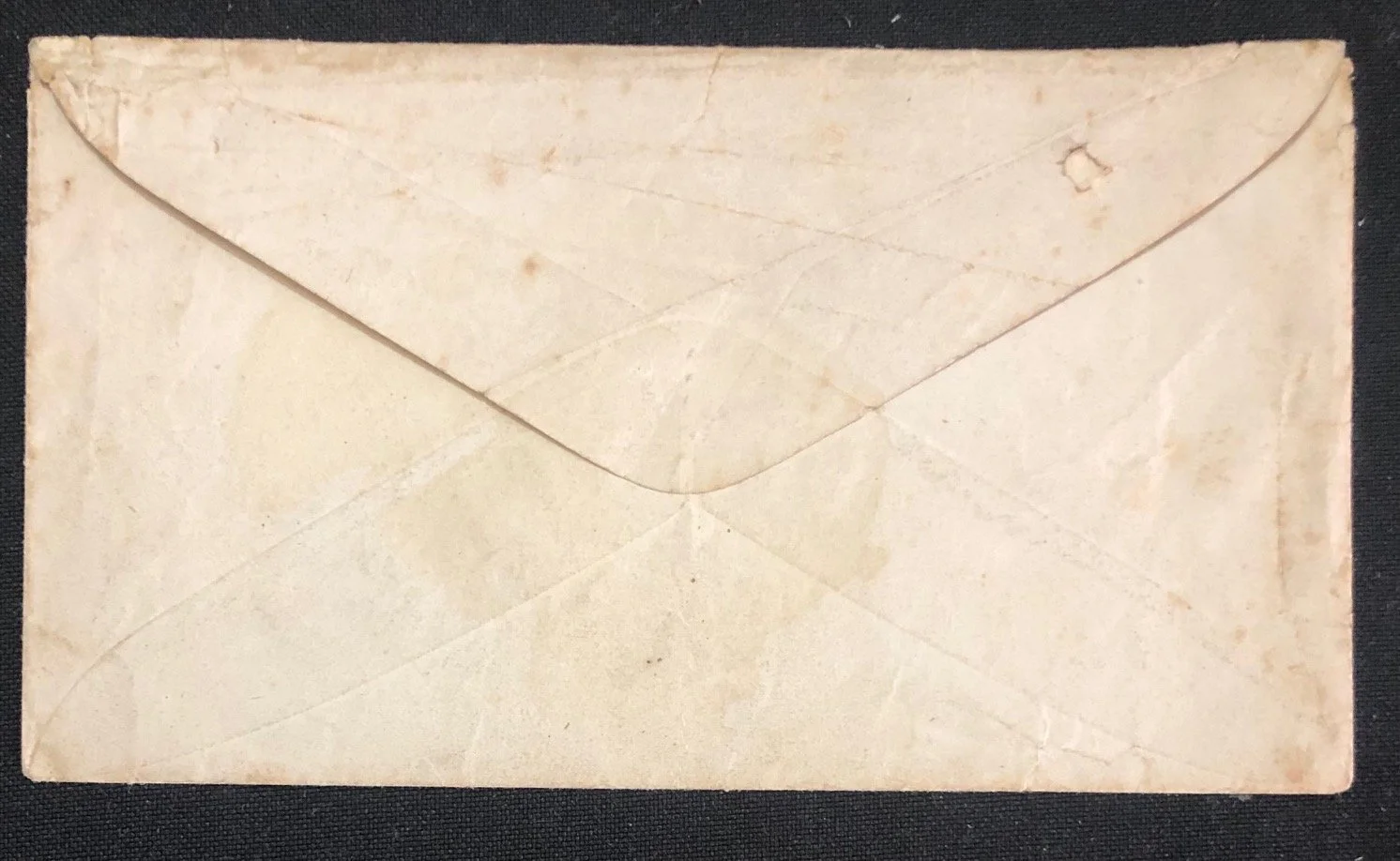
Items like this served as the functional ancestors to the postcard. Travelers, soldiers, and merchants passing through the Cape of Good Hope would buy these pictorial envelopes as souvenirs. They would write their letters on the blank reverse or on an enclosed sheet, fold it up (as shown by the flap lines), and mail it back home to Europe or England to show their families exactly what the distant, exotic port looked like.
Because these wrappers were meant to be torn open and were usually discarded after reading, finding an unused or well-preserved survival like this is an excellent find for cartographic, postal, and Cape ephemera collectors.
145mm x 80mm
Small tears; rubbed and creased.
R1,000