The Postage Stamps, etc of Africa by The Philatelic Society, London. 1895 - 1906. (3). R2,000
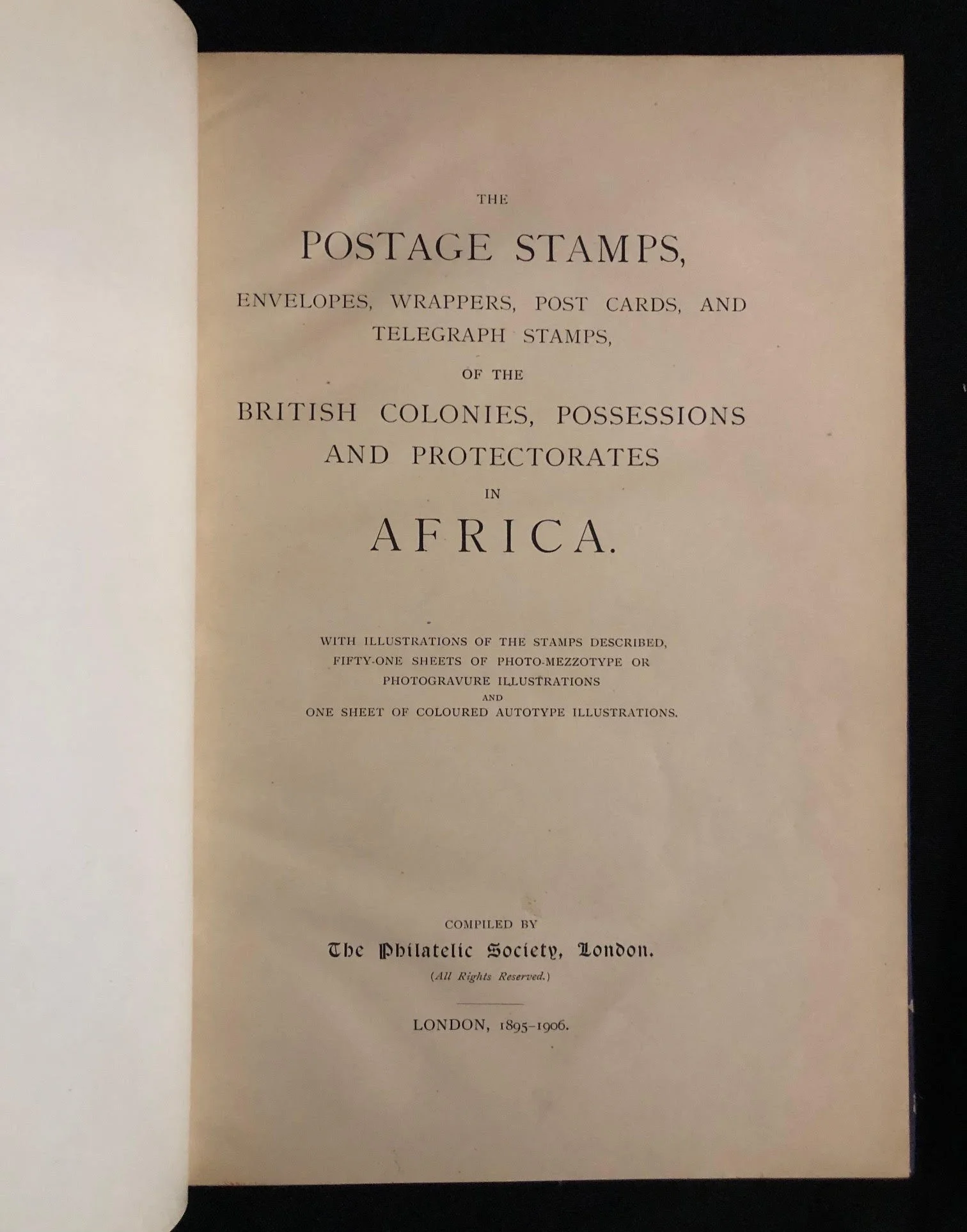
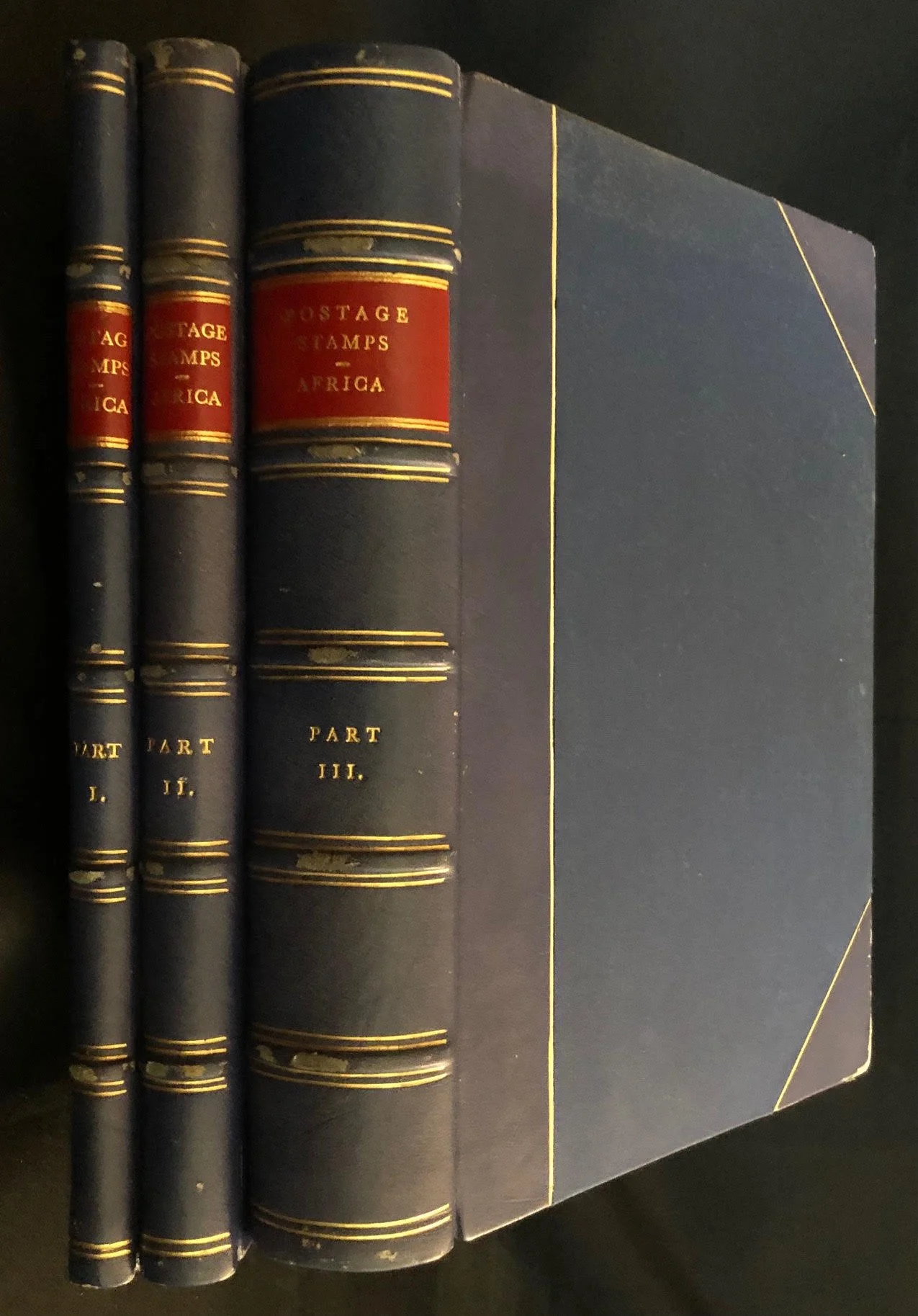
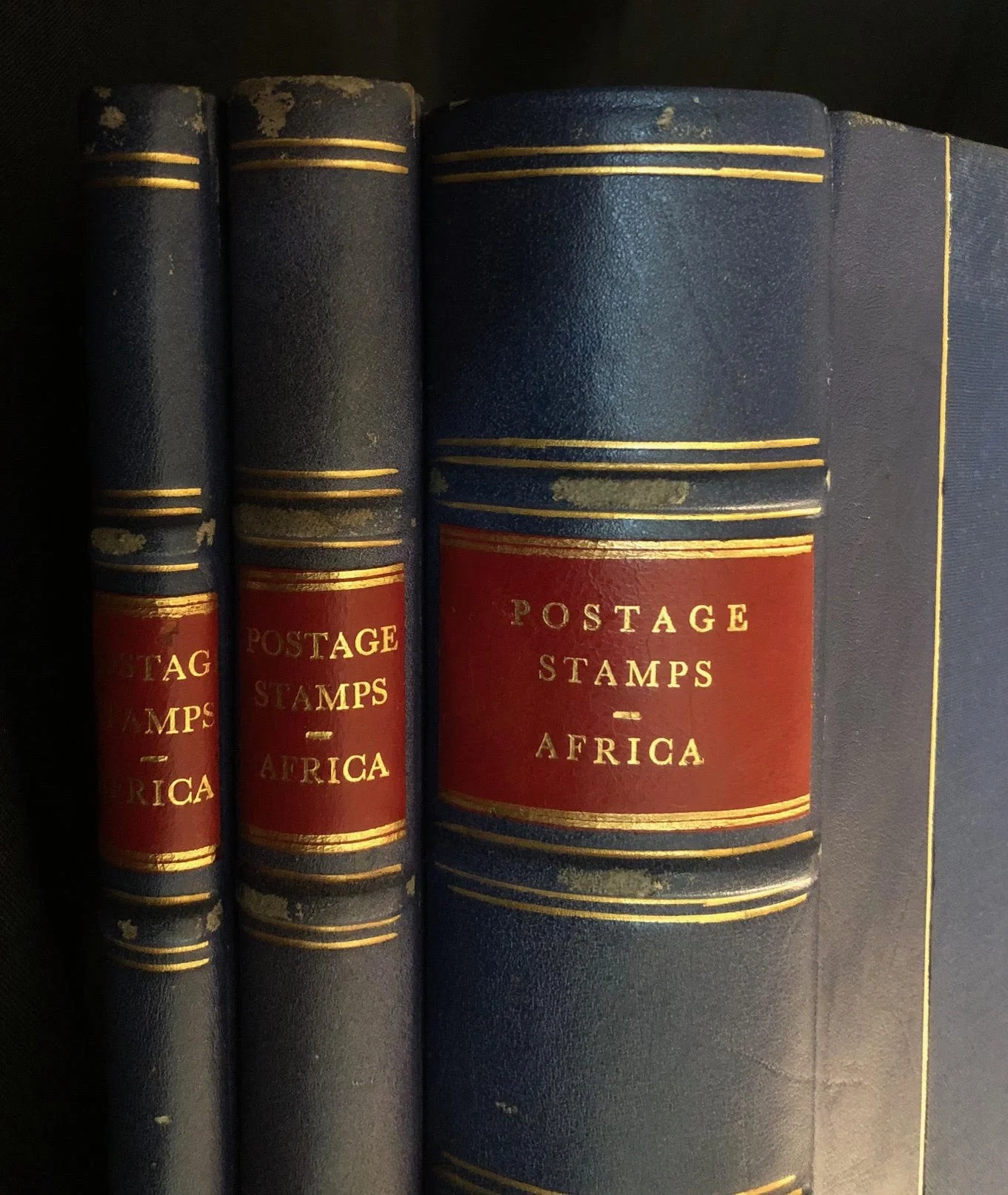
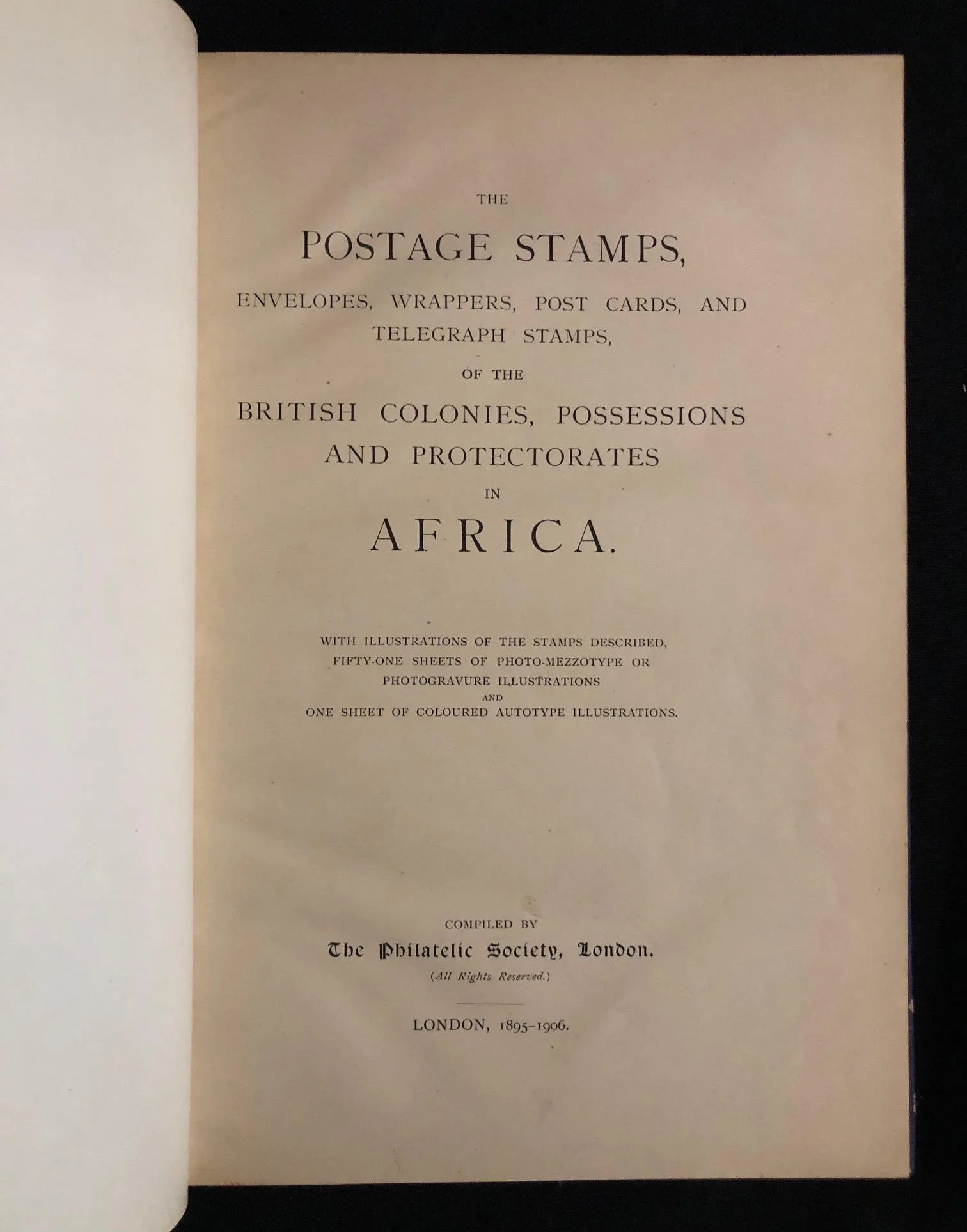
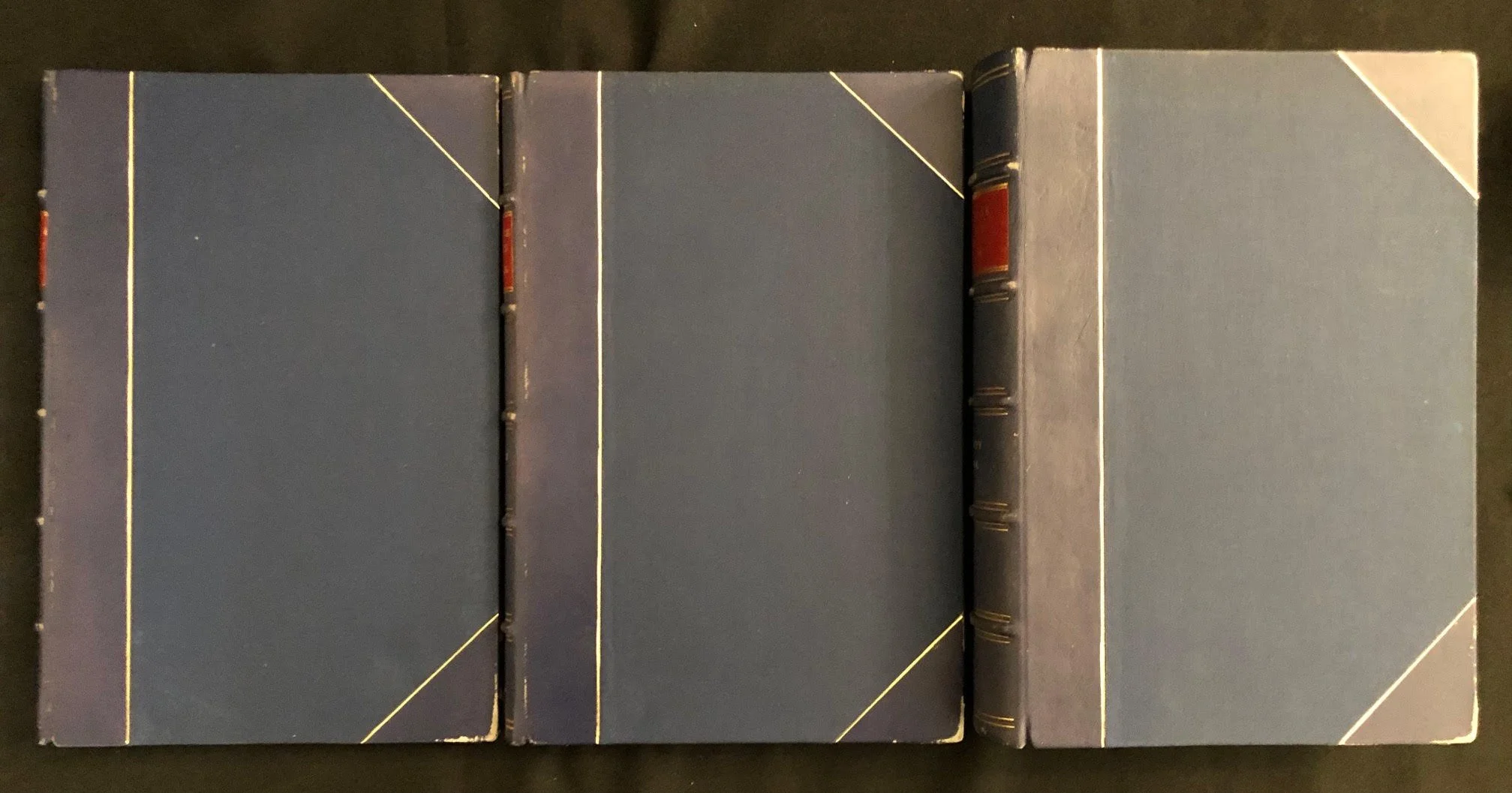
The three-volume set shown is The Postage Stamps, Envelopes, Wrappers, Post Cards, and Telegraph Stamps, of the British Colonies, Possessions and Protectorates in Africa, compiled by The Philatelic Society, London, and published between 1895 and 1906.
Beyond its handsome half-morocco binding, this set holds several remarkable historical and bibliographical distinctions:
The "Royal" Transformation: The publisher, The Philatelic Society, London, did not stay under that name for long after Part III was completed in 1906. Later that very year, King Edward VII granted the organization its Royal Charter, turning it into The Royal Philatelic Society London (RPSL)—the oldest and most prestigious philatelic society in the world. Their future Duke of York (later King George V) was actually the Society's president during the final years this set was being compiled.
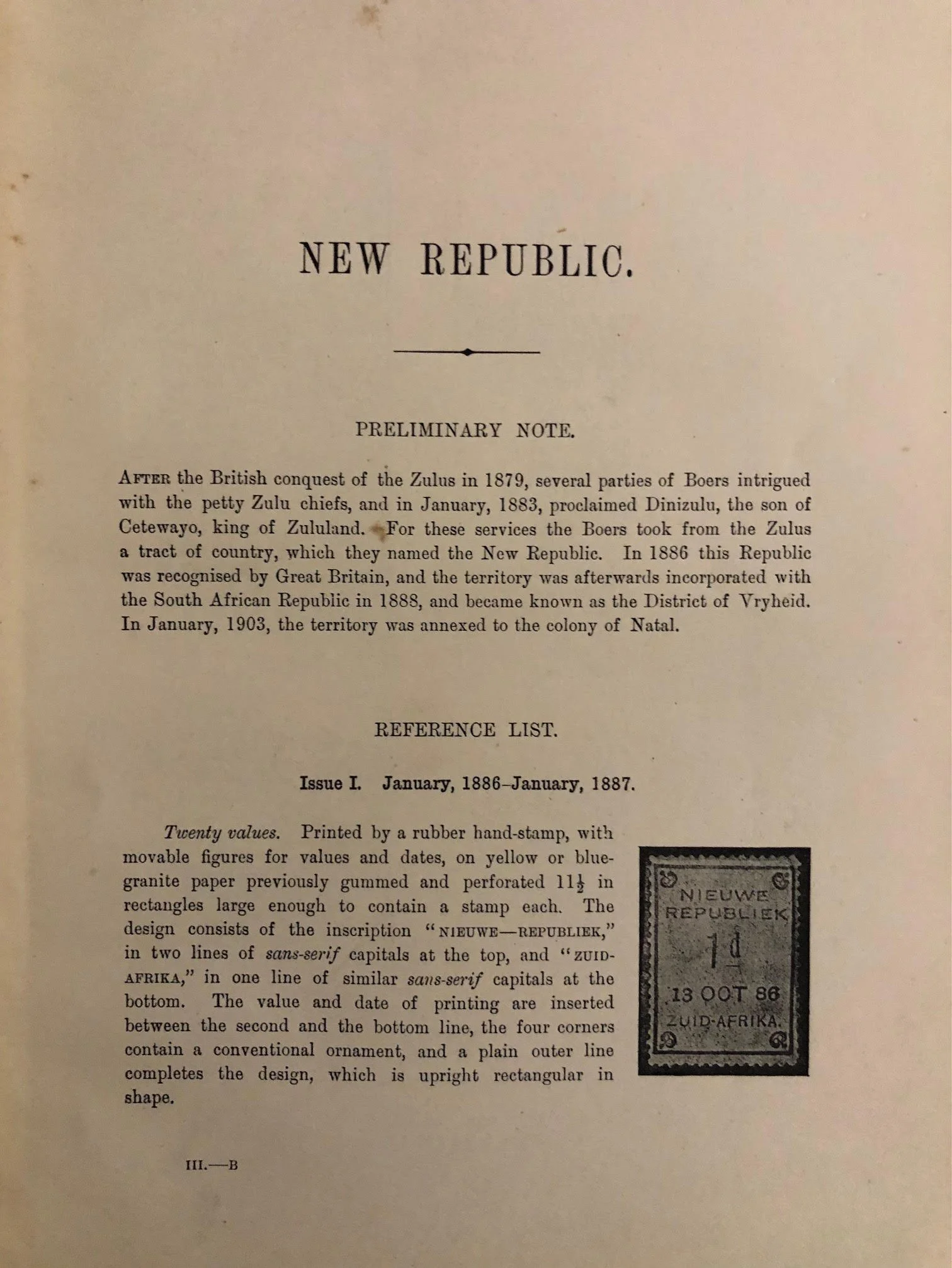
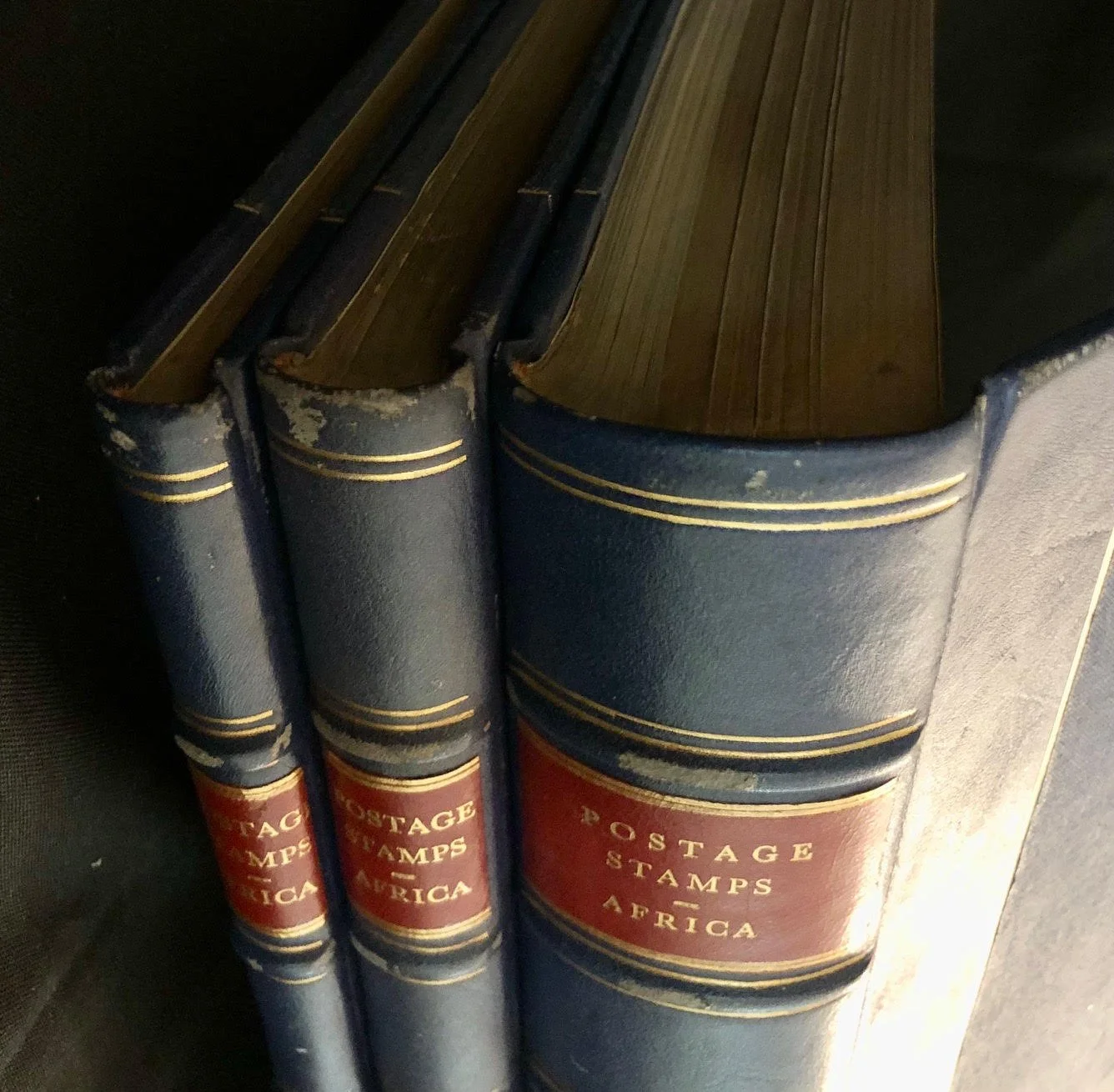
The Dramatic Expansion of Part III: You will notice how much thicker Part III is compared to Parts I and II. That physical difference is a direct artifact of imperial history. Part I (1895) covered British Bechuanaland, British East Africa, British South Africa, and the Cape of Good Hope. Part II (1900) covered Gambia, Gold Coast, Griqualand East and West, Lagos, Madagascar, Mauritius, and Natal. By the time Part III (1906) was published, the Anglo-Boer War had ended, and Britain had annexed the South African Republic (Transvaal) and the Orange Free State—suddenly dumping massive, complex histories of Boer postal issues, British occupation overprints, and siege stamps (like Mafeking) into the final volume.
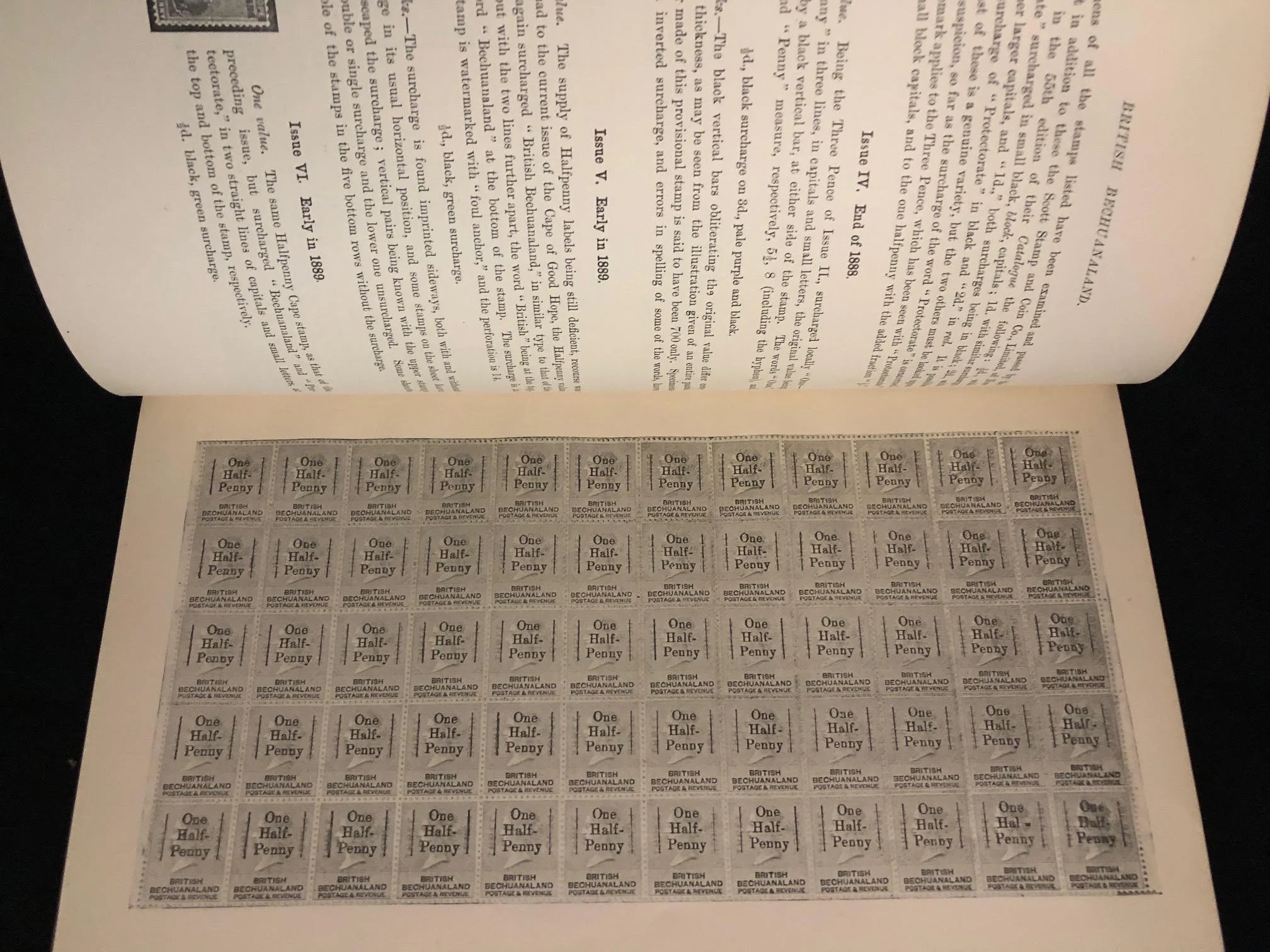
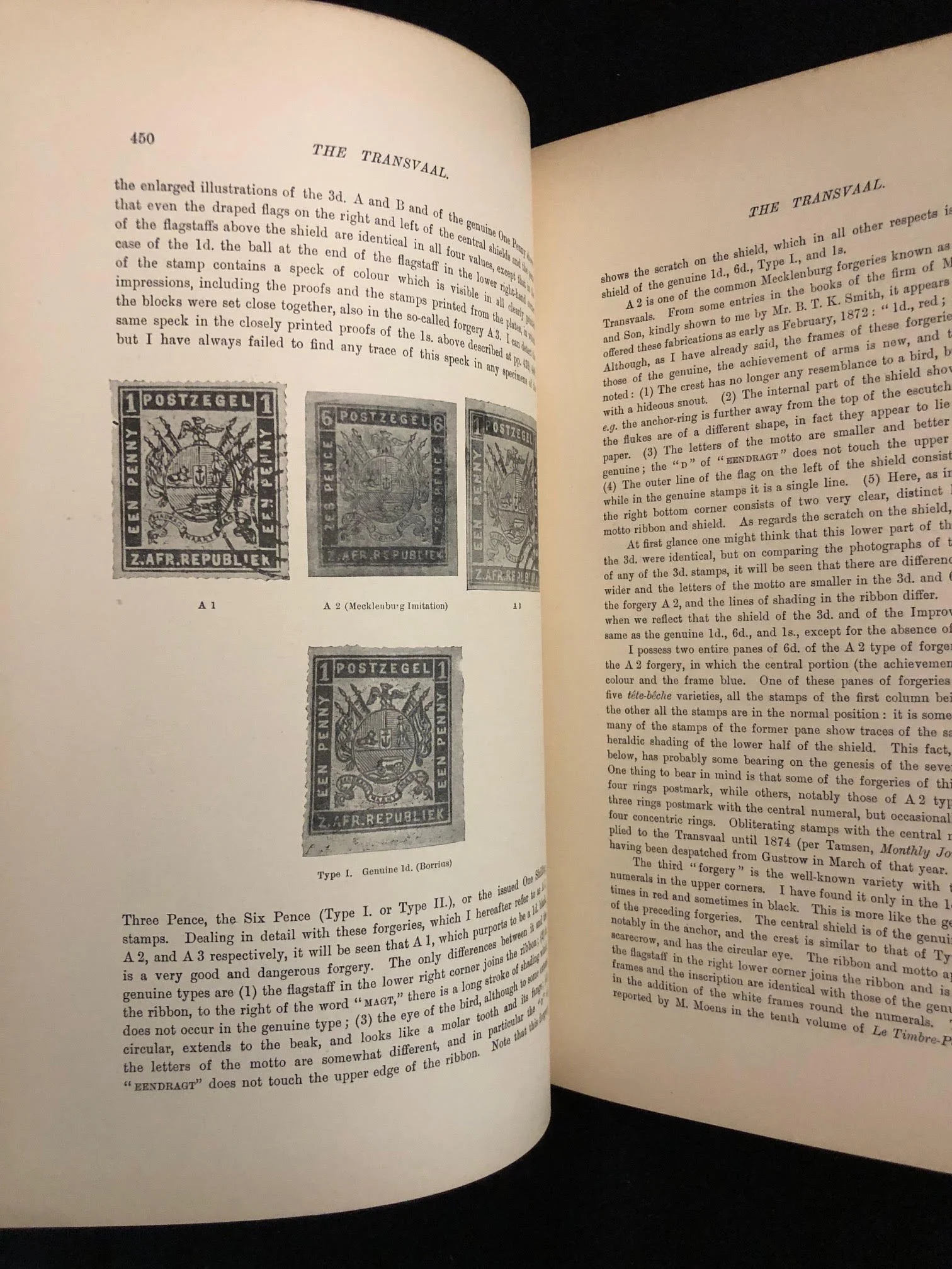
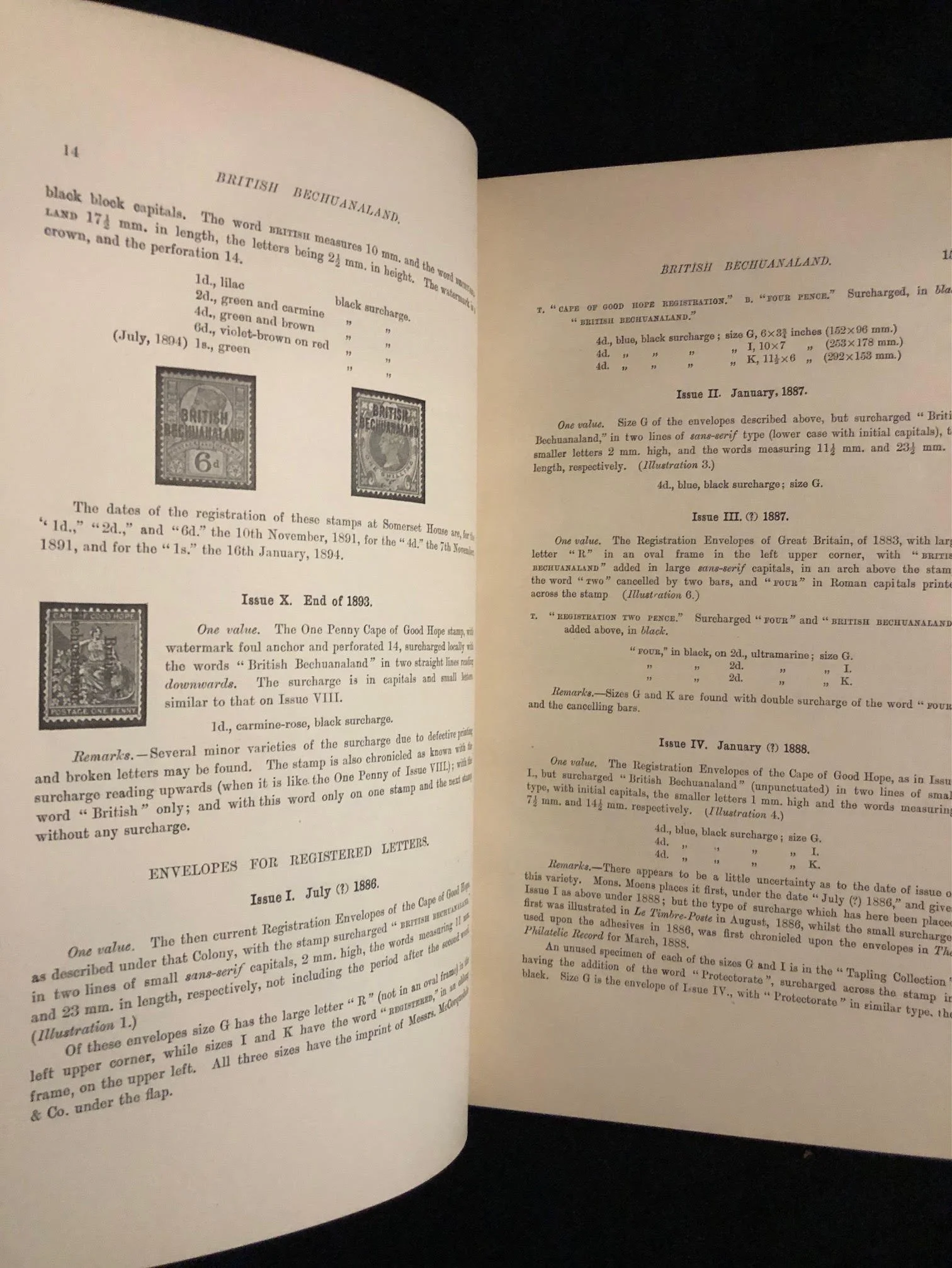
Pioneering Forensic Photography: The title page notes "fifty-one sheets of photo-mezzotype or photogravure illustrations and one sheet of coloured autotype illustrations." In the late 19th century, high-end philately was plagued by extraordinarily skilled European forgers (such as François Fournier and Jean de Sperati). Using high-precision photo-mezzotype and autotype plates—cutting-edge photographic printing methods for the era—allowed collectors and dealers to measure microscopic die flaws and plate varieties to authenticate rare African classics like the Cape Triangulars and the "Post Office" Mauritius.
Primary Source Access to Colonial Archives: Because the Society's members included senior British civil servants, aristocrats, and close associates of the Crown, the compilers were granted unprecedented access to the official records and original printing plates of De La Rue & Co., Perkins Bacon, and the Crown Agents for the Colonies. Consequently, this work wasn't merely a catalog of what collectors had found; it was the first definitive publication of the actual archival print runs, dispatch dates, and plate histories of British African postal history.
200mm x 290mm x 90mm (3 vols together).
Half leather; binding worn at the edges; more so on the bands of the spine; the pages have mellowed slightly.
R2,000