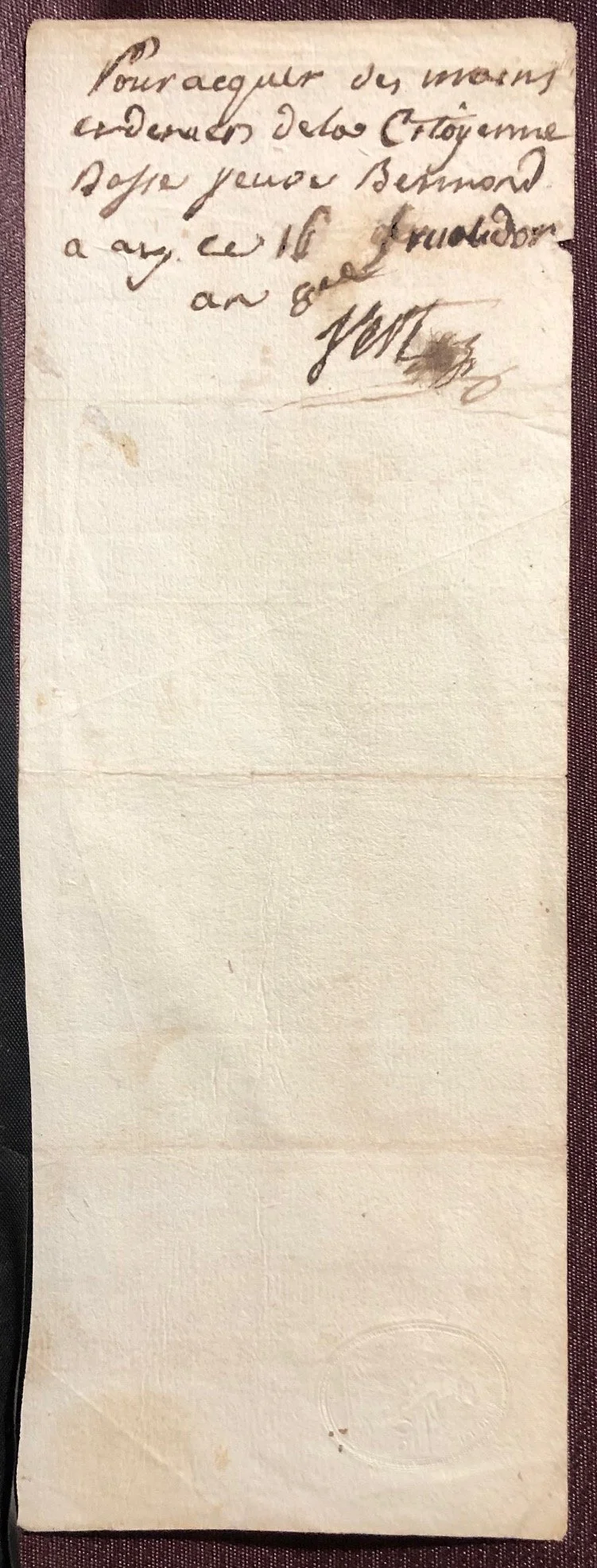
Document from the First French Republic (1799)
Dated by the French Republican Calendar
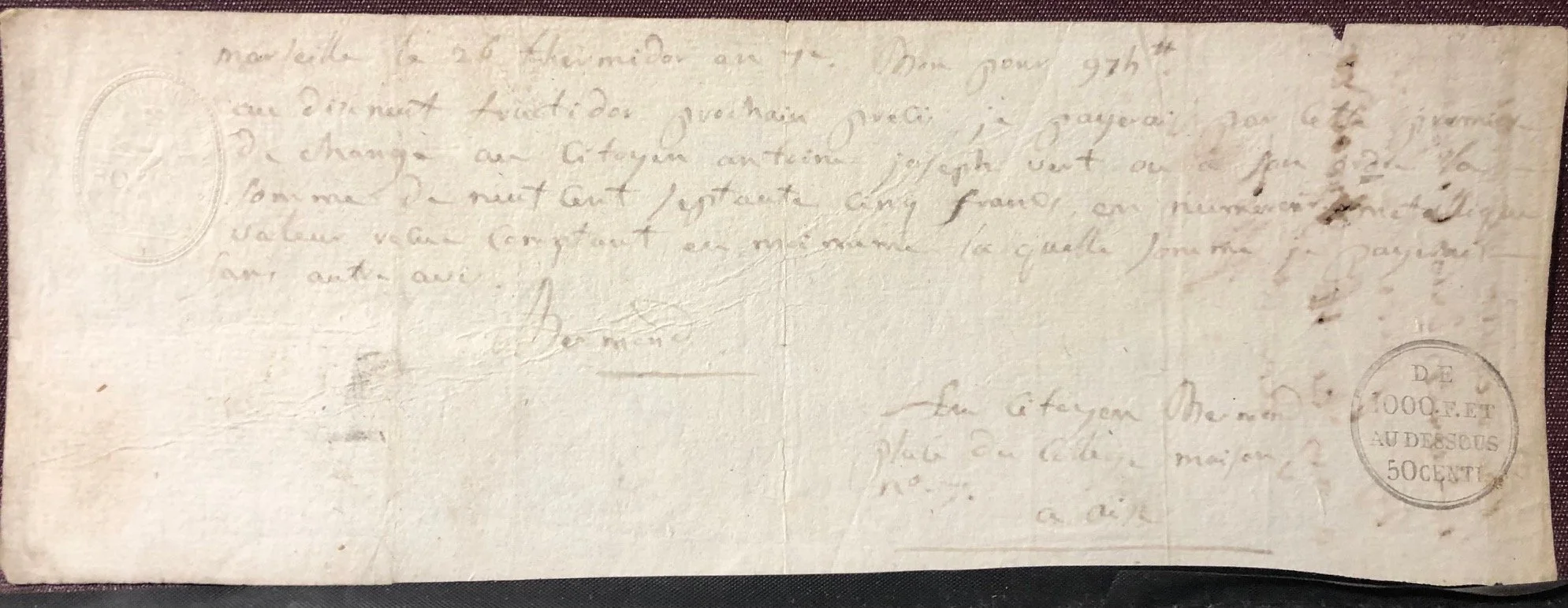
The document is dated "Marseille le 26 Thermidor an 7" (August 13, 1799), placing it right in the final months of the French Directory, just before Napoleon Bonaparte’s coup d'état of 18 Brumaire in November 1799.
Following the French Revolution, the National Convention abolished the Gregorian calendar to remove all religious and royalist influences, replacing months with nature-based revolutionary names like Thermidor, the month of heat, and Fructidor, the month of fruit.
The Citizen Title (Citoyen)
Rather than addressing individuals as Monsieur or Sieur, the note is drawn to "Citoyen Antoine Joseph Vert" and signed/addressed by "Citoyen Bermond." In Revolutionary France, addressing someone as "Citizen" was enforced by law and ideology as a symbol of egalitarianism and the elimination of aristocratic distinctions.
A Mandate for Hard Coin (Numéraire Métallique)
The bill of exchange for 975 francs explicitly stipulates payment in "numéraire métallique" (hard metallic coin).
This clause reflects the economic trauma of the 1790s. After the catastrophic hyperinflation and collapse of revolutionary paper currencies—the assignats and mandats territoriaux—merchants and citizens lost all faith in paper money. By Year 7 (1799), financial contracts across France strictly demanded physical silver or gold coins to ensure real value.
Regional Vocabulary (Septante)
The amount written in full reads "neuf cent septante cinq francs" rather than the standard modern French "soixante-quinze". The use of septante for seventy was widely used in southern French regions like Marseille and Aix-en-Provence during this period.
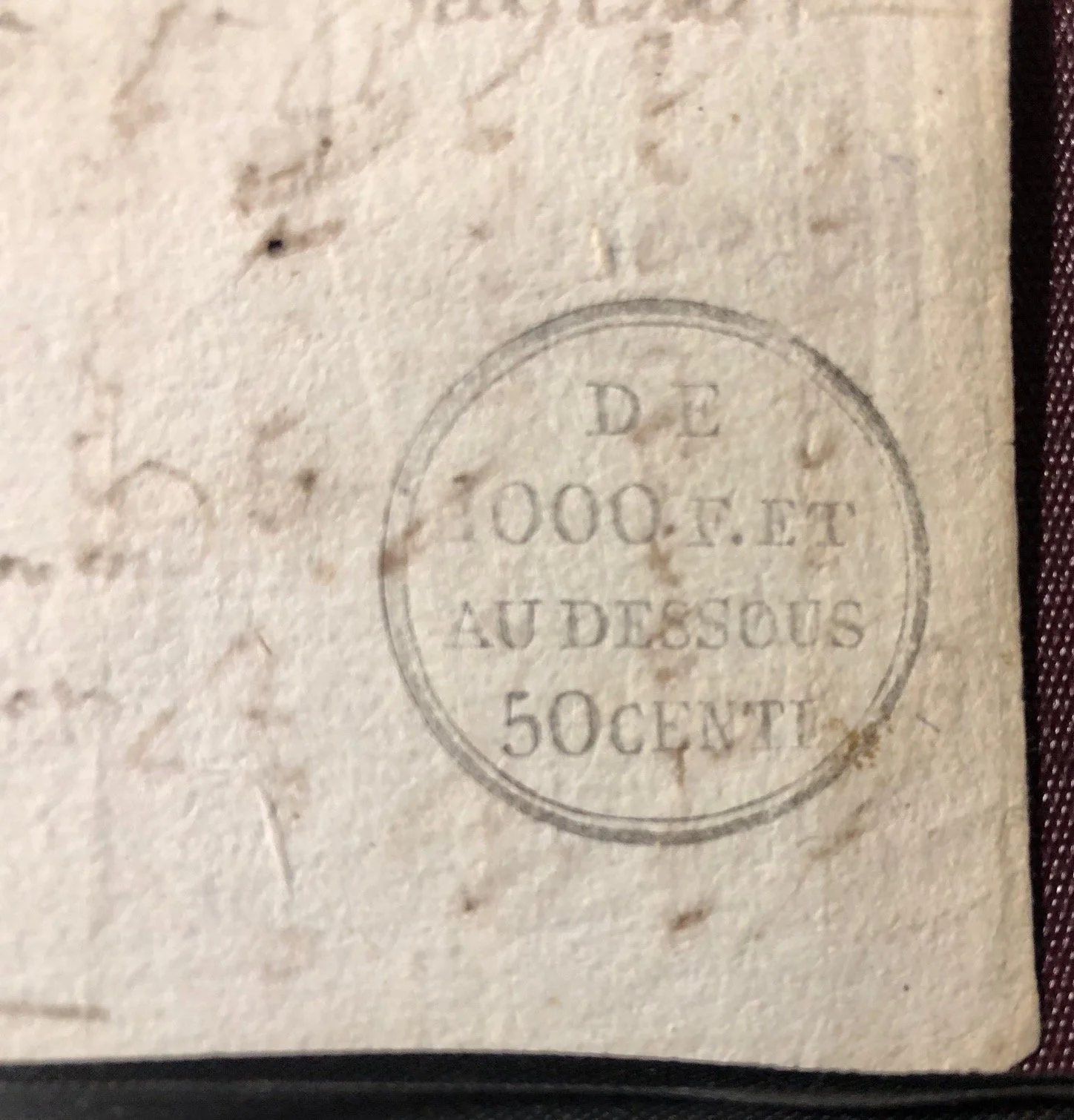
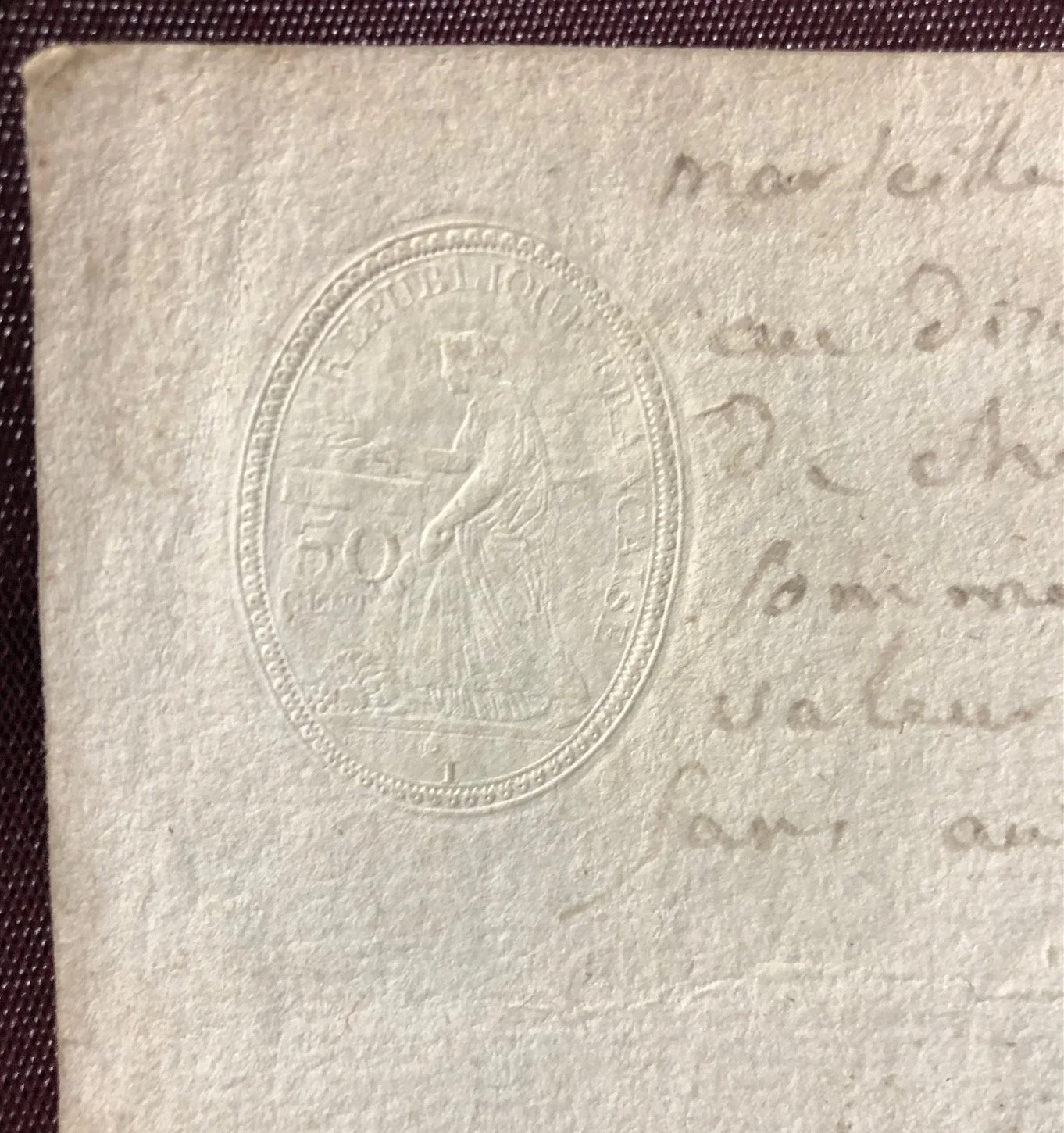
The fiscal stamp on the lower right ("DE 1000 F. ET AU DESSOUS 50 CENTIS") and the embossed Republican seal on the left further mark this as a officially taxed and legally binding commercial instrument of the First French Republic.
250mm x 90mm
Worn; writing faded; some stains.
R800