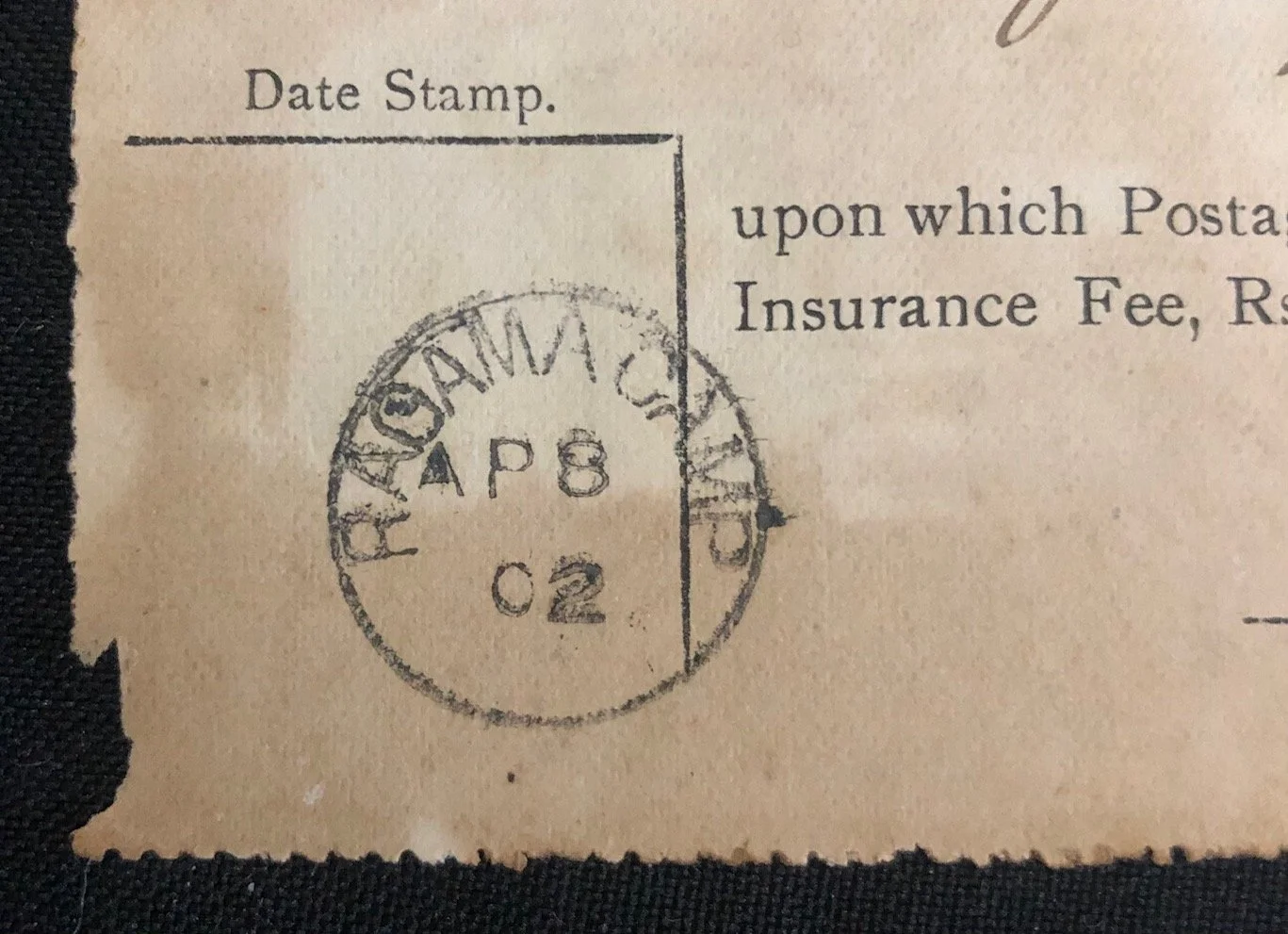
Boer War: Registered Letter Receipt from the Ragama Prisoner of War Camp in Ceylon (1902)
This piece of postal history is a Registered Letter Receipt issued on April 8, 1902, from the Ragama Prisoner of War Camp in Ceylon (now Sri Lanka). It documents a letter sent by a Boer captive, Van B. J. Vorster, to C. J. Vorster in Natal, South Africa.
Several distinct details make this receipt historically significant:
### The Camp for "Irreconcilables"
While the vast majority of the roughly 5,000 Boer prisoners sent to Ceylon were held at the main hill-station camp of Diyatalawa, Ragama Camp served a very specific, punitive purpose. Established by the British War Office in January 1901, Ragama was deliberately set up to segregate the "irreconcilables"—hardline dissidents, political agitators, and foreign volunteers who adamantly refused to sign the oath of allegiance to the British Crown. The camp was notoriously described by British authorities and some unsympathetic contemporary press as housing the "scum of the scum" due to the highly rebellious nature of the foreign nationals and bitter bittereinders interned there.
Context of the War's Final Weeks
The date on the circular cancel stamp—AP 8 02 (April 8, 1902)—places this letter at an incredibly tense moment in history. It was sent just a few weeks before the signing of the Treaty of Vereeniging on May 31, 1902, which officially ended the Second Anglo-Boer War. For an "irreconcilable" prisoner at Ragama, sending a registered letter home at this exact juncture highlights the agonizing final weeks of the conflict when the fate of the Boer republics—and the prisoners' own repatriation or potential permanent exile—hung entirely in the balance.
The Currency Anomaly
The receipt lists the postage and registration fee in "Rs." and "c." (Rupees and cents) rather than South African pounds or British pence. Because the British chose to disperse Boer POWs to remote corners of the Empire (including St. Helena, Bermuda, India, and Ceylon), prisoners had to convert their Transvaal gold sovereigns and funds into local colonial currencies to purchase stamps or utilize camp banking systems. The 18-cent fee noted on the right represents the specific cost of secure colonial wartime mail transit from the Indian Ocean back to Southern Africa.
130mm x 70mm
Glue backed; mellowed.
R750