WW l. Connection to Italian Nobility: The Palazzo Martinengo December 28, 1914
Written on December 28, 1914—just five months into the First World War—by an Englishwoman living among the high nobility in northern Italy.
Italy was still neutral at this time, only joining the Allies in May 1915. The letter captures a unique, tense "limbo" period of the war.
The Fateful Date: August 2, 1914
The writer notes that she last saw Mrs. Rowcliffe on August 2. She writes:
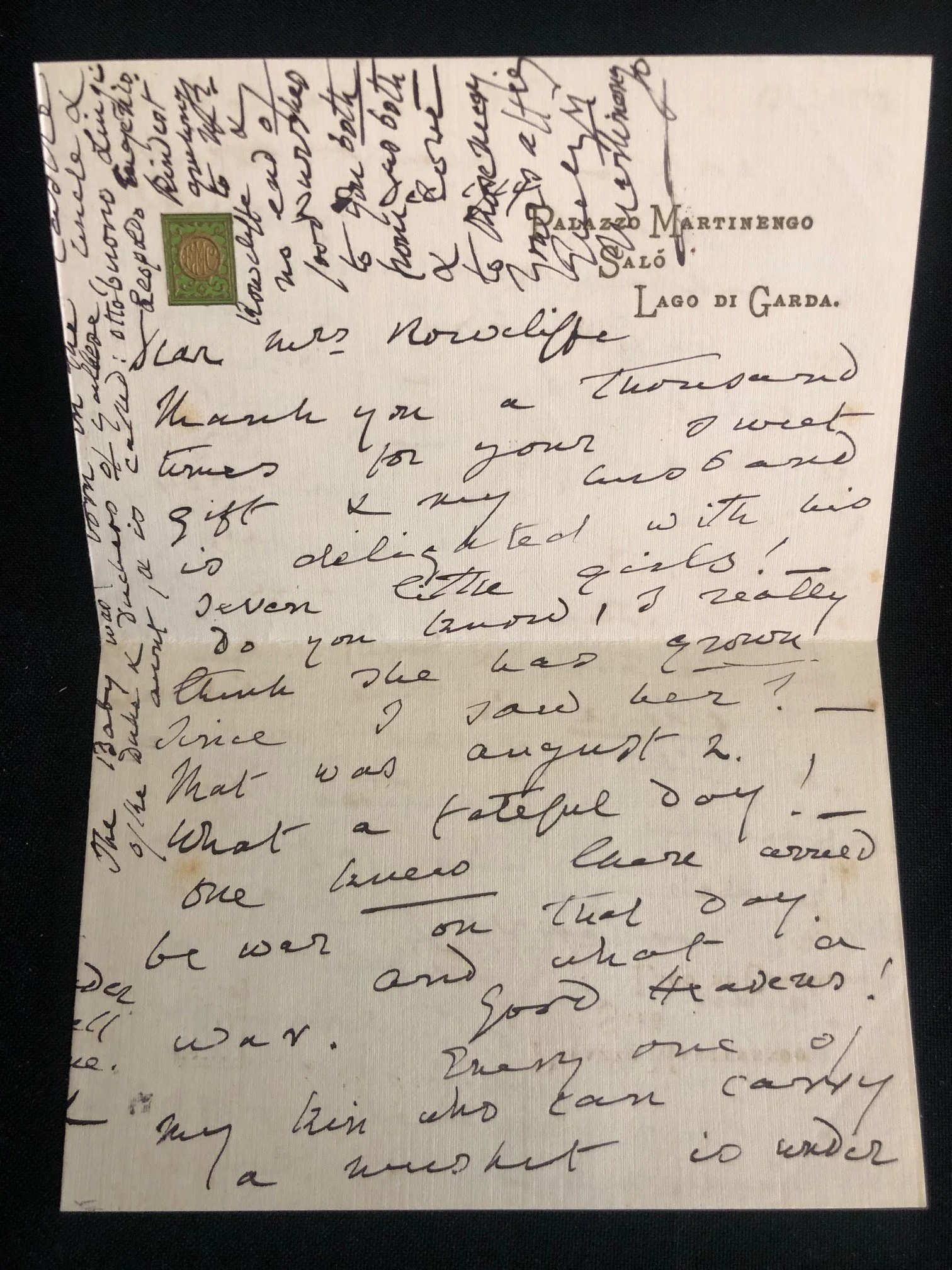
"What a fateful day! — One knew there would be war on that day... and what a war."
August 2, 1914, was the day the British Cabinet met in London in a state of high panic to decide whether to intervene, following Germany's ultimatum to Belgium and mobilization against France. Britain declared war just 48 hours later.
Connection to Italian Nobility: The Palazzo Martinengo
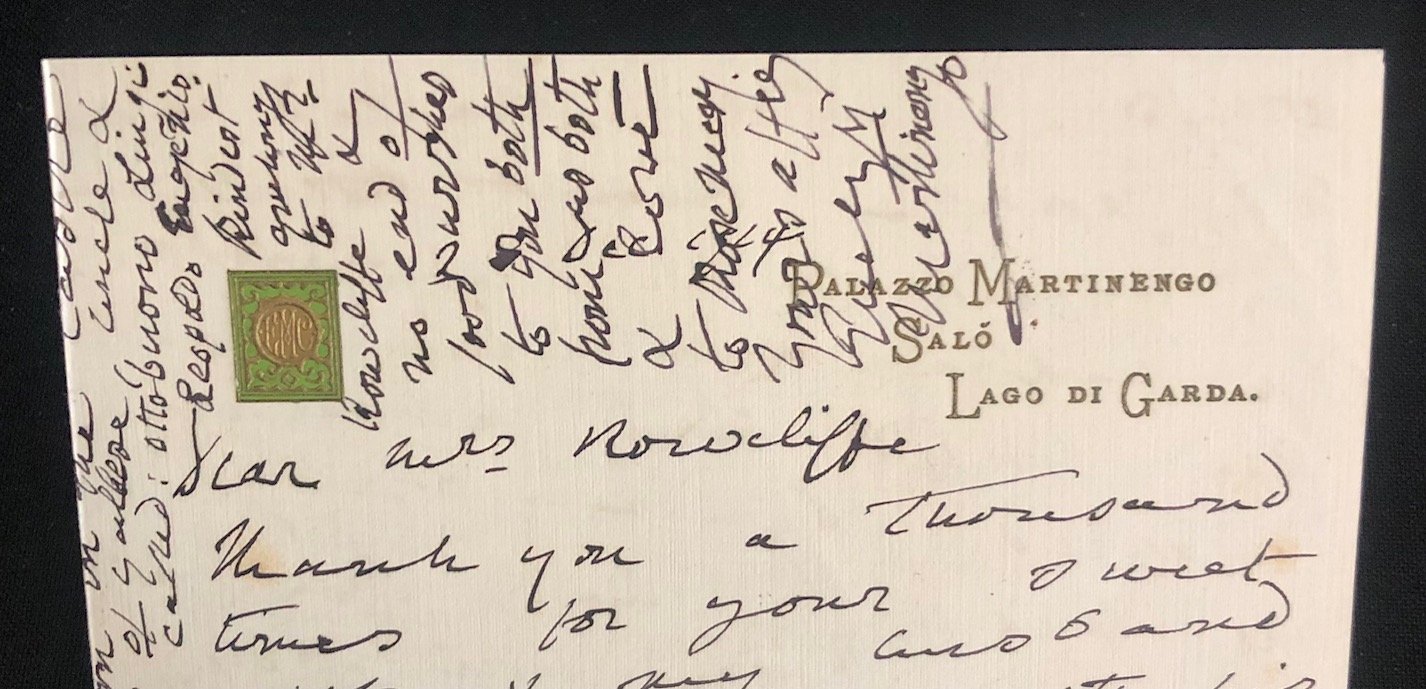
The letter is sent from the Palazzo Martinengo in Salò, on the shores of Lake Garda. The Martinengos were one of the oldest, most powerful aristocratic families in Brescia and Venice.
The writer adds a fascinating, sprawling marginal note on the left side of the paper detailing a high-society birth: "The Baby was born in the Duke & Duchess of Gallese [palace]... Uncle Luigi, Duke of Gallese & Otto Buono Buoncompagni..." This links the circle directly to the Buoncompagni-Ludovisi and Gallese lines—some of the most influential "Black Nobility" and papal aristocracy in Italy.
Total Mobilization: "Every One of My Kin..."
Even though Italy was still officially neutral in December 1914, the writer’s family was British, meaning they were already fully engulfed in the slaughter of the Western Front. At the bottom she writes a chilling line that sums up the early months of total war:
"Every one of my kin who can carry a musket is under arms."
She goes on to describe the tragedy that had already struck her family by Christmas 1914:
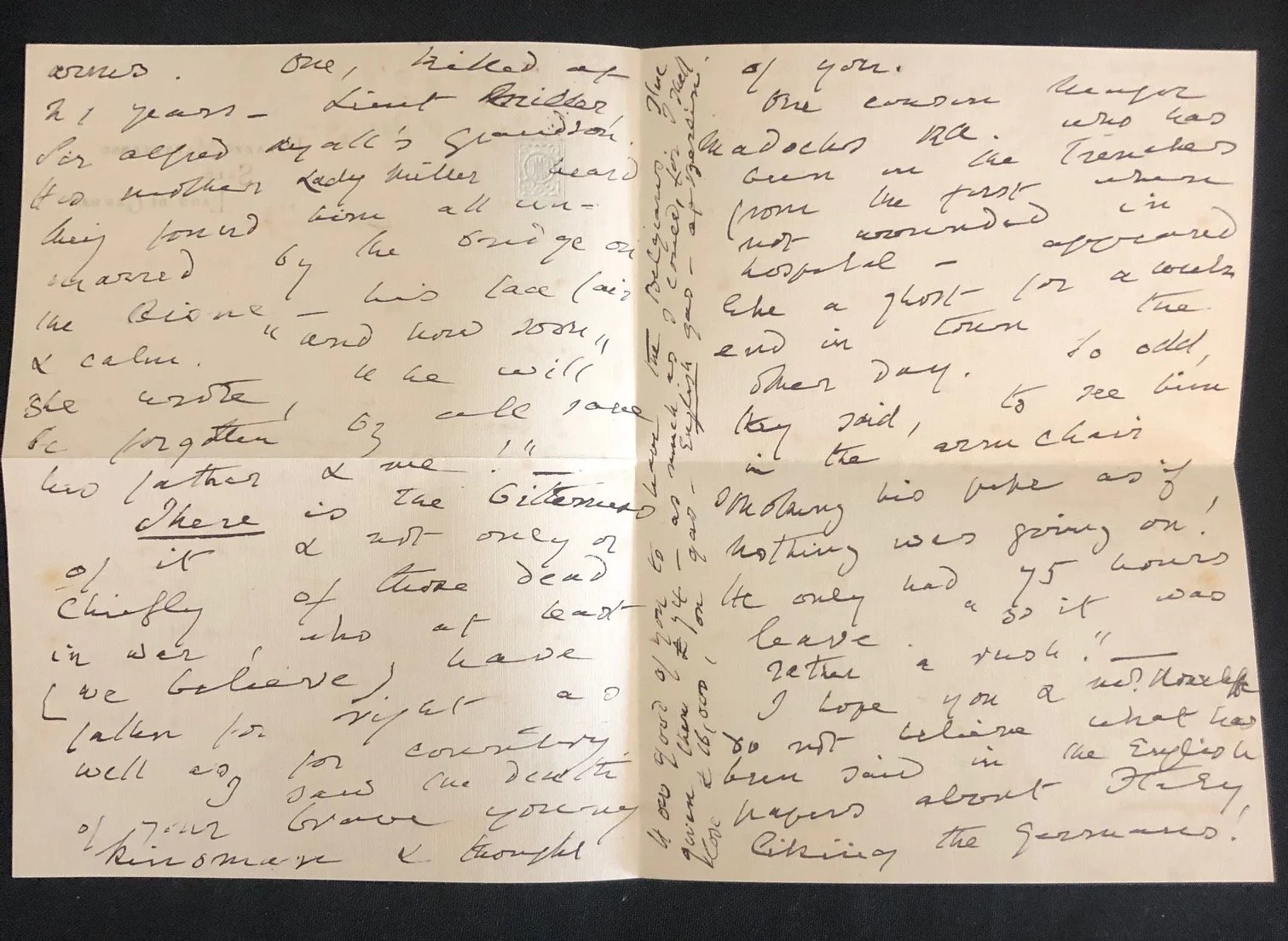
"One, killed at 21 years — Lieut. Knister..."
Another cousin, "Major Madocks R.A." (Royal Artillery), who had been "in the trenches from the first" and came home on a brutally short 75-hour leave looking "like a ghost."
The Italian Frontline Sentiment & Propaganda
Later in the letter the writer gives a fascinating boots-on-the-ground report of what neutral Italians actually thought of the conflict, directly contradicting what was being printed in the UK:
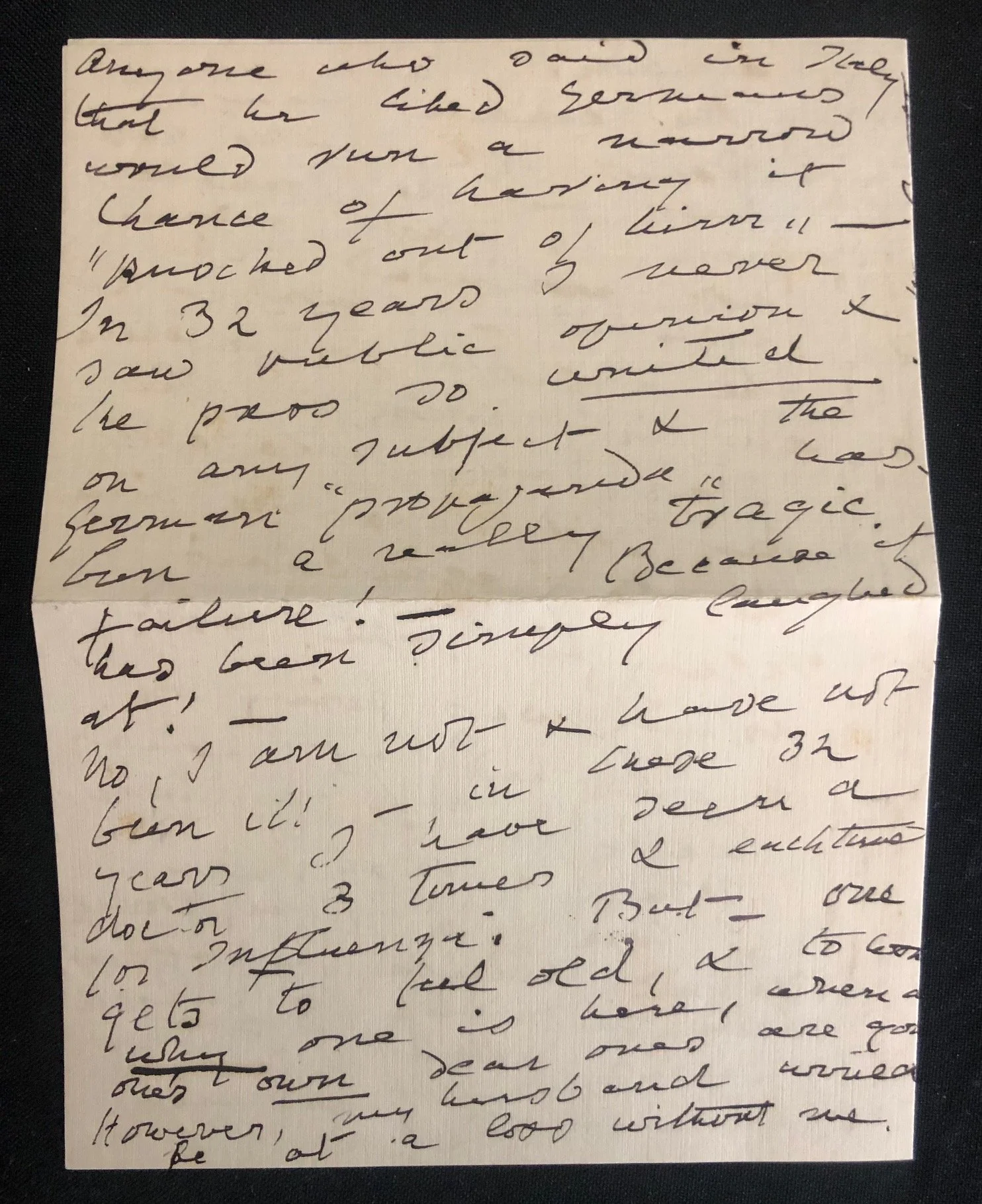
"Do not believe what has been said in the English papers about Italy liking the Germans! Anyone who said in Italy that he liked Germans would run a narrow chance of having it 'knocked out of him'."
She notes that in her 32 years of living in Italy, she had never seen public opinion so fiercely united, calling German attempts at wartime propaganda there a "tragic failure" that was "simply laughed at!" This fierce anti-German sentiment among the Italian public foreshadowed Italy's eventual entry into the war on the side of the Allies a few months later.
Postal History: King Victor Emmanuel III
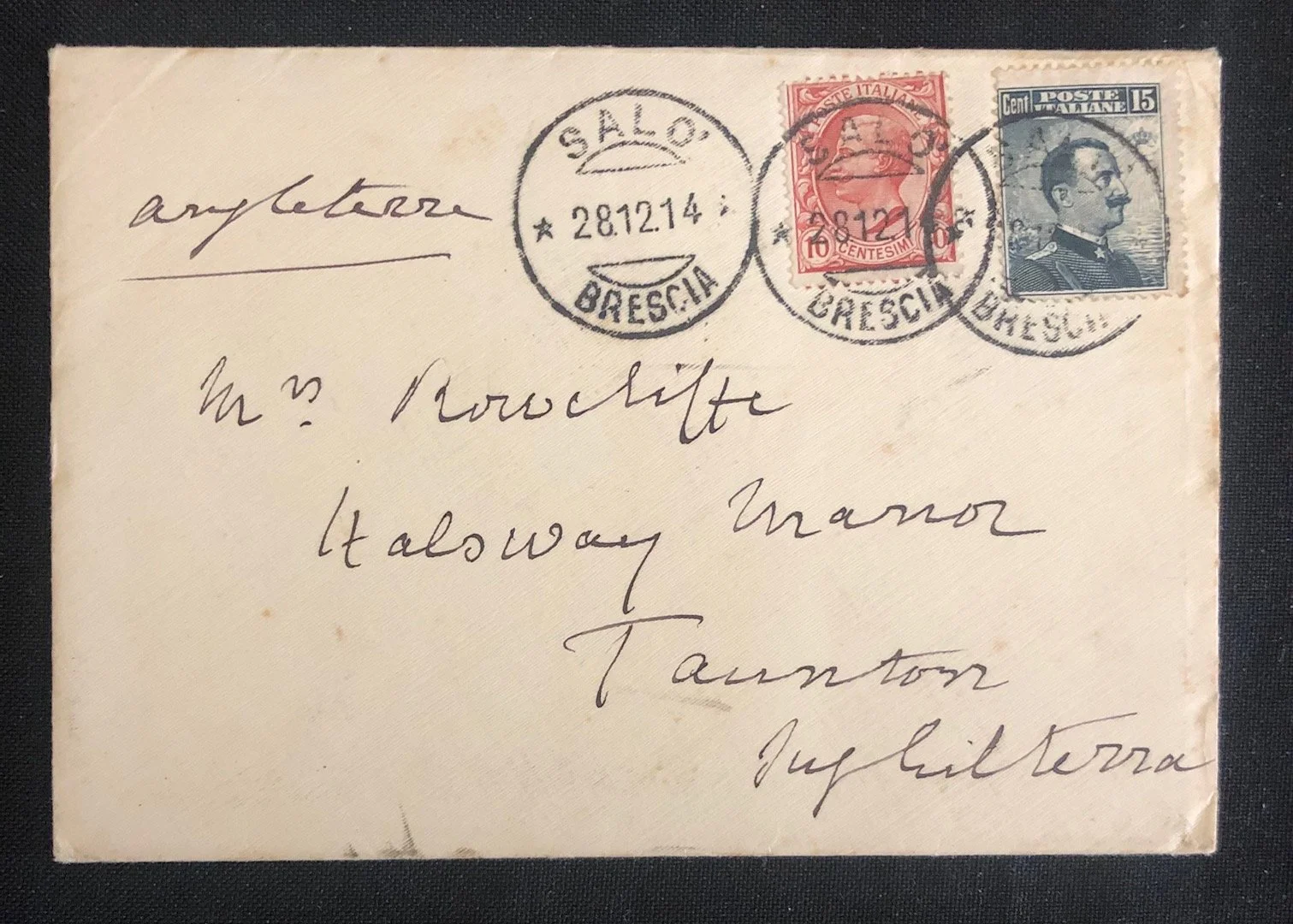
The envelope features two beautiful Italian stamps from the era. The green-grey 15-centesimi stamp depicts King Victor Emmanuel III in full military uniform. The envelope is stamped with a clear postmark from Salò, Brescia, dated 28.12.14, tracking its path out of wartime Italy, across a fractured Europe, to the Rowcliffe estate at Halsway Manor in Taunton, England.
130mm x 175mm
4 page manuscript letter; minor wear.
R1,000