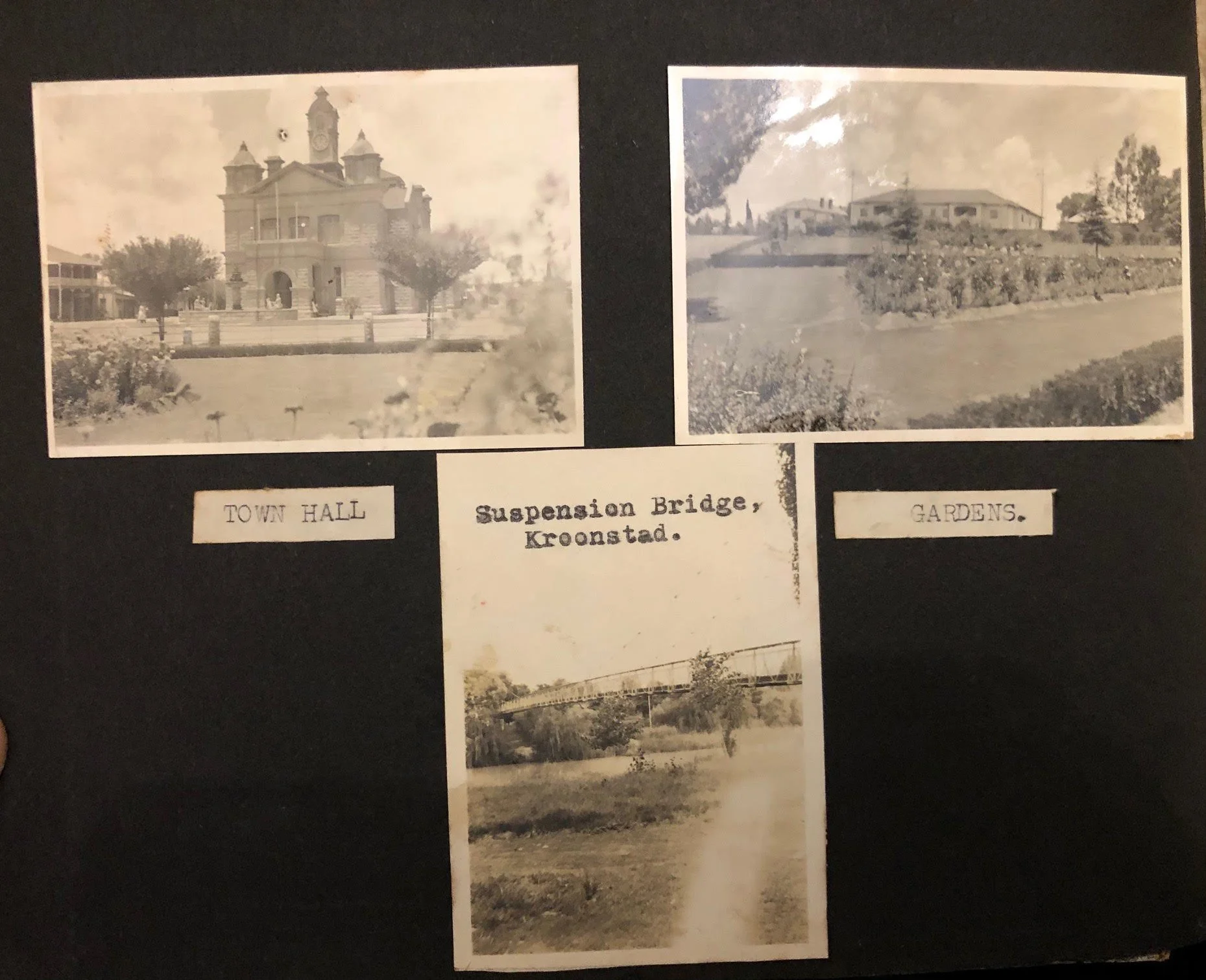
South African civil service presentation album - Department of Justice and Public Service Commission - 1930 - 1938. R2,000
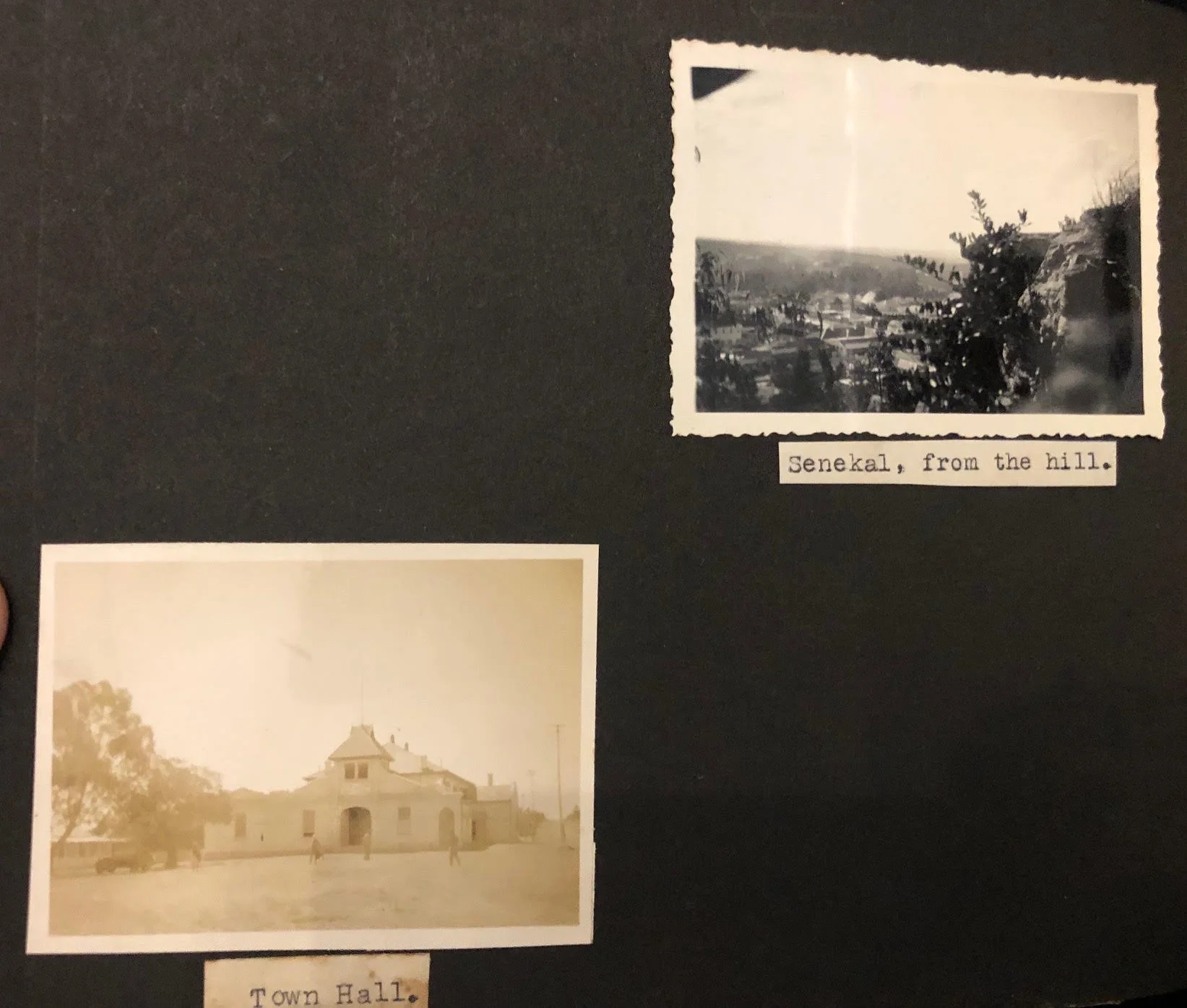
This is a bespoke, typewritten South African civil service career album (likely a retirement presentation album compiled for a retiring magistrate or senior clerk in early 1938) documenting postings across the Union of South Africa's Department of Justice and Public Service Commission between 1930 and 1938.
Several historically notable details stand out across these three leaves:
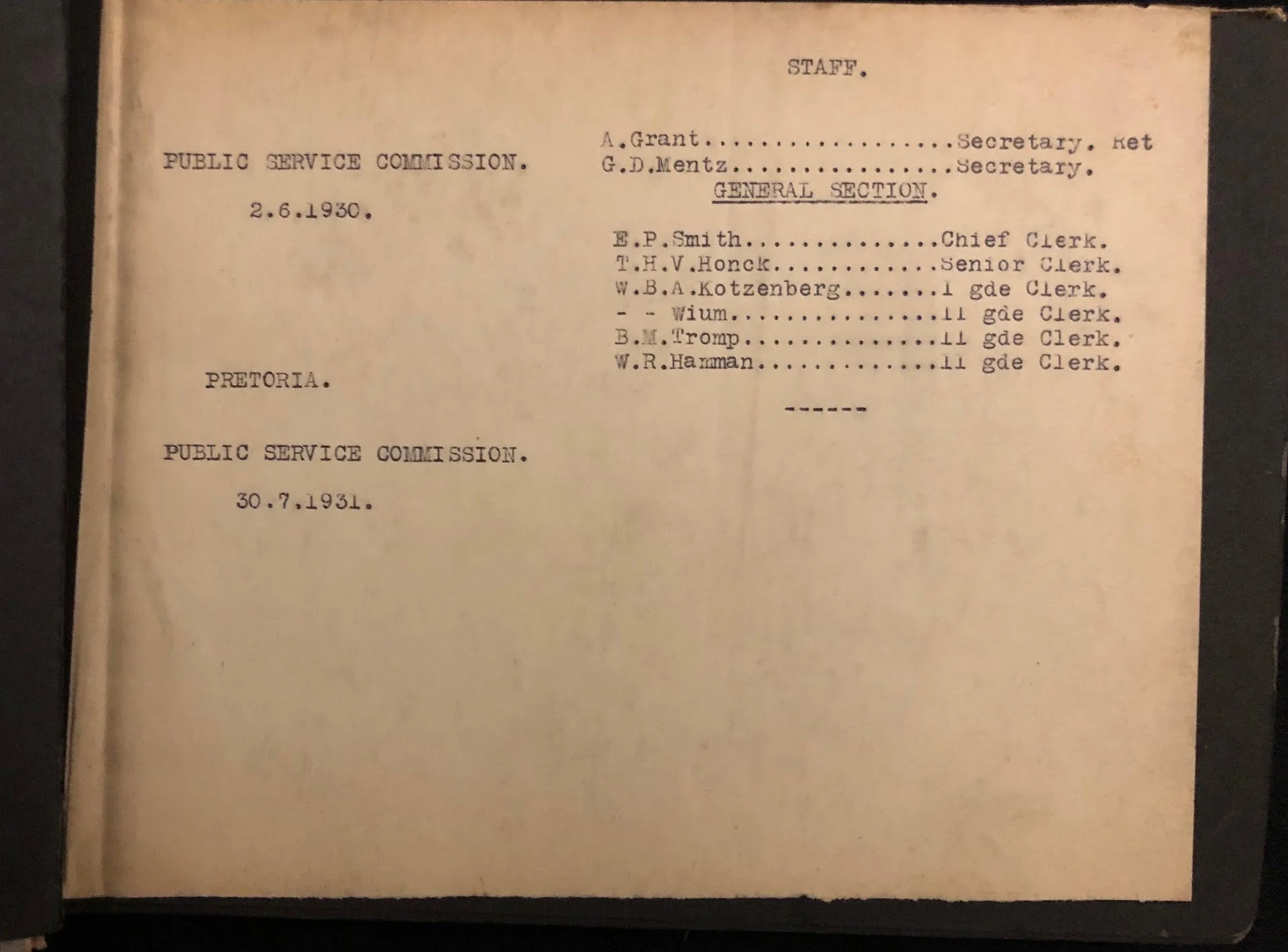
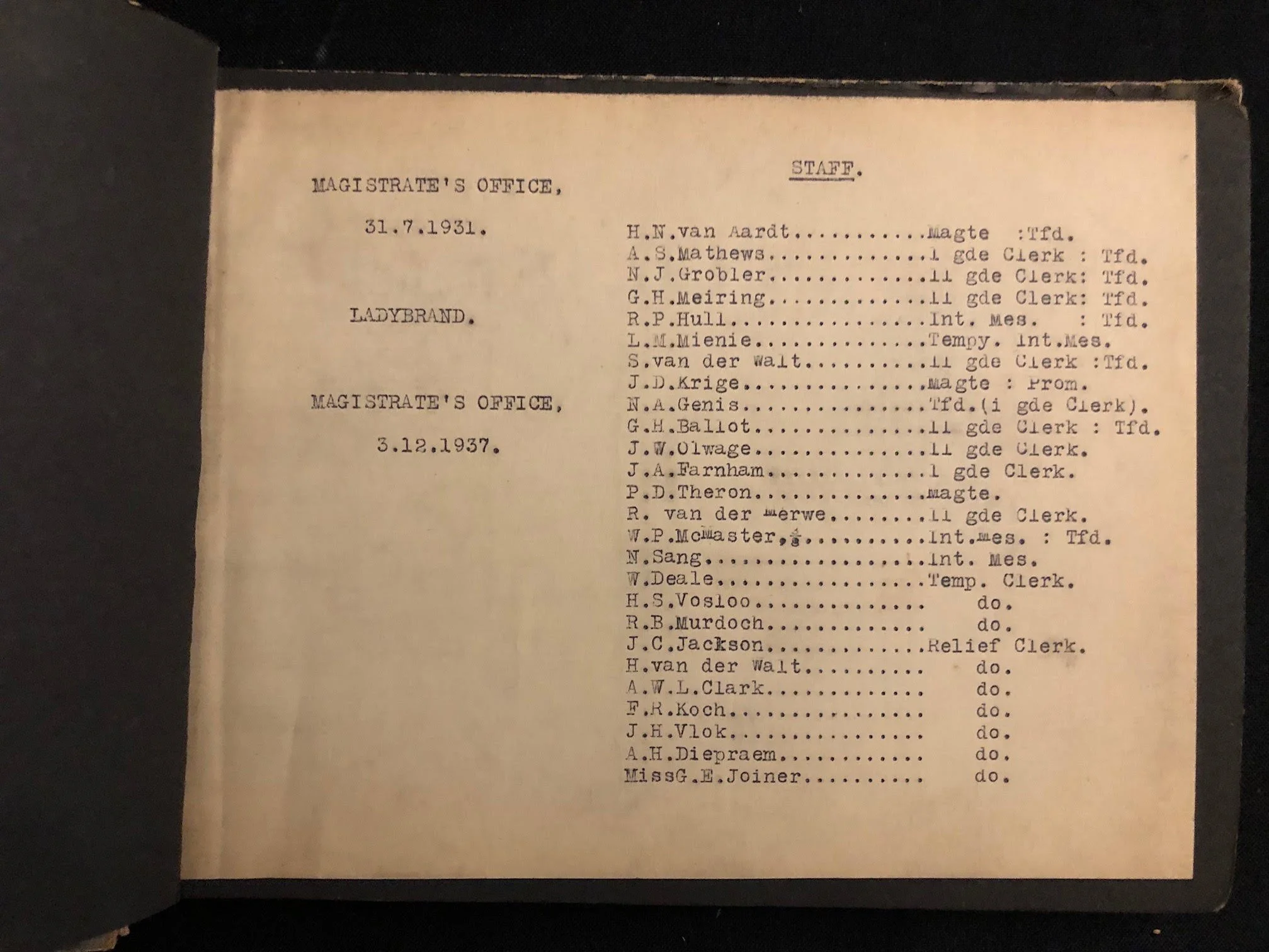
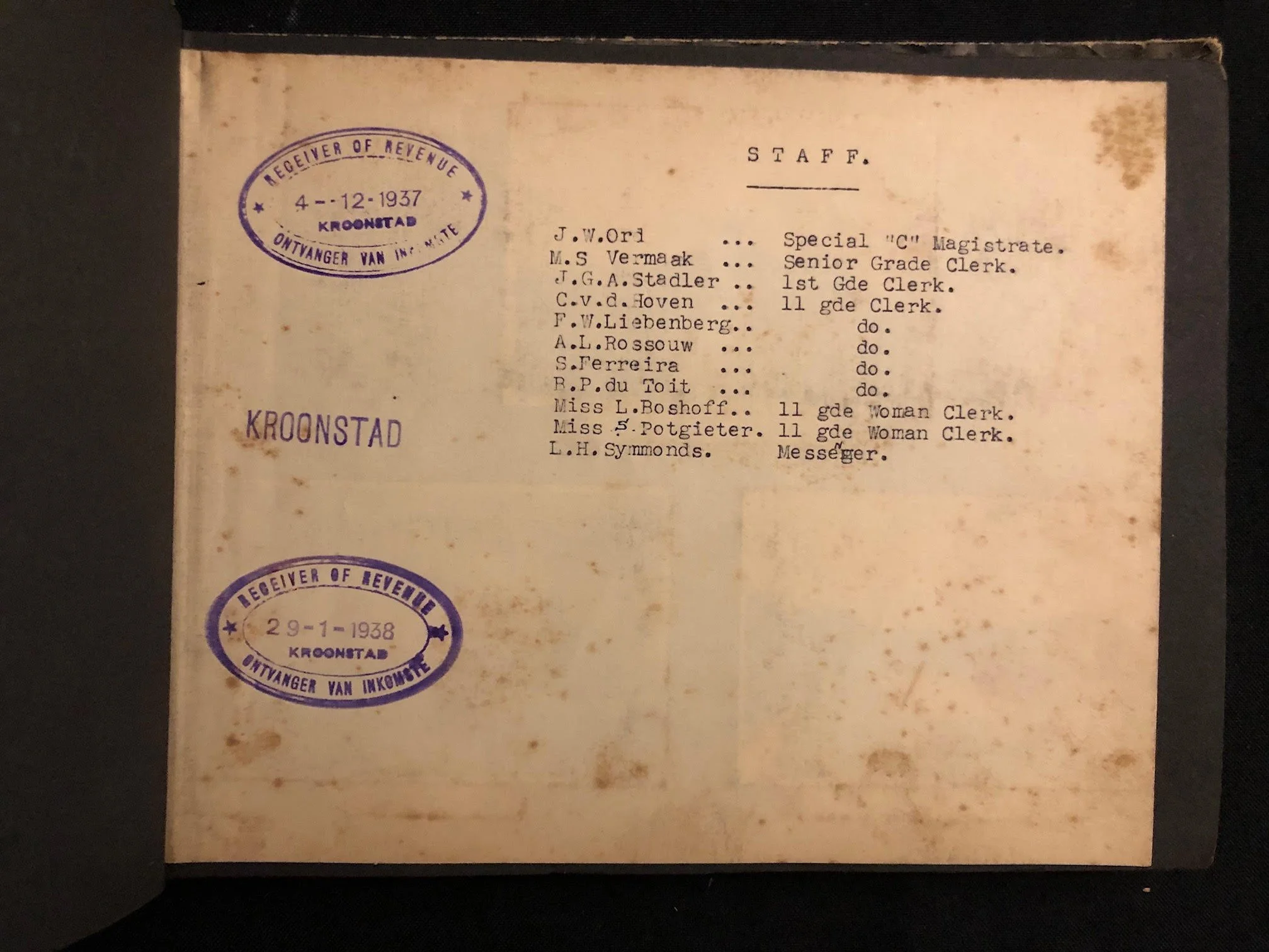
Career Trajectory & Geographic Postings: The album traces an administrative career moving from the Public Service Commission in Pretoria (1930–1931) to the Magistrate's Office in Ladybrand (arriving July 31, 1931, and departing December 3, 1937), and finally to Kroonstad (arriving December 4, 1937, with a closing stamp of January 29, 1938). Notably, the Pretoria leaf features the name W.B.A. Kotzenberg (listed as a 1st Grade Clerk)—Wilhelm Bernhard August Kotzenberg, who later became a prominent senior civil servant, South African Trade Commissioner in London, and the first Chairman of the South African Deciduous Fruit Board/Wool Board administration.
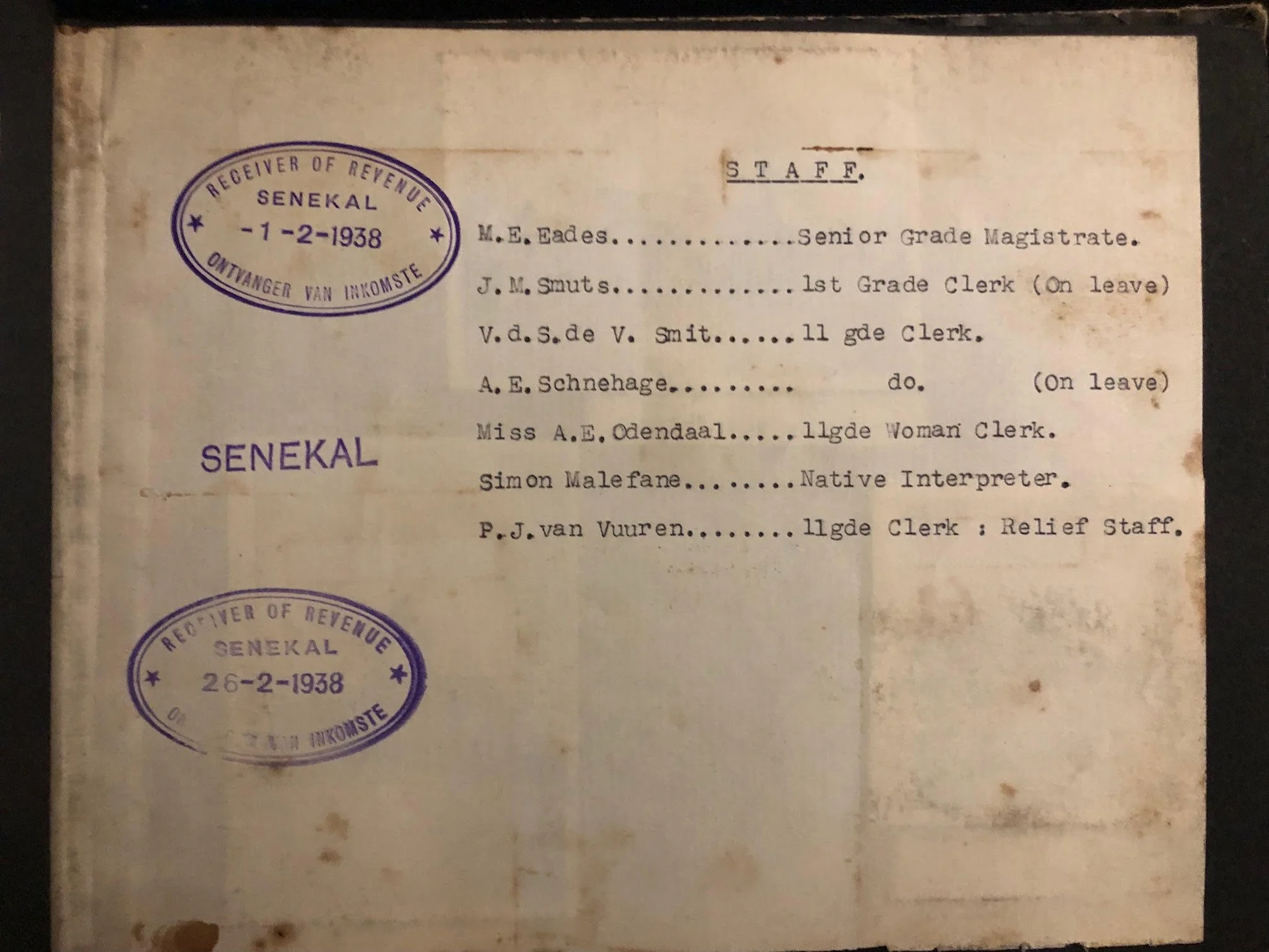
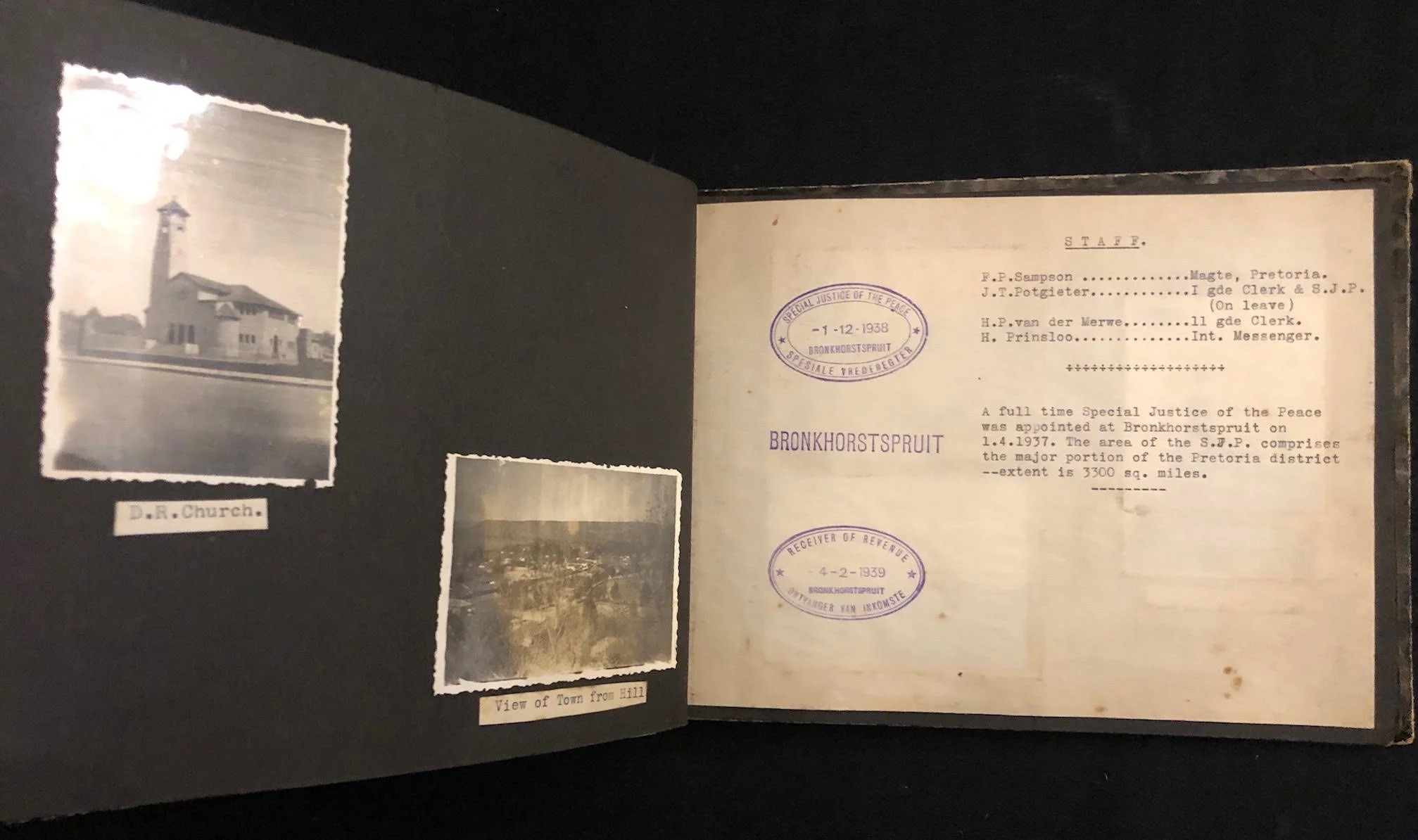
The Strict Hierarchy of the 1930s Union Civil Service: The staffing rosters preserve the rigid, granular grading system established under the Public Service and Pensions Act of 1923. Offices were strictly stratified into Special "C" Magistrates, Chief Clerks, Senior Clerks, 1st and 2nd Grade Clerks (1 gde Clerk / 11 gde Clerk), Relief Clerks, and Interpreter Messengers (Int. Mes.). In rural Free State towns like Ladybrand (bordering Basutoland/Lesotho), the Interpreter Messenger was a vital courtroom link between English/Afrikaans magistrates and Sesotho-speaking litigants.
Gendered Classifications & The Marriage Bar: On the Kroonstad page, female staff members—Miss L. Boshoff and Miss S. Potgieter—are explicitly categorized under a separate rank, "11 gde Woman Clerk". Under South African civil service regulations in the 1930s, women were placed on separate, lower-paying salary scales and were subject to the statutory "marriage bar," which legally required female civil servants to resign upon getting married.
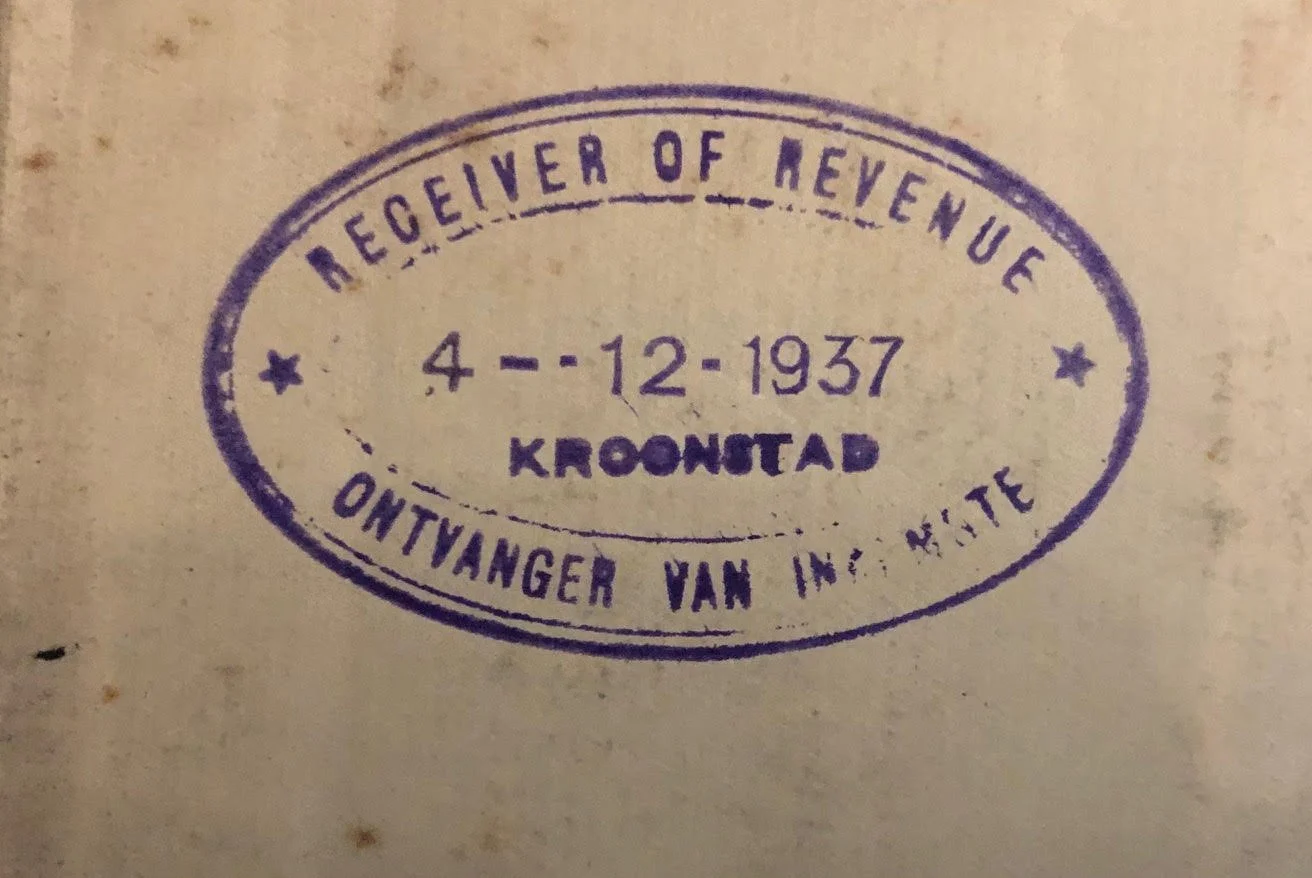
Bilingual State Administration: The purple oval ink stamps from Kroonstad—"RECEIVER OF REVENUE / ONTVANGER VAN INKOMSTE"—reflect the bilingual mandate of the Union of South Africa following the Official Languages of the Union Act of 1925 (which elevated Afrikaans alongside English, replacing Dutch). In the Free State towns, the Magistrate simultaneously acted as the local Receiver of Revenue, making the Magistrate's Office the central hub for tax collection, judicial hearings, and local governance.
The "Tfd." and "Prom." Annotations: On the Ladybrand roster, many names are marked : Tfd. (Transferred) or : Prom. (Promoted). Because the album spans over six years at Ladybrand (1931–1937), it appears to be a cumulative roll call of every colleague who passed through the office during the recipient's tenure there, rather than a snapshot of a single day.
250mm x 180mm x 22mm
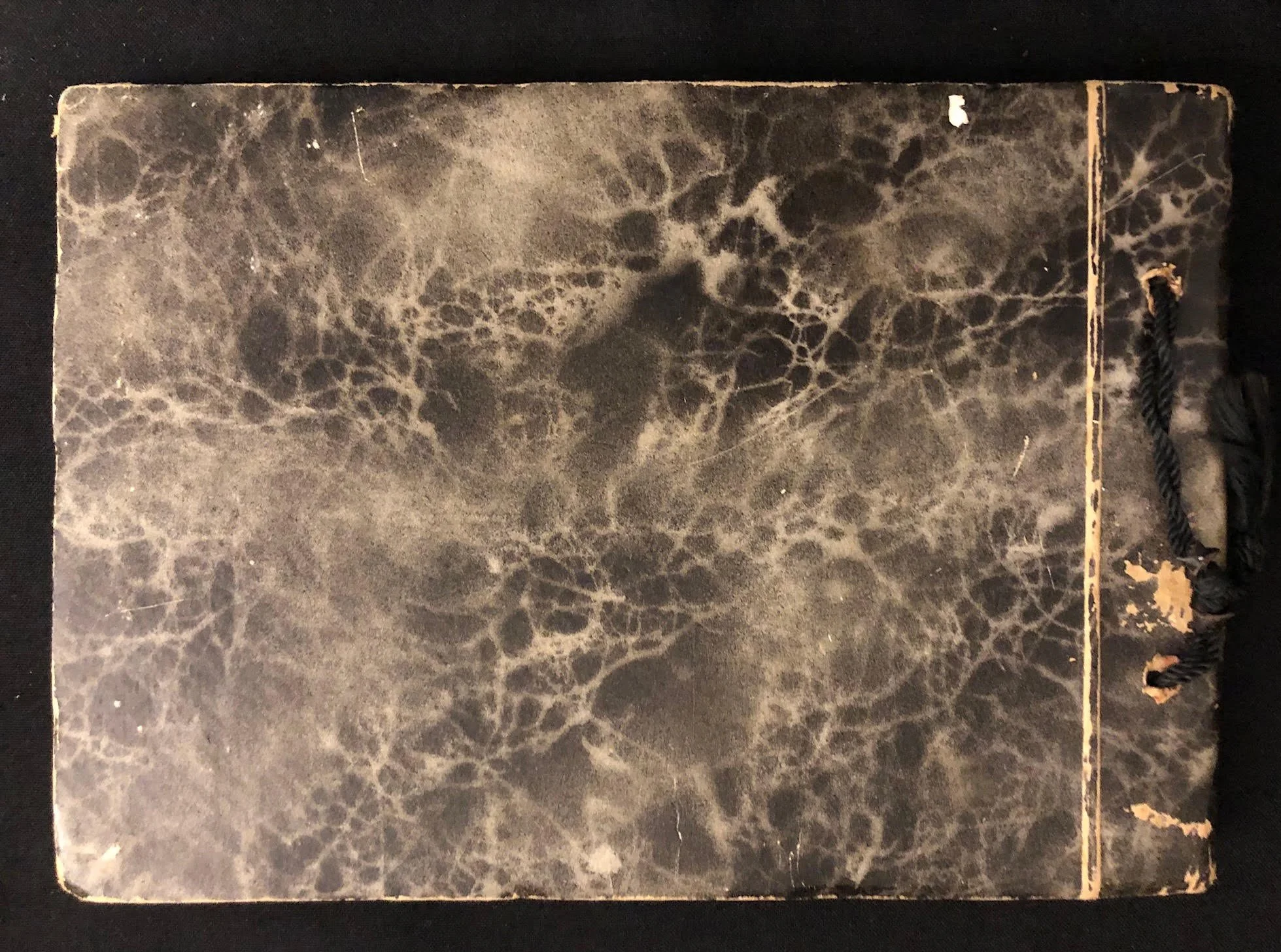
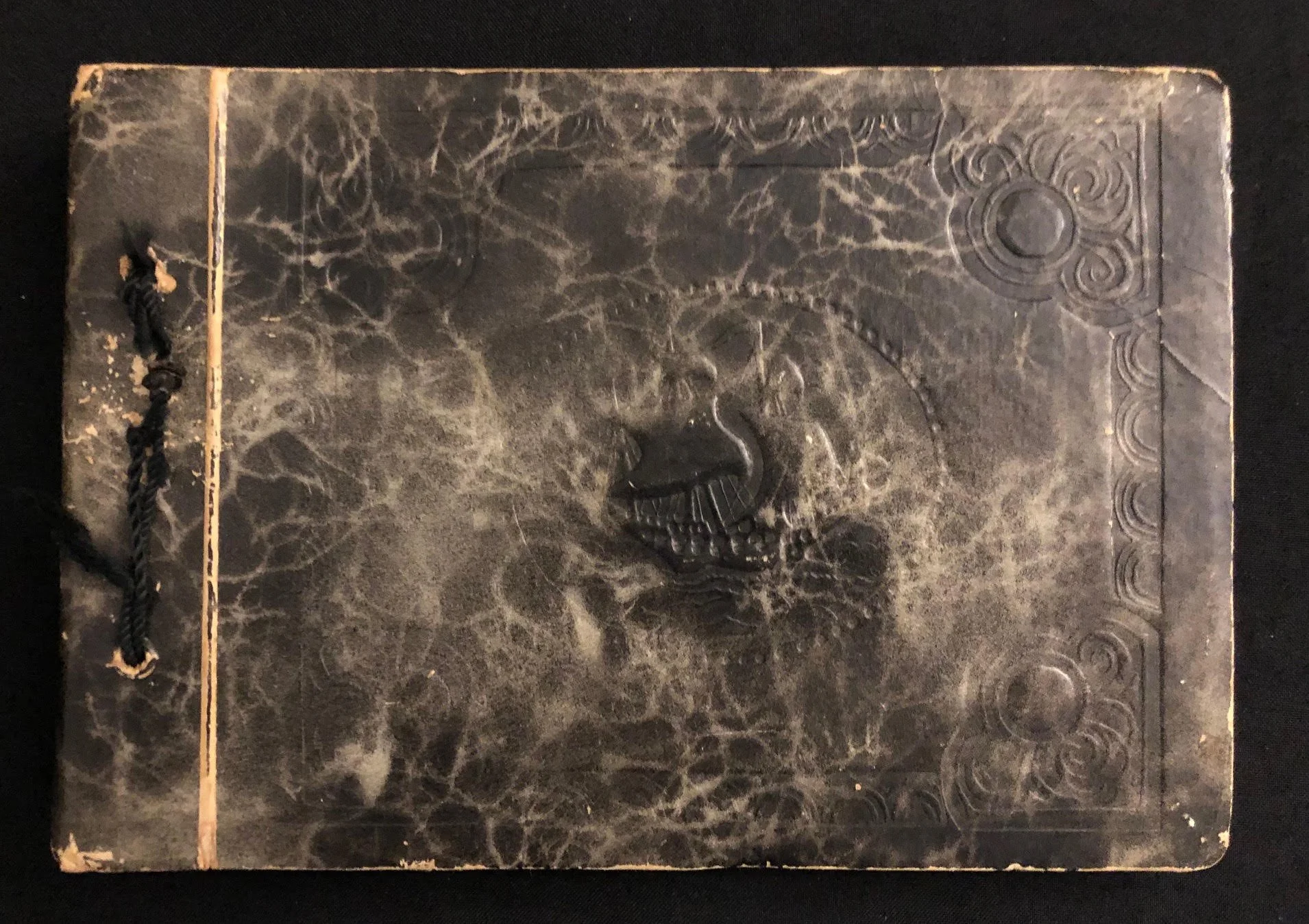
28 pages of typescript and photographs. Wear to the edge of the binding; some creasing to the pages; age-toned pages.
R2,000