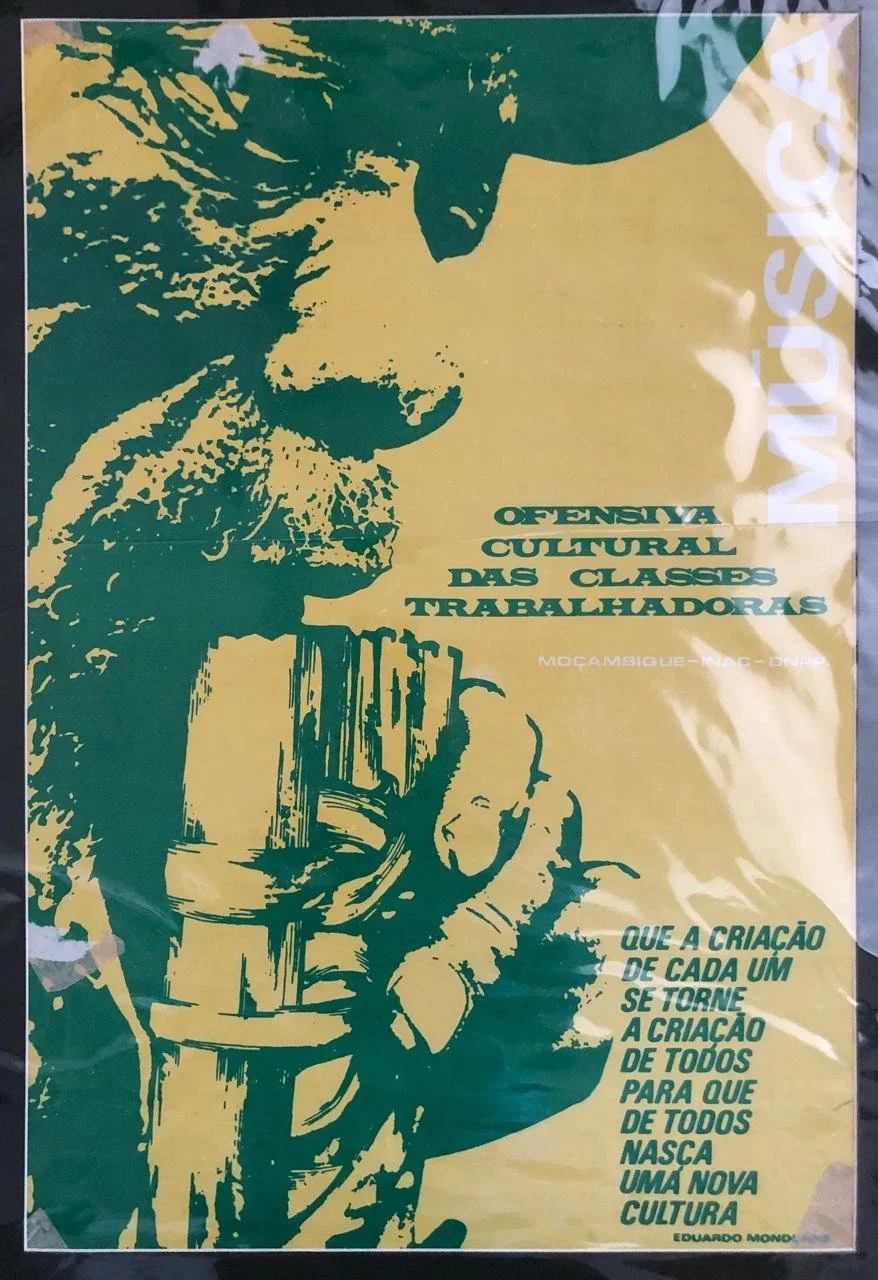
Music of the Workers - Mozambique
21-28 June. (Printed in 1980).
Silkscreen. Quote by Eduardo Chivambo Mondlane (1920-69). He was the founding President of FRELIMO and was assassinated in 1969.
Here are some historically significant aspects of this poster:
1. The "Cultural Offensive" of FRELIMO
The prominent title on the poster, "Ofensiva Cultural das Classes Trabalhadoras" (Cultural Offensive of the Working Classes), refers directly to a state-sponsored campaign launched by the ruling FRELIMO (Frente de Libertação de Moçambique) party in April 1977. Following independence from Portugal in 1975, FRELIMO adopted a Marxist-Leninist stance and viewed culture not merely as entertainment, but as a revolutionary battlefield. The "Cultural Offensive" aimed to dismantle colonial-era mentalities, combat elitism, and mobilize workers and peasants into an active cultural force.
2. Nation-Building Through Music and Instrument Art
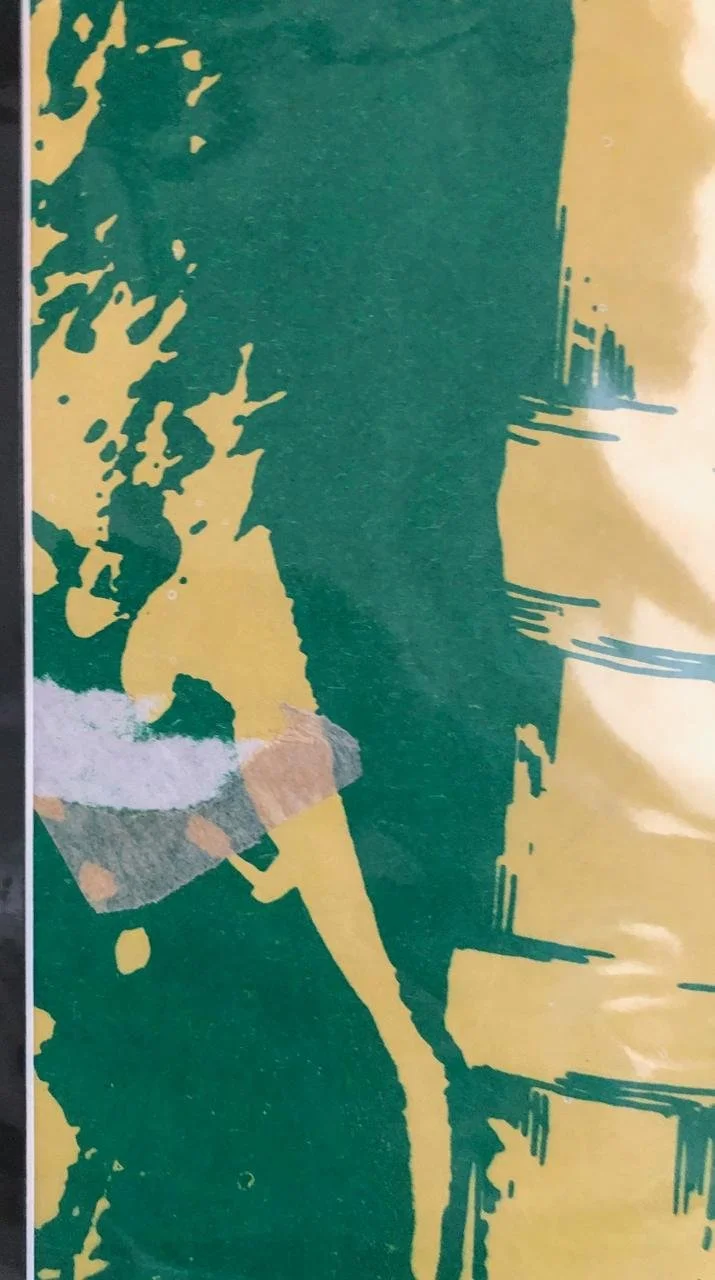
The vertical text reads "MÚSICA", and the central graphic depicts a worker playing a traditional instrument—likely a variant of a timbila (the traditional Chopi xylophone) or a chigufe, highlighted in a bold, two-tone screenprint. Under the colonial regime, indigenous music and traditional art were often suppressed, marginalized, or commercialized for tourist consumption. This poster represents FRELIMO's deliberate effort to rescue and weaponize traditional music, elevating folk artists from rural areas into national icons of the working class. This campaign directly laid the groundwork for massive state-run events like the first National Festival of Traditional Music and Song.
3. The Legacy of Eduardo Mondlane
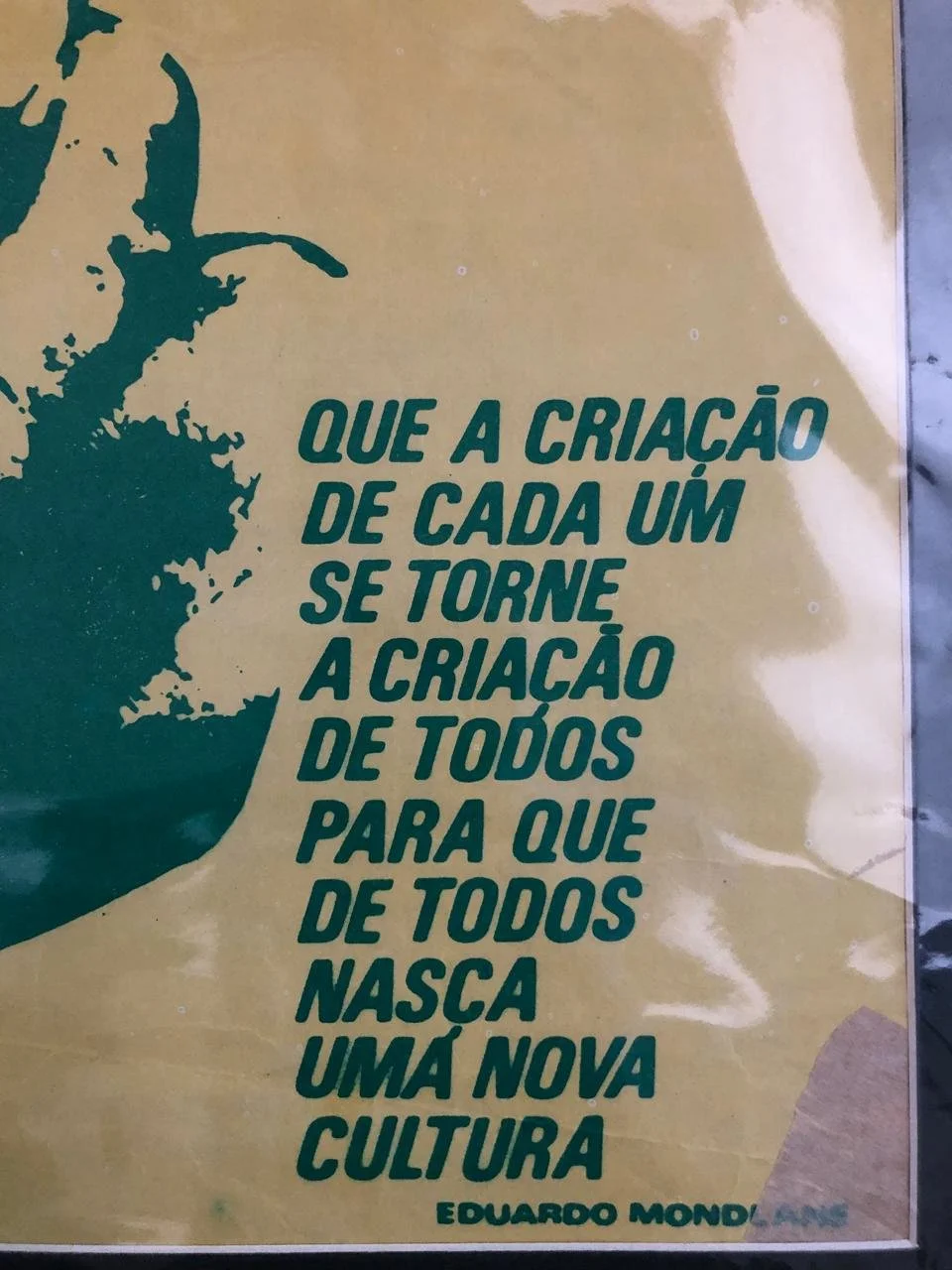
At the bottom right, the poster quotes or attributes its philosophy to Eduardo Mondlane, the intellectual architect and founding president of FRELIMO, who was assassinated via a book bomb in 1969. The poetic Portuguese quote reads:
"Que a criação de cada um se torne a criação de todos para que de todos nasça uma nova cultura."
("May the creation of each individual become the creation of everyone, so that from everyone a new culture may be born.")
By evoking Mondlane's vision of a unified, collective "New Man" (Homem Novo), the poster emphasizes that individual artistic expression must serve the collective community to forge a single, post-colonial Mozambican identity, cutting across old ethnic and regional divisions.
4. Early Post-Colonial Institutional Print
The small text below the main title reads "MOÇAMBIQUE - INAC - DNPP". This marks it as an official government print from the nascent state apparatus:
INAC:Instituto Nacional de Cinema e Audiovisual / Cultura (National Institute of Culture), which was tasked with documenting, controlling, and distributing the new socialist iconography.
DNPP:Direcção Nacional de Propaganda e Publicidade (National Directorate of Propaganda and Publicity).
Mozambican poster design and production of the 1970's and 80's is considered to be of the best quality of all Southern African countries. These bear a strong influence from international socialist symbolism. The poster tradition of Soviet Russia has played a pivotal role in shaping the graphic and typographic language of these posters. Historical events of the liberation struggle were often utilized. (Torn at the corners, tape marks).
430mm x 630mm
Sold June '26