The Transport and General Workers Union Anti-Apartheid Poster (c.1985)
A piece of South African resistance ephemera, capturing a moment when the labour movement became the most powerful internal force against the apartheid state.
The Birth of "Social Movement Unionism"
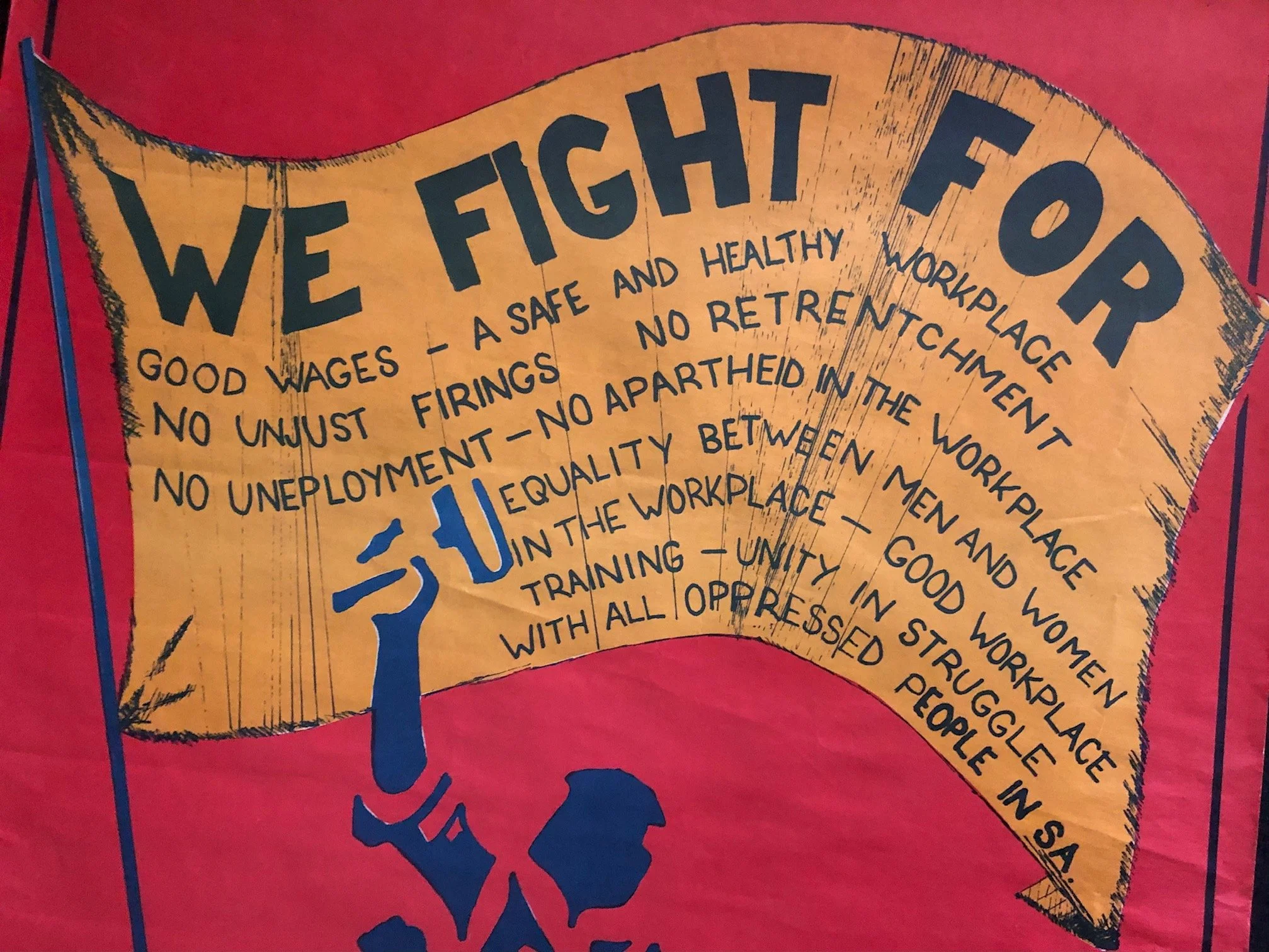
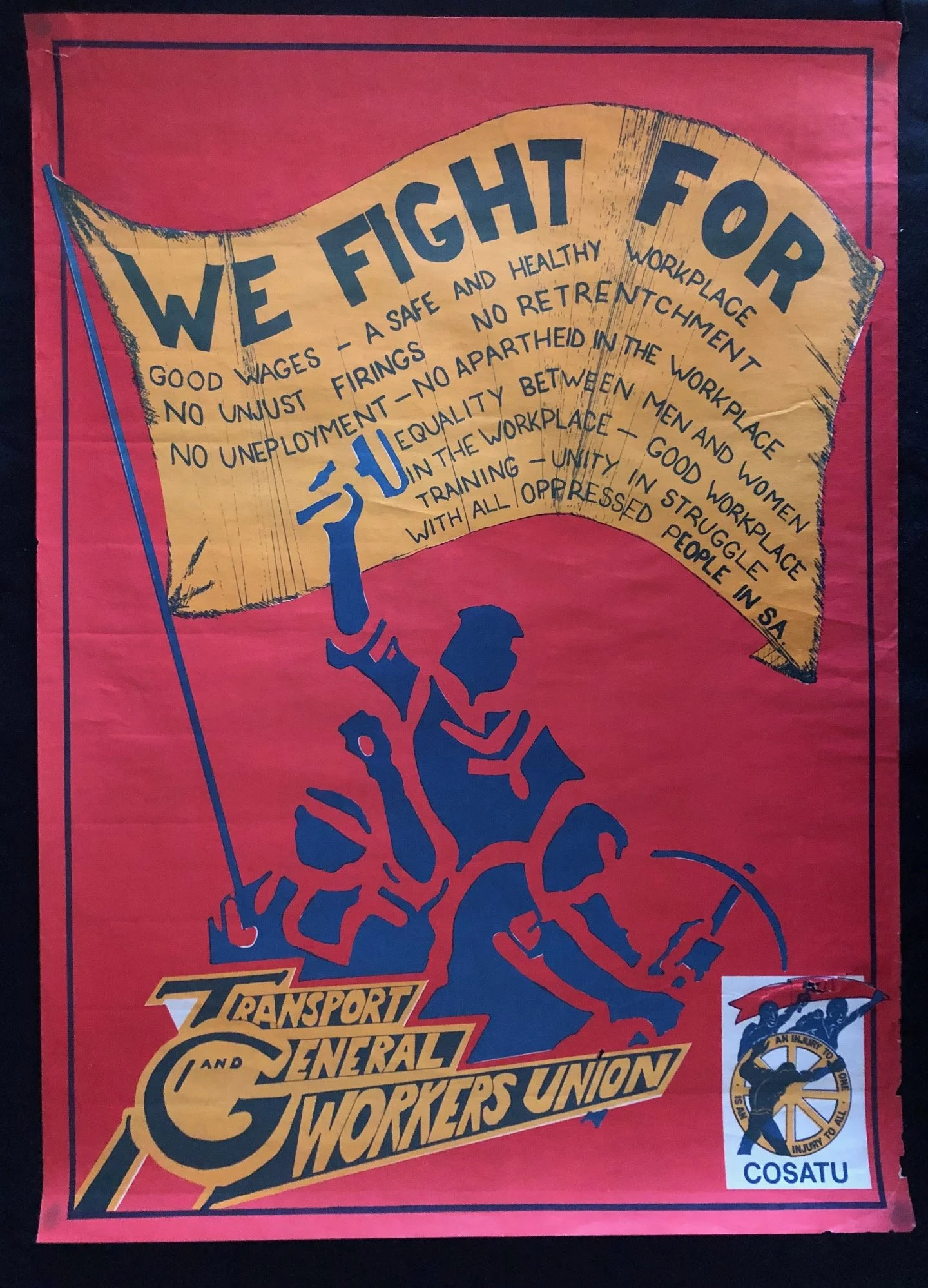
The demands written on the yellow flag are a blend of traditional labour rights and broader political liberation.
It lists standard union demands: "Good Wages," "A Safe and Healthy Workplace," and "No Retrenchment."
But it immediately connects them to national political goals: "No Apartheid in the Workplace" and "Unity in Struggle With All Oppressed People in SA."
This reflects a specific 1980s strategy known as social movement unionism. Because political organizations like the ANC and PAC were banned and operating in exile, trade unions stepped into the vacuum. They realized they couldn't just fight for a few extra cents an hour on the factory floor; they had to fight the entire political system that disenfranchised their workers.
The Roots in Durban
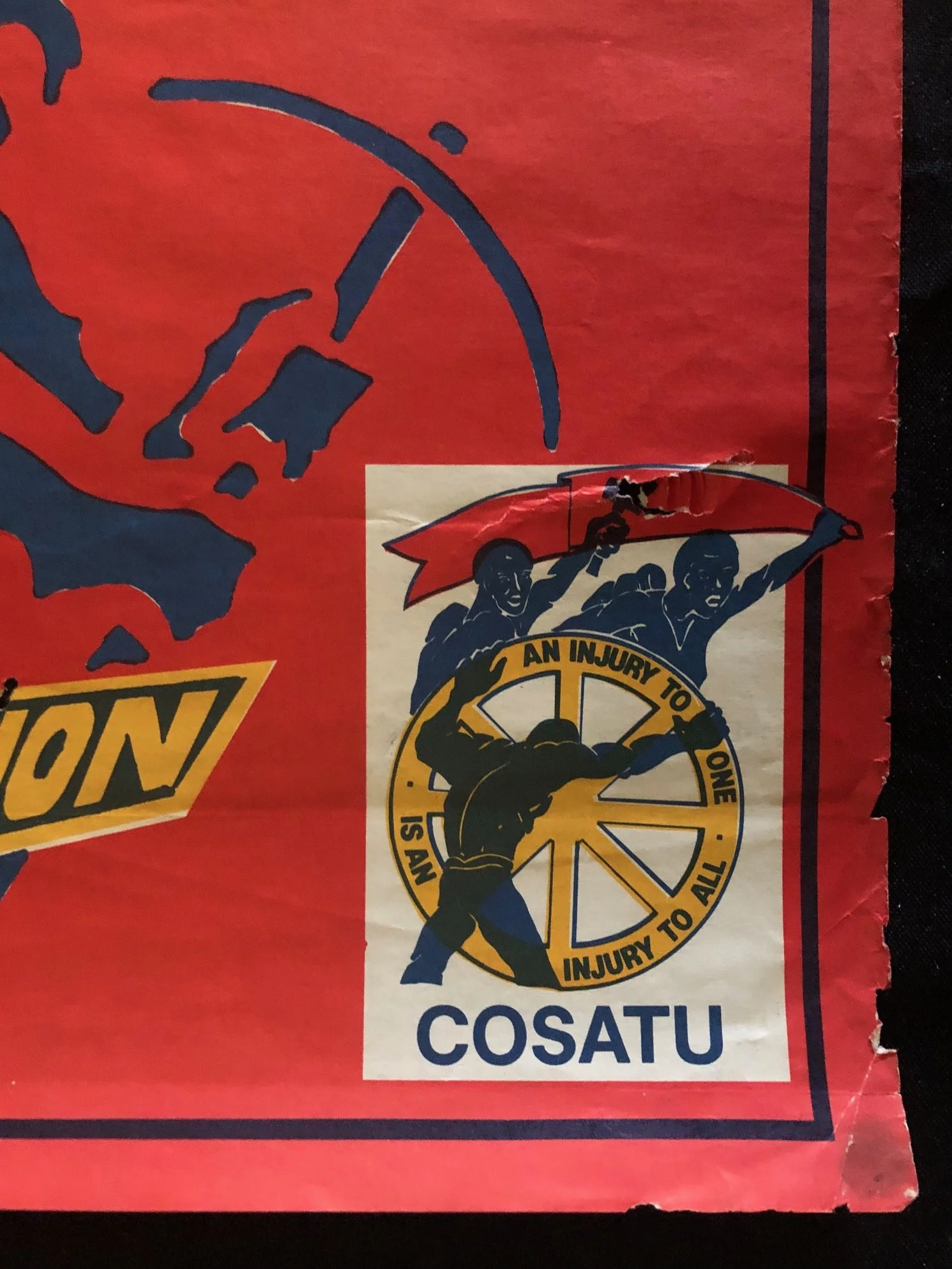
The Transport and General Workers Union (TGWU) was deeply rooted in the historic 1973 Durban strikes, which revitalized the black trade union movement in South Africa after a decade of severe state repression. Furthermore, COSATU (whose logo is in the bottom right corner) was officially launched at a massive rally at the King's Park Stadium in Durban in December 1985. The TGWU was one of the founding affiliates of this new mega-federation.
Progressive and Intersectional Demands
One of the most historically interesting lines on the flag is the demand for "Equality between men and women in the workplace."
While it seems standard today, pushing for explicit gender equality was a hard-fought internal battle within the heavily male-dominated, patriarchal trade union structures of the 1970s and 80s. Including it front and center on a mass-produced poster shows the growing influence of female union organizers who demanded that the liberation struggle include women's rights from the ground up.
The Visual Language of the Struggle
Aesthetically, this is a classic example of late-apartheid resistance graphic design.
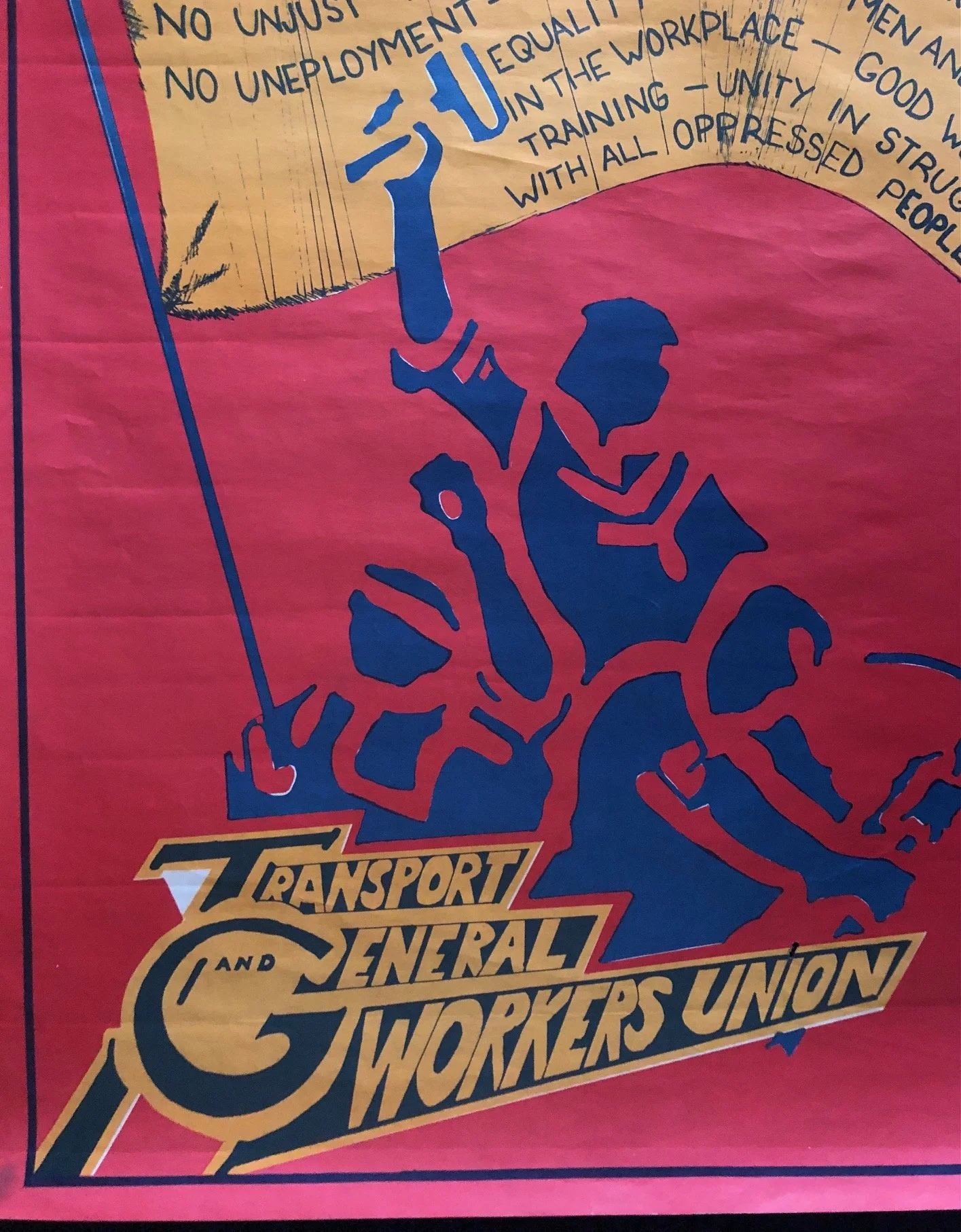
The Silkscreen Style: This artist utilizes bold, high-contrast flat colours (red, gold, and blue) that were easy to screen-print in large volumes at underground or union-affiliated print shops.
The COSATU Logo: The bottom right features the iconic COSATU logo—a wheel symbolizing the economy, powered by three figures representing the workforce, alongside the legendary slogan: "An injury to one is an injury to all."
The Iconography: The raised fist gripping the flag is a universal symbol of proletarian solidarity, but the silhouetted figures holding tools specifically represent the diverse, often unskilled or semi-skilled laborers that the TGWU organized, including drivers, cleaners, and security guards.
575mm x 415mm
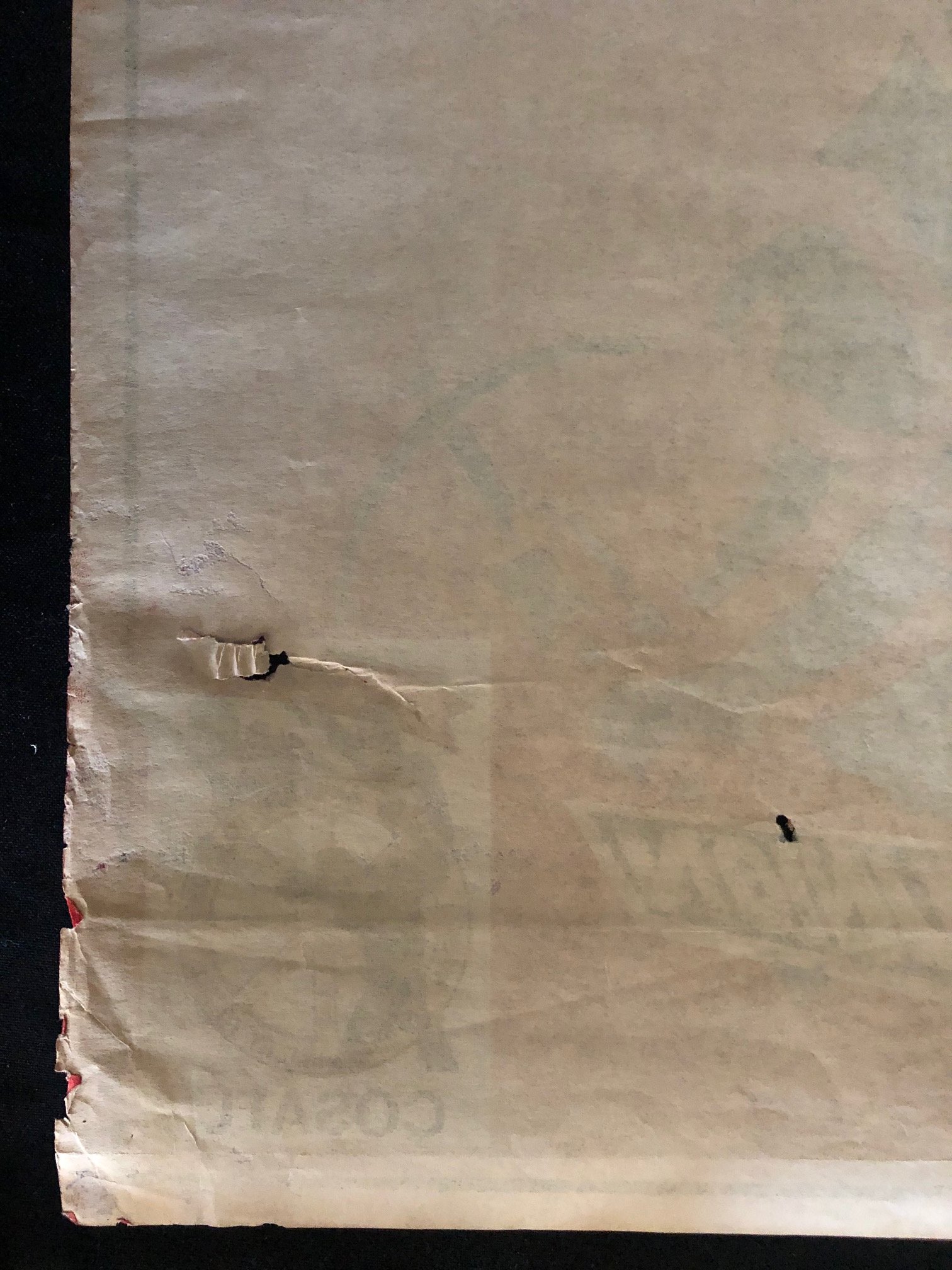
Prestick residue in the corners; mellowed; torn at the edges.
R2,500