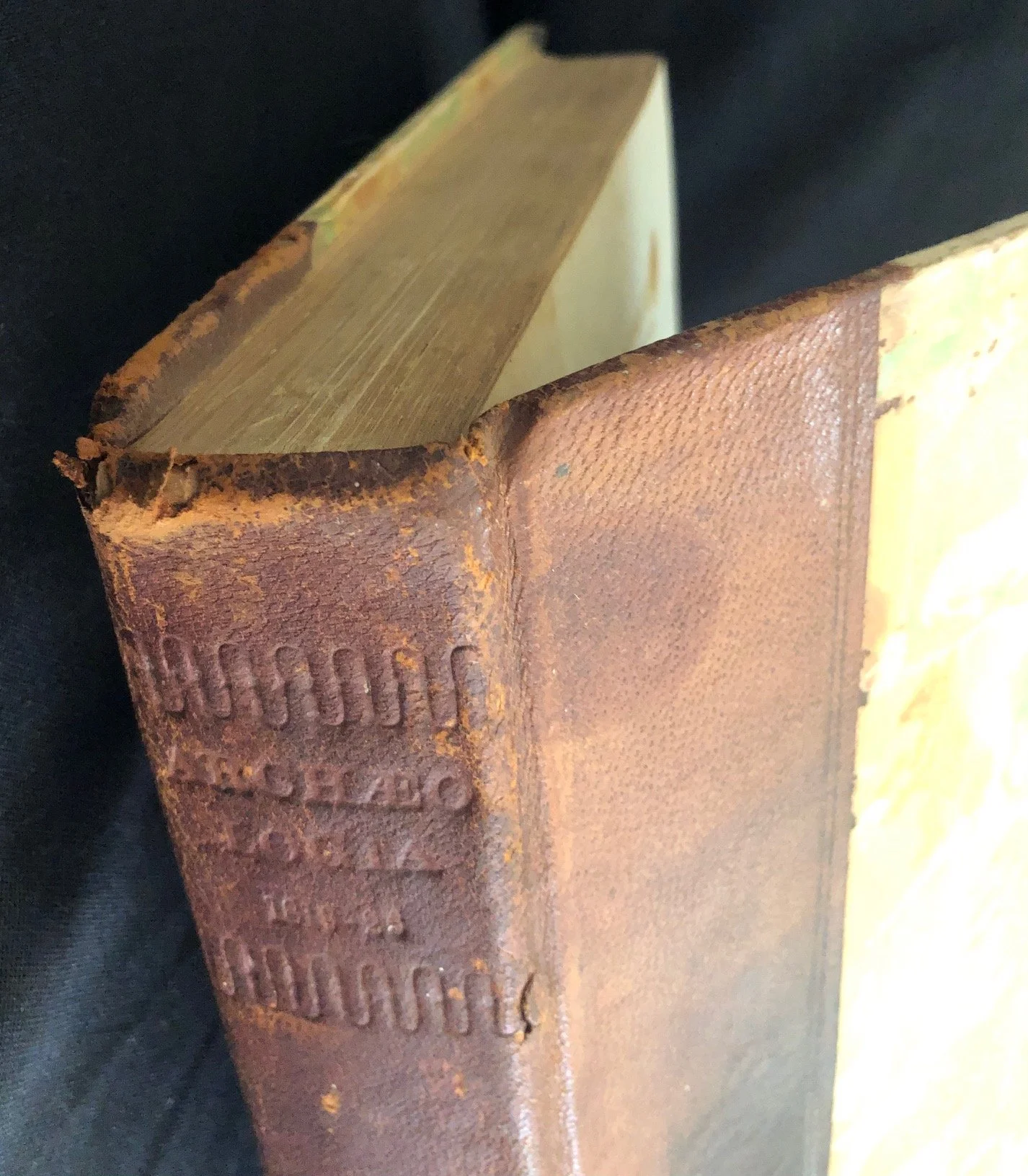
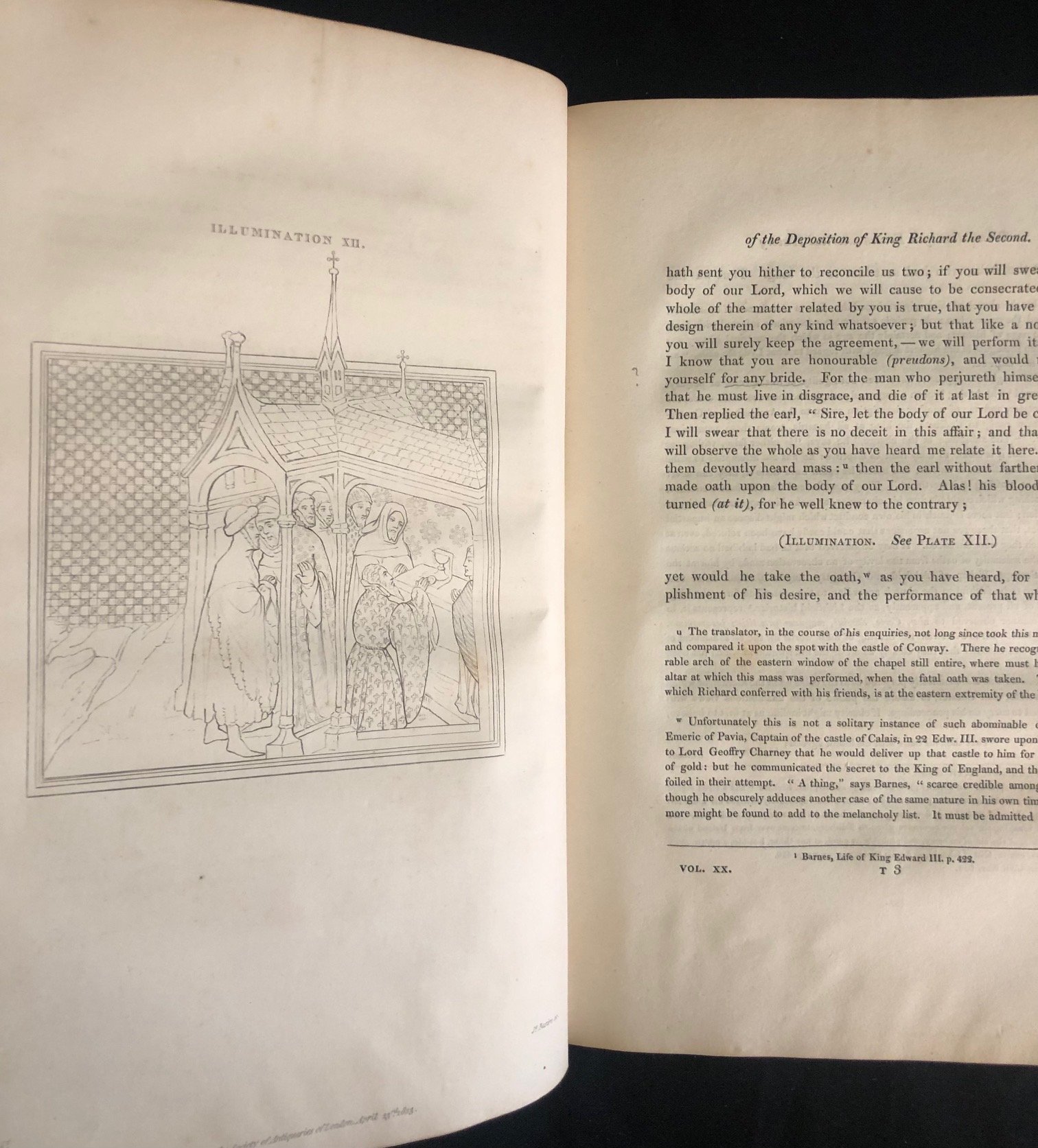
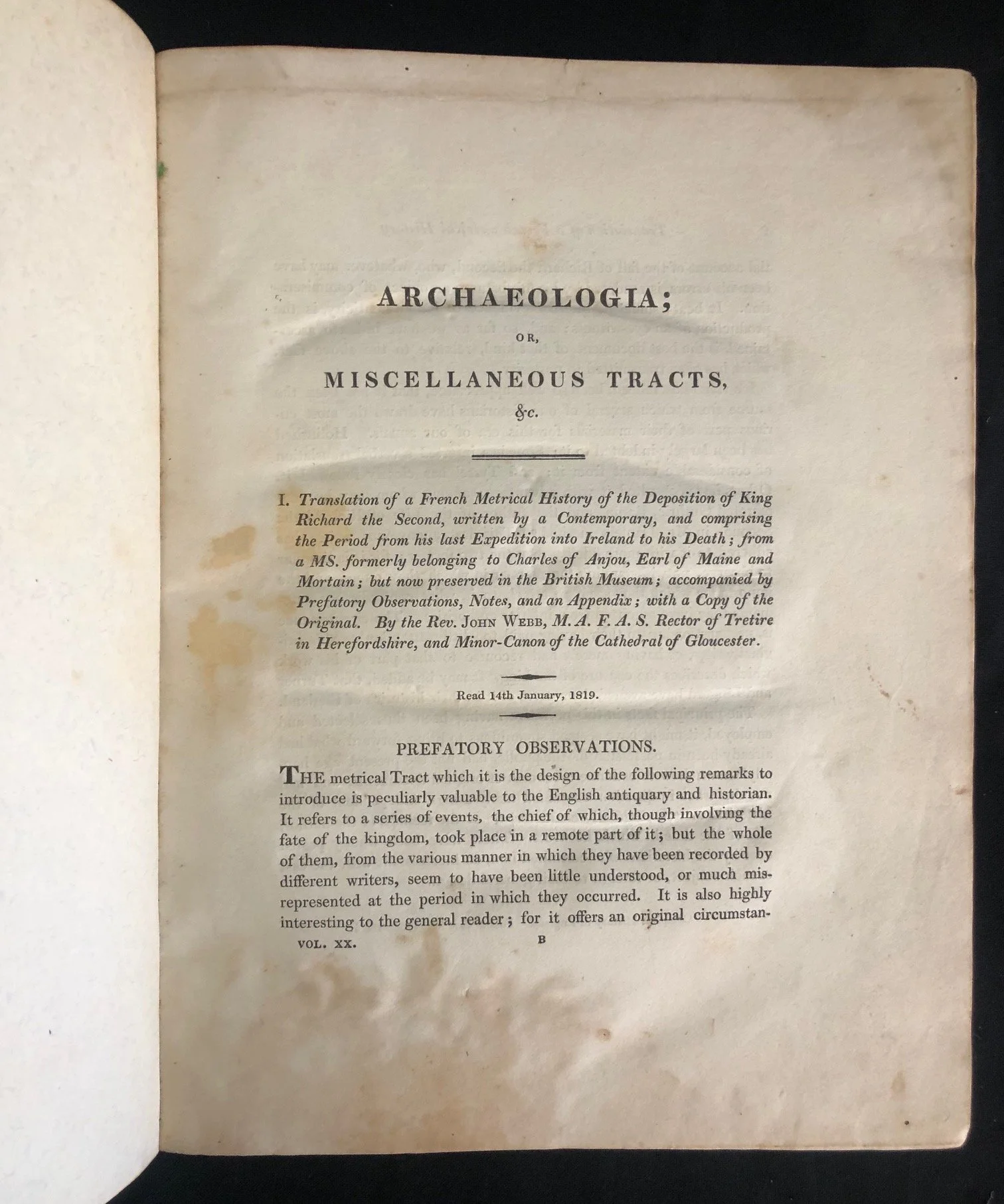
Archaelogia, ex libris Revil Mason 1824
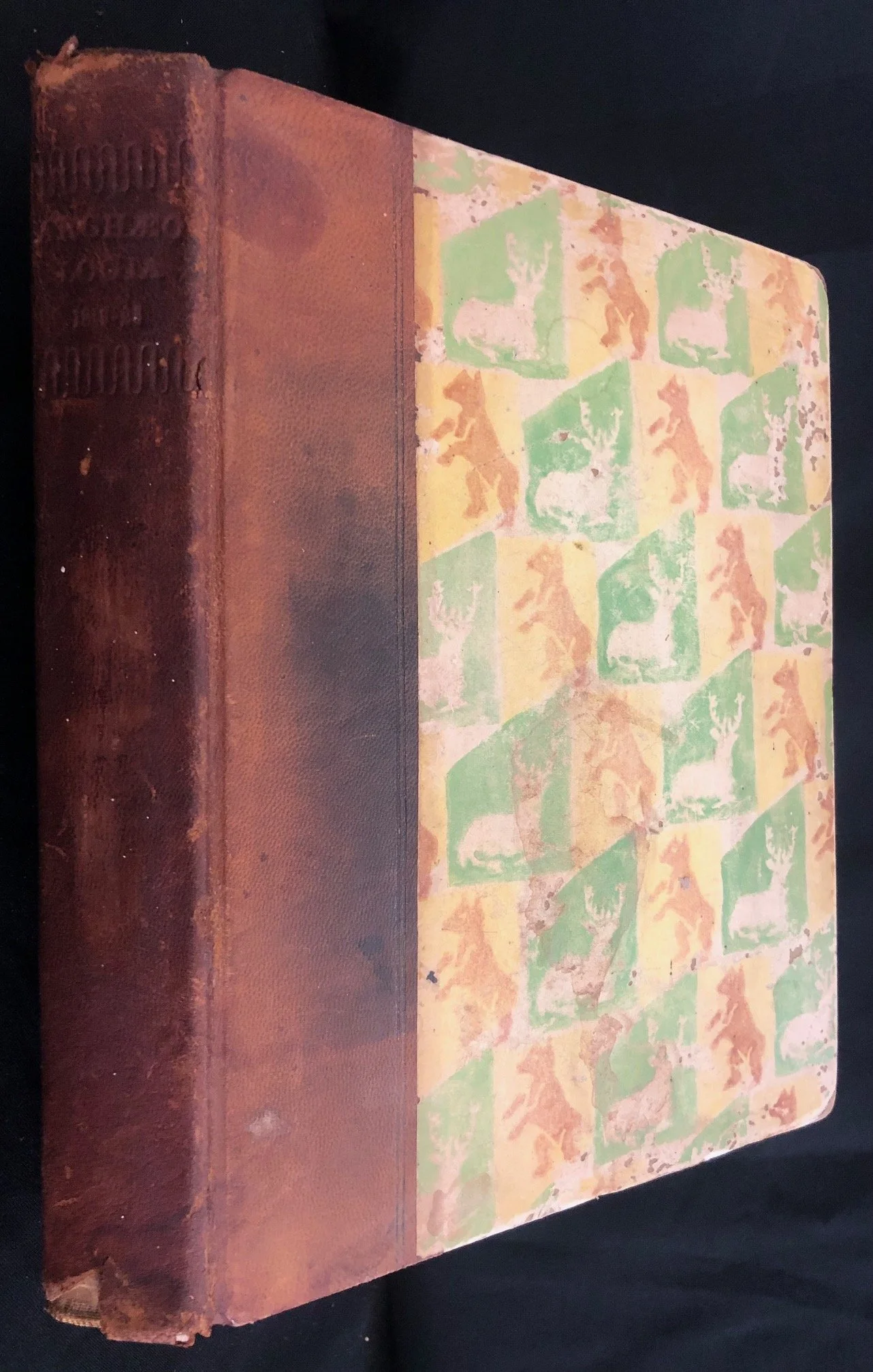
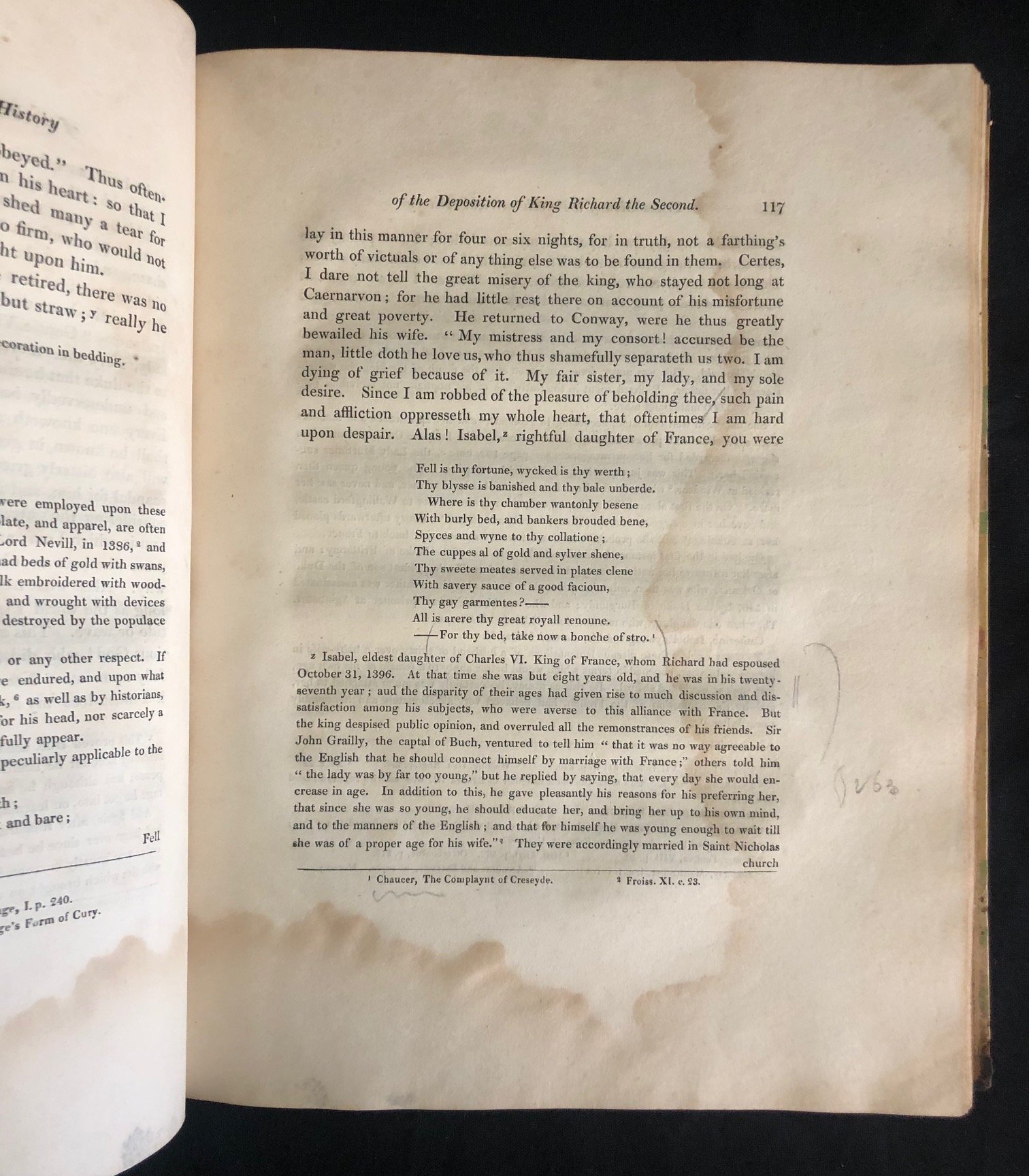
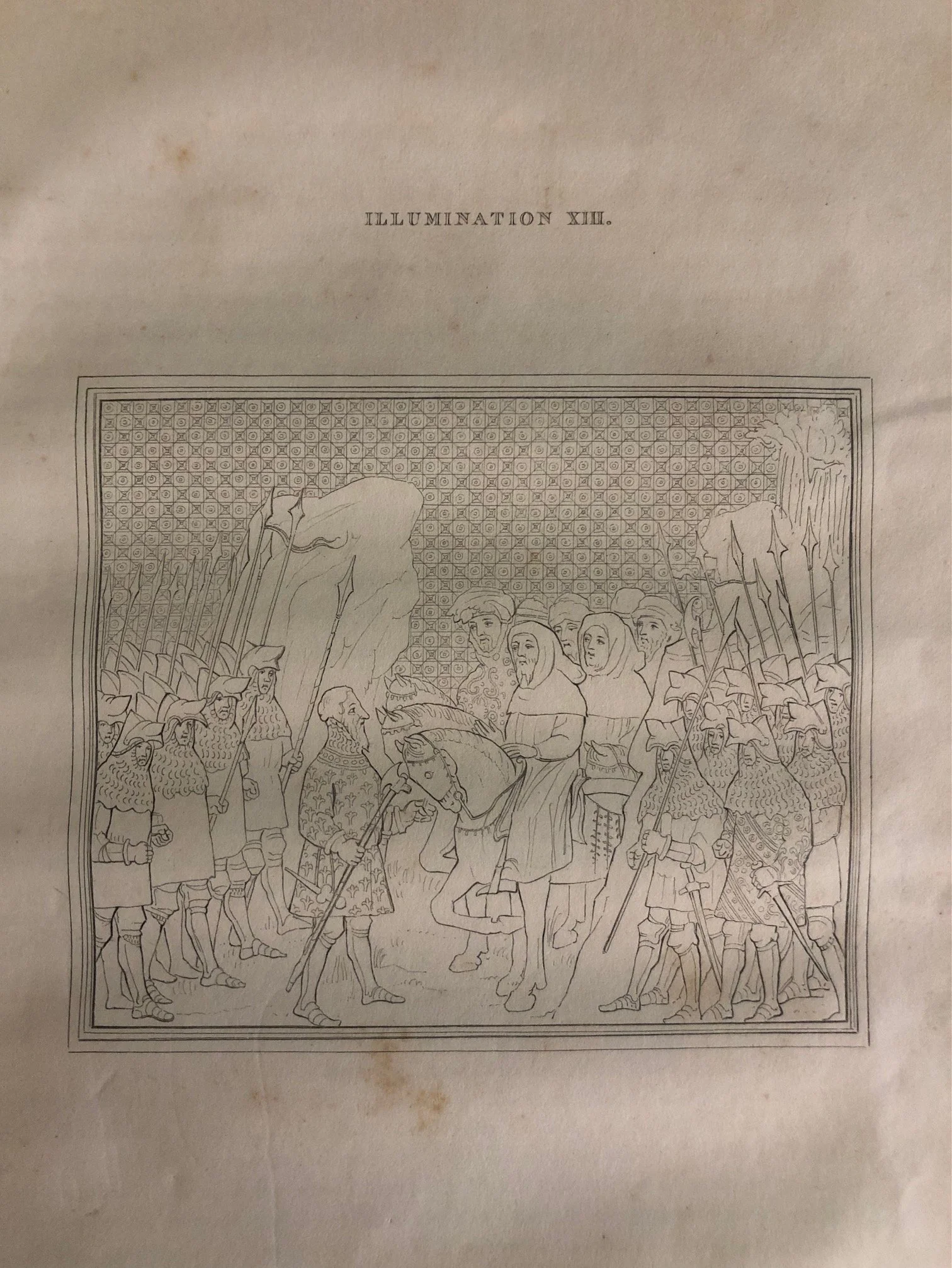
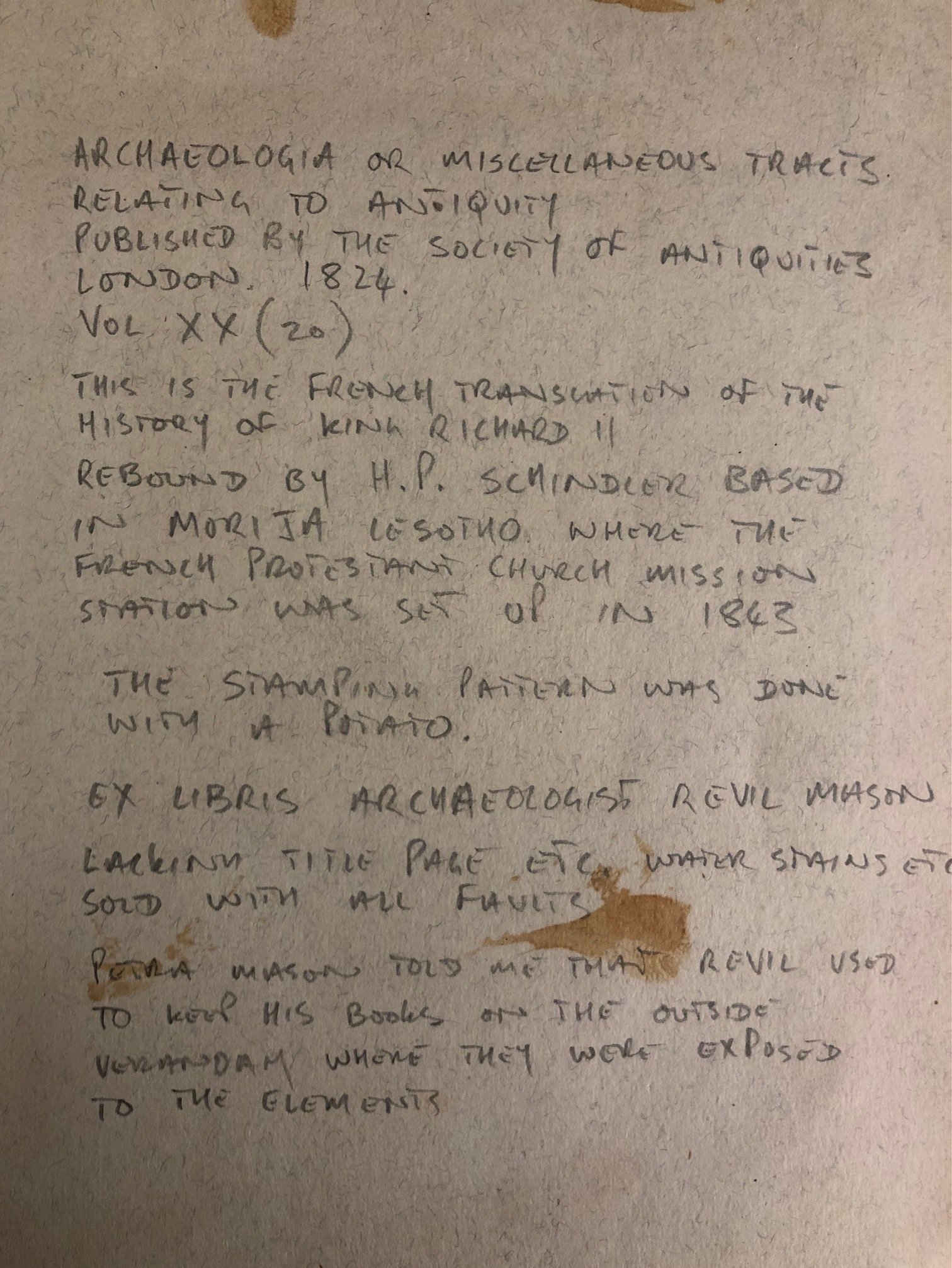
This volume (XX) is incomplete; has foxing; water stains; annotations; sold with all faults. All 16 engravings present.
The "Most Vulgar Potato" and a Design Legend
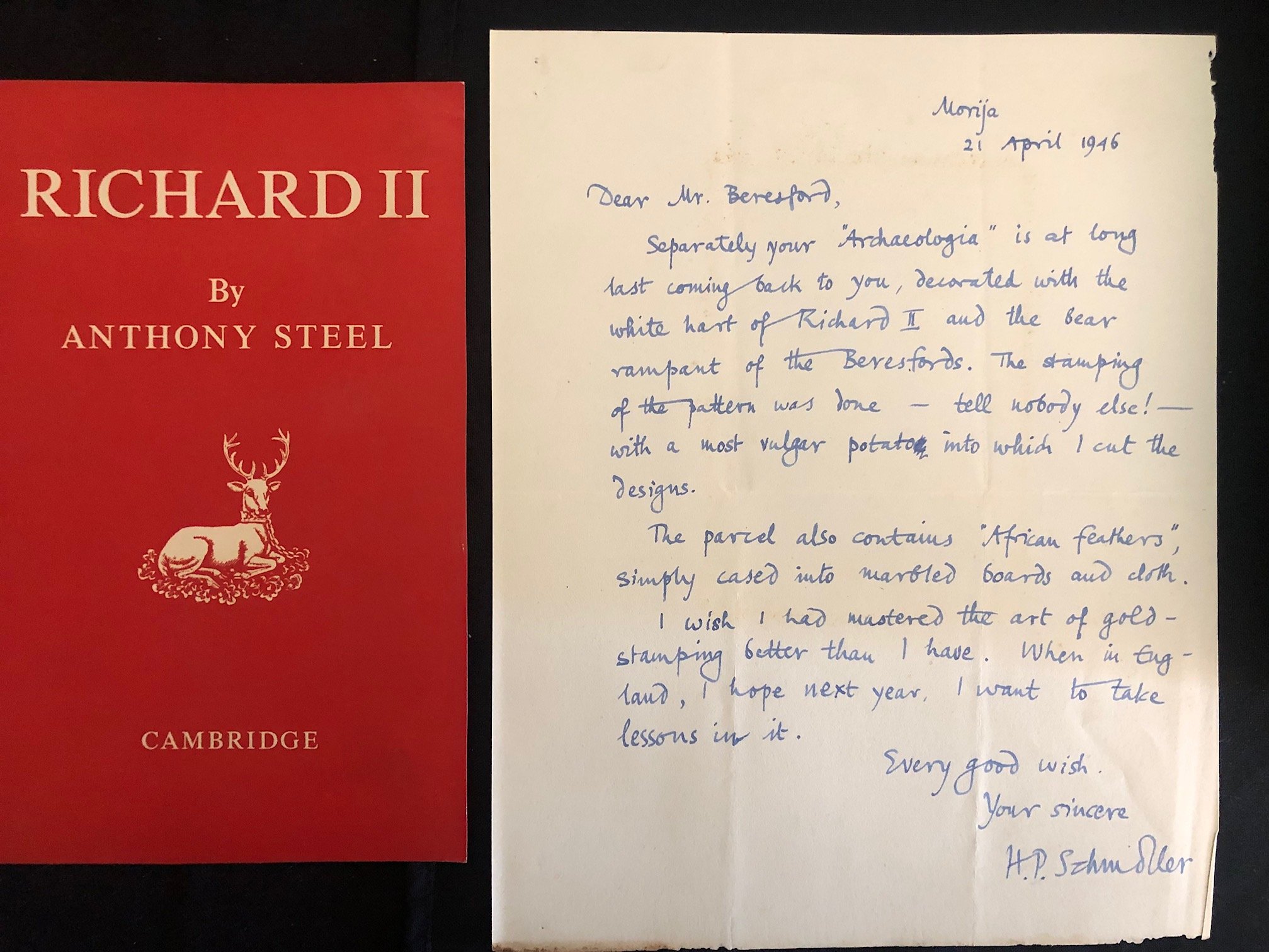
The letter reveals a brilliant, secret piece of bookbinding history. The binder confesses to a marvelous bit of improvisation for the gold-stamping pattern on the cover:
"...the stamping of the pattern was done — tell nobody else! — with a most vulgar potato into which I cut the designs."
What makes this truly spectacular is the signature: H.P. Schmoller (Hans Peter Schmoller). Before he became one of the 20th century’s most influential typographers and the legendary Head of Typography and Design at Penguin Books (succeeding Jan Tschichold in 1949), Schmoller spent the years 1938–1947 in South Africa and Lesotho.
As a young German refugee fleeing the Nazi regime, he took a position managing the Morija Printing Office in Lesotho (then Basutoland). Morija, established by the Paris Evangelical Missionary Society in 1863, was one of the most technologically vital and historically significant printing hubs in Southern Africa. Seeing a titan of mid-century modern book design resort to carving a "vulgar potato" in April 1946 while dreaming of taking professional gold-stamping lessons in England is a spectacular piece of design history.
The South African Archaeology Connection
Ex Libris Professor Revil John Mason (R. J. Mason). Mason was a pioneer of South African archaeology, famous for his extensive excavations of Iron Age settlements, hominid sites at Sterkfontein, and the Makapansgat caves.
The penciled note adds a delightfully eccentric, human touch to the book's physical state, explaining its water damage: "Revil used to keep his books on the outside verandah where they were exposed to the elements." For a man who spent his life in the dirt excavating the open-air history of the Transvaal, treating his library to the elements seems oddly fitting.
A Vital Medieval Chronicle
The text itself, is from Volume XX (1824) of Archaeologia, published by the Society of Antiquaries of London. It is the premier English printing and translation (by the Rev. John Webb) of the French Metrical History of the Deposition of King Richard II.
Written by a contemporary French courtier named Jean Creton, this metrical chronicle is one of the most critical primary sources for the final chaotic months of Richard II’s reign in 1399. Creton actually accompanied Richard on his ill-fated expedition to Ireland and was an eyewitness to the betrayal that led to the King's imprisonment and the usurpation of the throne by Henry Bolingbroke (Henry IV).
Symbolic Heraldry
When Schmoller carved his potato stamp, he didn't pick random patterns; he chose motifs tailored perfectly to the book's dual histories. As noted in the letter, he carved:
The White Hart: The famous personal badge of King Richard II.
The Bear Rampant: The heraldic crest of the Beresford family (the "Mr. Beresford" to whom the volume was being returned).
A text of medieval royal tragedy, owned by a pioneering South African archaeologist who left it out in the rain, bound at a historic Lesotho missionary press using a potato by a man destined to redefine the look of modern paperback literature—this volume is the ultimate definition of a compelling association copy.
228mm x 285mm x 40mm
R3,000