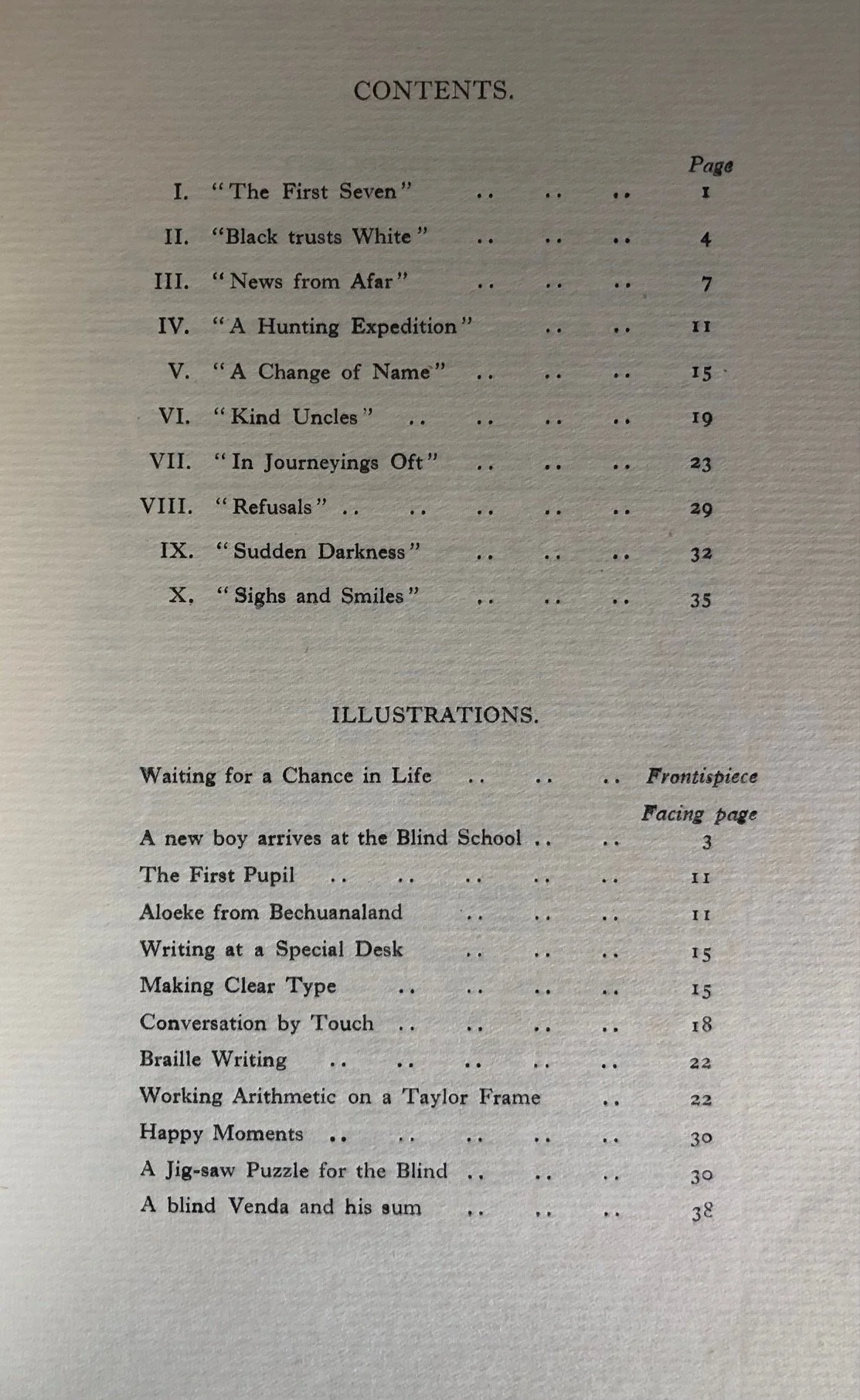
Ten Cameos from Darkest Africa, published by The Lovedale Press (1937)
This small booklet, Ten Cameos from Darkest Africa, published by The Lovedale Press in 1937, is a profound and poignant piece of South African social, medical, and political history.
While the title utilizes the typical paternalistic colonial phrasing of the 1930s ("Darkest Africa"), the content and the biography of its author reveal a deeply radical life of compassion and anti-apartheid resistance.
The Author: The Rebel Clergyman, A.W. Blaxall
The author, Arthur William Blaxall (1891–1970), was a British-born Anglican priest who immigrated to South Africa in 1923. While he spent his early decades dedicated to pioneering welfare and educational work for the blind and deaf, his theological conviction eventually drove him straight into the underground liberation struggle.
Underground Operative: Blaxall became a trusted ally of the liberation movement. He was close friends with leading political figures and heavily involved with the Christian Council of South Africa.
Arrest and Conviction: In the early 1960s, following the Sharpeville Massacre and the banning of liberation movements, the aging Blaxall was arrested and put on trial. He was convicted of aiding the African National Congress (ANC) and the Pan Africanist Congress (PAC) by managing a secret fund used to assist the families of political prisoners and banned activists. His autobiography, published in 1965, was tellingly titled Suspended Sentence.
Institutional History: Athlone School & Ezenzeleni
The subtitle notes Blaxall as the "Formerly Superintendent of the Athlone School for the Blind, Faure, C.P."
In the 1930s, Blaxall moved to the Cape to run the Athlone School, which was one of the very few institutions providing specialized, dignified education for non-white visually impaired children.
Shortly after publishing this book, in 1939, Blaxall relocated to the Reef and founded Ezenzeleni in Roodepoort—the first-ever specialized vocational training workshop for blind Black Africans in South Africa.
The Material Context of the Text
As Blaxall notes in the introduction of this work, the title is a deliberate subversion: "These are not pictures of heathen darkness... We write of physical darkness which is called blindness."
The "Cameos" are short, humanizing biographies of specific Coloured and Black pupils he encountered. He wrote and sold this booklet primarily as a tool to raise public awareness and secure desperately needed funds to build a national welfare infrastructure for disabled people of color, leading directly to the expansion of the South African National Council for the Blind.
The Printer: The Lovedale Press
Based at the Lovedale Missionary Institution in the Eastern Cape, this press was the undisputed epicenter of early Black South African intellectualism and literature. It was the same press that published the foundational works of Xhosa literature and, notably, Sol Plaatje’s Mhudi (the first novel in English by a Black African).
Seeing a Blaxall title coming out of Lovedale in 1937 highlights a fascinating meeting point between missionary printing heritage, early disability advocacy, and the seeds of 20th-century political activism.
140mm x 220mm
Minor wear and toning to the wrappers.
Sold July 2026.