A leaf from a Dutch incunabulum (The Book of the Properties of Things), printed by Jacob Bellaert in Haarlem (1485)
A leaf from a late 15th-century Dutch incunabulum, the Boek van den proprieteyten der dingen (The Book of the Properties of Things), printed by Jacob Bellaert in Haarlem in 1485.
A Middle Dutch translation of the incredibly popular 13th-century medieval encyclopedia De proprietatibus rerum by the Franciscan friar Bartholomeus Anglicus.
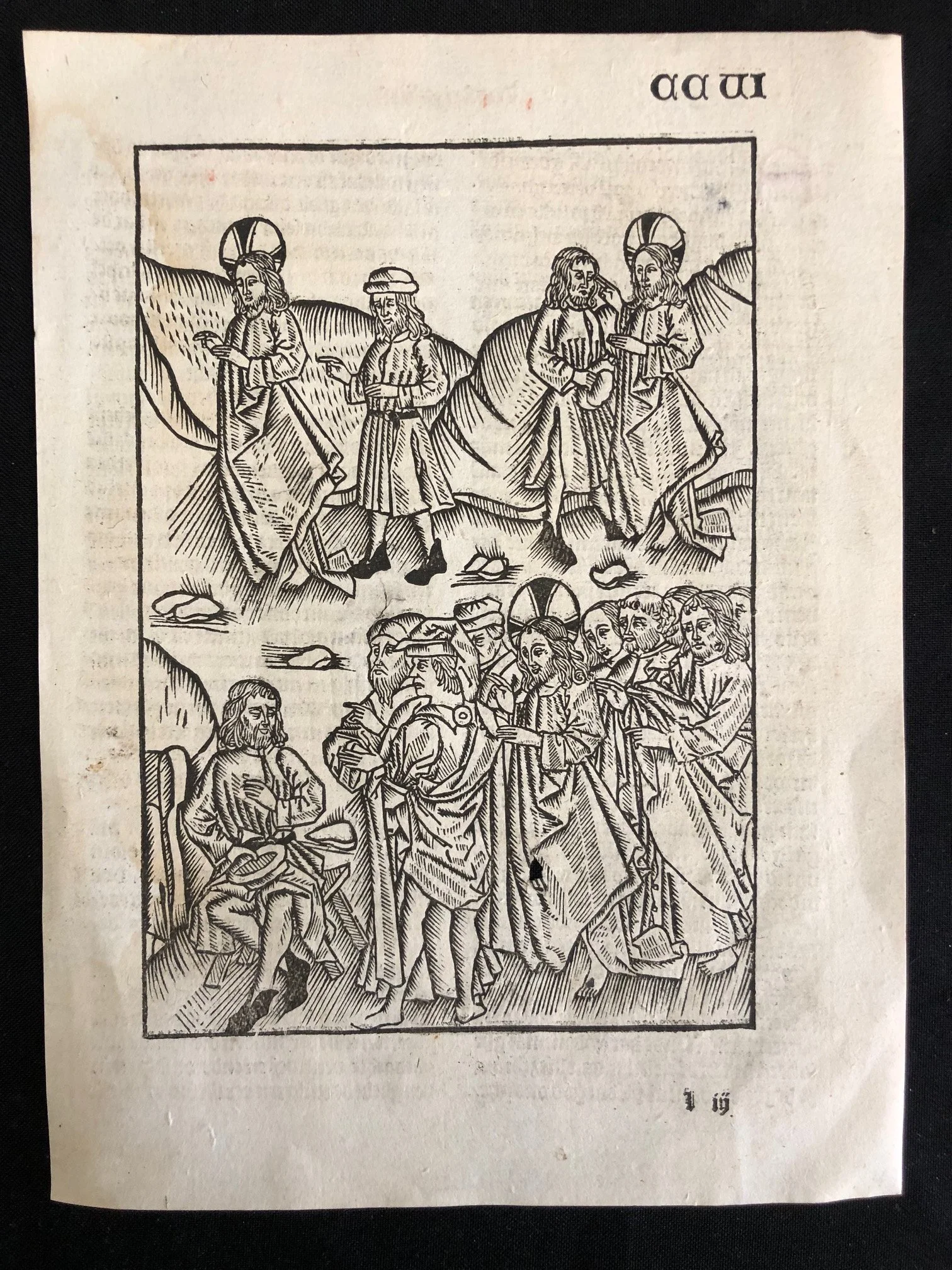
The woodcut illustration is attributed to an anonymous, highly influential artist known to art historians simply as the Master of Bellaert (or the Master of the Haarlem Bartholomeus Anglicus). Active in Haarlem between 1483 and 1486, this artist is famous for a distinctive, bold style characterized by rigid, architectural drapery folds, expressive profile faces, and a rhythmic use of parallel hatching for shading.
The image depicts two New Testament healing miracles side by side:
Top panel: The healing of two blind men near Jericho.
Bottom panel: The healing of the blind beggar Bartimaeus as Jesus and a crowd leave the city.
The text side reveals a wealth of information about early printing house practices:
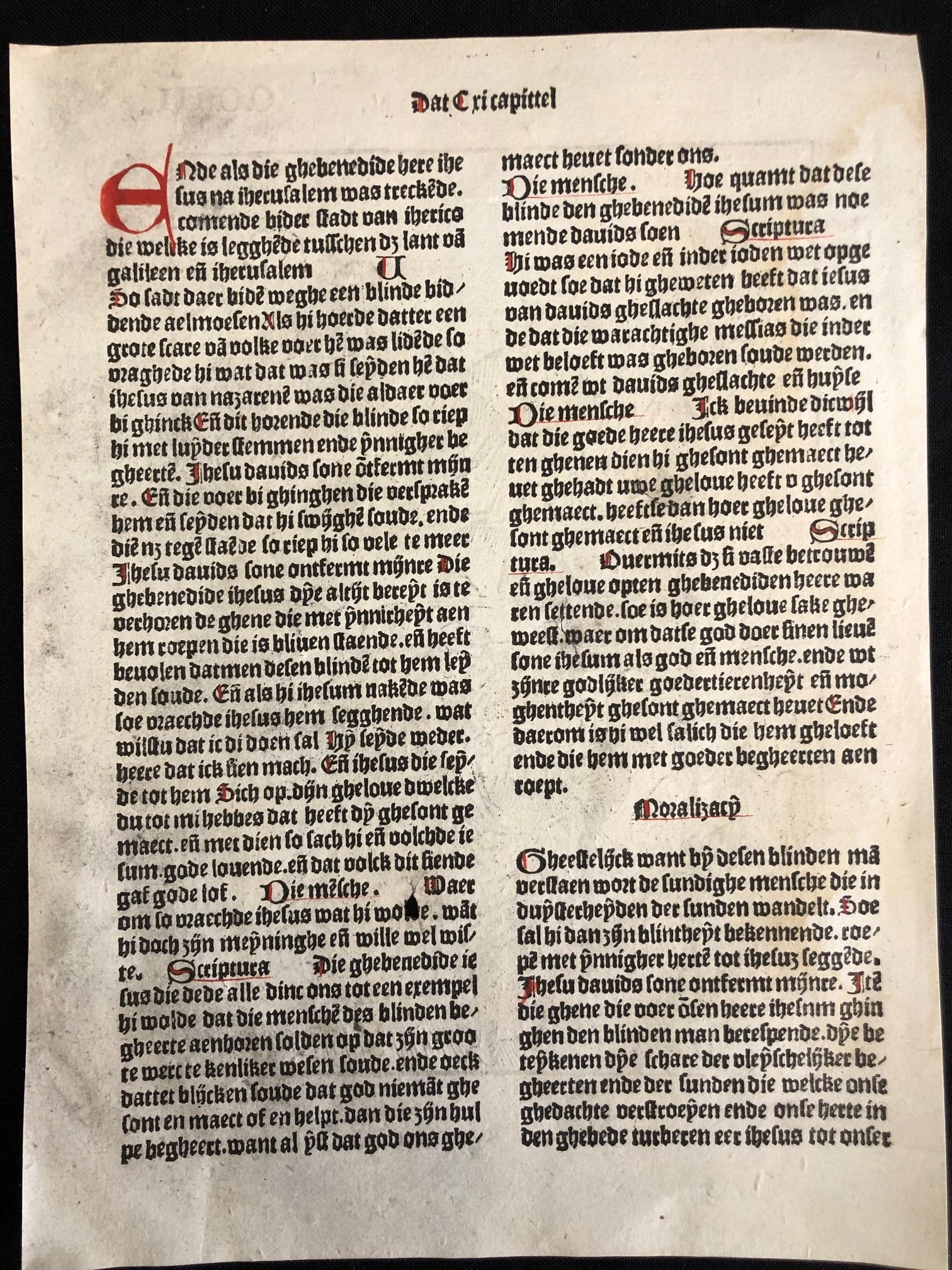
The Running Header: At the top, it reads "Dat Lvi capittel" (The 56th Chapter).
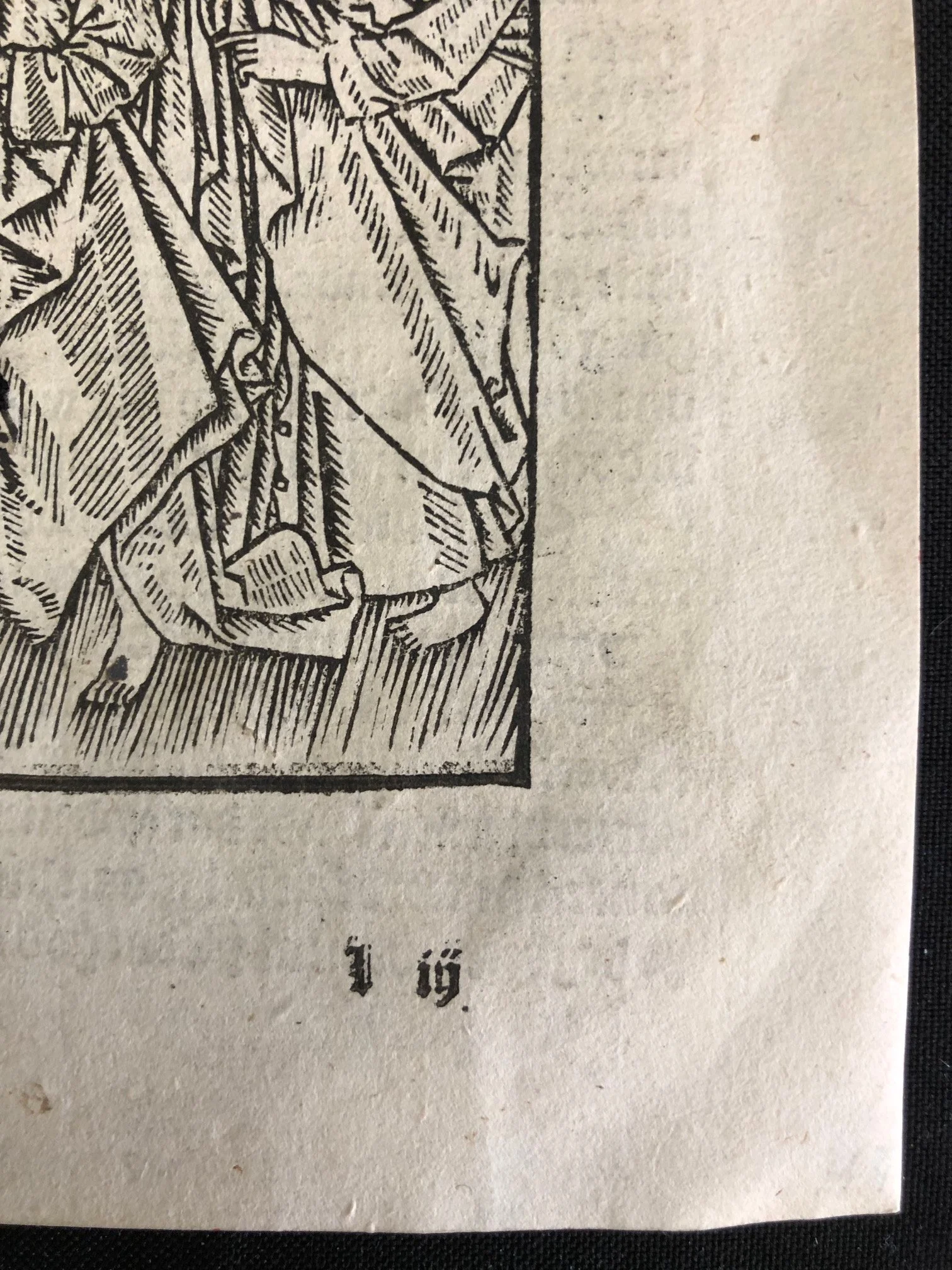
The Signature Mark: On the woodcut side, the lower margin bears the signature mark "I iij" (or I3). This was a guide for the bookbinder to know the exact order in which to fold and bind the gathered sheets of paper, long before consecutive page numbering (pagination) became the standard.
The top right of the woodcut side features the medieval Roman numeral foliation "cc vi" (\bm{206}).
The layout of the Middle Dutch text is particularly fascinating because it uses a structured dialogue format with the red-underlined rubrications within the gothic type:
Scriptura (Scripture / The Narrator)
Die mensche (The Human / The Questioner)
Moralisacio (The Moralization)
Rather than just reproducing raw biblical text, this encyclopedia sets up a pedagogical conversation. "The Human" asks a theological or natural question (e.g., “How did these blind men know that Jesus was the son of David?”), "Scripture" responds with textual authority, and the section concludes with a Moralisacio explaining the spiritual allegory of blindness as a state of sin.
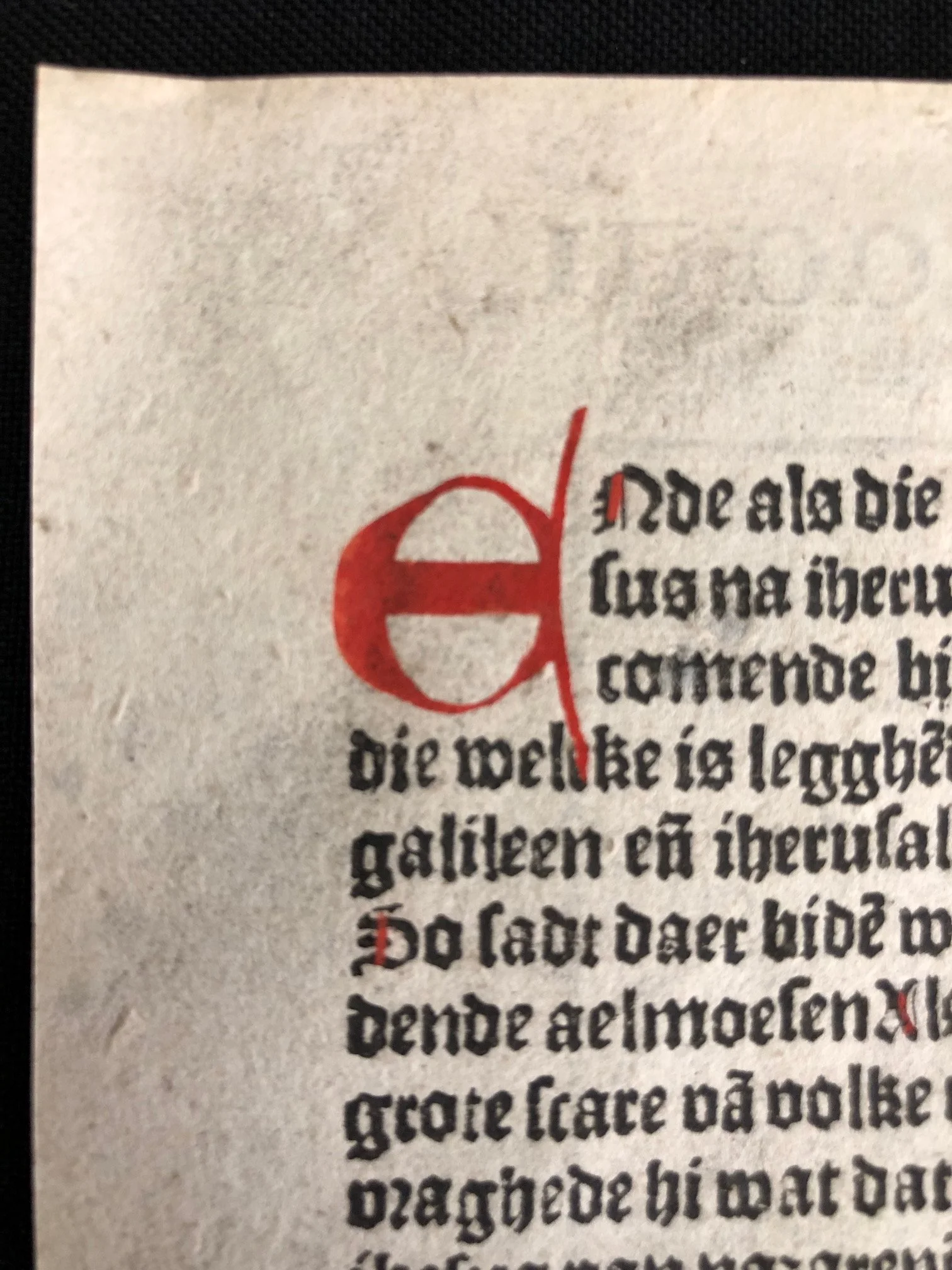
The large capital letter "E" (beginning "Ende als die ghebenedide here...") and the paragraph marks throughout the text are not printed; they were added by hand in red ink (rubrication) by a scribe after the page was pulled from the wooden press. This hybrid nature—part mechanized, part handmade—is a hallmark of the 1480s, when printers were trying to make their cheap new technology look like the luxurious, familiar manuscripts of old.
Jacob Bellaert’s press only operated in Haarlem for about three years, making complete books or individual leaves from his workshop rare examples of early Dutch printing history.
Small hole in the lower middle part of the page; minor wear; creasing and staining.
180mm x 240mm
R4,500