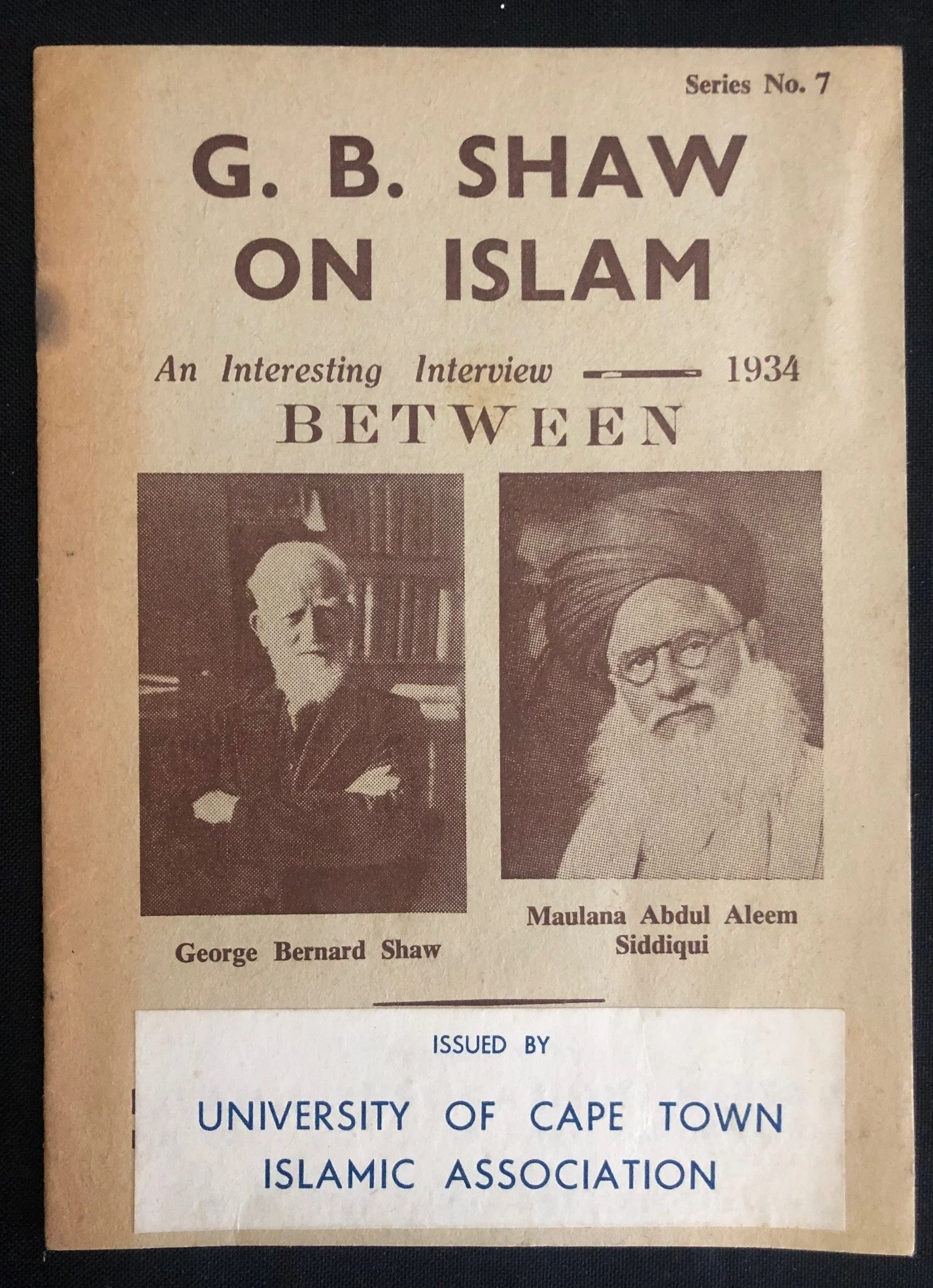
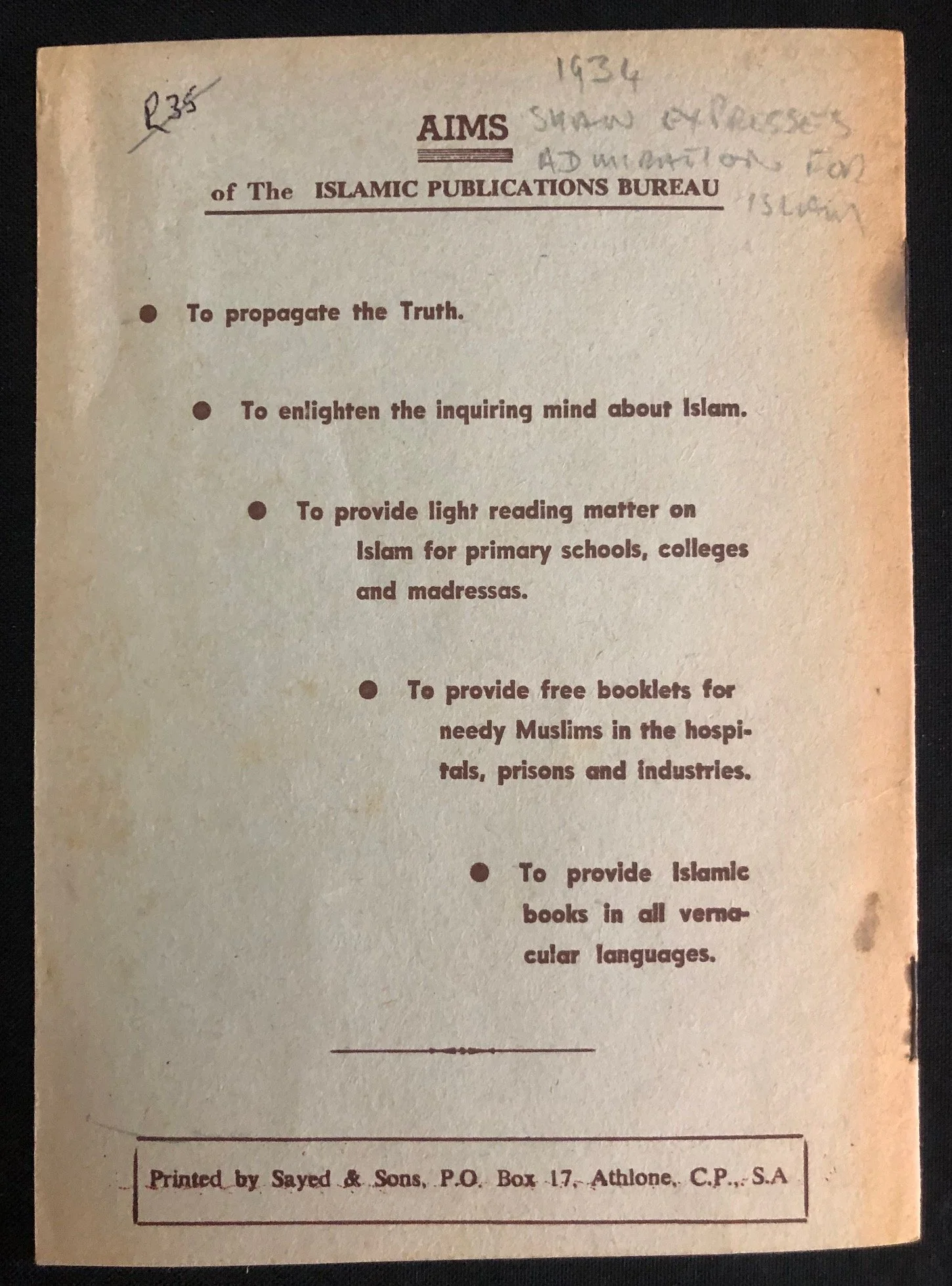
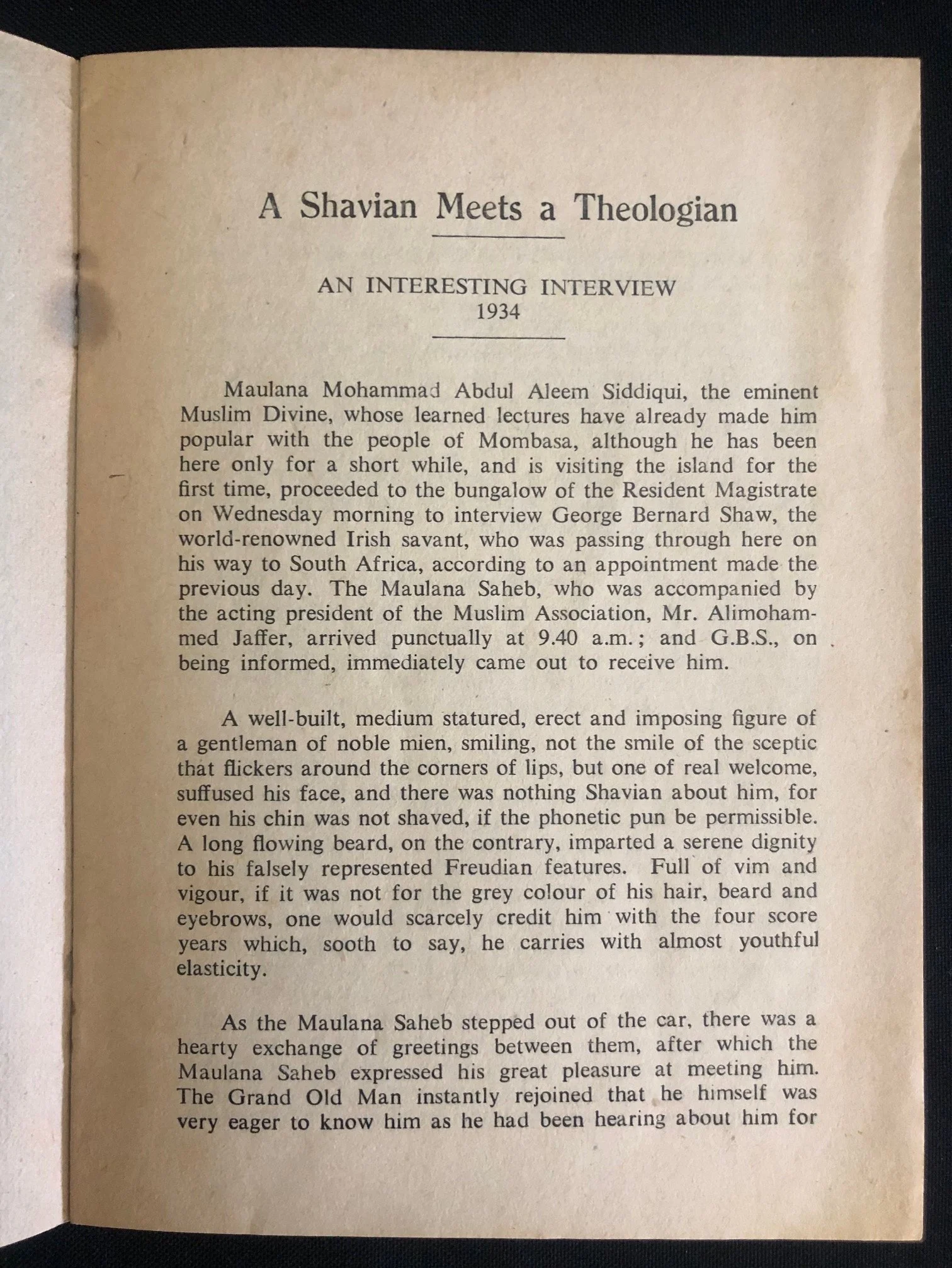
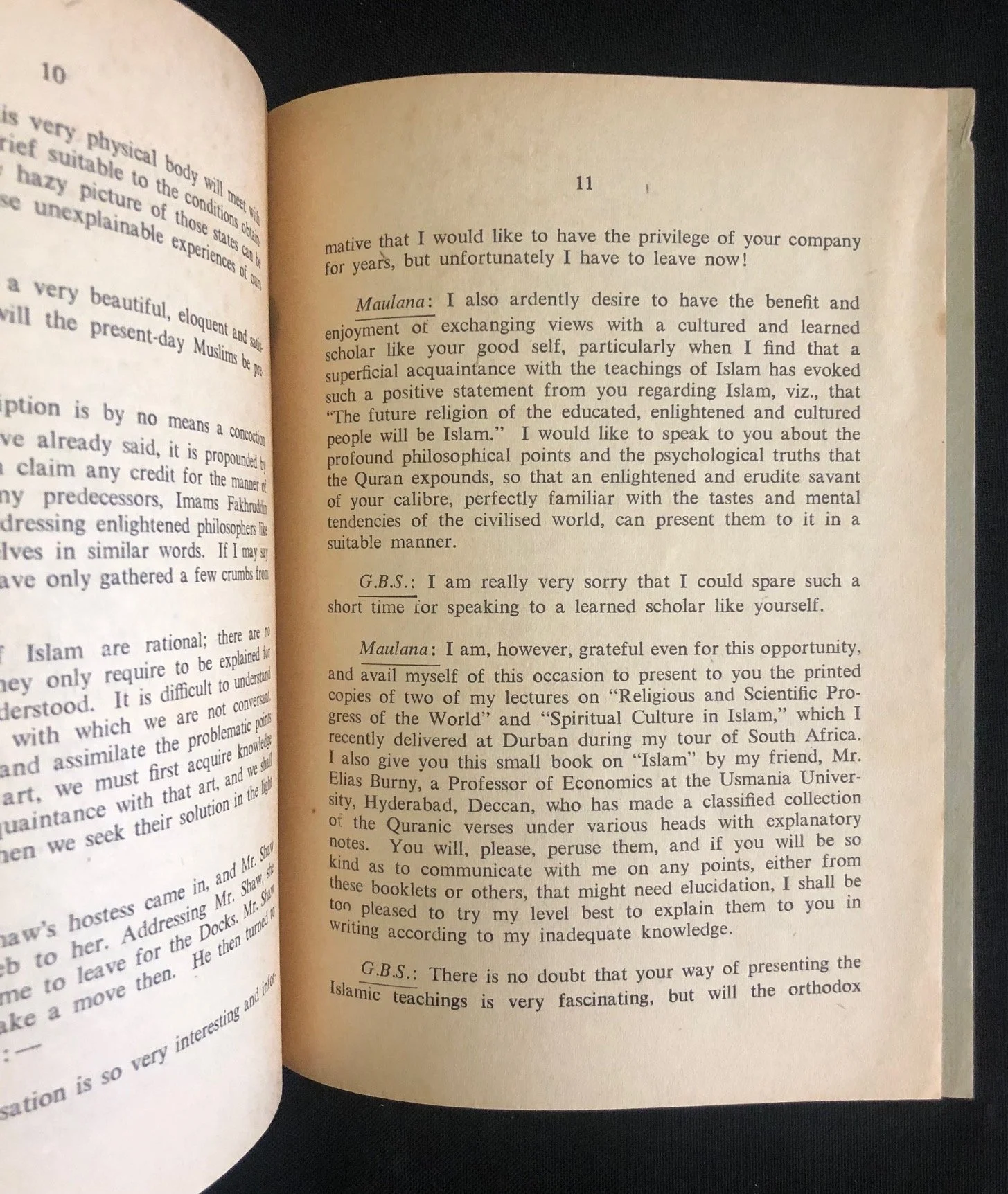
"Interesting Interview” with George Bernard Shaw and Sufi missionary, Maulana Abdul Aleem Siddiqui on Islam (1935)
This ephemeral booklet represents a fascinating cross-cultural encounter that occurred when the literary worlds of Western modernism and global Islamic missionary work intersected in colonial East Africa.
The Setting: A Chance Encounter in Mombasa
Though published by a South African student body, the actual "Interesting Interview" recorded in this booklet took place on April 17, 1935 (despite the "1934" date printed on the cover) in Mombasa, British-occupied Kenya. The Irish playwright, essayist, and Nobel laureate George Bernard Shaw was traveling as a tourist when he crossed paths with the elite, globe-trotting Islamic scholar and Sufi missionary, Maulana Abdul Aleem Siddiqui.
The Shavian Prophecy & Debate
The core of the interview centers on Shaw's highly controversial and widely cited commentary regarding the future of Western spirituality. Shaw, a dedicated skeptic and member of the Fabian Society, was famous for his provocative views on religion. In the interview, he famously praised Prophet Muhammad as the "Saviour of Humanity" and predicted that Islam's pragmatic adaptability would make it highly appealing to, and eventually accepted by, the Europe of tomorrow.
The exchange between the two men was remarkably courteous, reversing the typical roles of a Shaw interview: Shaw largely played the role of the curious questioner, asking Siddiqui about the nature of peace, the philosophy of war, and whether Islam had historically been spread "by the sword"—giving the Maulana a global platform to articulate a defense of Islamic theology.
Local Provenance: The University of Cape Town Connection
What makes the booklet more interesting is the pasted or stamped slip at the bottom: "Issued by University of Cape Town Islamic Association."
During the mid-20th century, the UCT Islamic Association (now the UCT Islamic Society) was a vital hub for intellectual, social, and political development for Muslim students navigating the complex socio-political landscape of South Africa. Raiding global Islamic literature—particularly texts that featured prominent European intellectuals validating Islamic philosophy—was a common and powerful tool used by student organizations to foster intellectual confidence, engage in interfaith dialogue, and counter Eurocentric colonial narratives on campus.
125mm x 175mm
12 pages; advert; some discolouration to the edges of the booklet.
Sold July ‘26