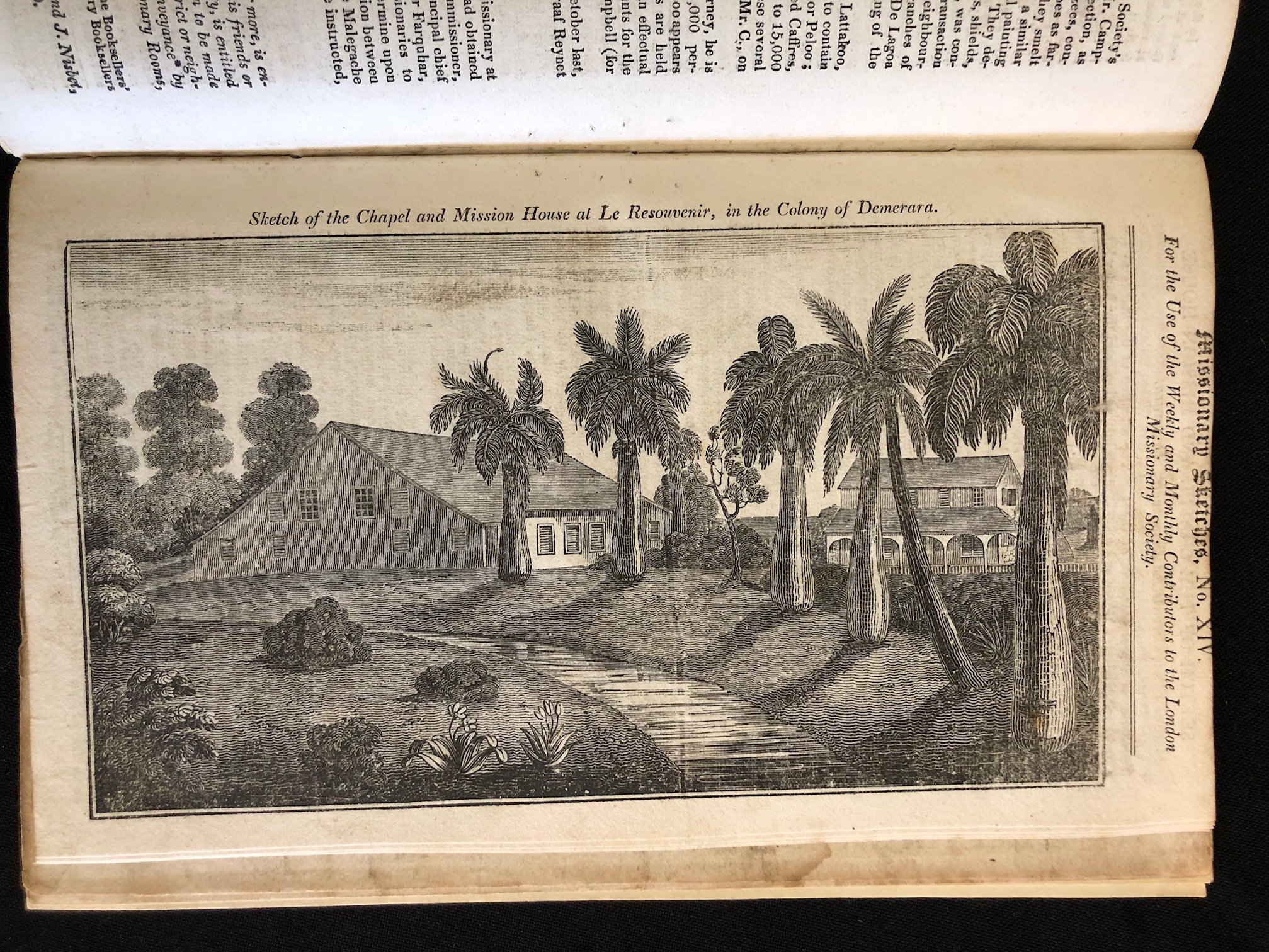
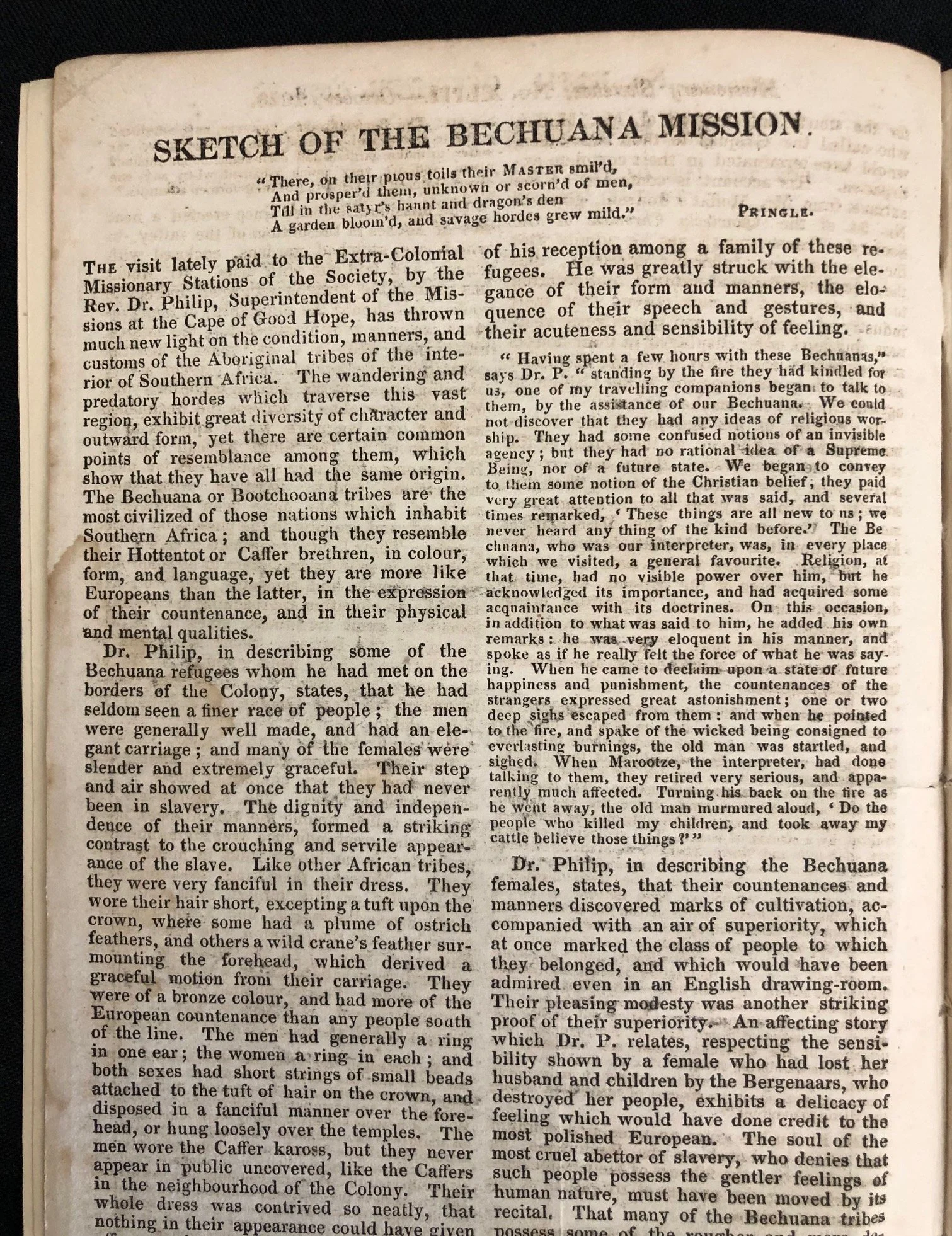
Several individual Issues of Missionary Sketches (1819 - 1828)
Several individual issues of Missionary Sketches, an early 19th-century quarterly periodical published by the London Missionary Society (LMS).
Historically, this specific artifact is a brilliant example of how early global media, imperial history, and fundraising intersected. Here are a few historically significant aspects hidden within these pages:
A Pioneer of Visual Propaganda & Modern Crowdfunding
As noted on the masthead, these sketches were explicitly printed "For the Use of the Weekly and Monthly Contributors to the Missionary Society."
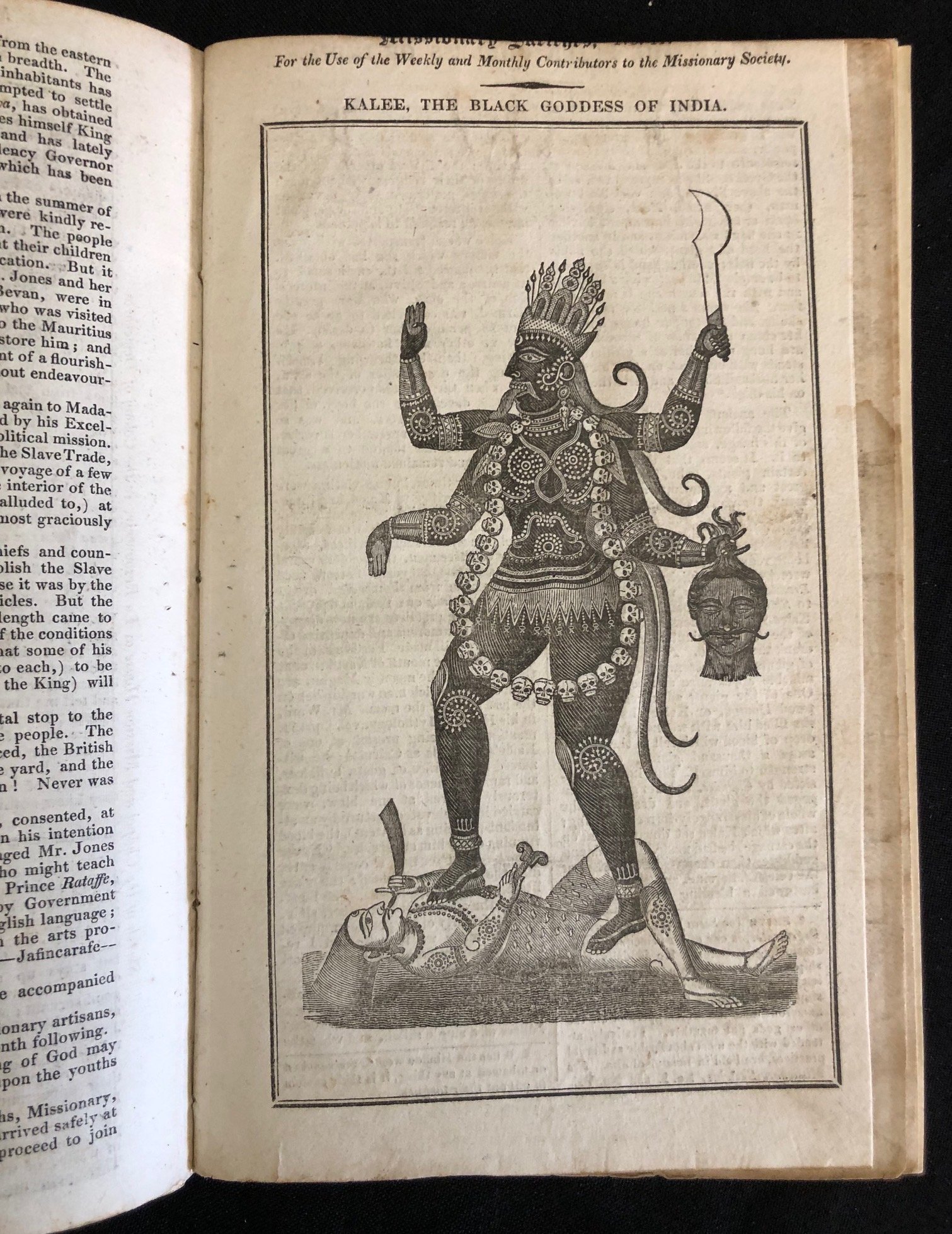
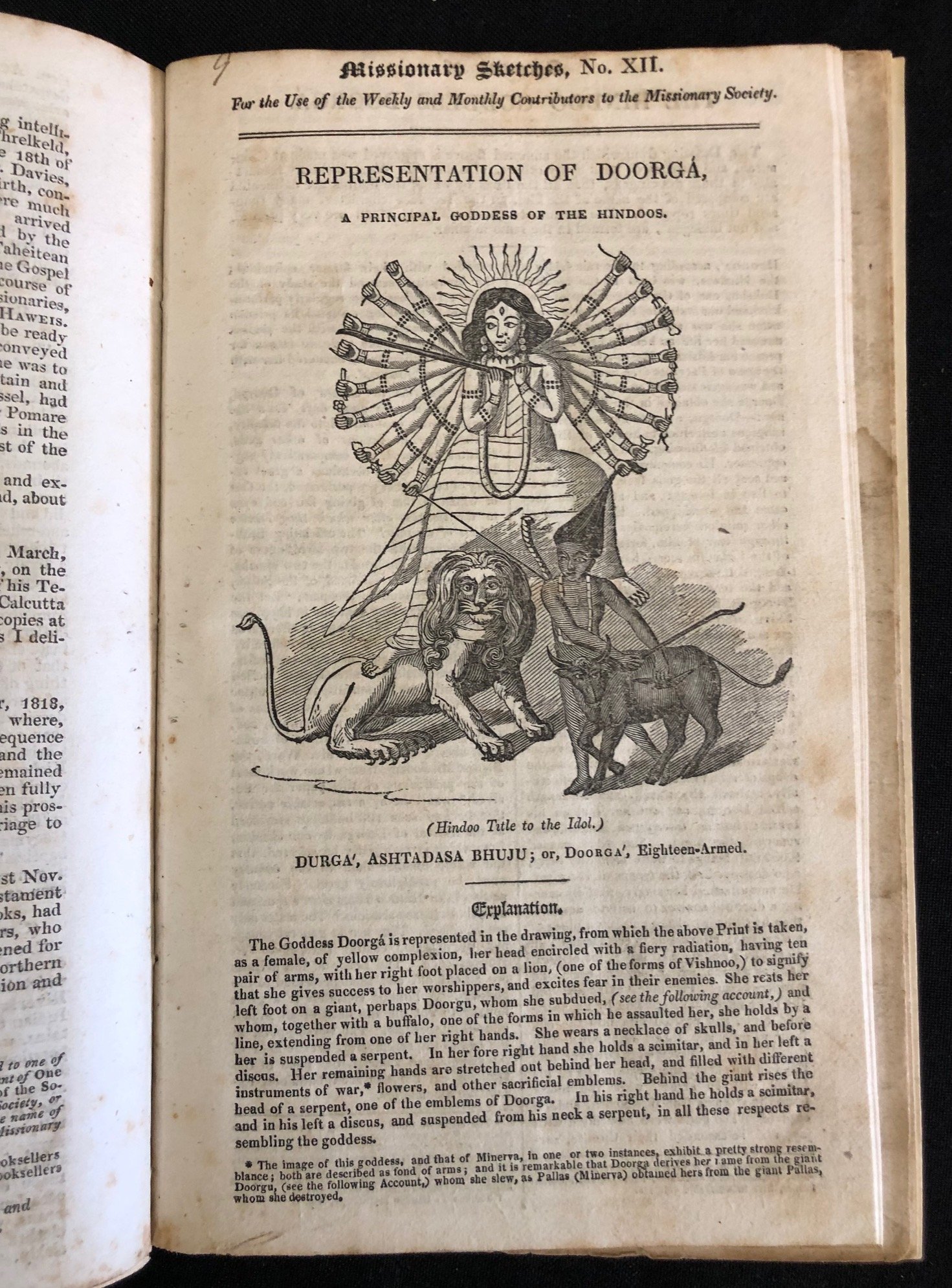
The Penny-a-Week Movement: In the early 1800s, the LMS pioneered a democratic fundraising model where working-class Brits contributed just a penny a week. To keep these low-income donors engaged, the society published Missionary Sketches, which relied heavily on striking, dramatic woodcut illustrations (like the depiction of the goddess Durga).
The Formula: Show donors the "heathen lands" or the "exotic cultures" their pennies were helping to civilize or convert. It was one of the earliest highly successful instances of mass-media charitable fundraising.
Eyewitness Accounts of the South African Frontier
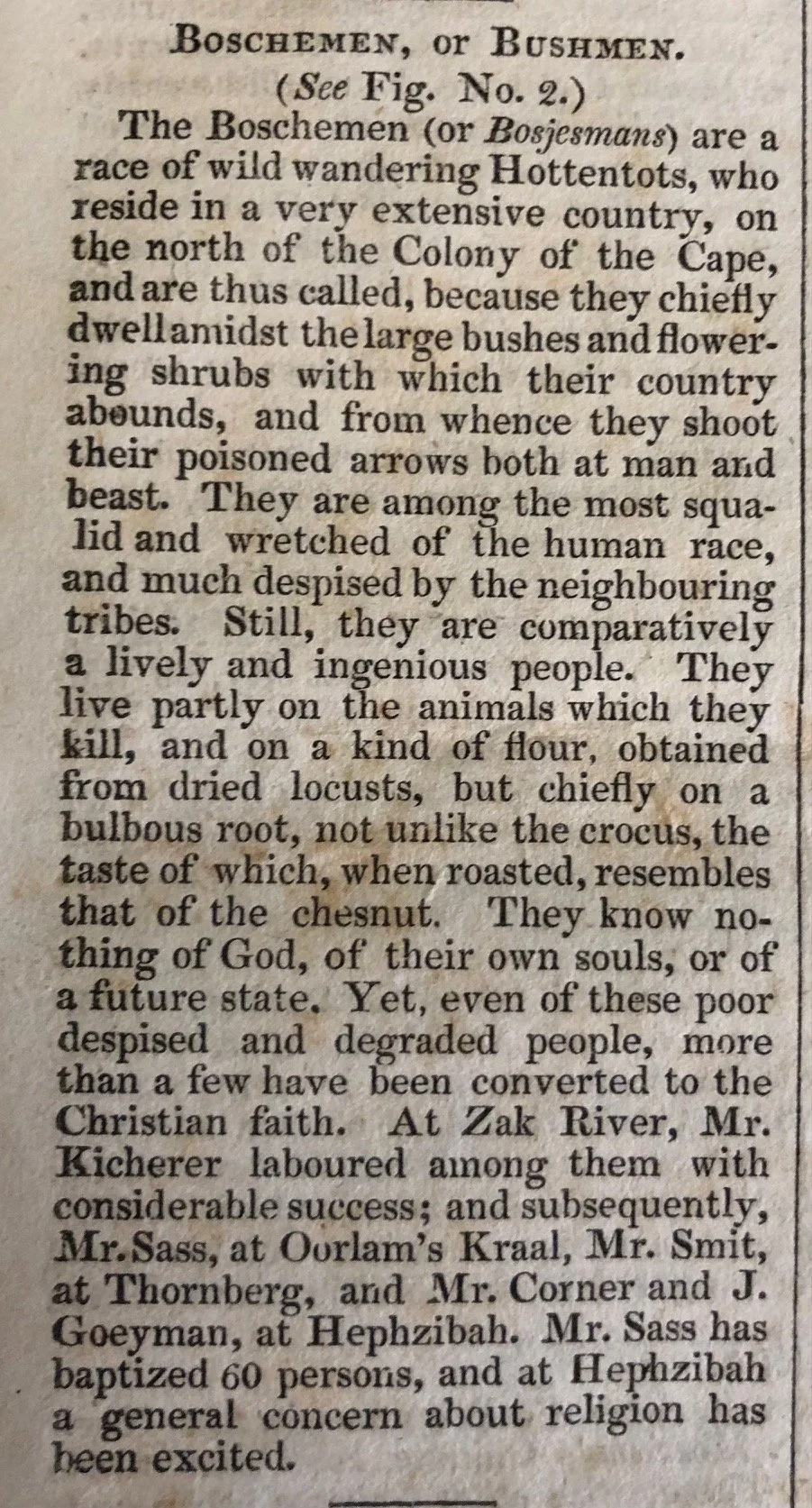
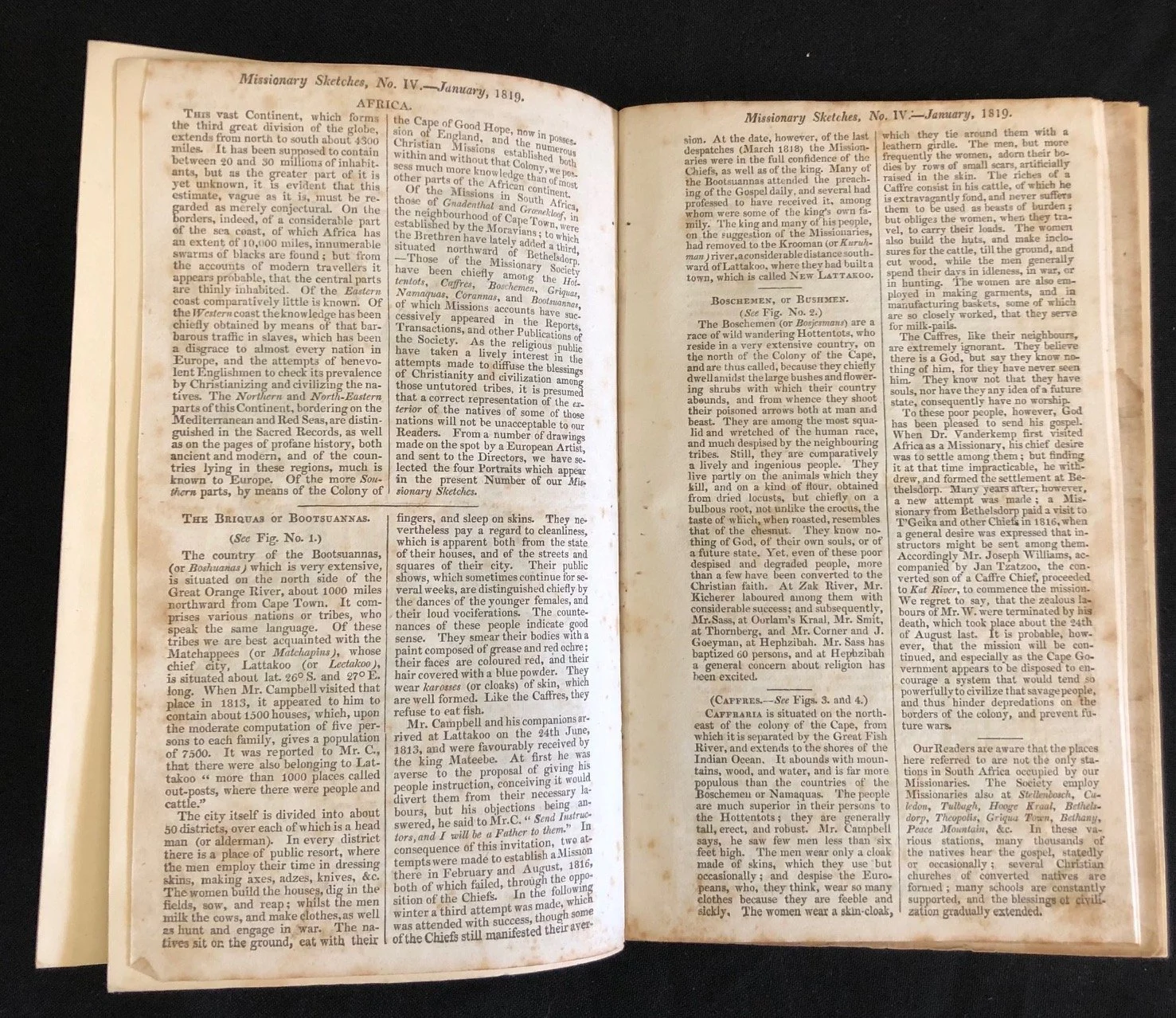
The early issues focus heavily on Southern Africa. The text references John Campbell's 1813 expedition to "Lattakoo" (Dithakong, near modern-day Kuruman), which was then the absolute edge of European geographical knowledge in the interior.
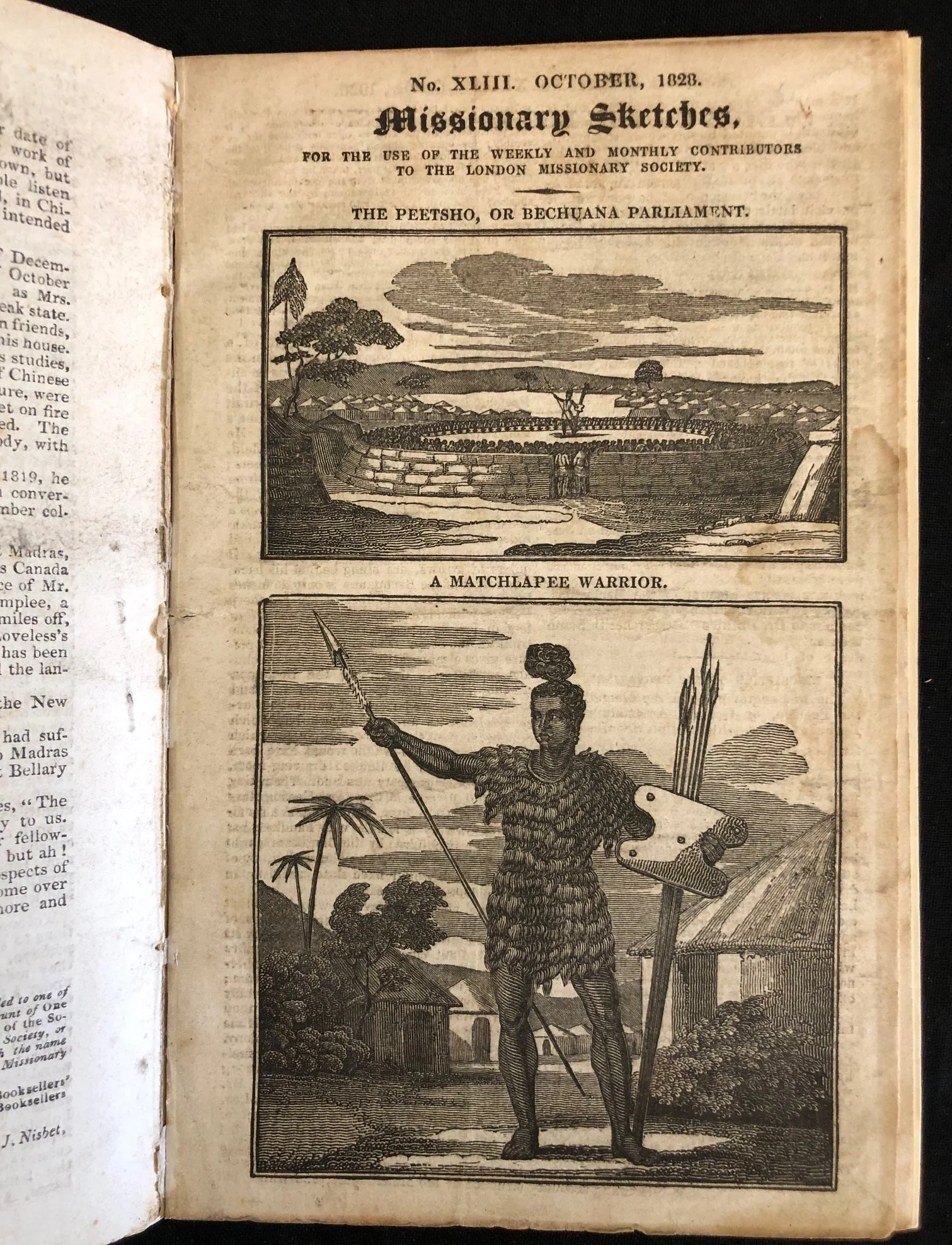
The "Peetsho": The October 1828 issue features a fascinating woodcut of a Pitso (spelled here as "Peetsho"), a traditional political assembly or parliament of the Batswana (Bechuana) people. These assemblies were highly democratic forums for public debate, and this engraving provides one of the earliest Western visual records of indigenous southern African governance.
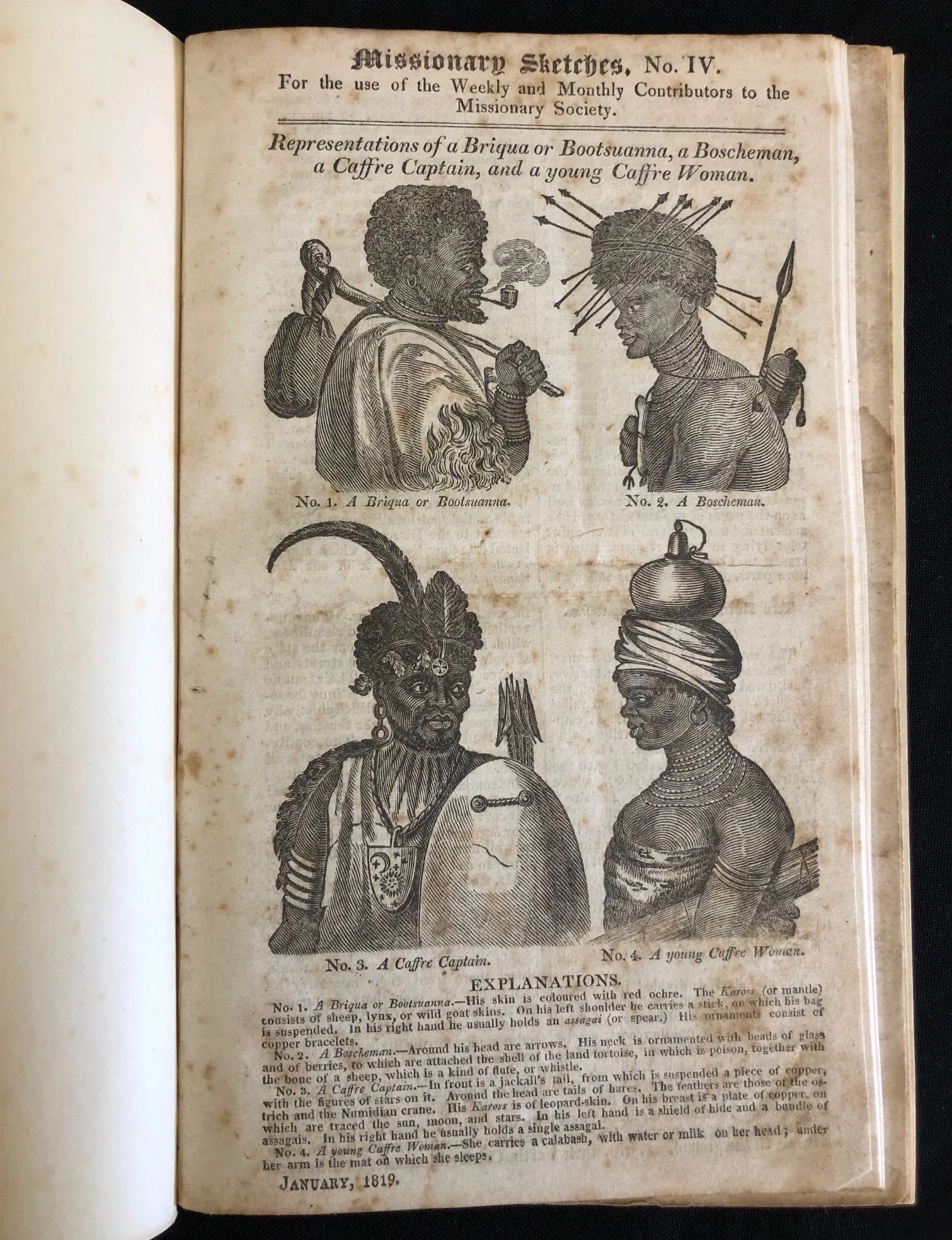
Early Linguistic Records: The texts describe interactions with the Briquas (a historical term used by the Khoekhoe to refer to the Batlhaping Tswana, meaning "goat people") and early encounters by famous LMS figures like Dr. Johannes Vanderkemp and Joseph Williams.
Geopolitical Footprints: The Madagascar Slave Trade Treaty
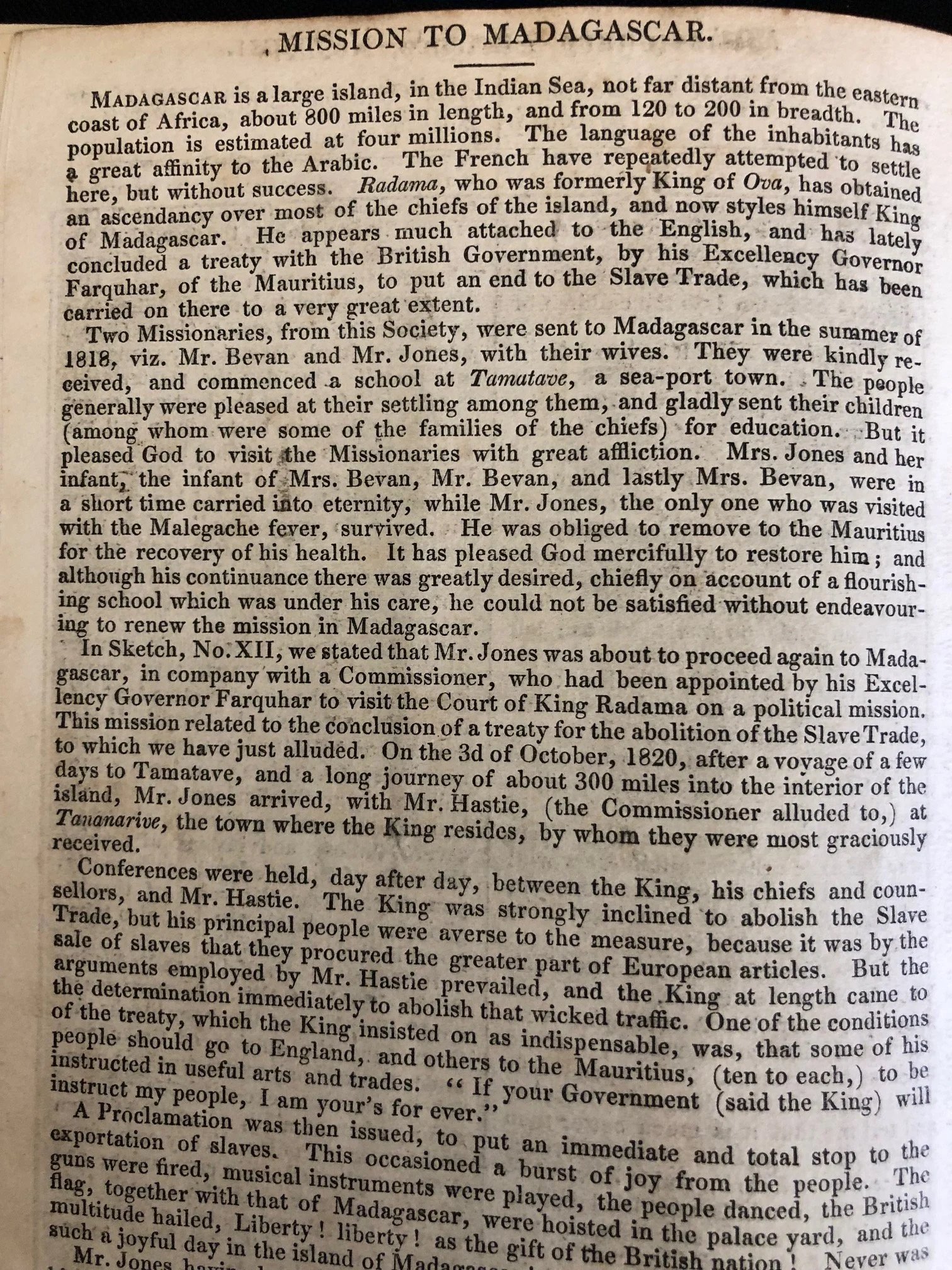
The text documents the harrowing early days of the LMS Mission to Madagascar starting in 1818.
It records a massive geopolitical moment: the political mission involving Mauritius Governor Robert Farquhar and King Radama I of the Merina Kingdom to conclude a treaty abolishing the export of slaves from Madagascar.
It simultaneously highlights the immense human cost to the missionaries themselves—noting how quickly Mr. Bevan, Mr. Jones’s wife, and their infants were "in a short time carried into eternity" by "Malegache fever" (malaria), leaving David Jones as the sole survivor to build the mission.
This slim, custom-bound collection serves as a remarkable time capsule of how the British public viewed the expanding global frontier—from the Cape of Good Hope to India and Madagascar—right at the dawn of the 19th century.
132mm x 210mm
20 pages bound into a 20th card binding. No pagination, presumed complete as is.
Sold Sept '26