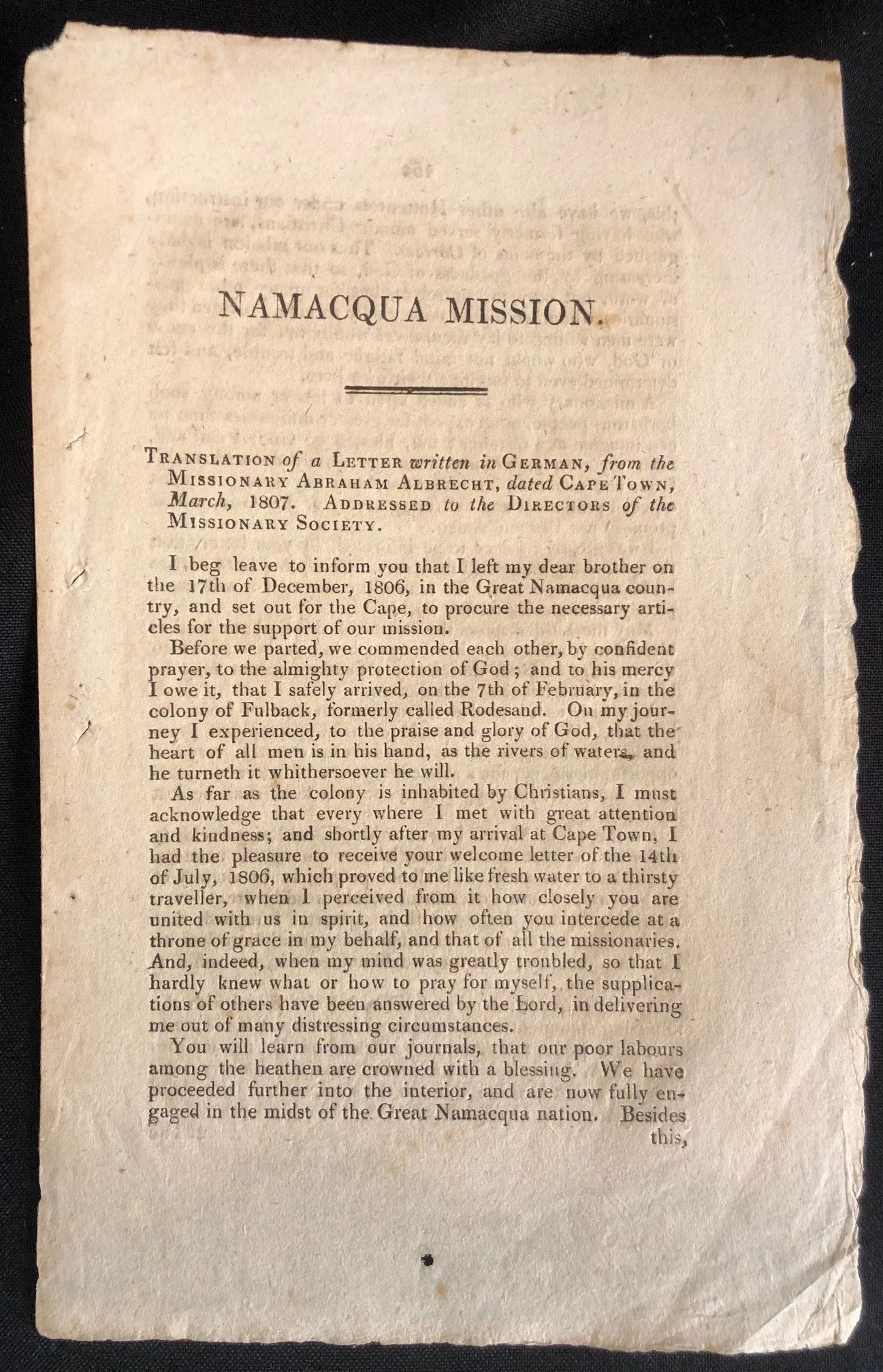
Namacqua Mission 1807 by German Missionary Abraham Albrecht
c.1812.
Complete translation of a 4 page letter. (But only part of a greater publication). Pages 163 - 166.
Namacqua Mission (modern-day Namaqualand, spanning the Northern Cape of South Africa and southern Namibia).
Dated March 1807, this letter from German missionary Abraham Albrecht offers a fascinating look at the logistical nightmares, demographic shifts, and geopolitical anxieties of operating a mission completely cut off from the rest of the Cape colony.
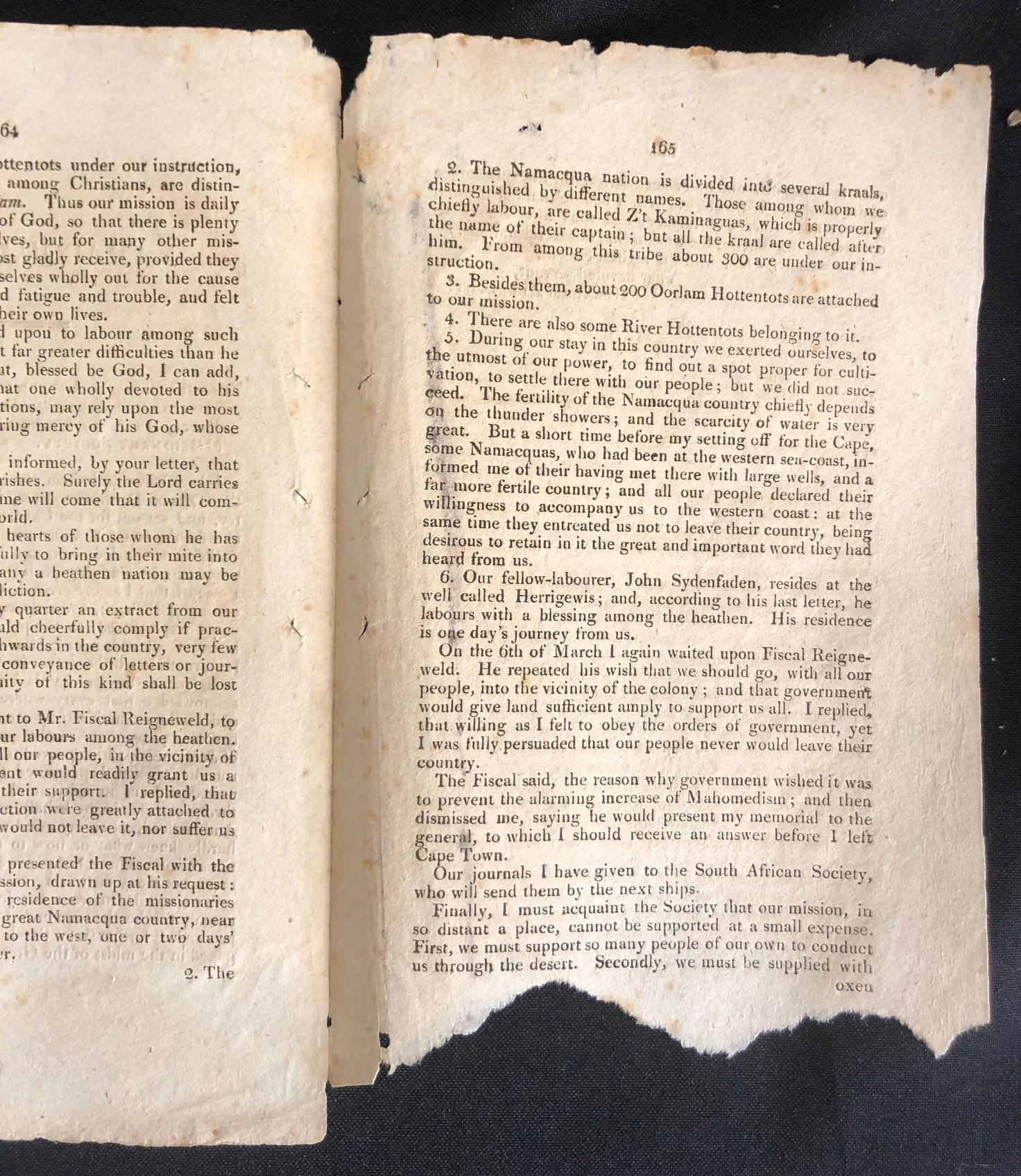
The Geopolitical Fear of Islam: "The Alarming Increase of Mahomedism"
On page 165, there is a striking revelation regarding British colonial anxieties at the Cape. Albrecht recounts his meeting with Fiscal Willem Cornelis Boers (referred to here as Fiscal Reigneweld—likely a mishearing or translation variance of Jan Willem Rademeyer or another fiscal official of the transition era).
Albrecht writes:
"The Fiscal said, the reason why government wished it [that the mission move closer to the colony] was to prevent the alarming increase of Mahomedism..."
This is an incredible piece of social history. By 1807, the British administration was terrified of the rapid growth of Islam ("Mahomedism") among the slave, artisan, and free black populations in Cape Town. The colonial authorities actively worried that if indigenous groups like the Nama and Oorlams remained entirely beyond the colonial border without Christian instruction, they might align with or adopt the faiths and anti-colonial attitudes of the Cape's Muslim underclass, or fall under the influence of hostile regional powers.
The Rise of the "Oorlam Hottentots"
On page 165, Albrecht provides a vital demographic breakdown of his mission population:
"Besides them, about 200 Oorlam Hottentots are attached to our mission."
In South African history, the Oorlams were a distinct, highly influential group. They were detached clans of mixed Khoekhoe, European, and slave ancestry who had lived on the fringes of the colonial frontier. Crucially, they spoke Dutch, rode horses, and possessed firearms.
Driven out of the colony by expanding white trekboers, leaders like Jager Afrikaner moved north across the Orange River. Albrecht’s casual mention of 200 Oorlams marks the exact historical moment these heavily armed, westernized groups began dominating the politics of Transgariep (the region across the Orange River), using the missions as temporary logistical hubs before shifting regional power dynamics entirely.
The Physical Frontier: The "Great Desert" and Pack Oxen
The sheer logistical terror of running a mission in Namaqualand comes alive at the bottom of page 165 and top of page 166:
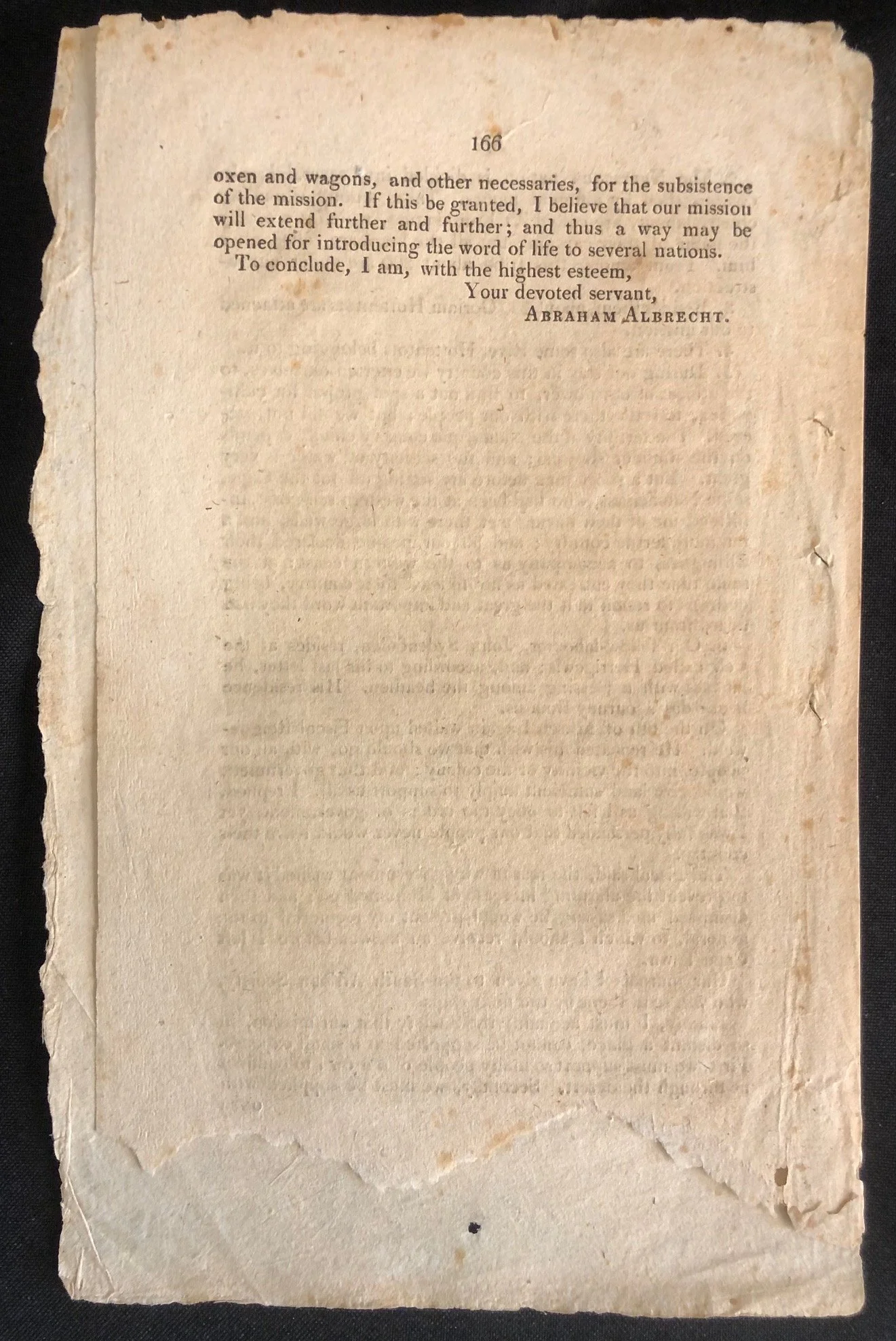
"...we must support so many people of our own to conduct us through the desert. Secondly, we must be supplied with oxen and wagons..."
The "desert" they refer to is the formidable Namib and the arid expanses of the Karas region. To survive, the Albrecht brothers (Abraham and Christian) had to pioneer the use of pack-oxen for deep-interior travel. Wagons regularly broke down in the deep sand, and water holes were days apart. Abraham actually writes this letter from Cape Town because he had to personally trek hundreds of miles south just to secure basic survival provisions for the station.
Typographical Clue: The "Colony of Fulback" (Tulbagh)
On page 163, there is a fantastic example of the challenges of 18th-century translation and typesetting. The text reads:
"...the colony of Fulback, formerly called Rodesand."
This is a phonetic Anglo-German misspelling of Tulbagh (the historic landdrost district in the Western Cape, which was originally known as Roodezand). Because Albrecht wrote his report in German, the London printers (Bye and Law) clearly struggled to decipher his handwriting of Cape Dutch place names, converting Tulbagh into Fulback. For a book historian, these small typographical quirks are excellent for tracing the translation chain from the South African veld to the printing presses of London.
The Tragic Fate of the Albrecht Mission
This document captures the Albrecht mission at its absolute zenith, full of optimism about expanding into "several nations." Historically, however, this enterprise was doomed. Just a few years after this letter was written, the notorious Oorlam ‘outlaw’ Jager Afrikaner fell out with the missionaries. In 1811, Afrikaner’s bandits attacked and destroyed the Warmbad mission station. The missionaries fled into the desert; Abraham Albrecht, already suffering from chronic illness exacerbated by the harsh climate, died of tuberculosis later that year at the age of 32. This letter stands as a fragile, surviving monument to an ambitious project just years before it was wiped off the map.
Torn with loss; foxed.
R2,000