South African Zionist Federation - Johannesburg. Palestine Pocket Calendar from 1938–1939
This pocket calendar from 1938–1939 (Hebrew year 5699) is a piece of ephemera that captures a pivotal, highly tense moment in the history of Mandatory Palestine, wrapped in a unique international connection.
The Cover Art and the "Tower and Stockade" Tactics
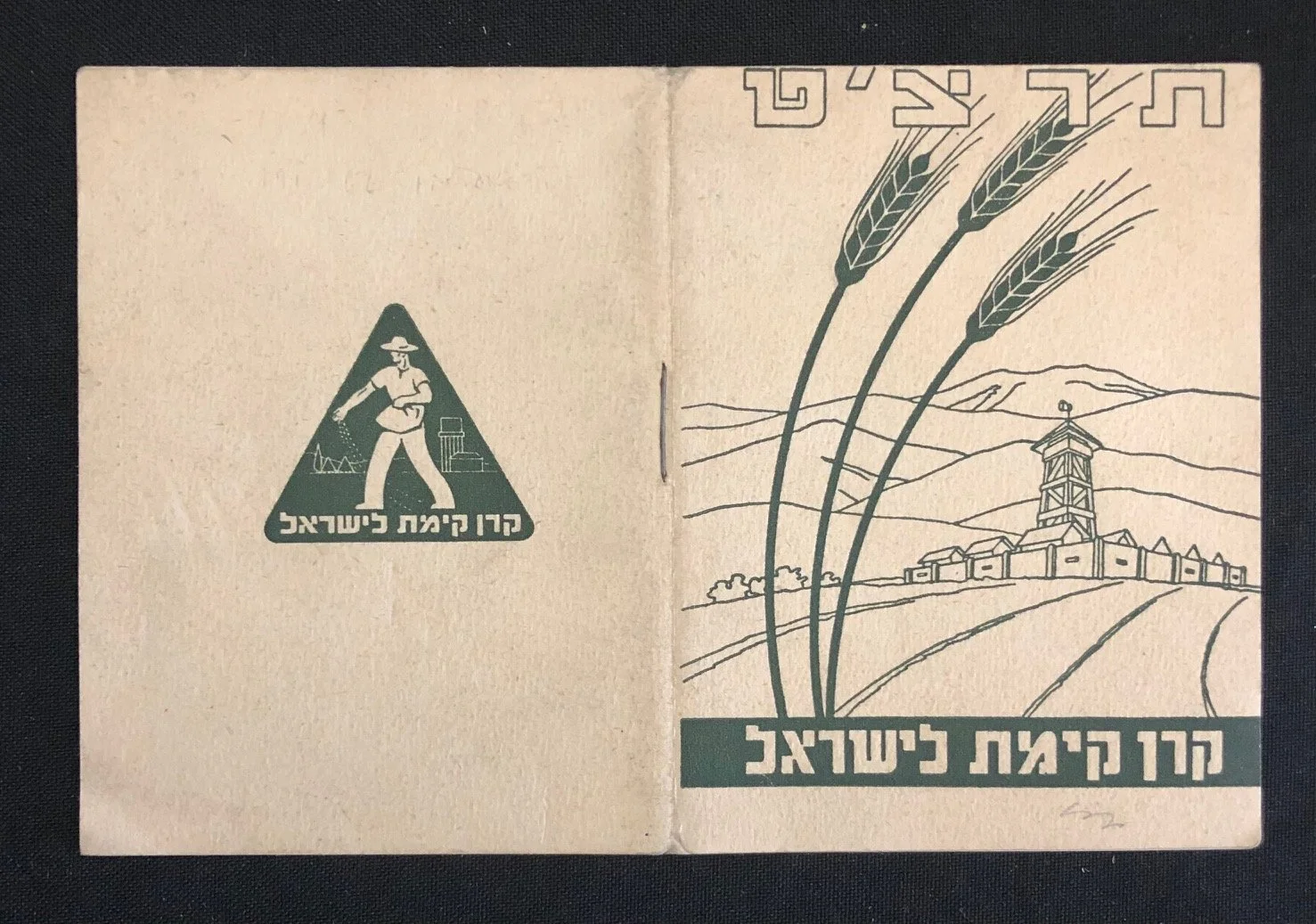
The illustration on the front cover of is not just a pastoral scene; it is a direct reflection of a radical, covert architectural strategy known as Homa U'Migdal (Tower and Stockade).
Between 1936 and 1939, during the Arab Revolt against the British Mandate, Jewish settlers faced severe security threats and strict British restrictions on expanding new towns. To bypass these hurdles, pioneers utilized an old Ottoman law still on the books: if a building's roof was completely finished, it could no longer legally be demolished by the authorities.
Communities would prefabricate a wooden watchtower, double-walled fences filled with gravel, and a few basic huts. In a single night, hundreds of volunteers would assemble the entire settlement before dawn. The watchtower and fortified wall depict exactly one of these defensive installations.
The Anglo-Palestine Bank
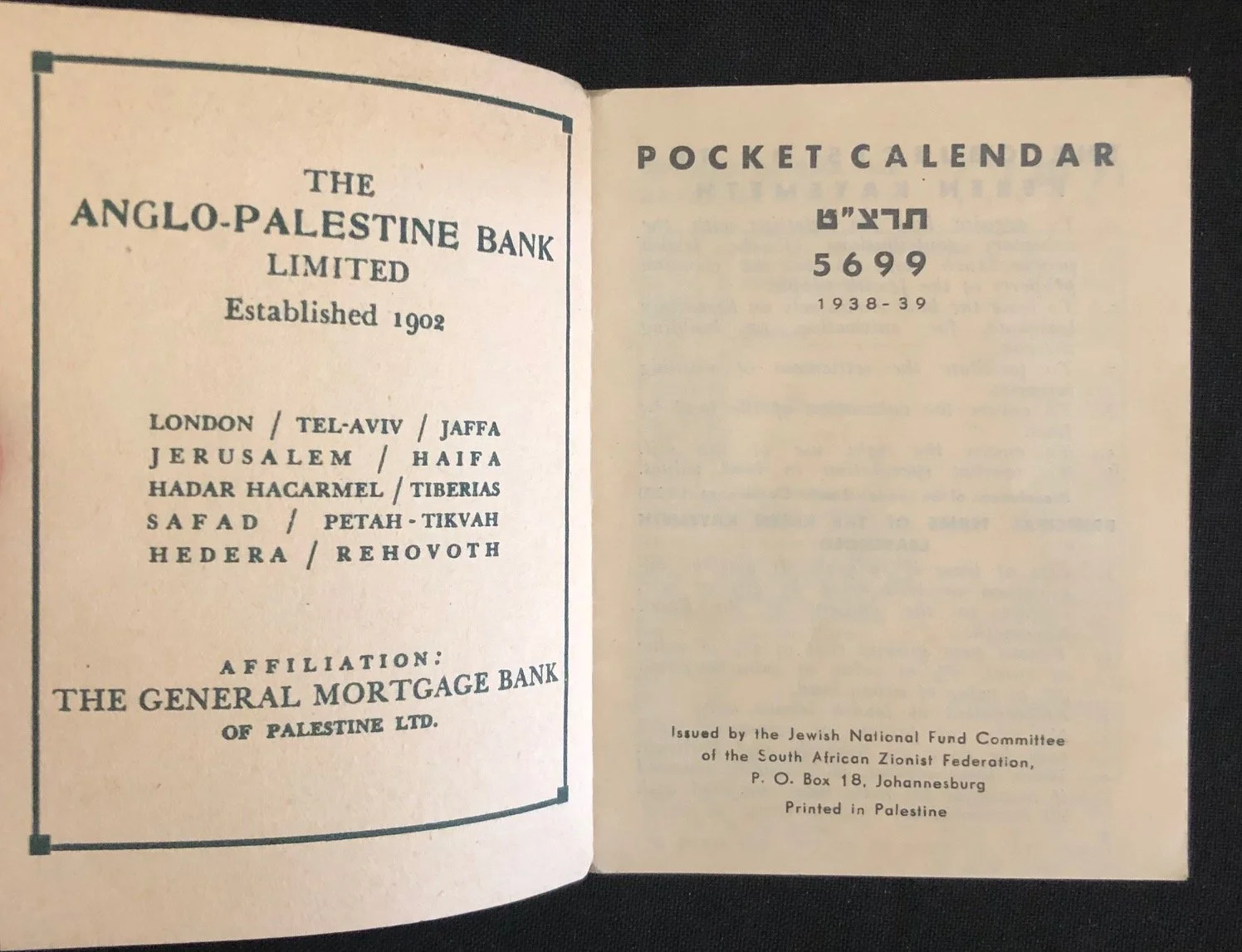
The advertisement for The Anglo-Palestine Bank Limited marks an institution that essentially functioned as the financial engine of the pre-state Jewish community (Yishuv). Established in 1902 under the direction of Theodor Herzl's Zionist movement, the bank moved its headquarters from London to Jaffa.
When World War II broke out shortly after this calendar was printed, the bank actually printed the currency used by the British military in the region. Following the establishment of Israel in 1948, it temporarily issued the new nation’s first official banknotes before transitioning into Bank Leumi in 1951.
The Global Diaspora Footprint
The fine print at the bottom notes that this piece was issued by the Jewish National Fund Committee of the South African Zionist Federation based in Johannesburg, but printed in Palestine.
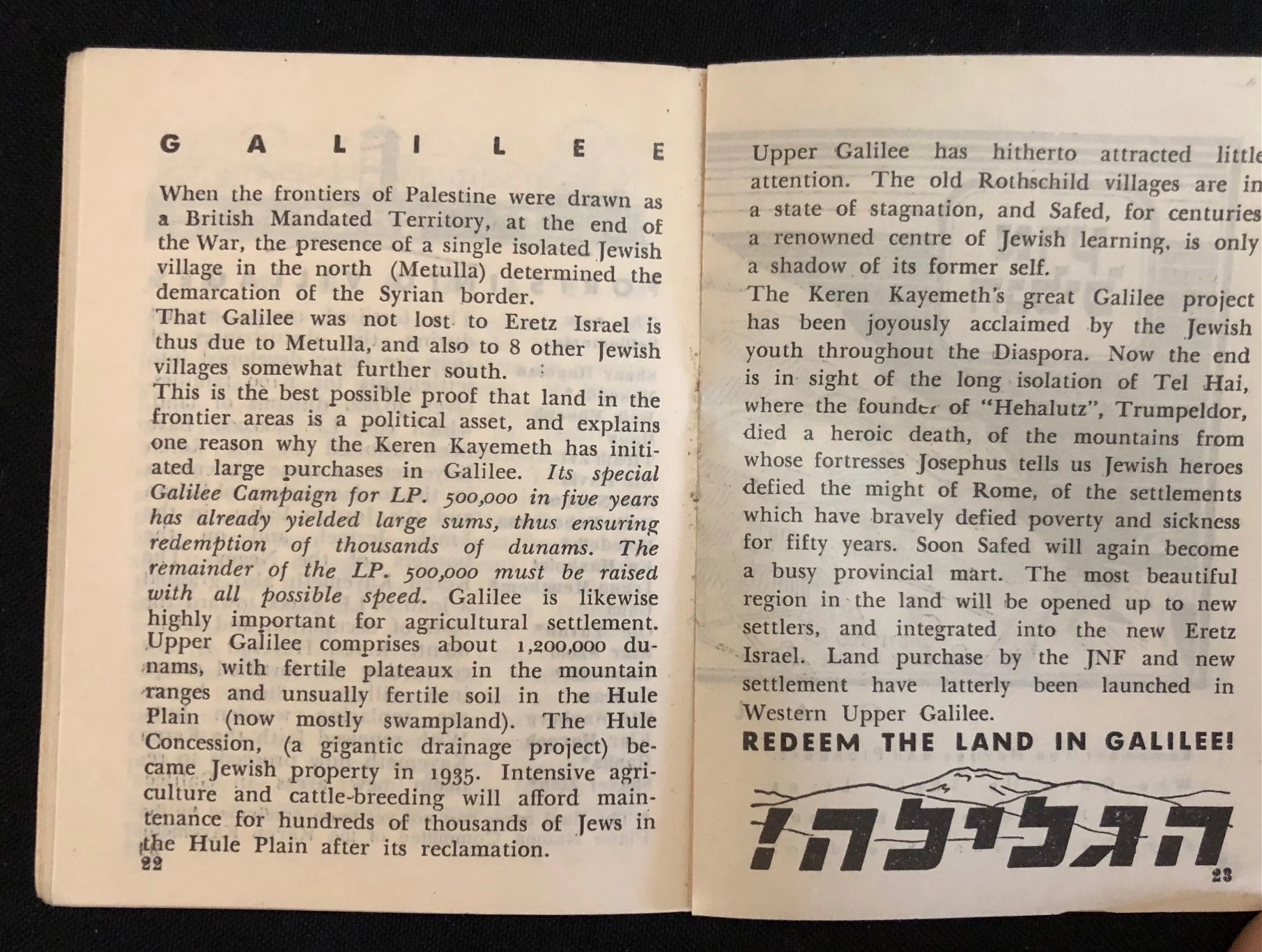
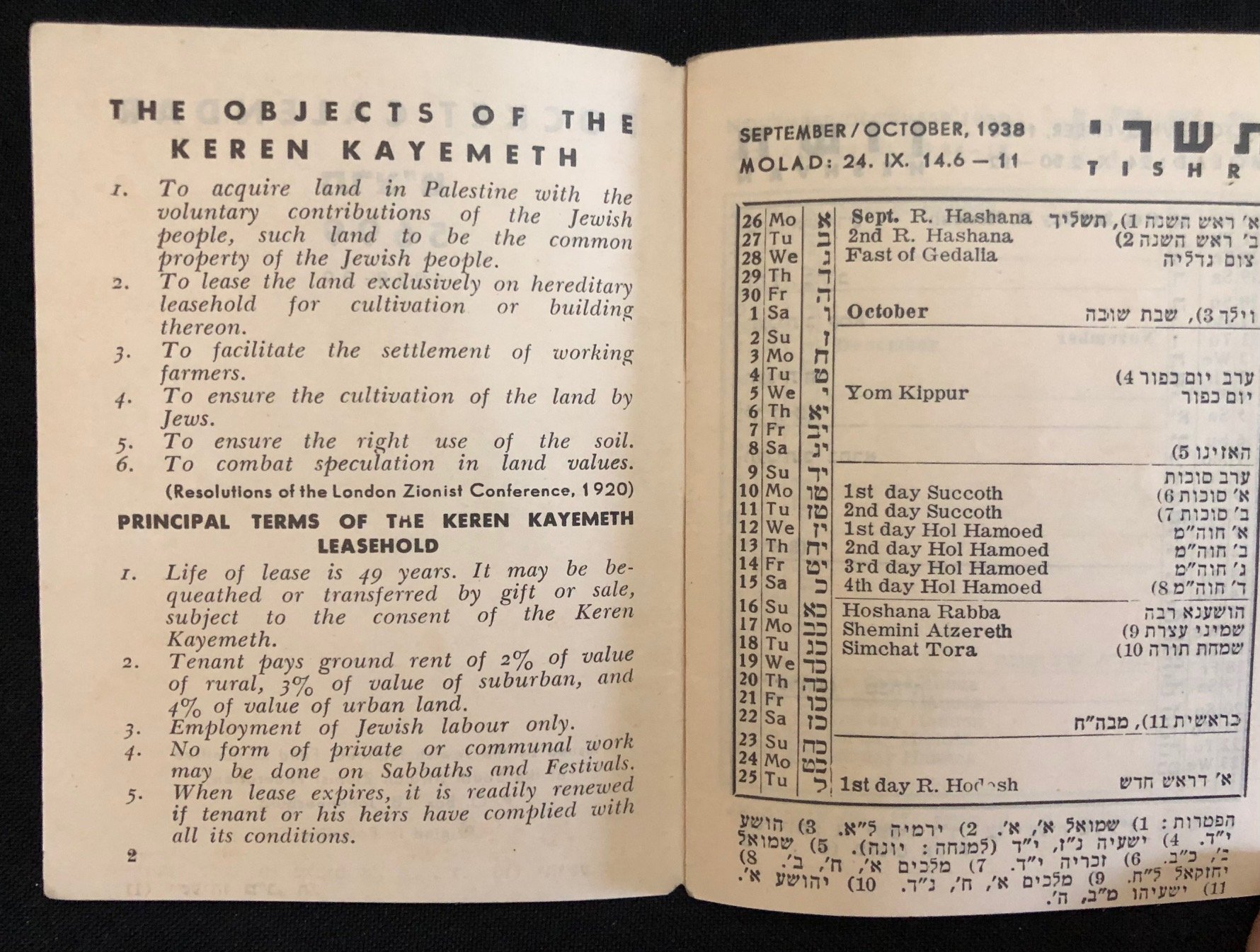
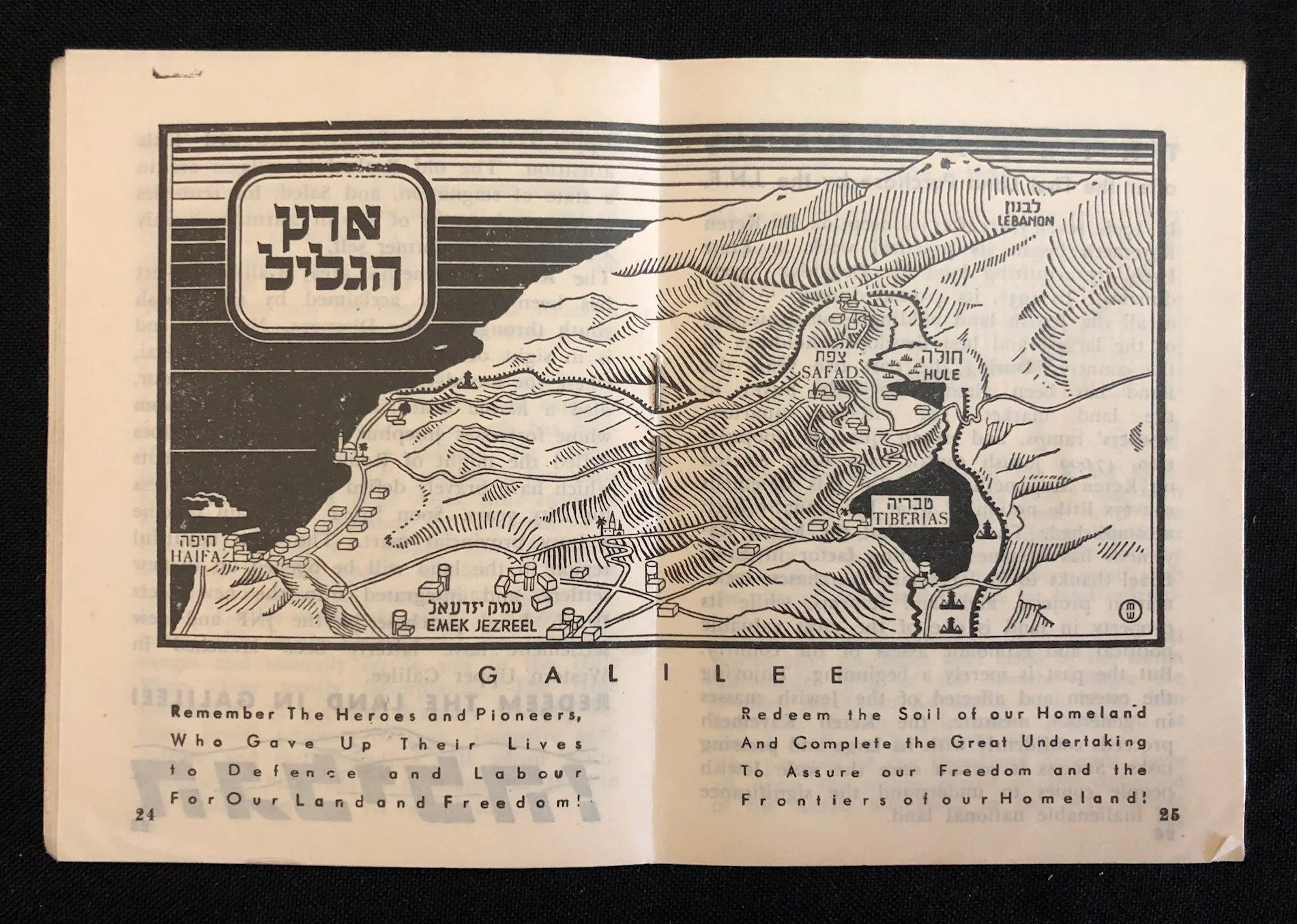
South Africa's Jewish community was historically one of the most organized and financially supportive diasporas per capita for the Keren Kayemeth (JNF). This little booklet shows how deeply interconnected global fundraising networks were during the interwar period—supplying diaspora members with liturgical calendars and ideological messaging while directly funding the purchase of land and leaseholds detailed on the interior pages.
46 page booklet. Minor wear.
R600