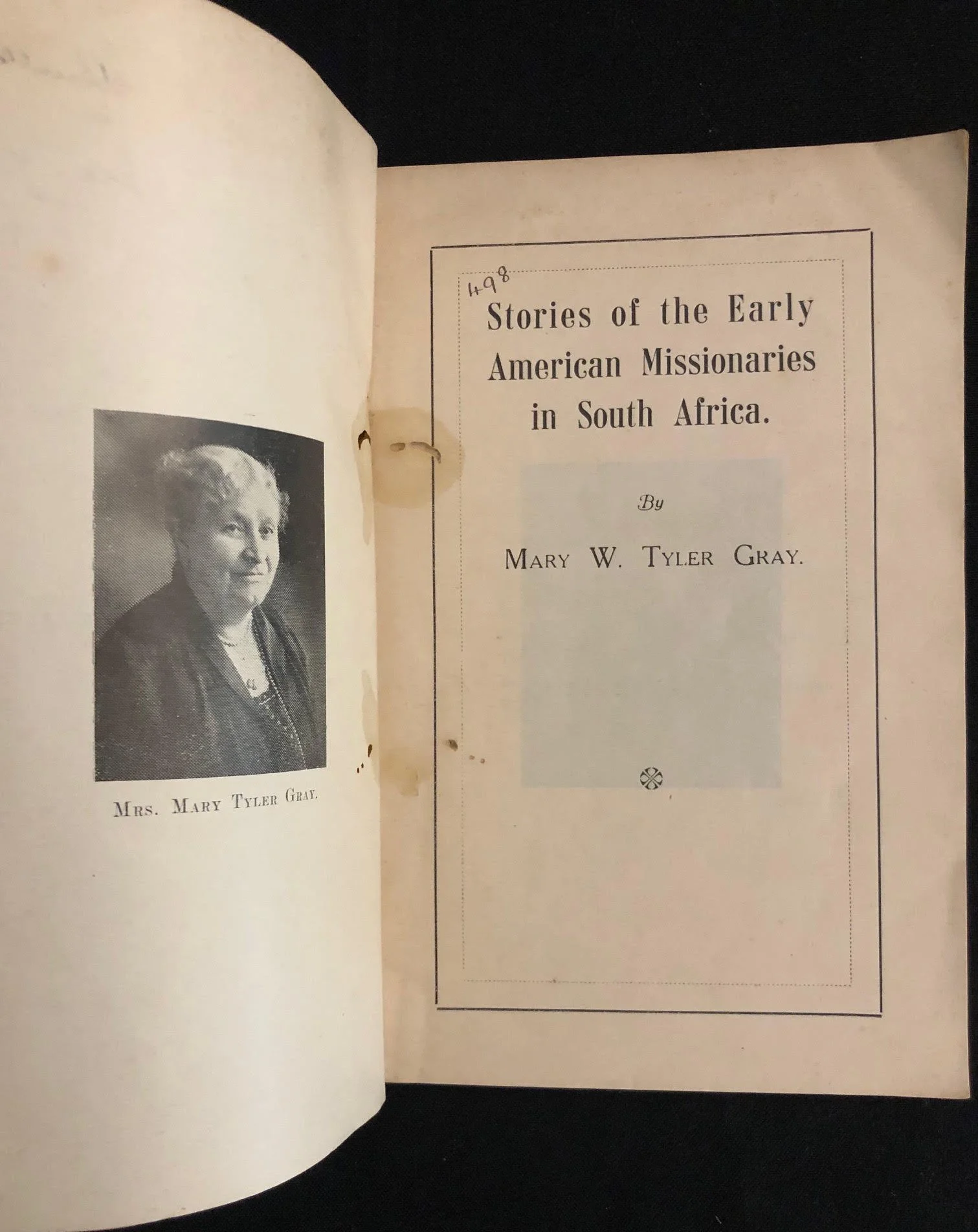
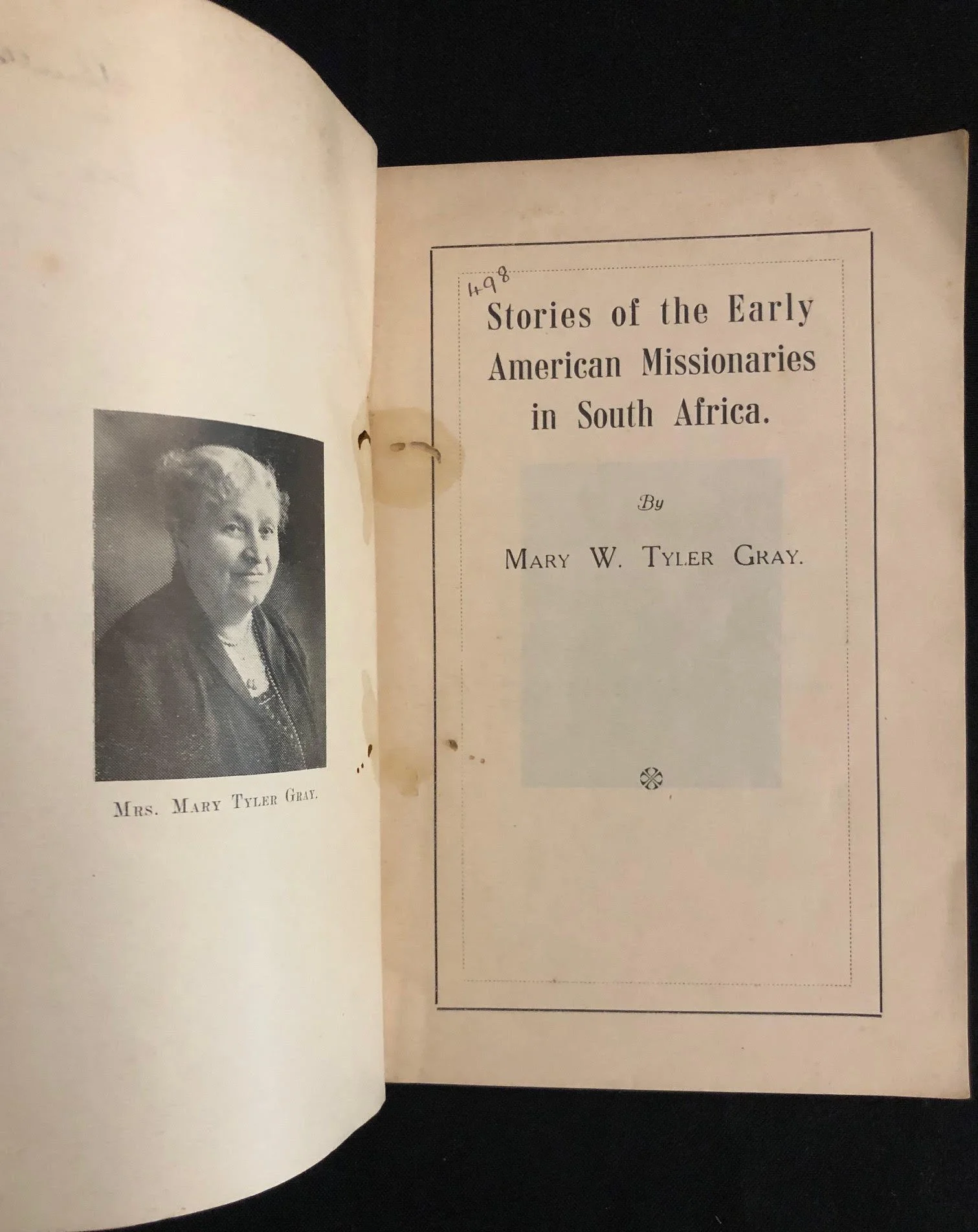
Stories of the Early American Missionaries in South Africa by Mary W. Tyler Gray. R1,000
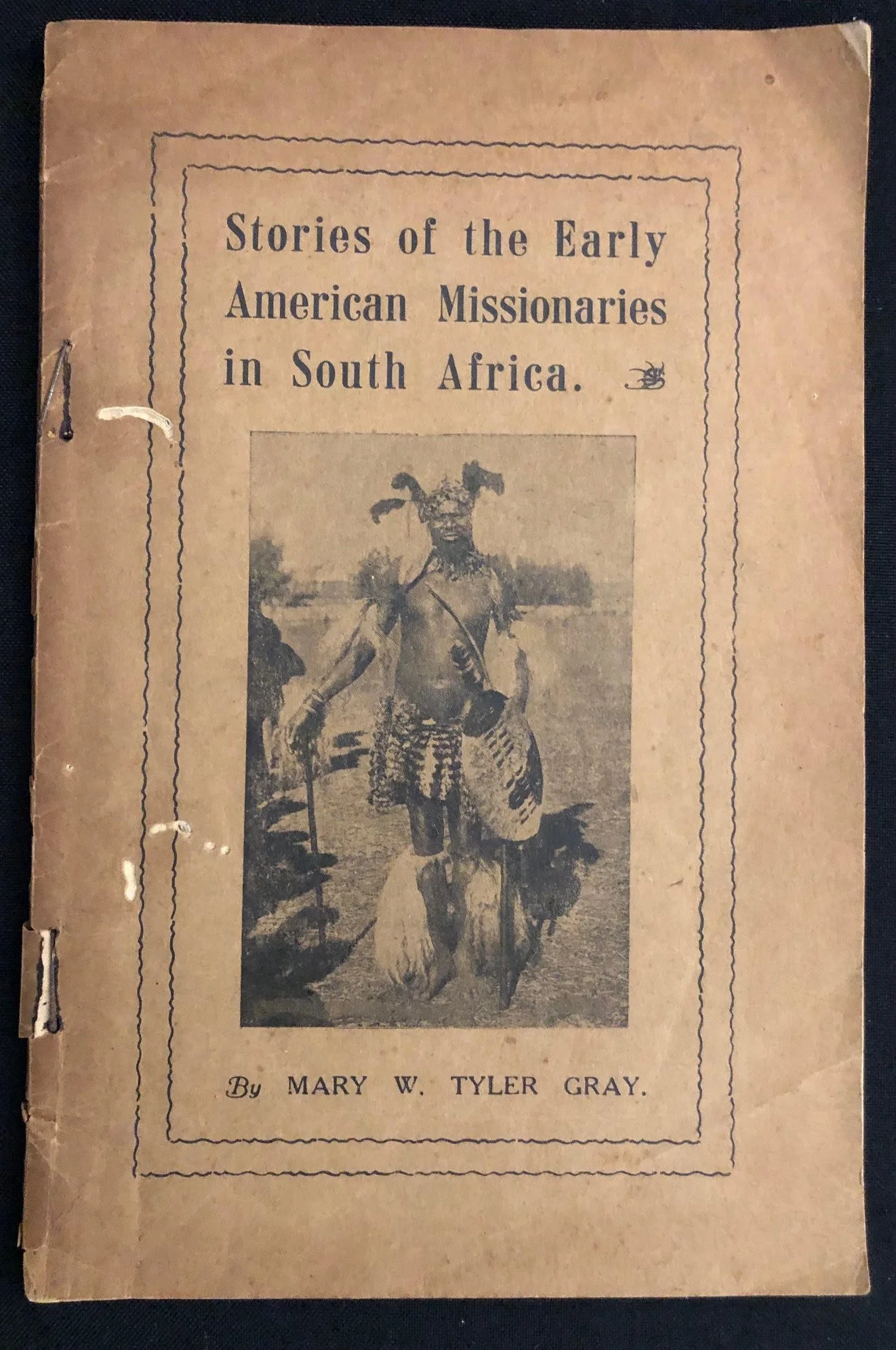
Stories of the Early American Missionaries in South Africa by Mary W. Tyler Gray is a scarce, privately printed historical pamphlet published in Johannesburg around 1935 to mark the centenary of the arrival of the first American Board missionaries in Southern Africa.
Here are several historically and bibliographically significant details about the author, the text, and the era it documents:
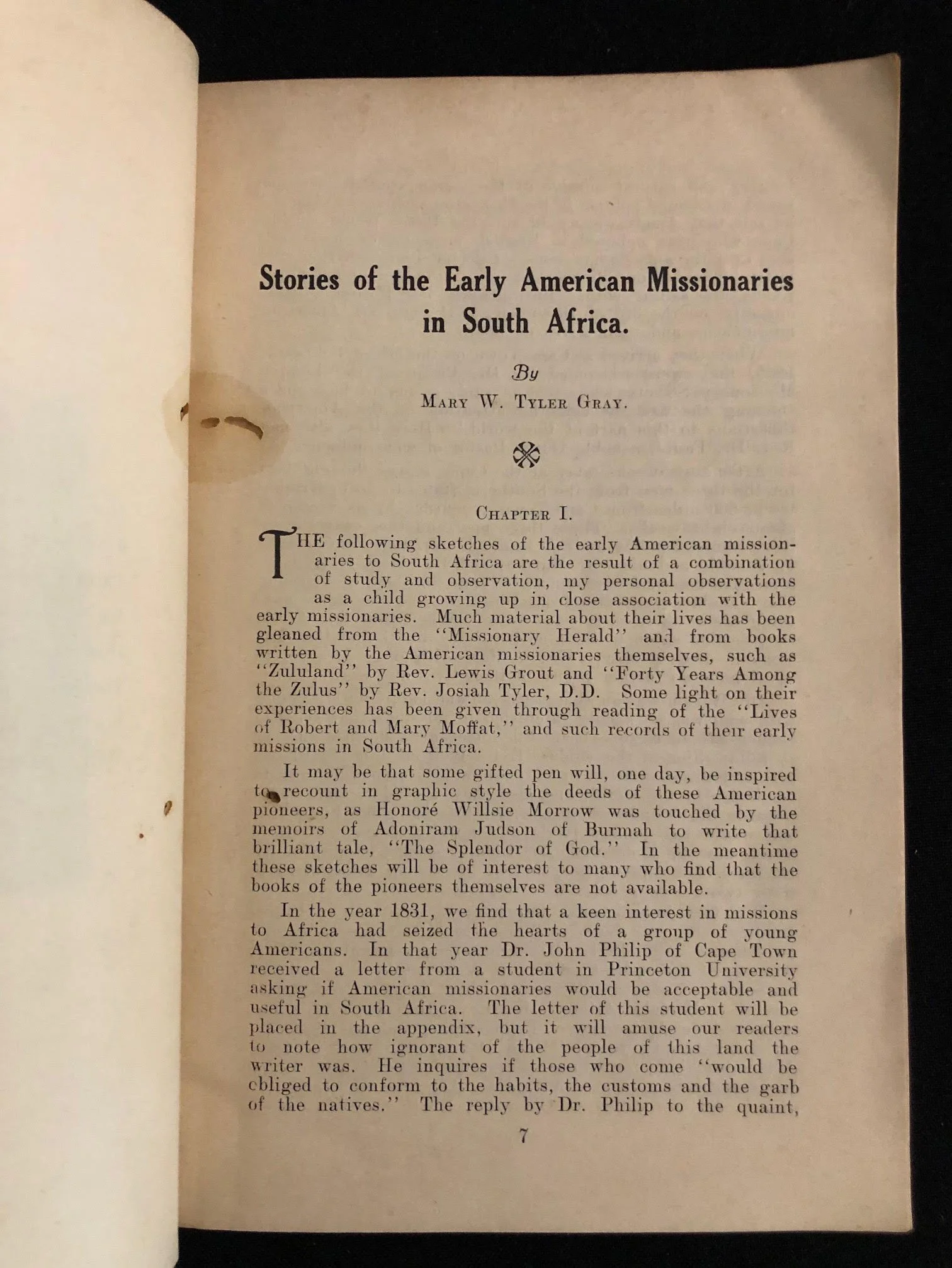
A First-Hand Witness to 19th-Century Natal: Mary Williams Tyler Gray was born in Natal in 1853 to Josiah and Susan Tyler, two of the pioneering missionaries sent by the American Board of Commissioners for Foreign Missions (ABCFM). Growing up at the Esidumbini mission station in KwaZulu-Natal, she spent her childhood fluent in isiZulu and living alongside the very first generation of American arrivals—such as Daniel Lindley, Aldin Grout, and Newton Adams—giving her sketches the rare authority of lived childhood memory rather than distant academic retrospection.
The 1835 Centenary Context: The booklet was produced to commemorate the arrival of the original six American missionary couples in Cape Town in February 1835, who subsequently split into two parties: one heading north into the interior to Mzilikazi’s Ndebele kingdom (where they witnessed the violent clashes between the Ndebele and the Voortrekkers at Mosega), and the other traveling by sea and wagon into Natal and Zululand during the reign of King Dingane.
The Origins of South African Educational & Linguistic Institutions: The pioneers profiled in Gray’s sketches laid the foundations for major institutions that shaped modern South African history. Newton Adams founded Adams College near Amanzimtoti (which later educated Albert Luthuli, John Dube, and Mangosuthu Buthelezi); Daniel Lindley became the first ordained minister to the Voortrekkers in Natal (after whom the Free State town of Lindley is named) and later founded Inanda Seminary; and Lewis Grout—whose work Gray cites on the opening page—produced one of the earliest comprehensive grammars of the Zulu language (The Isizulu, 1859).
The 1831 Princeton Letter Anecdote: As highlighted at the bottom of the opening page, Gray preserves a telling piece of 19th-century cultural history: an 1831 letter from a Princeton Theological Seminary student to Dr. John Philip in Cape Town anxiously inquiring whether American missionaries sent to South Africa "would be obliged to conform to the habits, the customs and the garb of the natives"—a revealing glimpse into how little Americans knew of Southern Africa prior to the 1835 expedition.
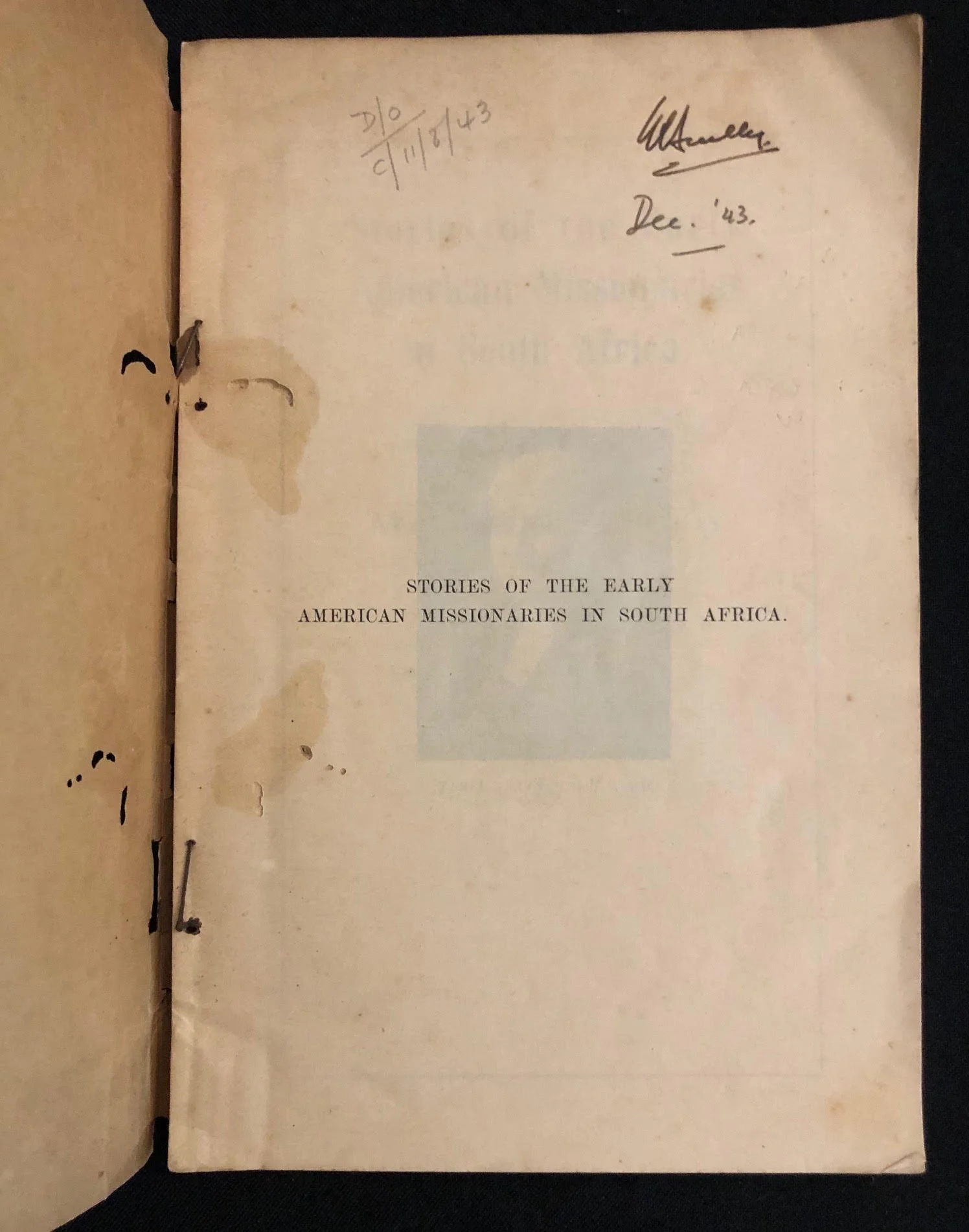
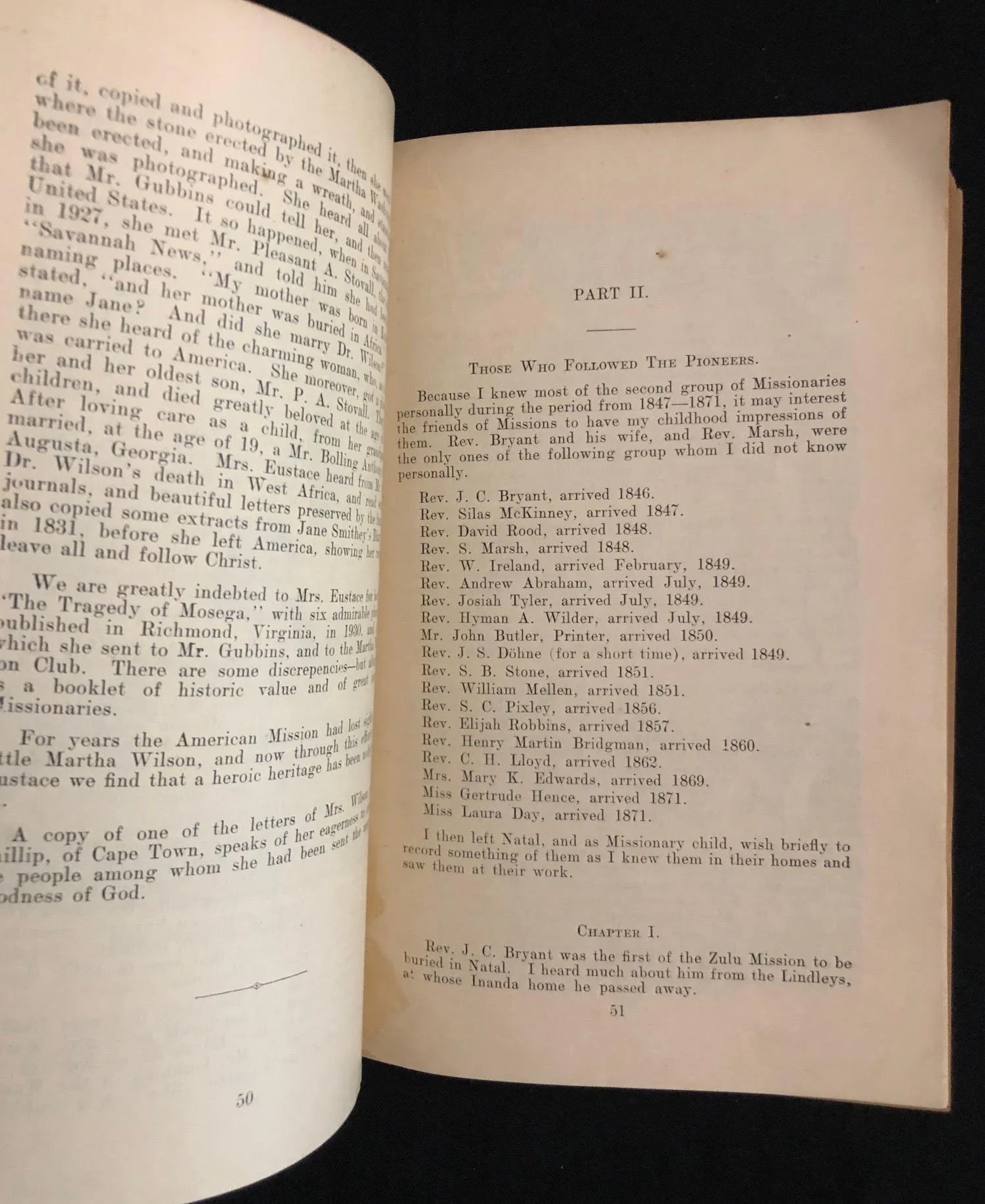
A Classic Piece of Local Joburg Printing: Printed in modest wrappers with side-stapled binding (visible with typical rusting around the staples), this 71-page pamphlet was produced in small numbers for missionary circles, descendants, and local historical societies rather than the commercial book trade, making surviving copies sought-after items of KwaZulu-Natal and Africana ephemera.
145mm x 220mm
Very fragile; worm holes, staples rusted; front and back wrapper breaking off. Sold WAF. (Very rare in any state).
R1,000