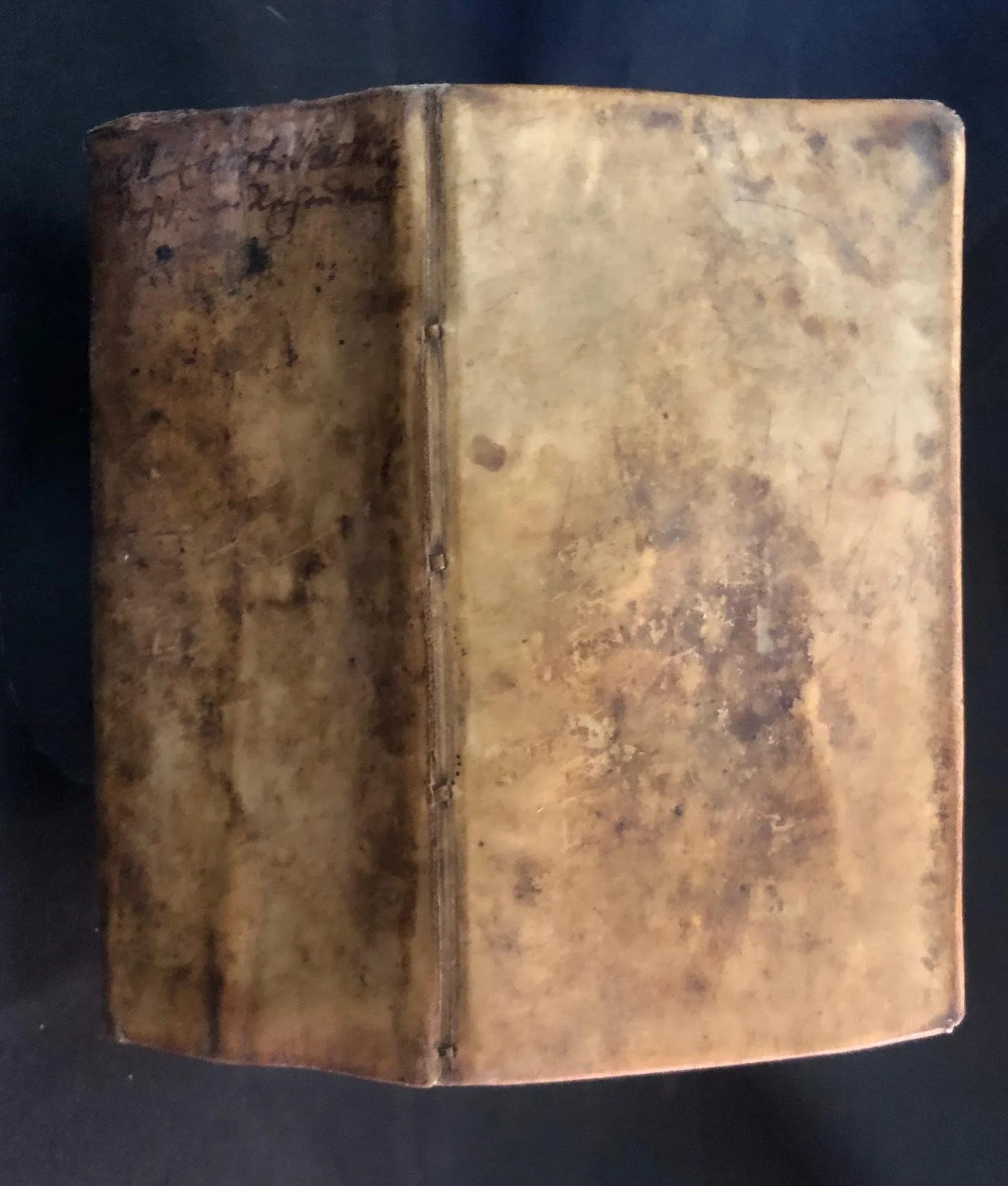
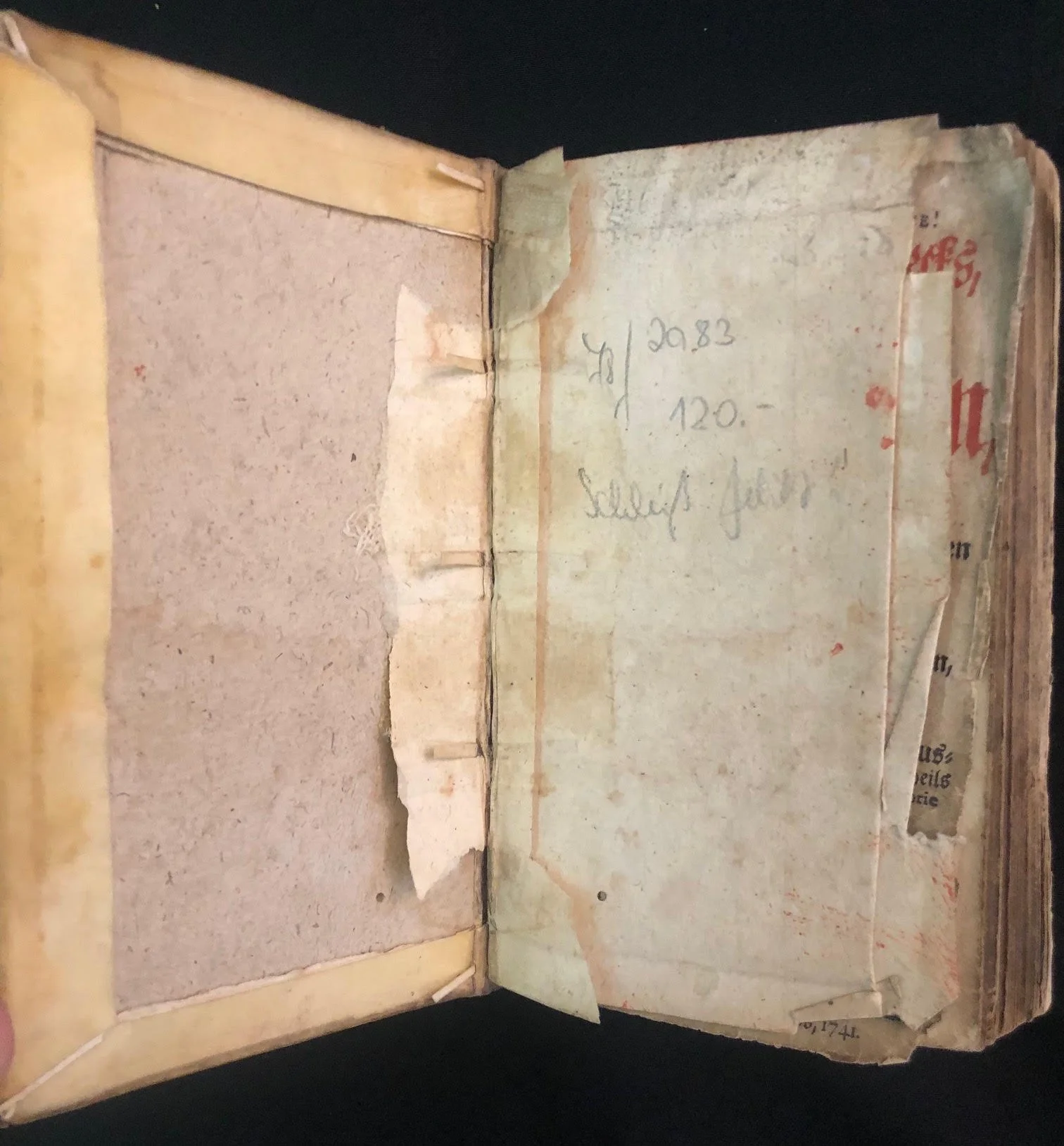
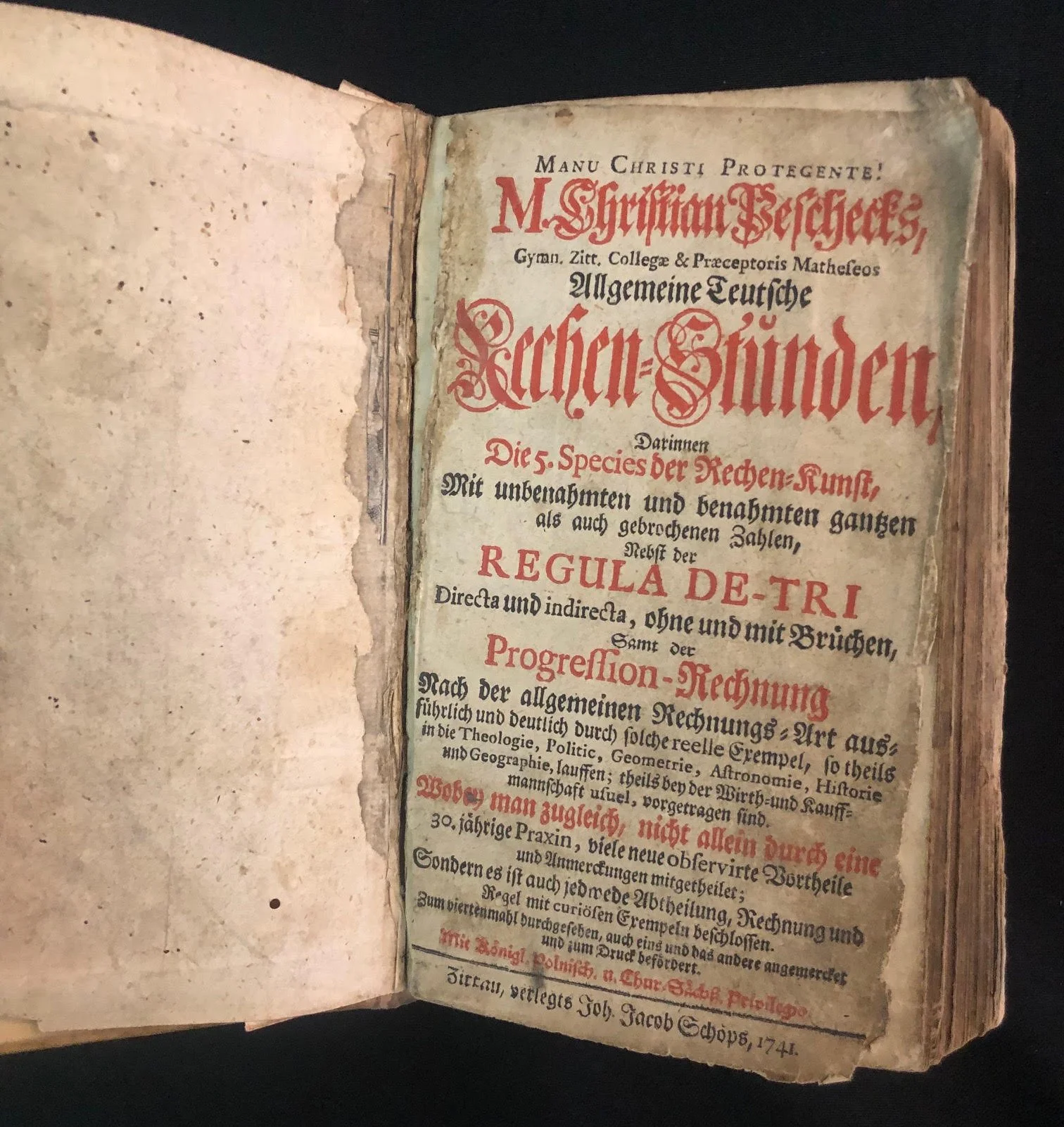
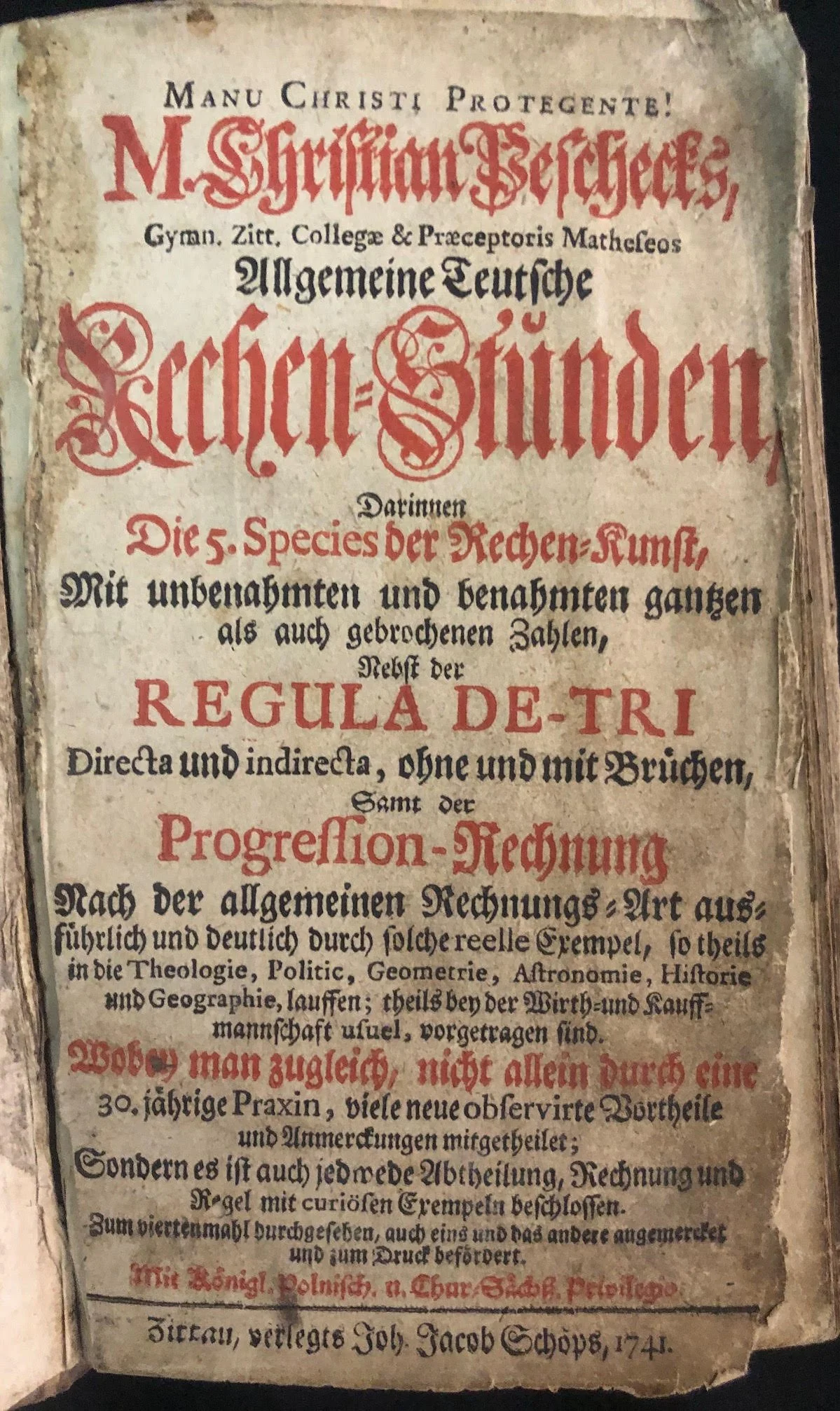
1741 Allgemeine Teutsche Rechen-Stunden (Arithmetic) by Christian Pescheck.
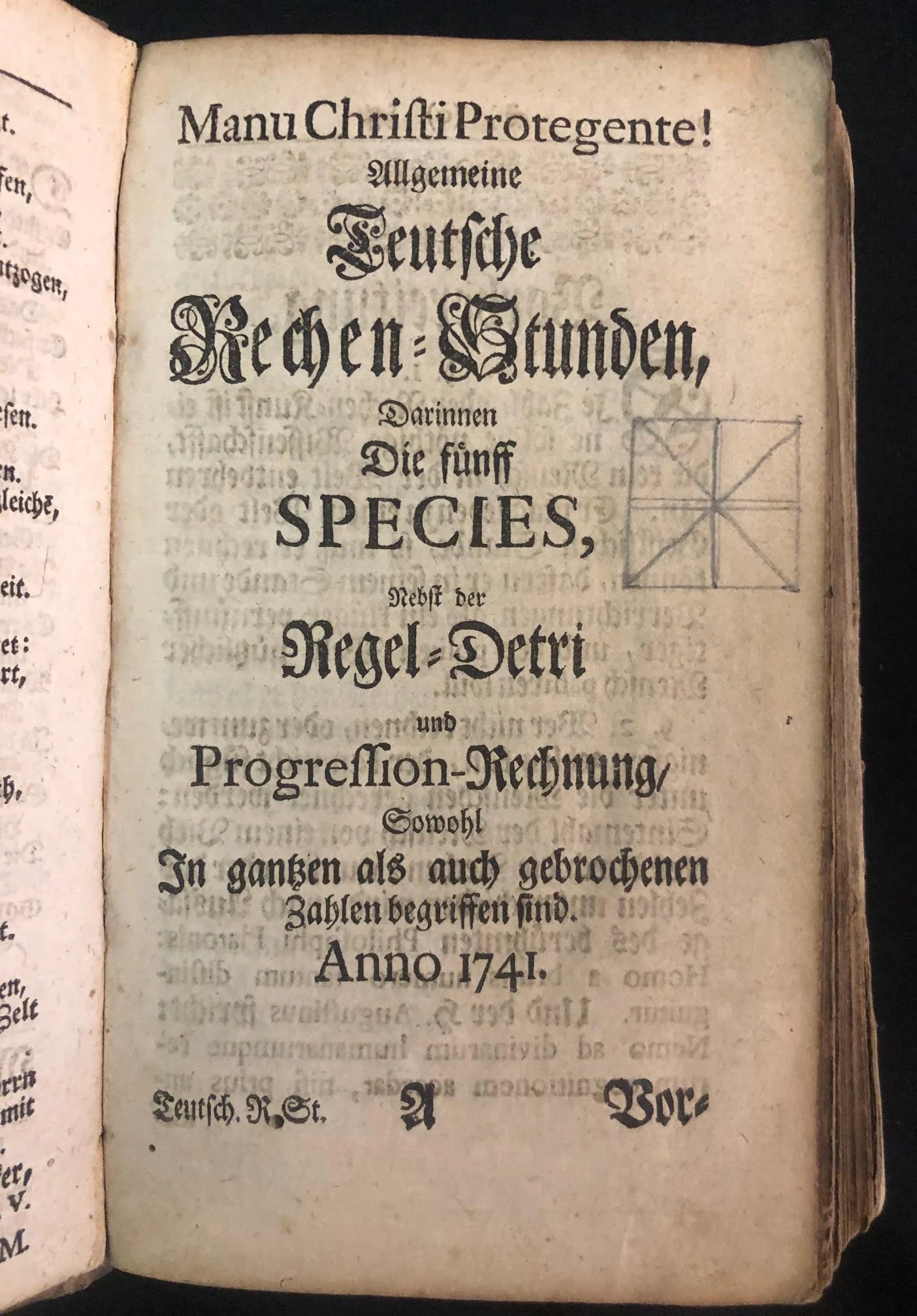
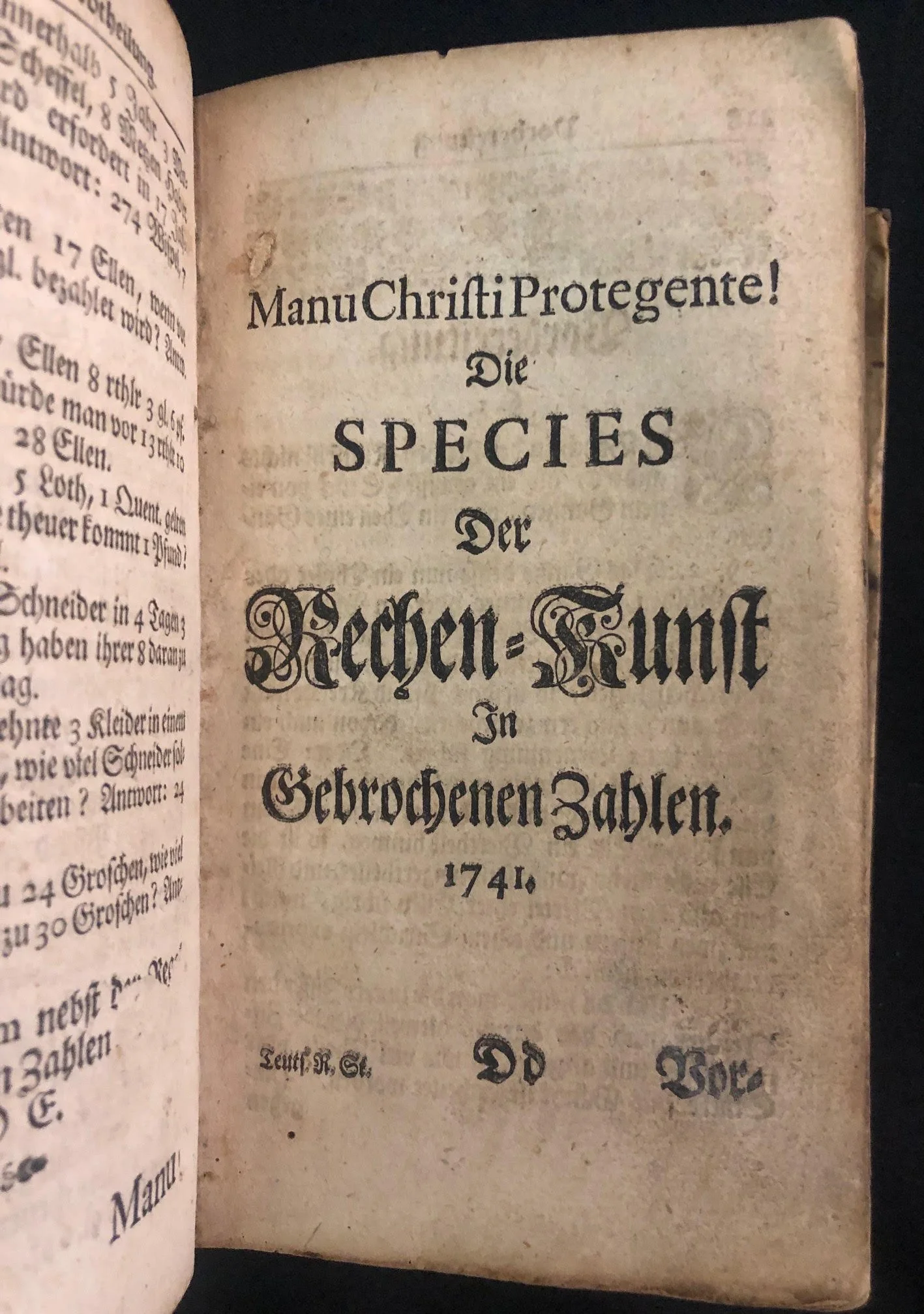
This is a 1741 fourth edition of Allgemeine Teutsche Rechen-Stunden ("General German Arithmetic Lessons") by Christian Pescheck (1676–1744), printed in Zittau, Saxony, by Johann Jacob Schöps.
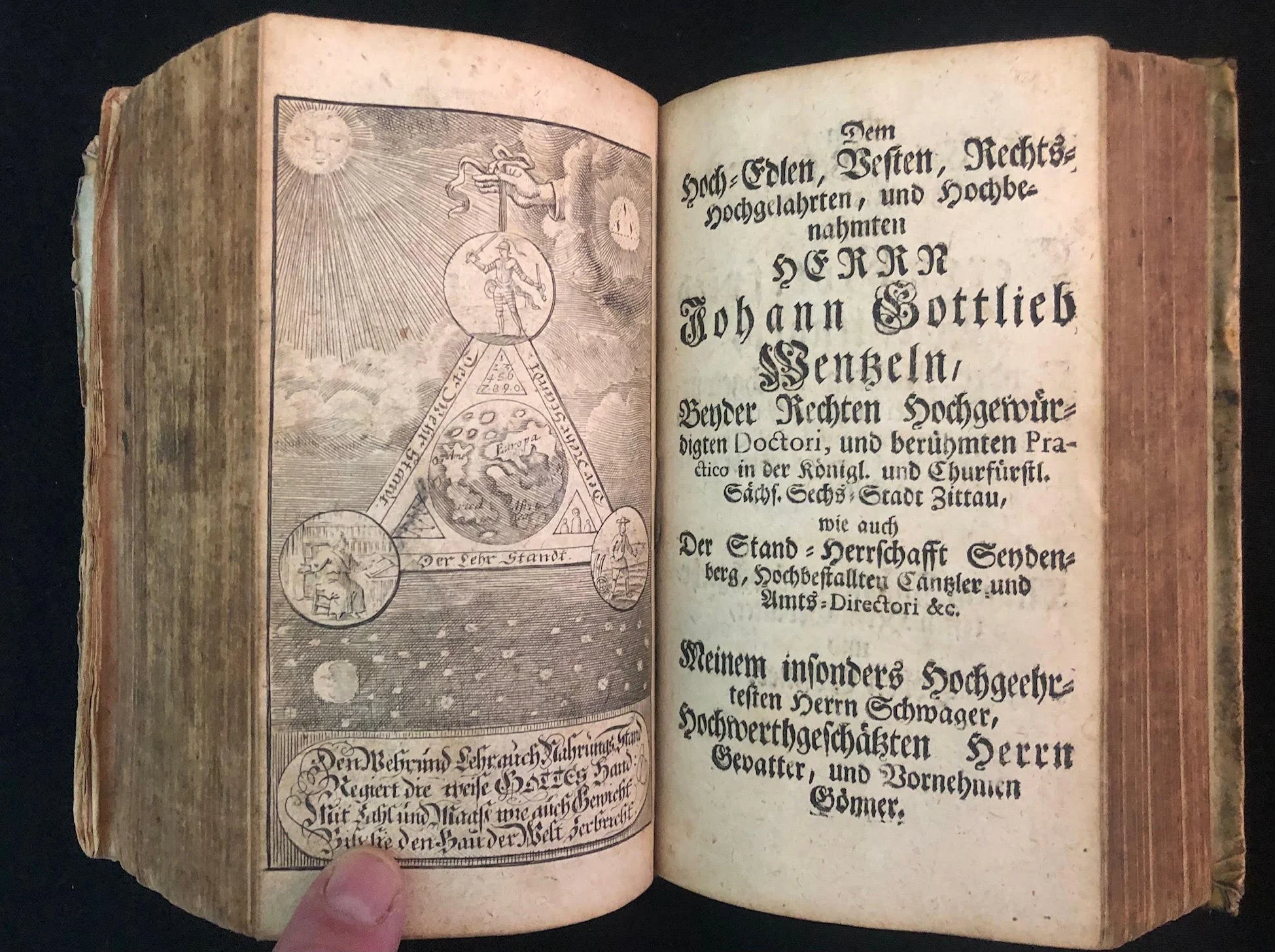
Beyond being a fine example of two-color (red and black) 18th-century German Fraktur printing, this volume holds several fascinating historical threads:
The "Adam Ries" of the 18th Century: Christian Pescheck was a mathematics teacher (Præceptor Matheseos) at the Zittau Gymnasium who became the most influential arithmetic textbook author in the German-speaking world during the Enlightenment. His books were so ubiquitous that "according to Pescheck" (nach Pescheck) became a standard German idiom for verifying a calculation—the exact 18th-century equivalent of "according to Hoyle."
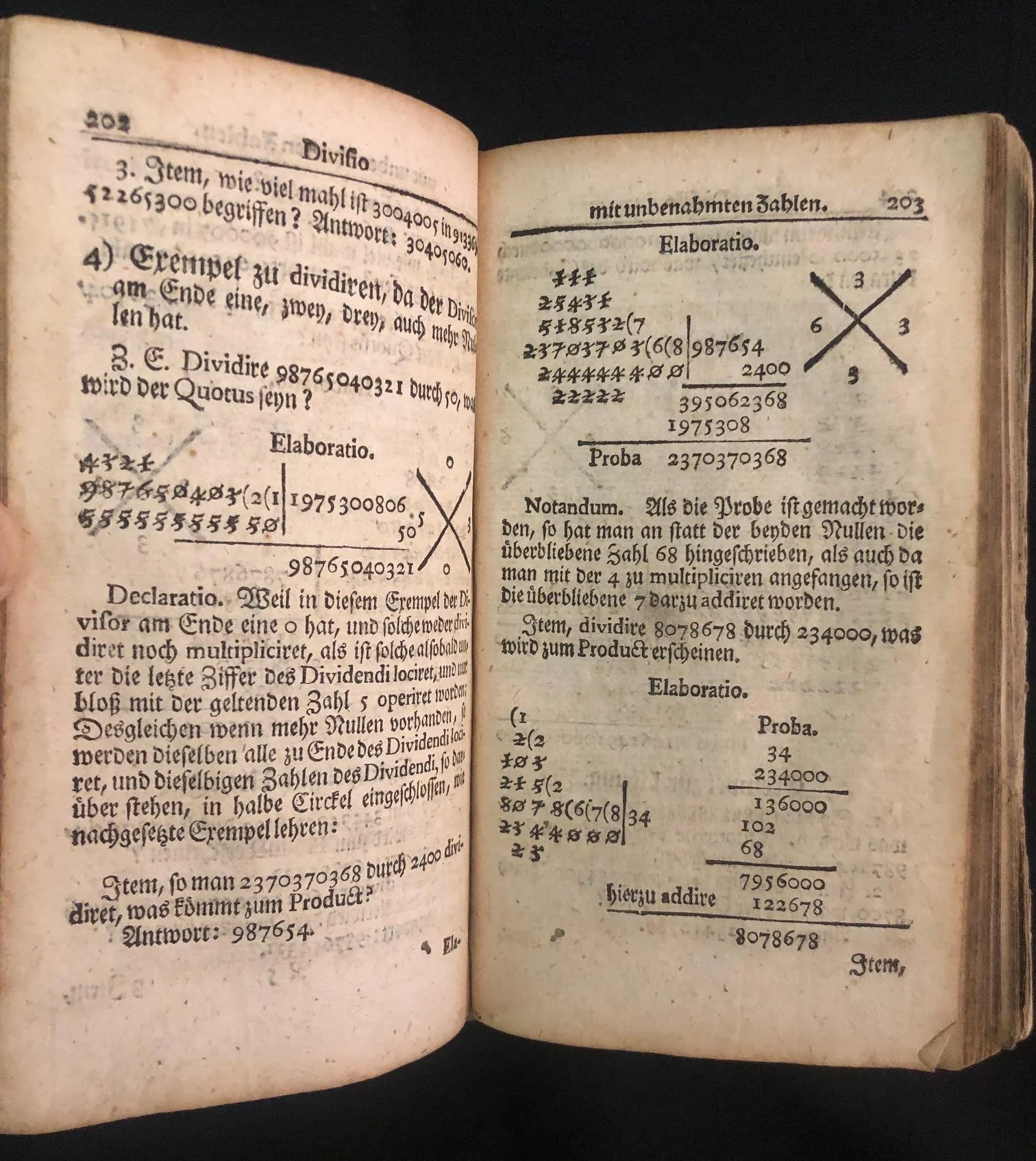
Mathematics for the "Real World" and Entertainment: Notice how the title page promises practical examples drawn not only from commerce and housekeeping (Wirth- und Kauffmannschafft), but also from theology, politics, geometry, astronomy, history, and geography, concluding each section with "curious examples" (curiösen Exempeln). Pescheck pioneered the idea of teaching dry commercial math—such as the Regula de-Tri (the Rule of Three, essential for currency conversion and weights/measures across fragmented German states)—through riddles, biblical puzzles, and historical brain-teasers to keep students engaged.
The Saxon-Polish Royal Privilege: At the bottom of the title page is the notice Mit Königl. Polnisch. u. Chur-Sächs. Privilegio ("With Royal Polish and Electoral Saxon Privilege"). Because Pescheck’s textbooks were massive bestsellers, pirated editions were rampant across Central Europe. In 1741, the ruler of Saxony was Augustus III, who simultaneously held the crown of King of Poland. This dual royal copyright legally barred rival printers in Saxony and Poland from pirating Schöps's printing.
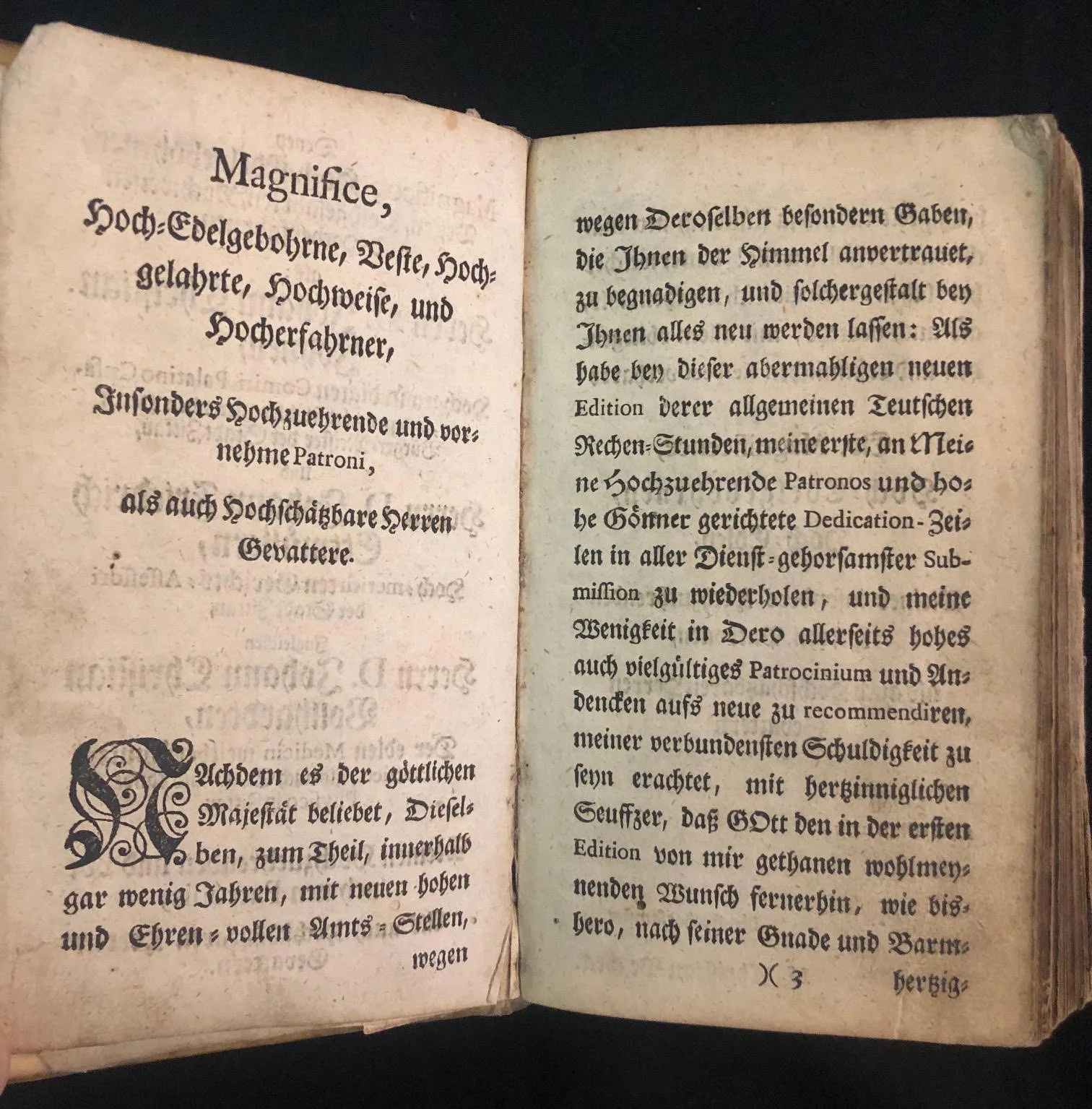
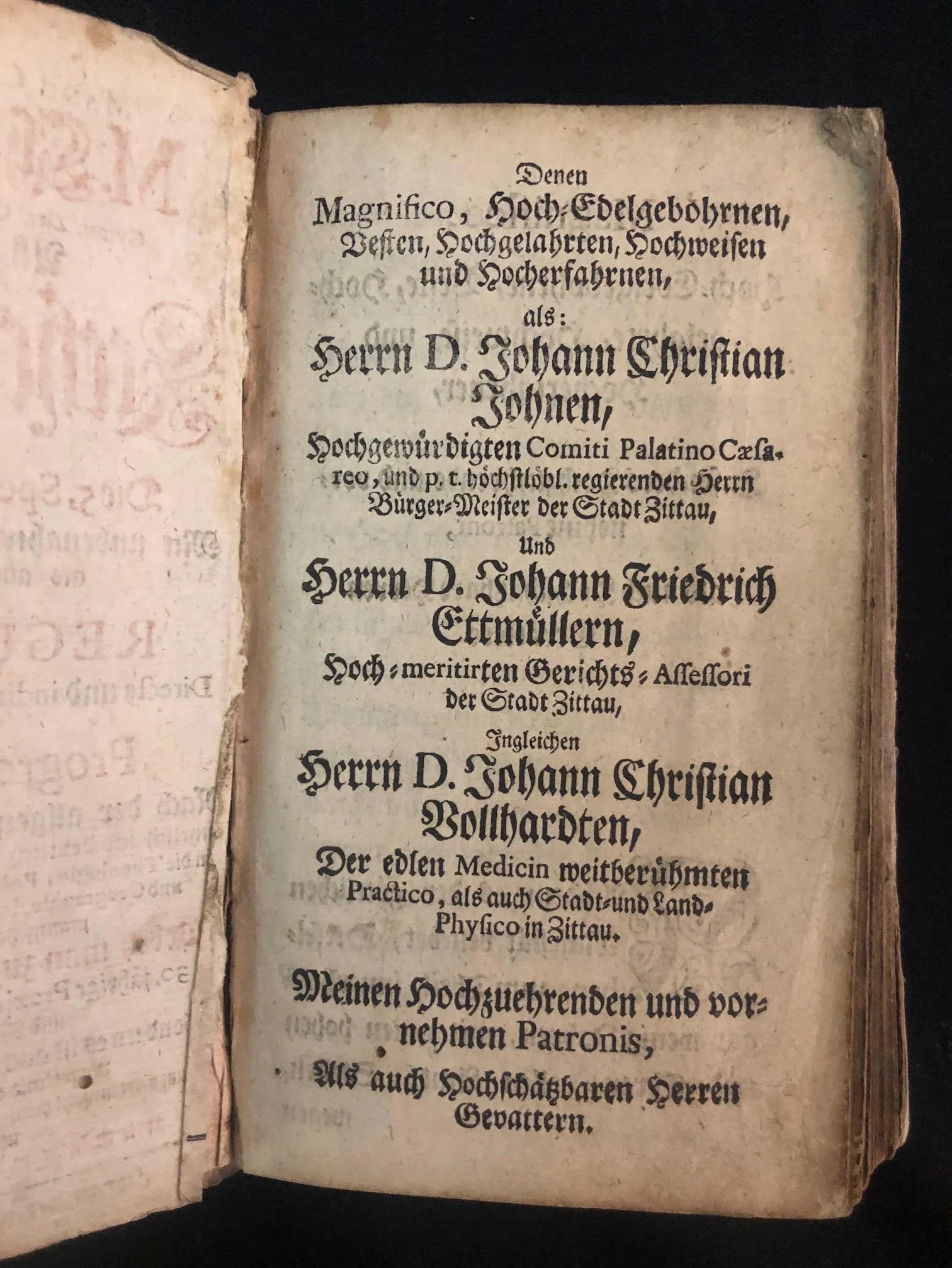
A Window into Zittau Before Its Destruction: The dedication is addressed to three prominent civic leaders of Zittau—Mayor Johann Christian John, Court Assessor Johann Friedrich Ettmüller, and city physician Johann Christian Vollhardt—whom Pescheck also thanks as his "honored godfathers" (Herren Gevattern). Just sixteen years after this book was printed, during the Seven Years' War in July 1757, Austrian forces bombarded Zittau with incendiary shells, burning nearly the entire historic city, its churches, and its archives to the ground. Books like this survive as direct physical artifacts from Zittau's prosperous Baroque golden age just prior to the catastrophe.
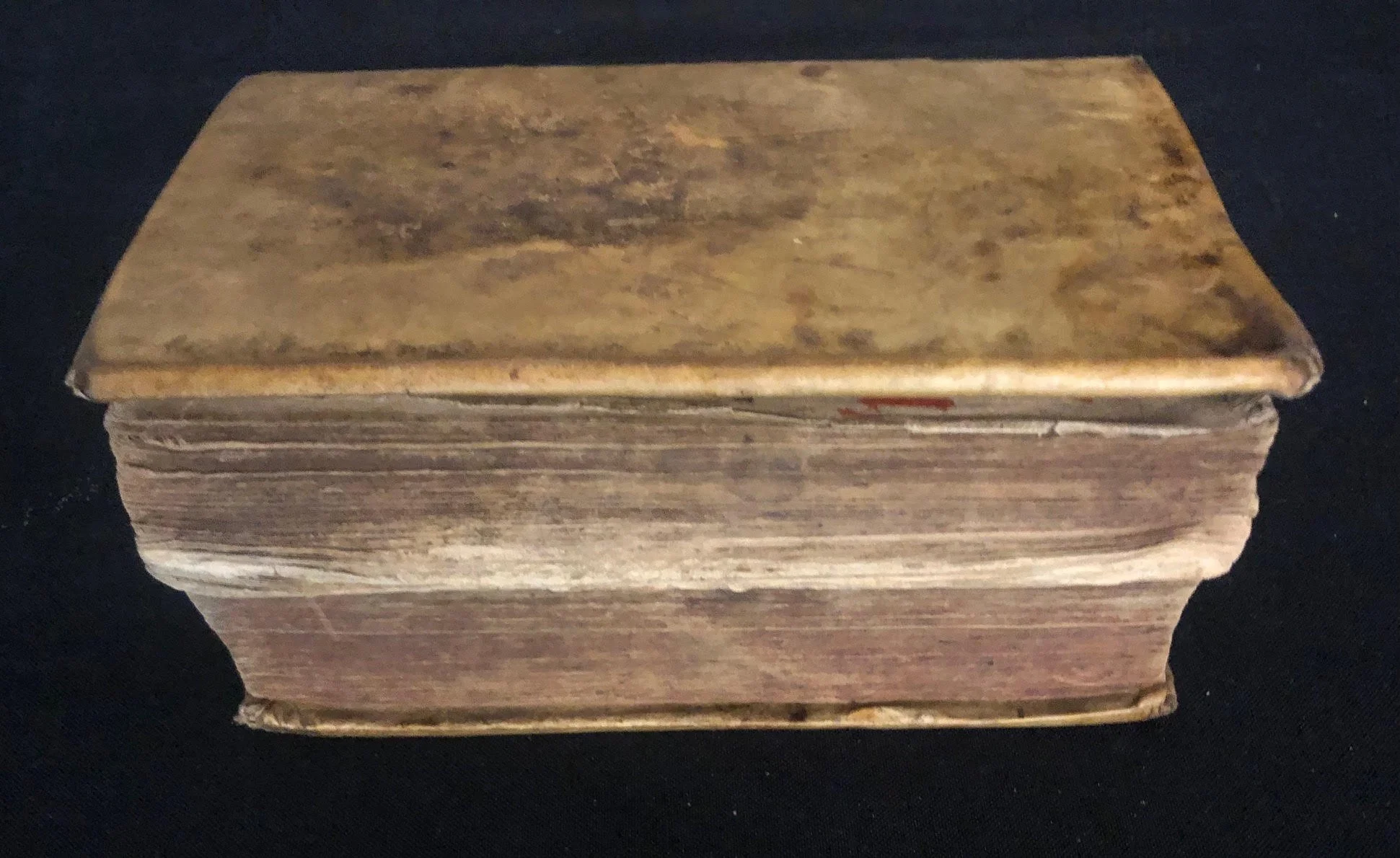
105mm x 175mm x 90mm
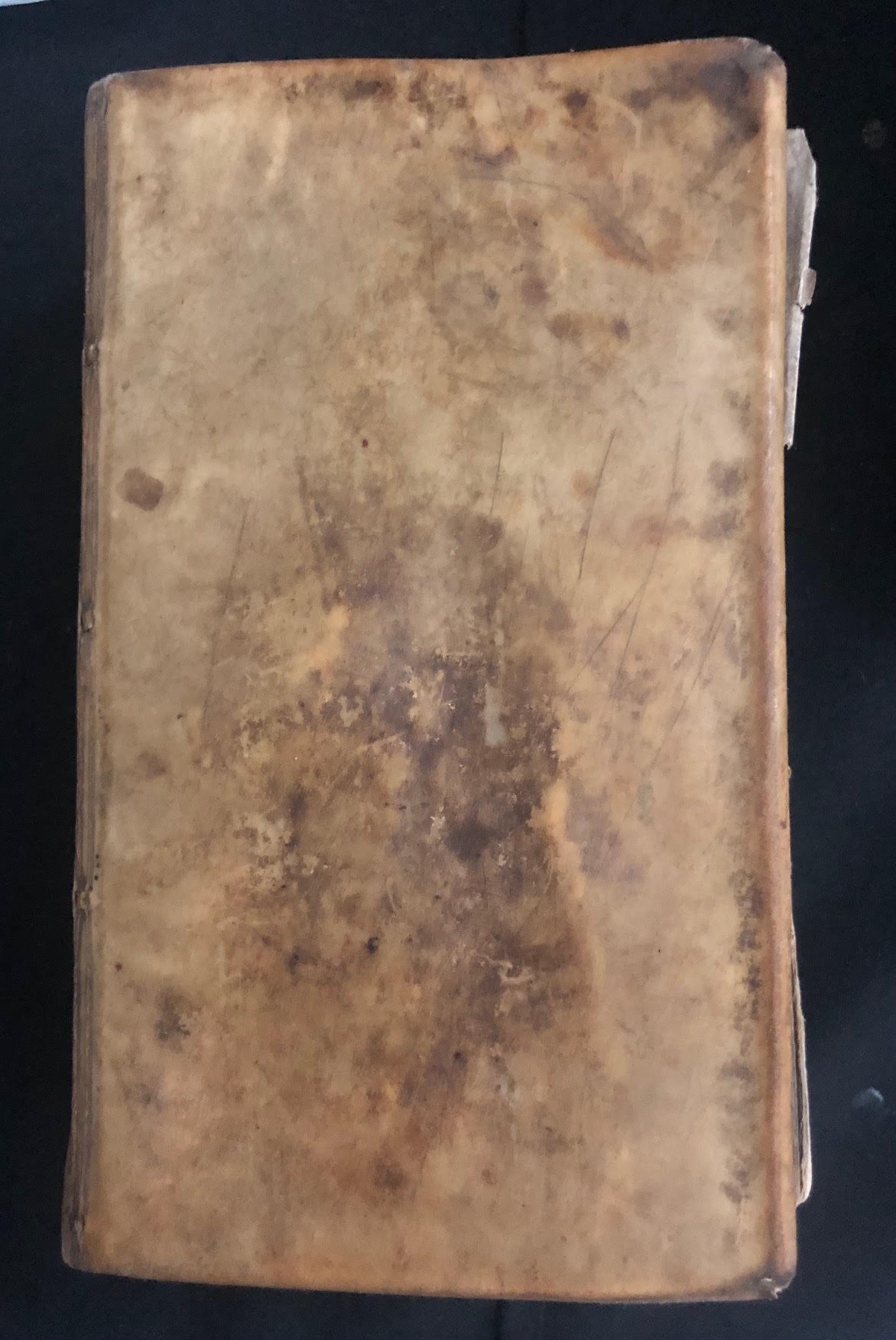
Well used; binding splitting; pages worn and thumbed; minor tears throughout; title page detached. Incomplete, sold as a curiosity.
R3,000