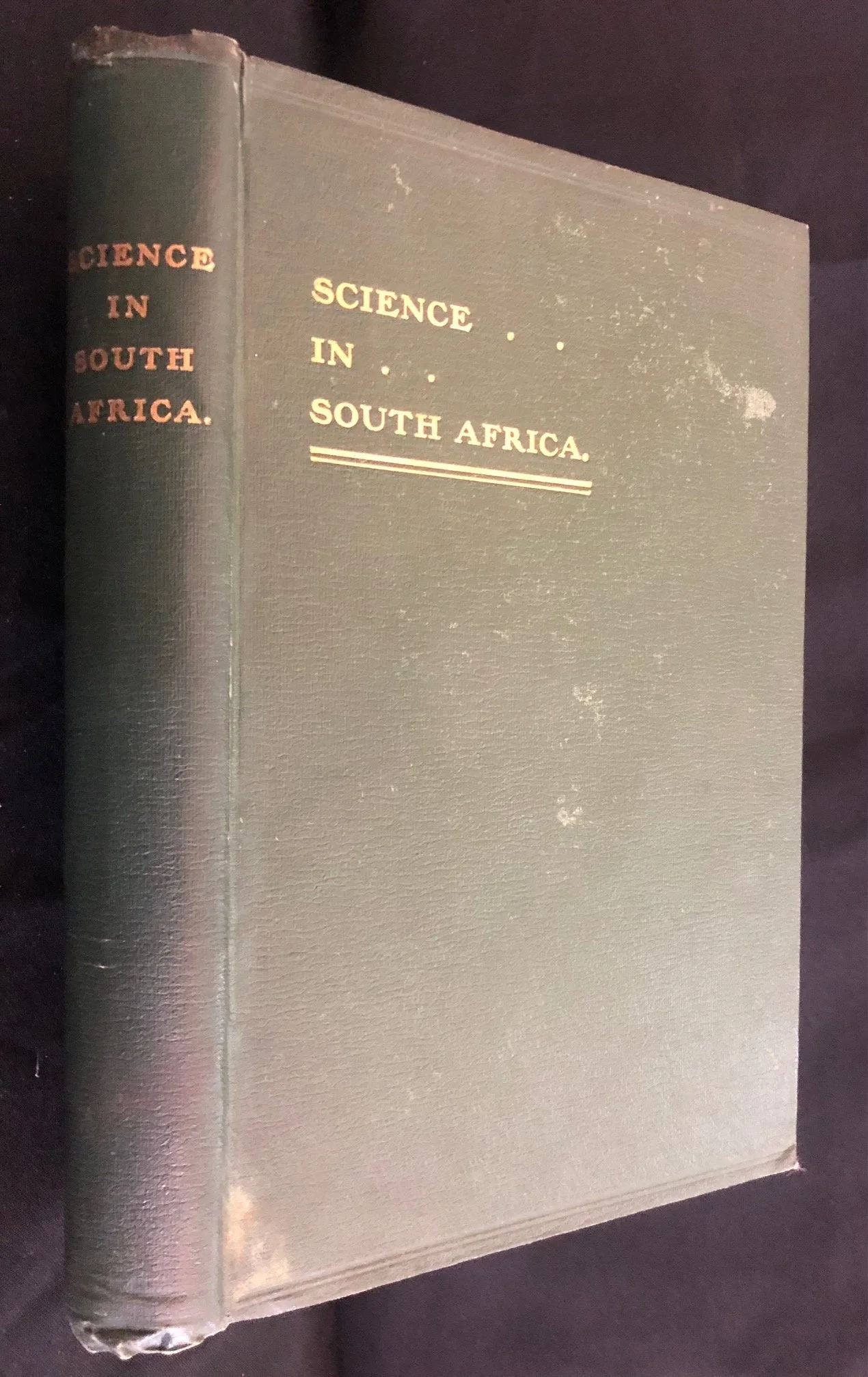
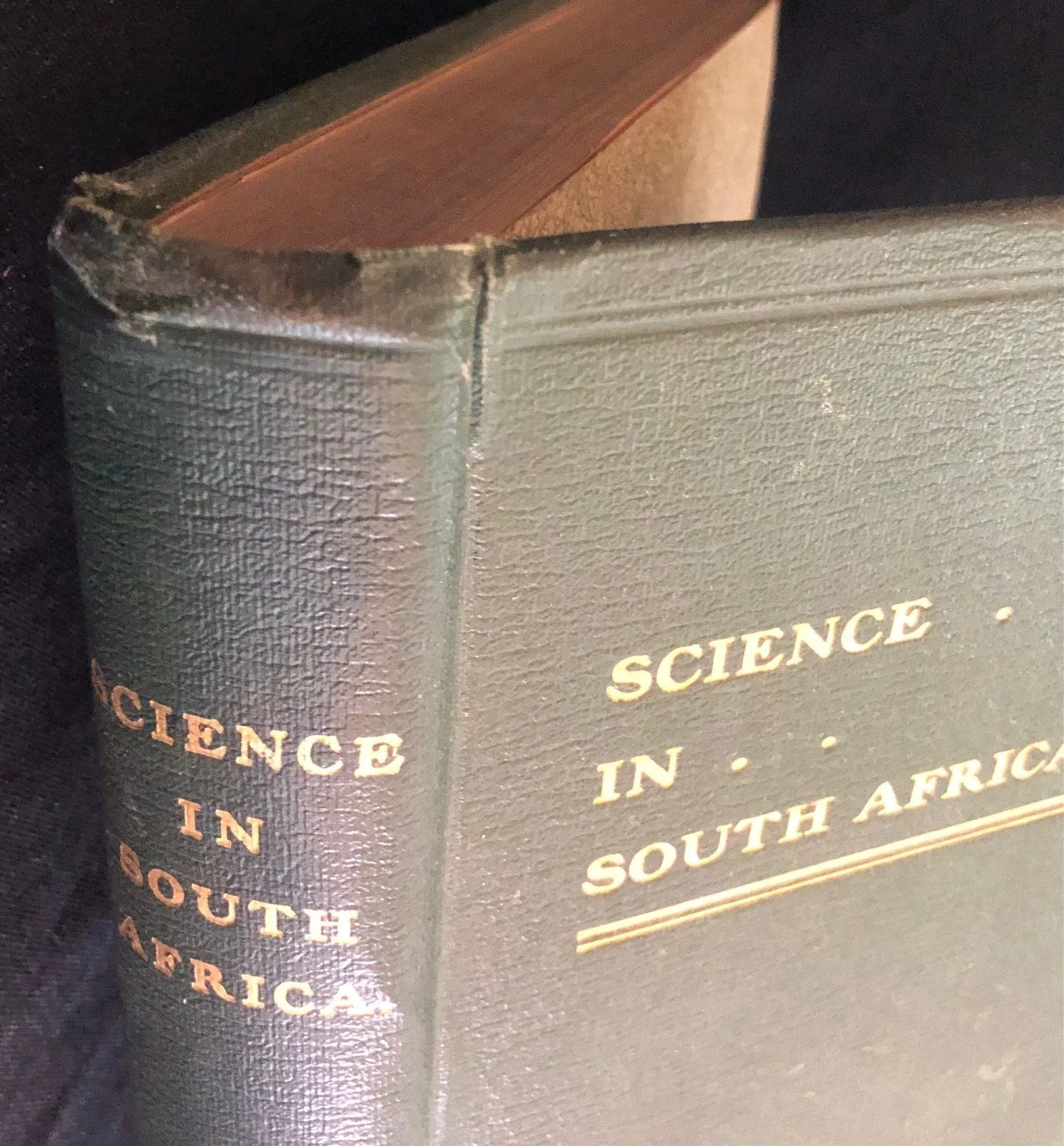
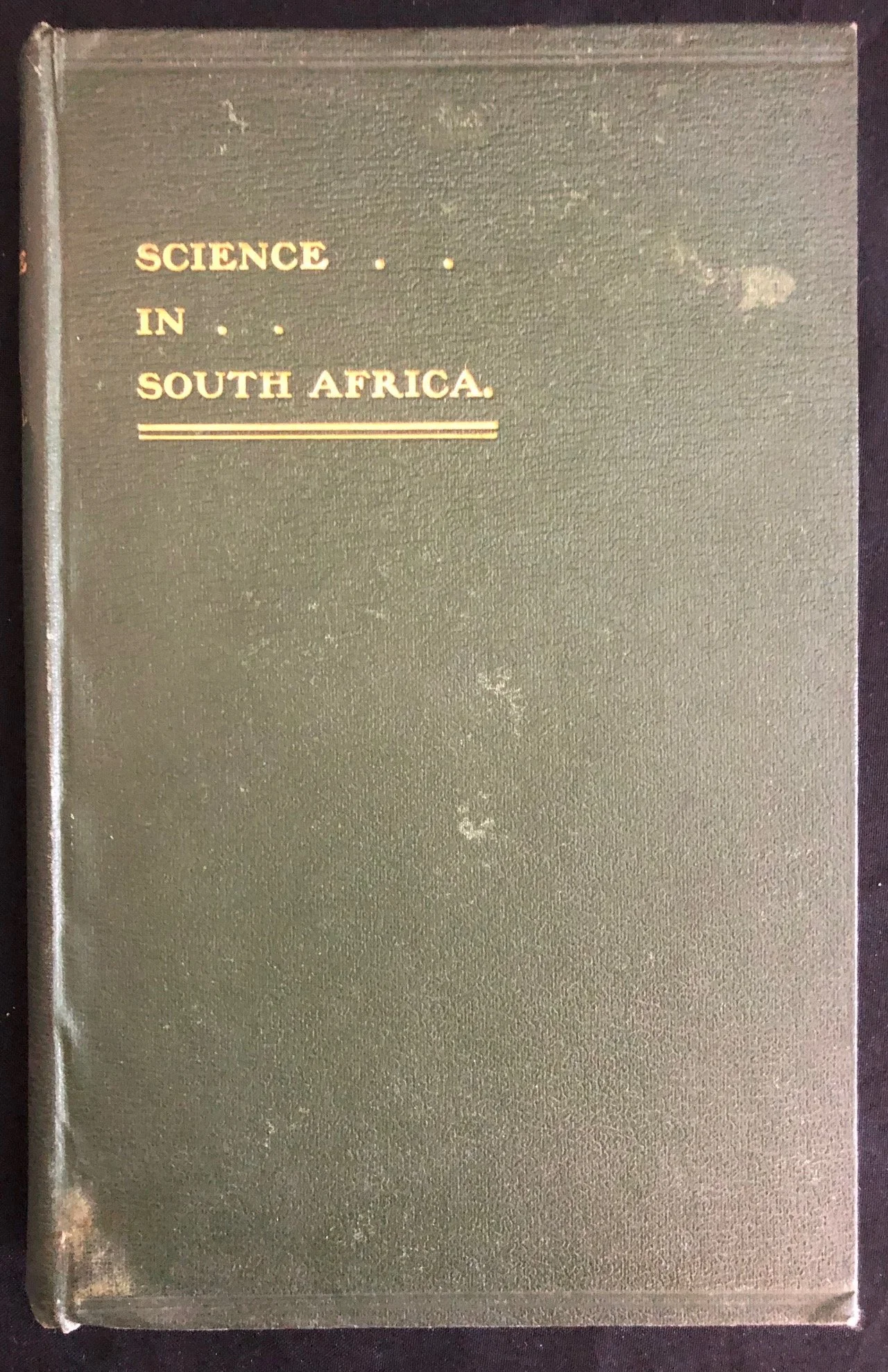
Science in South Africa: A Handbook and Review 1905 (Association copy)
A Blueprint for a Unifying Nation (Pre-Union)
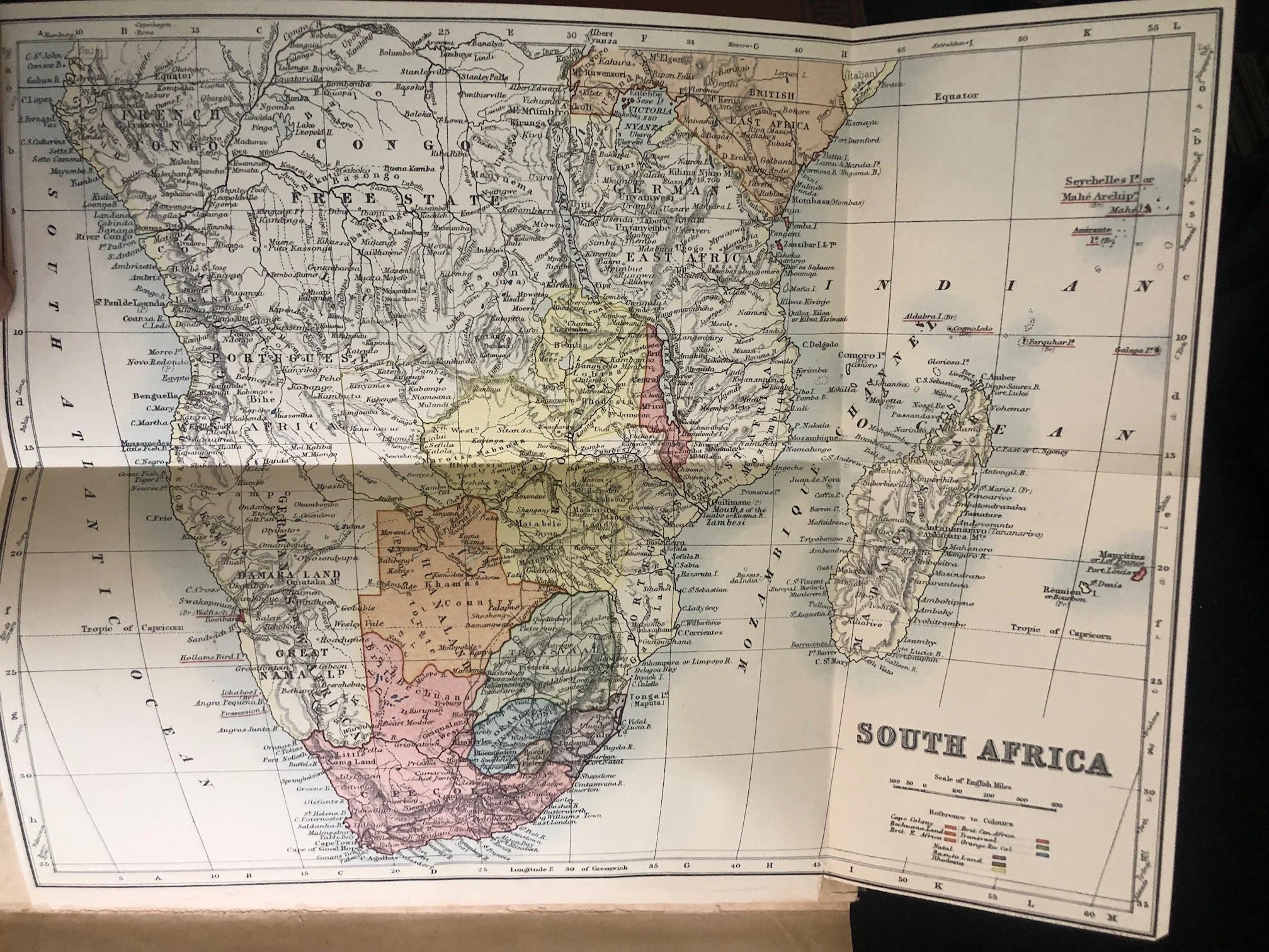
Science in South Africa: A Handbook and Review, was published in 1905 just three years after the end of the devastating Anglo-Boer War (1899–1902) and five years before the official formation of the Union of South Africa in 1910.
The subtitle states it was prepared under the auspices of the "South African Governments" (plural). At this time, the region was still divided into separate British colonies (the Cape Colony, Natal, the Transvaal, and the Orange River Colony). Using scientific collaboration as a bridge, this publication was one of the earliest intellectual efforts to conceptualize "South Africa" as a single, unified entity.
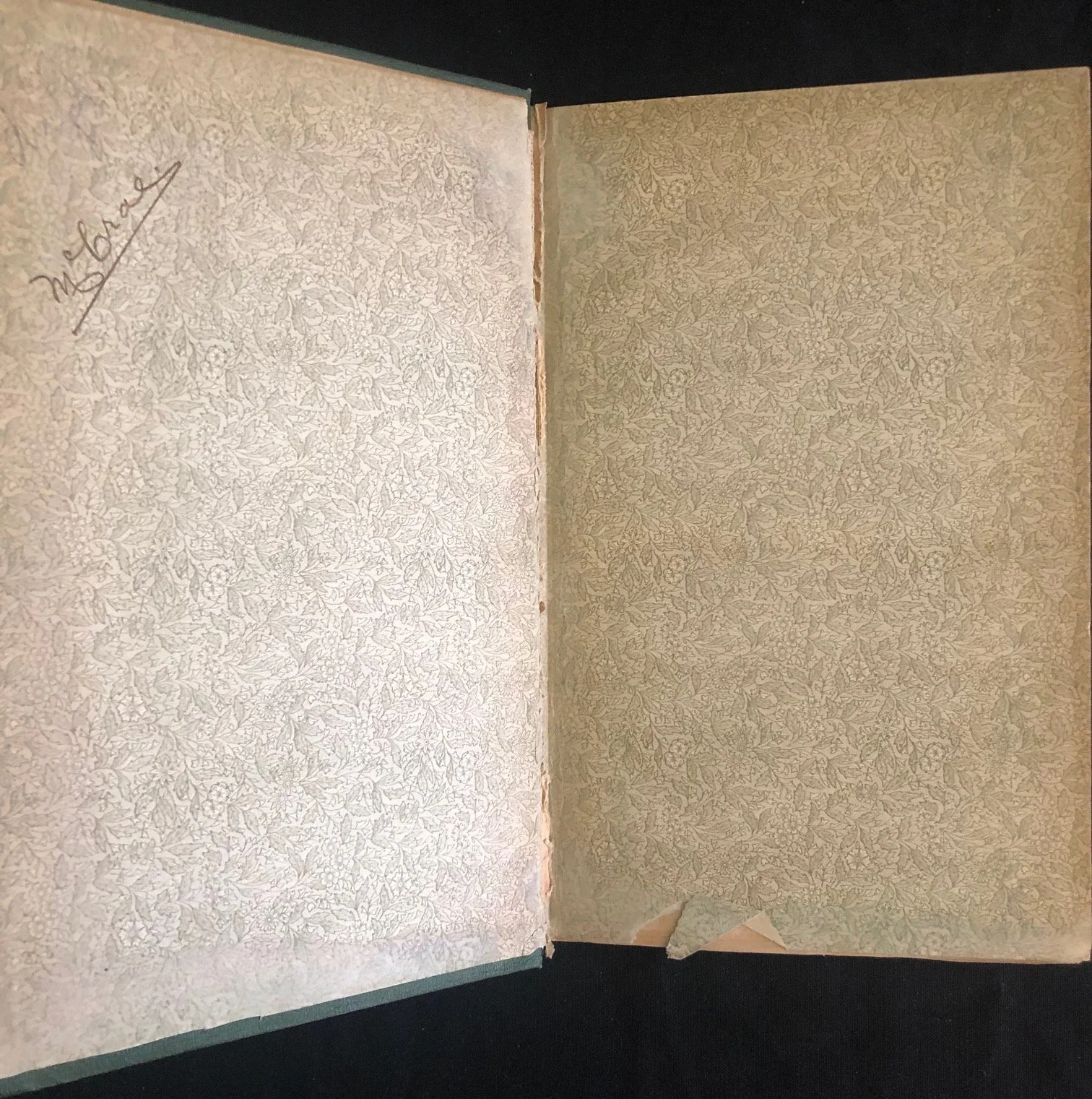
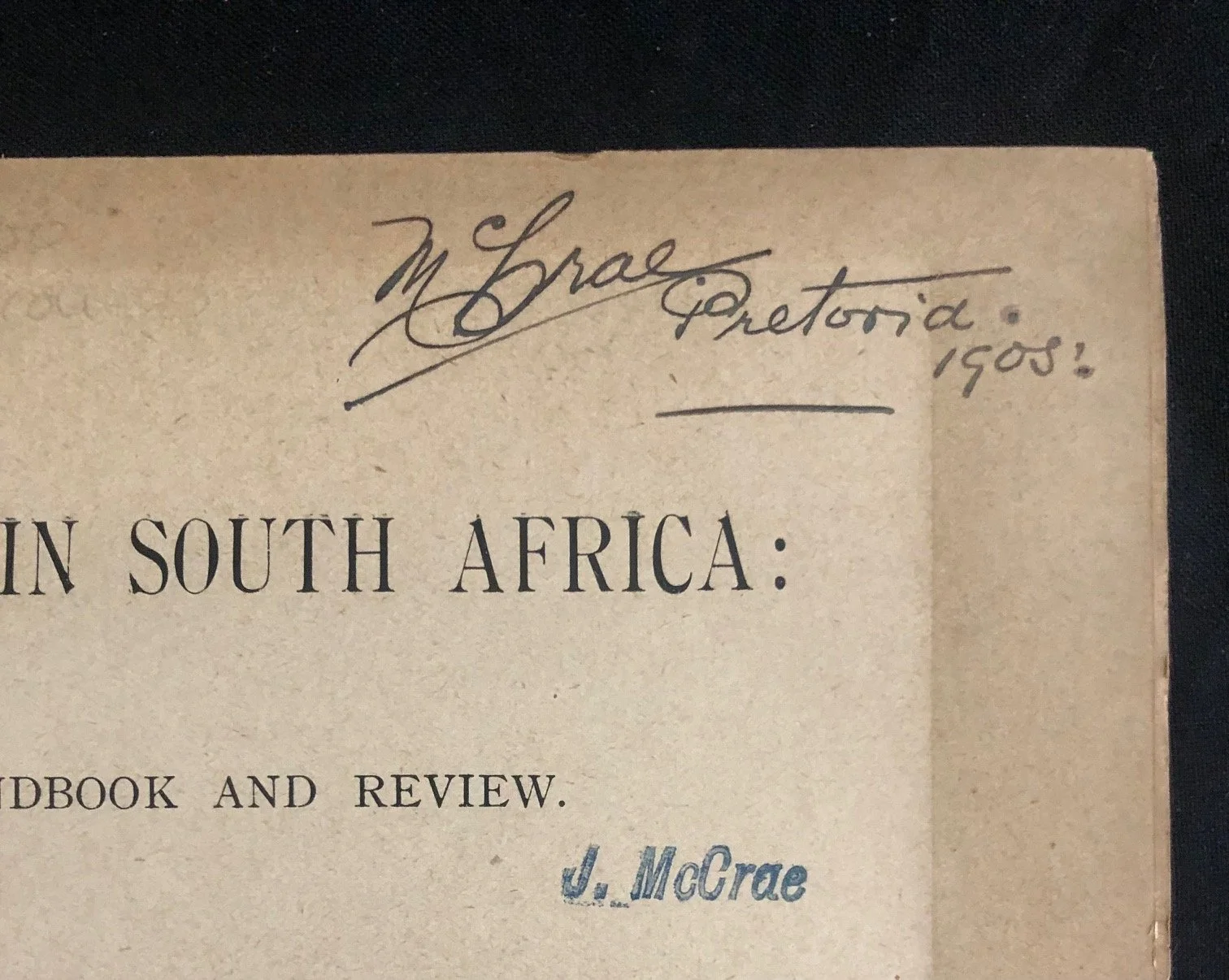
The Provenance: Dr. John McCrae
The handwritten inscription reads "J. McCrae, Pretoria, 1905" alongside his stamped name. This is an incredible provenance mark.
Dr. John McCrae was a brilliant Scottish analytical chemist who arrived in the Transvaal Colony in November 1903 to work for the Department of Agriculture in Pretoria. Right around the time he signed this book in 1905, he was appointed as the Government Analyst for the Transvaal.
His legacy: McCrae went on to become a foundational pillar of South African chemical science, serving as the very first President of the South African Association of Analytical Chemists in 1912.
Medical Importance: He later conducted ground breaking work with the South African Institute for Medical Research, publishing a definitive 1913 paper, The Ash of Silicotic Lungs, which devised a method to extract mineral dust from the lung tissue of deceased miners, a massive step forward in understanding and fighting silicosis in the gold mines.
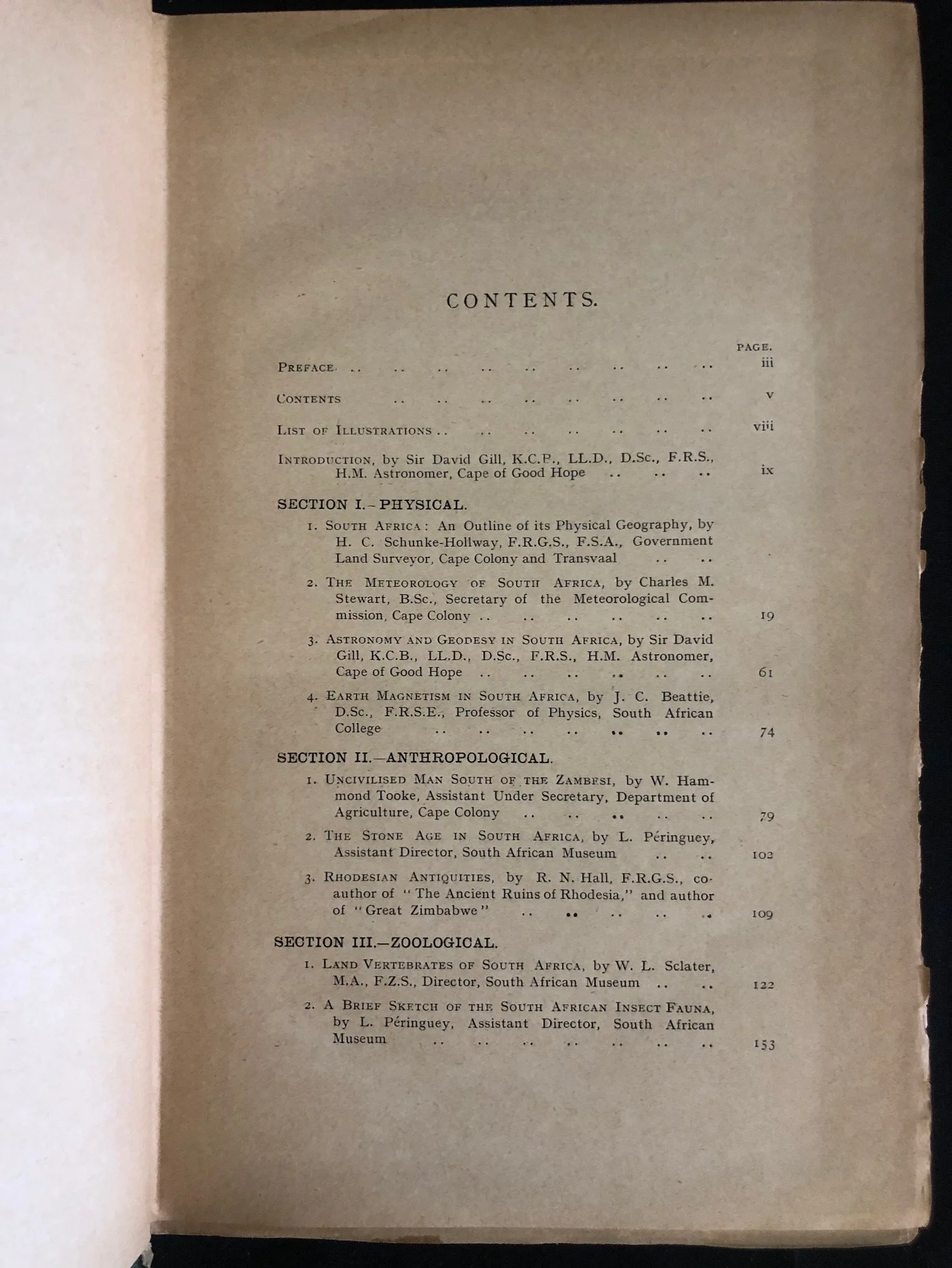
The Editors: Giants of Early SA Science
The two editors listed are monumental figures in their respective fields:
Dr. J.D.F. Gilchrist: As the Government Biologist for the Cape Colony, Gilchrist is widely considered the father of South African marine biology. He conducted the first systematic marine biological survey of the South African coast using the research vessel Pieter Faure, discovering numerous marine species and essentially launching the local commercial fishing industry.
Rev. William Flint: The Librarian of Parliament for the Cape Colony, Flint was a powerhouse of colonial administration, bibliography, and intellectual organization, ensuring that early legislative and scientific works were systematically preserved.
175mm x 265mm x 20mm
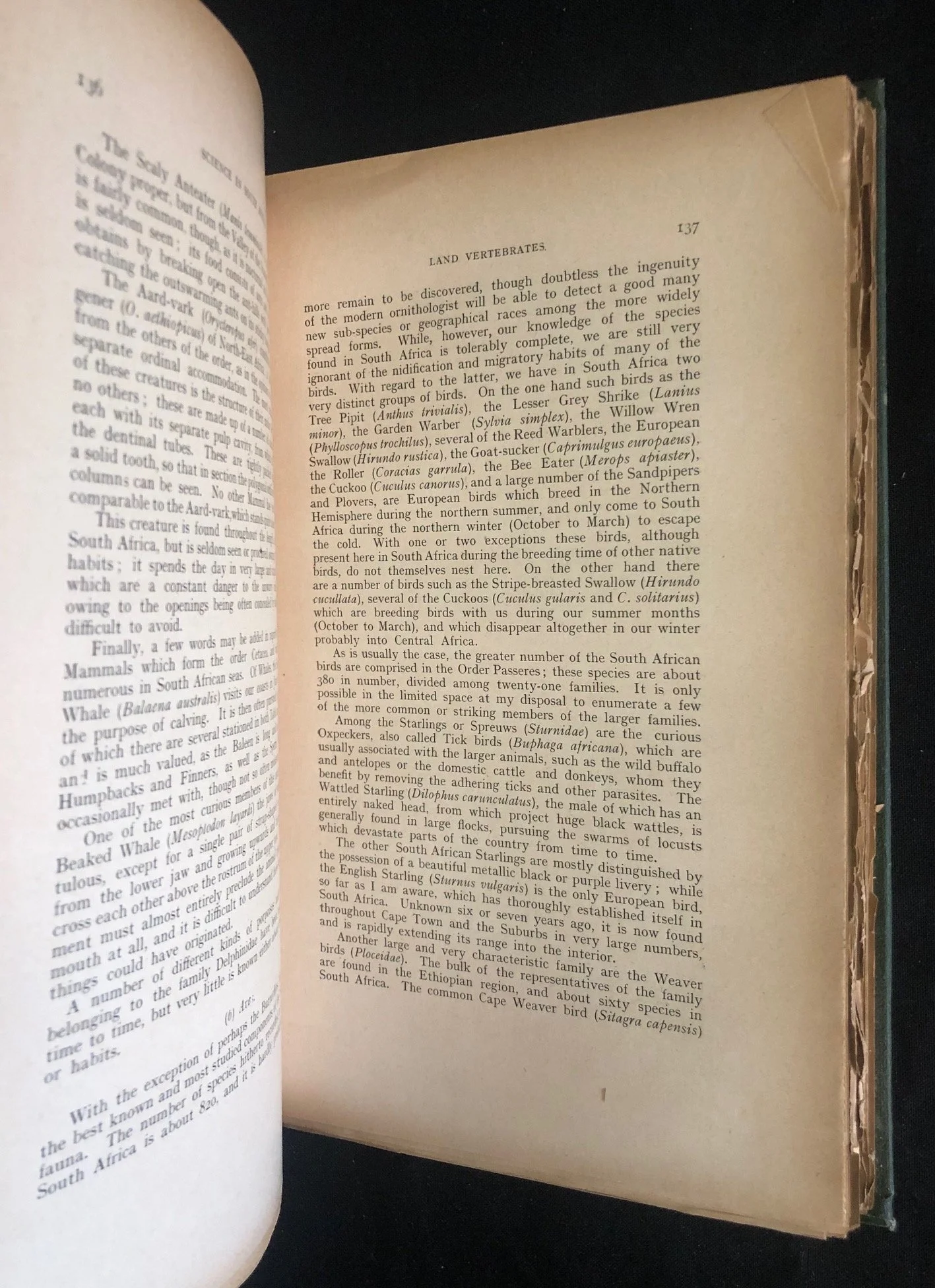
Pages mellowed; binding worn and stained.
R1,000