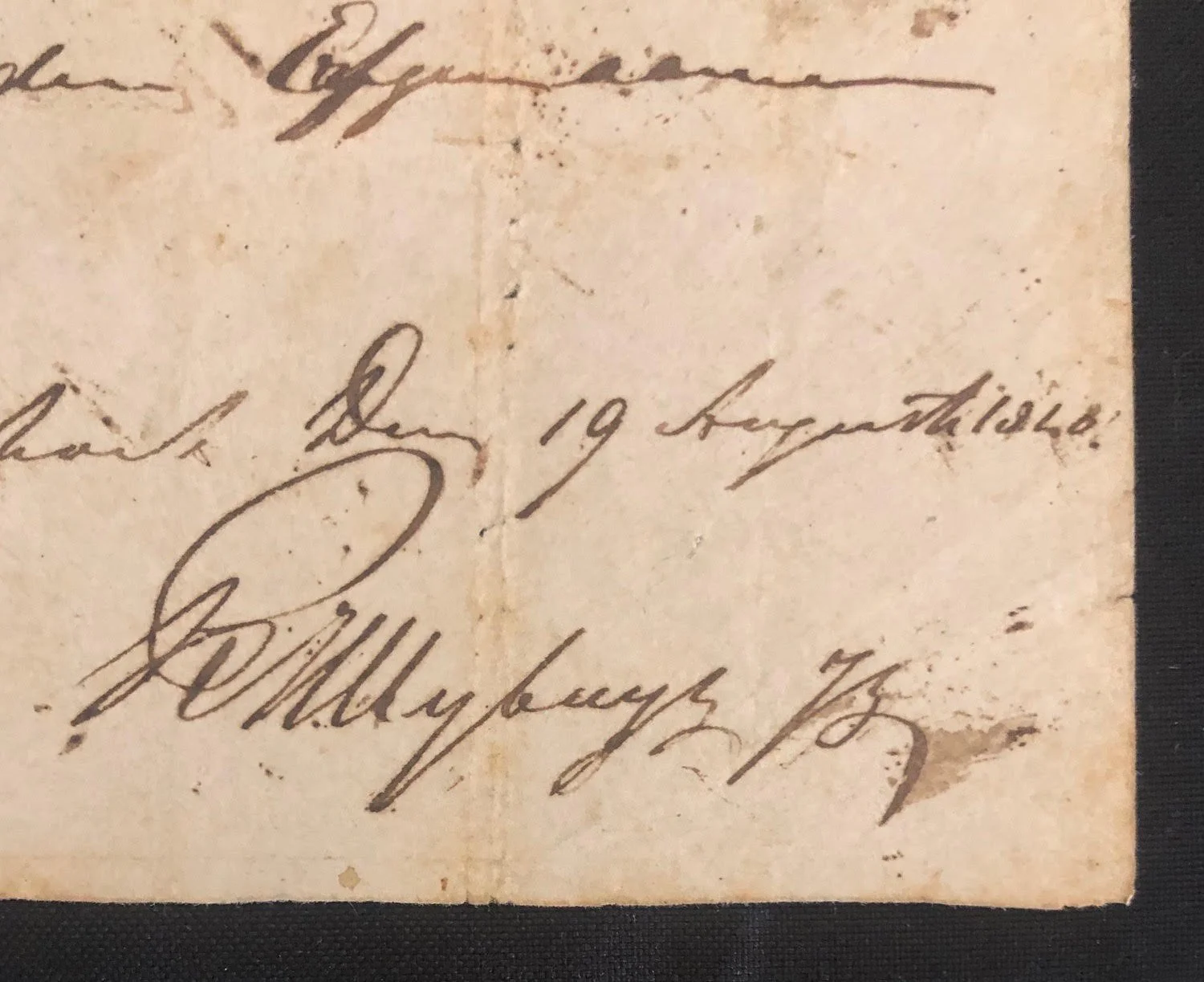
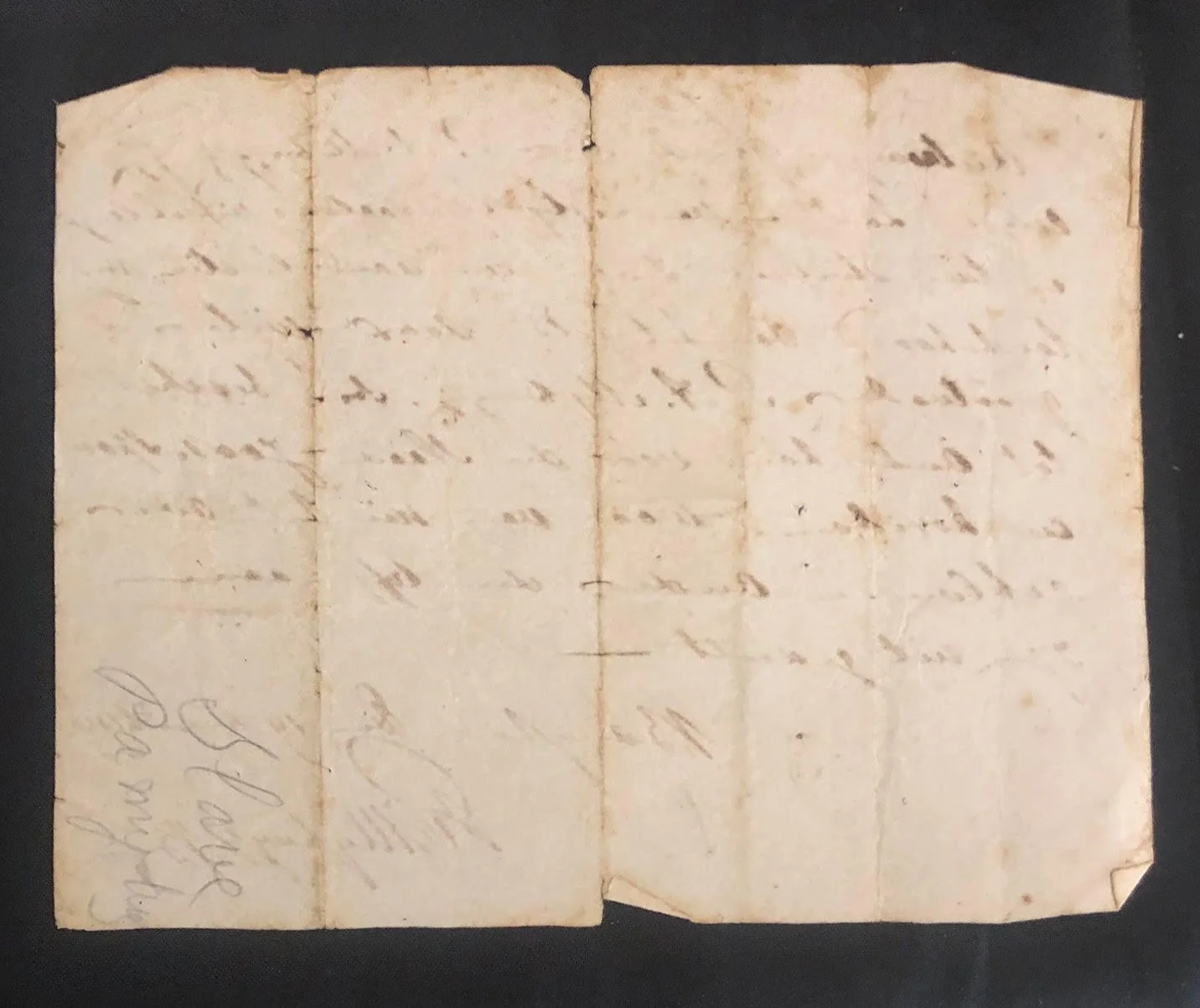
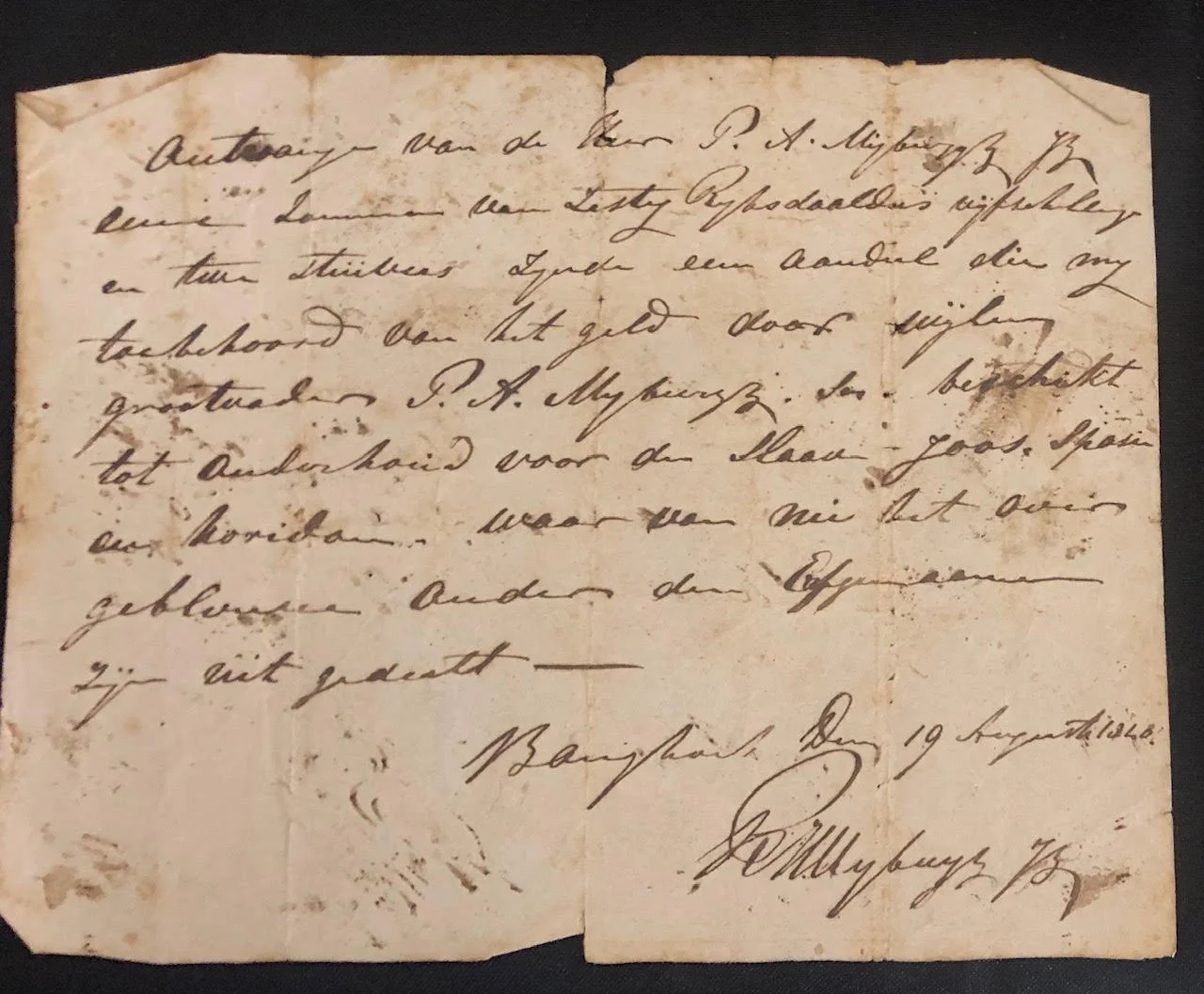
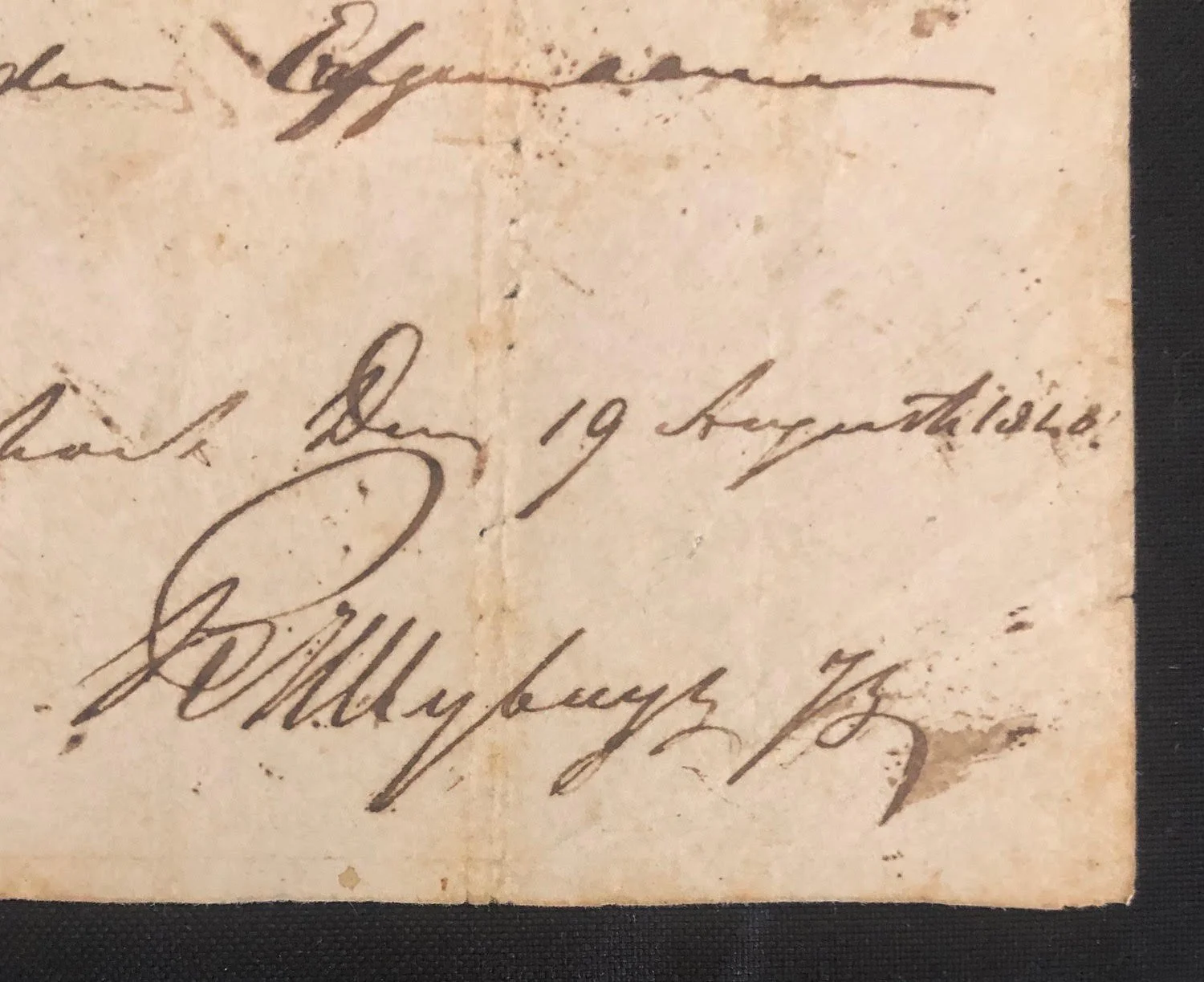
1848 Dutch Slave receipt from Banghoek (near Stellenbosch) a decade after emancipation.
This handwritten 1848 Dutch receipt from Banghoek (near Stellenbosch) captures a fascinating intersection of Cape Colony estate law, the legacy of slavery a decade after emancipation, and the financial mechanics of a prominent Cape family.
Transcription & Translation
Dutch Transcription:
Ontvangen van den Heer P. A. Mijburgh Jz eene Somma van Zestig Rijksdaalders vijftien [schellingen?] en twee stuivers zijnde een aandeel die mij toebehoord van het geld door wijlen grootvader P. A. Mijburgh Sen. beschikt tot onderhoud voor de slaaven Joos, Spasie en Koridon, waar van nu het overgeblevene onder de Erfgenaamen zijn uitgedeelt —
Banghoek Den 19 Augustus 1848.
[Signed] P. A. Myburgh Jz
English Translation:
Received from Mr. P. A. Myburgh Jz a sum of Sixty Rixdollars, fifteen [skillings?] and two stuivers, being a share belonging to me from the money set aside by [our] late grandfather P. A. Myburgh Sen. for the maintenance of the slaves Joos, Spasie, and Koridon, of which the remainder has now been distributed among the heirs —
Banghoek, The 19th of August 1848.
[Signed] P. A. Myburgh Jz
What Makes This Document Historically Interesting
A Window into Post-Emancipation Estate Settlements: Although slavery in the Cape Colony was abolished in 1834 (with the final "apprenticeship" period ending in December 1838), this 1848 document deals directly with a testamentary trust originally created during the slaveholding era. Under Roman-Dutch law at the Cape, wealthy landowners frequently bequeathed a specific fund (onderhoud) in their wills to care for elderly, infirm, or freed enslaved people—here named Joos, Spasie, and Koridon—who could no longer work.
The Passing of the Last Generation: The fact that the "remainder" (het overgeblevene) of this maintenance fund was finally being liquidated and divided among the grandchildren in August 1848 strongly implies that Joos, Spasie, and Koridon—the last of the three—had recently passed away, closing out a legal obligation established decades earlier.
A Snapshot of Cape Monetary Transition: In 1848, the signer still calculates the inheritance in Rixdollars (Rijksdaalders) and stuivers. The British colonial government had officially introduced Sterling (pounds, shillings, and pence) at the Cape in 1825, fixing the Rixdollar at 1 shilling and 6 pence, yet rural Cape Dutch families continued accounting in Rixdollars well into the mid-19th century. (60 Rixdollars was roughly equivalent to £4 10s at the time).
The Myburghs of Banghoek & Meerlust: The Myburgh family were among the most prominent wine-farming dynasties in the Stellenbosch district (most famously associated with Meerlust, which has been in the Myburgh family since 1756, as well as farms in the Jonkershoek and Banghoek valleys). Philippus Albertus Myburgh (Senior) was the patriarch of the Meerlust line, and this receipt documents his grandsons (P. A. Myburgh Jz—short for Janszoon or Junior—and his cousin) settling the final accounts of his estate.
205mm x 165mm
Worn, torn and stained.
R6,500