Birth Registration Certificate for an Enslaved Infant 1832
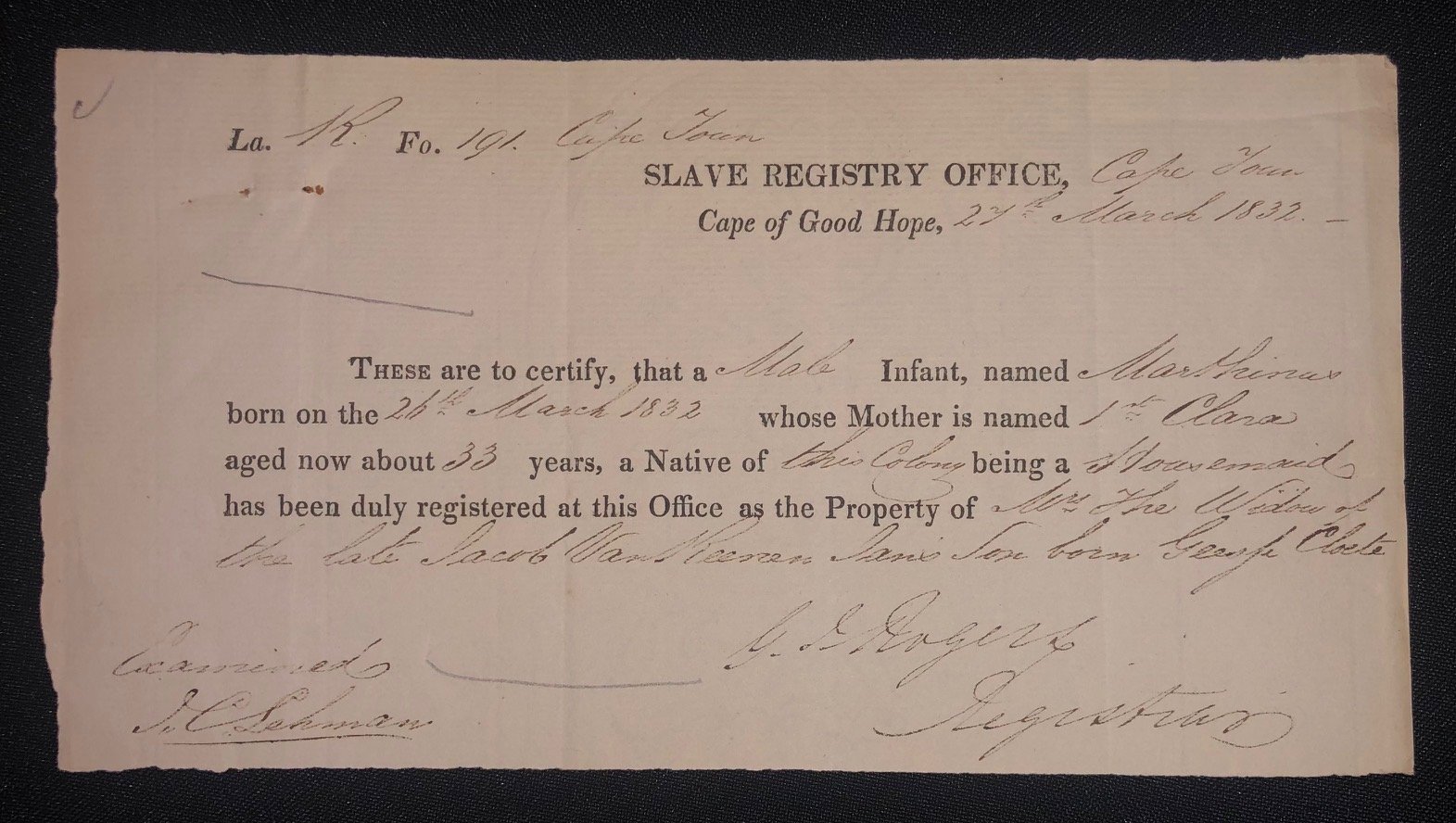
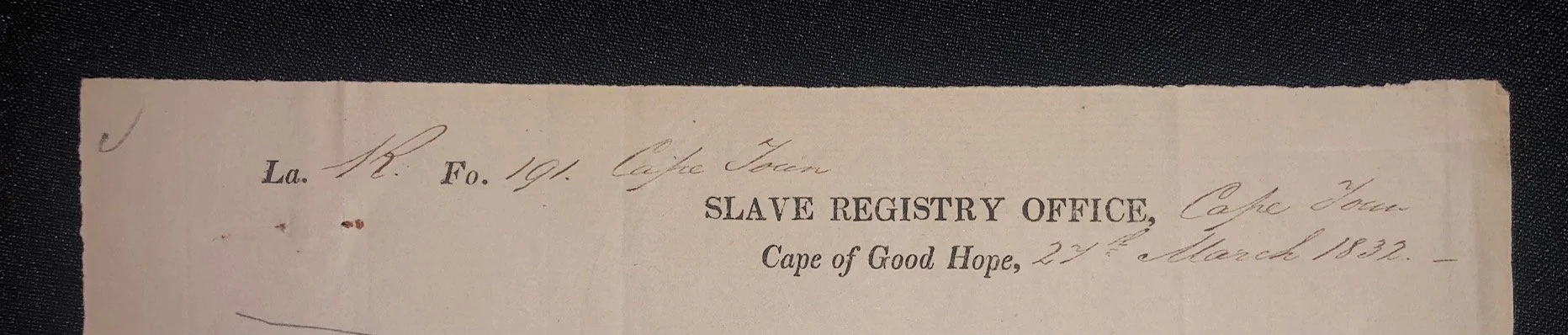
Official birth registration certificate for an enslaved infant born at the Cape of Good Hope, dated 27th March 1832.
The document certifies the registration of a "Male Infant, named Marthinus" born just the day before, on 26th March 1832.
The Mother: Clara, described as a "Housemaid" aged about 33, and a "Native of this Colony" (meaning she was born into slavery within the Cape Colony rather than being imported).
The Owner: The document names the owner as "Mrs. The Widow of the late Jacob Van Reenen Jan's Son born Gesina Cloete".
The Officials: It is signed by G. J. Rogers, the Registrar of Slaves at the Cape, and examined by H. Sherman.
This certificate was issued a mere twenty months before the Slavery Abolition Act 1833 came into effect on December 1, 1834. Because the British government had already banned the international slave trade in 1807, the only way for the slave population in the Cape to grow legally was through natural increase.
Consequently, the colonial government strictly monitored births. Every enslaved child born was instantly the legal property of their mother's owner. Little Marthinus was born into a system on the absolute precipice of its demise, though he would still have faced the mandatory four-year period of "apprenticeship" that followed formal abolition.
The Intersection of Two Cape Dynasties
The owner's name connects two of the most prominent, wealthy landed families in early colonial South African history: the Van Reenens and the Cloetes. Gesina Cloete was a member of the influential Cloete family (famous for estates like Groot Constantia). Her late husband, Jacob van Reenen (Jan's son), belonged to a massive agricultural and meat-monopoly dynasty that owned immense tracts of land, fine homes, and hundreds of enslaved people across the Western Cape.
By 1832, Gesina was managing this estate property as a widow. The specificity of her name—"born Gesina Cloete"—shows how meticulously the registry tracked property lines, even when that "property" was a newborn child.
The Erasure of the Father and Patronymics
Notice that while Marthinus's mother, Clara, is named, no father is listed. Under the legal framework of Cape slavery (partus sequitur ventrem), a child’s legal status solely followed the womb.
Furthermore, Clara is given no surname; she is simply "Clara," indexed by her age, occupation, and status. Enslaved people were structurally denied the right to a family name, a tool used by the colonial bureaucracy to distinguish property from citizens.
G.J. Rogers: The Bureaucrat of Human Property
The signature at the bottom is that of George Jackman Rogers, who served as the Registrar of Slaves in Cape Town. Rogers was tasked with compiling the massive, multi-volume "Slave Registers" (now housed in the Western Cape Archives). His meticulous handwriting on these printed forms represents the cold, administrative reality of human bondage—where a human life was logged with the same bureaucratic distance as land transfers or shipping manifests.
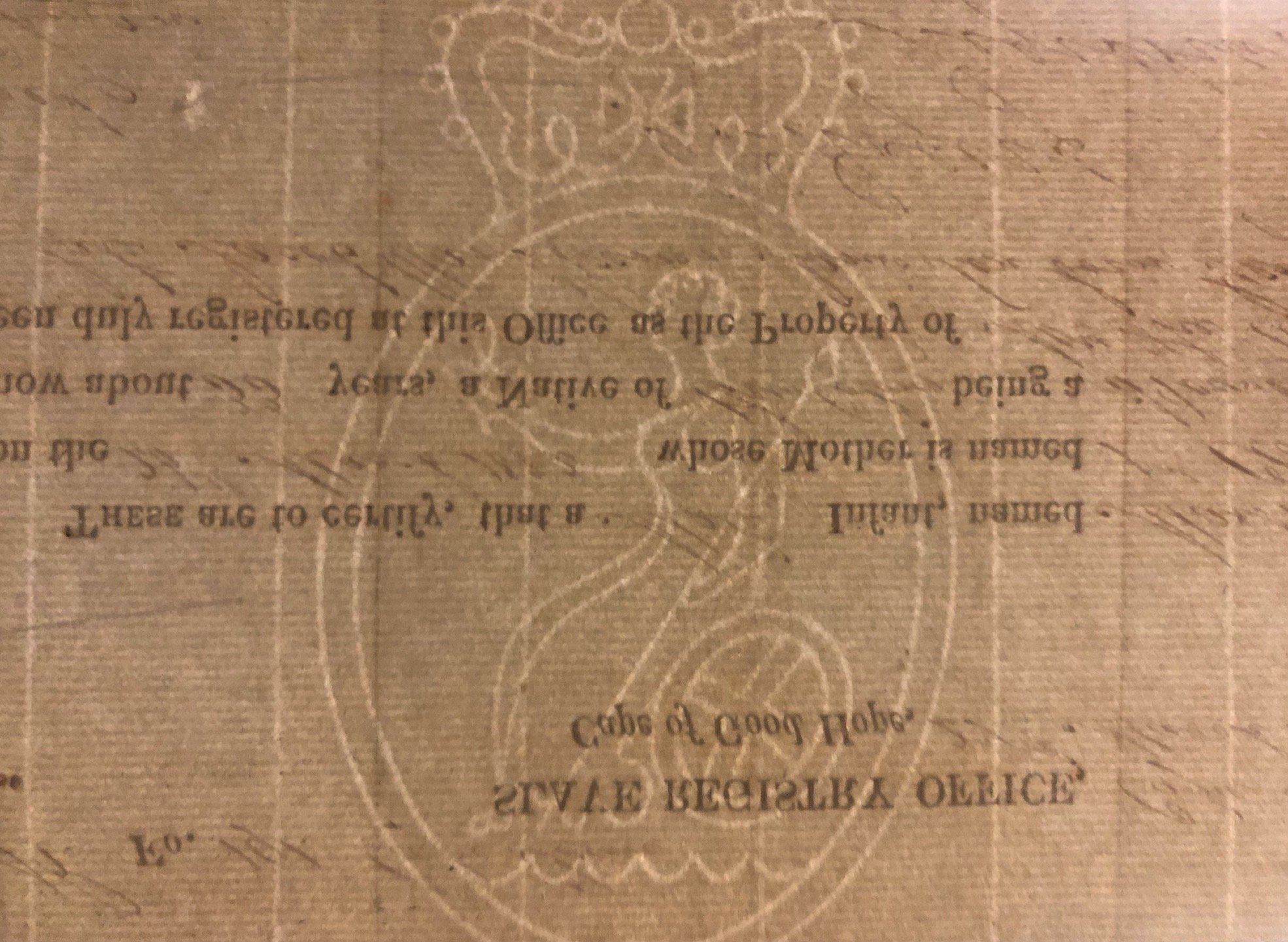
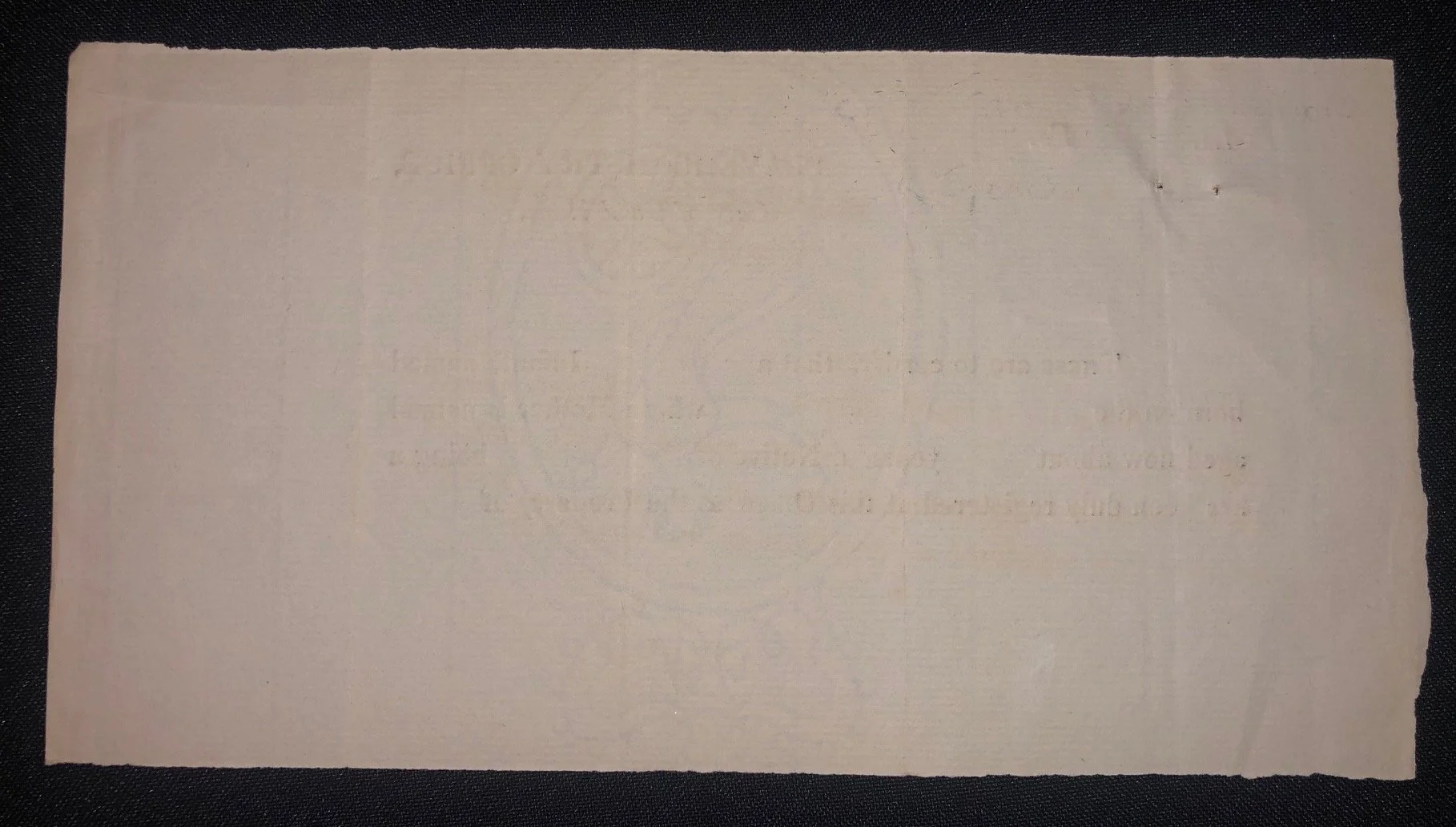
Some wear and pin holes.
205mm x 110mm
R7,500