Certificate of Slave Manumission c.1830
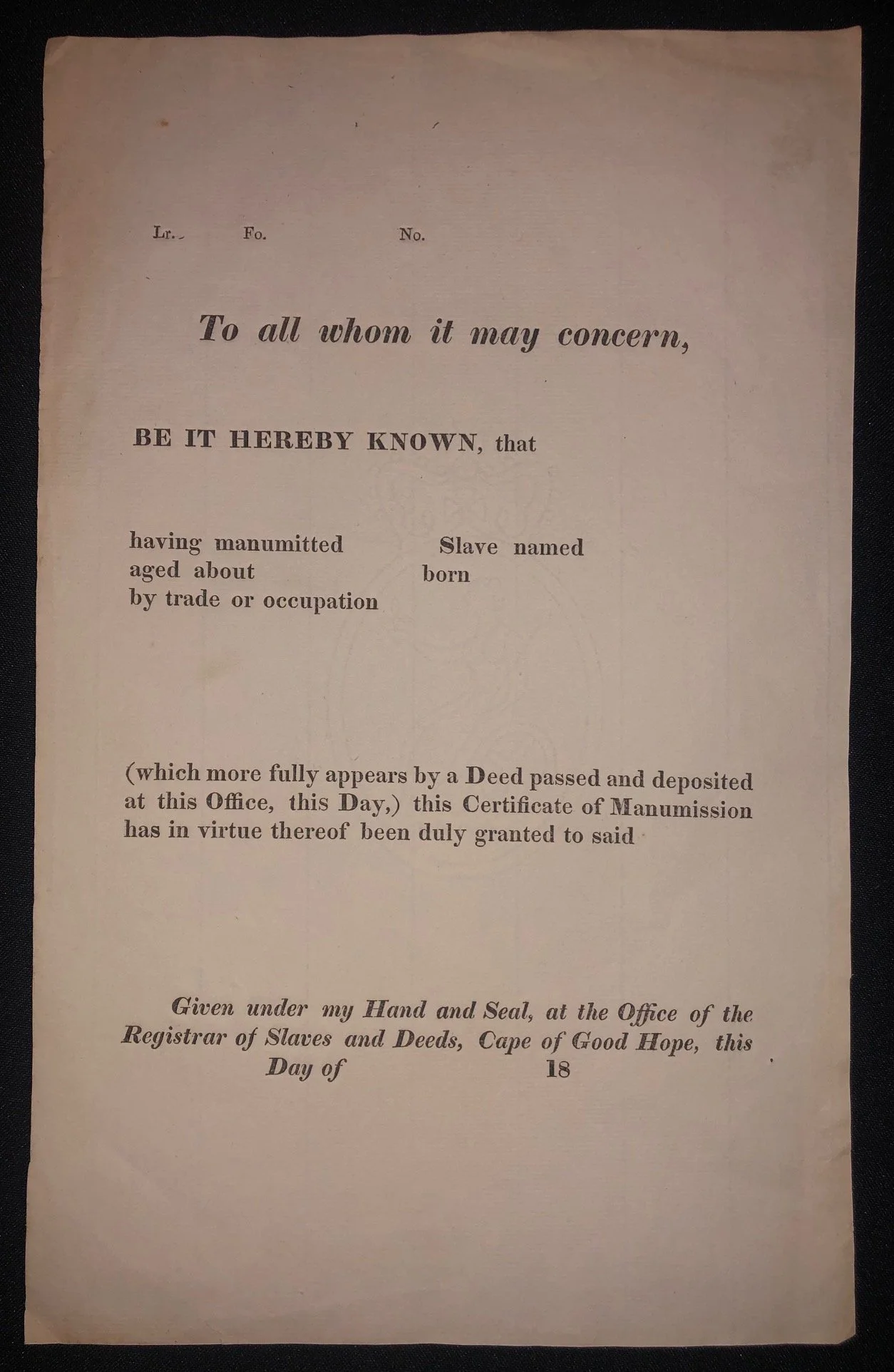
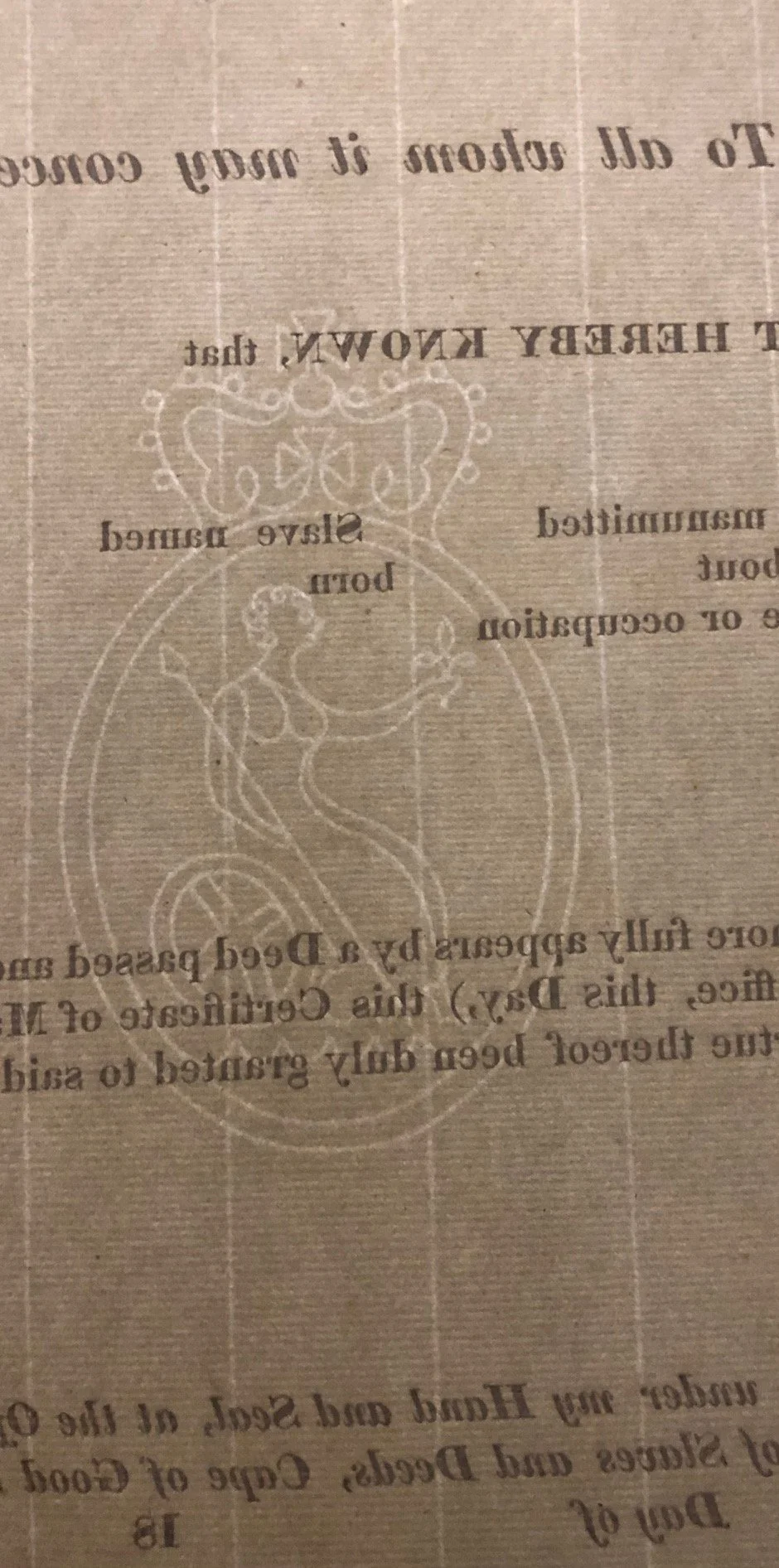
A blank pro-forma Certificate of (Slave) Manumission from the British colonial administration at the Cape of Good Hope.
Dating from the early 19th century, it was issued by the Office of the Registrar of Slaves and Deeds in Cape Town.
The Bureaucracy of Freedom
Manumission—the formal, legal freeing of an enslaved person by their owner—historically occurred via private wills, church records, or notary deeds. However, when the British took permanent control of the Cape Colony in 1806, they brought an obsessive level of administrative oversight to the institution of slavery, primarily to monitor the population and regulate the fiscal aspects of slave ownership.
To have a standardized, government-printed form specifically for manumission shows how institutionalized the legal path to freedom had become by the 1810s and 1820s.
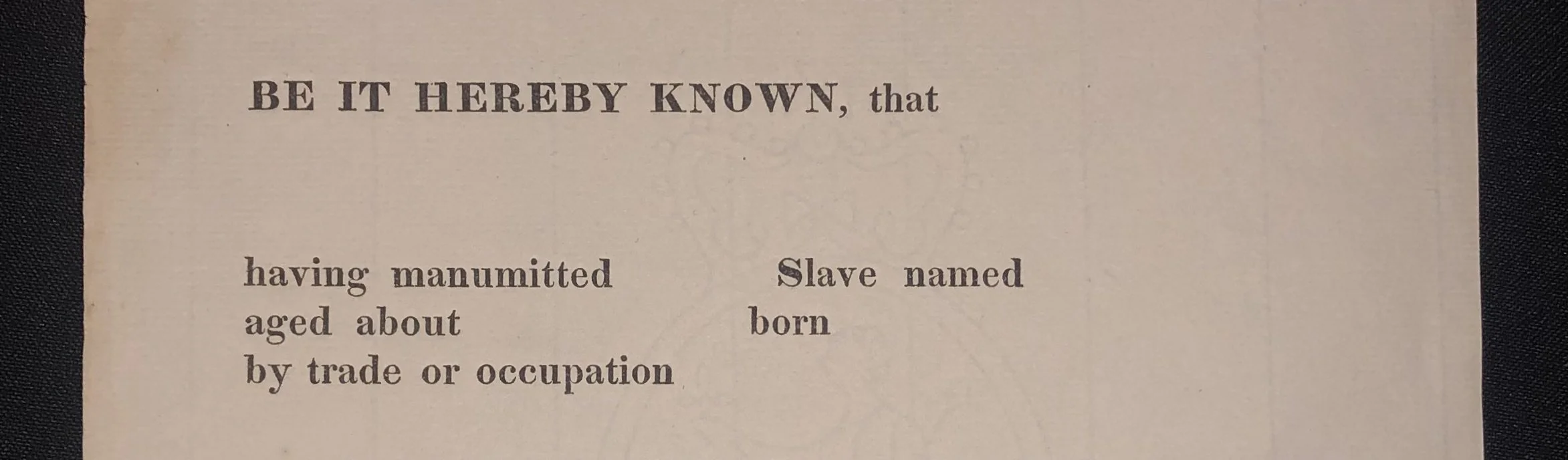
The form indicates the information the colonial state deemed vital for tracking a newly freed person:
"by trade or occupation": Skilled labor was a primary avenue to freedom at the Cape. Many enslaved people were highly skilled artisans—masons, tailors, cooks, and fishermen (often of South-East Asian or "Malay" descent). They were sometimes permitted to work for wages in their spare time, saving money over decades to purchase their own freedom (vrijkoop) or that of their family members.
"born": Crucial for distinguishing between foreign-born enslaved people (brought via the Indian Ocean slave trade from Madagascar, Mozambique, India, or the East Indies) and creole slaves born within the Cape Colony.
The Short-Lived "Registrar of Slaves"
The "Registrar of Slaves and Deeds." In 1816, Governor Lord Charles Somerset established the Slave Office in Cape Town, appointing a Registrar to keep an exact ledger of every enslaved person in the colony to prevent illegal smuggling after the abolition of the trans-Atlantic slave trade in 1807.
Because this office only existed in this specific iteration from 1816 until the formal abolition of slavery at the Cape in 1834, the printing of this document occured in a narrow 18-year window.
Why is it blank?
Unused ephemera of this nature is exceptionally rare because paper was a valuable commodity in the colonial Cape, and obsolete official forms were routinely destroyed, repurposed as scrap, or used for binding other records.
It could have been a duplicate template kept in an office file or a law firm's ledger.
It may have been printed in the late 1820s or early 1830s and rendered entirely obsolete on December 1, 1834, when the Slavery Abolition Act took effect across the British Empire, replacing individual manumissions with general emancipation (and the subsequent controversial "apprenticeship" system).
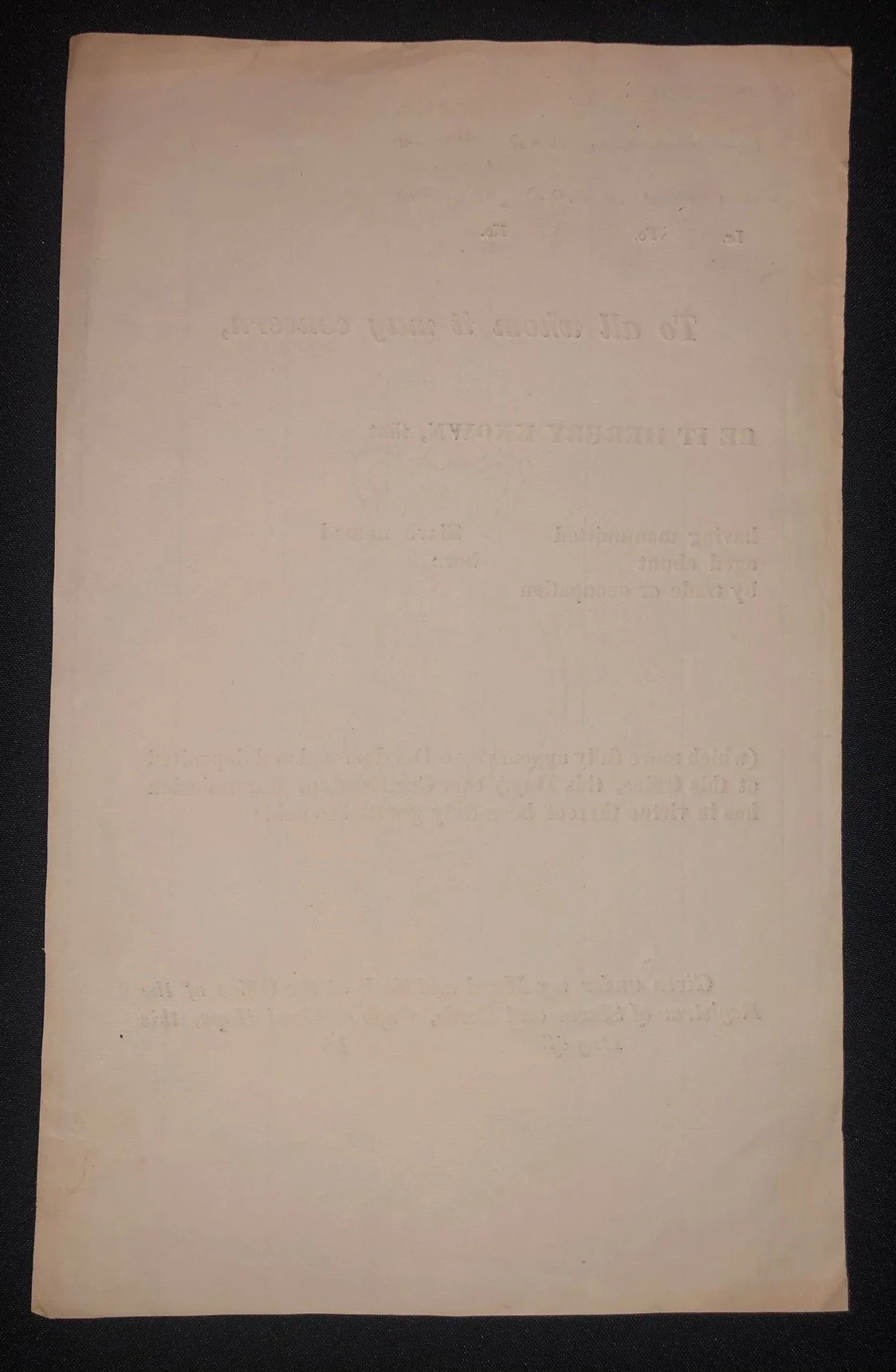
Minor wear, creases (especially to the corners).
200mm x 325mm
R3,500