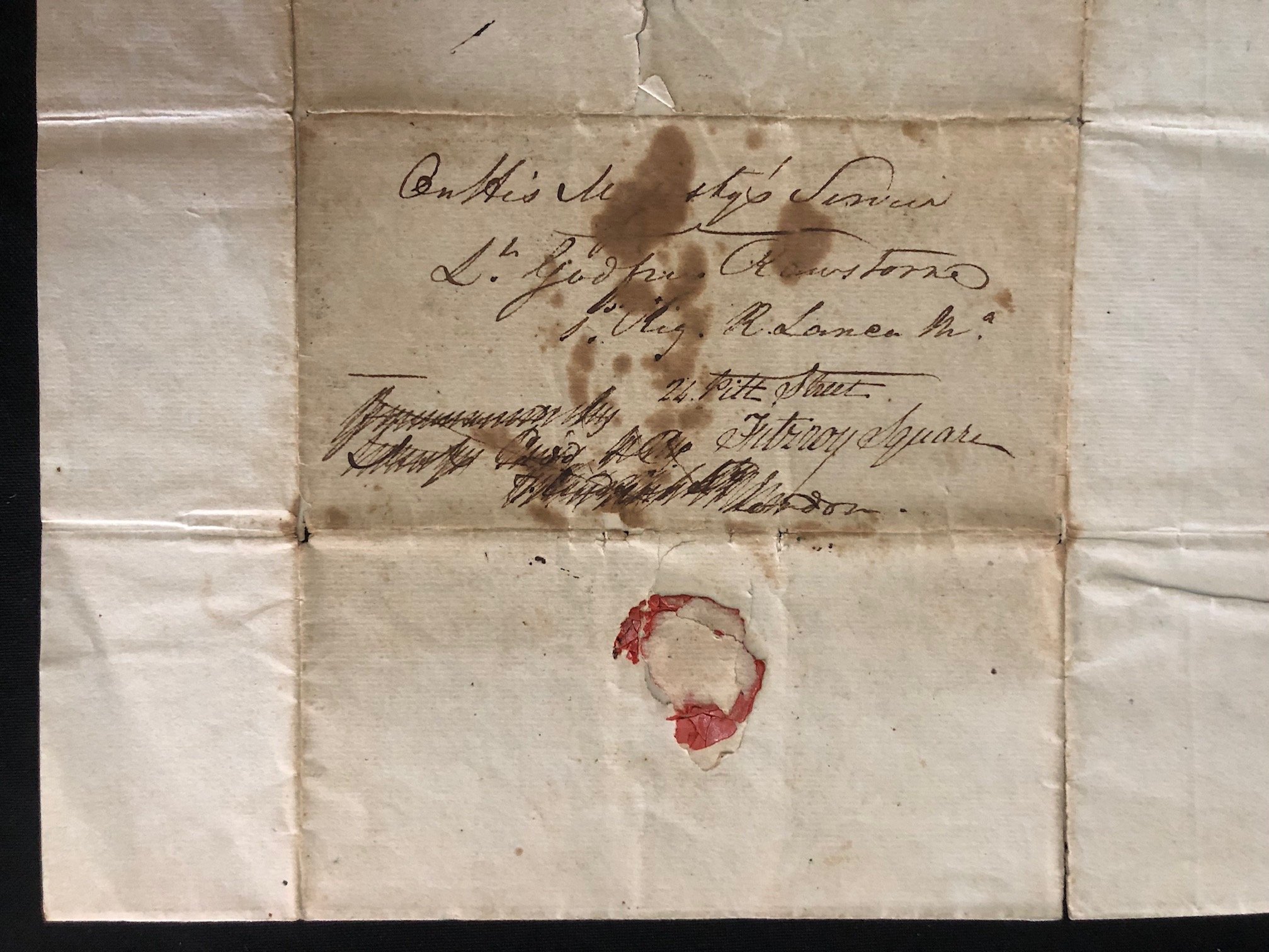
Manuscript letter linking landed gentry of Lancashire to the colonial administration of the Cape of Good Hope (1829)
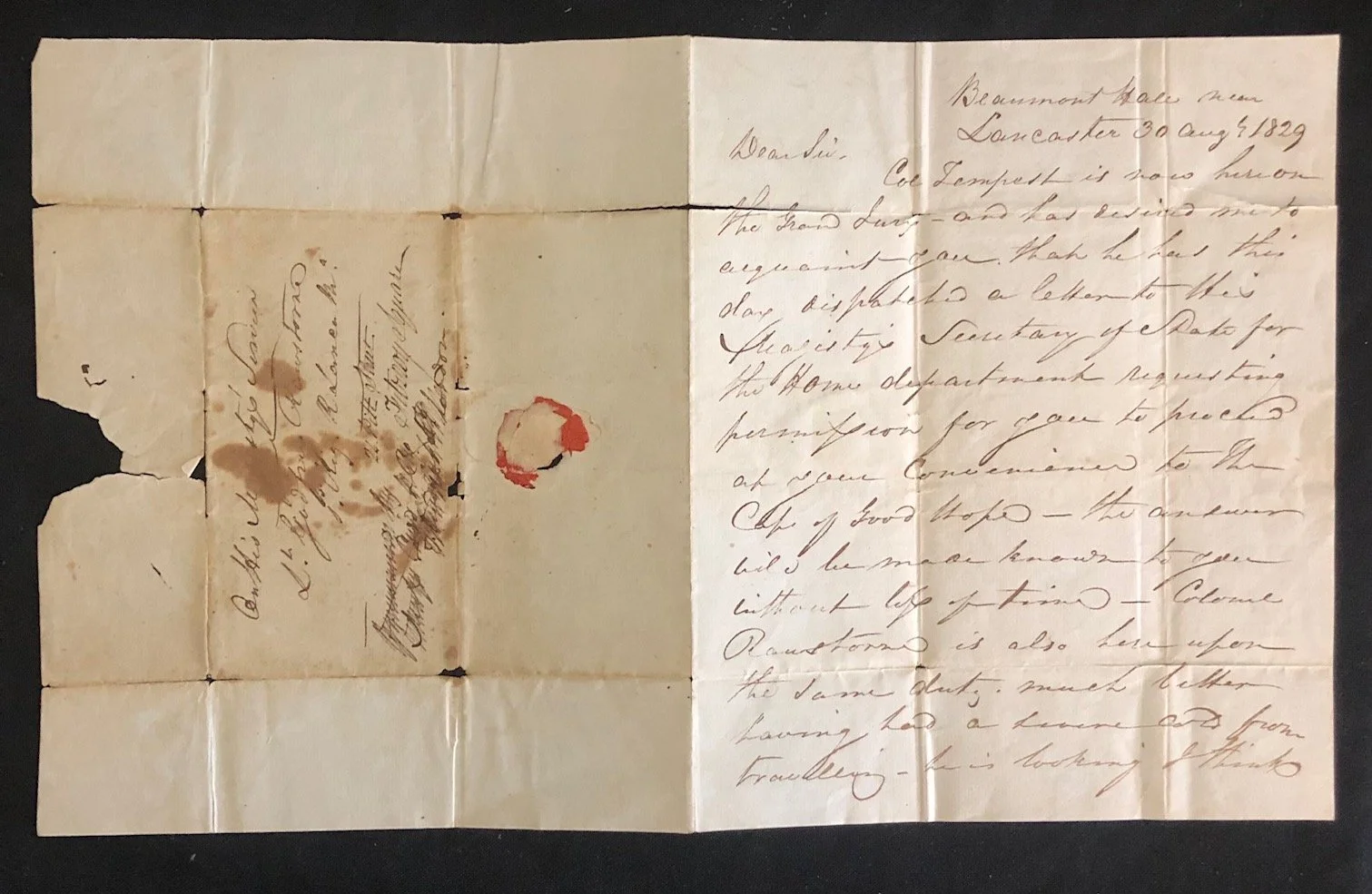
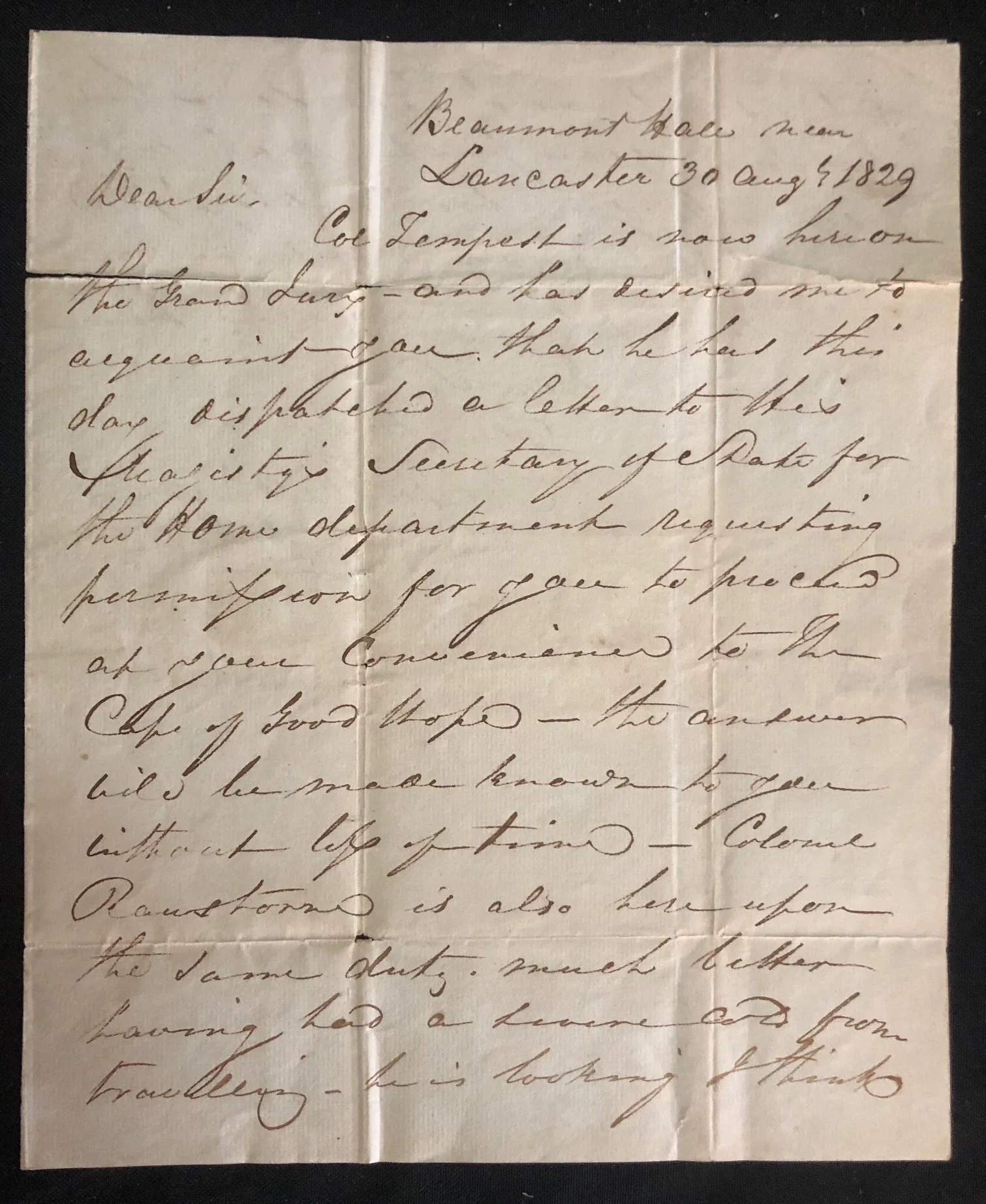
Written at "Beaumont Hall near Lancaster, 30 Augt. 1829". Beaumont Hall is a historic sandstone manor house in Lancashire dating back to the early 17th century.
The Context (Grand Jury Duty): The writer notes that "Col. Tempest is now here on the Grand Jury... Colonel Rawstorne is also here upon the same duty". The Grand Jury at Lancaster Assizes was comprised exclusively of the county's elite—wealthy landowners and military officers who handled major regional judicial affairs.
The Core Message: Colonel Tempest has "this day dispatched a letter to His Majesty's Secretary of State for the Home Department requesting permission for you to proceed at your convenience to the Cape of Good Hope".
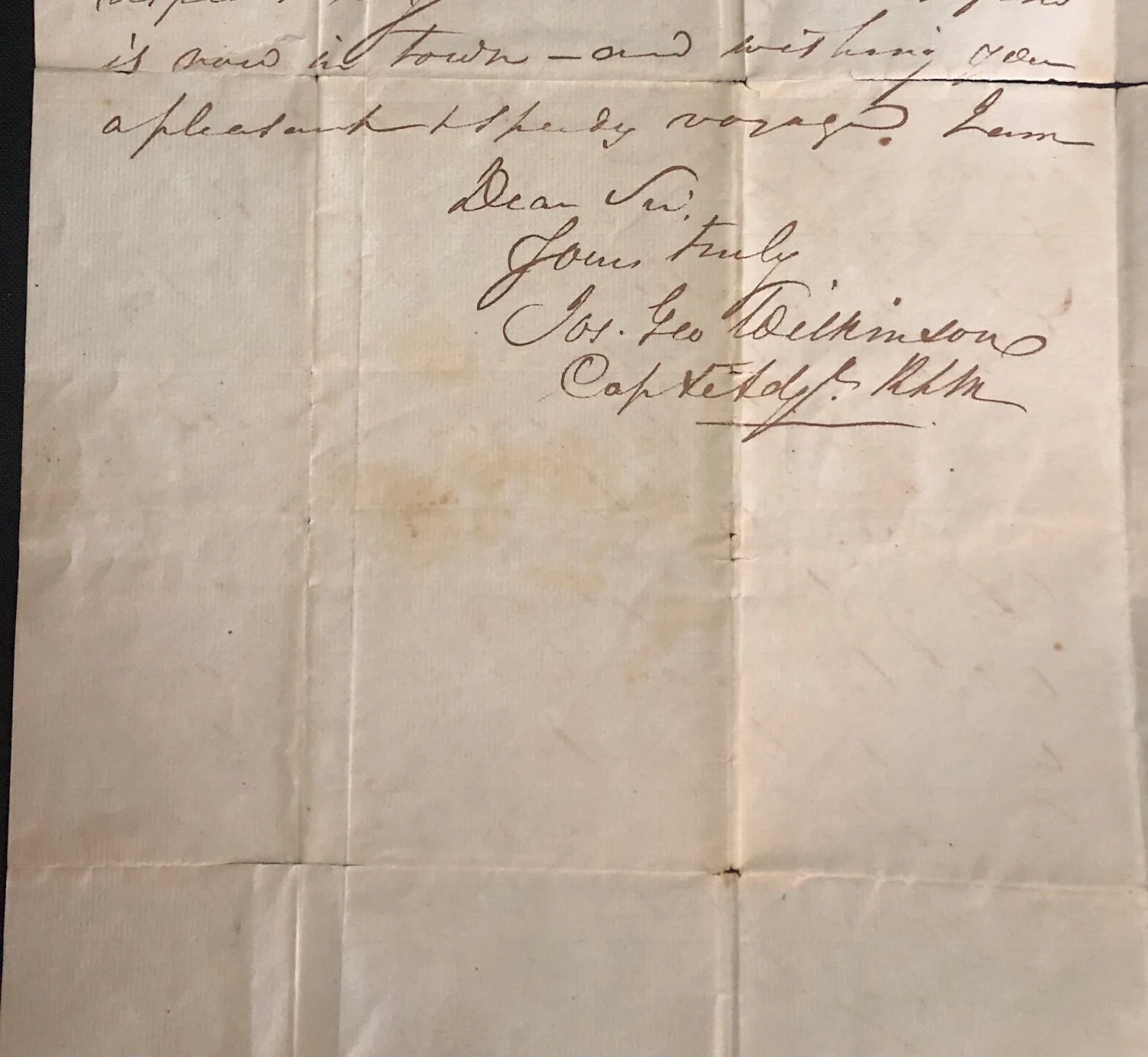
The Sender: Signed by "Jos. Geo. Wilkinson, Cap. Retd. R.M." (Retired Captain, Royal Marines).
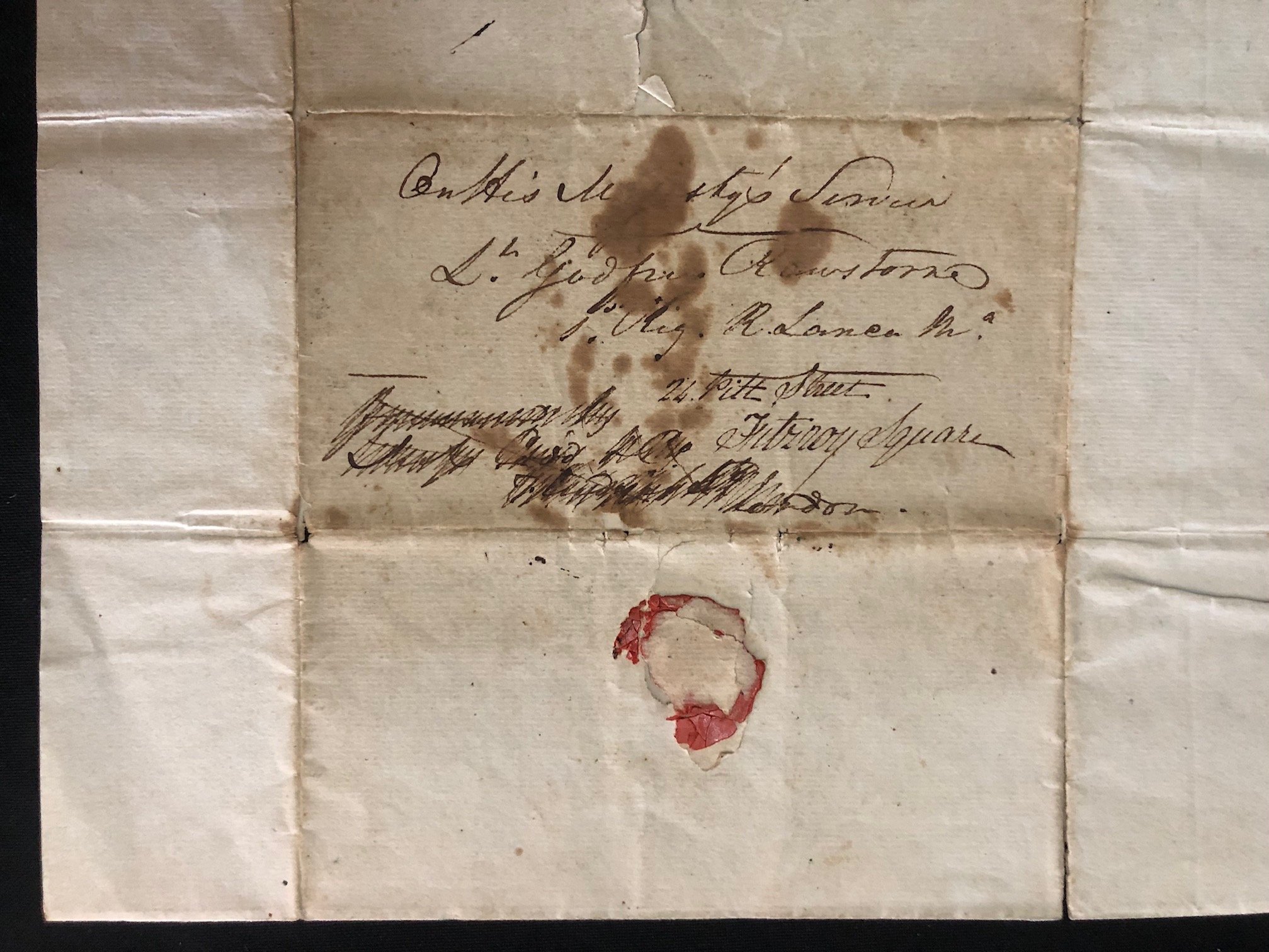
The Address & Intact Seal: shows the outer address panel when the letter was folded into its own envelope. It is addressed to a lieutenant (likely of the Atherton or a similar vessel, though the ink is smudged/crossed out) at 21 Fitzroy Street, Fitzroy Square, London, and still features a striking red wax postal seal.
Three Historically Interesting Facets
High-Society Patronage and Colonial Placement
In 1829, obtaining a desirable military or administrative posting in the British Empire wasn't just a matter of applying; it required the influence of the landed gentry. This letter showcases how that network operated. Colonel John Plumbe-Tempest (of Tong Hall and Beaumont Hall) was an incredibly powerful figure in the north of England. By directly lobbying the Home Department (which at the time handled domestic and certain overlapping colonial colonial clearances), Tempest was bypassing standard military bureaucracy to secure a smooth journey for the young officer heading out to South Africa.
The Mention of Colonel Rawstorne
The casual mention that "Colonel Rawstorne is also here... having had a severe cold from travelling", carries significant historical weight for South African history. This refers to the Rawstorne family of Lancashire (specifically Penwortham Priory).
A prominent member of this immediate family, Lawrence Rawstorne, along with Fleetwood Rawstorne, would become deeply intertwined with the Eastern Cape Frontier. Most notably, Civil Commissioner Fleetwood Rawstorne would later find himself at the center of global history when he was sent to maintain order in the northern Cape and ended up establishing the official British presence at the diamond diggings—leading directly to the founding of Kimberley. Seeing a Rawstorne operating in the same small circle of Lancaster judges helping send officers to the Cape captures the tightly knit nature of early British colonial expansion.
A Snapshot of the Cape Colony in 1829
The year 1829 was a pivotal, tense transitional period for the Cape of Good Hope. The British colonial government was heavily restructuring the colony's legal and administrative frameworks following the landmark Ordinance 50 of 1828 (which altered civil rights frameworks in the colony) and amid rising tensions on the Eastern Frontier that would soon erupt into the Sixth Frontier War. Officers arriving at this exact moment were stepping into a rapidly changing, volatile frontier world where the old patterns of Dutch administration were being aggressively overwritten by British military rule.
190mm x 230mm
3 page manuscript letter. Torn and stained.
R2,500