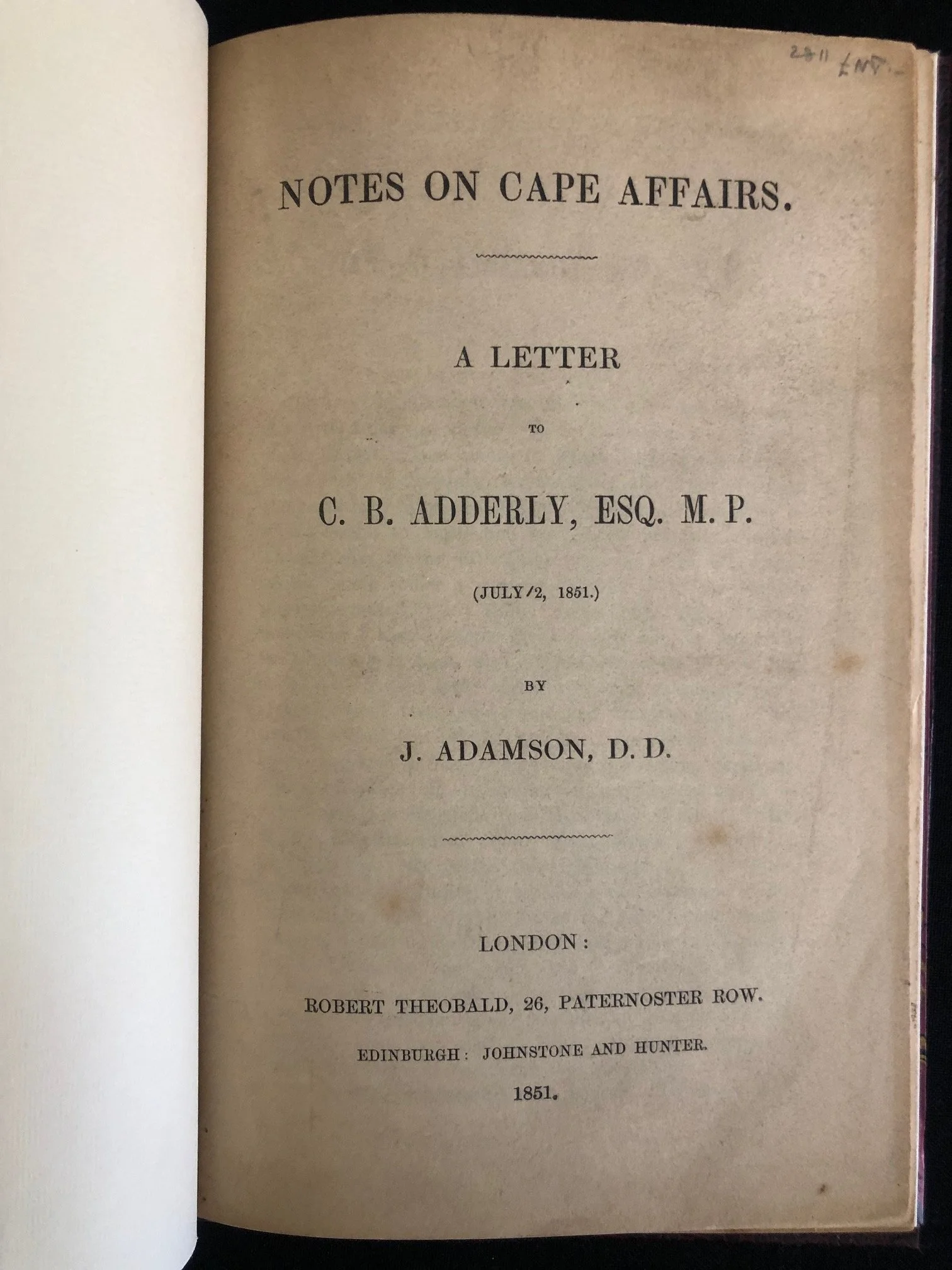
Notes on Cape Affairs - Anti-Convict Resistance (1851)
The letter is addressed to C.B. Adderley, Esq. M.P. (Charles Bowyer Adderley). Today, anyone familiar with Cape Town knows Adderley Street, but few remember exactly why it was named after a British Member of Parliament who never actually set foot in South Africa.
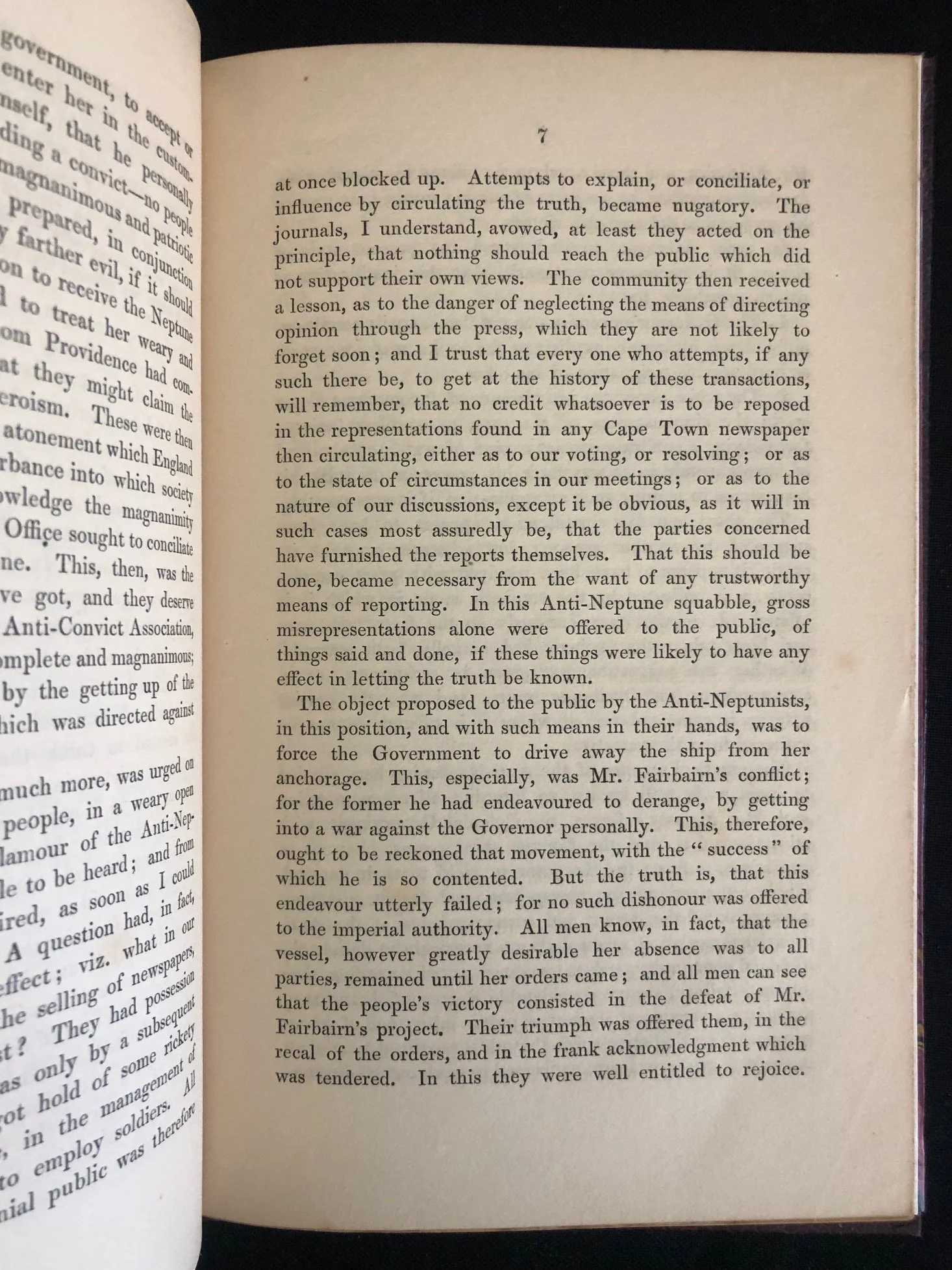
In 1849, the British Government attempted to turn the Cape into a penal colony by sending the convict ship Neptune to Simon's Bay. The local colonists were absolutely furious. They formed the Anti-Convict Association, launched a total economic boycott against the government, and refused to supply the ship or the military with food or water.
In London, Charles Adderley became the colonists’ greatest champion in the House of Commons, fighting tenaciously against the Colonial Office until the British government finally backed down and ordered the Neptune to sail for Tasmania. In profound gratitude, Cape Town's old Heerengracht was renamed Adderley Street in 1850. This 1851 pamphlet is a direct continuation of that dialogue, keeping Adderley briefed on what the colony wanted next: representative self-government.
The author, Dr. James Adamson, D.D., was one of the intellectual giants of 19th-century Cape Town, though his name is often overshadowed today.
Arriving from Scotland in 1827 to serve as the first minister of St. Andrew’s Presbyterian Church, Adamson quickly became a powerhouse in colonial education and science.
He was a co-founder of the South African College (which later evolved into the University of Cape Town) and voluntarily taught mathematics, physics, and classics there for years without a salary when the college fell on hard times.
He was also deeply interested in geology, botany, and indigenous languages.
When Adamson penned this letter in July 1851, the Cape was undergoing massive upheavals—not only dealing with the aftermath of the convict crisis but also embroiled in the protracted Eighth Frontier War (1850–1853). His "Notes" provided an elite, analytical insider's perspective to a powerful British ally at a moment when the future constitution of the Cape was being hotly debated in London.
This 35-page pamphlet is highly elusive. It is recorded in Mendelssohn’s South African Bibliography, which notes that it deals explicitly with the anti-convict struggle and the complex administrative matters of the colony at mid-century.
Ephemeral items like this—printed dynamically between London and Edinburgh publishers (Robert Theobald and Johnstone & Hunter) to influence rapid parliamentary debates—had very small print runs. Most were read, argued over, and quickly discarded, making surviving copies in clean condition incredibly rare today.
35 pages, complete. Rebound.
Pages slightly mellowed.
135mm x 210mm
Sold Oct ‘26