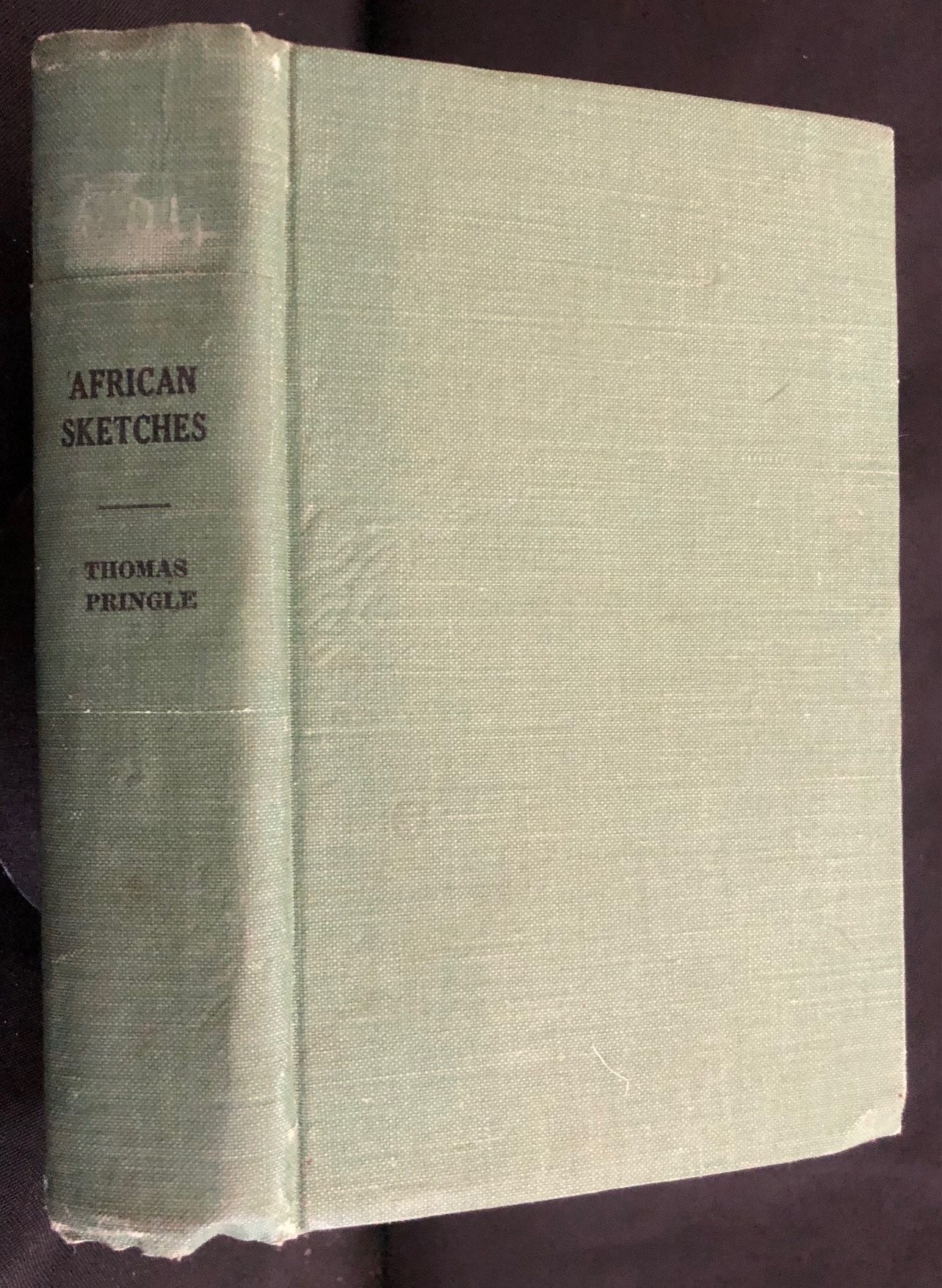
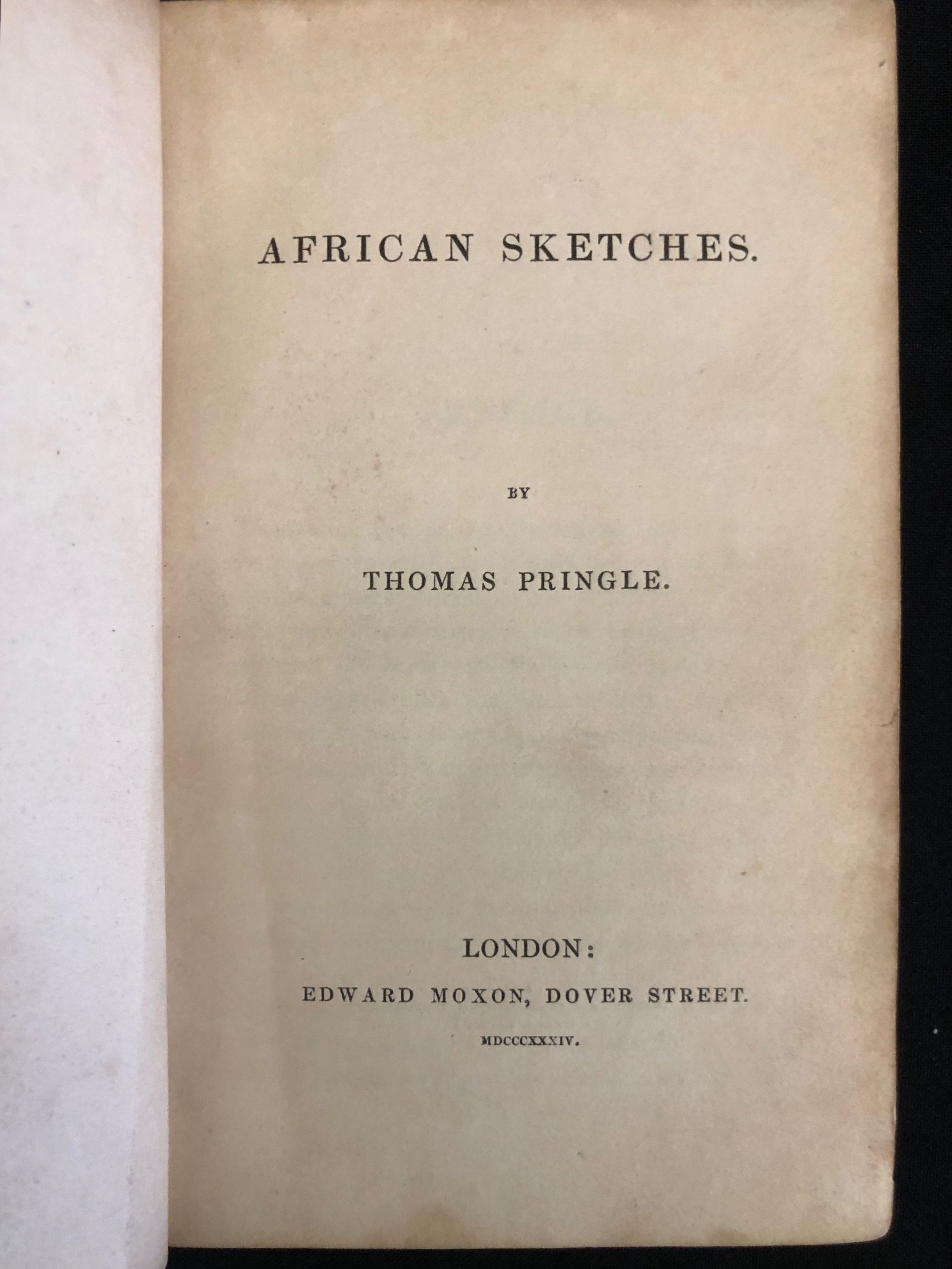
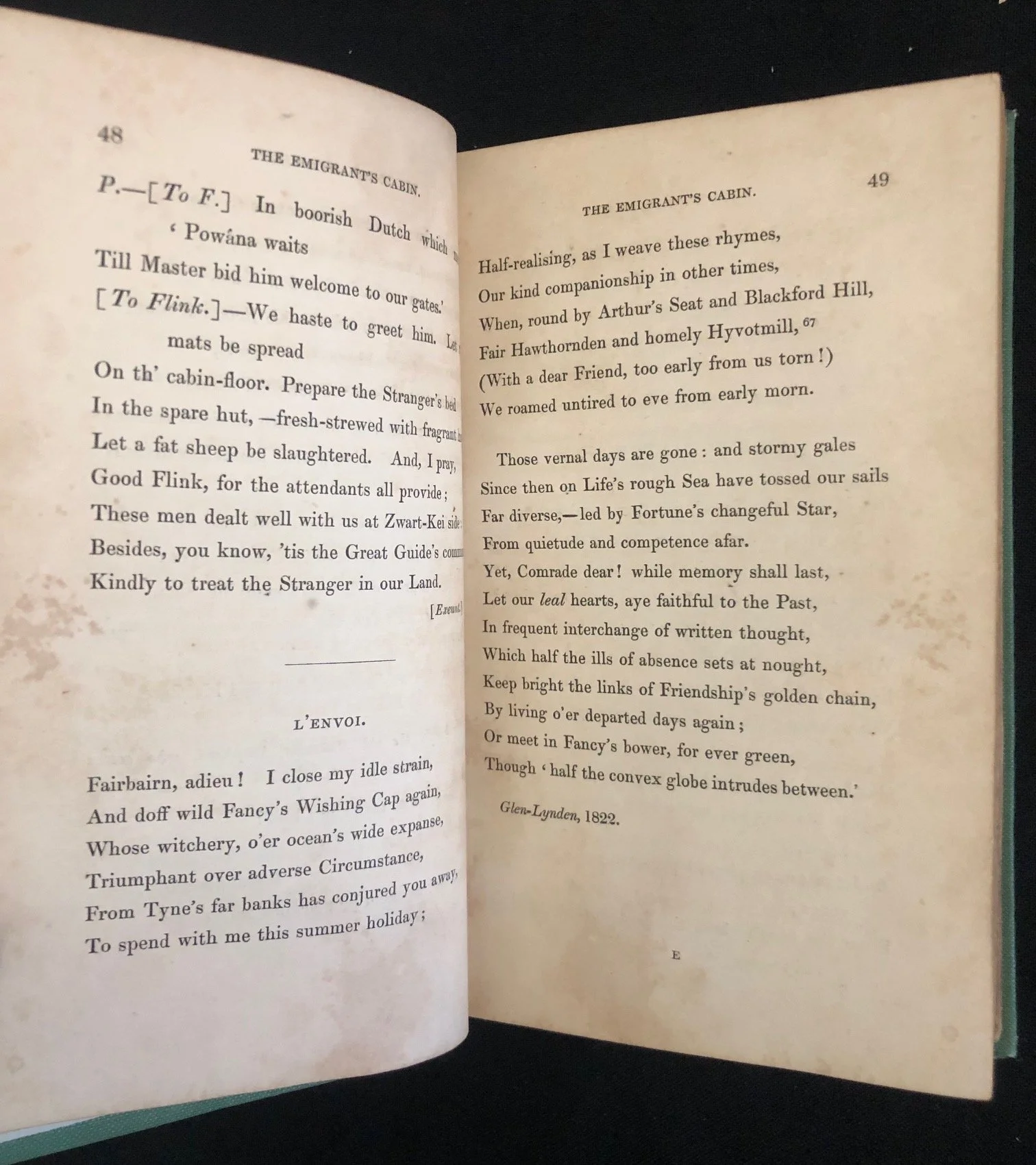
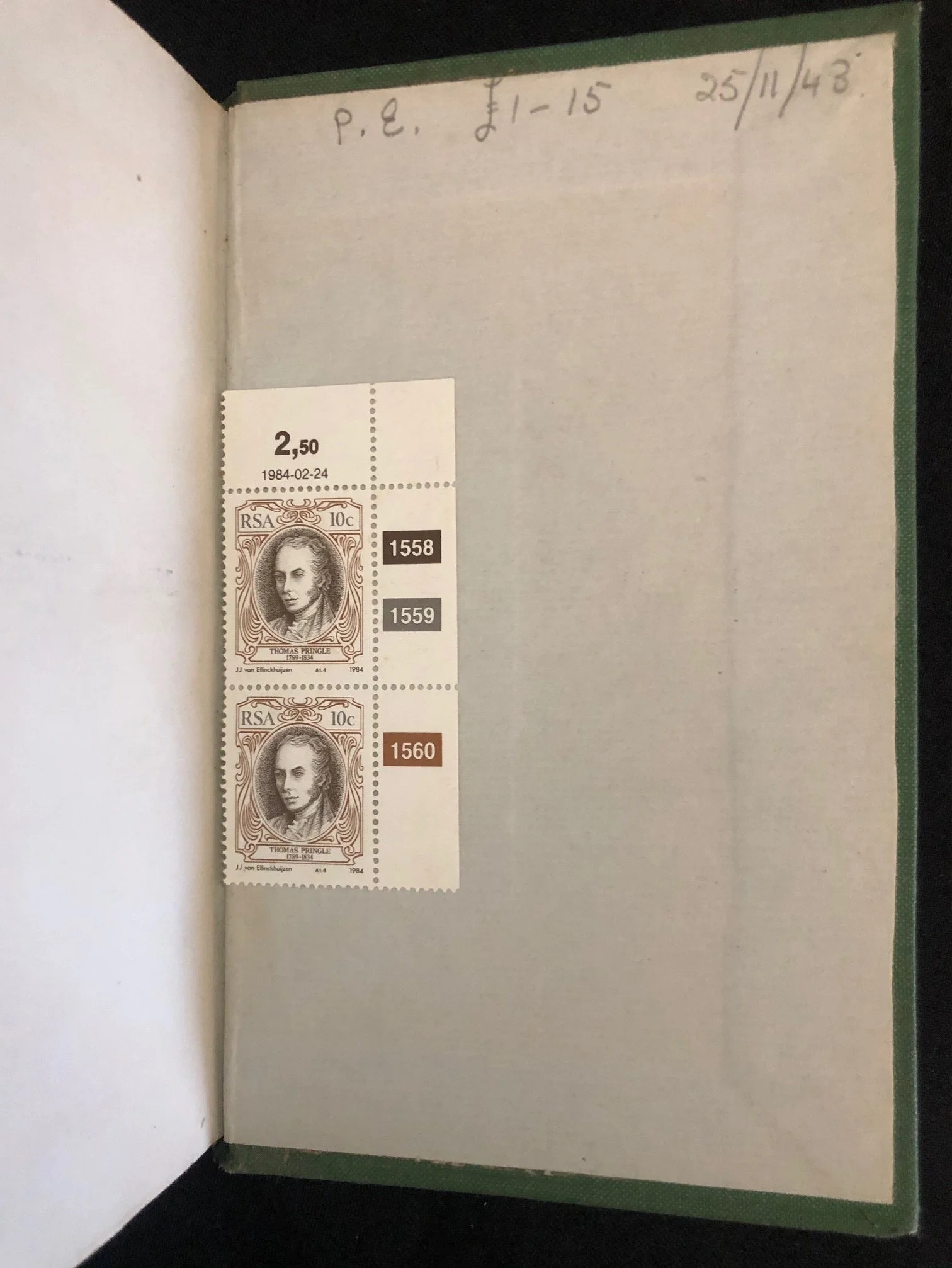
Thomas Pringle’s African Sketches, published in London by Edward Moxon (1834)
First edition.
Published in London by Edward Moxon in 1834.
This specific volume represents a monumental, bitter-sweet milestone in South African literary and political history: it is Thomas Pringle's final farewell and his crowning legacy, published only months before his death.
Thomas Pringle—often called the "Father of South African Poetry"—led the 1820 Scottish Settlers to the Baviaans River valley in the Eastern Cape, fought fiercely against Governor Lord Charles Somerset for a free press in Cape Town, and later returned to England to serve as the Secretary of the Anti-Slavery Society.
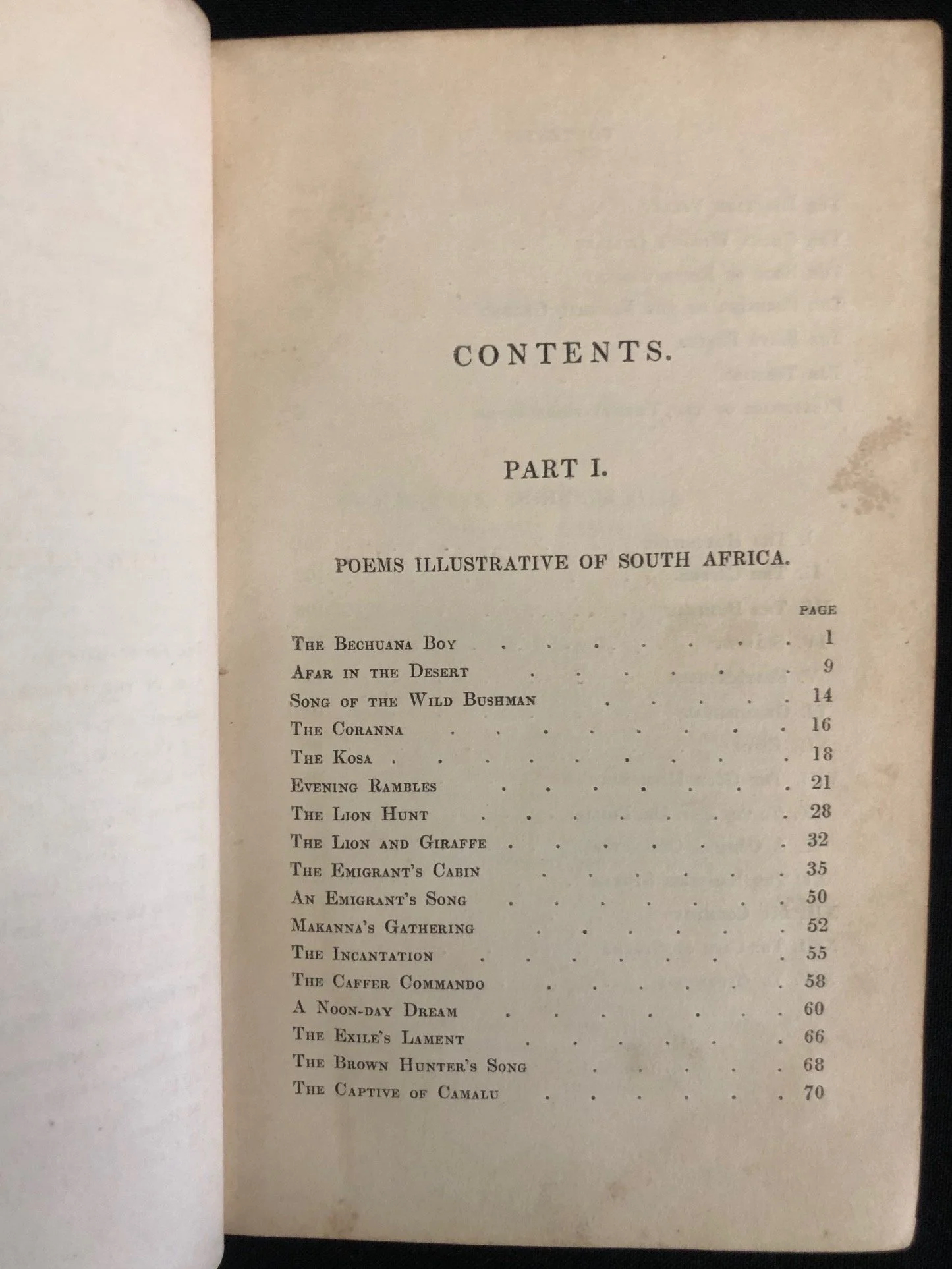
By 1834, Pringle was severely impoverished and dying of tuberculosis. Desperate to secure financial support for his wife and sister-in-law after his impending death, he painstakingly compiled African Sketches. It was a combination of his famous poems (including "Aafar in the Desert") and his prose, Narrative of a Residence in South Africa.
He barely lived to see it in print. The book was published in 1834; Pringle died in December of that year, just as he was preparing to return to the warmer climate of the Cape in a last-ditch effort to save his health.
On August 1, 1834, the Slavery Abolition Act came into effect across the British Empire, including the Cape Colony. As Secretary of the Anti-Slavery Society, Pringle had spent years working to achieve this exact moment. African Sketches was published precisely to coincide with and celebrate this massive societal shift. Pringle actually lived just long enough to see the act signed into law before his lungs failed him.
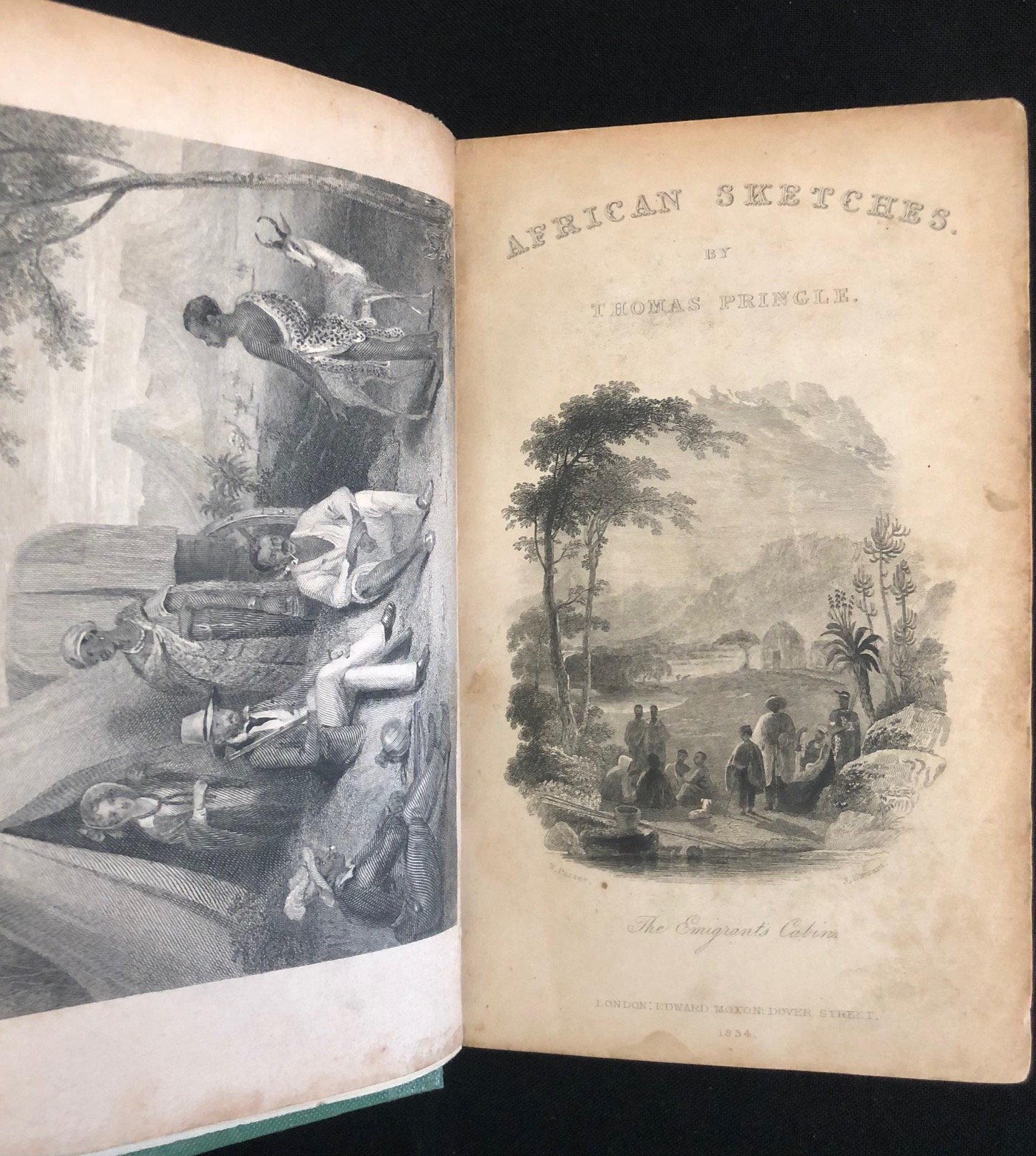
The engravings, perfectly capture the idealized, yet deeply observant, humanitarian lens through which Pringle viewed the Eastern Cape frontier:
The Frontispiece: This complex scene illustrates the interaction between European settlers and the indigenous peoples of the Cape. It depicts a frontier camp, showing a mix of European dress and indigenous figures, emphasizing a shared, albeit tense, landscape.
The Title Page Vignette (Right): Titled "The Emigrant's Cabin," this vignette depicts Glen-Lynden, the location of the Pringle family’s original Scottish settlement in the Eastern Cape. It shows a rustic homestead surrounded by local flora (like the distinctive Aloe or Euphorbia on the right) and a peaceful gathering of both settlers and local inhabitants near a riverbed. It visually encapsulates Pringle's deep romantic attachment to the rugged beauty of the South African interior.
Published by Edward Moxon of Dover Street. Moxon was the premier publisher of the English Romantic poets, counting William Wordsworth, Percy Bysshe Shelley, Alfred Lord Tennyson, and Charles Lamb among his close friends and clients. By publishing Pringle, Moxon was cementing the South African settler-poet's status within the absolute upper echelon of 19th-century British literature.
Complete except for the half title page. Rebound; pages fragile and well used. 528 pages.
110 x 168 x 20
R1,500