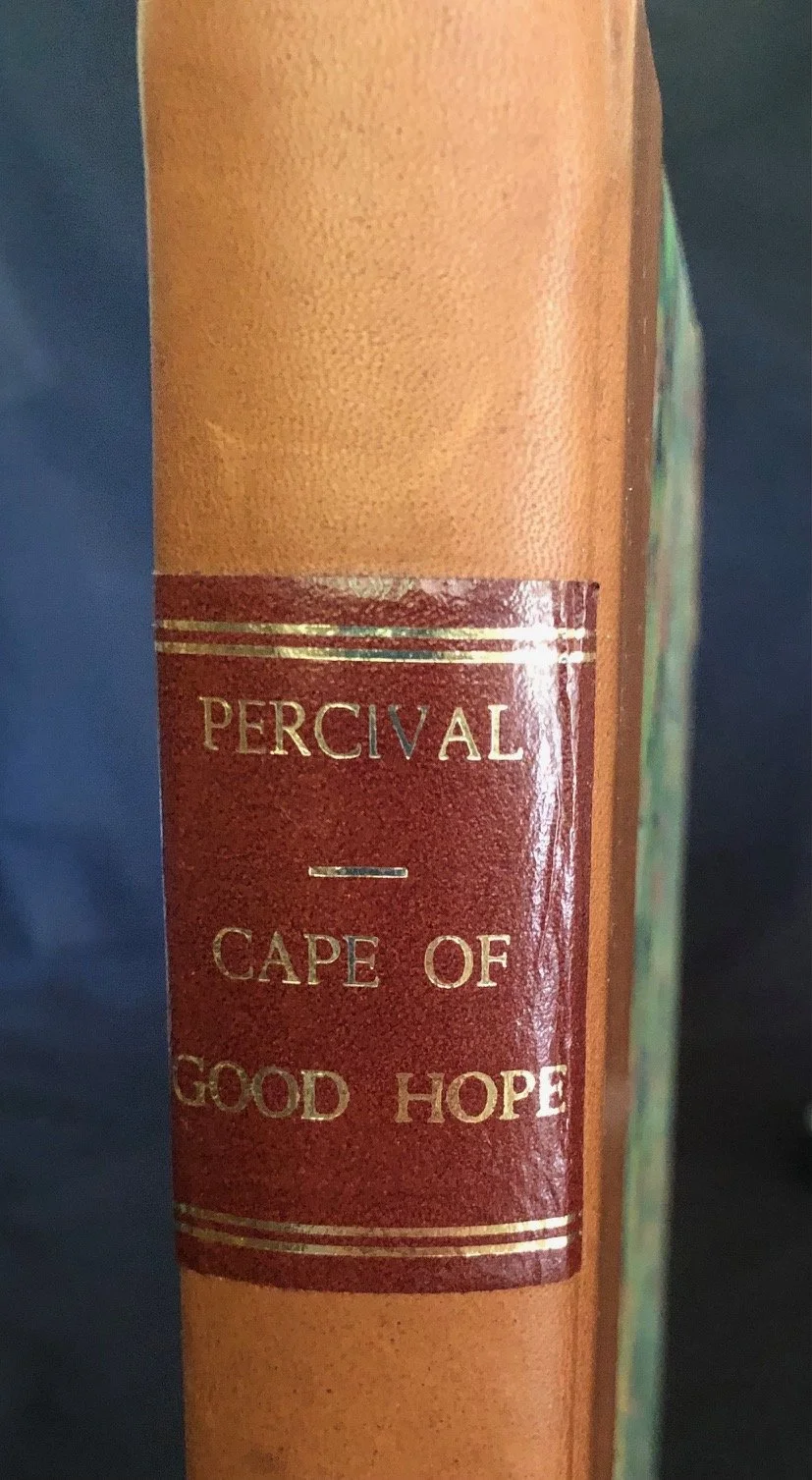
Captain Robert Percival’s An Account of the Cape of Good Hope (1804)
Eyewitness Account of the First British Occupation (1795)
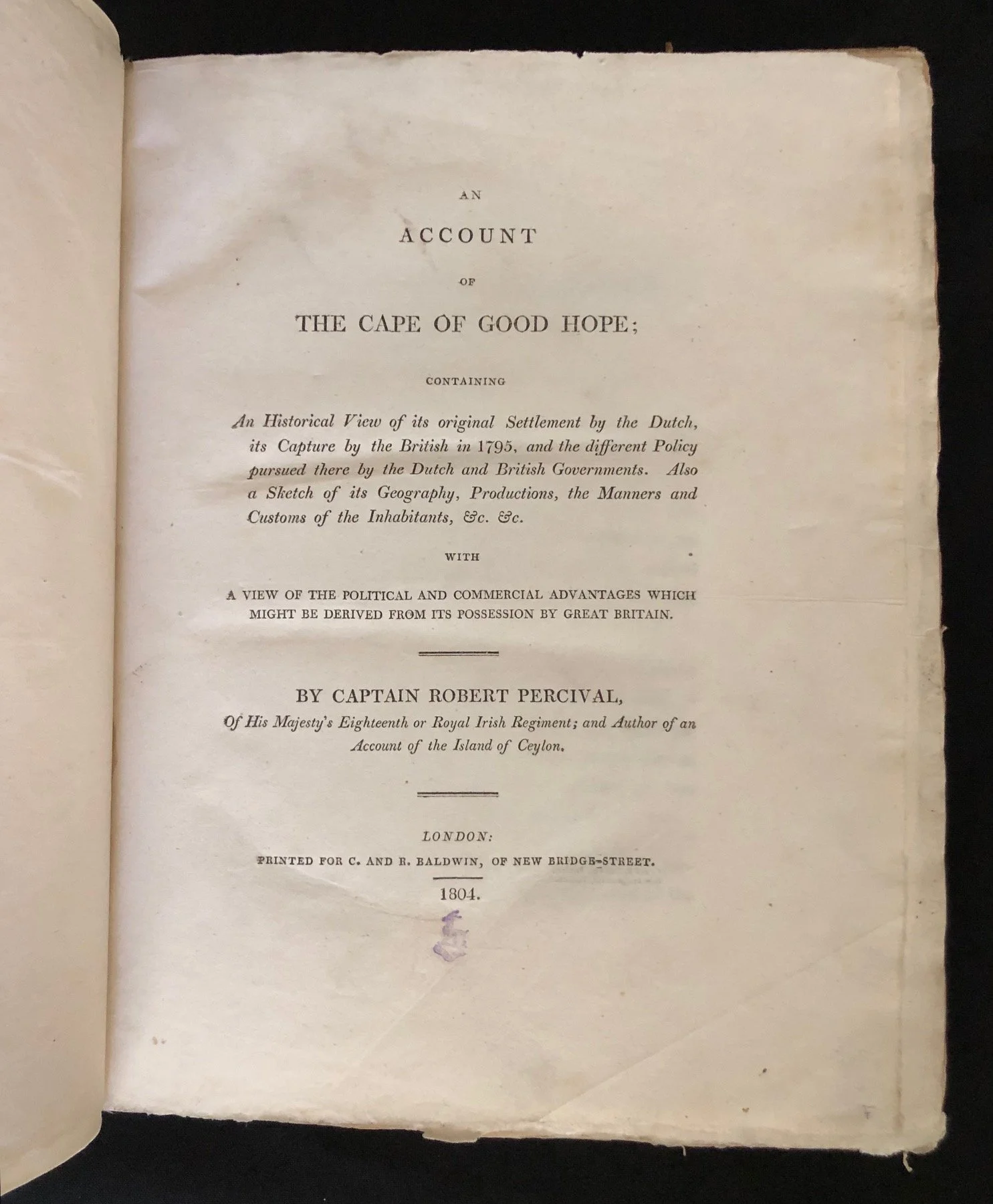
Captain Robert Percival, an officer in the 18th (Royal Irish) Regiment of Foot, arrived at the Cape with the British invasion fleet in 1795. His book is one of the earliest published English descriptions of the Cape written by a military participant. Published in 1804—during the brief interlude of Batavian (Dutch) rule under the Treaty of Amiens—Percival’s narrative explicitly served as British strategic propaganda, arguing that Great Britain had a vital commercial and geopolitical imperative to permanently annex the Cape.
Early Social Observations & Natural History
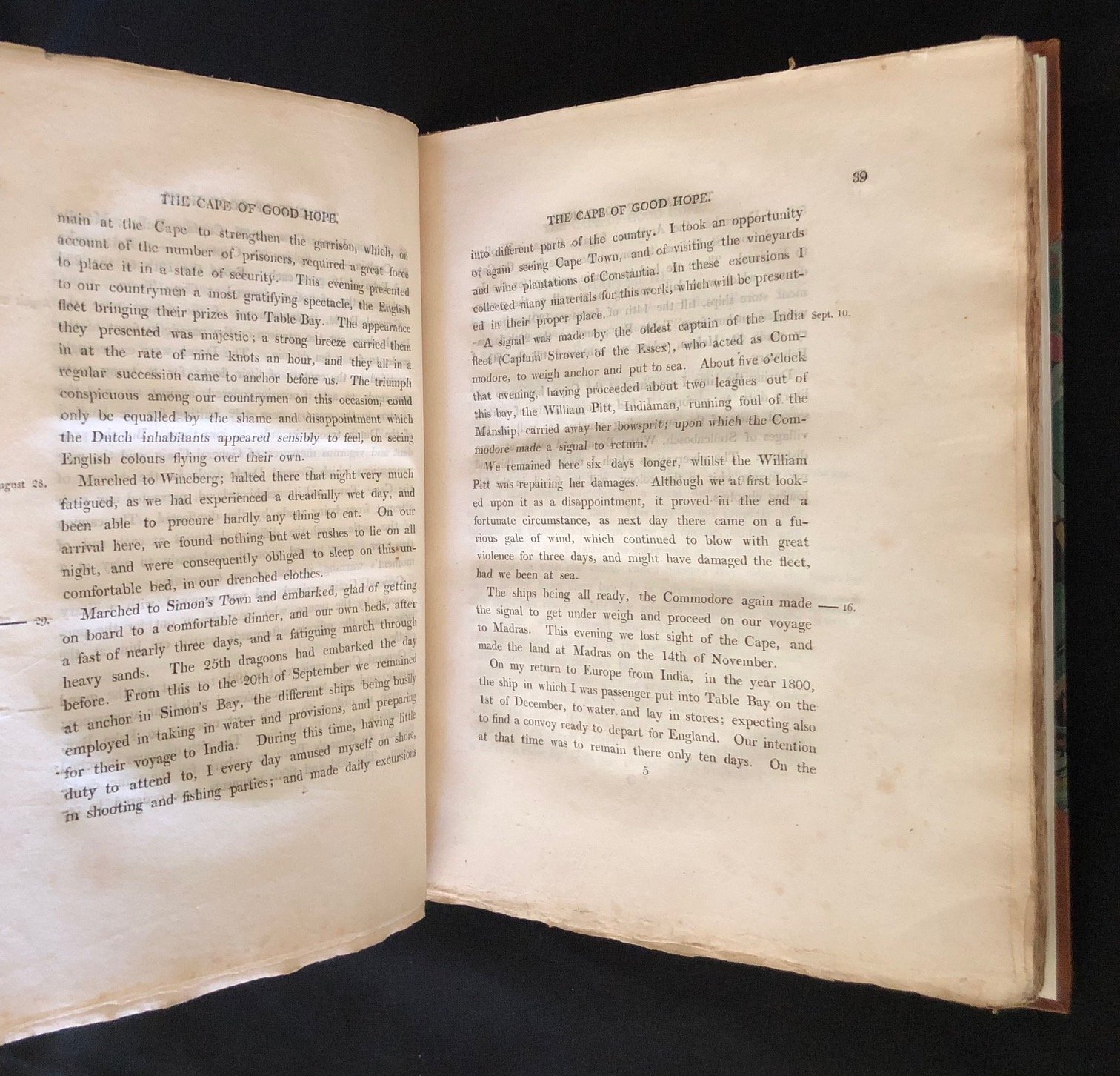
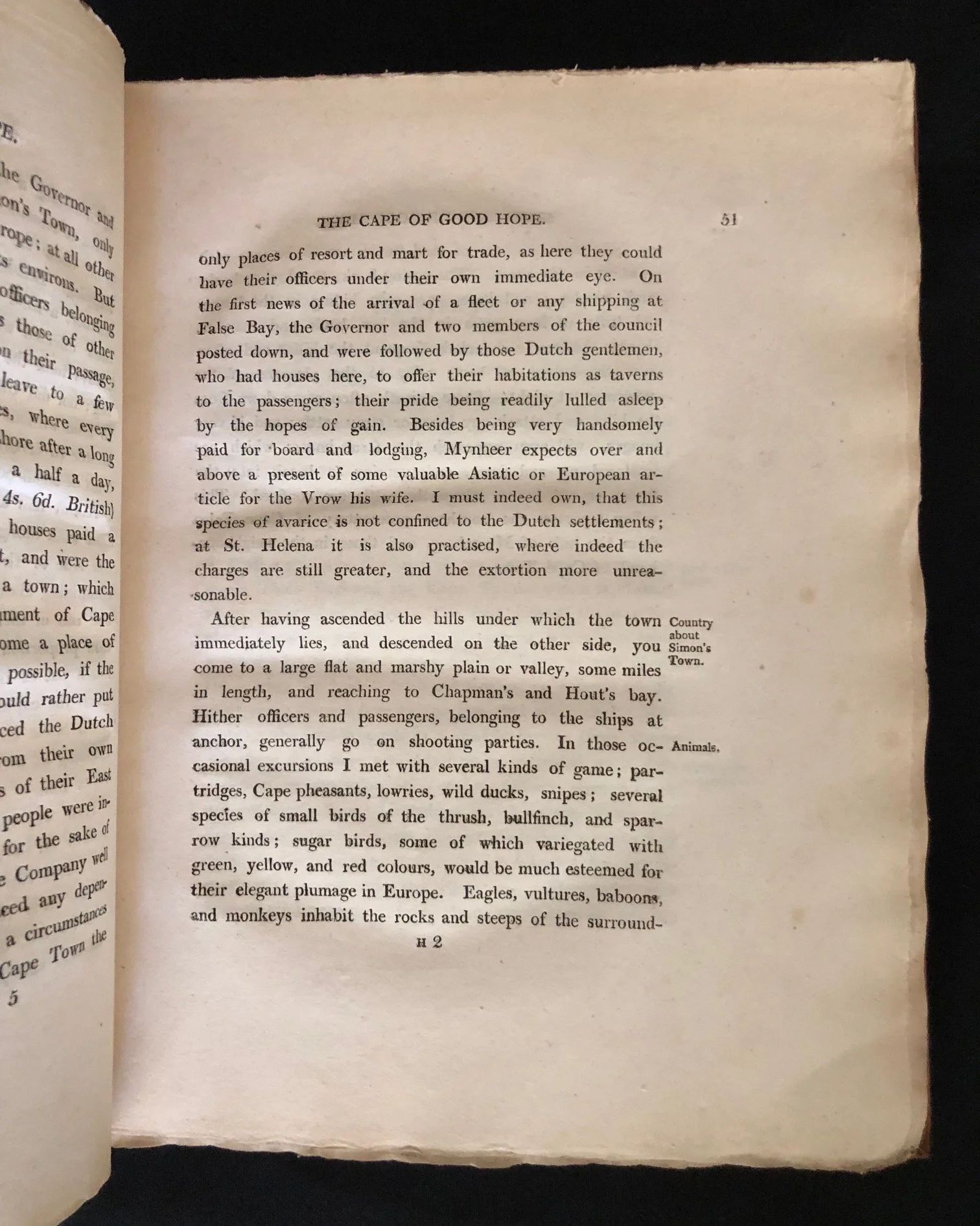
Percival wrote extensively on local fauna, flora, geography, and social customs. Page 51 describes excursions from False Bay and Simon's Town into the marshy valley reaching toward Chapman’s Peak and Hout Bay, detailing shooting parties for "Cape pheasants, wild ducks... sugar birds" along with sightings of eagles, baboons, and monkeys. It also contains his observations on local hospitality and trade at False Bay during shipping season.
Layers of Notable Provenance (Ex Libris)
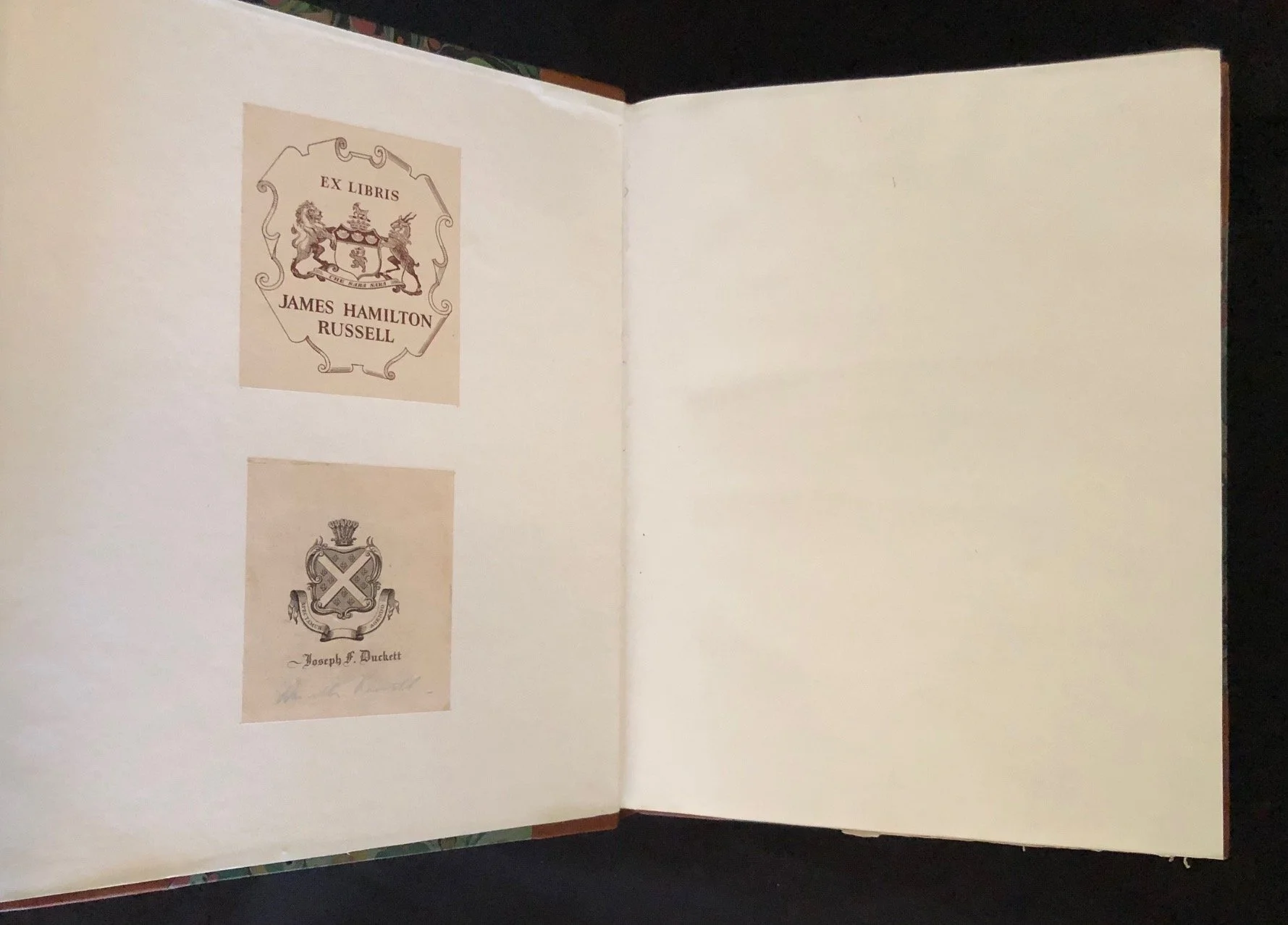
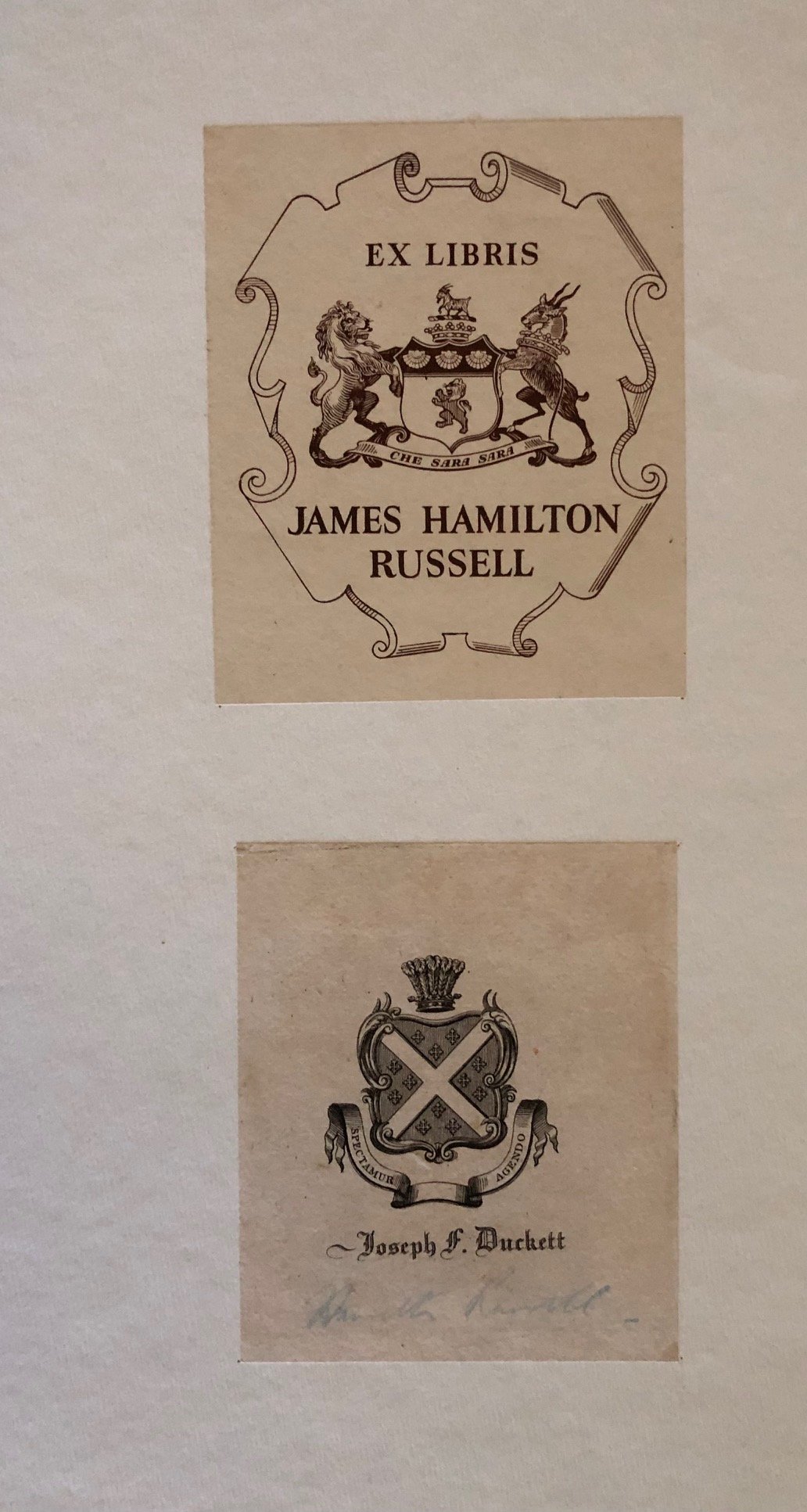
The two armorial bookplates on the front pastedown trace a distinct lineage of ownership:
James Hamilton Russell (1906–1984) was a prominent South African politician, Progressive Party MP, and businessman who built an exceptional collection of rare Africana and early Cape travel books. His bookplate features the Russell family crest with the motto "Che Sara Sara" ("What will be, will be").
Joseph F. Duckett. An earlier 19th-century armorial bookplate showing a coat of arms with the motto "Spectamur Agendo" ("Let us be judged by our acts"). Beneath the plate, a faint pencil inscription records the purchase/transfer between these collections.
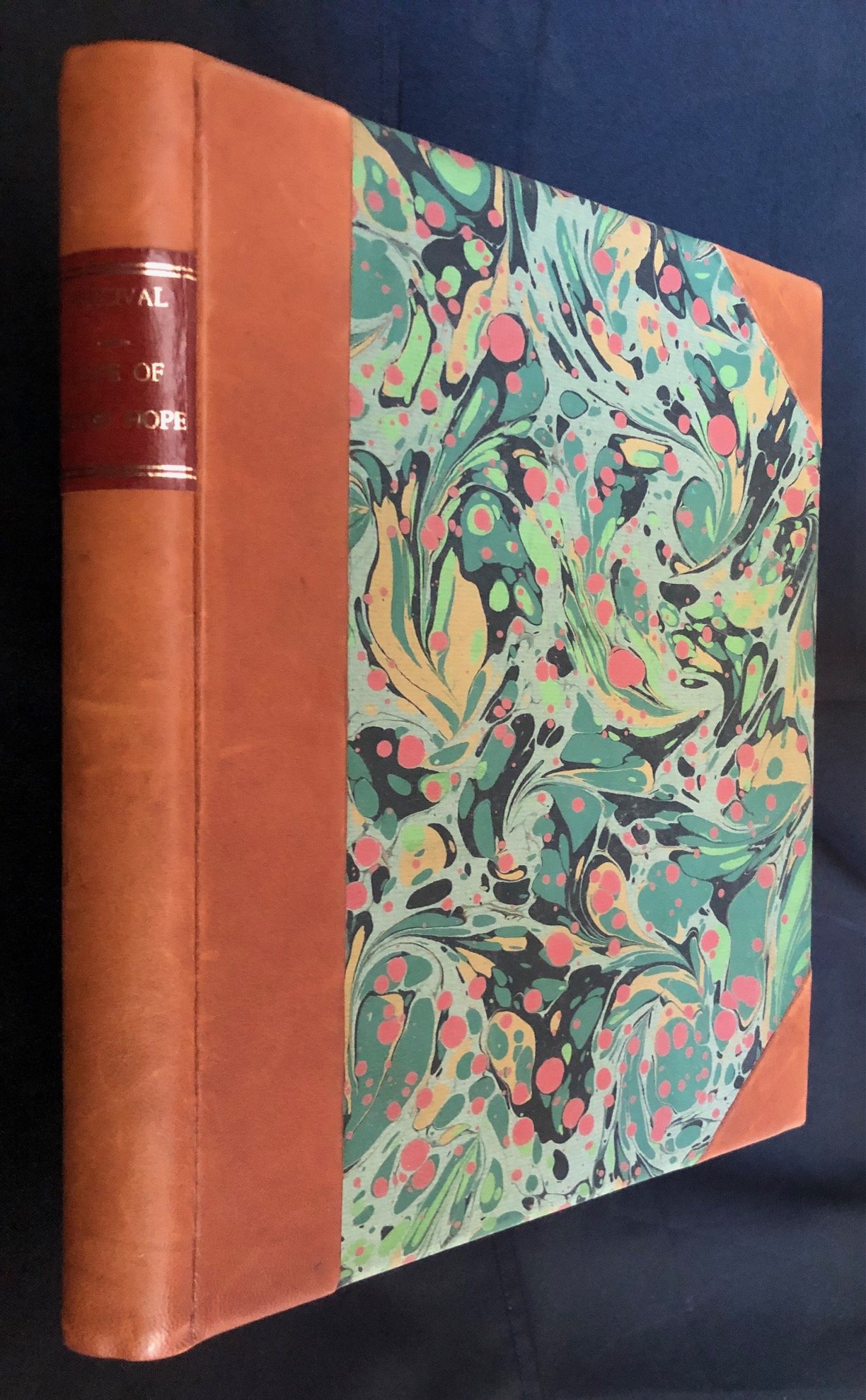
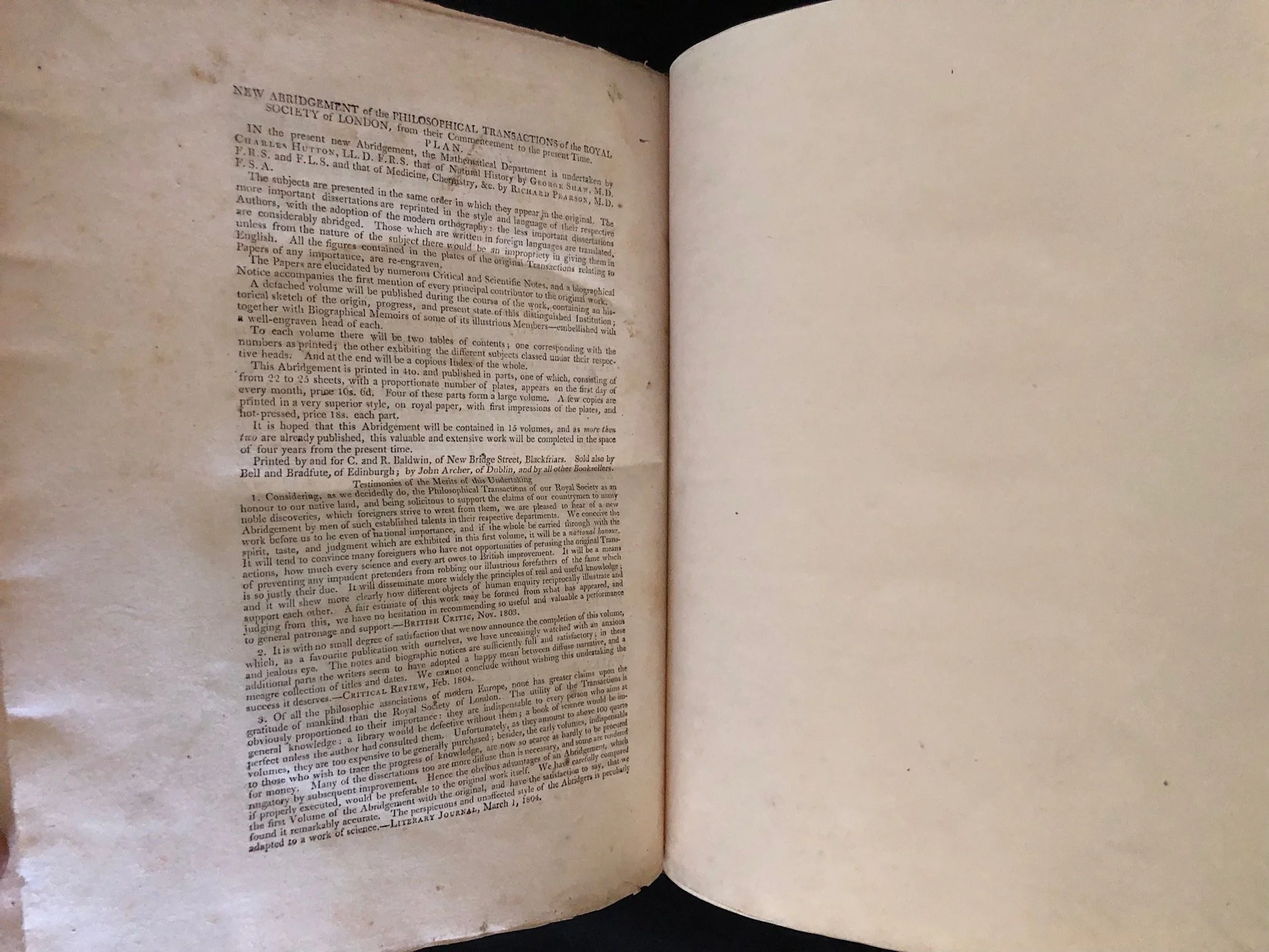
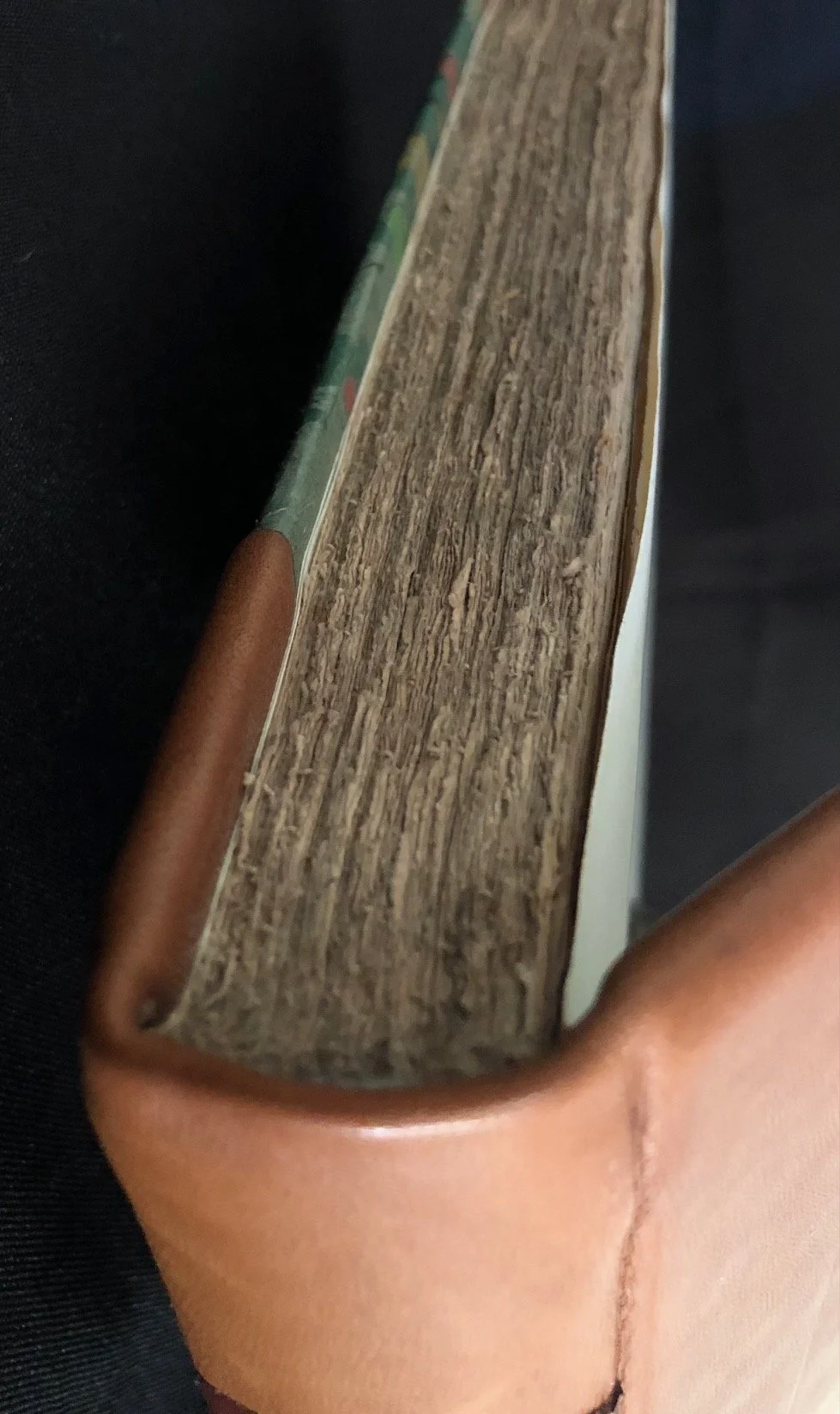
Rebound; half leather & marbled boards; new endpapers; otherwise a clean copy. First edition. Lacking half title page, otherwise complete.
235mm x 295mm x 27mm
R8,000