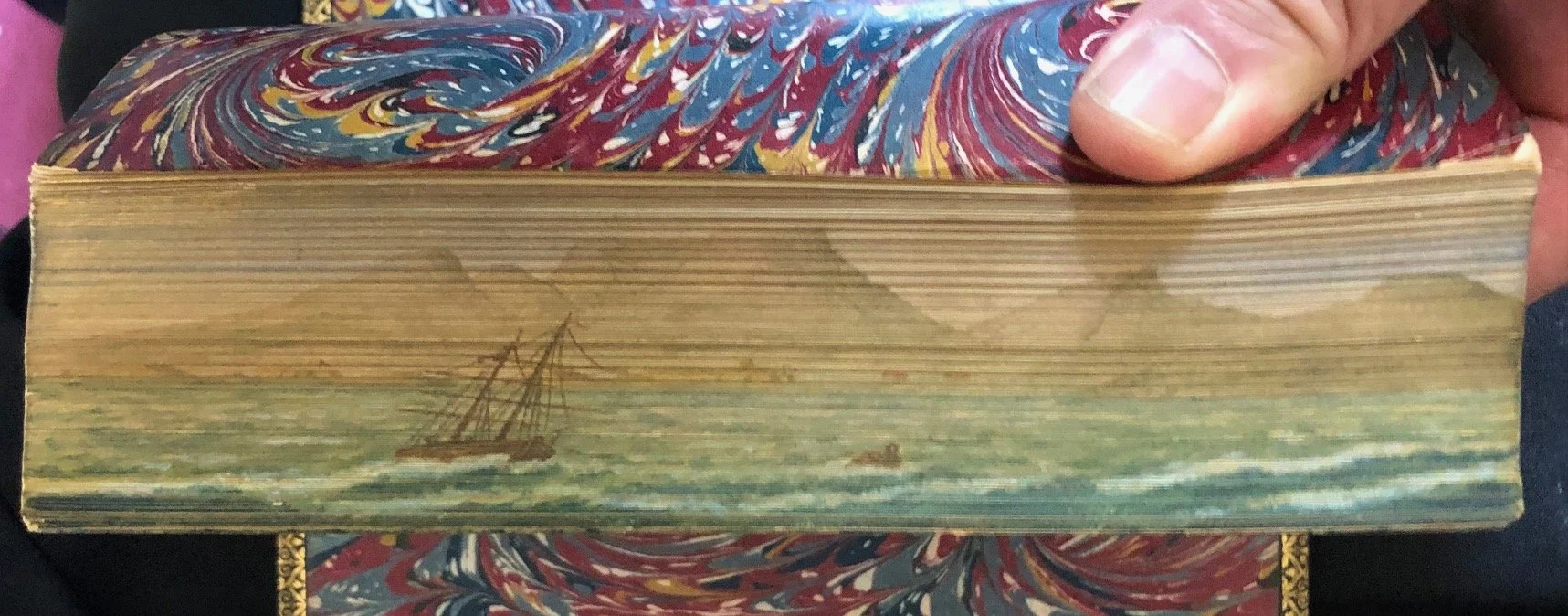
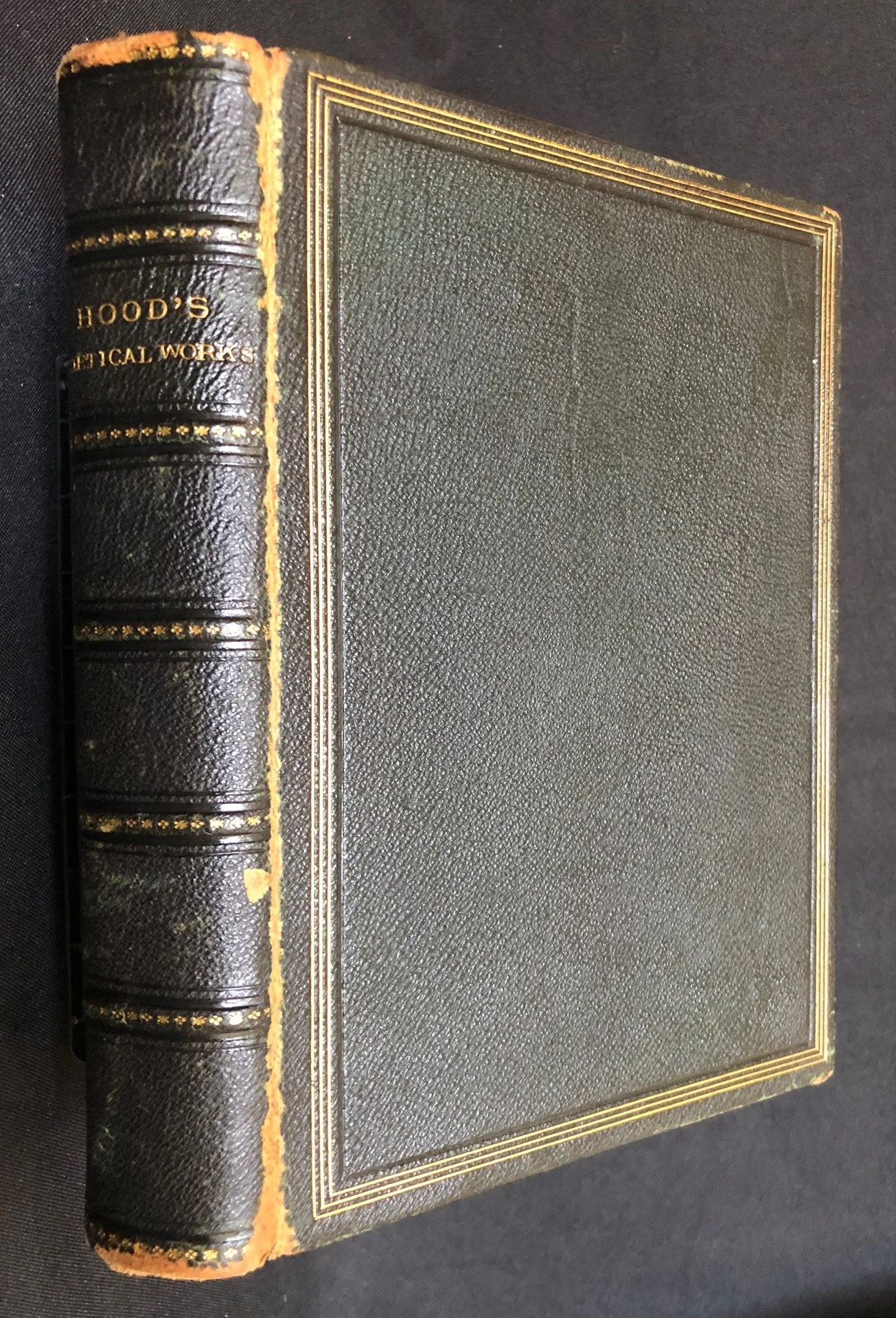
The Poetical Works of Thomas Hood 1871 (Table Bay Fore-edge Painting).
Published by E. Moxon, Son & Company, London 1871
Illustrated by: Gustave Doré
Complete; decorative title page; frontis; title page; xxxi; 400 pages.
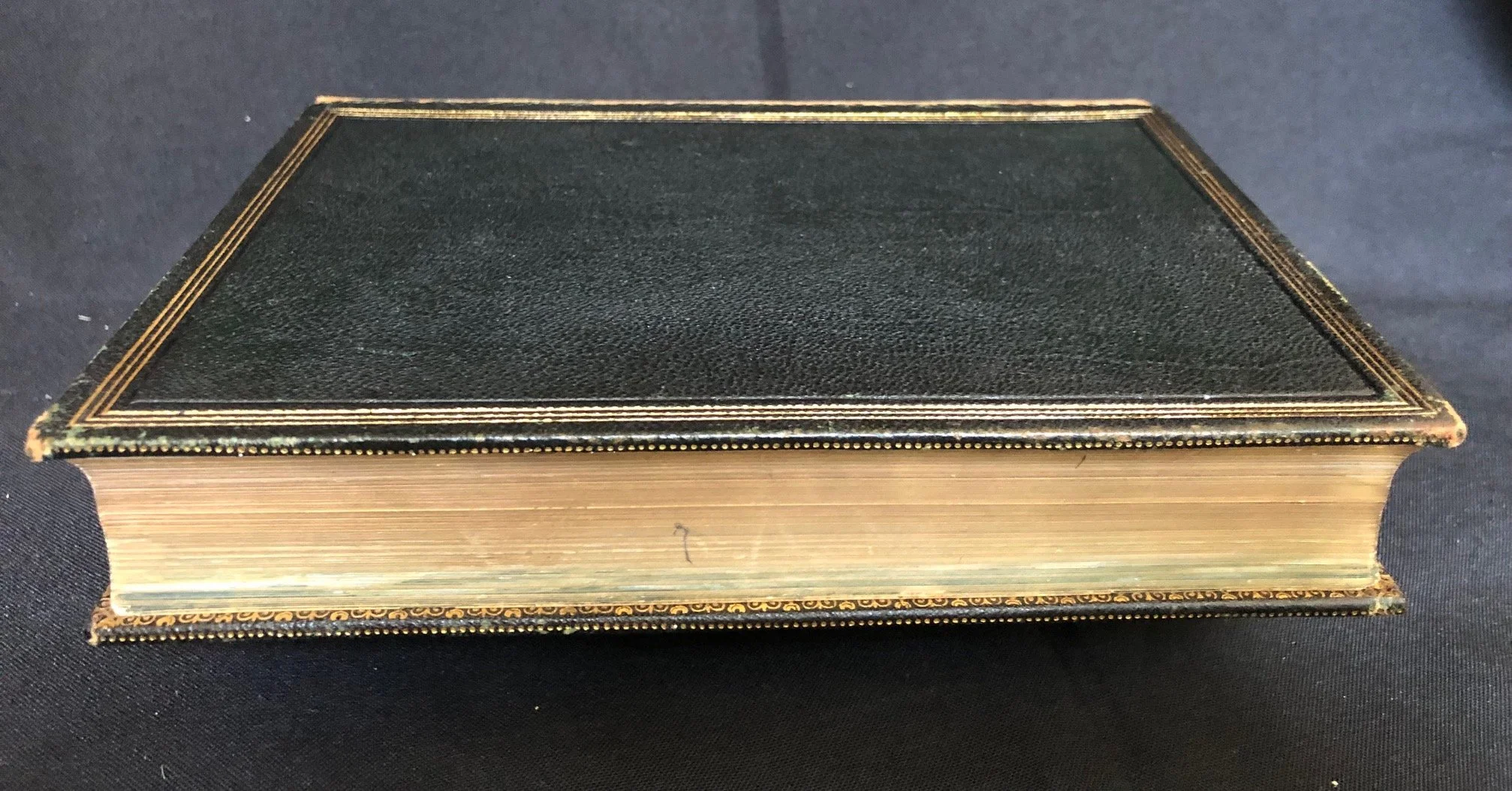
Full leather binding; all edge gilding; edges worn; top and bottom of the spine chipped. Some minor tears to the pages; glue stain on the verso of the frontis (occupies half the page).
A collection of the poetical works of Thomas Hood (1799-1845), who was a regular contributor for major publications during his lifetime such as 'The London Magazine'. This work was edited, with a critical memoir, by William Michael Rossetti (1829-1919), who was himself a writer, and also a founder member of the Pre-Raphaelite Brotherhood. Illustrated throughout by Gustave Doré, including a frontispiece and an engraved title page. Undated, dated through copies held at the Victoria and Albert Museum libraries.
Hood’s Poetry and The Table Mountain fore-edge Painting
By James Findlay
Last year, I paid dearly for a leather bound, Victorian book of poetry. Holding its Octavo-sized frame in my hands, I knew I was holding a hidden gem.
When closed, the book’s edges present a solid block of shimmering gold leaf. Yet, with a gentle, fan of the thumbs, the gold vanishes. In a flash of delicate watercolors, a dramatic Cape vista comes alive: the iconic silhouette of Table Mountain, Lion’s Head, and Signal Hill, while a twin-masted schooner battling the churning ocean below.
It was a fore-edge painting—a centuries-old technique where art is painted onto the raw tips of the pages, concealed beneath gold leaf. A quick market check revealed zero Table Mountain fore-edge paintings for sale anywhere in the world. Smelling extreme rarity, I secured it immediately, planning to retail it at a nice profit.
Then, a nagging question surfaced: Why paint a Cape sea scene onto a book of obscure Victorian verse?
While Thomas Hood was a Victorian literary darling, nobody reads him today. These volumes usually end up in charity shops, bought strictly as interior design props. Why lavish an exquisite Cape landscape on a poet? Of course a Capetonian might have commissioned this art work 150 years ago. Dramatic poetry meets a dramatic Table Bay sailing scene. This scenario is entirely plausible.
I raised the anomaly with a visiting international bookseller—a true veteran of the trade. Without hesitation, he raised a finger: "Ah, sounds like the work of 'The Policeman.'"
The man with the silver broom for a moustache went on to explain that in the 1950s, a retired Scotland Yard detective supplemented his pension by trawling London’s Cecil Court. He would buy up cheap, beautifully bound Victorian poetry books, secretly paint historical scenes on the fore-edges, and pass them off as original 19th-century treasures to unsuspecting dealers.
My heart sank. I hadn't found a 19th-century Cape relic. I had bought a 20th-century forgery.
"So it's worthless?" I cringed.
"Not at all," the veteran smiled. "In fact, those Mid-Century Scotland Yard forgeries are now highly coveted in their own right. You haven't just bought a landscape—you've bought a mystery, a trickster's legacy, and let’s be honest, a great story."
Either way we have a very rare example of a fore-edge painting of a Table Bay sailing scene. Highly desirable for a Cape collector.
R30,000