French Maritime Rewittling Contract - Cape Town (1850)
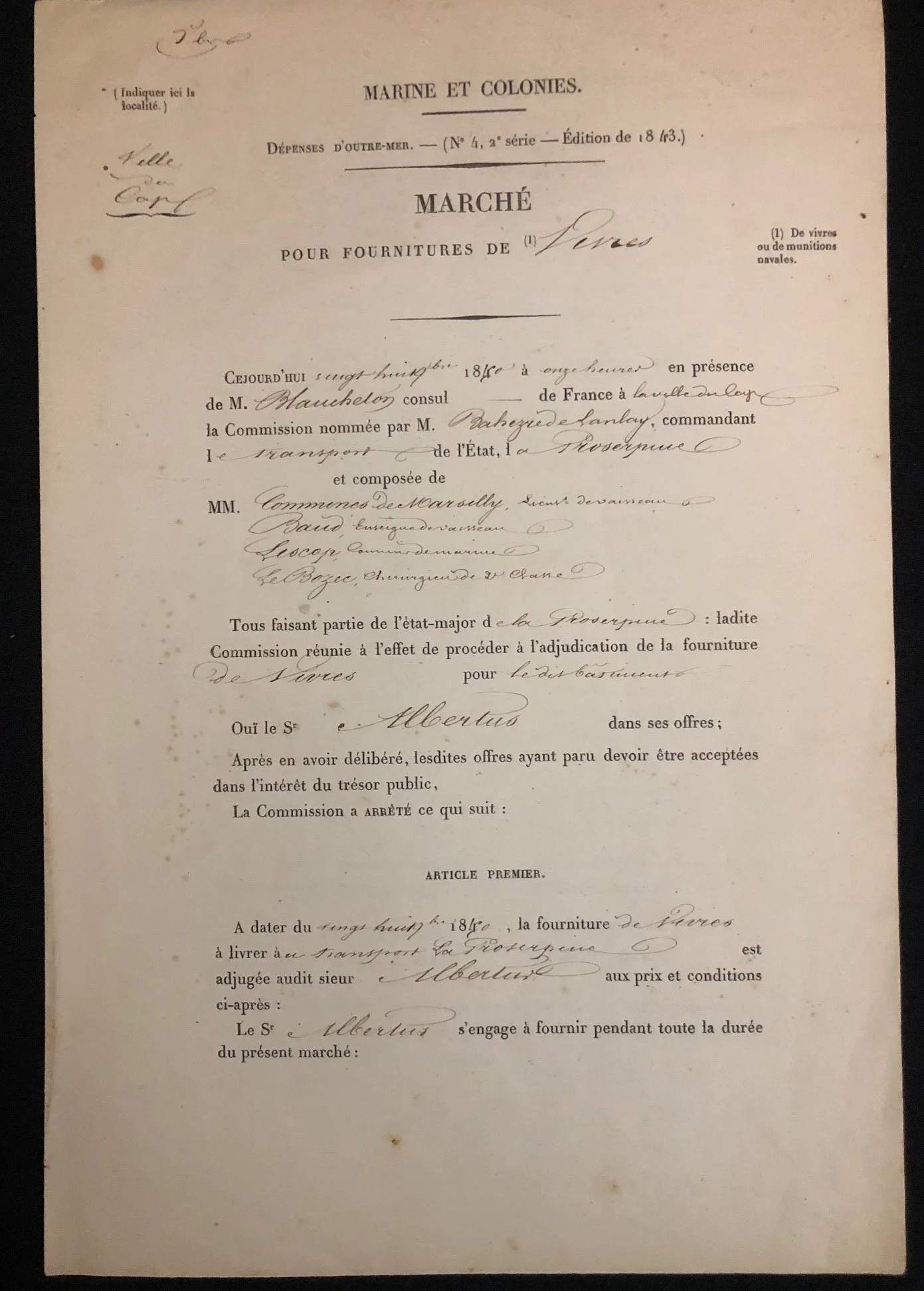
This is a fascinating 1850 maritime contract (Marché pour fournitures de vivres) issued by the French Ministry of the Marine and Colonies (Marine et Colonies).
What makes this document historically compelling is the specific intersection of French naval history, global geopolitics, and Cape history playing out right on the page.
The Local Context: "La Ville du Cap"
This contract is localized to "la ville du Cap" (Cape Town). It is dated November 28, 1850 (vingt-huit 9bre 1850).
During the mid-19th century, Cape Town was a vital, strategic refreshment station for European powers charting courses to the East or maintaining naval presence in the South Atlantic and Indian Oceans. Even though the Cape was under British rule at this time, foreign naval vessels regularly docked to provision. This contract shows the official bureaucratic machinery of the French state operating out of Cape Town to secure massive amounts of local supplies.
The Vessel: La Proserpine
The contract names the French state transport ship, La Proserpine, commanded by M. Bahezre de Lantay.
In the 1840s and 1850s, La Proserpine was a prominent French frigate/transport vessel that travelled extensive global circuits—moving between France, the Caribbean, South America, Reunion Island, and French positions in the Pacific (like Tahiti and New Caledonia). A stop at the Cape to refit and restock was essential for such gruelling, multi-month voyages.
The Local Contractor: "Albertus"
The contract is awarded to a gentleman named Albertus (noted multiple times). Given the Cape Town setting, this is almost certainly a member of the prominent Van der Byl or Myburgh networks, or a specific local merchant named Albertus (a very common Dutch/Afrikaans given name and surname in the Cape at the time) who specialized in ship chandling—a highly lucrative business in a busy port city.
A Deep Dive into Maritime Diet
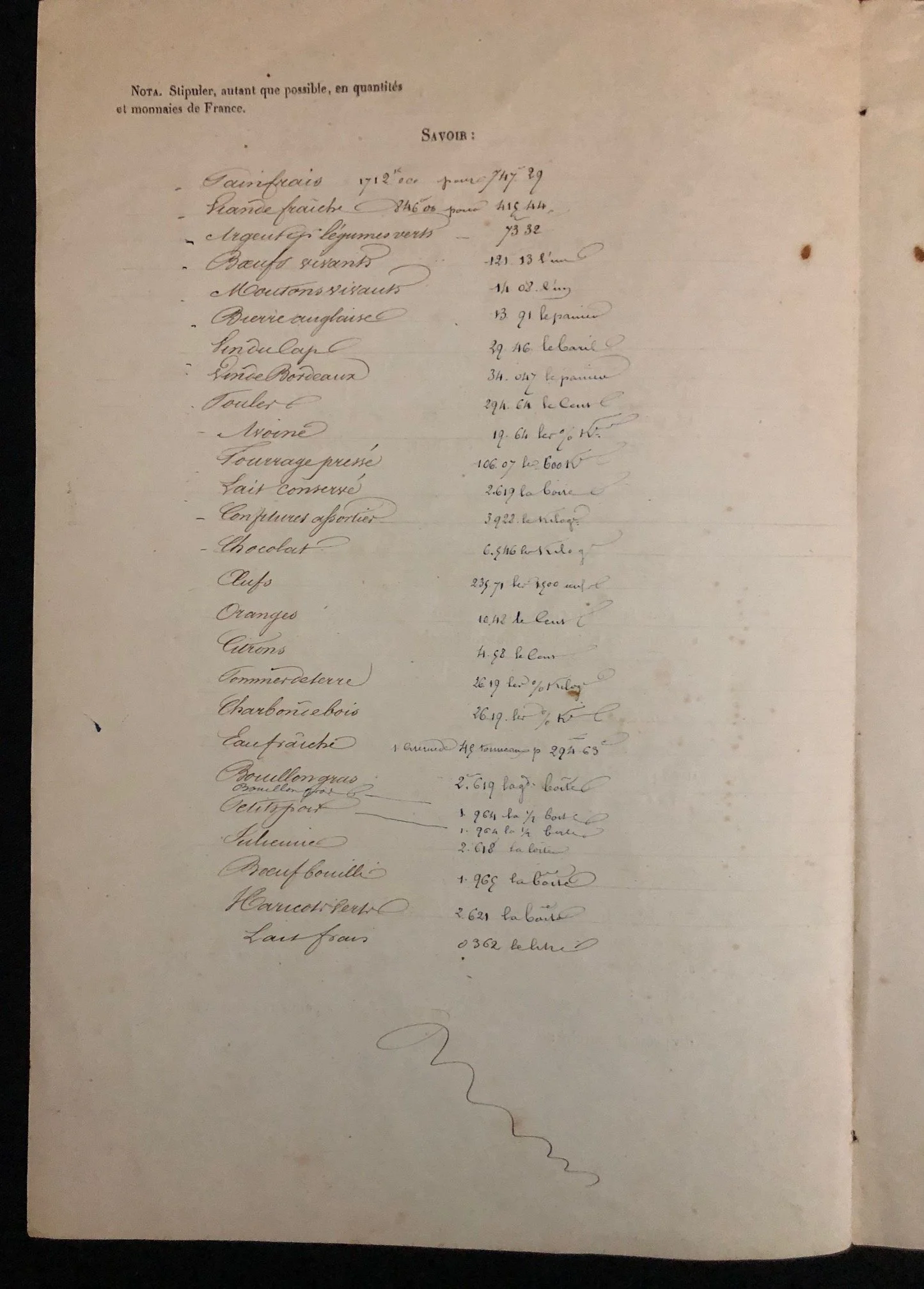
The ledger provides an incredible, granular look at what sustained a 19th-century naval crew. The French were notoriously particular about their provisions, ensuring their sailors maintained a remarkably "French" diet even in the southern hemisphere.
The shopping list includes:
Live Animals: Bœufs vivants (live oxen) and Moutons vivants (live sheep). Ships kept livestock on deck to ensure fresh meat could be slaughtered weekly during long ocean crossings.
Alcohol: Bière anglaise (English beer) and a significant quantity of Vin de Bordeaux (Bordeaux wine) and Vin du Cap (local Cape wine).
Fresh vs. Preserved: Pain frais (fresh bread) and Farine fraîche (fresh flour) alongside Lait conservé (preserved milk), Confitures assorties (assorted jams), and Chocolat (chocolate).
Anti-Scorbutics: Oranges and Citrons (lemons/limes)—absolutely vital for preventing scurvy on the next leg of La Proserpine's journey.
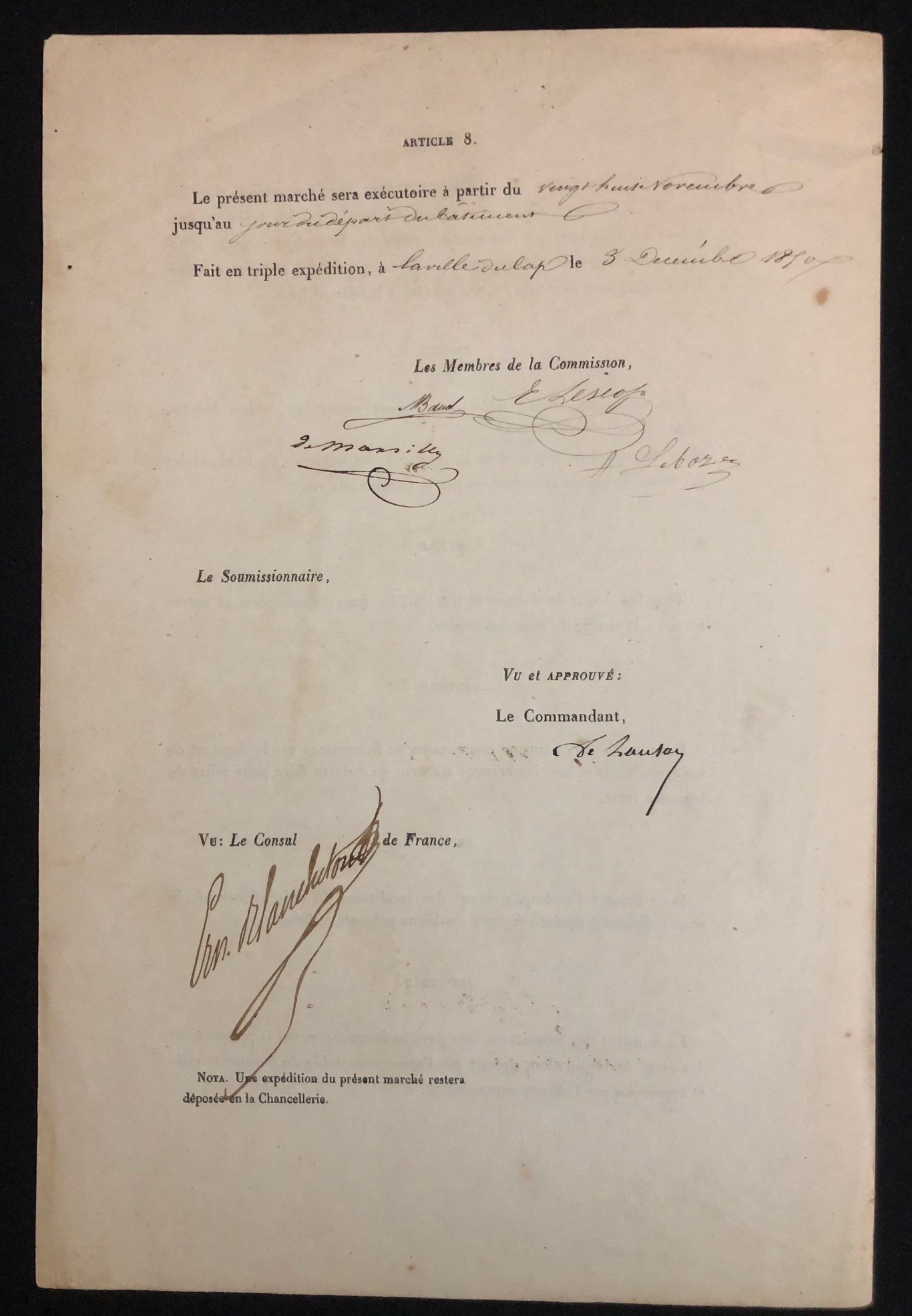
Official Validation
The final page features the official signatures of the ship's commission (including the surgeon, Le Bozec, ensuring the food quality meets health standards), the commander, and crucially, the Consul of France in Cape Town, M. Blancheton.
Ernest Blancheton was a well-known French diplomat and intellectual who served as the French consul in Cape Town during this era. He wrote extensively about the Cape Colony's resources and helped facilitate trade and diplomatic relations between the French Empire and the British Cape authorities.
4 pages. Minor wear and slight foxing.
210mm x 320mm
R3,500