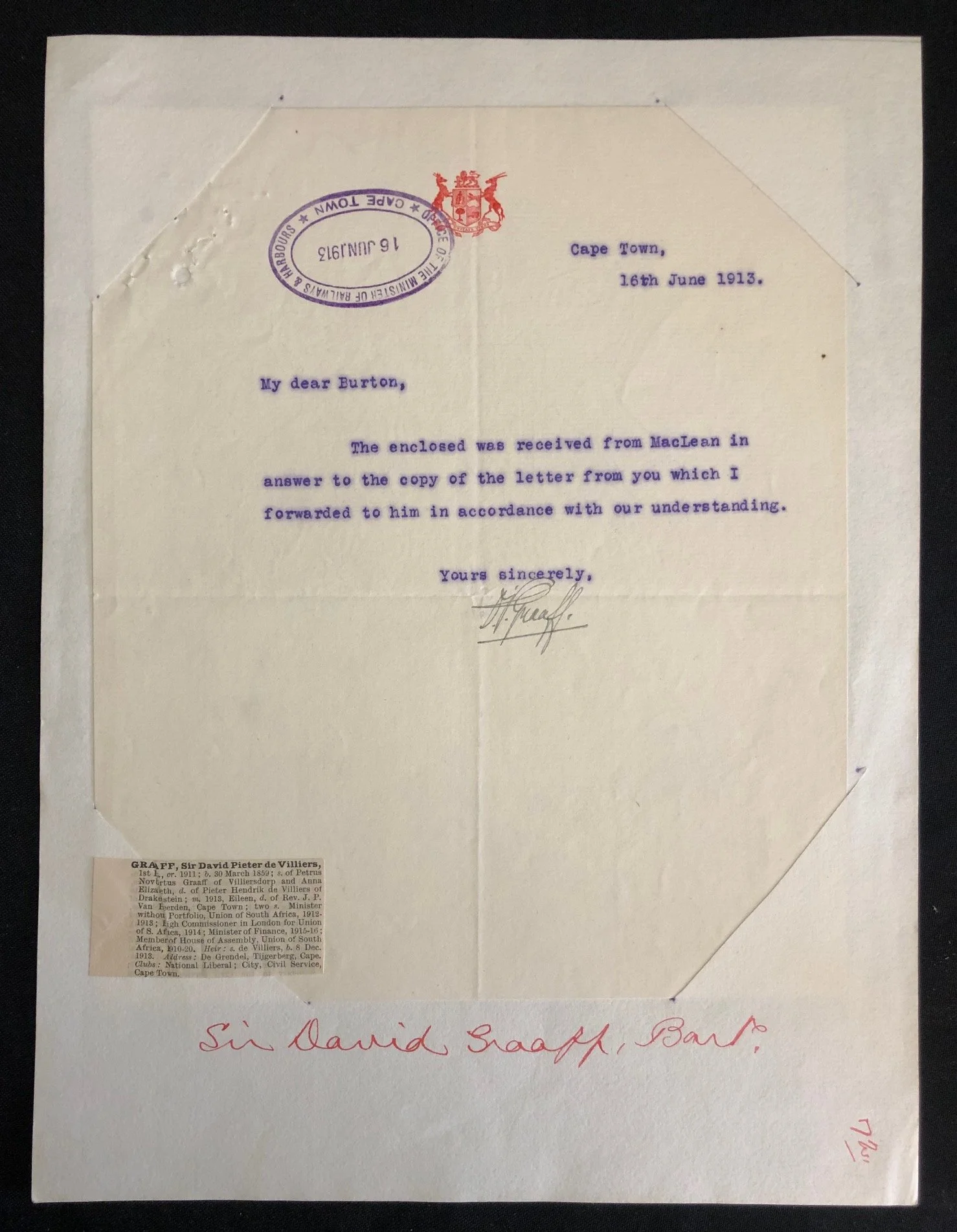
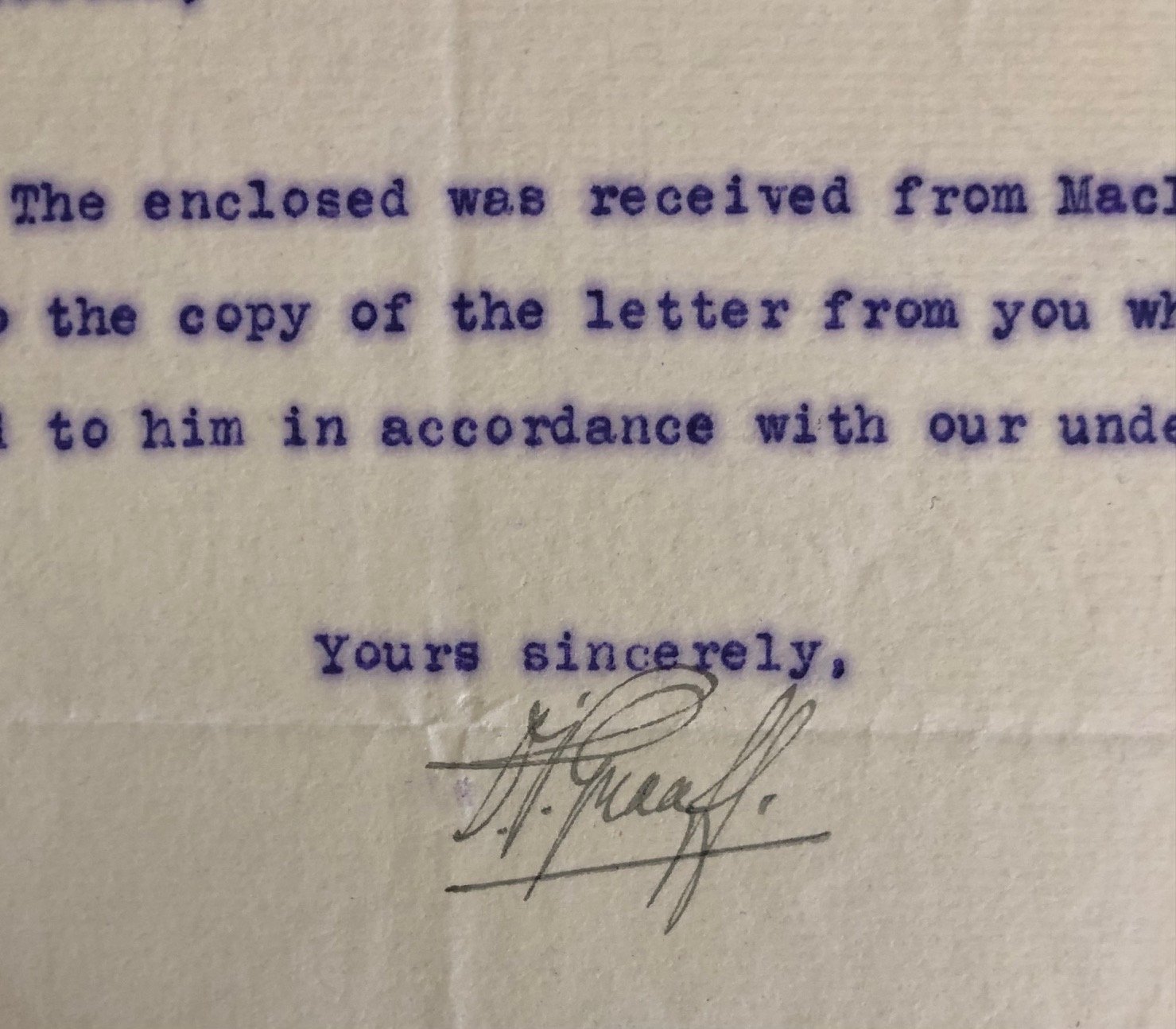
Letter signed by Sir David Pieter de Villiers Graaff, 1913 (Written during the white miners' strike)
Letter is from South Africa's first post-Union government.
Dated 16th June 1913, it captures the political networks and behind-the-scenes communication that shaped the young country just three years after its formation.
The Signee: One of South Africa's First Tycoons
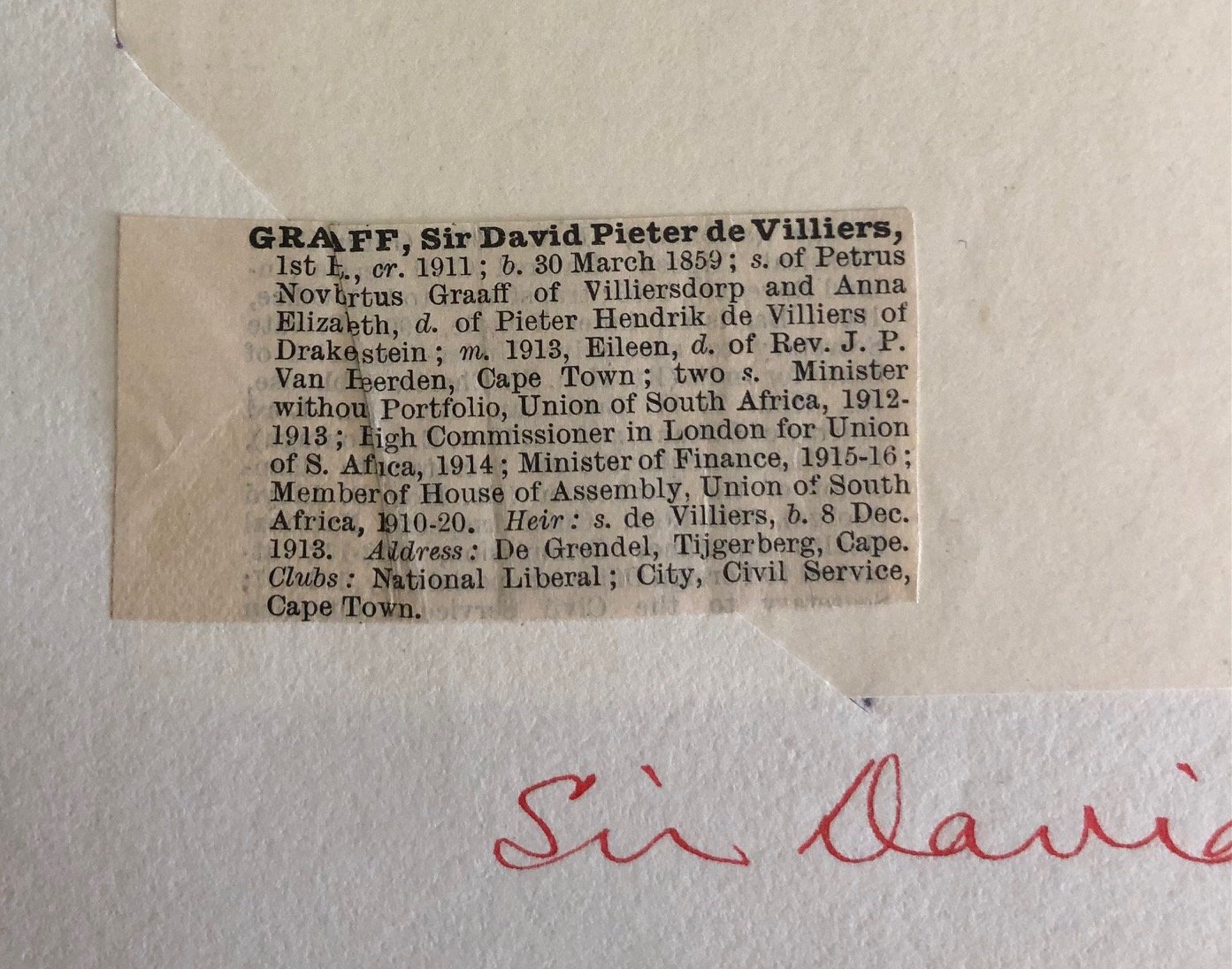
Signed by Sir David Pieter de Villiers Graaff. Graaff was an extraordinary figure in South African history. Raised in severe poverty, he went on to revolutionize the African cold storage industry with his company, Imperial Cold Storage, amassing a massive fortune.
By 1913, he was a close friend, confidant, and cabinet minister under South Africa's first Prime Minister, General Louis Botha. He was a key figure in the modernization of Cape Town—serving as its youngest mayor, donating the mayoral chain still used today, introducing electricity to the city, and later backing the construction of the Table Mountain Aerial Cableway.
The Recipient: "My dear Burton"
The recipient is Henry Burton, an advocate and influential Cape politician who served as the Minister of Railways and Harbours in Botha's initial cabinet.
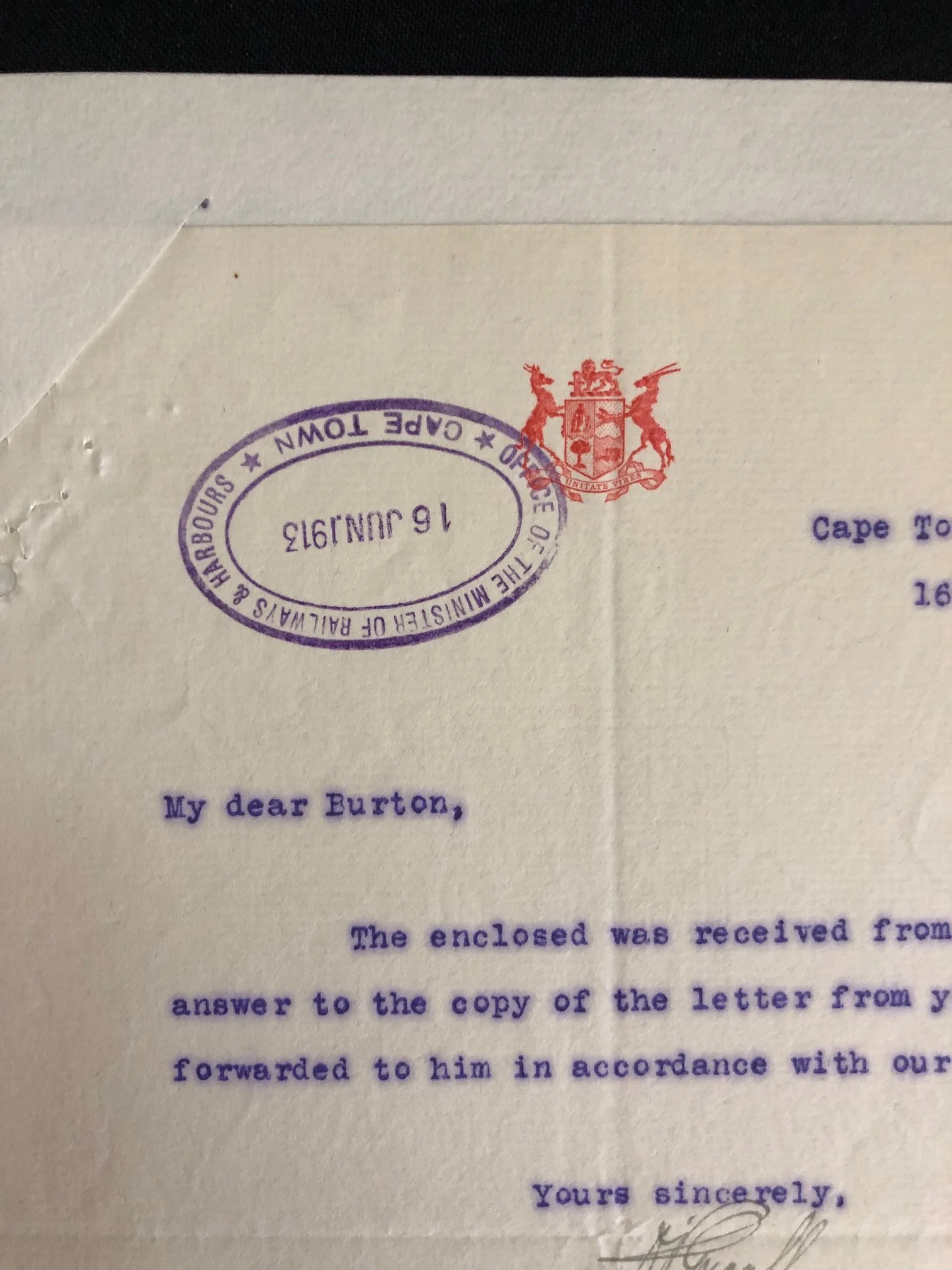
The letterhead itself is a fascinating historical detail: it bears the official red crest of the "Office of the Minister of Railways & Harbours" with a matching purple receiving stamp dated the exact same day, 16 Jun 1913. Graaff was writing directly to Burton, using Burton's own ministerial stationery or forwarding paperwork through his department, demonstrating the tight, informal communication style among early Union cabinet members.
A Hidden Crisis: The June 1913 Timeline
While the text of the letter seems routine—referencing a letter received from a "MacLean"—the date of June 16, 1913, places it right in the middle of a major national crisis.
Just weeks earlier, in late May 1913, a massive white miners' strike had broken out on the Witwatersrand, rapidly escalating into widespread industrial unrest that threatened to paralyze the young Union's economy.
Simultaneously, the government was pushing through the highly controversial Natives Land Act of 1913 (which was officially passed just days later on June 19, 1913), a piece of legislation that fundamentally altered land ownership and rights in South Africa.
As key ministers without portfolio and of railways, Graaff and Burton were deeply involved in handling the logistics, finances, and political fallout of these historic flashpoints. This letter represents the daily, quiet bureaucratic machinery moving behind the scenes while the country faced immense legislative and social upheaval.
Card: 225mm x 300mm (not laid down)
R800