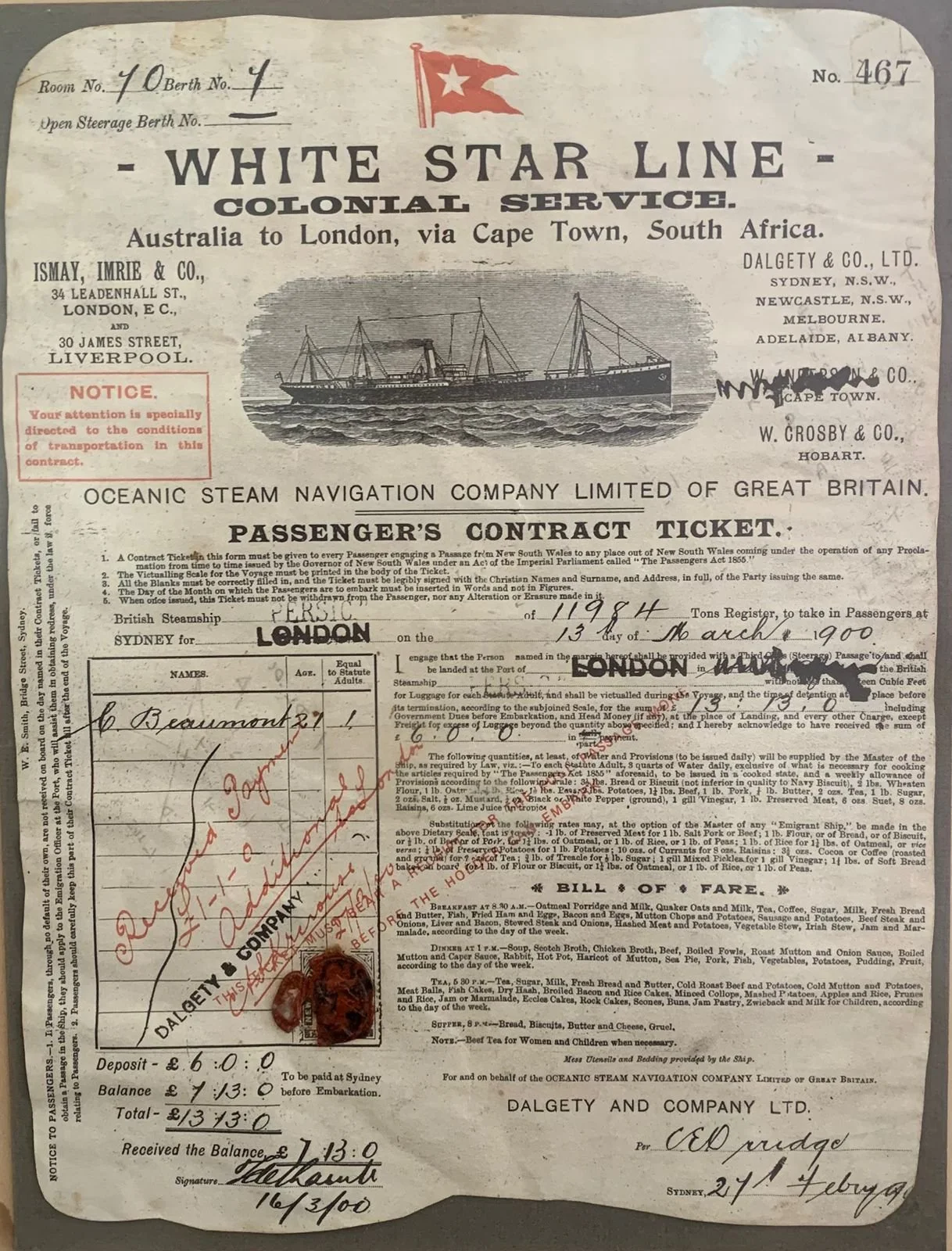
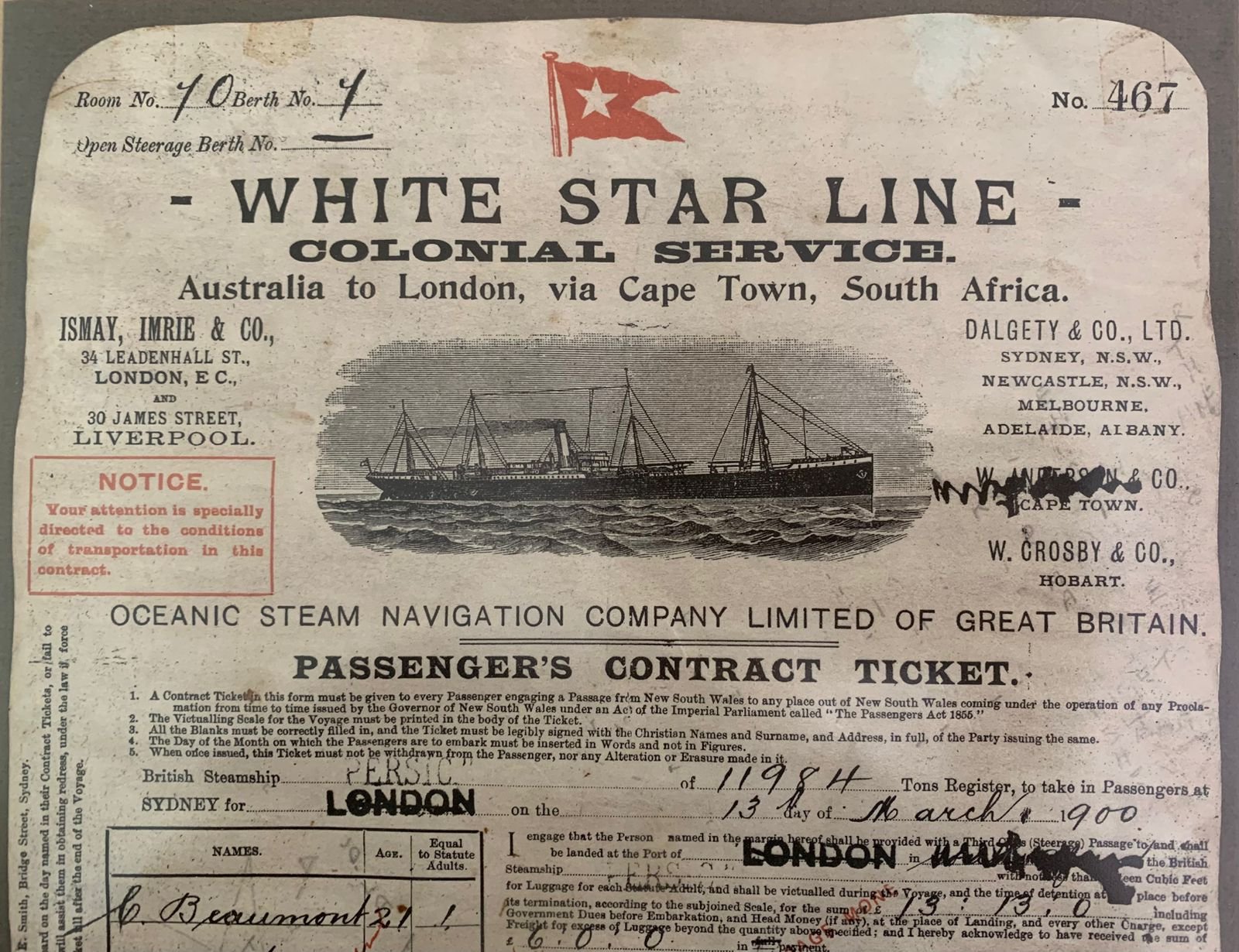
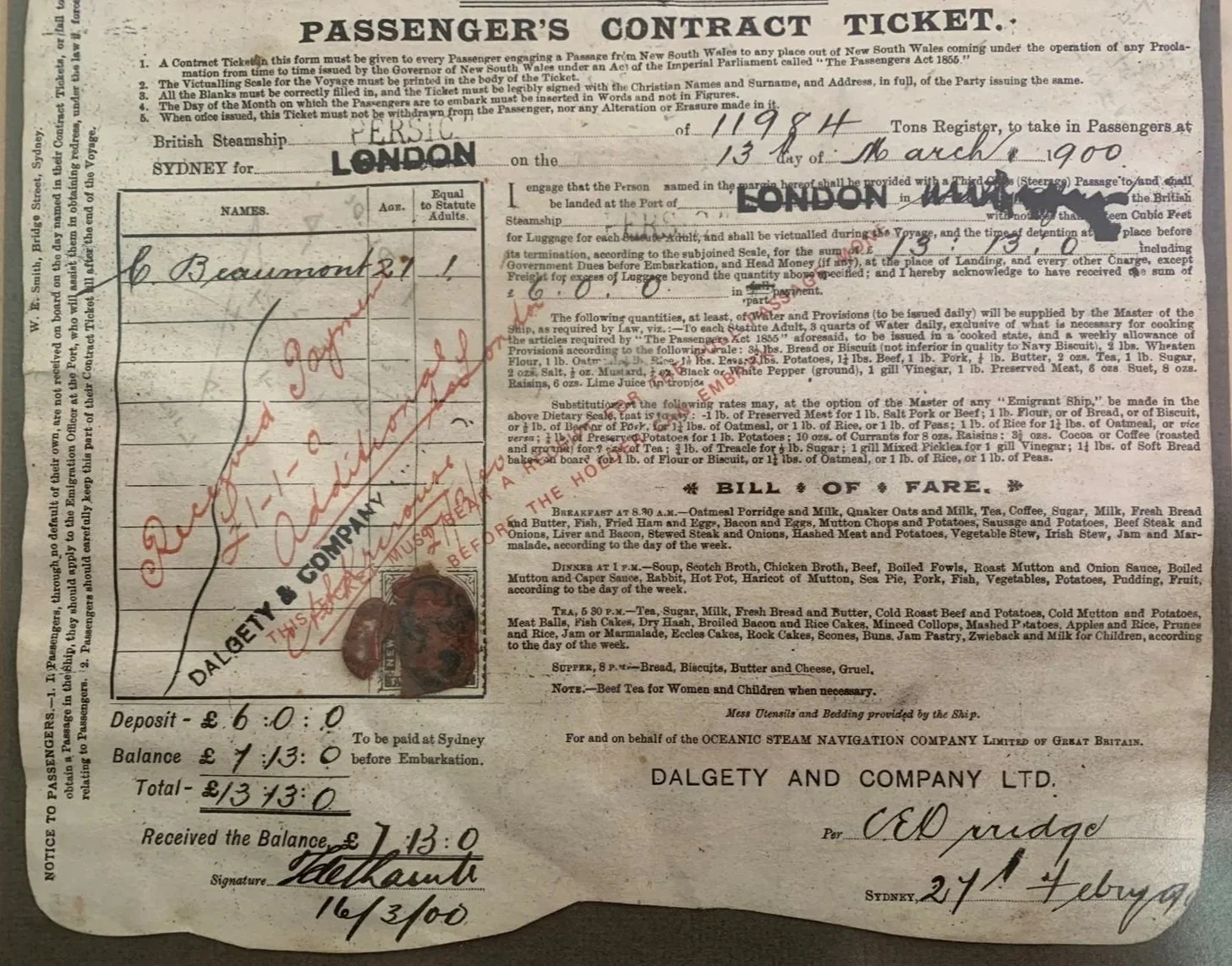
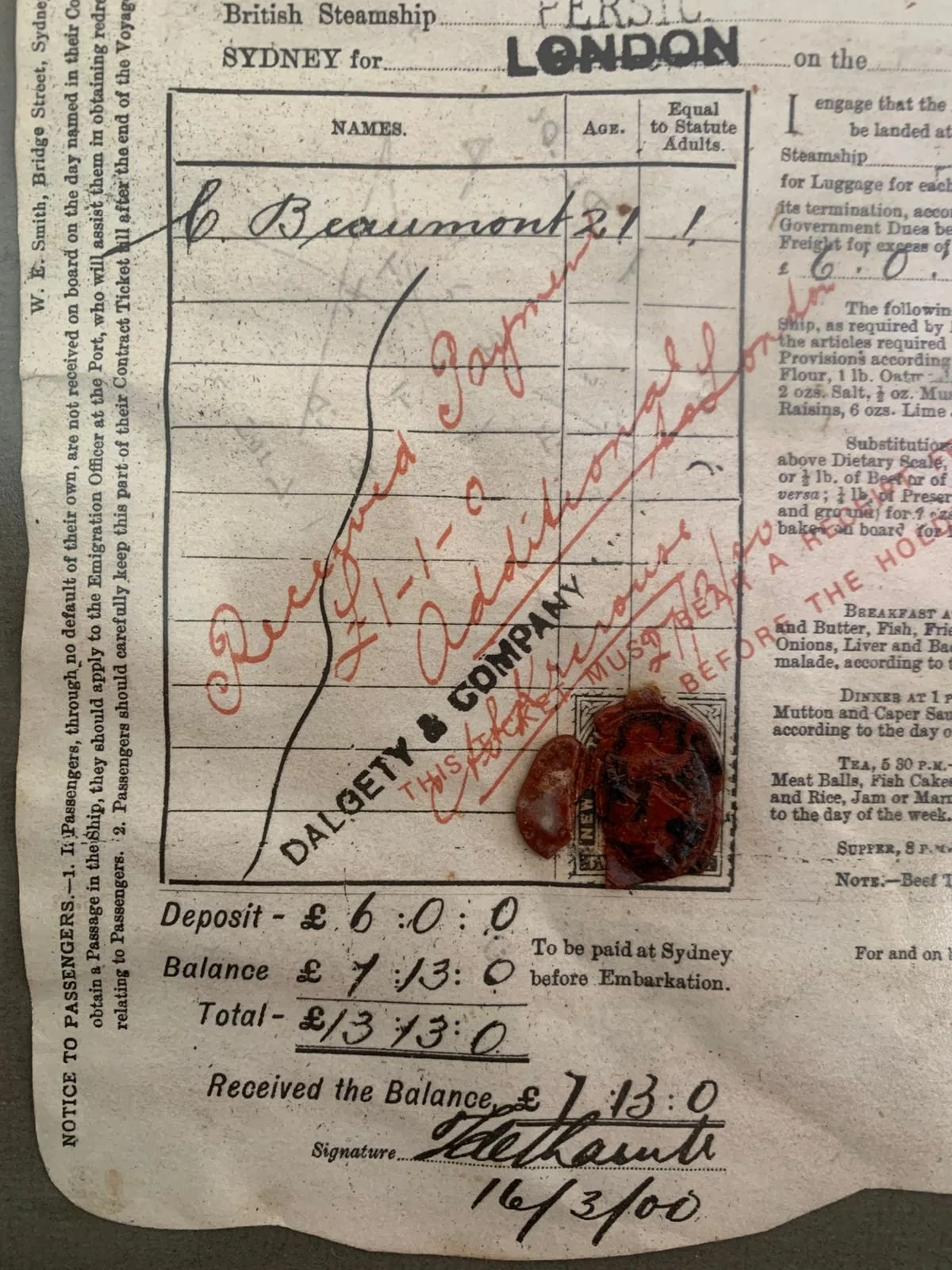
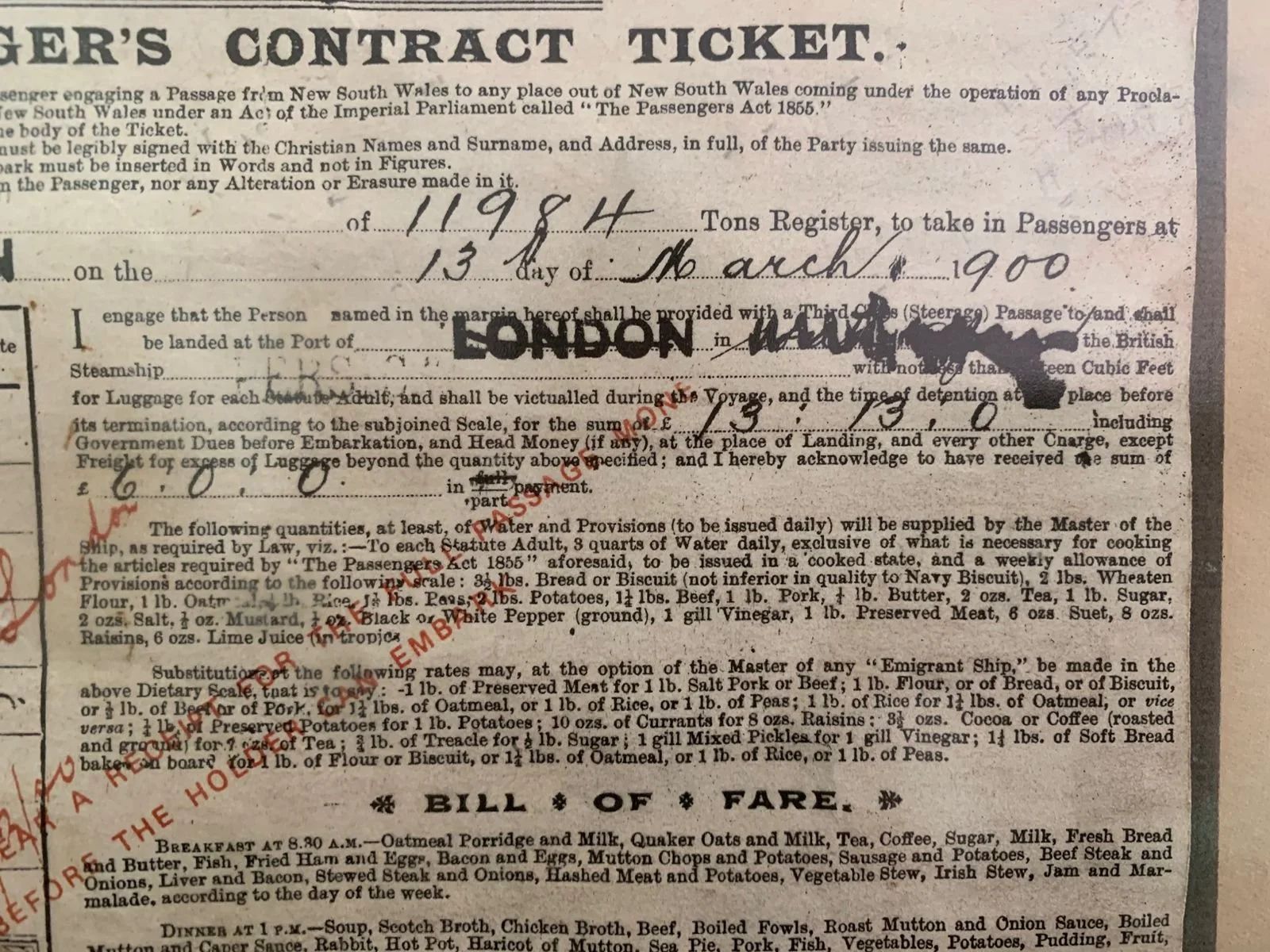
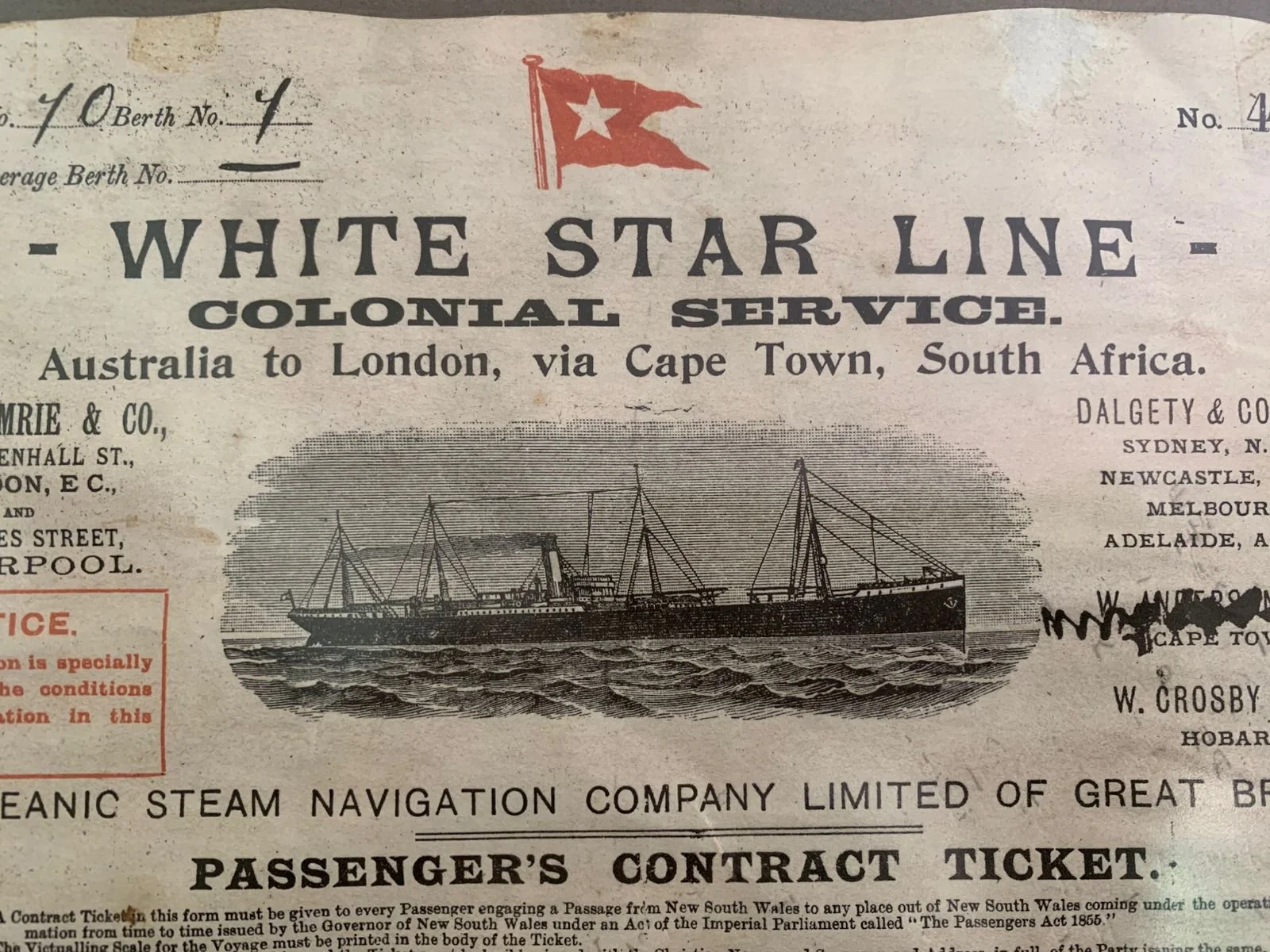
SS Persic White Star Line Passengers Contract Ticket (1900)
The SS Persic was a prominent ocean liner of the White Star Line, specifically designed for the grueling "Jubilee" service between Liverpool, Cape Town, and Sydney. Launched in 1899, it was one of five sister ships known as the Jubilee Class, built to provide reliable, high-capacity transport across the British Empire.
Built by the famed Harland & Wolff shipyard in Belfast (the same yard that later built the Titanic), the Persic was designed more for stability and cargo volume than for record-breaking speed.
The Persic had a long and varied career that spanned nearly three decades, touching on several major global conflicts.
The Boer War Service: On its maiden voyage in December 1899, the ship was immediately pressed into service related to the conflict in South Africa. It transported 500 British troops to Cape Town and later carried wounded soldiers and horses between Australia and South Africa.
World War I & The U-Boat Attack: During the First World War, it served as a troopship (designated HMAT A34). On September 12, 1918, while carrying 2,800 American troops, it was torpedoed by the German U-boat UB-87 near the Isles of Scilly. Despite a large hole in its hull, the ship remained afloat and "limped" back to port under its own power. Every soul on board survived.
Post-War Refit: In 1920, the ship was modernized to carry 260 Second Class passengers and returned to its primary route, often carrying Australian wool and fruit (including tens of thousands of cases of Tasmanian apples) back to London.
By the mid-1920s, the Persic began to show its age. During a refit in 1926, engineers discovered significant wear in its engines. Given the ship was 27 years old, the White Star Line determined that the cost of repairs was not economically feasible. She made her final voyage to Australia in September 1926 and was sold for scrap in July 1927.
The "Jubilee" Sisters:
The Persic belonged to a class of ships named after the Diamond Jubilee of Queen Victoria. Its sisters included the Afric, Medic, Suevic, and Runic. They were recognizable by their single funnel and four masts, a classic silhouette of the late Victorian maritime era.
Cropped at the edges.
Laid down.
235mm x 307mm (size of grey card)
R750