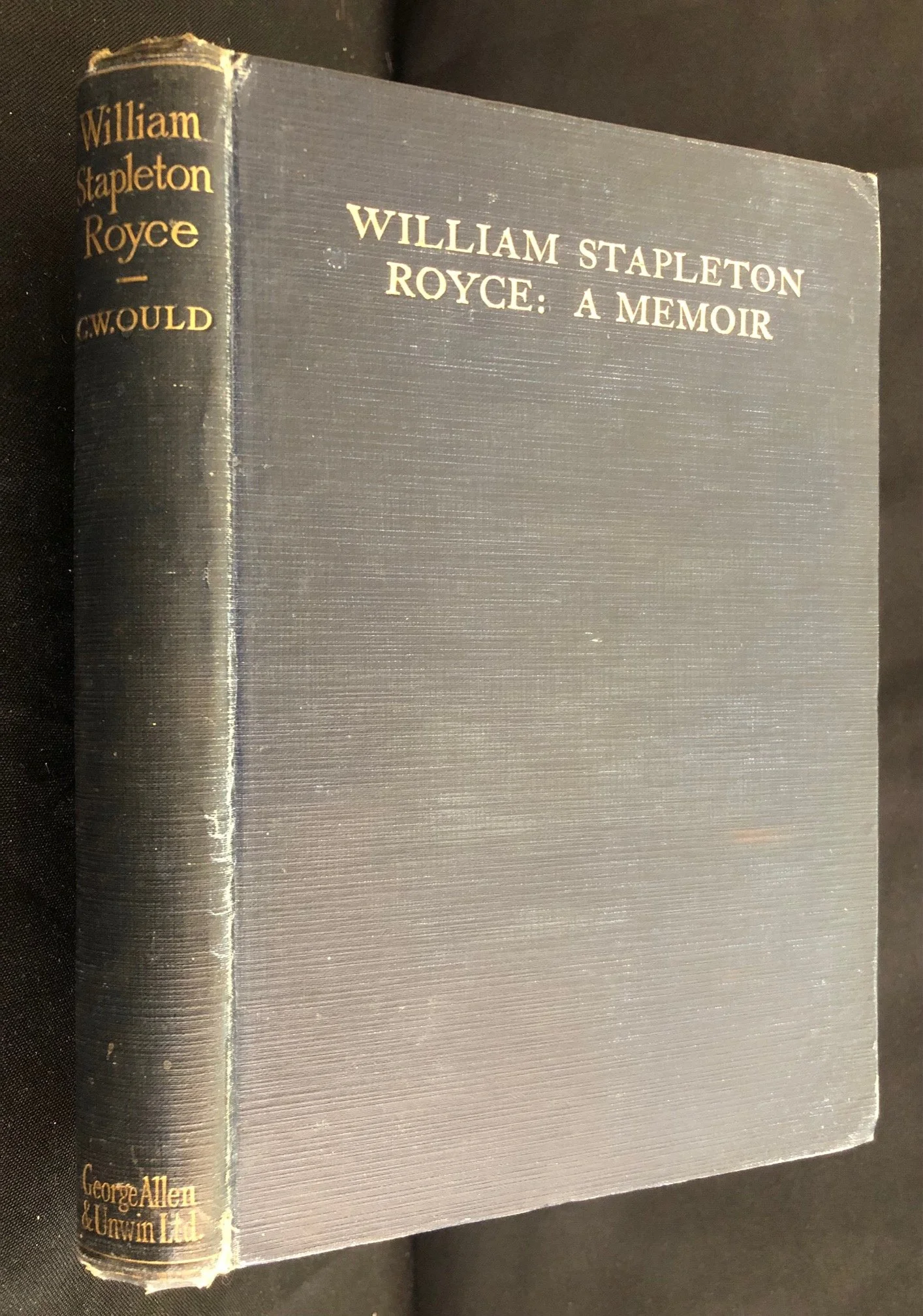
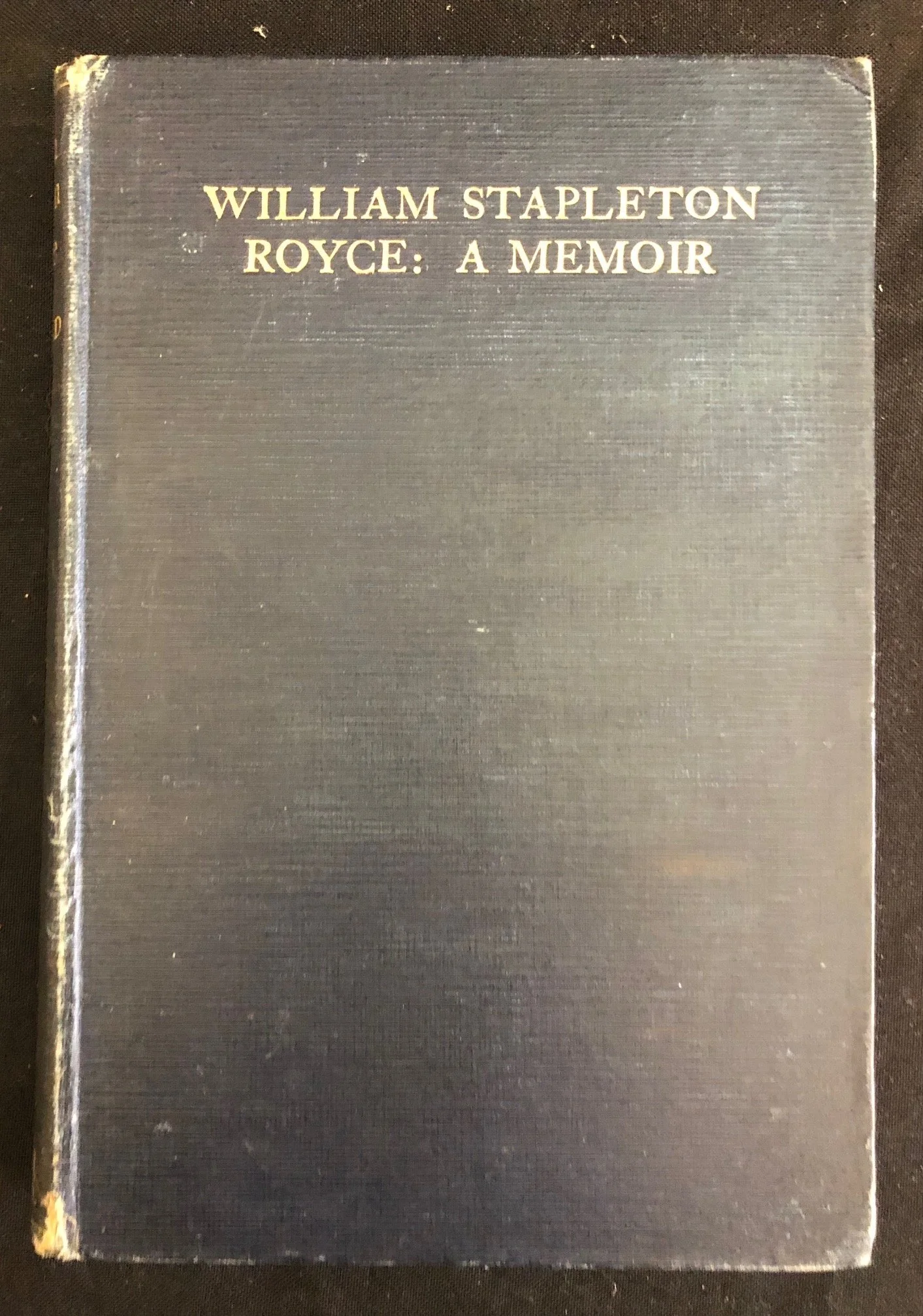
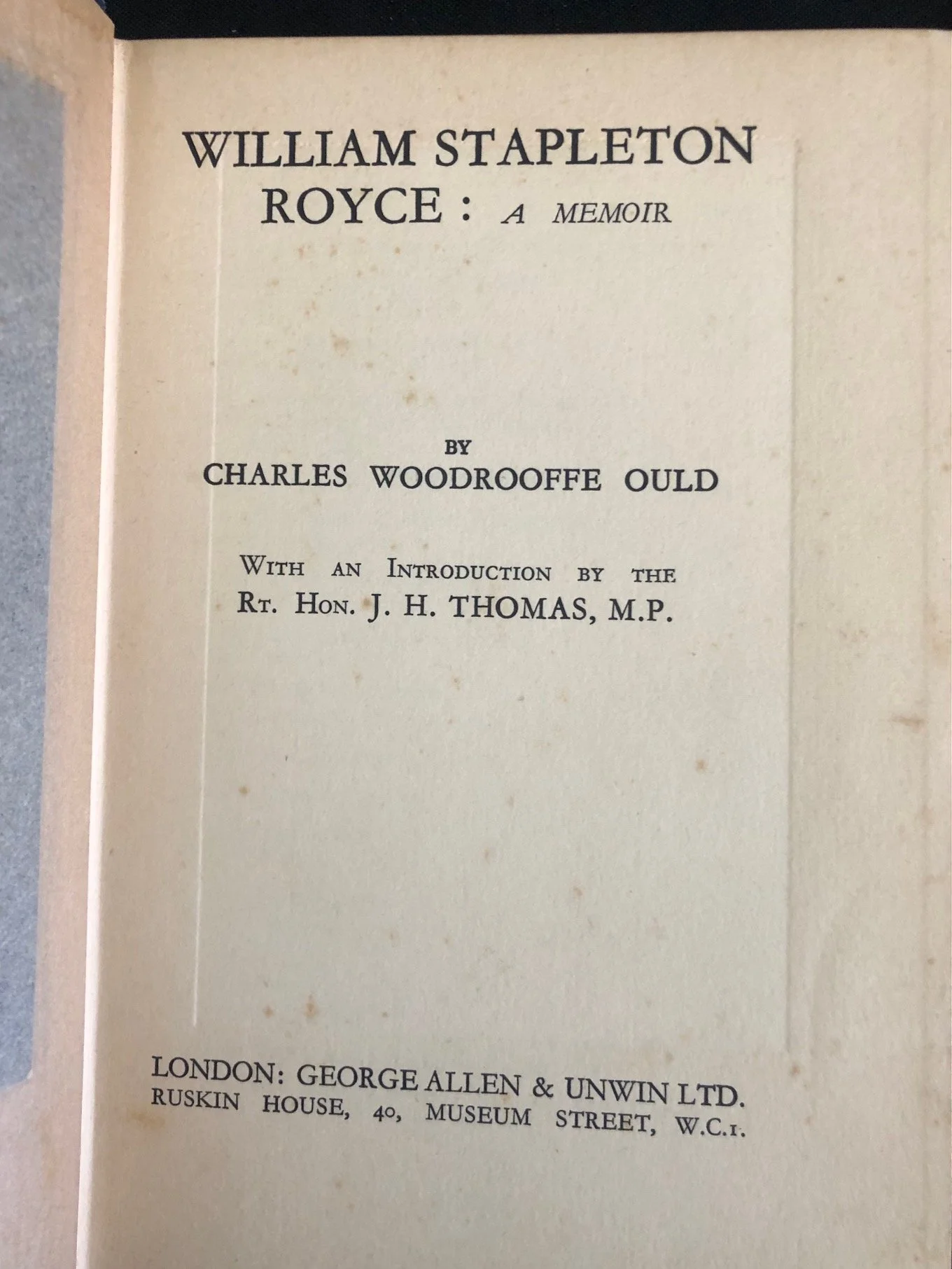
William Stapleton Royce: A Memoir, written by Charles Woodrooffe Ould (1925)
Published by George Allen & Unwin Ltd in 1925.
Behind this standard biographical title page lies an extraordinary, overlooked cross-continental connection between South Africa and British political history.
From Running Away to Building the South African Railways
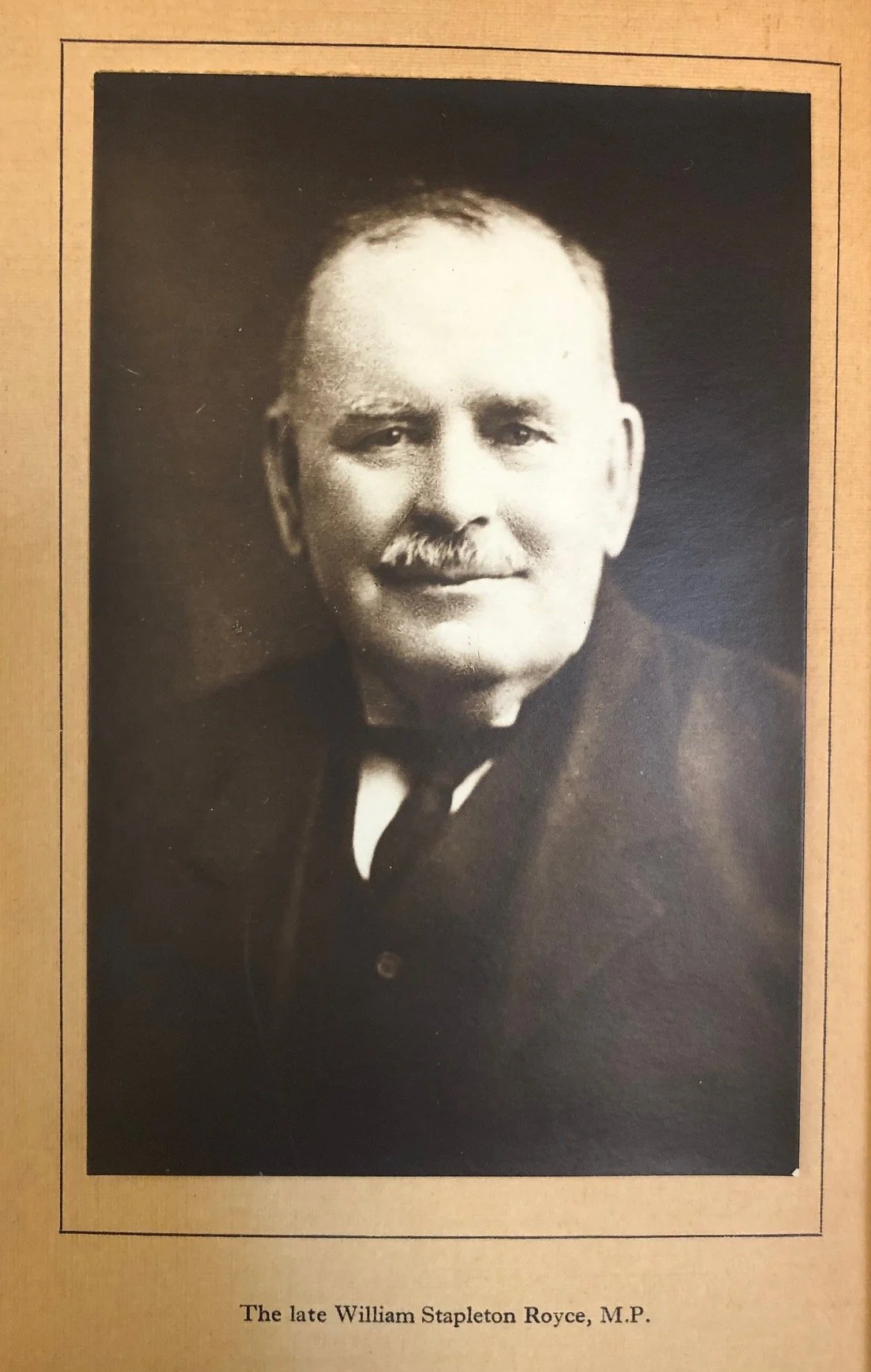
William Stapleton Royce (1858–1924), was born into humble beginnings in Lincolnshire, England. After running away from a joiner's apprenticeship to London, he accepted a free passage to the Cape Colony offered by the Cape Town government, which desperately needed laborers to expand its infrastructure.
Over the next thirty years, Royce transformed from a penniless immigrant carpenter into a vastly wealthy engineering contractor. He became a titan of South African infrastructure, heavily engaged in:
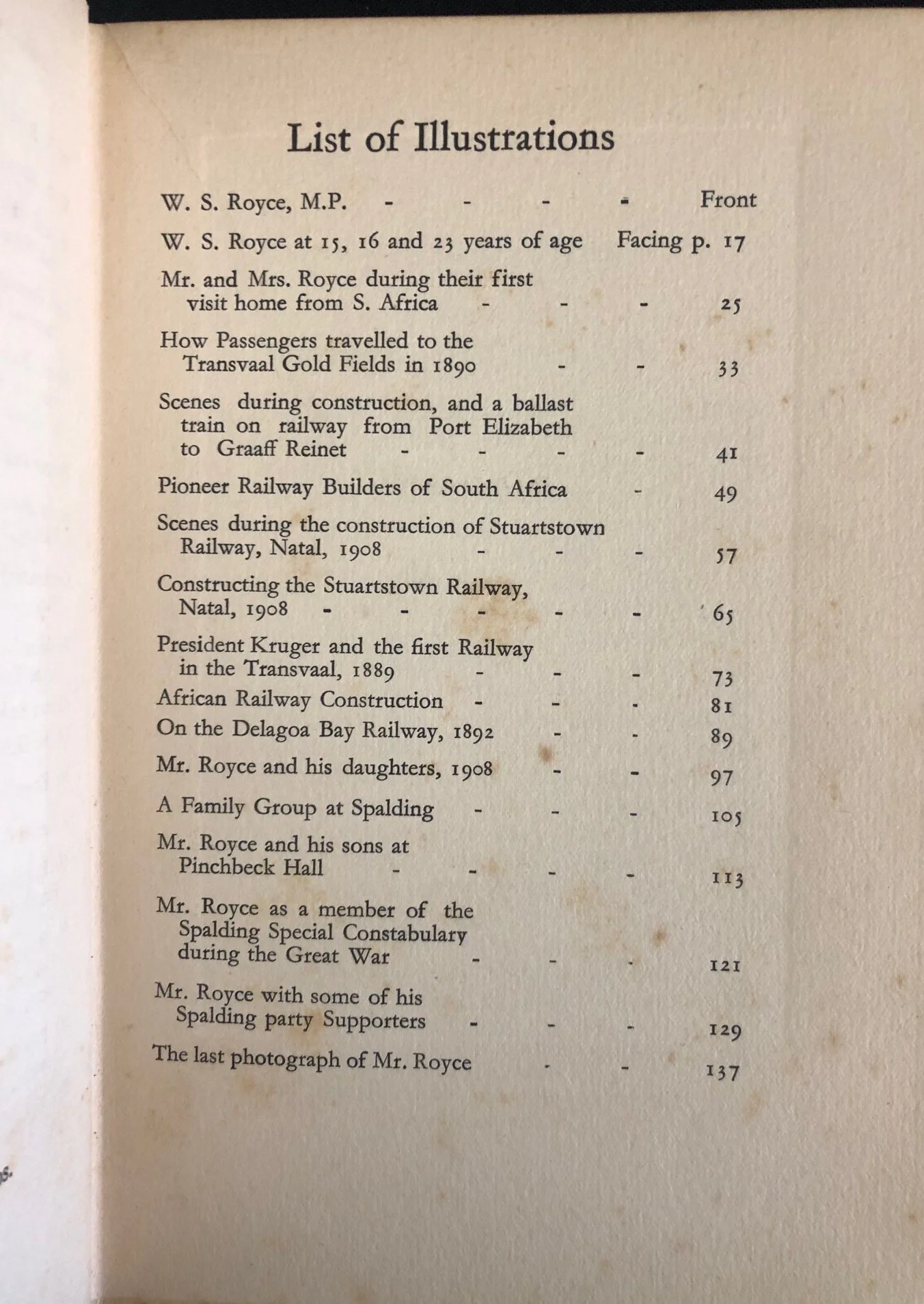
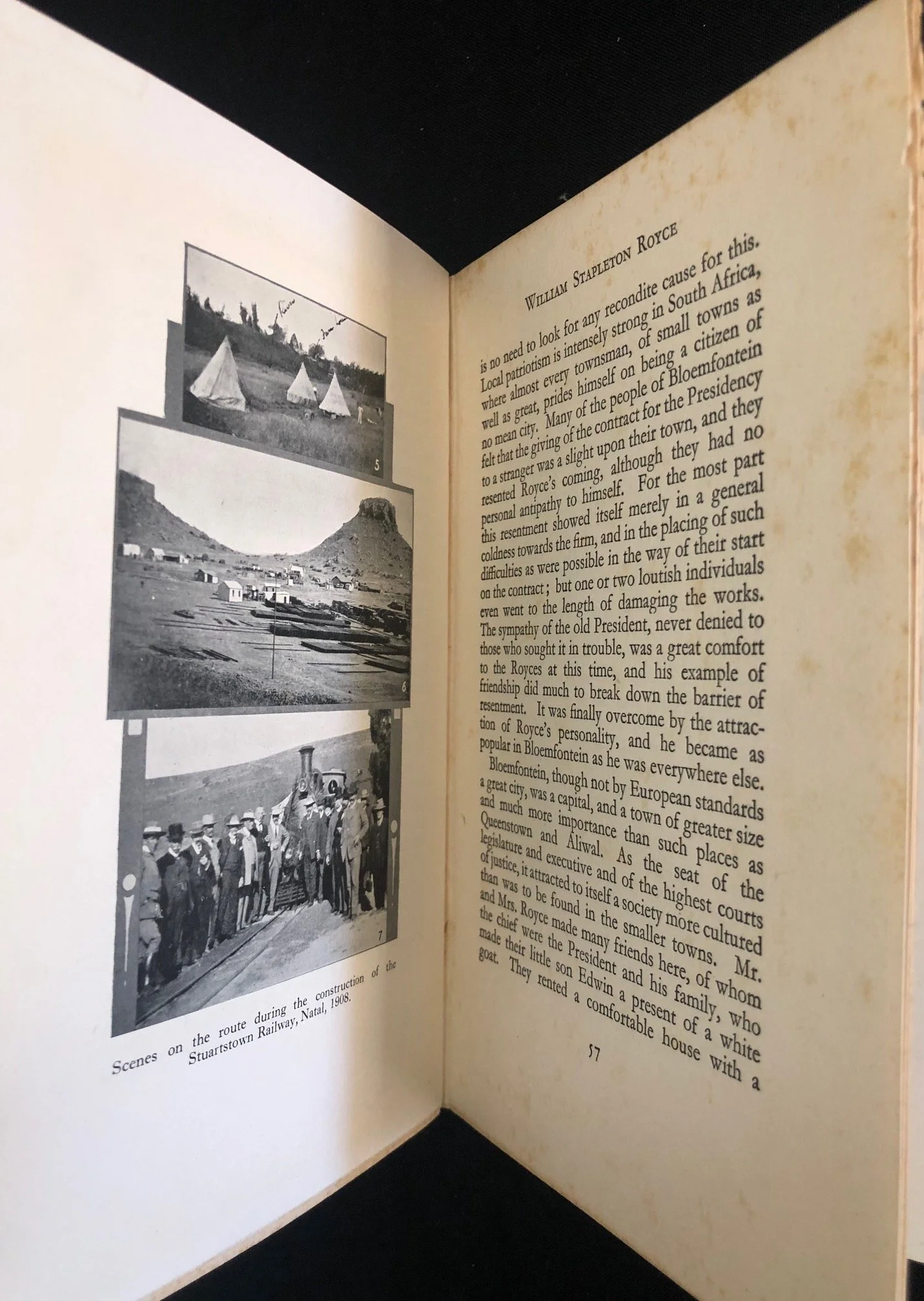
Constructing several major South African railway lines.
Serving as a principal contractor for the Houses of Parliament in Cape Town.
Overseeing the construction of the historic Kruger Bridge over the Vaal River (opened by President Paul Kruger in 1891).
A Fascination with the Cape Followed Him Home
When Royce made his fortune and returned to England in 1910, he bought a grand Georgian mansion called Pinchbeck Hall. His deep ties to South Africa heavily influenced the estate:
He added a grand entrance hall featuring a stained-glass front door that bore the motto "All will come right" written in Afrikaans (a nod to the famous phrase by Orange Free State President Johannes Brand).
He built an architectural tower onto the mansion explicitly styled after an African watchtower.
A Dramatic Political Turn and Tragic End
Politically, Royce was a chameleon. Upon returning to England, he initially ran for Parliament as a Conservative candidate and lost. Realizing the political tides, he crossed the floor entirely to join the Labour Party during a highly turbulent era. He successfully won the Holland-with-Boston seat in 1918, holding it until his death.
The ultimate tragedy of his life occurred just as he reached a new pinnacle. In June 1924, he was offered the prestigious position of Governor of Tasmania and accepted. However, before he could be officially appointed or set sail, he suffered a sudden, fatal heart attack while riding a London omnibus near Russell Square.
The South African Author
The biographer Charles Woodrooffe Ould, adds an extra layer of regional history. Born and educated in Grahamstown (Makhanda) in the Eastern Cape, Ould worked as a journalist before relocating to England. He was also a poet whose work often reflected a deep, vivid heimwee (homesickness) for the harsh, fiery reds and bright landscapes of the South African veld compared to the pale, manicured lawns of England.
145mm x 205mm
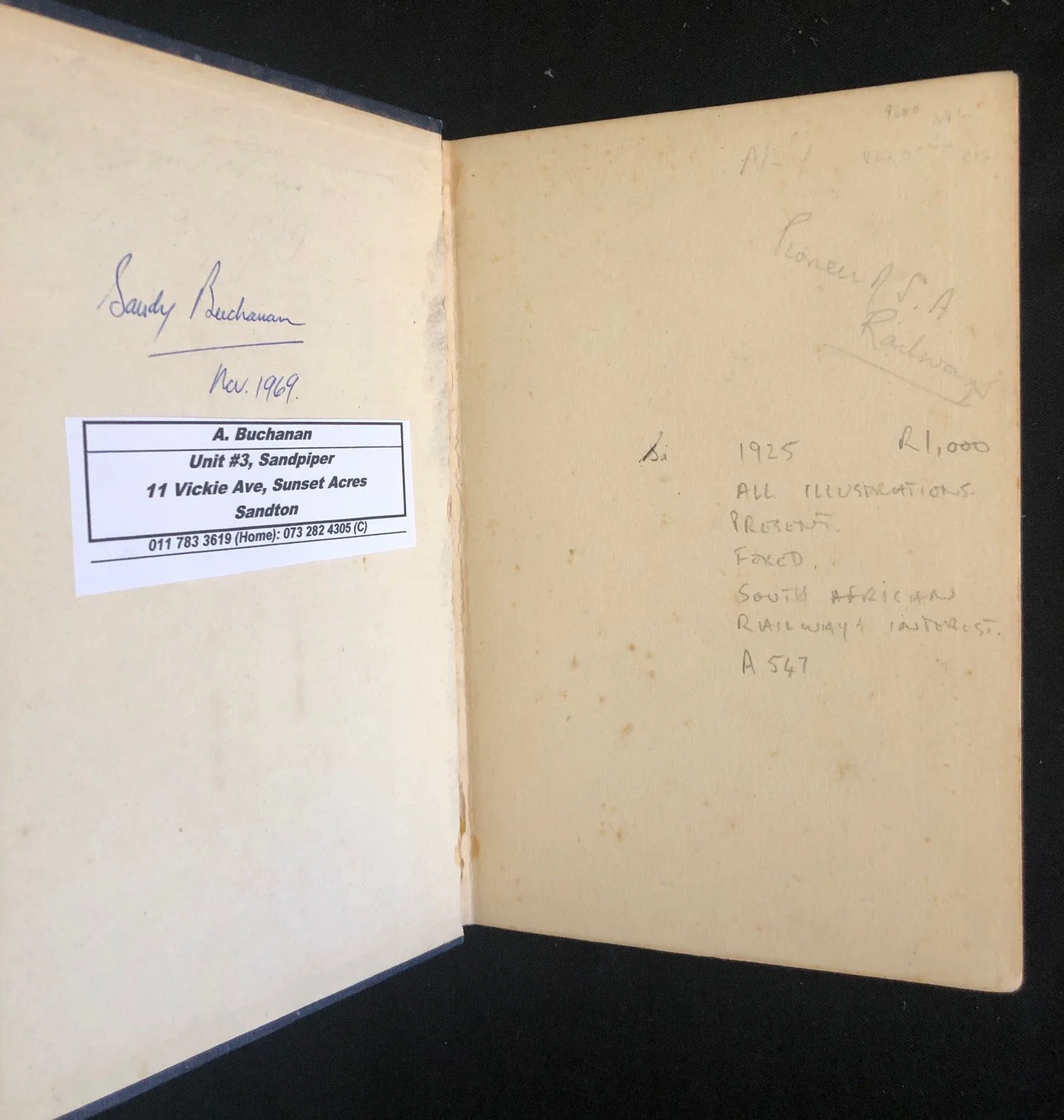
Binding worn; prelims foxed. Complete.
R1,000