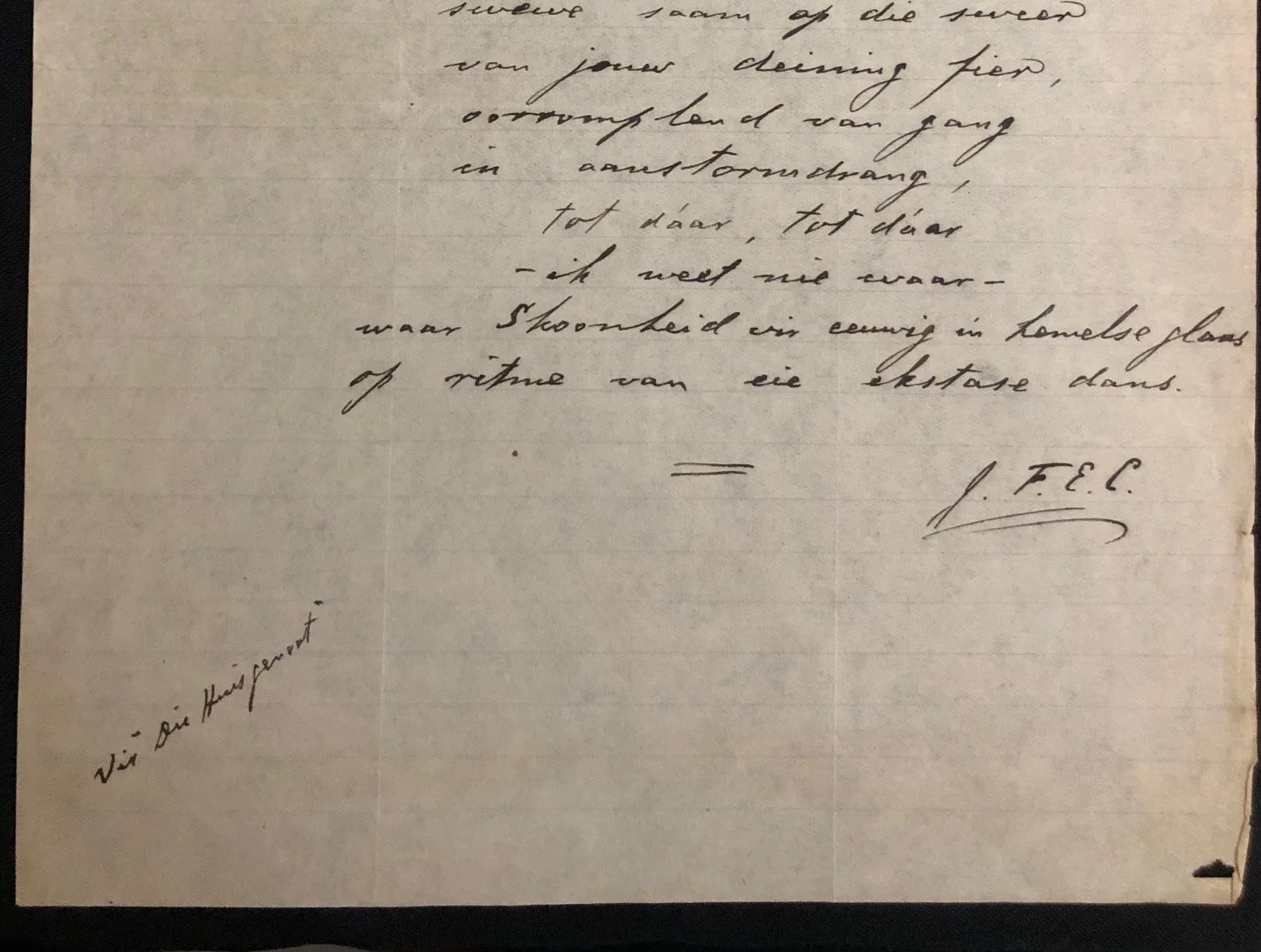
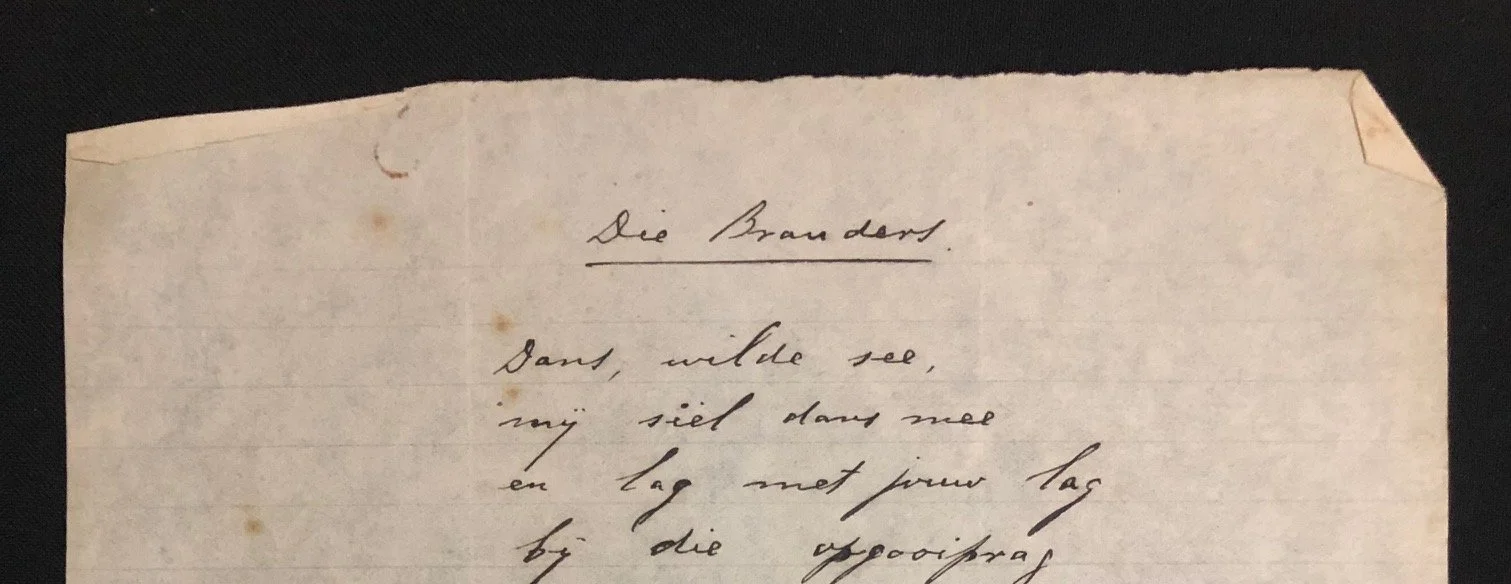
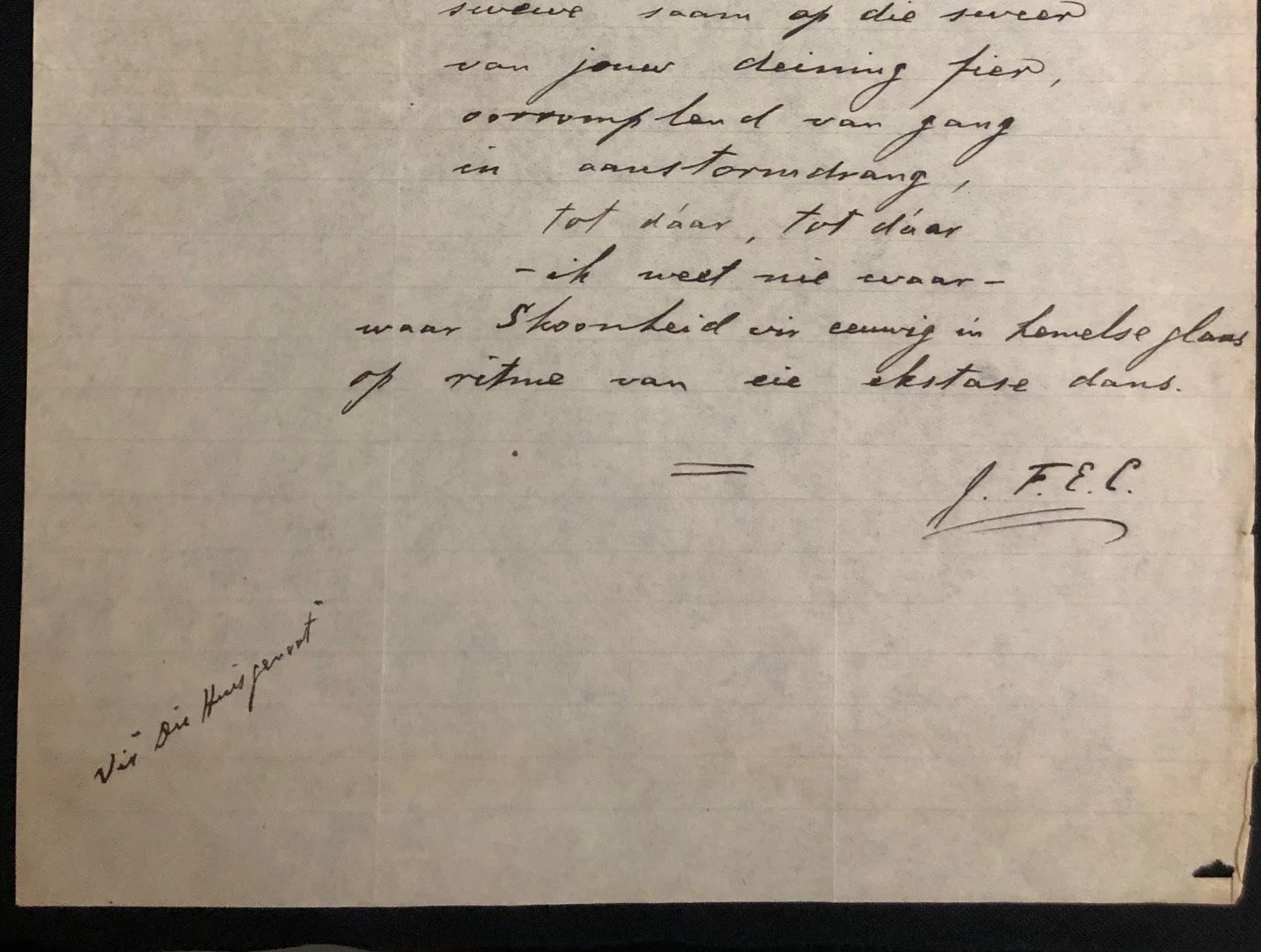
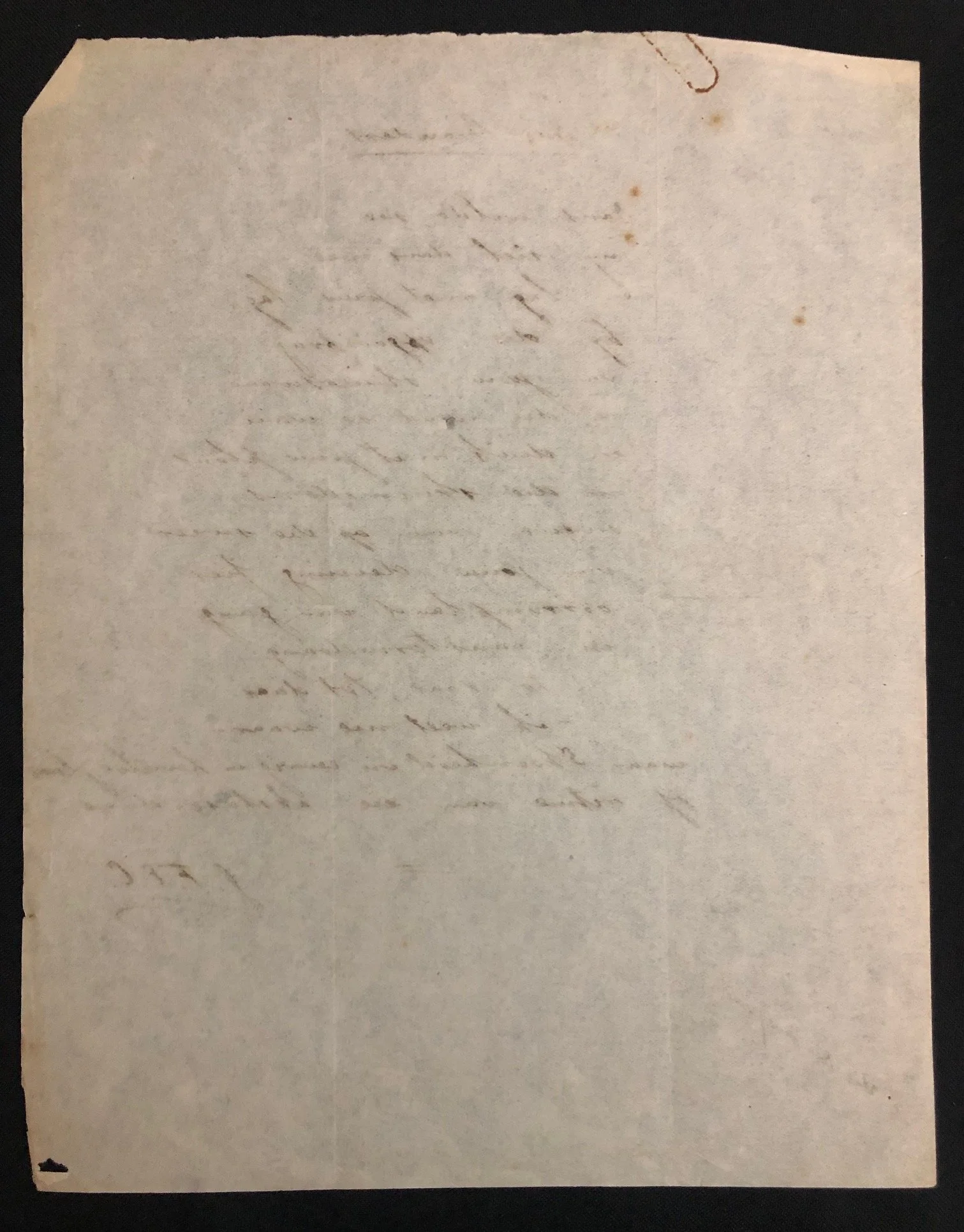
Manuscript draft of the poem ‘Die Branders’ (The Waves), by Jan F.E. Celliers (c.1920)
This manuscript is a fascinating piece of literary history. It is an original, handwritten draft of the poem Die Branders (The Waves), signed with the initials J.F.E.C. by Jan F.E. Celliers (1865–1940), one of the foundational figures of Afrikaans poetry.
A Pillar of the Eerste Geslag (First Generation)
Jan F.E. Celliers was a giant of the Tweede Afrikaanse Taalbeweging (Second Afrikaans Language Movement). Alongside contemporary poets like Totius and C. Louis Leipoldt, Celliers elevated Afrikaans from a spoken vernacular into a respected literary language. Finding a raw, handwritten draft like the one offers a rare window into the early creative process that shaped modern Afrikaans literature.
The "Vir die Huisgenoot" Note
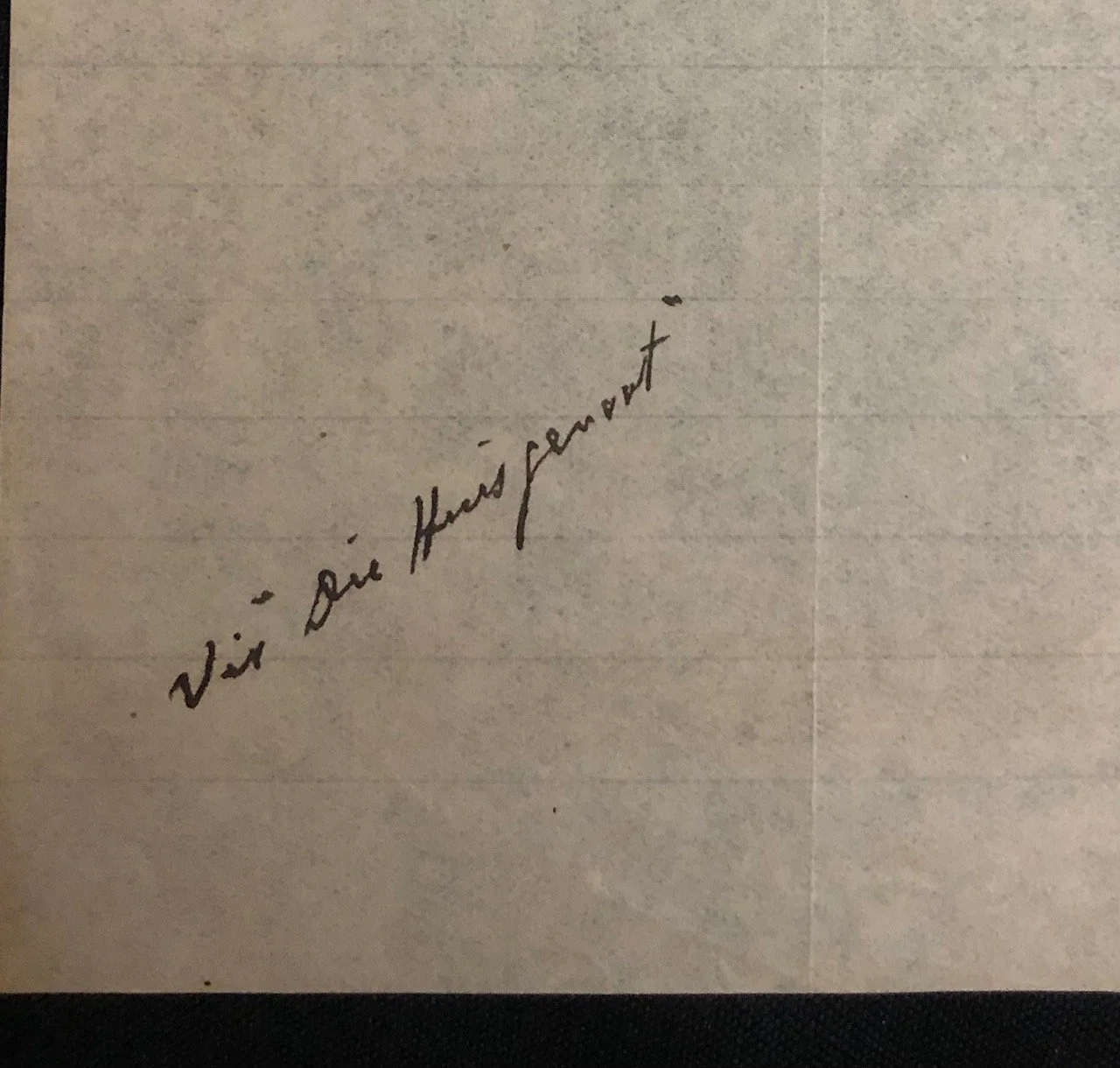
In the bottom-left corner of the page, there is a handwritten notation: "Vir die Huisgenoot" (For Die Huisgenoot).
Founded in 1916, Die Huisgenoot was not just a popular weekly magazine; during the early-to-mid 20th century, it was a massive cultural vehicle that actively funded, published, and promoted early Afrikaans writers and poets.
This inscription indicates that this specific manuscript page was the actual submission copy sent to the editor for publication.
A Linguistic Shift in Real Time
The orthography and vocabulary reveals the language in a state of transition. Celliers writes with classical Dutch-influenced phonetic elements and formal structures typical of the early 1900s (such as the use of the double hyphen/dash styling and older spelling variants like "ik" instead of the modern "ek", though it's worth noting he uses both "my" and "ik" here). It captures the deliberate molding of Afrikaans rhythm, moving away from rigid Dutch syntax to embrace a more fluid, local cadence.
Rhythmic Modernism: Dans, wilde see!
While Celliers is most famously remembered for his poignant Anglo-Boer War poetry (like Dis Al) or pastoral praises of the veld, Die Branders shows his fascination with the raw, untamed elements of nature. The opening line—"Dans, wilde see, / mÿ siel dans mee" (Dance, wild sea, / my soul dances with you)—is highly expressive and experimental for its era. It trades stiff, formal metrics for an almost musical, proto-modernist free flow meant to mimic the crashing, surging, and ebbing of ocean waves.
It's a beautiful, evocative archival specimen that captures the intersection of early 20th-century mass media (Die Huisgenoot) and the deliberate forging of an indigenous literary identity.
Provenance: Out of the collection of Professor Johannes Jacobus "Jan" Smith (5 October 1883 − 18 June 1949). J.J. Smith was a leading figure in the Afrikaans language movement and the compiler of the first standard Afrikaans dictionary. He was an important member of the committee which first attempted to standardize Afrikaans spelling, and was made the founding editor of Die Huisgenoot, the family magazine of the Nasionale Pers, in which early Afrikaans literature was discussed. He was a professor of languages at Stellenbosch University from 1919 until his retirement in 1945.
200mm x 260mm
Manuscript poem in the hand of Jan Celliers. Creased; offsetting; some foxing.
R15,000