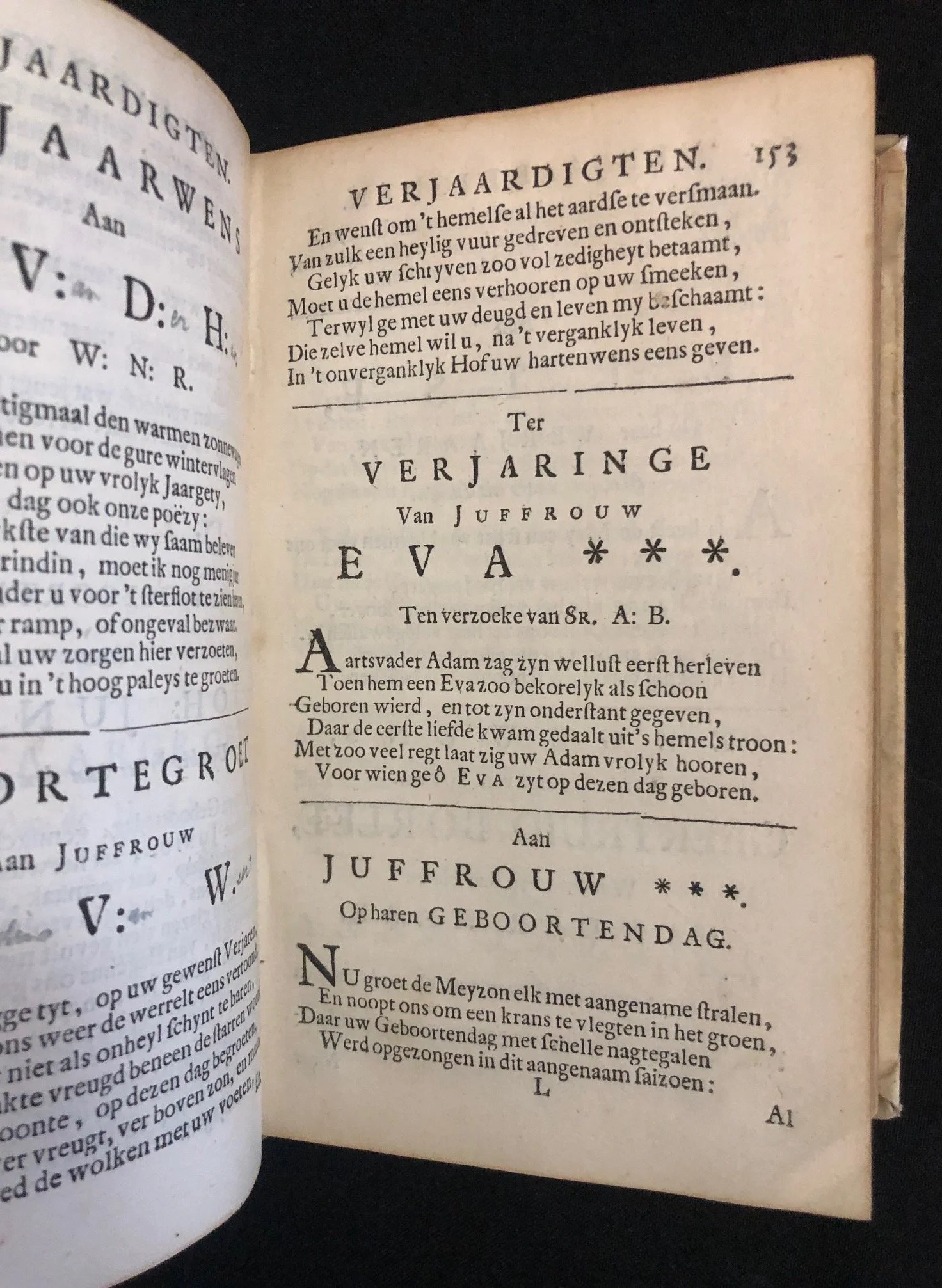
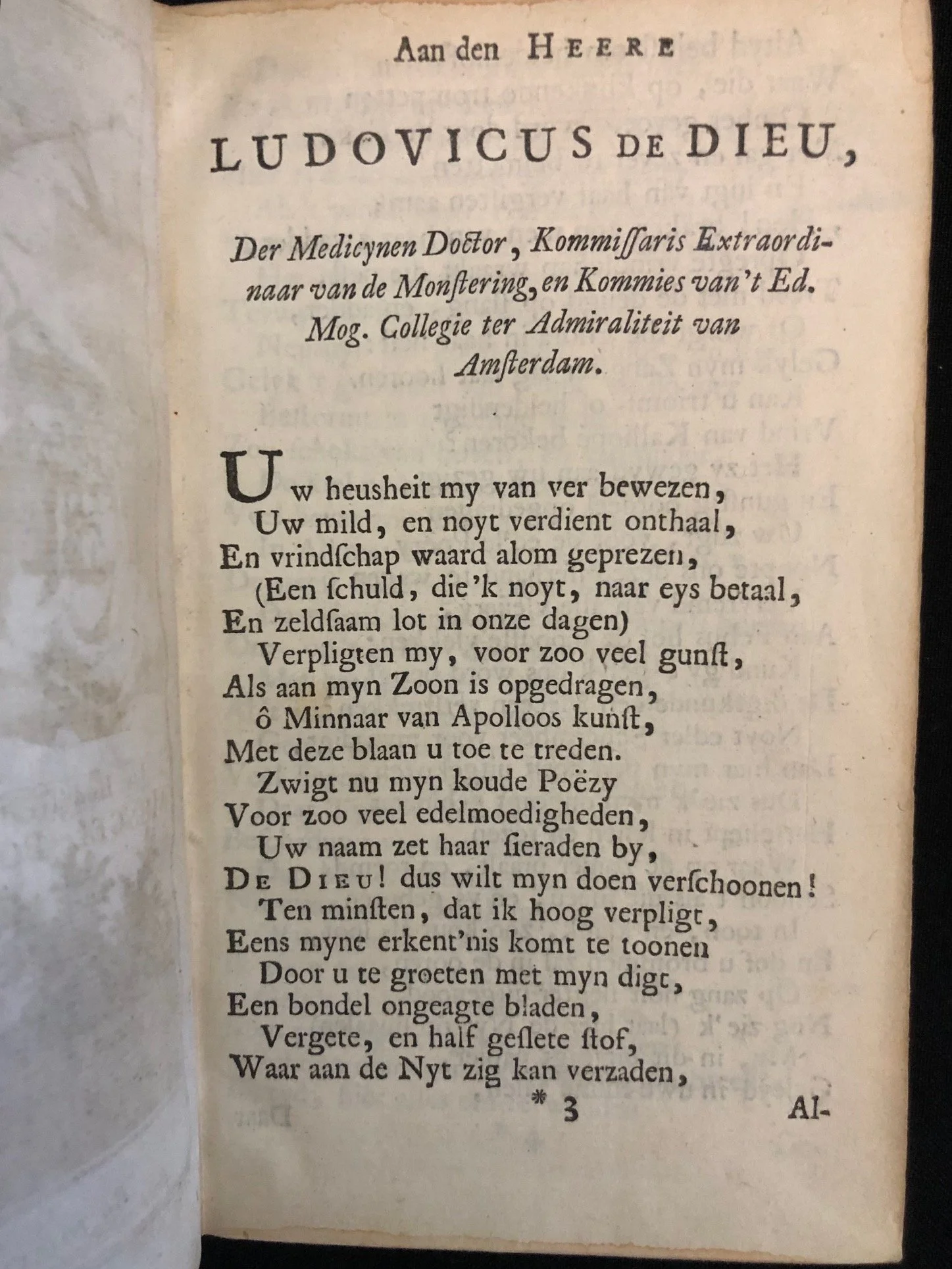
Mengel-Poezy (Miscellaneous Poetry) by Jan van Hoogstraten (1714)
The Dutch Golden Age Connection and possible link to Cape History
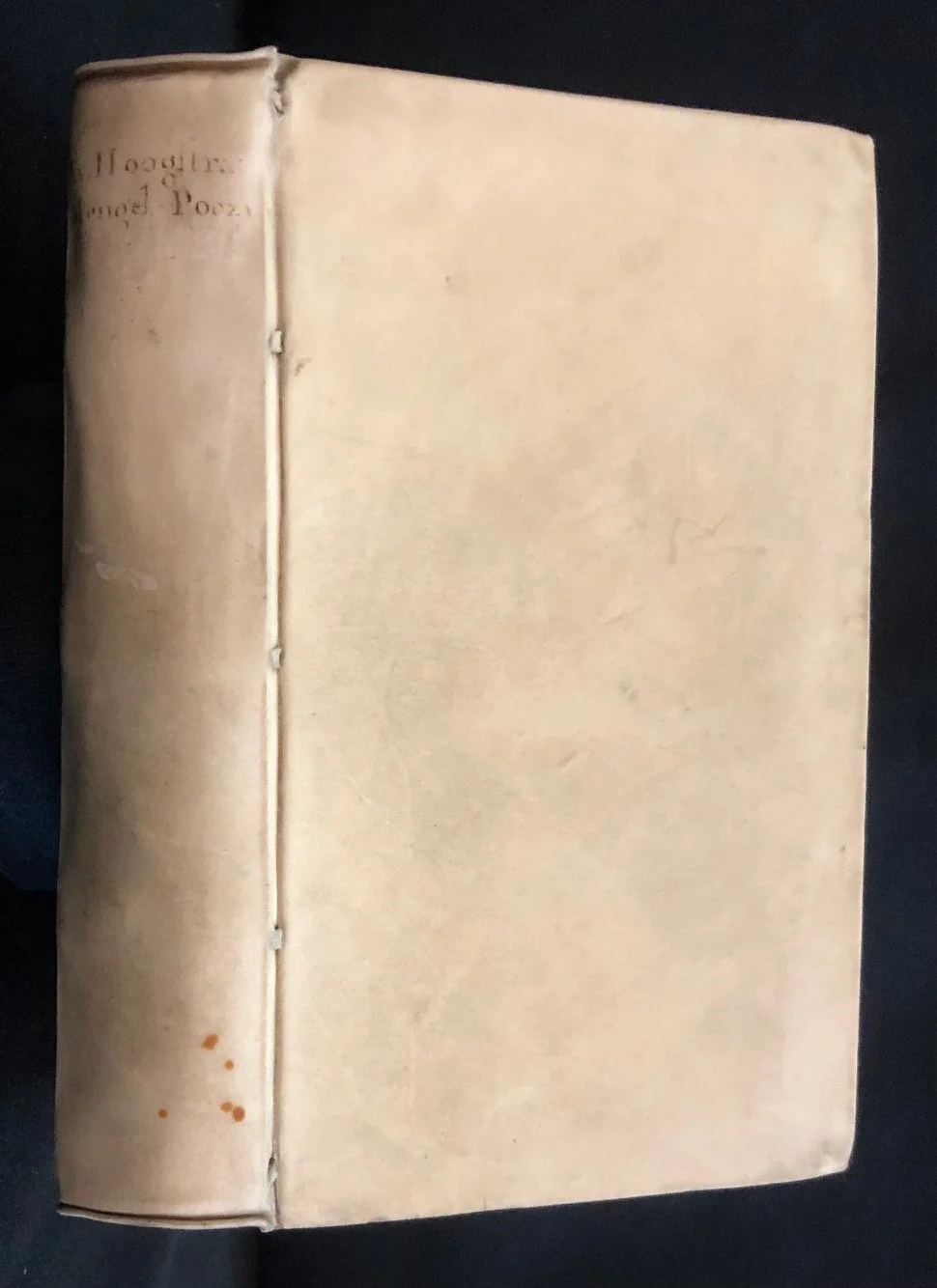
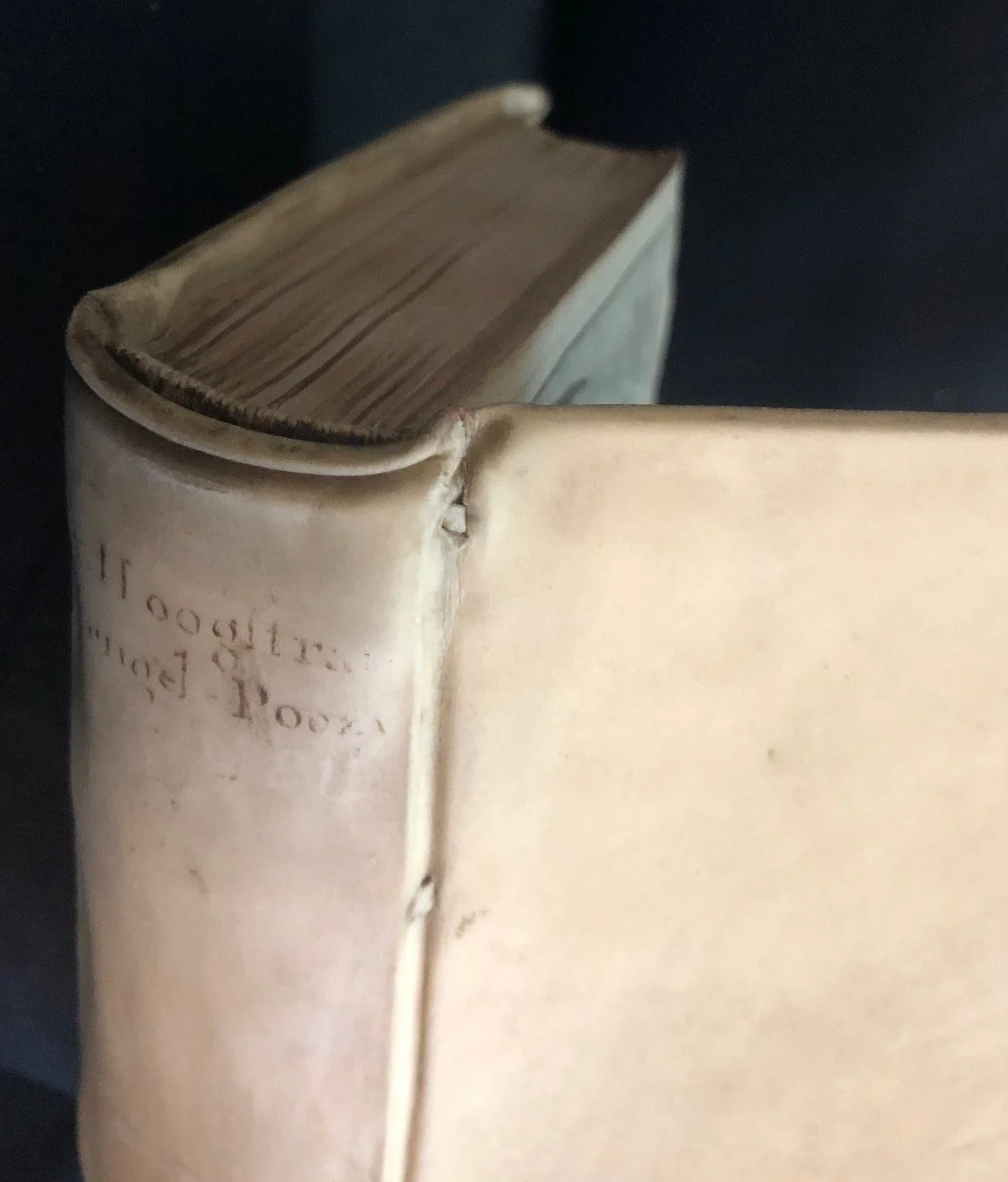
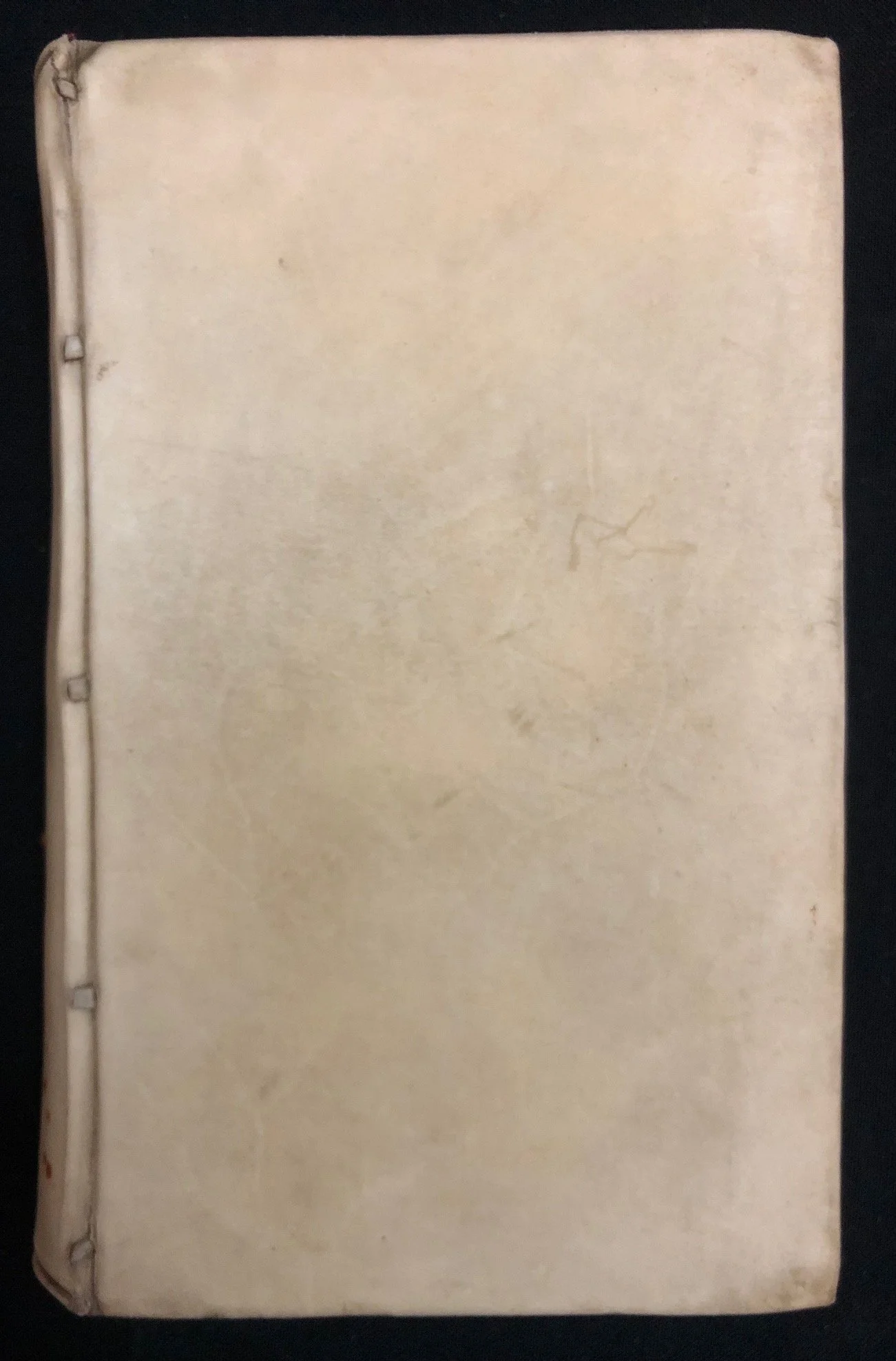
When this book was bound in its contemporary vellum in Amsterdam in 1714, the Dutch East India Company (VOC) was at the height of its administrative grip on the Cape Colony.
Books like Jan van Hoogstraten’s Mengel-Poezy were the exact cultural exports that traveled aboard VOC East Indiamen vessels arriving in Table Bay. For the high-ranking officials of the Cape—such as Governor Willem Adriaan van der Stel or the wealthy burghers of Stellenbosch and Cape Town—volumes of contemporary Dutch poetry, theology, and philosophy were prized status symbols. They were imported to keep the isolated colonial elite connected to the high baroque culture, literature, and standard European Dutch of the motherland.
A Linguistic Stepping Stone to Afrikaans
Jan van Hoogstraten (1662–1756) was a prominent poet, lexicographer, and grammar scholar. He was deeply invested in formalizing, purifying, and standardizing the Dutch language.
The irony of a text like Mengel-Poezy arriving at the Cape in the early 1700s is that it represents the exact opposite linguistic trajectory of what was actually happening on the ground in South Africa. While Hoogstraten was publishing meticulous, high-register verses in Amsterdam, the Dutch spoken at the Cape by soldiers, sailors, slaves, and indigenous Khoekhoe people was rapidly evolving, stripping away complex European inflections. This vernacular evolution was laying the silent, early groundwork for what would eventually emerge as a distinct new language: Afrikaans. Books like this highlight the widening gulf between the formal Dutch of the European elite and the vibrant spoken tongue of the African frontier.
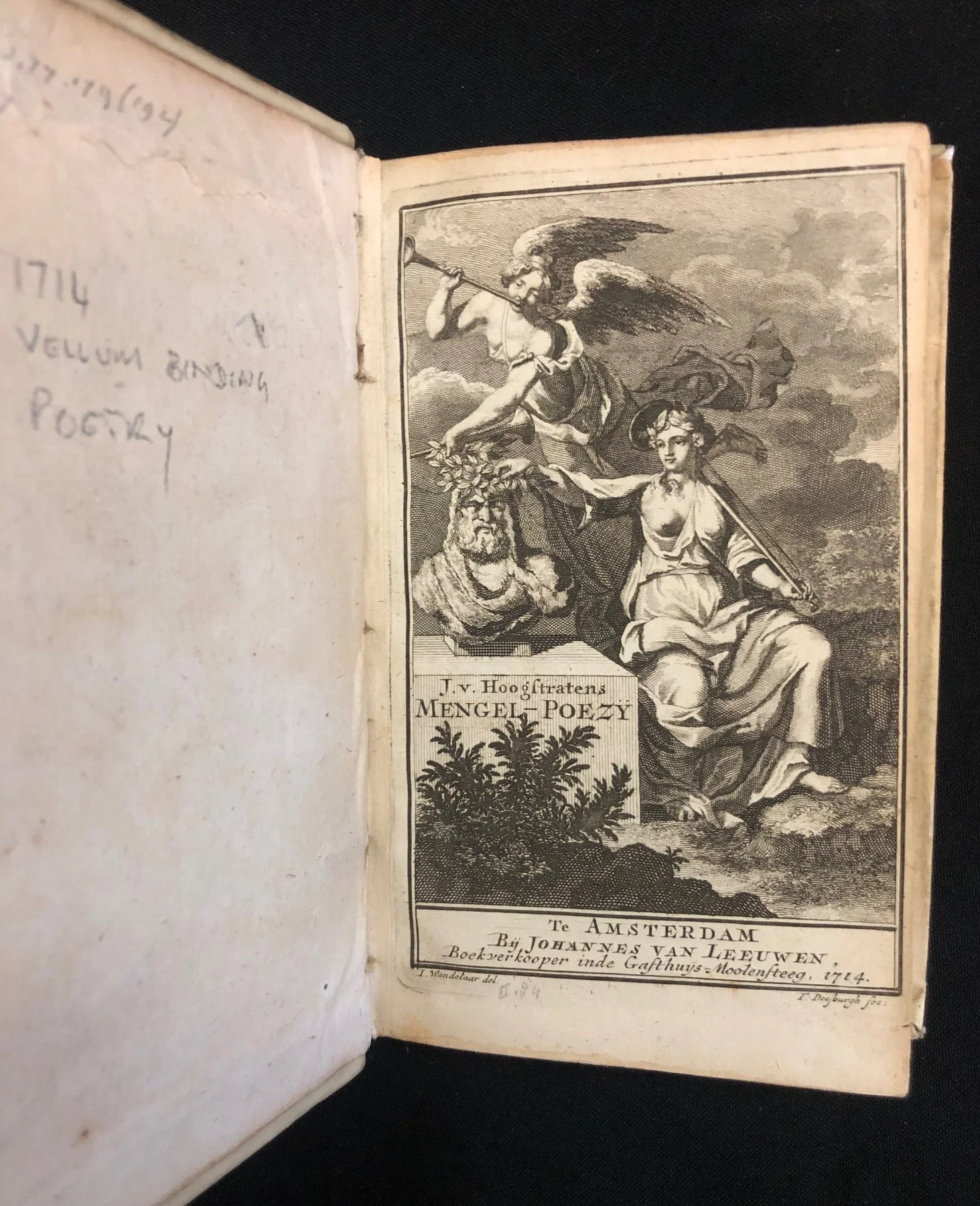
The Allegorical Engraving
The engraving is steeped in Classical Enlightenment symbolism, designed to convey the timeless and divine nature of poetry:
The Bust: A laureate classical bust (likely representing Homer or Apollo) is being crowned with a fresh wreath of laurel leaves.
The Muscular Muse / Athena: A seated female figure holding a spear (signifying wisdom, strength, or the state) looks out at the viewer while placing the crown on the bust.
Fame / Pheme: Hovering above them is an angelic, winged figure blowing a trumpet, symbolizing the role of poetry in broadcasting great deeds, history, and fame across the world.
At the very bottom left, you can see the name of the artist who designed the print: J. Wandelaar del. (Jan Wandelaar, a celebrated Dutch painter and engraver famous for his anatomically precise and beautiful book illustrations).
The Printer’s Address
The text at the foot of the page reads:
Te Amsterdam, Bij Johannes van Leeuwen, Boekverkooper inde Gasthuys-Moolensteeg, 1714.
The mention of Gasthuys-Moolensteeg (Hospital Mill Alley) places the production of this book right in the dense, labyrinthine heart of Amsterdam’s historic publishing district. This tiny alleyway was a bustling hive of printers, binders, and mapmakers who together supplied the global reading material for the entire Dutch maritime empire.
110mm x 165mm x 20mm
There is an engraved frontispiece and title of Mengel-Poezy (Miscellaneous Poetry) by Jan van Hoogstraten, printed in Amsterdam by Johannes van Leeuwen in 1714.
End paper missing; as well as the text title page; 222 pages; sold as incomplete.
R1,000