Ref: The tail end of the Great Irish Famine. From, British Radical statesman and orator John Bright (1849)
A first hand artefact from one of the most devastating periods in Irish history—the tail end of the Great Irish Famine (1845–1852).
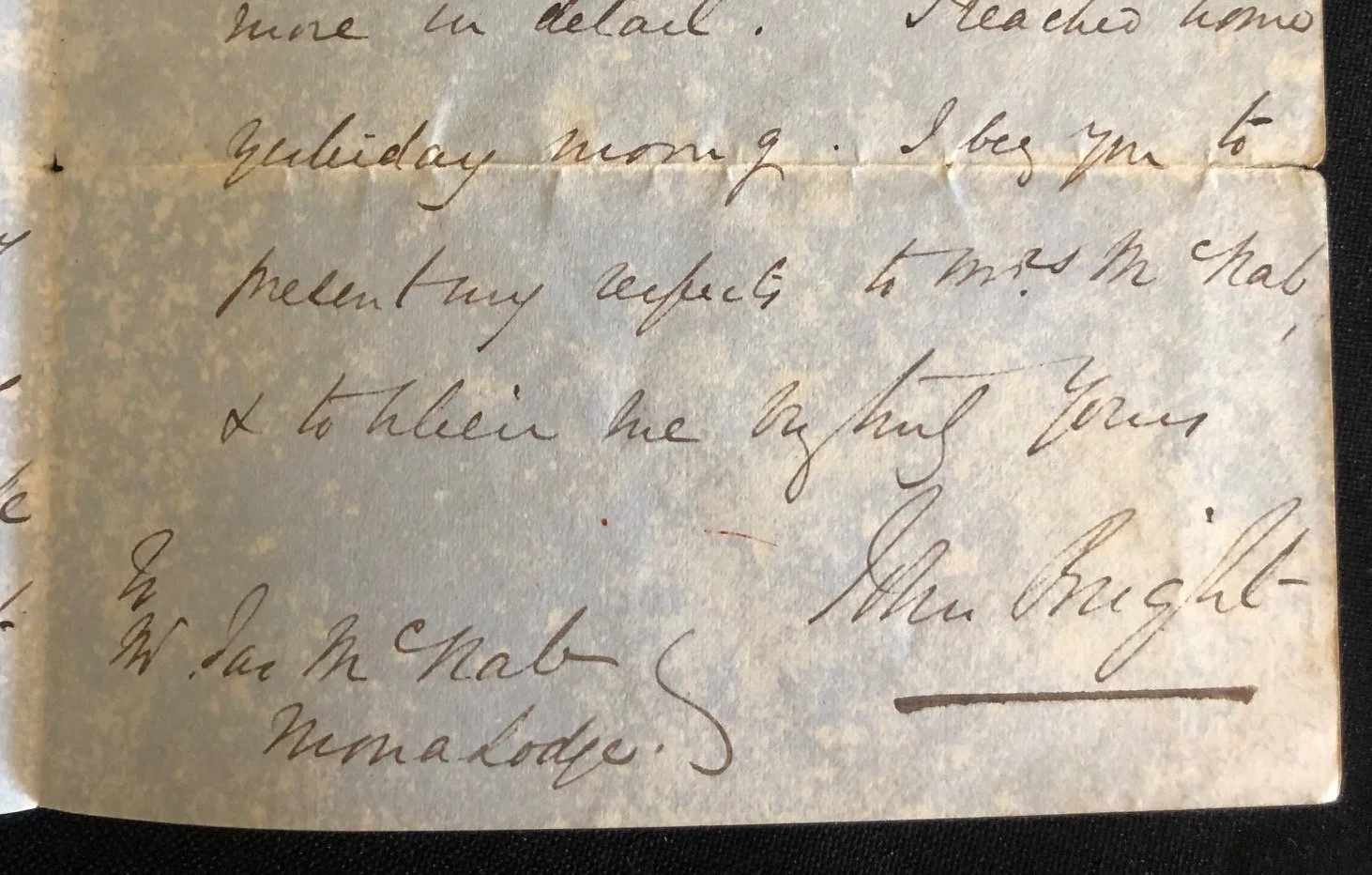
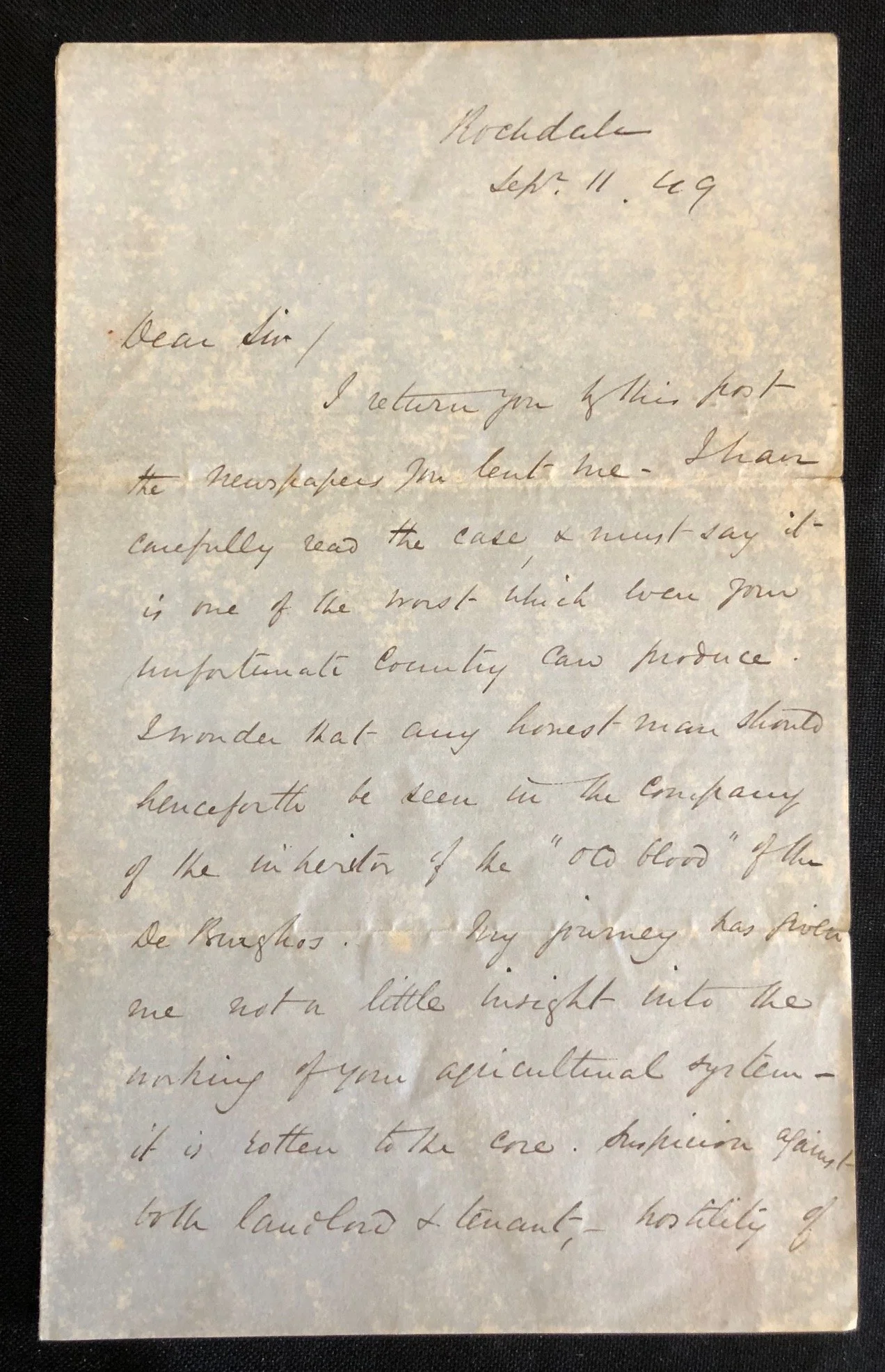
Written on September 11, 1849, by the famous British Radical statesman and orator John Bright, it delivers a blistering, unfiltered critique of the Irish land system directly following his political tour of the country.
A Condemnation of the Famine Landlord System
Bright writes with palpable anger regarding a case involving the "De Burghos" (the prominent Anglo-Norman De Burgh/Burke landowning family):
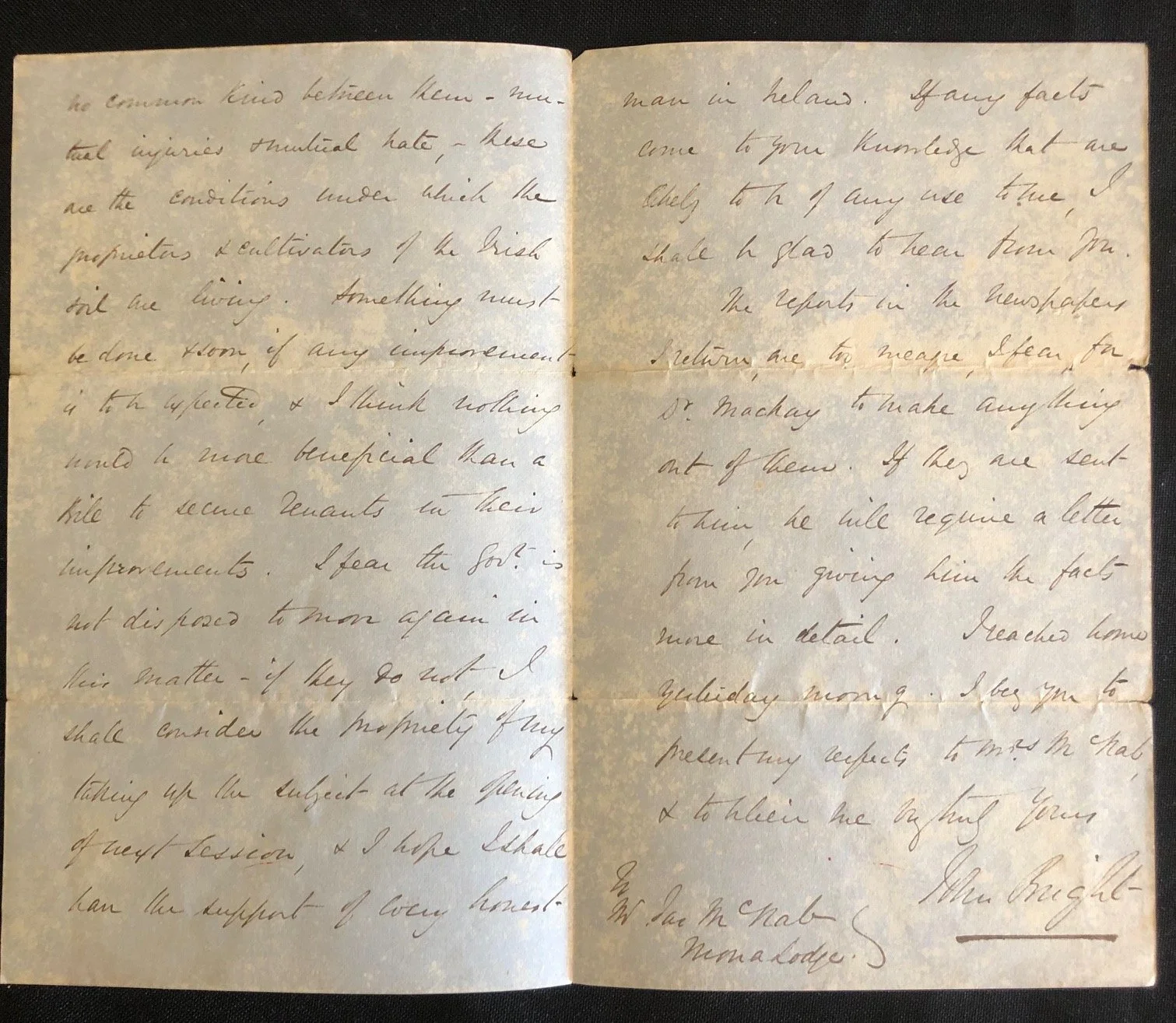
"I must say it is one of the worst which even your unfortunate country can produce... My journey has given me not a little insight into the working of your agricultural system—it is rotten to the core."
During the Famine, many Anglo-Irish landlords chose to mass-evict starving tenants who could no longer pay rent, turning arable land into pasture. Bright's observation of "mutual injuries & mutual hate" between the proprietors and cultivators captures the intense social warfare that plagued rural Ireland at this moment.
Early Framework for the "Three Fs" and Land Reform
Bright identifies the exact legislative remedy that would dominate Irish politics for the next three decades:
"...nothing would be more beneficial than a bill to secure tenants in their improvements."
At the time, if a tenant improved their rented plot (e.g., building a fence or fixing a roof), the landlord could instantly raise the rent or evict them without compensation. Bright’s advocacy for tenant security was ahead of its time, foreshadowing the Irish Land Acts later championed by William Gladstone to grant tenants fixity of tenure and fair rent.
The "Bright Clauses" Origin Story
John Bright became one of the vital English champions for Irish agrarian reform. His experiences during this 1849 journey directly inspired the famous "Bright Clauses" in the Landlord and Tenant (Ireland) Act 1870, which allowed the state to advance money to Irish tenants so they could purchase their own land.
This letter catches Bright at the moment his radical ideas on Irish land reform were hardening into concrete political strategy, showing his determination to take up the issue "at the opening of next session."
110mm x 185mm
3 page manuscript letter; some offsetting; folded and faded.
R2,000