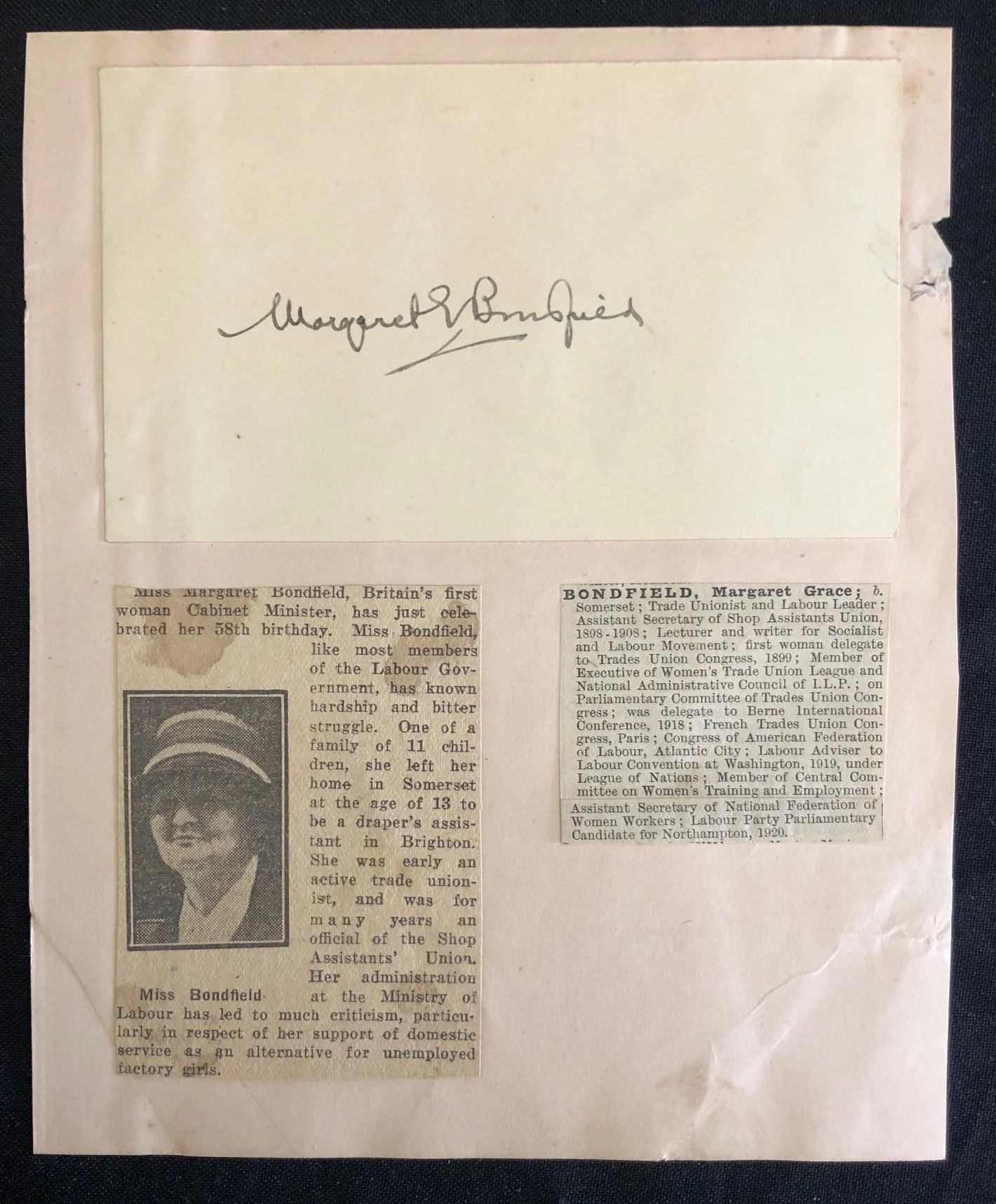
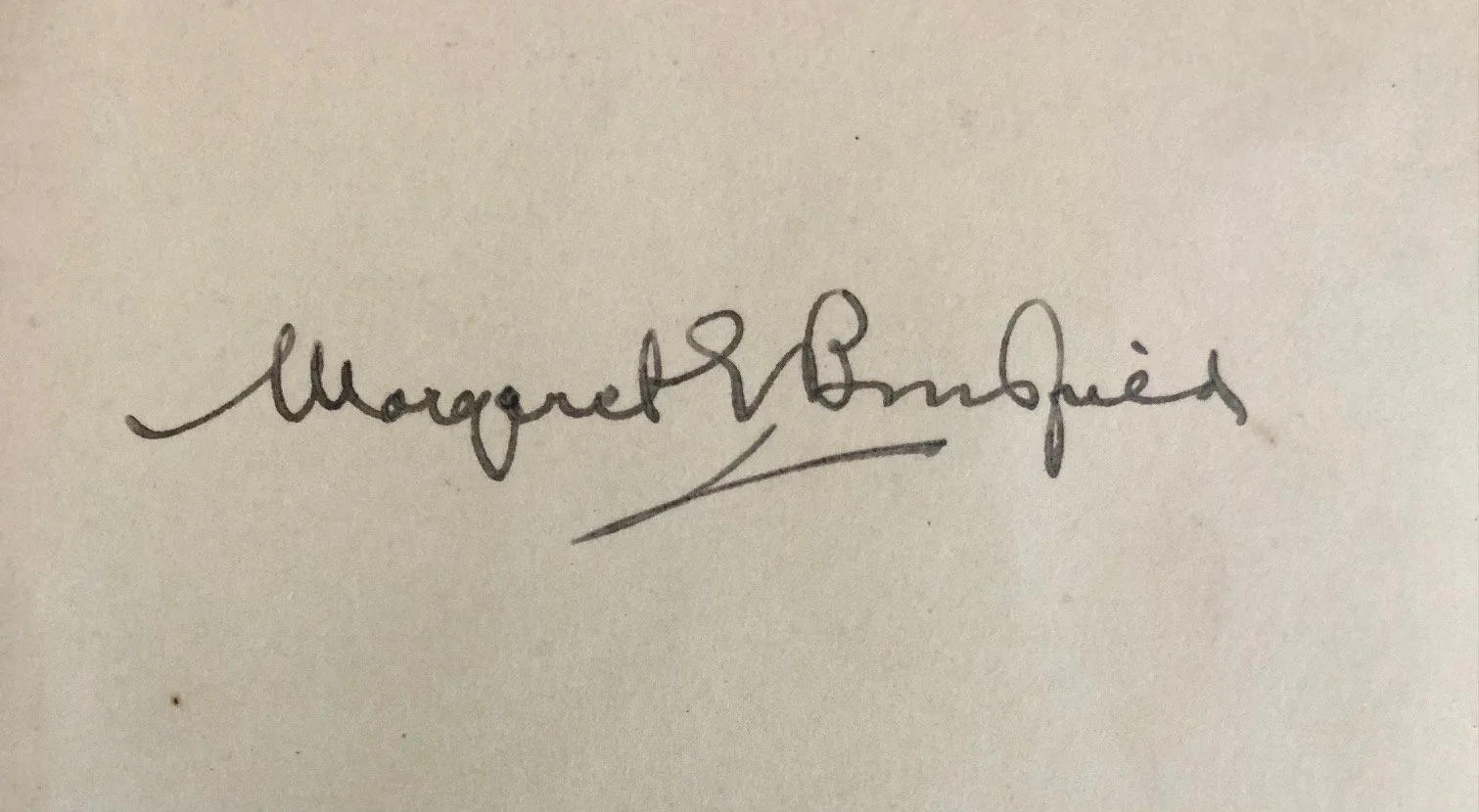
Autograph: British Politician, Margaret Bondfield (c.1931)
This piece of ephemera preserves the signature and early press clippings of Margaret Bondfield, one of the most remarkable—yet complicated—pioneers in British political and labor history.
What makes these items particularly interesting is the sheer historical paradox of who she was versus the specific criticism she was receiving at the exact moment this signature was collected.
From Teen Labourer to the Inner Circle
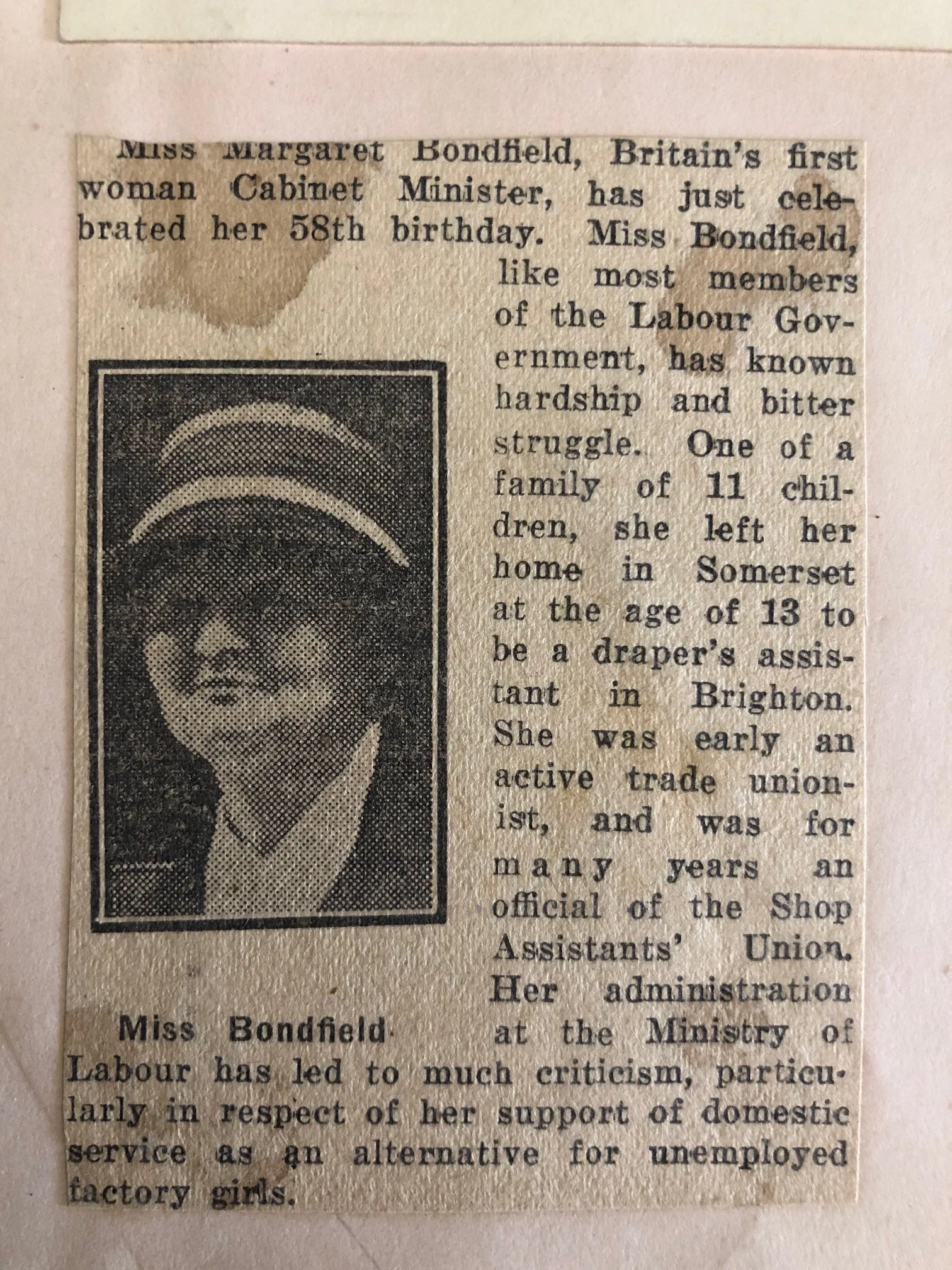
The newspaper snippet notes that Bondfield "has known hardship and bitter struggle," leaving home at age 13 to become a draper's assistant. This is entirely accurate. As a teenager, she endured the brutal "living-in" system of late-Victorian retail, working up to 80–100 hours a week and sleeping in cramped, unregulated dormitories above the shop.
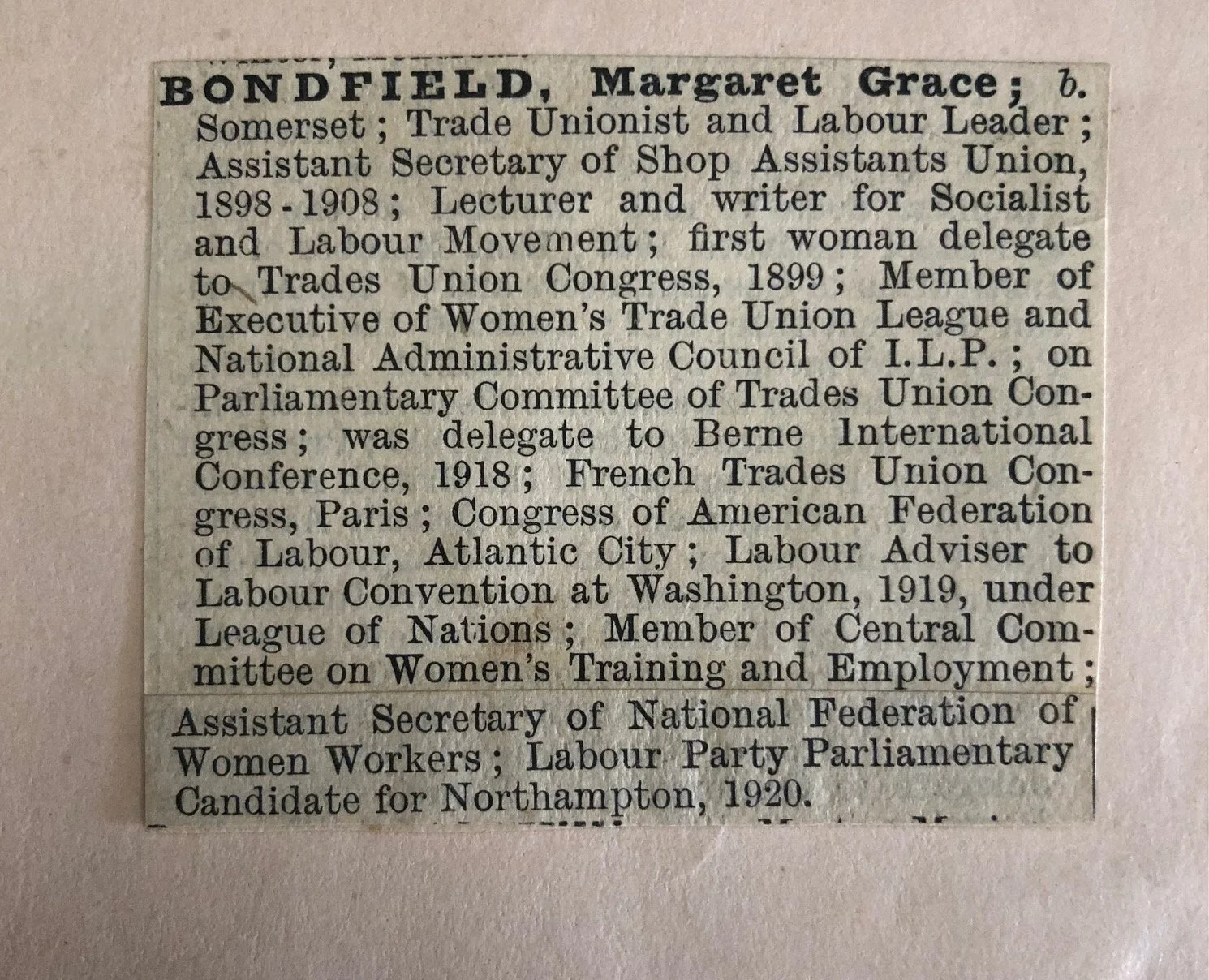
Fueled by this exploitation, she became a fierce trade union organizer. Breaking through immense class and gender barriers, she made history multiple times over:
-The first woman to chair the Trades Union Congress (TUC) in 1923.
-One of the first female Labour MPs.
-Britain’s first-ever female Cabinet Minister and Privy Counsellor when she was appointed Minister of Labour in 1929.
The 1931 Crisis and the "Impossible Job"
Based on the mention of her 58th birthday in the clipping, this piece was compiled in March 1931—placing it in the same timeframe and scrapbooking collection as the Lord Kylsant letters. At this moment, Bondfield was holding what many colleagues called the "worst job in government."
The Great Depression had just struck, causing unemployment in Britain to skyrocket. The National Insurance fund was completely overwhelmed, and Bondfield was caught in an impossible political vice between her socialist ideals and brutal economic realities.
The Irony of the Criticism
The clipping highlights a fascinating contemporary grievance:
"Her administration at the Ministry of Labour has led to much criticism, particularly in respect of her support of domestic service as an alternative for unemployed factory girls."
There is a deep, bitter historical irony here. Bondfield had spent her entire youth fighting to liberate working-class women from the unregulated drudgery of domestic and shop servitude. Yet, by 1931, desperate to curb the ballooning cost of the "dole" (unemployment benefits) and under intense pressure from the Treasury, her ministry began pushing unemployed factory workers into domestic service positions. If these women refused the domestic work, they risked losing their unemployment benefits entirely.
This policy alienated her from the very trade unions and working-class women who had propelled her to power.
A Forgotten Legacy
Just a few months after this item was compiled, in August 1931, the economic crisis completely fractured the Labour government. Unlike Prime Minister Ramsay MacDonald, Bondfield refused to join the emergency coalition National Government. In the subsequent October 1931 election, she lost her parliamentary seat.
While she paved the way for every female British politician who followed—from Barbara Castle to Margaret Thatcher—her legacy was heavily obscured by the shadow of the Great Depression, making this 1931 artifact a poignant record of a trailblazer at her peak, navigating an economic storm.
Laid down.
150mm x 180mm
R1,000