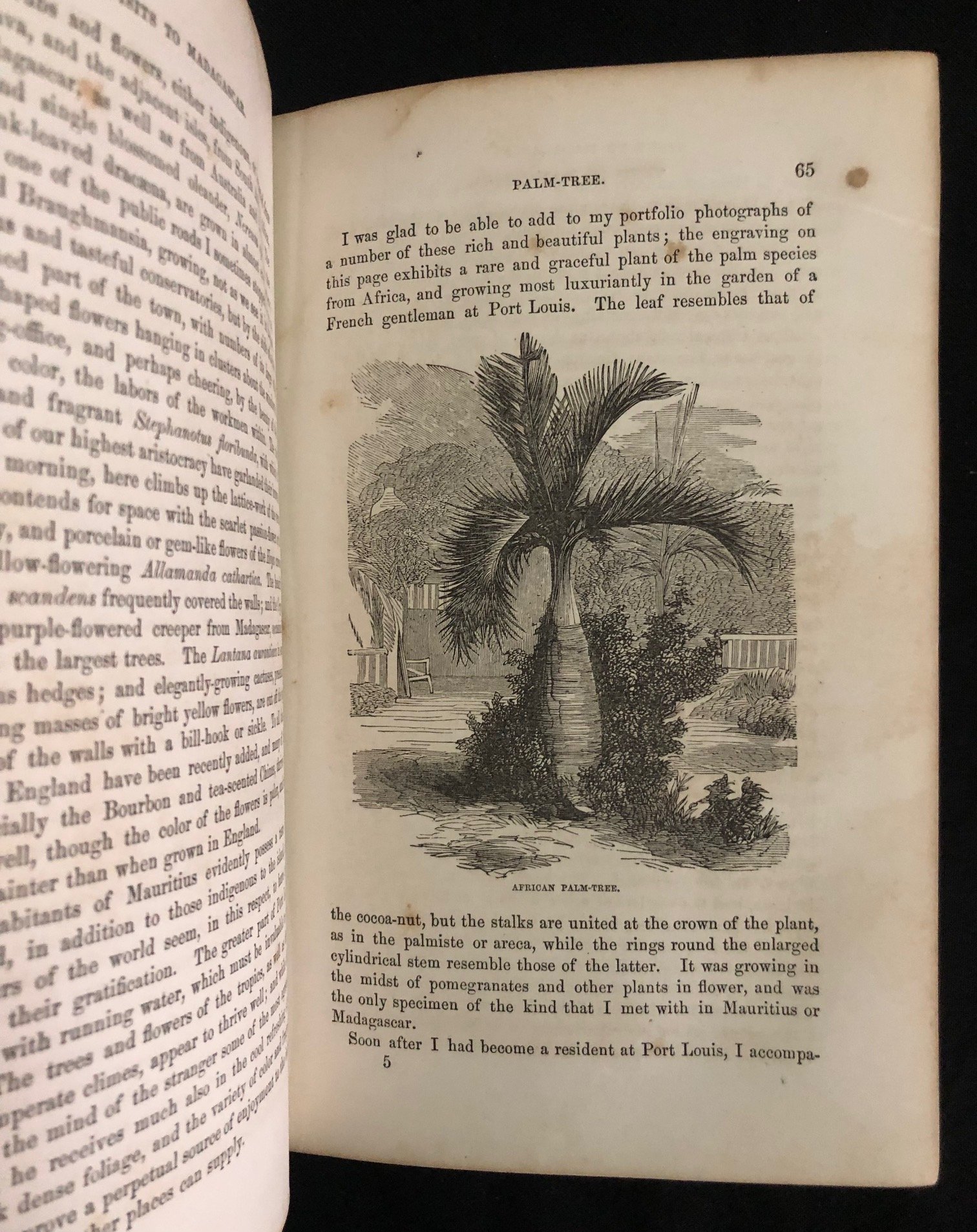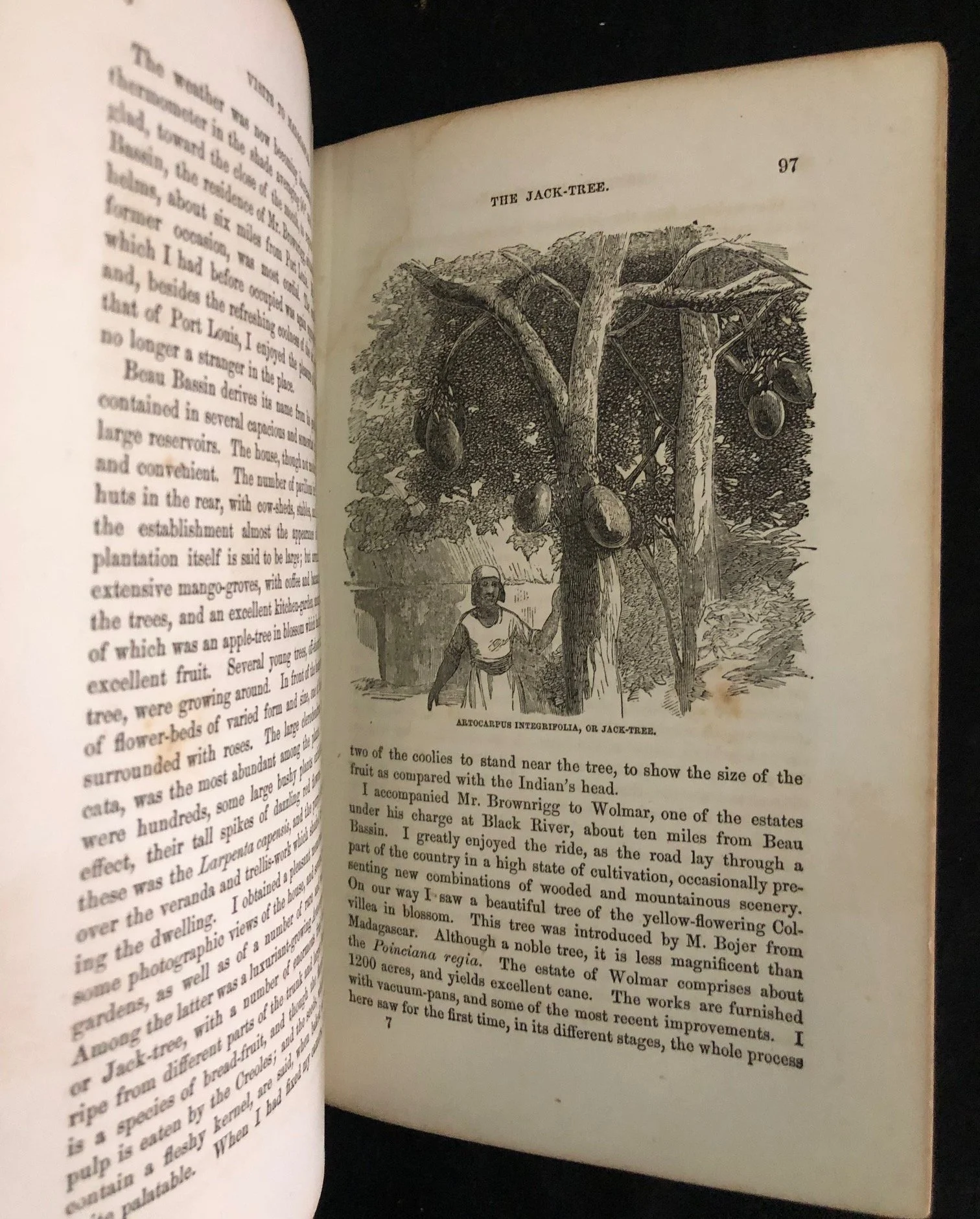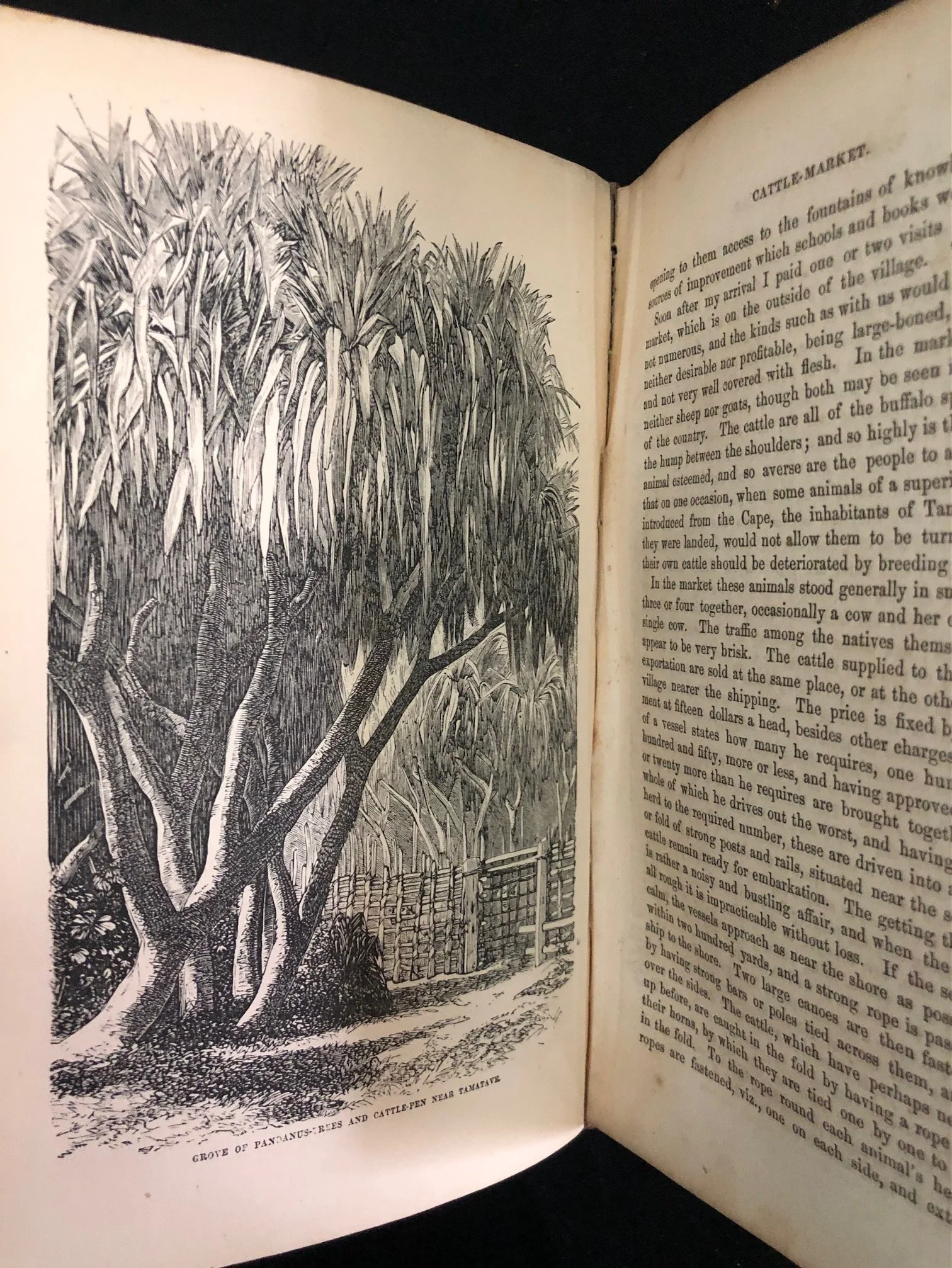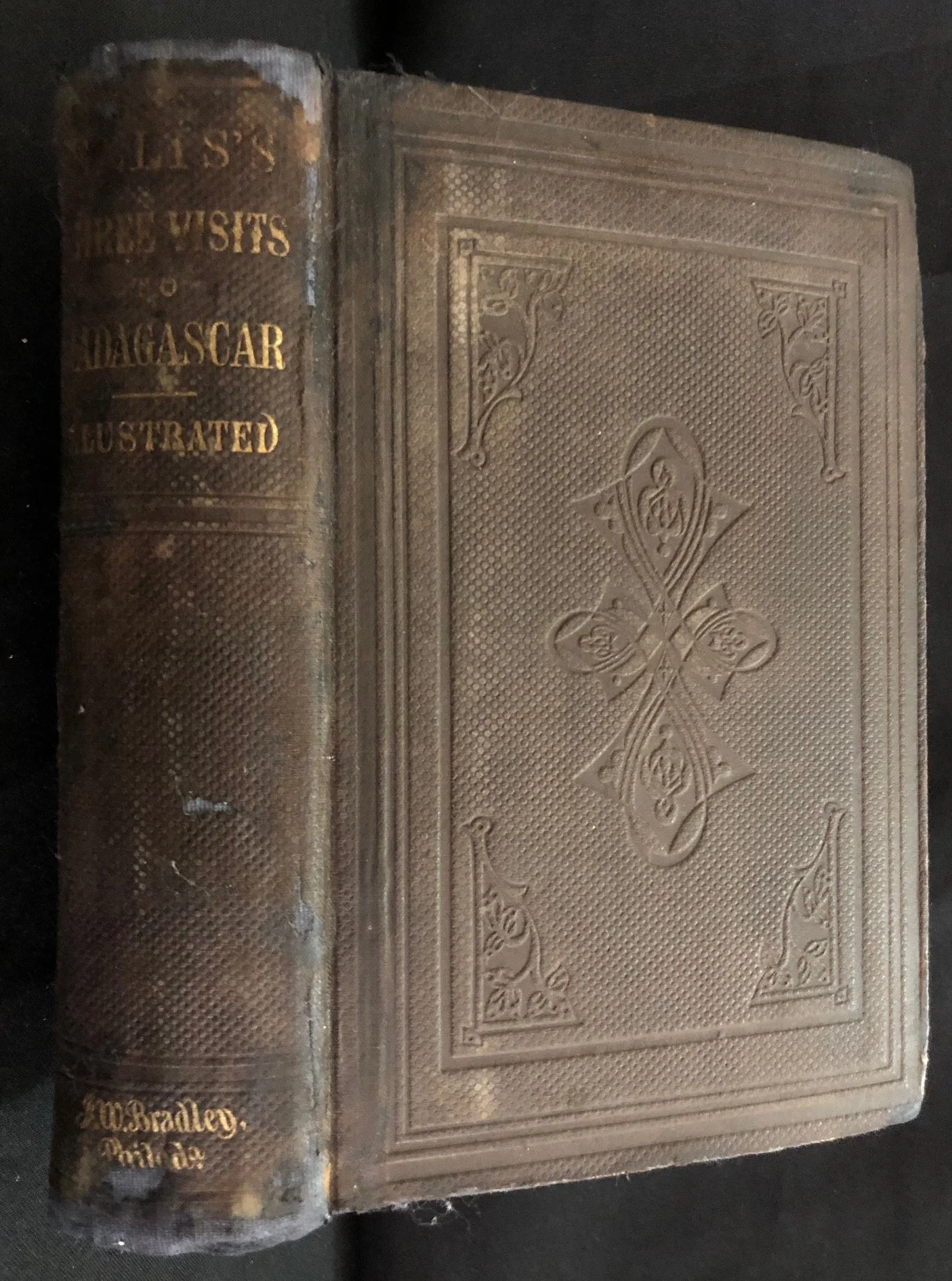
Rev. William Ellis’s Three Visits to Madagascar (1859)
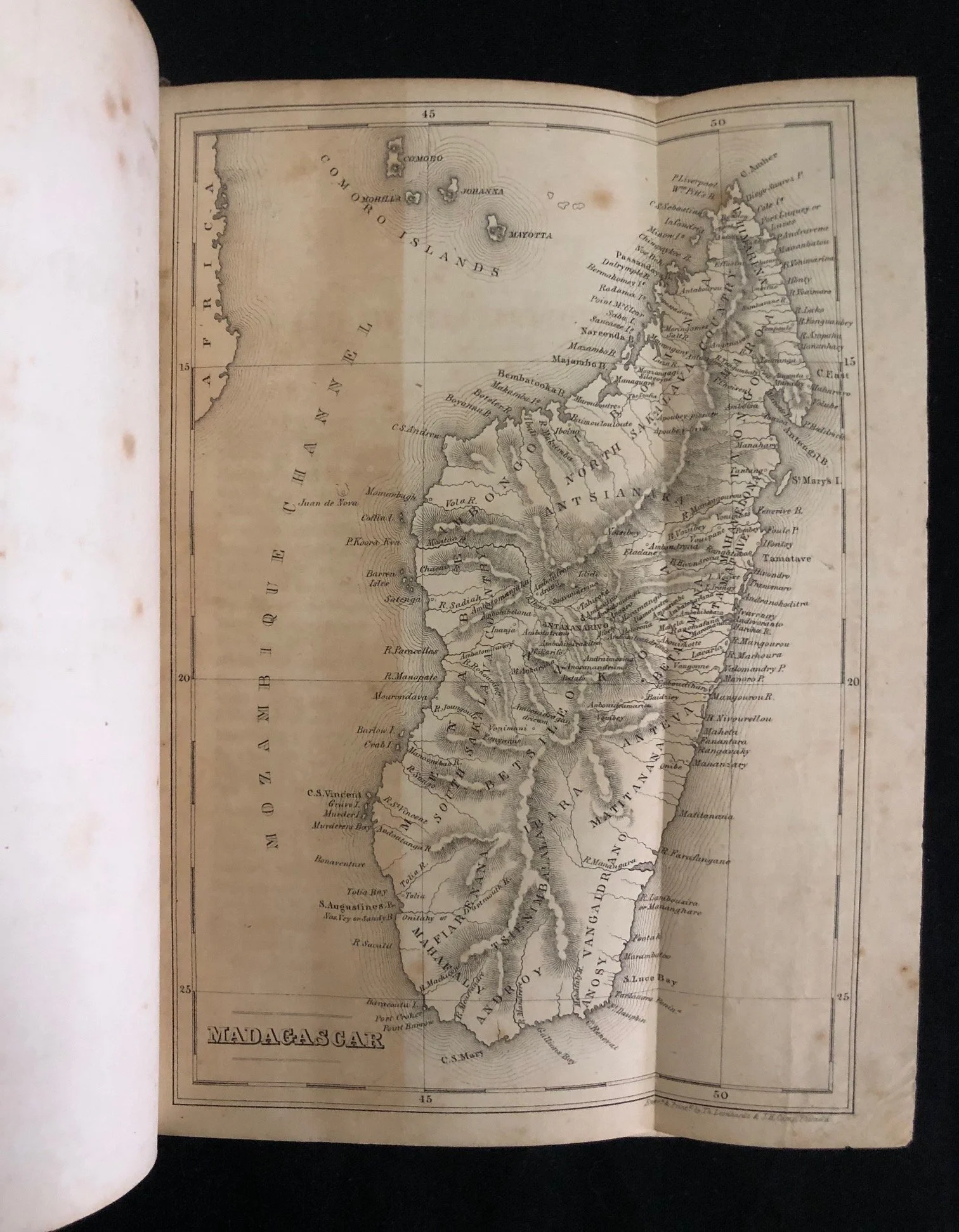
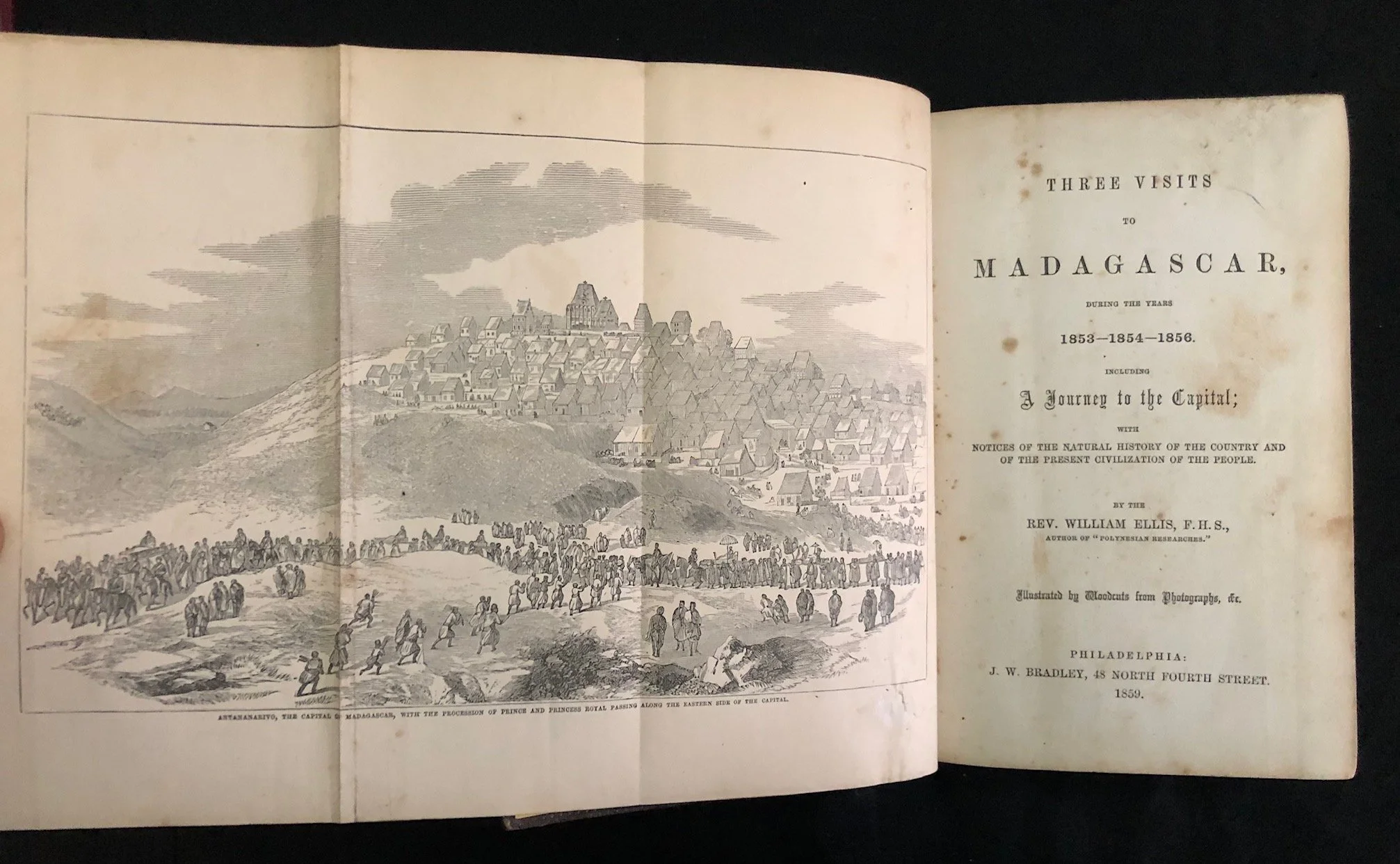
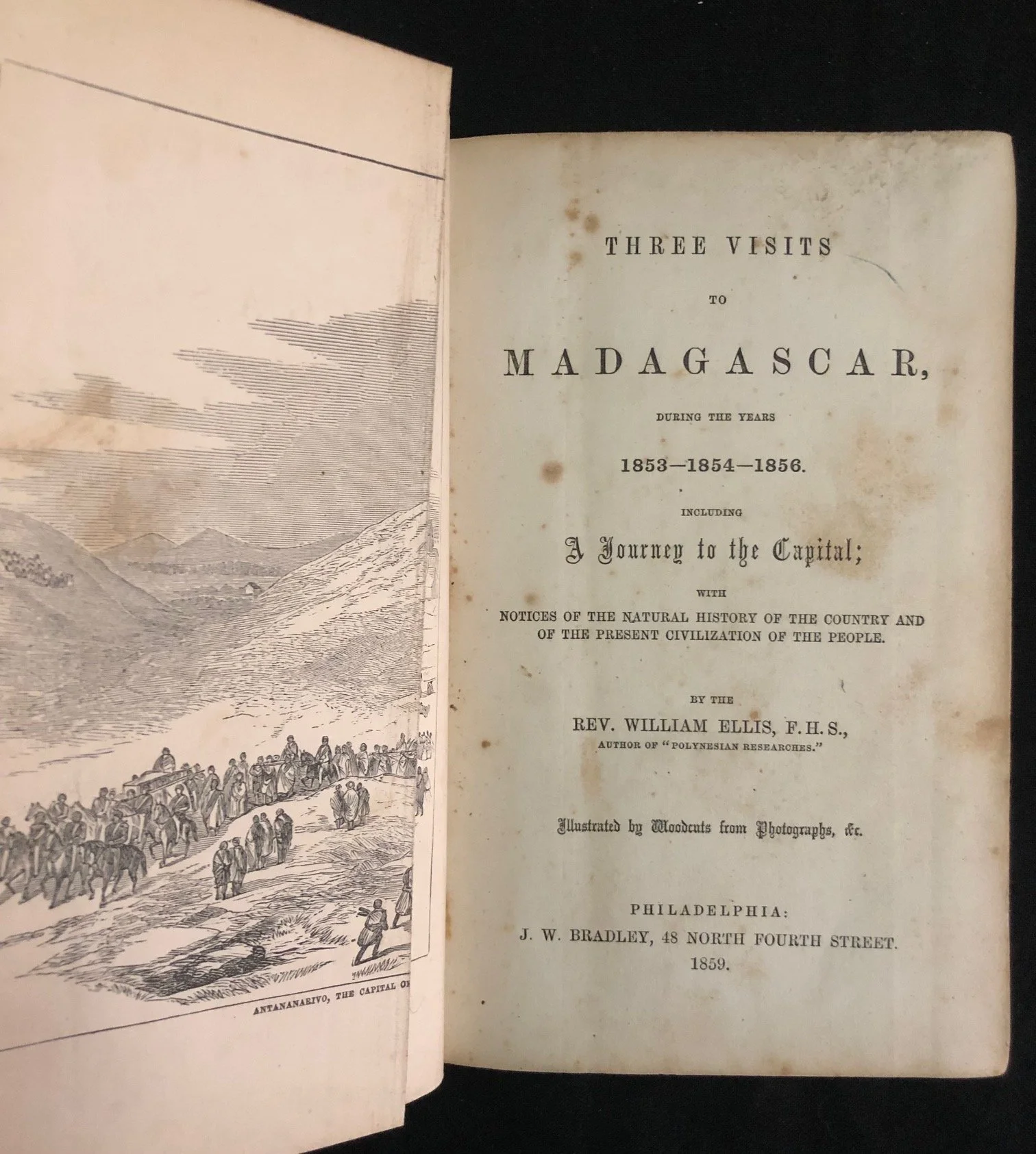
Complete. Xvii / 470 pages / map / fold out frontis / 24 woodcut illustrations
First USA edition.
Here are a few historically significant details surrounding Rev. William Ellis’s Three Visits to Madagascar (1859):
A Pioneer of Photography in Madagascar
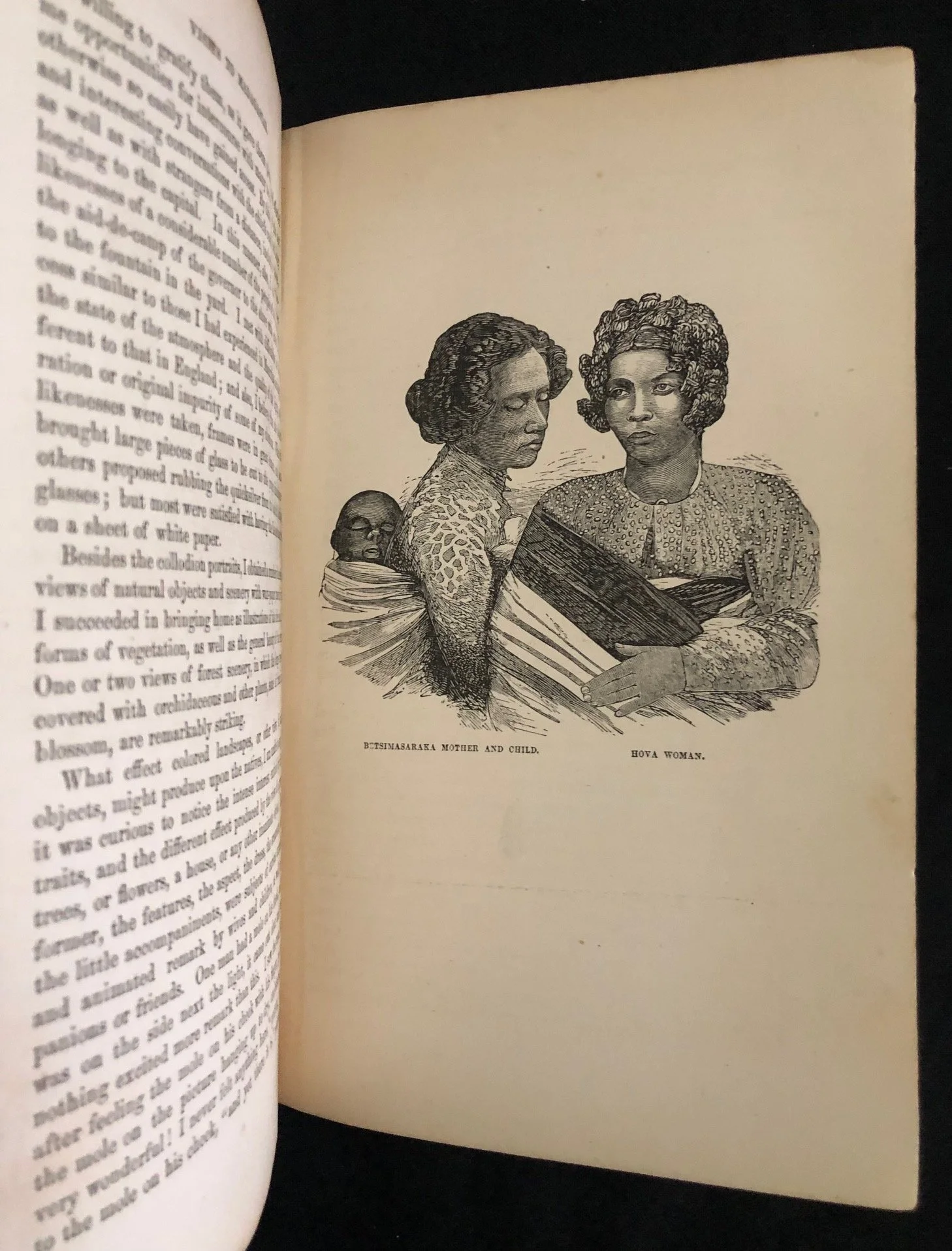
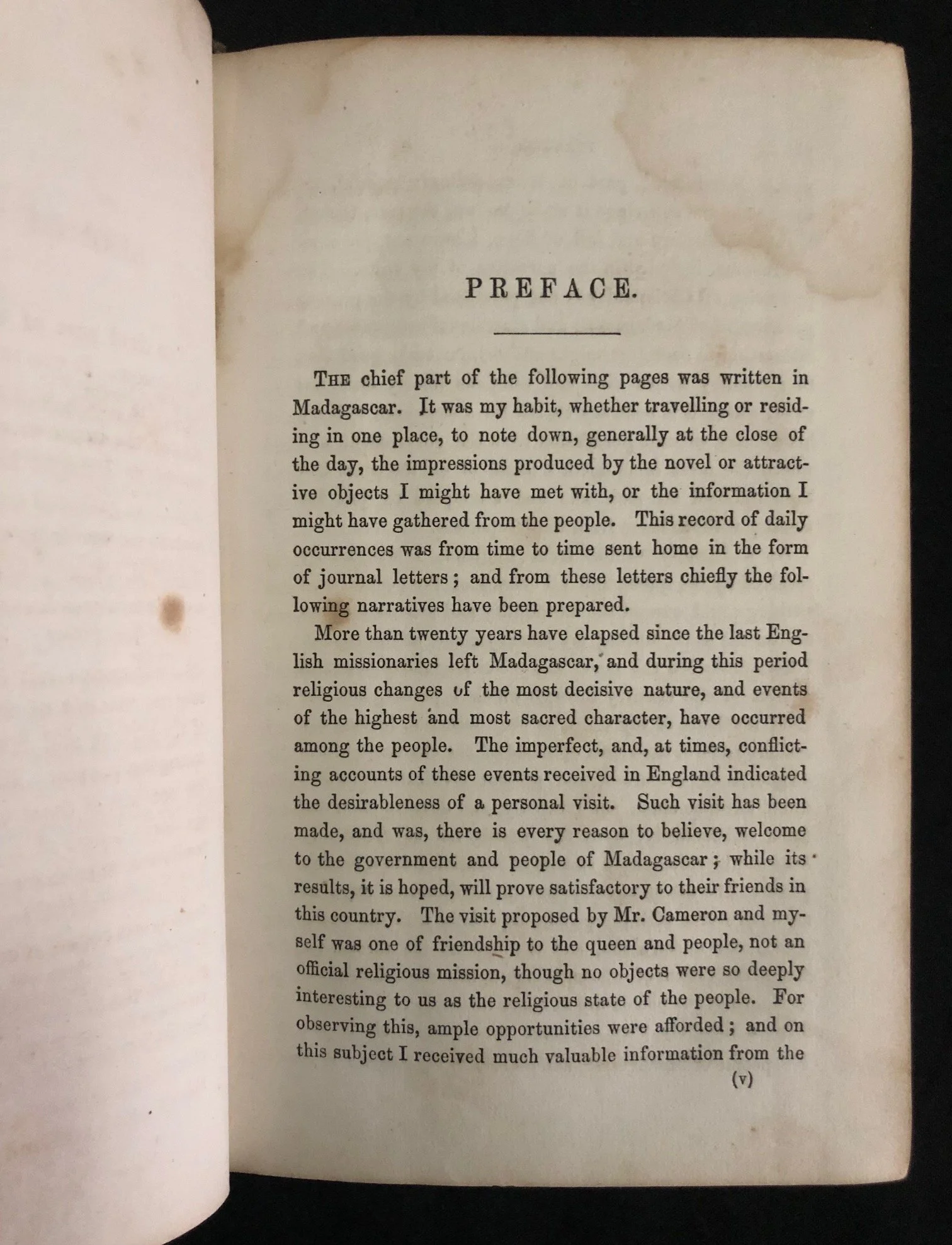
"Illustrated by Woodcuts from Photographs, &c."
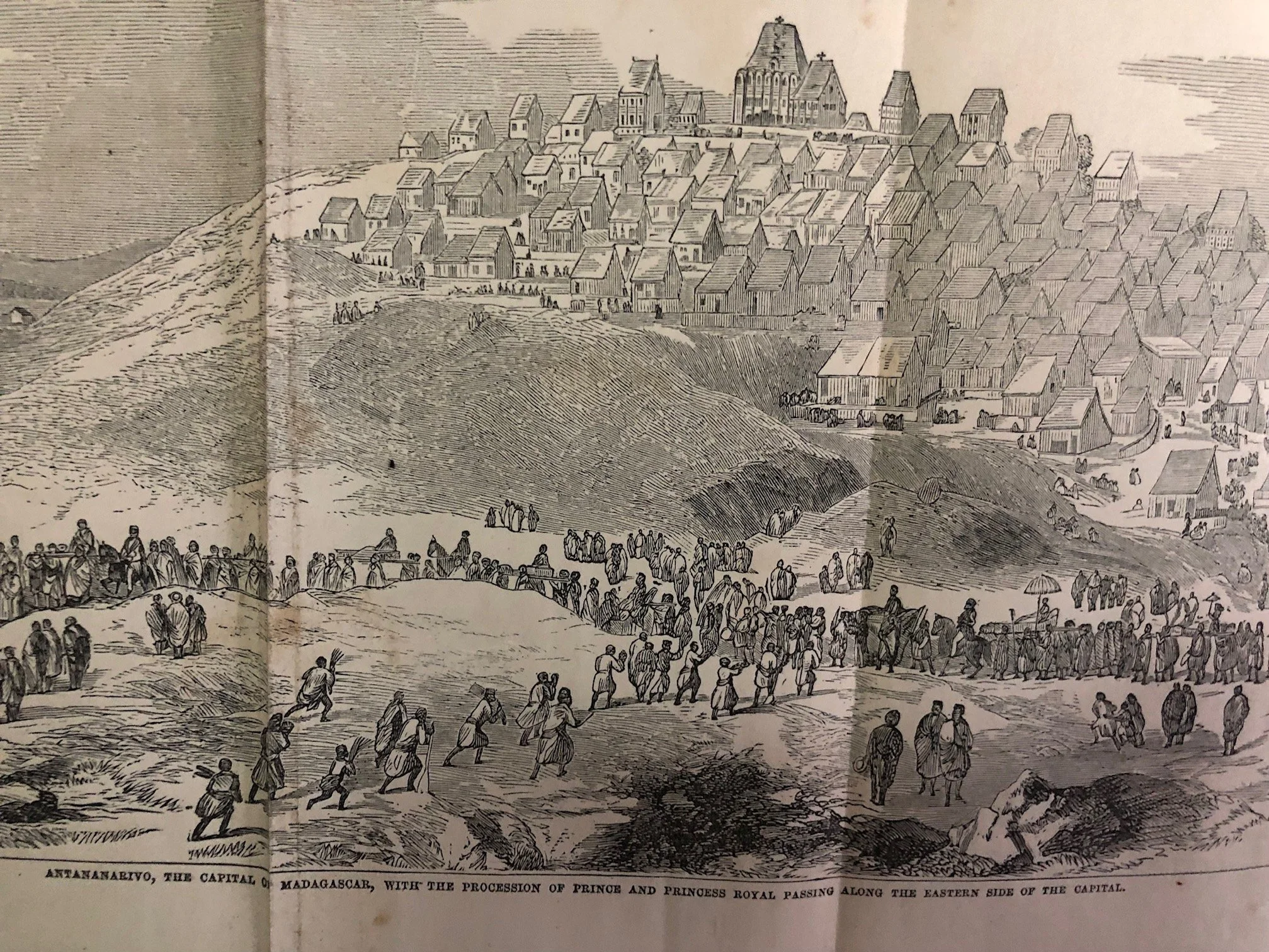
Before setting out on his trips in the 1850s, William Ellis specifically learned the wet-plate collodion photographic process so he could document the people, court life, and landscape of Madagascar. He became one of the very first people to successfully photograph the island. Because photographic printing in books was still in its infancy in the 1850s, his original glass negatives were meticulously translated into woodcut engravings to illustrate this volume.
Penetrating the "Forbidden Kingdom" of Queen Ranavalona I
Ellis’s visits occurred during the reign of Queen Ranavalona I (often styled in 19th-century European accounts as the "Cruel Queen" or "Mad Queen of Madagascar"). She was fiercely anti-colonial and anti-Christian, having expelled foreign missionaries, banned Christian worship, and severely limited Western access to the interior.
Sent by the London Missionary Society under the guise of health visits and botanical research, Ellis was turned away during his first two attempts. On his third visit in 1856, he was finally granted permission to travel inland to the capital, Antananarivo (depicted in the frontispiece). During his stay, he gained audience with the Queen and became a confidant to her son, Crown Prince Radama II, placing Ellis at the very center of Madagascar’s turbulent court politics.
Botanical Discoveries and Darwin’s Orchid
Ellis was an avid botanist (indicated by his title F.H.S.—Fellow of the Horticultural Society). During his travels, he collected and successfully exported several rare botanical specimens to Britain.
Most notably, he brought back living specimens of the famous Star of Madagascar orchid (Angraecum sesquipedale). It was this specific orchid—with its extraordinarily long spur—that led Charles Darwin to famously predict in 1862 that a moth with a foot-long proboscis must exist to pollinate it (a prediction proven correct decades later with the discovery of Xanthopan morganii praedicta).
Early American Publication
While the primary edition was published in London by John Murray in 1858, this particular copy was issued in 1859 by J. W. Bradley in Philadelphia, highlighting how rapidly accounts of African exploration and missionary travel were pirated or licensed for the avid American reading market just prior to the American Civil War.
150mm x 200mm x 40mm
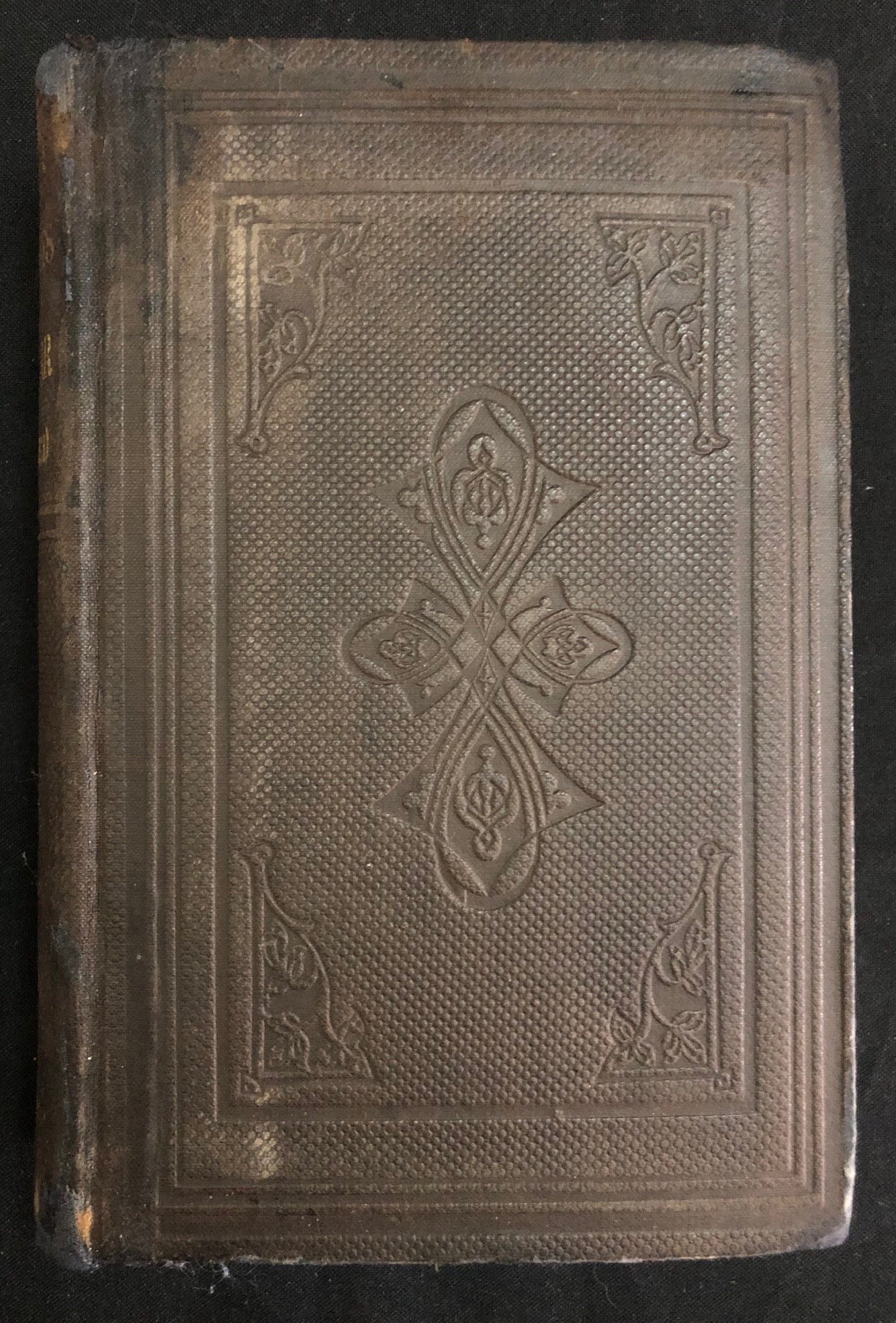
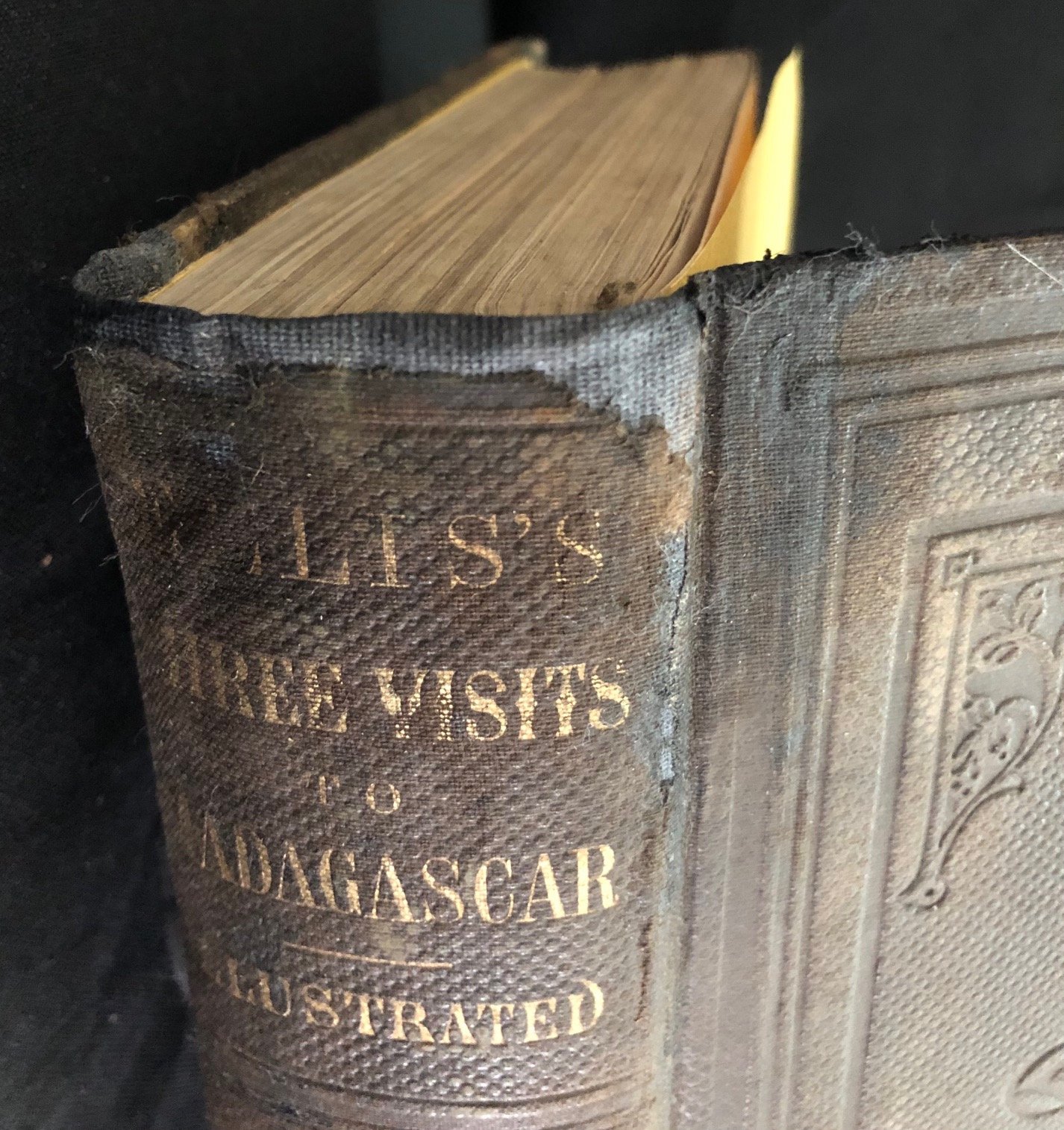
Binding extensively repaired; new end papers; water stain top corner of text block until page 45.
R2,500