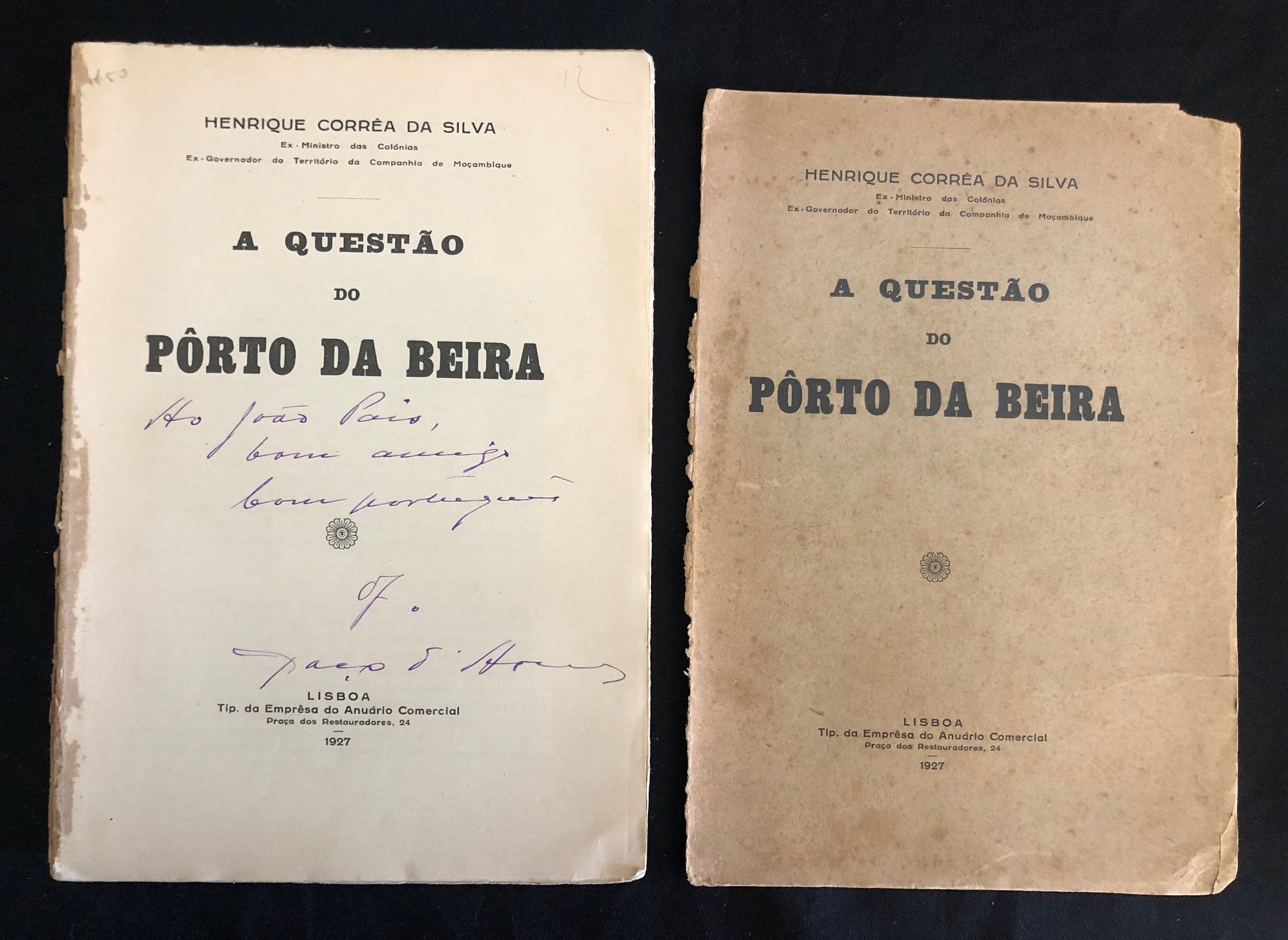
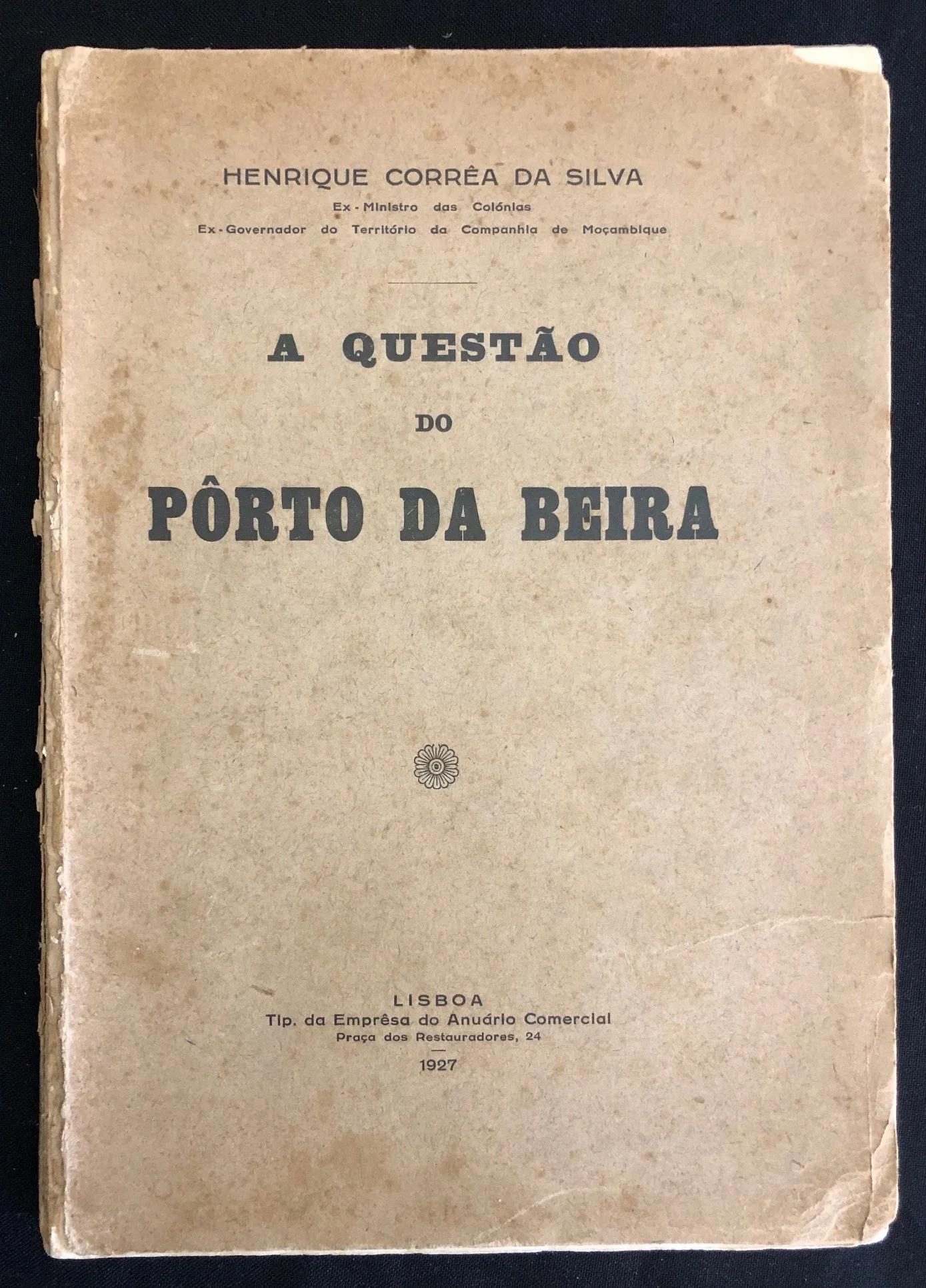
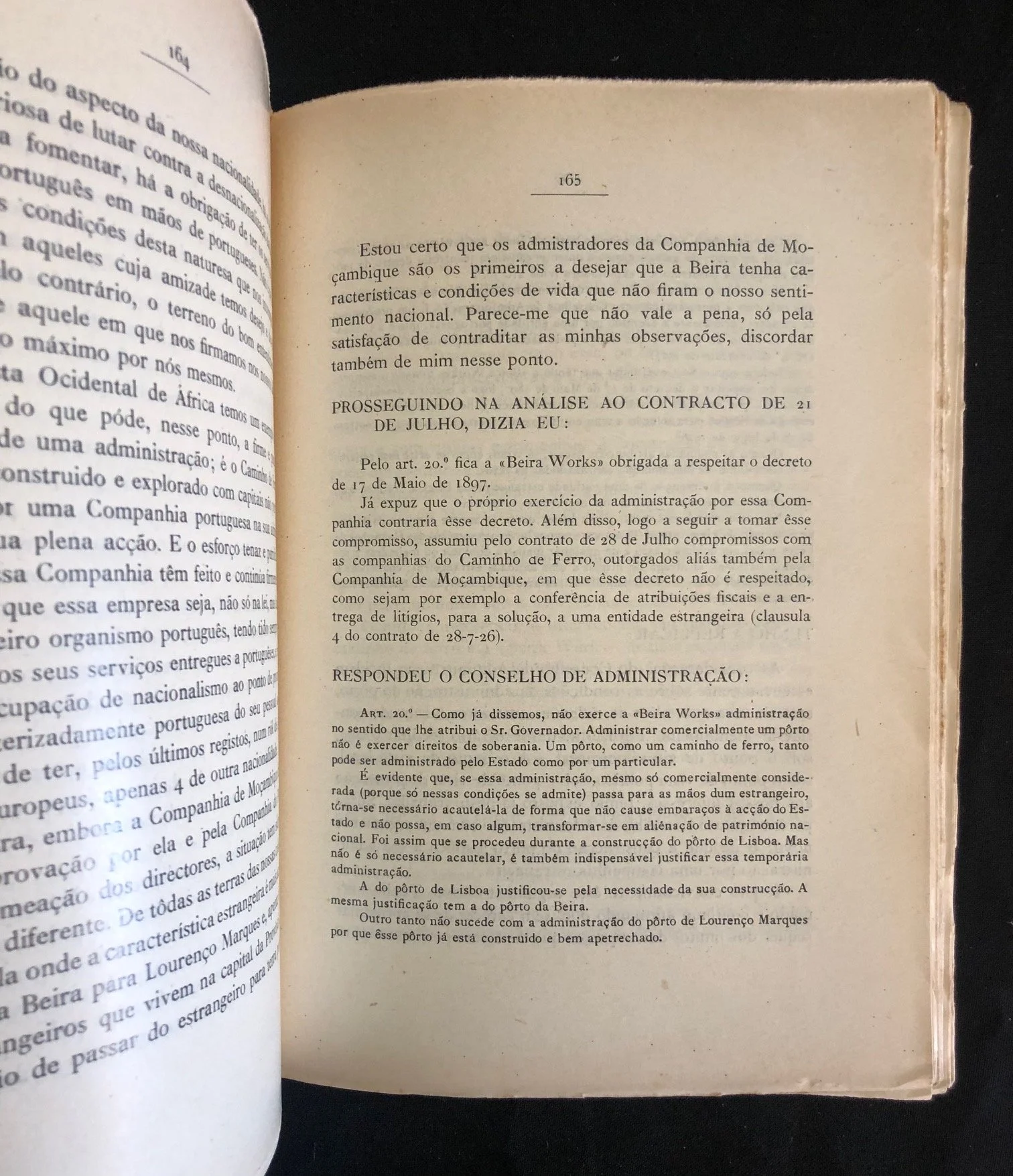
A Questão do Pôrto da Beira (The Question of the Port of Beira) (1927)
This publication, A Questão do Pôrto da Beira (The Question of the Port of Beira), printed in Lisbon in 1927, is a window into the intense, high-stakes geopolitics of colonial Southeast Africa.
The Port of Beira in Mozambique was not just a coastal harbor; it was a vital economic artery for the landlocked British territories of Southern Rhodesia (Zimbabwe), Northern Rhodesia (Zambia), and Nyasaland (Malawi). Consequently, its administration was a source of massive friction between British commercial interests and Portuguese sovereign control.
The Author: A Colonial Power Player
The author is Henrique Corrêa da Silva (1878–1935), also known as Paço d'Arcos. His credentials listed right under his name illustrate his high status in the Portuguese Empire:
Ex-Ministro das Colónias (Former Minister of the Colonies)
Ex-Governador do Território da Companhia de Moçambique (Former Governor of the Territory of the Mozambique Company)
Having served as Governor of the territory from 1910 to 1913, Corrêa da Silva understood the region intimately. He wrote this treatise in 1927 to fiercely defend Portuguese sovereign interests against British economic encroachment at a time when the port was undergoing massive modernizations.
The Context: The "Mozambique Company" and Chartered Capitalism
The mention of the Companhia de Moçambique (Mozambique Company) highlights a fascinating era of concessionary colonialism.
Portugal was historically broke and lacked the capital to develop its vast African territories. To hold onto them during the "Scramble for Africa," the state granted royal charters to private, mega-corporations like the Mozambique Company. This company had its own military, collected its own taxes, and issued its own currency, ruling over the provinces of Manica and Sofala (including Beira) as a corporate state.
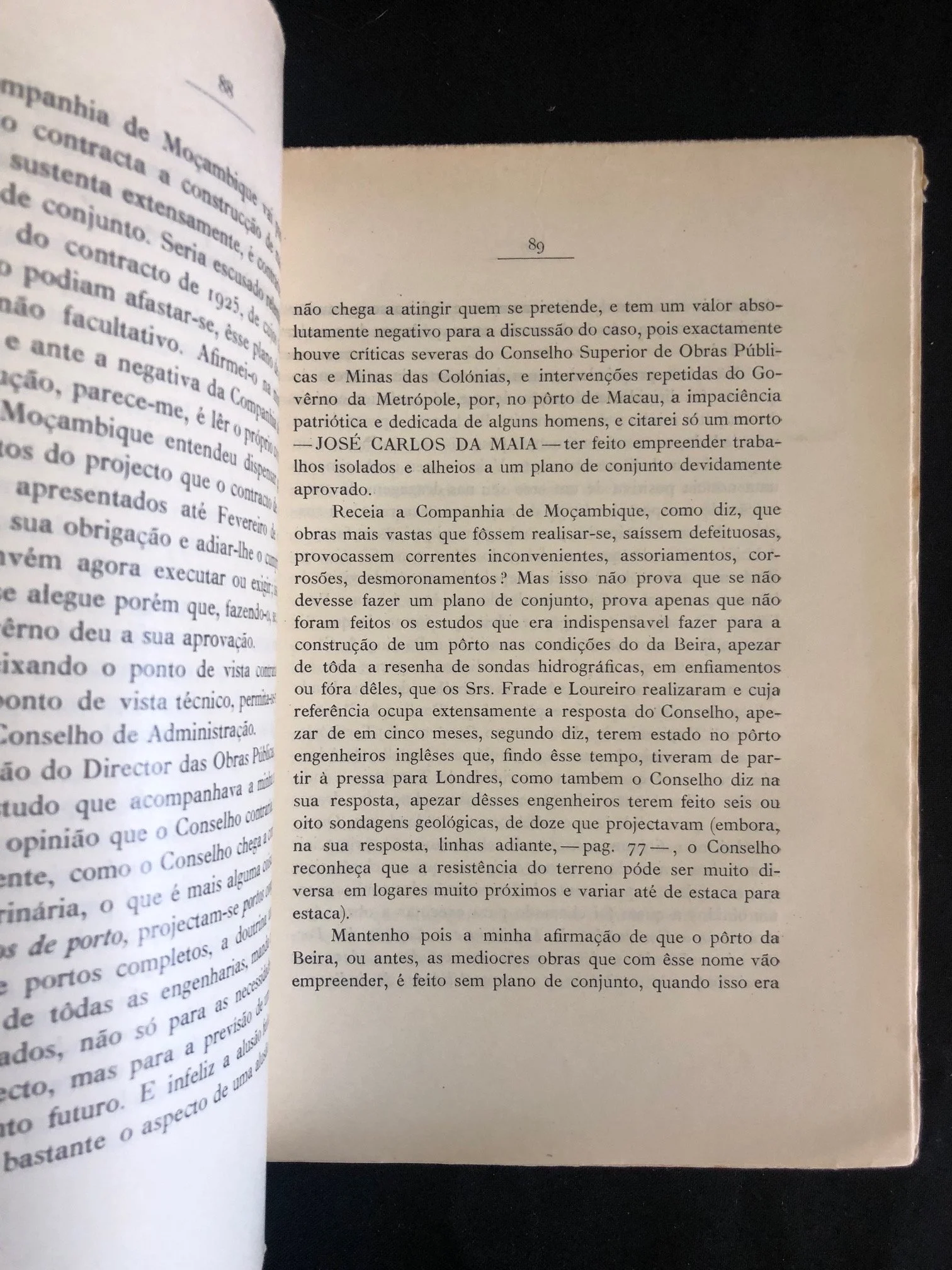
Because British finance capital heavily backed the Mozambique Company, British imperialists constantly pushed to control the infrastructure of Beira's port and railway line. This booklet was part of a major public debate regarding how much control Portugal should cede to foreign entities over such a strategic asset.
The Date: 1927 and the Rise of the Ditadura Nacional
The publication date, 1927, marks a critical turning point in Portuguese history. Just one year prior, in May 1926, a military coup overthrew the chaotic First Portuguese Republic, establishing the Ditadura Nacional (National Dictatorship), which would soon pave the way for António de Oliveira Salazar’s authoritarian Estado Novo (New State).
One of the central tenets of this new regime was ultra-nationalism and an uncompromising reassertion of absolute Portuguese control over its colonies, aiming to end the era where British companies could dictate terms in places like Beira. This book is a direct ideological product of that nationalist shift.
An Intimate, Patriotic Inscription
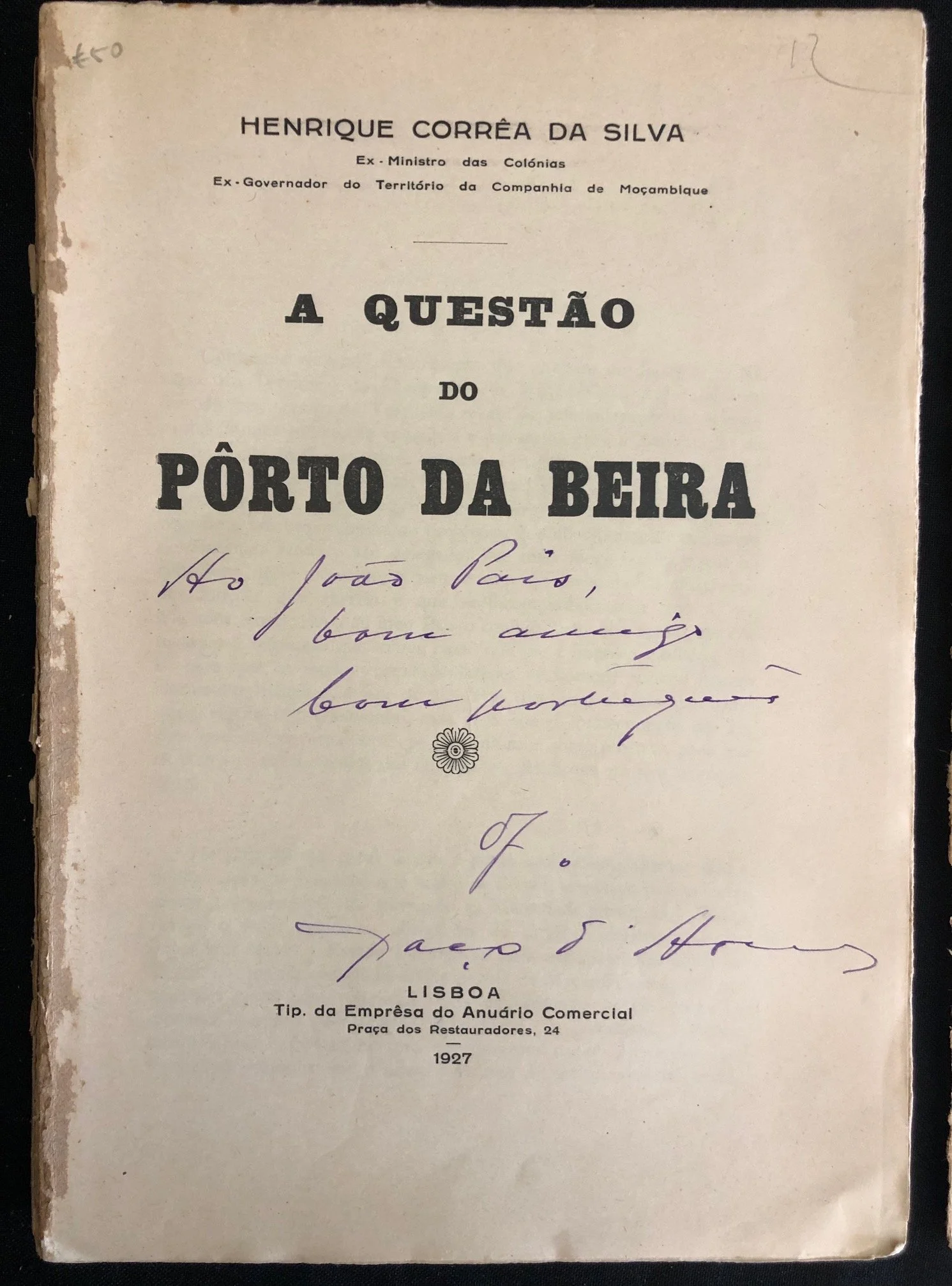
Adding immense provenance to this copy is the prominent handwritten inscription written in blue ink across the centre of the title page, signed by what might be the author using his aristocratic title, Paço d’Arcos:
"Ao João Pais,
bom amigo,
bom português"
[signed] Paço d'Arcos
Translation:
"To João Pais,
good friend,
good Portuguese"
By calling the recipient a "bom português" (good Portuguese) in a book defending the empire, the inscription transforms this copy into a personal token of shared patriotic duty. It was gifted directly by a former colonial minister to a close contemporary who shared his anxieties and convictions about keeping Portugal's grip firm on the wealth of the East African coast.
170mm x 240mm
Front wrapper detached. Spine starting to break.
(No map, as published).
R1,000