Lourenço Marques and the Moçambique Coast: A Guide, written by John Anthony (c.1955)
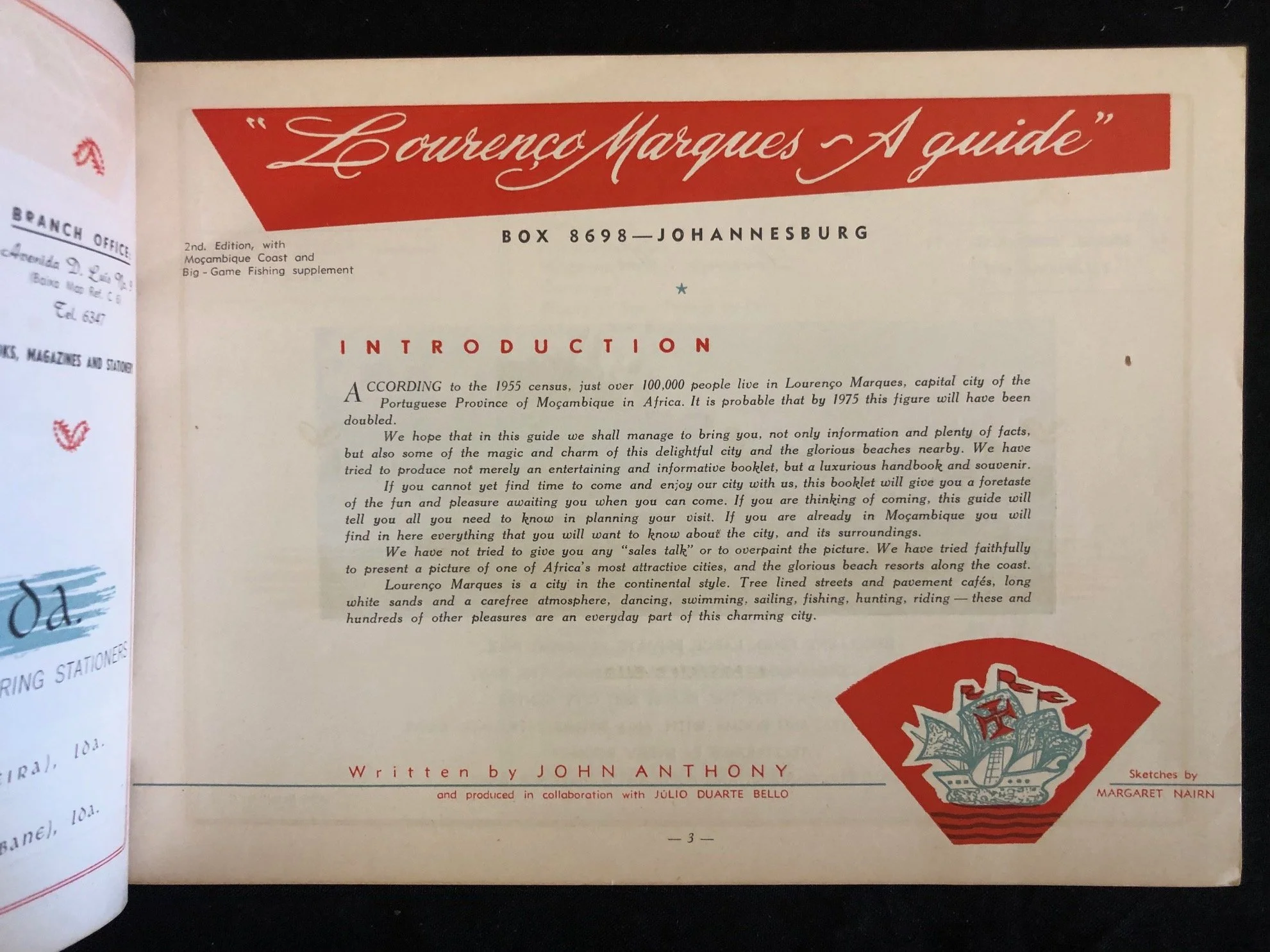
This is the second edition of Lourenço Marques and the Moçambique Coast: A Guide, written by John Anthony in collaboration with Júlio Duarte Bello, featuring sketches by Margaret Nairn.
As an ephemeral tourism artifact from a vanished era, this mid-1950s handbook offers several compelling historical insights into the geopolitical and cultural landscape of Southern Africa at the time:
Dual Pricing and the South African Tourist Pipeline
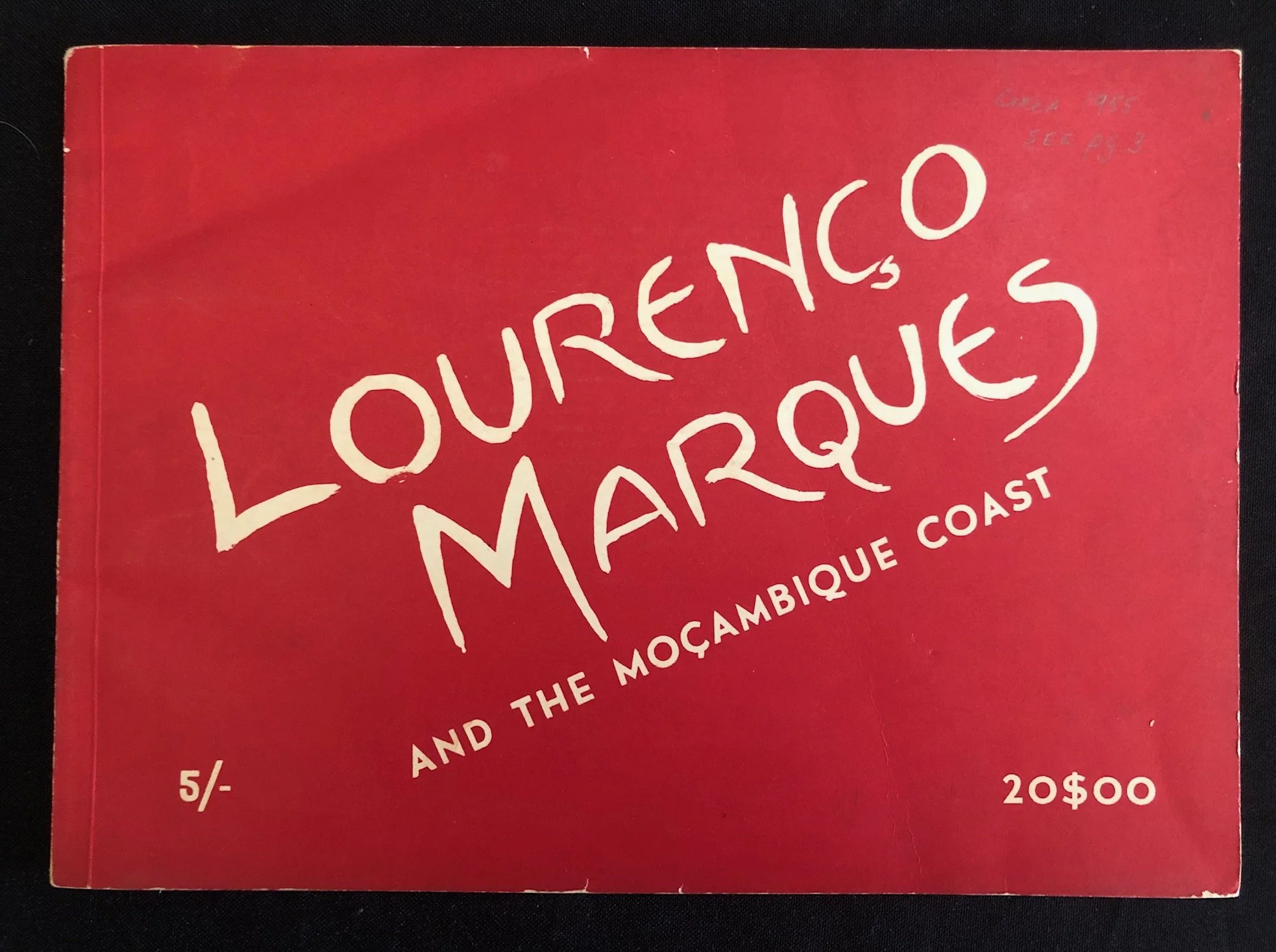
The cover features a telling detail in the lower corners: it is explicitly priced in two currencies: 5/- (five South African shillings, pre-decimalization) and 20$00 (twenty Portuguese Mozambican escudos).
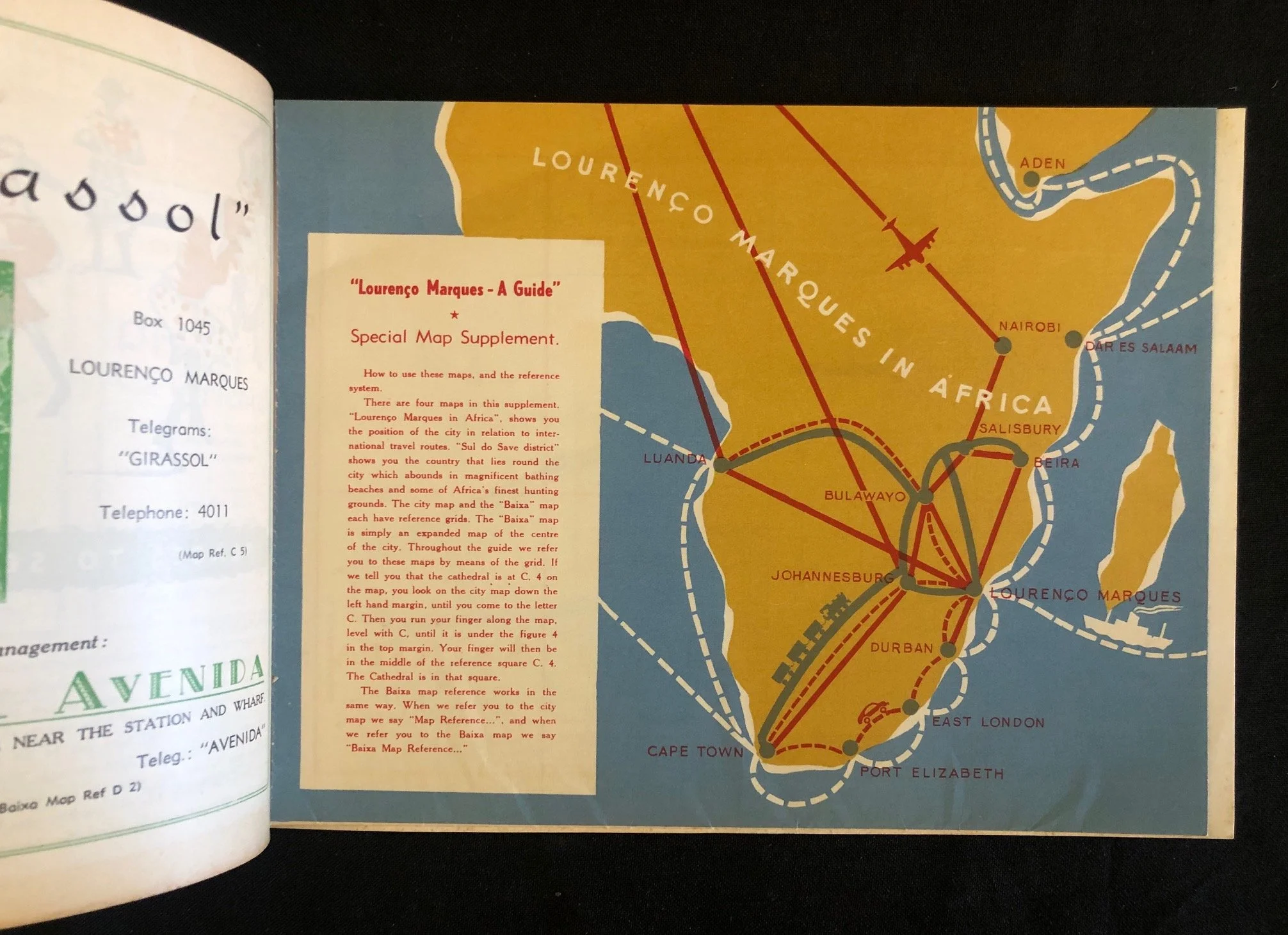
Notice the publisher's address: Box 8698—Johannesburg.
This dual currency and Transvaal-based production underscore a major economic reality of the era: Lourenço Marques (now Maputo) operated as the ultimate playground, coastal escape, and nightlife hub for landlocked white South Africans during the mid-20th century. It offered a continental, Latin-influenced atmosphere—pavement cafés, piri-piri chicken, architecture, and a laxer social environment—that was vastly different from the conservative, Calvinist realities of South Africa under early apartheid.
A Prescient Demographic Prediction (The Year 1975)
In the introduction the text reads:
"According to the 1955 census, just over 100,000 people live in Lourenço Marques... It is probable that by 1975 this figure will have been doubled."
While the authors were looking strictly at urban population growth, 1975 would accidentally become the most pivotal, explosive year in the history of the region. On June 25, 1975, following the Carnation Revolution in Lisbon and a protracted guerrilla war waged by FRELIMO, Mozambique gained independence from Portugal. Within a year, the city's colonial name, Lourenço Marques, was erased, and it was officially renamed Maputo. The "carefree, continental lifestyle" marketed in booklets like this evaporated nearly overnight as the mass exodus of the Portuguese population occurred.
Propaganda of the "Portuguese Province"
The text subtly reinforces the colonial geopolitics of the Salazar regime (Estado Novo) by explicitly referring to the territory as the "Portuguese Province of Moçambique in Africa" rather than a colony. Portugal heavily promoted this terminology mid-century to resist growing United Nations pressure regarding decolonization, framing its African possessions as integral, overseas extensions of the Portuguese mainland.
Artistic Collaborators: Margaret Nairn
The booklet features sketches by Margaret Nairn, a well-known South African artist and etcher who worked out of Johannesburg and the Eastern Cape mid-century. Her inclusion, alongside a Portuguese collaborator (Júlio Duarte Bello), highlights how closely intertwined the creative, commercial, and printing networks were between South Africa and Portuguese East Africa during the height of the mid-century tourism boom.
245mm x 175mm
Some pen underlining; small tear on map (without loss); minor surface wear.
R1,250