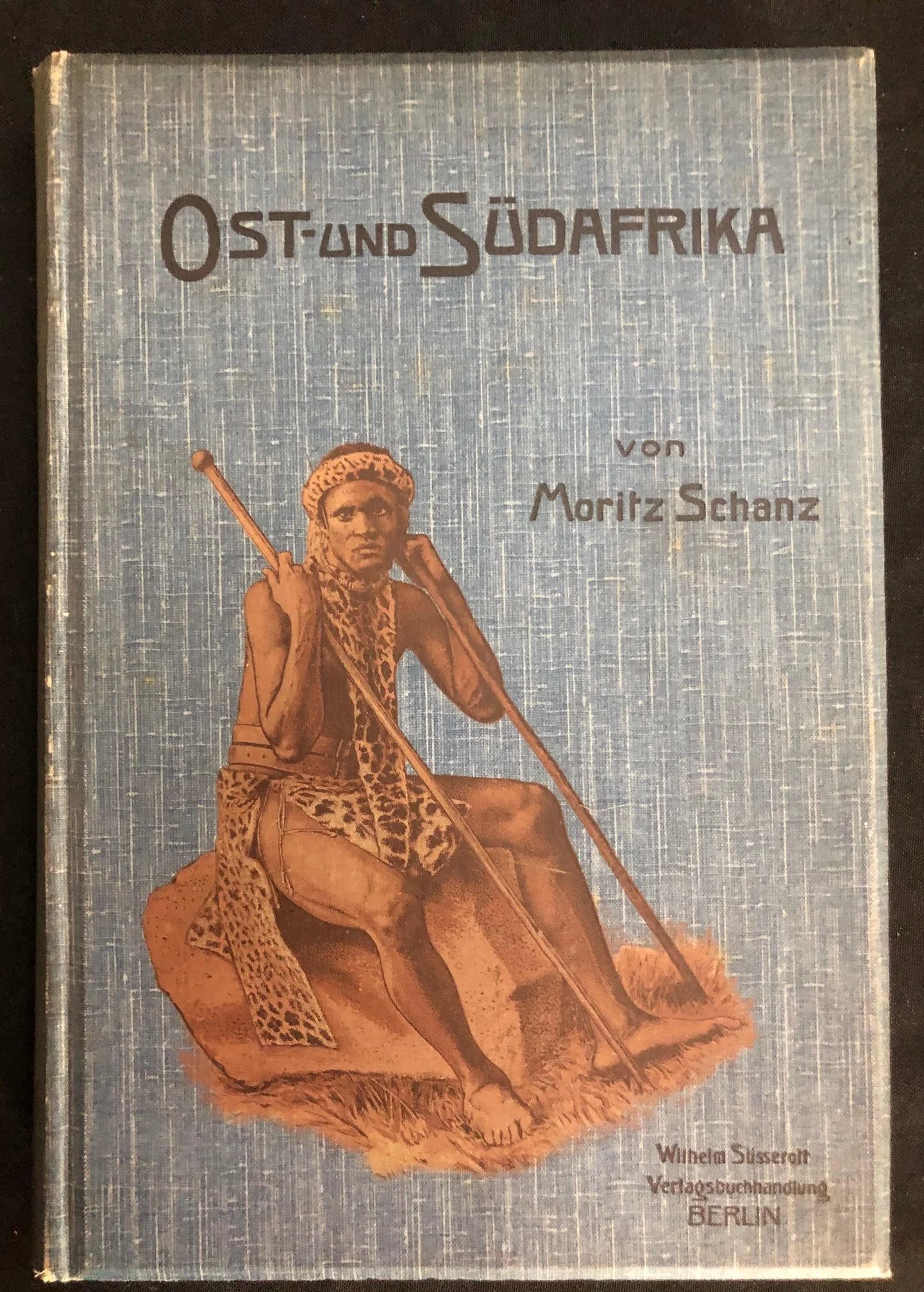
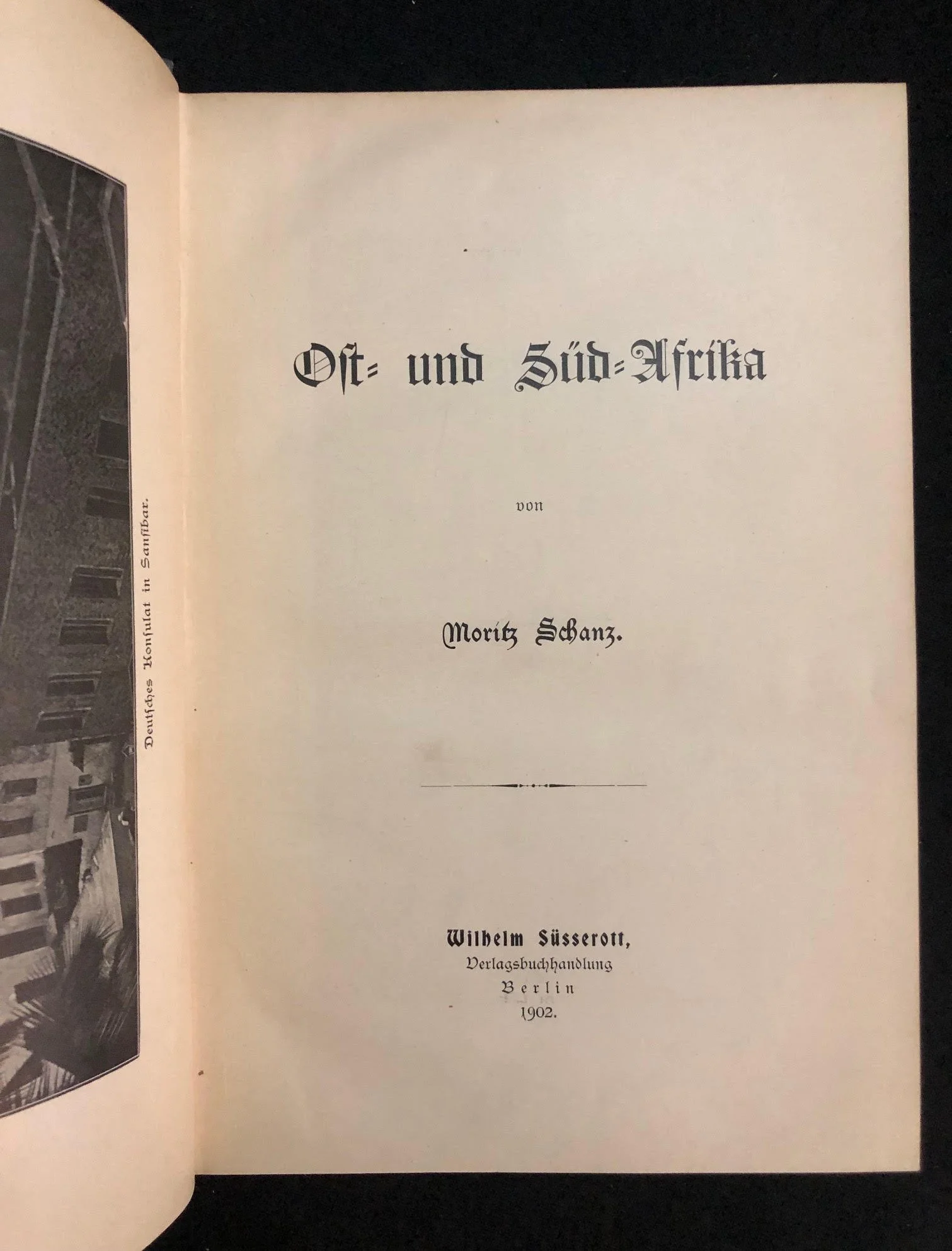
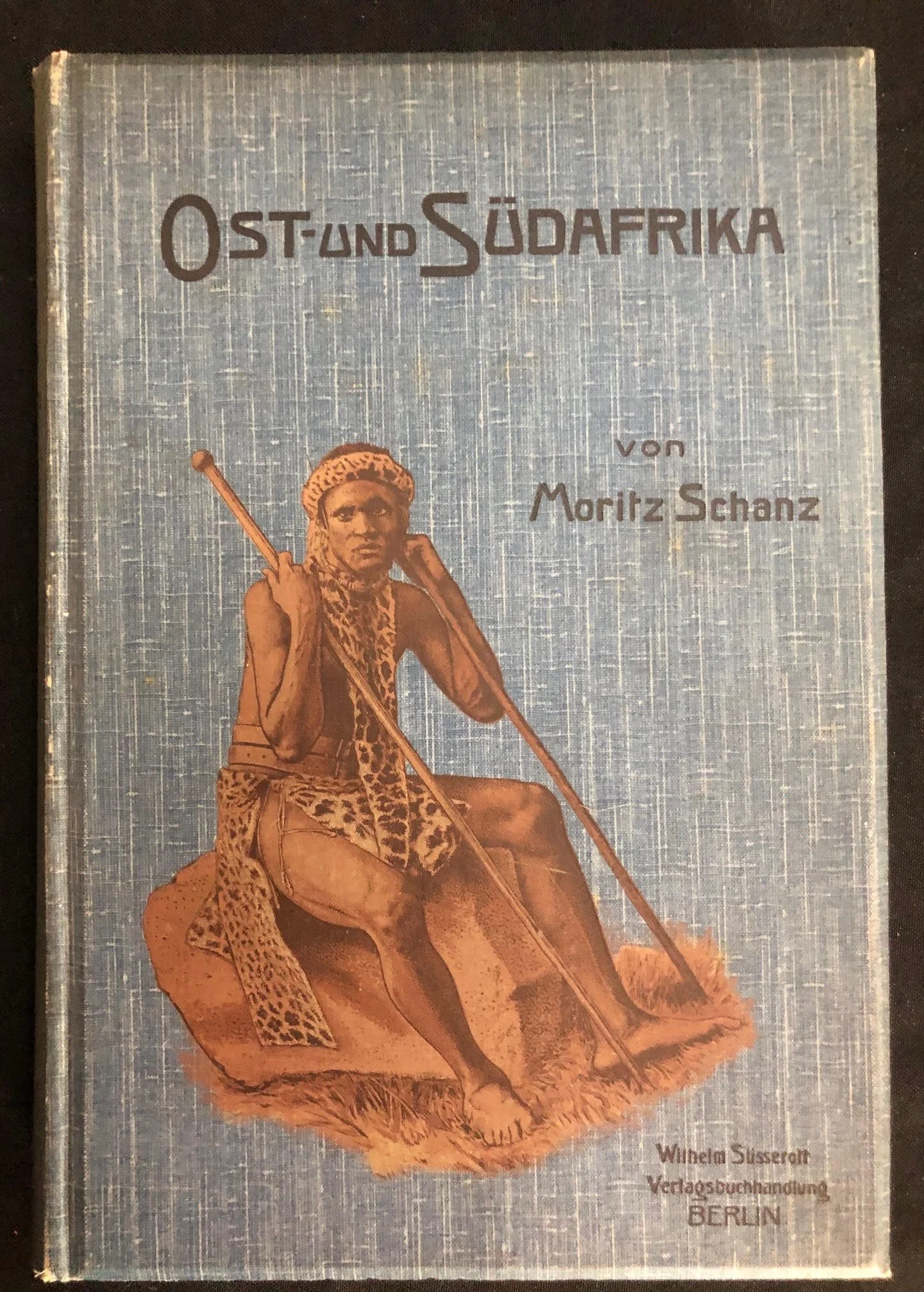
Ost- und Süd-Afrika (East and South Africa) by Moritz Schanz. 1902.
This volume, Ost- und Süd-Afrika (East and South Africa) by Moritz Schanz (published in Berlin by Wilhelm Süsserott in 1902), provides a fascinating historical snapshot because of when and why it was written:
1. Published Right at the Pivot of the Second Anglo-Boer War
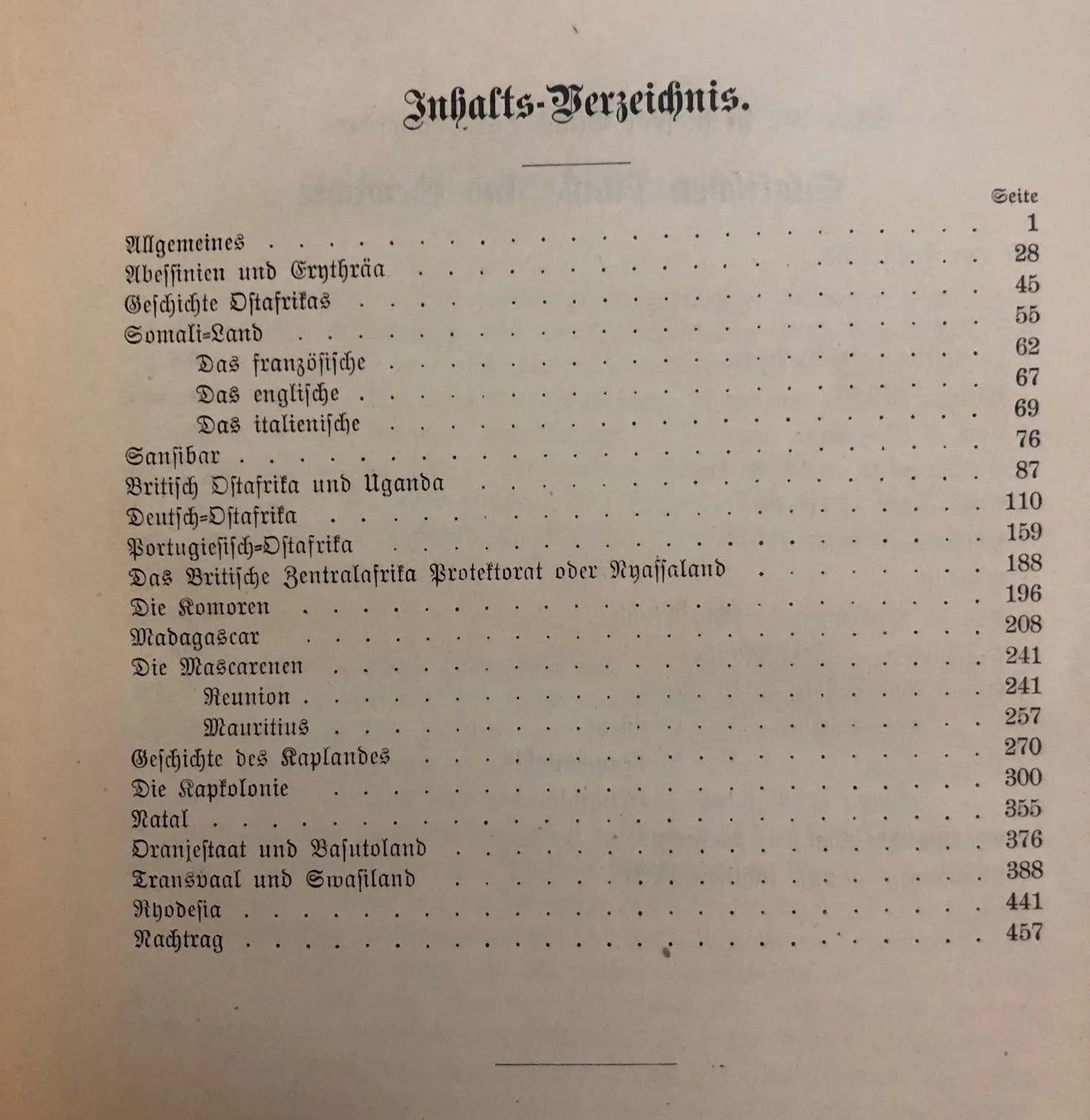
The imprint date of 1902 marks the exact year the Treaty of Vereeniging ended the Second Anglo-Boer War (May 1902). The Inhalts-Verzeichnis (Table of Contents) lists regions like the Oranjestaat (Orange Free State), Transvaal, Kapkolonie (Cape Colony), and Natal. Schanz was documenting these territories right as the two Boer republics lost their independence and were absorbed into the British Empire, offering a contemporary Imperial German perspective on a region in dramatic transition.
2. Written by a German Colonial & Economic Specialist
Moritz Schanz was a prominent travel writer and merchant-advocate for the Deutsche Kolonialgesellschaft (German Colonial Society). He traveled extensively across global trade routes—including Africa, Brazil, and Cotton-producing regions worldwide—to survey commercial potential, infrastructure, and agricultural prospects for German trade interests. His works were intended to serve both as comprehensive regional surveys and economic guides for German colonial expansion and commerce.
3. A Pre-WWI Snapshot of Scramble-for-Africa Geopolitics
The table of contents reads like a geopolitical map of European imperial partition just after the turn of the 20th century:
Deutsch-Ostafrika (German East Africa, covering modern Tanzania, Rwanda, and Burundi)
Britisch Ostafrika und Uganda
Somali-Land broken down into French, English, and Italian spheres (Das französische, Das englische, Das italienische)
Das Britische Zentralafrika Protektorat oder Nyassaland (modern Malawi)
Regional island colonies including Madagascar, the Comoros, Réunion, and Mauritius
4. Wilhelm Süsserott’s Specialist Publishing House
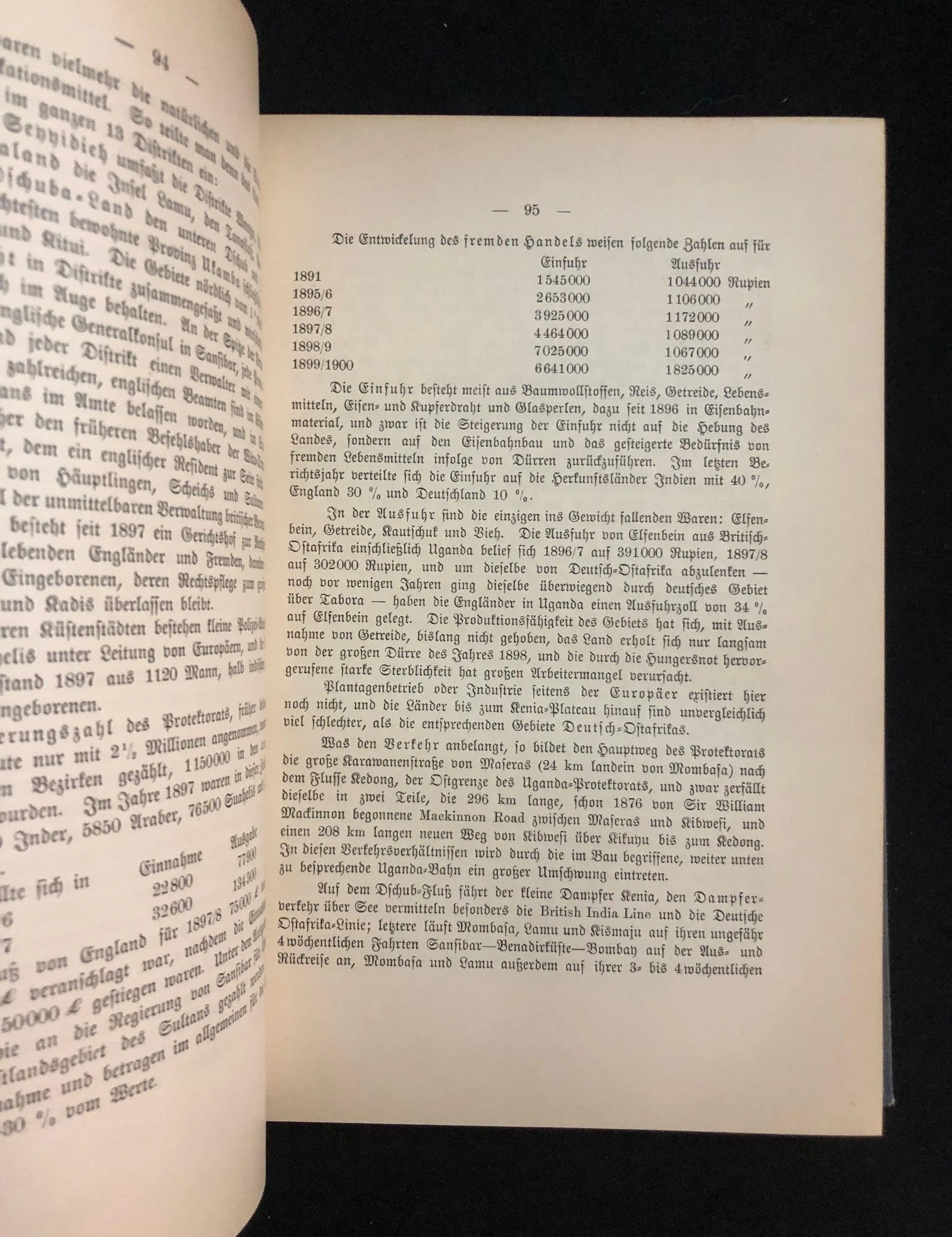
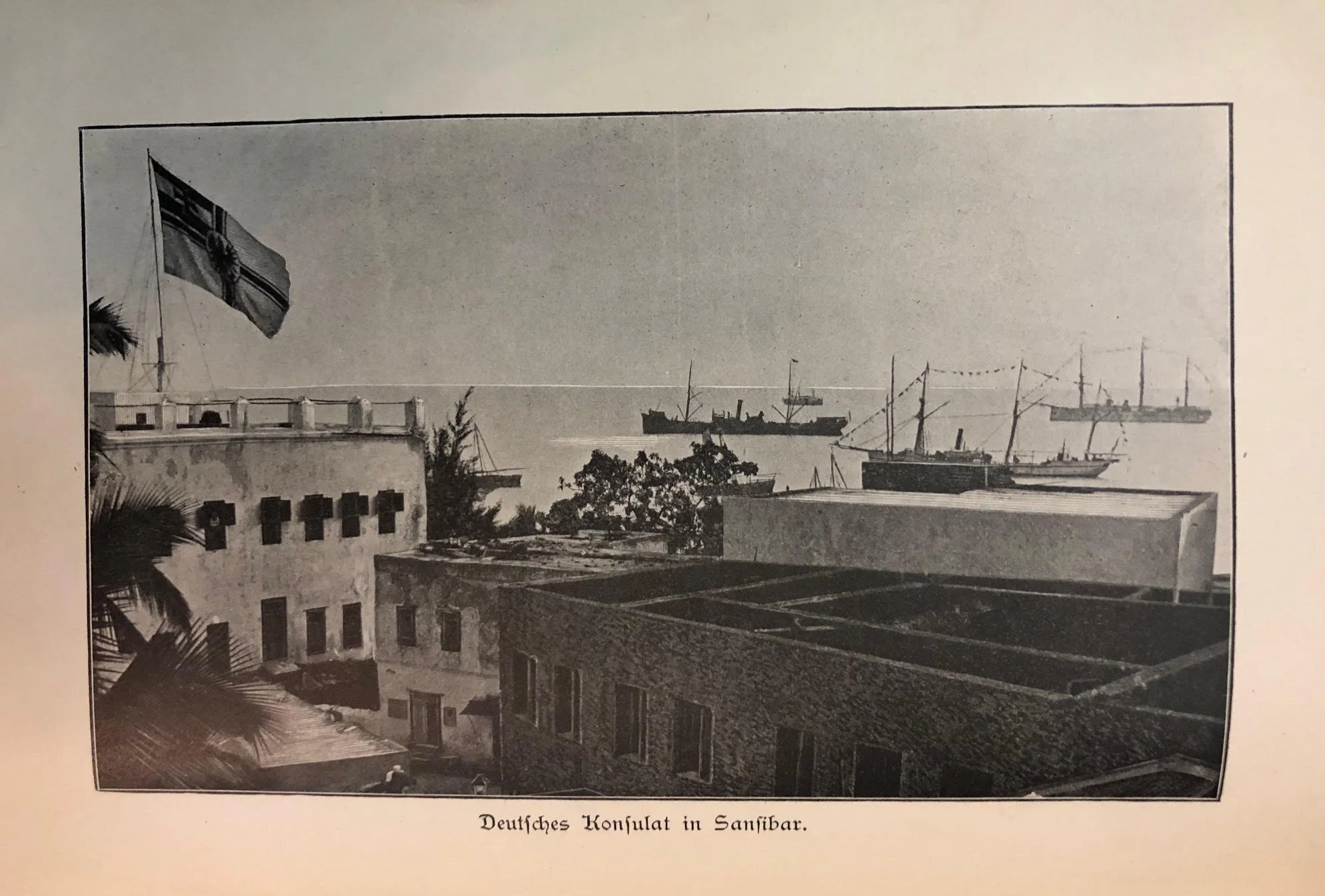
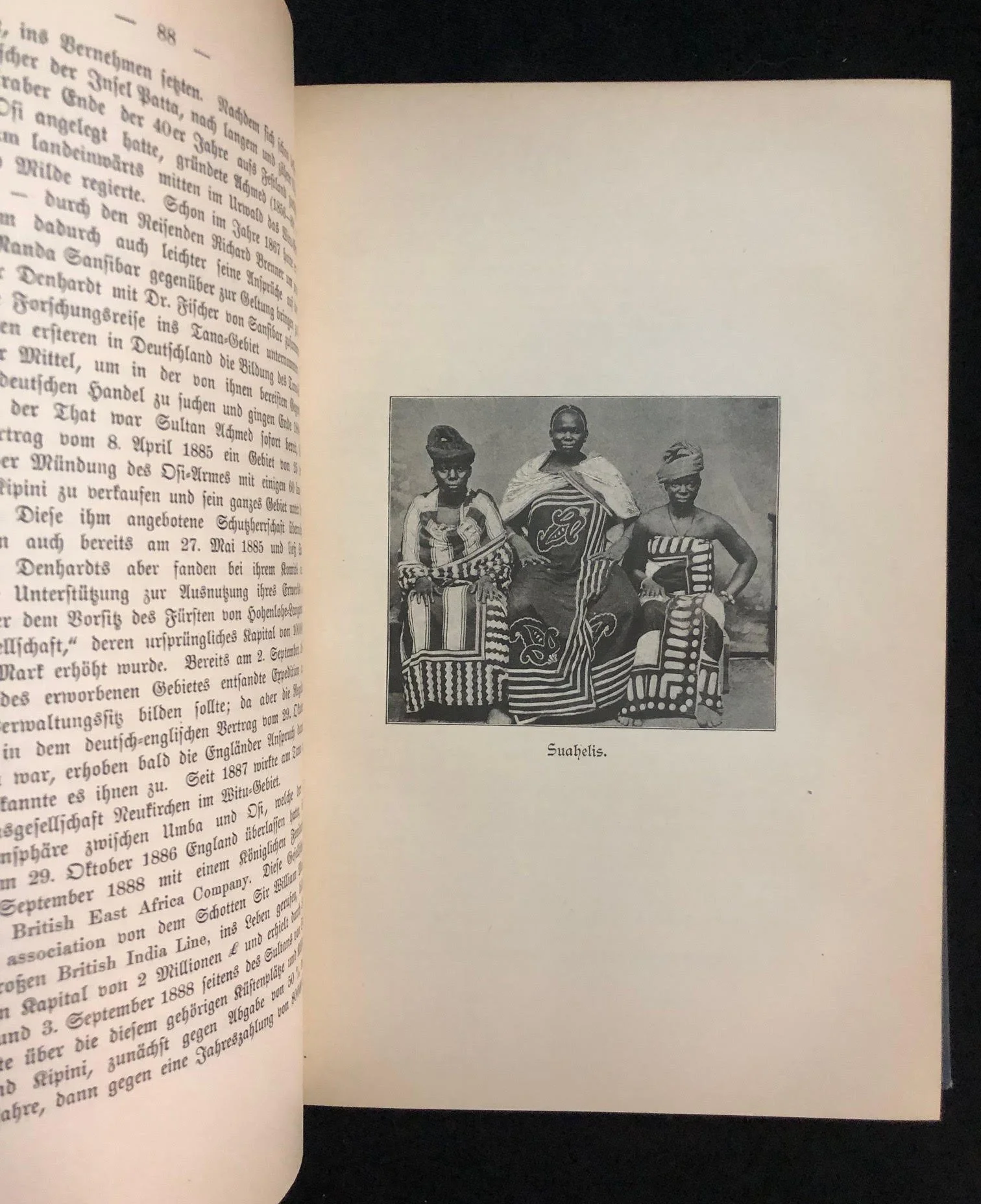
Publisher Wilhelm Süsserott in Berlin was one of the premier publishers of German colonial literature (Kolonialliteratur), cartography, and foreign economic studies at the turn of the century. Books from this imprint often included detailed folding maps, statistical tables on trade imports/exports, and photographic frontispieces—such as the image of the Deutsches Konsulat in Sansibar (German Consulate in Zanzibar) visible on the left page.
170mm x 250mm
Ex library copy; minor wear to binding. Splitting in the gutter of the front free end papers. Complete. All illustrations present.
R1,250